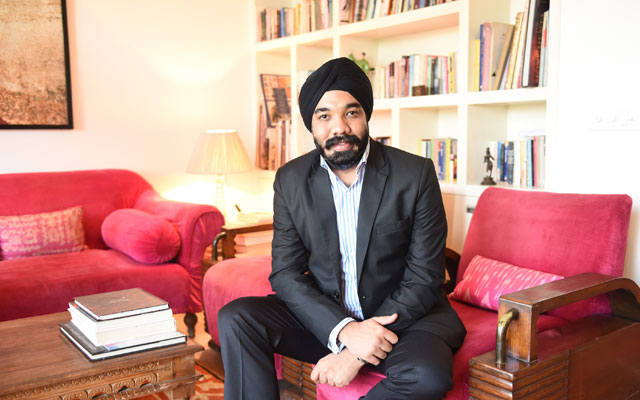
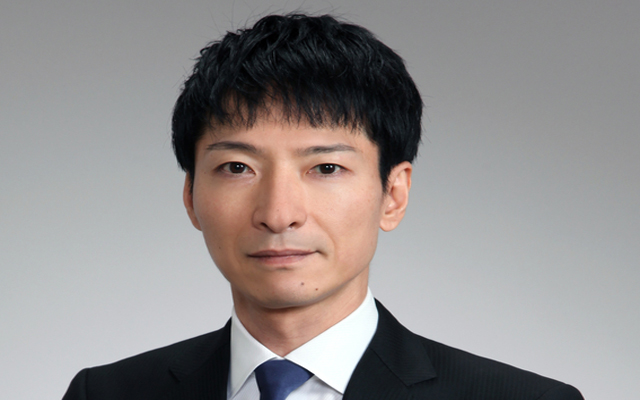
Airbnb has appointed Amanpreet Bajaj as general manager for India, South-east Asia, Hong Kong and Taiwan, taking over from Mike Orgill who returns to his former role as Airbnb’s regional policy director for Asia-Pacific.
In his expanded role, Bajaj will be responsible for driving Airbnb’s strategy and long-term growth in Asia-Pacific. He was previously the company’s country manager for India.
Amanpreet Bajaj
Bajaj will continue to report to Kum Hong Siew, Airbnb’s regional director for Asia-Pacific and COO of Airbnb China.
Before joining Airbnb, he co-founded Letsbuy.com in 2010, which was acquired by Flipkart.com in 2012.
Charging forward with its plans to rescue the tourism industry, Singapore is exploring “reciprocal arrangements” with priority countries including South Korea, Australia, New Zealand, and countries in Europe.
Speaking to tourism industry partners and stakeholders at the STB Tourism Recovery Dialogue on Wednesday, minister for trade and industry Chan Chun Sing explained that the government is in talks to establish green lanes with cities that have effectively contained the spread of Covid-19.
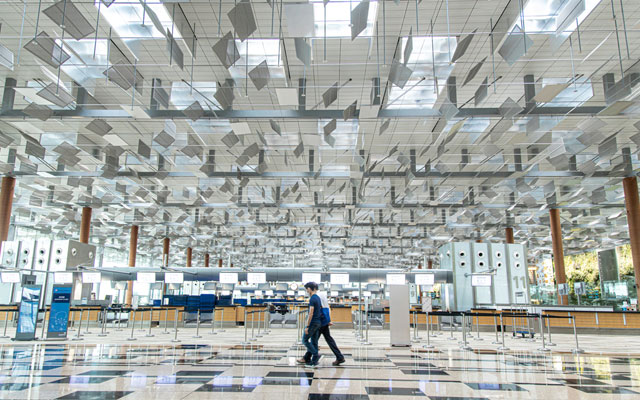
Singapore in talks with several countries to establish green lanes for travel; a largely empty Changi Airport during Singapore’s circuit breaker period in April pictured
In such agreements, protocols will be re-examined to “minimise duplication” that will inconvenience and discourage travellers. For example, instead of undergoing two sets of health tests on both ends of the journey, travellers flying between two countries with reciprocal arrangements can sit through one mutually recognised test.
He added that these arrangements can also reconsider the mandatory 14-day quarantine on both ends, significantly reducing inconvenience to travellers. This will follow the successful lanes established with China and Malaysia.
In a further thrust to revive domestic demand and, in the longer term, international interest, Chan also announced that the Singapore Tourism Board (STB) has earmarked the Singapore Racecourse at Kranji for redevelopment into a new tourist destination.
The project aims to connect the “rustic” Sungei Buloh wetland reserves in the northwest of Singapore to the Mandai Nature Reserve in the southwest with “a seamless, integrated plan”, he said.
He described: “We can have an entirely new tourism proposition for both locals and foreigners that is away from the current tourist attractions.”
Chan also shared that STB will launch the proposal of interest for the integrated tourism development in Jurong Lake District by end-2020.
He urged local businesses to revamp the tourism product model into an “end-to-end” service that takes care of consumers even after consumption and realisation.
He pressed that this change is essential as the government is looking into targeting the “higher-end market”, which some proponents have predicted may be the first segment of international tourism to rebound.
“We will move further into a quality, not quantity game; niche, not mass market. We need to reconsider some of our products and services,” he asserted.
As Six Senses Hotels Resorts Spas properties around the world reopen, the hotel group is offering Plan Now, Play Later certificates valid at all its resorts.
Each certificate includes an additional 20 per cent bonus that may be used towards a room upgrade or any purchases on property including dining, spa treatments and activities.
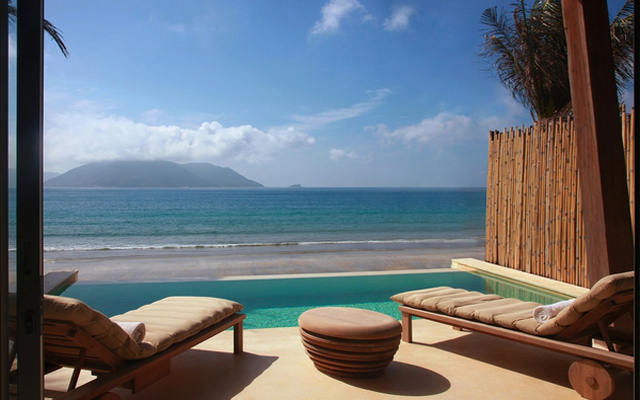
Six Senses’ guest can now purchase Plan Now, Play Later certificates to enjoy 20 per cent bonus credit; Six Senses Con Dao Ocean Front Deluxe Pool Villa in Vietnam pictured
Certificates will be available for purchase until December 20, 2020, and have a validity period of three years from the purchase date.
Currently, the properties which have reopened are Six Senses Con Dao and Six Senses Ninh Van Bay (Vietnam), Six Senses Uluwatu (Bali), Six Senses Douro Valley (Portugal), Six Senses Qing Cheng Mountain (China), and Six Senses Kocataş Mansions (Turkey).
Elsewhere, Six Senses Six Senses Yao Noi (Thailand) and Six Senses Laamu (Maldives) are slated to reopen on July 24 and August 1, respectively.
To pull Singapore’s travel industry out of the Covid-19 doldrums, the Singapore Tourism Board (STB) has announced a nine-month, S$45 million (US$32.5 million) campaign to drive local spend on tourism and lifestyle offerings.
As part of a tripartite effort with Enterprise Singapore (ESG) and Sentosa Development Corporation (SDC), SingapoRediscovers will focus on three broad areas: partnering local communities to help citizens discover hidden gems; curating precinct-based tour itineraries; as well as collaborating with hotels, tour operators, attractions and precincts to develop new experiences and promotions.
Singapore Tourism Board partners Sentosa, Expedia and Klook in US$32.5 mil domestic revival campaign
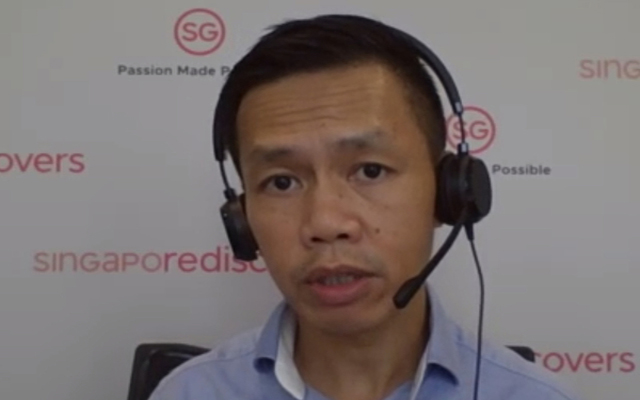
STB CEO Keith Tan shared: “These efforts constitute the largest domestic marketing push we’ve ever undertaken. (The S$45 million budget) represents a significant portion of what we would normally spend on international marketing in any given year. If it needs to be extended, we are prepared to negotiate with the other agencies to put in more resources.”
He added that STB hopes to expand the 5-people capacity limits for group tours, as part of social distancing rules during phase two of the country’s post-circuit breaker, “in the coming weeks”, and will be engaging other ministries in discussions to explore this possibility.
SingapoRediscovers will kick off at the end of July, with precinct tours of Little India and Sentosa to be marketed as Singapoliday destinations. SDC has curated new back-of-house tours and staycation packages featuring itineraries themed around island life, heritage discovery, wellness escape and adventure. More precincts will be added to the roster in the coming months.
Accompanying these offerings will be curated tours conducted by the Federation of Merchants’ Associations, Singapore; Heartland Enterprise Centre Singapore; and the Society of Tourist Guides (Singapore). These will be complemented by a Jalan Jalan: Your Good Hoods Guide initiative, a series of guidebooks promoting neighbourhood destinations.
To stimulate local retail and attraction spend, businesses and associations such as the Singapore Retailers Association, Singapore Hotel Association, Association of Singapore Attractions and Chinatown Business Association will rally their members to offer promotions on the VisitSingapore app and the newly launched SingapoRediscovers microsite.
Some 40 businesses have already come on board to offer about 80 promotions, including attractions, tours, and hotel stays. These include cross-sector tie-ups between hotels and tour operators, such as lyf Funan Singapore with Tribe Tours, and Fullerton Hotel with Singapore Sidecars.
SingapoRediscovers constitutes Singapore Tourism Board’s largest ever domestic marketing push: Tan
Aviation giants Changi Airport Group (CAG) and Singapore Airlines (SIA) have also entered agreements with STB on joint marketing campaigns for business revival. CAG will expand its portfolio of local brands on iShopChangi from next month, while SIA will soon offer Design Orchard brands on KrisShop.
Down the line in September, STB and Expedia will embark on a global marketing partnership, extending offers to locals and eventually to overseas visitors. The board is also teaming up with Klook to create engaging content, and develop new and interesting products and promotions for locals.
Trip.com also recently hosted a live webcast promoting flexible hotel reservations at discounted rates to Singapore’s staycation segment. STB confirmed that the OTA will collaborate on other initiatives for overseas visitors in the future.
Lynette Pang, STB assistant CEO of the marketing group, said: “According to UNWTO, in 2018, Singaporeans spent more than S$34 billion on overseas travel. Thus, the challenge for us is whether we can redirect some of that spending towards our local tourism and lifestyle businesses.”
SingapoRediscovers is the country’s largest ever campaign to drive local demand. It stems from the work of the Tourism Recovery Action Taskforce, which was launched in February 2020 in response to the Covid-19 pandemic.
Similar efforts to push domestic consumption have also been rolled out by STB post-crises in the past, namely, the Step Out Singapore programme after 2003’s SARS, and the BOOST (Building on Opportunities to Strengthen Tourism) initiative following the 2009 global financial crisis.
After 47 years, Hong Kong-based travel management company Jardine Travel will cease operations on August 31, 2020.
A spokesperson for Jardine Travel told TTG Asia that despite its best efforts, the company faced “significant challenges in maintaining a competitive edge alongside multi-location travel agencies”.
Connexus Travel’s takeover of Jardine’s travel management business will be “compelling proposition” for clients: Slethaug
Since July 1, 2020, Jardine’s operations has been taken over by Connexus Travel (formerly Swire Travel). Jardine has assured clients, business partners and employees that they are working towards a “smooth transition” which is expected to be completed by August 31.
Connexus Travel’s CEO Gloria Slethaug said that her company is “delighted” to take up Jardine’s travel management business, and promised that it will be a “compelling proposition” for clients. This move also demonstrates Connexus’ confidence in the market as a travel management company committed to “long-term development”.
Slethaug added that technology and digitisation have transformed the travel industry into a highly specialised business sector in recent years.
An industry veteran, who declined to be named, opined that if Jardine Travel had changed its business model earlier, it might have survived.
He elaborated: “When (Jardine Travel’s) general manager retired two years ago, her successor brought on board staff with a background in airlines, GDS, and corporate travel. However, the company remained traditional, and did not expand its distribution platform, or diversified its business for the last 15 years.”
He pointed out that Jardine could have survived if the company had upgraded their IT capabilities, enhanced tools for B2C and B2B partnerships, as well as upskill employees.
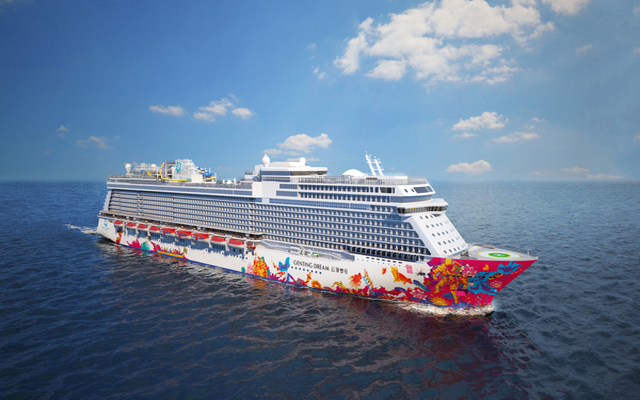
Dream Cruises has released its winter cruise itineraries that will set sail into certain parts of South-east Asia from Singapore, with departures from November 2020 through April 2021 aboard Genting Dream.
Genting Dream will embark on a host of two- to five-night cruises, featuring ports of call such as Melaka (Port Dickson) and Penang in Malaysia, as well as Koh Samui, Phuket (Patong Bay), Mergui Archipelago (Nyaung Oo Phee, Myanmar) and Bangkok (Laem Cha Bang) in Thailand.
Dream Cruises has enhanced preventive measures across its ships in the wake of coronavirus
To mark the launch of its winter itineraries, Genting Dream is offering two- to three-night cruises to Melaka, Penang, Bintan, Phuket and Langkawi from just S$204 (US$147) per person; as well as five-night cruises to Thailand – Phuket, Mergui Archipelago, Langkawi, Koh Samui or Bangkok – starting from S$476 (US$344) per person.
In addition to enhancing preventive measures across its ships, Genting Cruise Lines is offering incentives such as its Cruise As You Wish programme that will allow customers the flexibility of up 48 hours’ cancellation before sailing to receive 100 per cent future cruise credit for Dream Cruises’ bookings prior to or on April 9, 2021. Cruise credits can be redeemed on sailings departing on or before September 30, 2021.
Vietnam is further easing restrictions as it reopens its borders to select destinations deemed to have handled the coronavirus well.
At the latest meeting of the Mekong Tourism Advisory Group, Tran Phong Binh, deputy head of the tourism market department at Vietnam National Administration of Tourism, said that starting this month, the country will welcome flights from Taiwan, Guangzhou in China, Tokyo in Japan, and Seoul in South Korea.
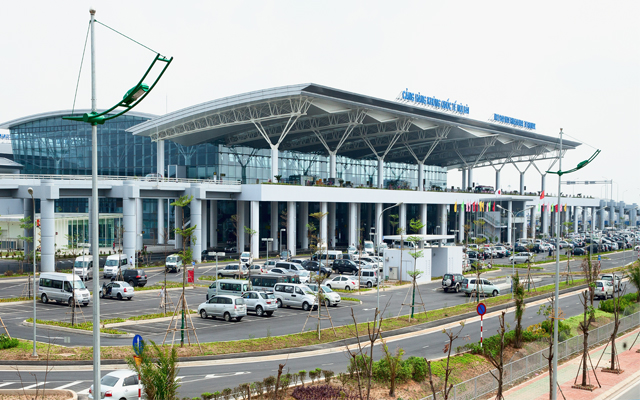
Vietnam set to reopen select flight routes; Noi Bai International Airport in Hanoi, Vietnam pictured
Tran shared that these places were chosen as they were considered to have managed Covid-19 “very well”.
The agreement is only for overseas nationals, diplomats, high-level workers, investors and other special cases as determined by the government. Currently, Tran said they must undergo 14-day quarantine.
He added that if the pilot programme is successful, authorities will consider putting in place similar agreements with Laos, Cambodia, Thailand, and Singapore.
Tran further said that the country has now entered the second phase of its VietnamSafe Communication Plan. The second stage of phase two will be implemented in October and will see the destination ramp up its promotion channels ahead of reopening its doors to international tourists.
However, Tran added, easing restrictions for international tourists will be done with caution, as the government monitors the situation.
In the meantime, Tran said the country has been successfully promoting domestic tourism since restarting flights within Vietnam in May. Heavy promotions have been put in place to encourage residents to travel local.
Tran noted: “Annually, about 13 million Vietnamese go abroad. With the borders closed, they cannot leave and are exploring parts of Vietnam instead. We are now receiving reports from some provinces that the number of tourists have increased from last year.”
He added that to date, Hanoi, Danang and coastal areas have drawn the most visitors.
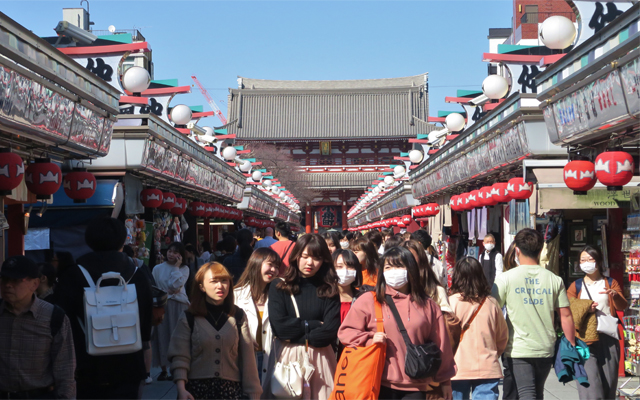
Nakamise Shopping street at Sensoji Temple with some people with masks during the outbreak of the coronavirus (COVID-19).
Hospitality experts have expressed confidence that Japan’s tourism industry will enjoy a U-shaped recovery from the devastating impact of the pandemic, thanks to its strong domestic market.
In a RICS-hosted webinar, representatives of JLL and global property agent Savills said local travel would lead recovery, evidenced by the rebound in hotel occupancy in areas within driving distance of major cities.
Experts forecast a swifter recovery for Japan’s tourism sector on the back of a strong domestic segment; locals strolling through Nakamise Shopping Street at Sensoji Temple amid the pandemic pictured
“Japan’s domestic tourism has historically been strong and stable, accounting for 83 per cent of the country’s total tourism spend in 2019,” said Raymond Clement, managing director for hotels in Asia Pacific at Savills.
Takahiro Tsujikawa, head of JLL’s Japan hotels and hospitality group, agreed, adding that “about 80 per cent of lodging demand in Japan is domestic, so we should be able to see a swifter recovery compared to other Asian cities where lodging demand is highly dependent on inbound guests.”
Majority of Japan’s accommodation demand comes from locals: Tsujikawa
In a survey related to Japan’s travel subsidy campaign, 71 per cent of respondents said their number of anticipated trips from July to December 2020 would be the same or higher than before the pandemic.
Japan also has the potential to relocate the spending of outbound travellers who are currently unable to go abroad, which amounted to 3.7 trillion yen (US$34.6 billion) in 2019.
Clement predicts that people will likely restart travelling by visiting nearby destinations that don’t require transport by airplane or train. Tsujikawa agreed, noting that “green shoots” in hotel occupancy can already be seen at locations within a couple of hours’ drive of major cities, including Karuizawa and Hakone near Tokyo, and Itami near Osaka.
Within the hotel sector, Tsujikawa said limited service hotels are “starting to see some recovery in performance” in regional cities, largely driven by business use.
Four- and five-star hotels that targeted primarily the wealthy inbound market can expect a slower recovery. Many are appealing to the high-end domestic market with staycations.
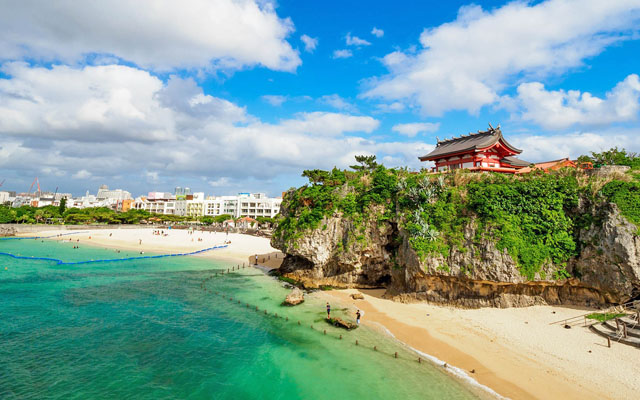
Okinawa, in particular, is tipped to be sold as the destination of choice for those who once chose resort destinations like Hawaii.
Destinations with fewer cases of Covid-19 are likely to experience a swifter recovery, meaning Tokyo is likely to be the slowest to rebound, Tsujikawa said.
A number of Indonesian tour operators have questioned the fairness of the new online booking system introduced by the Komodo National Park (TNK) earlier this month.
The online platform, booking.labuanbajoflores.id, requires users to choose from a selection of 197 tour operators listed on the website during the reservation process, according to Evodius Konsomar, head of the Association of Indonesian Tours and Travel Agencies (ASITA) West Manggarai, East Nusa Tenggara (NTT) chapter.
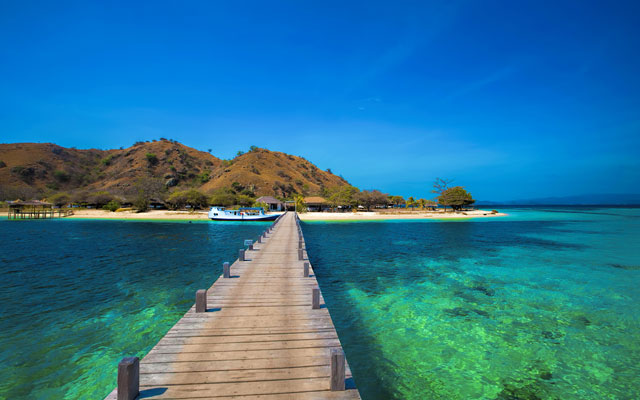
TNK, which has three terrestrial tourism sites, has capped entry to 25 visitors per site per day
This has created the impression that TNK is taking a cut from these travel companies, he said, questioning the transparency in the appointment process of the listed operators.
TNK, which has three terrestrial tourism sites, namely Padar, Loh Liang and Loh Buaya, has capped entry to 25 visitors per site per day after it kicked off the first phase of reopening on July 6.
This quota also drew outrage from travel companies, he said, as the number was considered too paltry for the UNESCO World Heritage Site spanning 239,000ha.
Evodius also criticised park authorities for the ambiguity around how the 75 entrance tickets across the three sites would be fairly distributed among travel companies. “We will keep on protesting until there is clarity (around that issue), otherwise it creates unfairness,” he said.
Responding to the allegations, TNK head Lukita Awang, said that the online booking system had been agreed by TNK, Labuan Bajo Flores Tourism Authority (BOLB), and West Manggarai Tourism Agency, in a bid to track integrated data about the number of tourists across the province.
With regards to the capacity caps, he highlighted that TNK is a conservation area, and not “an ordinary tourist attraction”. Hence, the restriction on visitor numbers is designed to prevent overcrowding and damaging the ecosystem.
Lukita explained that the 25-person capacity limit at each site is based on a study carried out by the park to determine the ideal carrying capacity for the first phase of reopening. As such, this cap is set to be revised down the road, depending on the study results.
According to Lukita, TNK has curated the list of 197 tour operators on its online booking system, and verified their legitimacies, so as to ensure tourists’ safety and comfort, and protect them from fraudulent agents.
Incito Vacations owner Ng Sebastian said the park has no authority to dictate visitors’ choice of travel companies. “Their duty is to protect the Komodo dragons and visitors. How visitors get to the park is not their business,” he said.
Ng also said that the curated list of tour operators on TNK’s website was problematic because it included dive operators, and some travel companies were mentioned more than once.
Though acknowledging the importance of limiting visitor numbers to maintain physical distancing amid the Covid-19 pandemic, he opined that TNK needed to publicly disclose the carrying capacity study that it did to determine the quota.
Ng also said that the website was lacking in a feature that would display a real-time availability of entrance tickets. “The park also needs to give the exact cut-off date for the ticket purchasing period,” he added.
S Hotels & Resorts (SHR), the hospitality arm of Thai property developer Singha Estate, is plowing ahead with short-term initiatives to lure travellers back to its properties, including promotions and safety frameworks, and longer-term plans to double its existing portfolio in five years.
In the short-term, SHR is focused on launching promotions for domestic and intra-regional travellers at properties that have resumed business and implementing health and safety measures.
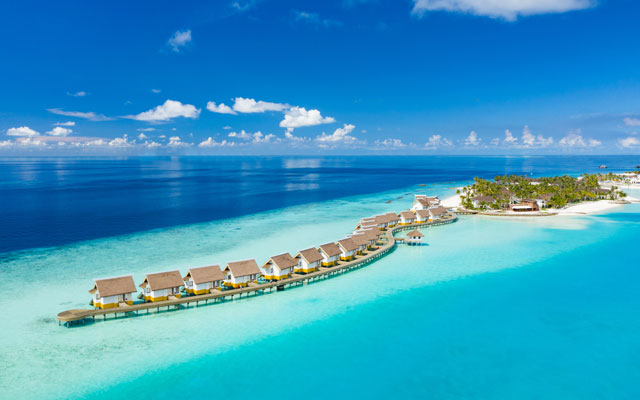
SAii Lagoon Maldives wooing guests with stay-three-nights-and-pay-for-two promotion
Eventually, expansion, including that of its upper-upscale resort brand SAii, will be achieved via management contracts, acquisitions and international investments.
SHR CEO Dirk De Cuyper shared in a press statement that he was optimistic that the company will recover well and be sustainable, in spite of the crisis. He cited SHR’s leisure and affordable luxury positioning and its business structure, low debt and healthy capital structure as reasons.
With border restrictions in many countries limiting hotel and resorts’ potential market to domestic travellers and expats, promotions targeted at these groups are pertinent.
At the Thai properties open for business, SHR is offering discounts of 40 per cent or up to 3,000 baht (US$95) per room night, with a limit of five nights, in line with the Travel Together campaign started by the government to boost domestic travel.
According to SHR, all Thai resorts have obtained the Tourism Authority of Thailand’s Amazing Thailand Safety & Health Administration certificate.
Over in the Maldives, which has reopened to all international travellers, SHR’s The SAii Lagoon Maldives and Hard Rock Hotel Maldives, are offering stay-three-nights-and-pay-for-two promotions.
SAii Lagoon Maldives conforms to Hilton Worldwide’s CleanStay programme, while Hard Rock Hotel Maldives has adopted the 272-point Safe + Sound programme with independent inspection.
SHR is expected to gradually reopen more properties as it monitors and responds to border control changes.