Backyard over bucket list adventures for post-pandemic travel
The global pandemic has led to the rise of the cautiously optimistic traveller, with a greater desire to explore one’s own backyard and revisit favourite haunts over exploring bucket list destinations, according to a recent global study by Hotels.com, an Expedia Group company.
The study uncovered five trends that are shaping post-pandemic travel as vacation seekers around the world adapt to a new normal of travel.

Closed borders, wandering minds and rise of the cautiously optimistic traveller
With the pandemic limiting vacation plans, one thing is for certain – travellers are #ThirstyForTravel, with 84% of respondents admitting that they are looking forward to travelling again.
However, while the desire for travel is strong, travel attitudes have also changed. Some 49% admit that they would still be nervous to travel even after all travel restrictions have been lifted. In fact, at least five out of 10 travellers require reassurance from local governments and health authorities before they start travelling again – 30% would feel most comfortable travelling again when a vaccine has been developed, and 27% would feel reassured when the government confirms that travel is safe.
Furthermore, maintaining personal hygiene takes precedence over staying connected and being fashionable on holiday as hand sanitisers (61%), surgical masks (51%), disinfectant wipes (47%) and travel insurance documents (43%) top the list of necessities to pack for their next vacation. Laptops, iPads, books and magazines (45%), as well as travel accessories such as jewellry, sunglasses and hats (42%) moved down the priority list.
Reliving past memories, familiarity over the unknown
When it comes to post-pandemic travel, familiarity breeds comfort, as 33% want to explore more of their own country and revisit their favourite haunts (31%) over exploring new places (27%) and bucket list destinations (27%).
The desire to rediscover one’s own backyard is also evident, with 29% of respondents preferring to go on a domestic holiday over an international vacation (26%) when planning their next trip.
Retreat for the mind, ‘belly’ and soul
The global pandemic has also paved the way for a new generation of travellers – Generation E – also known as Generation Enlightened, a new wave of travellers seeking to improve their mental and physical wellbeing through travel.
Globally, 86% of travellers believe that travelling is a post-pandemic stress buster that can enrich the mind, body and soul. Feeling relaxed and stress-free (51%) tops the list of what these “Gen E” travellers are looking forward to in their post-pandemic vacation.
When it comes to wellness travel, it’s no longer just about getting massages or practicing yoga. Eating great food (55%) also plays an important role in nourishing the ‘belly’ and soul during travel. This belief extends to the stay experience, with 51% of travellers ranking a good hotel buffet as number one on the list of key amenities that accommodations should have to improve guests’ personal wellbeing.
Other important amenities include fresh towels (50%) and sanitation facilities such as public hand sanitisers (48%), which ranked second and third, respectively.
Beach more, worry less
The trend of wanting to escape the hustle and bustle is also reflected in the types of accommodation travellers would choose to feel most relaxed. Beach resorts (44%), luxury 5-star hotels (43%) and vacation rental (35%) emerged as some of the top accommodation choices for vacationers to feel the most at ease.
With 36% of consumers admitting that they would now actively avoid visiting crowded places once they start travelling again, it comes as no surprise that the sparseness of beaches would appeal to the cautious traveller.
Keeping up with the family and the wanderlust
Notably, romantic getaways (25%) take a backseat to family holidays (38%), as the global pandemic seems to have struck a chord on the importance of family during this period. Some 38% of respondents state that they would start travelling again to spend more time with family and friends they haven’t seen in a while. A holiday with family (40%) or partner (31%) is also the first thing that people plan to spend on when things get back to normal, over a big night out with friends (19%) or shopping (17%).
Among the top holiday motivators for travellers around the world are the need to travel for a change of scenery (45%) and to make the most of one’s freedom post-pandemic (41%).
The study was conducted by One Poll between May 28 and June 24, 2020 among 7,000 respondents in Brazil, Denmark, Finland, France, Hong Kong, Japan, Norway, South Korea, Spain, Sweden, Taiwan, the UK and the US.
Wink Hotels launches, eyeing Vietnam’s domestic travel boom
Vietnam’s first major lifestyle hospitality chain Wink Hotels has launched, setting its sights firmly on the domestic market, as it readies to open its debut hotel later this year.
Setting out to redefine affordable luxury, Wink Hotels touts itself as “a sleek, chic and vibrant lifestyle brand” that reflects a “young, modern and confident Vietnamese identity”.

The hotel chain is designed by AW2, conceived by developer Indochina Kajima, and operated by Indochina Vanguard – the latter two being joint venture companies with Indochina Capital and Kajima Corporation, and Vanguard Hotels, respectively.
The first Wink branded hotel will be the 237-room Wink Hotel Saigon Centre @ 75 Nguyen Binh Khiem, opening in Ho Chi Minh City’s Da Kao area in 4Q2020. It will be the first in a pipeline of 10 hotels to launch across Vietnam over the next four years, according to a press release.
Properties to follow include the 243-room Wink Hotel Danang Centre @ 178 Tran Phu, and a third in riverside Danang as part of a mixed-use complex with a 60m façade on Tran Hung Dao Street, along the Han River.
Fuelled by economic growth and the advent of low-cost carriers, domestic tourism in Vietnam grew 22 per year from 2014 to 2019, registering 85 million domestic travellers last year.
Wink Hotels is looking to tap Vietnam’s booming domestic travel market, as the country’s successful management of the coronavirus and the quick re-opening of the economy have prompted greater emphasis on domestic tourism to spur growth.
With 48 per cent of Vietnam’s 96 million population under the age of 34, the brand is looking to capture “young, aspirational and highly mobile” business and leisure travellers.
Wink Hotels CEO Michael Piro said: “These are exciting times for the Vietnamese hospitality industry. There’s a massive, underserved market segment currently and it is our clear ambition to serve and inspire this youth market with a new and dynamic brand of hospitality.
“Wink Hotels will be modern, bold and resolute in personality – reflecting a strong cultural identity – while being deeply respectful of Vietnamese traditions. At the same time, we offer guests a fun and connected destination experience.”

Strategically positioned to embody a youthful spirit, the brand will aim to convey that through Wink Guides, a team of personality-driven associates that will individualise interactions with guests, leveraging their local knowledge and sharing their own stories.
Other key features will be self-check in; grab and go Wink Food Carts; as well as social, community spaces and flexible seating.
Partnership and collaboration will be a signature of all Wink Hotels as the brand celebrates Vietnamese culture, creativity and commerce. For example, Wink has partnered with Toong, Vietnam’s first chain of co-working spaces, which will be featured in all Wink Hotels.
Insights on the recovery of the hospitality industry

With the recent news of countries opening up after extended lockdowns worldwide, travellers are beginning to see the light at the end of the tunnel, and are looking on releasing their pent-up travel desires.
Simplified as the phenomenon of “revenge travel”, places like China, the US and others saw a surge in travel the moment their lockdowns lifted. While this might seem to indicate a positive recovery for the hospitality industry, there is more than meets the eye.
Hotelplanner has been in the group travel industry for over 20 years, and has seen many such trends following the SARS pandemic and other crises like the 9/11 tragedy. While brands should naturally rejoice at the thought of travel bouncing back, it is something that calls for a well-thought-out strategy, and an accurate assessment of what recovery means.
Here are some insights that provide a clearer picture of the industry’s recovery post-Covid-19.
Recovery is uneven, unpredictable, and unequal
Inevitably, people emerging from lockdowns indicate an increase in travel demand. This in itself is undeniable. However, it is crucial to recognise a few things about recovery.
First, recovery will be uneven; it will come in waves while the pandemic comes under control. Second, it is unpredictable – media sensationalism and promotion of Covid-19 hysteria will hinder the recovery, and at times, stop it in its tracks. And finally, it is unequal. If any, recovery will be most significant in places like South-east Asia, over Northern Asia.
Recovery should not be expected to be consistent worldwide. For instance, in the US, revenge travel has come and gone – with a relatively short lifespan towards the end of June. Reason being, states have begun to retreat back into lockdown measures due to the increase in Covid-19 infections.
Whereas, in South-east Asia, people will be inclined to choose their travel destinations for its low-cost, large natural beaches for social distancing, and track record in containing the virus.
That said, South-east Asia’s recovery will also be dependent on the health of the airline industry. Several airlines like AirAsia and Hong Kong Air are on the brink of bankruptcy; if there is less competition among low-cost carriers, prices for air travel will rise, and higher prices will hurt the recovery.
Government bodies have a part to play
To revive world economies, governments around the world need to do more to add stimulus to the hospitality industry. Recovery is definite, but it has been slow. This slow growth makes it difficult for hospitality companies to deliver quality products and services – all due to low staffing levels. The industry should try to keep high staffing levels to provide quality even at low occupancies. Hopefully, we can see the government help these companies with a payroll stimulus plan.
On top of that, they need to protect the people so they feel confident to travel. Seeing the effort put in to enforce prolonged lockdowns, it is the hope that authorities put in an equal amount of effort in creating a stable society for economic recovery.
Adapt, invent, and innovate: Get used to a new normal
As death rates begin to decline, it signals the end of the pandemic is near. Brands should recognise that while this indicates the end of the crises, it does not mean that a V-shaped recovery is guaranteed. Things will not return to normalcy, and this is a time for them to adapt, invent, and innovate.
Take this opportunity to capitalise on the travel surge. Seize opportunities to make yourself visible online. Travellers that embark on revenge travel are generally social media junkies that consume content from specific channels. With the increased technology literacy that has come with Covid-19 and work-from-home measures, it can also be helpful in aiding companies to overcome limited capacity measures.
One way this can be done is through keeping staffing levels efficient to deliver the best product in line with pandemic protection measures. For example, virtual meetings at hotels will be the solution to having a 200-person meeting, allowing hotels and venues to socially distance and keep capacity low.
Venues can choose to have temporary walls installed in convention halls and split up rooms of a low number of people each, and tie these rooms together through virtual conference technology with cutting-edge AV systems.
Keep your brand in front of your customer, constantly grow, improve and innovate, and you will be able to capture the business you need.
Country-wide border closures could stall global economic recovery: WTTC
WTTC is urging global governments to adopt a carefully calibrated approach to country-wide border closures, and introduce localised measures only to combat Covid-19 spikes, warning that continued border closures could jeopardise global economic recovery and cripple the already battered travel and tourism sector.
The UN body said that it supports the opening of city to city “air corridors” between global financial centres where infection levels are low, such as London and Frankfurt and New York, to help restart business travel and aid the economic recovery.

As some countries around the world are experiencing local coronavirus spikes, this is forcing a re-think by a number of governments which are now having to consider reintroducing tough and unwelcome new “anti-travel” measures, WTTC said in a press statement.
According to the latest statistics from Johns Hopkins University in the US, the worldwide Covid-19 death toll has passed 606,000, while the number of confirmed coronavirus cases has now surpassed more than 14.5 million.
Gloria Guevara, WTTC president & CEO, said: “Enforcing country-wide restrictions is a blunt instrument which benefits no one – neither travellers, the local population, the economy or the travel and tourism sector which has been left reeling from the impact of worldwide travel restrictions.
“Such measures could undo the significant efforts to revive travel and tourism, which has recently shown encouraging signs of emerging from the worst of the pandemic, and which in turn, has brought hope to millions of people around the world who depend upon the sector for their livelihoods.
“Taking a more carefully calibrated approach to strategically combating coronavirus spikes with local measures rather than country-wide closures, will contain Covid-19 and preserve a country’s attempt to kick-start their economy by continuing to attract travellers to unaffected areas.”
The travel and tourism sector plays a critical role to powering the global economic recovery, generating one in four of all new jobs last year. WTTC’s 2020 Economic Impact Report shows that during 2019, the sector supported one in 10 of all jobs, or 330 million jobs in total; and made a massive 10.3 per cent contribution to global GDP.
Guevara added: “It is perfectly possible to fight Covid-19 and support the economic recovery through the travel and tourism sector at the same time. We urge governments to consider only local lockdowns as the key to opening the door to a successful way forward.”
Restoring business travel, especially via transatlantic flights, is key to help kick-start the economic recovery. WTTC research shows that for two of the world’s top business centres, business travellers account for one in every three US dollars spent in New York and one out of every four pound sterling spent in London.
WTTC research showed that every 2.7 per cent increase in travellers would generate or recover one million jobs in the sector. Governments working together with the right coordinated measures could stimulate an increase in travel by as much as 27 per cent, recreating a massive 10 million jobs in travel and tourism.
Amanpreet Bajaj expands role at Airbnb
Airbnb has appointed Amanpreet Bajaj as general manager for India, South-east Asia, Hong Kong and Taiwan, taking over from Mike Orgill who returns to his former role as Airbnb’s regional policy director for Asia-Pacific.
In his expanded role, Bajaj will be responsible for driving Airbnb’s strategy and long-term growth in Asia-Pacific. He was previously the company’s country manager for India.

Bajaj will continue to report to Kum Hong Siew, Airbnb’s regional director for Asia-Pacific and COO of Airbnb China.
Before joining Airbnb, he co-founded Letsbuy.com in 2010, which was acquired by Flipkart.com in 2012.
Singapore eyes green lanes with South Korea, Australia, New Zealand, Europe
Charging forward with its plans to rescue the tourism industry, Singapore is exploring “reciprocal arrangements” with priority countries including South Korea, Australia, New Zealand, and countries in Europe.
Speaking to tourism industry partners and stakeholders at the STB Tourism Recovery Dialogue on Wednesday, minister for trade and industry Chan Chun Sing explained that the government is in talks to establish green lanes with cities that have effectively contained the spread of Covid-19.

In such agreements, protocols will be re-examined to “minimise duplication” that will inconvenience and discourage travellers. For example, instead of undergoing two sets of health tests on both ends of the journey, travellers flying between two countries with reciprocal arrangements can sit through one mutually recognised test.
He added that these arrangements can also reconsider the mandatory 14-day quarantine on both ends, significantly reducing inconvenience to travellers. This will follow the successful lanes established with China and Malaysia.
In a further thrust to revive domestic demand and, in the longer term, international interest, Chan also announced that the Singapore Tourism Board (STB) has earmarked the Singapore Racecourse at Kranji for redevelopment into a new tourist destination.
The project aims to connect the “rustic” Sungei Buloh wetland reserves in the northwest of Singapore to the Mandai Nature Reserve in the southwest with “a seamless, integrated plan”, he said.
He described: “We can have an entirely new tourism proposition for both locals and foreigners that is away from the current tourist attractions.”
Chan also shared that STB will launch the proposal of interest for the integrated tourism development in Jurong Lake District by end-2020.
He urged local businesses to revamp the tourism product model into an “end-to-end” service that takes care of consumers even after consumption and realisation.
He pressed that this change is essential as the government is looking into targeting the “higher-end market”, which some proponents have predicted may be the first segment of international tourism to rebound.
“We will move further into a quality, not quantity game; niche, not mass market. We need to reconsider some of our products and services,” he asserted.
Plan Now, Play Later with Six Senses
As Six Senses Hotels Resorts Spas properties around the world reopen, the hotel group is offering Plan Now, Play Later certificates valid at all its resorts.
Each certificate includes an additional 20 per cent bonus that may be used towards a room upgrade or any purchases on property including dining, spa treatments and activities.

Certificates will be available for purchase until December 20, 2020, and have a validity period of three years from the purchase date.
Currently, the properties which have reopened are Six Senses Con Dao and Six Senses Ninh Van Bay (Vietnam), Six Senses Uluwatu (Bali), Six Senses Douro Valley (Portugal), Six Senses Qing Cheng Mountain (China), and Six Senses Kocataş Mansions (Turkey).
Elsewhere, Six Senses Six Senses Yao Noi (Thailand) and Six Senses Laamu (Maldives) are slated to reopen on July 24 and August 1, respectively.
Singapore plows US$32.5m to revive domestic tourism
To pull Singapore’s travel industry out of the Covid-19 doldrums, the Singapore Tourism Board (STB) has announced a nine-month, S$45 million (US$32.5 million) campaign to drive local spend on tourism and lifestyle offerings.
As part of a tripartite effort with Enterprise Singapore (ESG) and Sentosa Development Corporation (SDC), SingapoRediscovers will focus on three broad areas: partnering local communities to help citizens discover hidden gems; curating precinct-based tour itineraries; as well as collaborating with hotels, tour operators, attractions and precincts to develop new experiences and promotions.

STB CEO Keith Tan shared: “These efforts constitute the largest domestic marketing push we’ve ever undertaken. (The S$45 million budget) represents a significant portion of what we would normally spend on international marketing in any given year. If it needs to be extended, we are prepared to negotiate with the other agencies to put in more resources.”
He added that STB hopes to expand the 5-people capacity limits for group tours, as part of social distancing rules during phase two of the country’s post-circuit breaker, “in the coming weeks”, and will be engaging other ministries in discussions to explore this possibility.
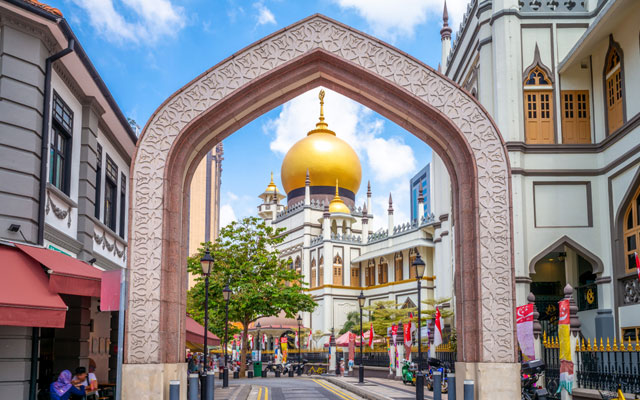
SingapoRediscovers will kick off at the end of July, with precinct tours of Little India and Sentosa to be marketed as Singapoliday destinations. SDC has curated new back-of-house tours and staycation packages featuring itineraries themed around island life, heritage discovery, wellness escape and adventure. More precincts will be added to the roster in the coming months.
Accompanying these offerings will be curated tours conducted by the Federation of Merchants’ Associations, Singapore; Heartland Enterprise Centre Singapore; and the Society of Tourist Guides (Singapore). These will be complemented by a Jalan Jalan: Your Good Hoods Guide initiative, a series of guidebooks promoting neighbourhood destinations.
To stimulate local retail and attraction spend, businesses and associations such as the Singapore Retailers Association, Singapore Hotel Association, Association of Singapore Attractions and Chinatown Business Association will rally their members to offer promotions on the VisitSingapore app and the newly launched SingapoRediscovers microsite.
Some 40 businesses have already come on board to offer about 80 promotions, including attractions, tours, and hotel stays. These include cross-sector tie-ups between hotels and tour operators, such as lyf Funan Singapore with Tribe Tours, and Fullerton Hotel with Singapore Sidecars.

Aviation giants Changi Airport Group (CAG) and Singapore Airlines (SIA) have also entered agreements with STB on joint marketing campaigns for business revival. CAG will expand its portfolio of local brands on iShopChangi from next month, while SIA will soon offer Design Orchard brands on KrisShop.
Down the line in September, STB and Expedia will embark on a global marketing partnership, extending offers to locals and eventually to overseas visitors. The board is also teaming up with Klook to create engaging content, and develop new and interesting products and promotions for locals.
Trip.com also recently hosted a live webcast promoting flexible hotel reservations at discounted rates to Singapore’s staycation segment. STB confirmed that the OTA will collaborate on other initiatives for overseas visitors in the future.
Lynette Pang, STB assistant CEO of the marketing group, said: “According to UNWTO, in 2018, Singaporeans spent more than S$34 billion on overseas travel. Thus, the challenge for us is whether we can redirect some of that spending towards our local tourism and lifestyle businesses.”
SingapoRediscovers is the country’s largest ever campaign to drive local demand. It stems from the work of the Tourism Recovery Action Taskforce, which was launched in February 2020 in response to the Covid-19 pandemic.
Similar efforts to push domestic consumption have also been rolled out by STB post-crises in the past, namely, the Step Out Singapore programme after 2003’s SARS, and the BOOST (Building on Opportunities to Strengthen Tourism) initiative following the 2009 global financial crisis.
Connexus takes over Jardine’s travel management business
After 47 years, Hong Kong-based travel management company Jardine Travel will cease operations on August 31, 2020.
A spokesperson for Jardine Travel told TTG Asia that despite its best efforts, the company faced “significant challenges in maintaining a competitive edge alongside multi-location travel agencies”.

Since July 1, 2020, Jardine’s operations has been taken over by Connexus Travel (formerly Swire Travel). Jardine has assured clients, business partners and employees that they are working towards a “smooth transition” which is expected to be completed by August 31.
Connexus Travel’s CEO Gloria Slethaug said that her company is “delighted” to take up Jardine’s travel management business, and promised that it will be a “compelling proposition” for clients. This move also demonstrates Connexus’ confidence in the market as a travel management company committed to “long-term development”.
Slethaug added that technology and digitisation have transformed the travel industry into a highly specialised business sector in recent years.
An industry veteran, who declined to be named, opined that if Jardine Travel had changed its business model earlier, it might have survived.
He elaborated: “When (Jardine Travel’s) general manager retired two years ago, her successor brought on board staff with a background in airlines, GDS, and corporate travel. However, the company remained traditional, and did not expand its distribution platform, or diversified its business for the last 15 years.”
He pointed out that Jardine could have survived if the company had upgraded their IT capabilities, enhanced tools for B2C and B2B partnerships, as well as upskill employees.


Marriott International has launched limited-time staycation offers at select properties across Singapore.
The ongoing 14-day limited-time offer for its Reserve Now, Indulge Later staycation packages will end on August 4, 2020, offering guests up to 20 per cent savings on all suites and 10 per cent off for standard room bookings, for stays until June 30, 2021.
Three curated, themed packages – Romantic Escapade, Dining, Family Fun – are available under the offer at participating hotels and resorts. The Romantic Escapade package caters to couples, the Dining package offers handcrafted dining experiences, while the Family Fun package comes with a ‘kids eat free’ inclusion.
Guests can choose from an array of bespoke packages at participating hotels: The St. Regis Singapore, W Singapore-Sentosa Cove, The Ritz-Carlton, Millenia Singapore, and Singapore Marriott Tang Plaza Hotel.
At The St. Regis Singapore, guests can enjoy a S$100 (US$72) daily credit for use on dining and spa experiences, an epicurean breakfast for two adults and two children (up to 12 years of age), and a bottle of champagne.
Those looking for a family staycation can check into The Ritz-Carlton, Millenia Singapore. The Ritz Kids Night Safari seeks to cultivate the spirit of the great outdoors in young children, and cater to their thirst for new adventures. This immersive programme will take the little ones on an in-room camping experience, with a sleeping tent pitched in the room, and equipped with a night lamp, an edible turndown amenity, a Ritz-Carlton lion beanie and an activity book.
For Singapore Marriott Tang Plaza Hotel, its staycation package includes a 24-hour stay with check-in and check-out flexibility, S$70 dining credit, complimentary breakfast for 2 children (below 12), free parking, English high tea with champagne, and more.