TTG Asia
Asia/Singapore Thursday, 1st January 2026
Page 949

Malaysia eyes green zone regions for travel bubble plan

0

Malaysia is exploring the possibility of setting up travel bubbles with green status destinations, as opposed to countries, in efforts to spur economic growth in the wake of the Covid-19 pandemic.

Minister of tourism, arts and culture, Nancy Shukri, said the travel bubbles may not involve Malaysia as a whole but only select green zones within the country with other foreign destinations that are also green zones.

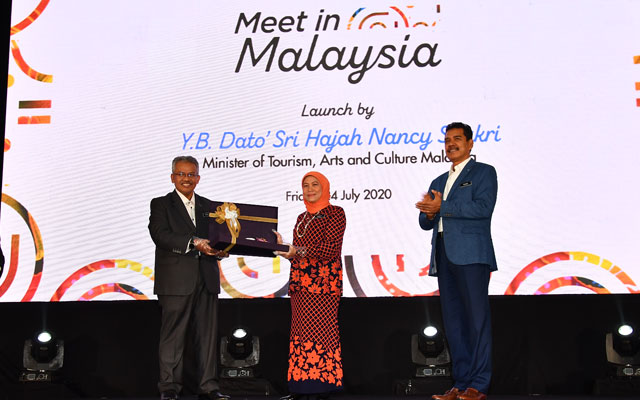
Nancy Shukri (middle) flanked by Ministry of Tourism, Arts and Culture’s Noor Zari Hamat (left) and Malaysia Convention & Exhibition Bureau’s Abdul Khani Daud at the Meet in Malaysia campaign launch

She added that the Ministry of Tourism, Arts and Culture will have its first meeting with the Ministry of Foreign Affairs on July 27 to identify the green zones in foreign destinations that could collaborate with Malaysia on the proposed travel bubbles.

“The proposal to hold a travel bubble with these countries is based on the potential of the market to contribute to overall economic growth, including trade activities, business, business travellers and the influx of foreign tourists, as well as significant short-term tourism income contribution to the country,” she said at a press conference on Friday, after launching the Meet in Malaysia campaign.

During the campaign launch, Nancy also shared that the ministry is looking at the possibility of creating travel bubbles with green zone regions in Australia, Brunei, China, Japan, New Zealand, South Korea, Singapore, Thailand, Cambodia and Vietnam.

She added: “Its implementation is subject to bilateral discussions with paramount consideration on the aspects of health, immigration, data tracking and continuous monitoring by respective agencies concerned in both countries.”

Nancy stressed that nothing had been finalised and no timeline has been determined for the creation of these travel bubbles.

Dynasty Travel bakes up a storm for charity drive

0

The pandemic may have dealt the travel industry a massive blow, but Singapore-based tour agency Dynasty Travel is forging ahead with its annual charity drive to aid needful residents of Singapore.

It has launched Food from the Heart – Project Belanja, an initiative that enables beneficiaries to redeem freshly cooked meals at designated food stalls across the island. These include hawker stalls and F&B owners in residential areas such as Tampines, Toa Payoh and Mountbatten, with both halal and non-halal food options.

Dynasty Travel’s Food from the Heart – Project Belanja aims to raise funds for the needy in Singapore 

Aiming to raise S$10,000 (US$7,240) towards this cause, staff of Dynasty Travel have been kept busy baking, cooking and delivering meals, as well as designing and broadcasting digital content for the campaign.

“Our director of MICE will be cooking XO prosperity glutinous rice, our senior manager of product development will be baking chocolate cake and monster cookies, and our senior manager in marketing is baking cheese cake and cinnamon rolls. For myself, I will be baking the butter banana raisins cake,” shared Alicia Seah, Dynasty Travel’s director, public relations & communications.

She added: “Despite the difficulties and challenges, we are forging ahead with our charity drive as it is even more important that we continue our CSR journey this year to help those who have been hit hard by the current crisis.”

To prepare for the project, staff involved in food preparation attended and passed the Workforce Skills Qualification food safety and hygiene course, approved by the National Environment Agency.

M&C Hotels’ CEO quits after four months

0
Clarence Tan, senior vice president development AMEA, InterContinental Hotels Group (IHG)

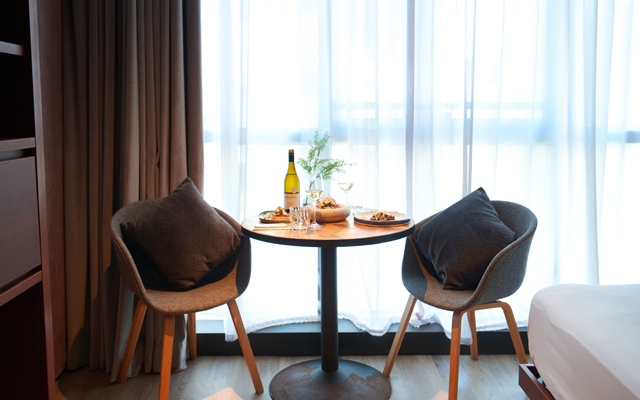
Ovolo’s Restaurant in Room lands in Hong Kong

0

Restarting the throttle of international travel

0

Since 2013, air passenger volumes had risen steadily every year, according to figures from the International Air Transport Association (IATA).

Everything was looking rosy for the travel industry even in Asia-Pacific, where airlines’ full-year traffic increased 4.5 per cent in 2019. Data aggregator Statista valued the global aviation industry at US$828 billion in the same year and it was projected to be around US$850 billion in 2020. Then came 2020, with the entire travel industry going into a standstill as the coronavirus pandemic hit, crippling the world economy in a way nobody could have imagined.

With countries imposing entry restrictions to limit the spread of Covid-19, global travel ground to a halt in the first half of 2020. Early pandemic period saw stranded travellers and overseas nationals desperate to be repatriated home; and for many, Qatar Airways was their only lifeline to fly home as we were one of the very few airlines that remained in operation throughout the Covid-19 pandemic.

While most airlines stopped flying, Qatar Airways was still operating to over 30 global destinations at the peak of the pandemic with the mission to bring people home safely. Since February, we have helped close to two million people get home to their loved ones, working closely with government and embassies worldwide to organise over 300 chartered repatriation flights. Our flights clocked over 1.3 billion revenue passenger kilometers in April. Data from IATA indicates that this accounted for 17.8 per cent of the market that month, triple that of the next placed airline.

As the world is now slowly recovering from Covid-19, travel may no longer be restricted to those seeking passage home, with countries cautiously opening up and setting up travel bubbles with other nations.

After months of isolation, people will long to travel again, experience the world, and reunite with friends and family, while business travel will soon resume too. Here are some ways the aviation industry is restarting the throttle of international travel.

Safeguard health
Even when demand picks up, travel will not be like before – not until there is a viable Covid-19 treatment or vaccine. More than ever, health concerns are top of mind. Travellers need assurance that service providers have their well-being in mind. Having been the airline that operated throughout the pandemic period, Qatar Airways is now well-poised and experienced in providing the best hygiene practices and customer experience.

Qatar Airways first introduced PPE suits for our cabin crew back in May 2020. What was meant as a short-term solution has become a mainstay of our health and safety measures onboard. We have also recently introduced the hygiene kit which includes face shields for adults and kids, face mask and sanitiser for all passengers.

Health concerns also go beyond air travel. From the moment they leave home till when they reach their accommodation, and even while touring the destination, travellers want to feel safe. Collaboration across the travel ecosystem could address this by creating a door-to-door passage serviced by trusted players. Such a move boosts the travel industry in general – we can all afford more allies in these trying times.

Sustainable operation with fleet optimisation
Agile airlines are also quick to switch to smaller aircraft to keep the operational cost lower from the dwindling passenger traffic. Once the reigning king in the air with the biggest passenger capacity, many Airbus A380 aircraft worldwide have been grounded indefinitely.

Operating the gargantuan A380 involves significantly higher costs with higher volume of jet fuel needed as well as more cabin crew. With the drastic drop in travel demand, operating larger aircraft types would be detrimental to profit margins. Qatar Airways has since grounded all its 10 A380s, switching mainly to its fleet of 49 Airbus A350 and 30 Boeing B787 Dreamliners.

With the current market condition, profitability and fuel efficiency are even more paramount as airlines strive to recover from the impact of Covid-19. Switching to newer and more fuel efficient aircraft types with smaller capacity such as the Airbus A350 and Boeing 787 Dreamliner would not only reduce operating cost, but also greatly benefit the environment.

Benchmark figures identified that Qatar Airways’ fleet of A350 aircraft consumed 20 tonnes of CO2 less per block hour on certain routes, as compared to the A380. Perhaps with more airlines looking towards a more sustainable operation, the positive environmental impact could be the silver lining to the Covid-19 pandemic.

Flexible, customer-centric booking conditions
Covid-19 has created an unprecedented crisis for the aviation industry with global travel coming to a halt since earlier this year. Airlines globally are under immense financial duress, and many smaller airlines have unfortunately ceased operation permanently after caving into financial pressures.

As countries are gradually coming out of lockdown and travel gradually restarting, airlines are also ramping up to push out travel promotions. With the global economy in a slump and travellers becoming even more price-sensitive, broad-scale discounting might look like a good antidote to stimulate travel and boost ticket sales. However, it is crucial that airlines consider the long-term sustainability and financial viability of such strategy.

Instead, other means of adding value may be more viable, such as offering flexible booking policies, considering the fluidity of the current situation.

Qatar Airways was one of the first airlines to respond to the crisis by offering its customers greater flexibility on bookings. In early March, we already offered flexibility for passengers to change their dates or exchange their ticket for a travel voucher + 10 per cent of the ticket value. As the crisis has prolonged, it has altered the dates by which this offer expires.

To further adapt to the flexibility needed in the ever-changing pandemic climate, Qatar Airways has also recently announced that we will allow unlimited date changes, where passengers can change their destination as often as they need, if it is within 5,000 miles of the original one. The airline will not charge any fare differences for travel completed before December 31, 2020. Also, all tickets booked for travel up to December 31, 2020 will be valid for two years from the date of issuance.

In addition, Qatar Airways’ passengers can opt to swap their ticket for “Qmiles” to use however they like, or exchange it for a travel voucher with 10 per cent additional value, also valid for two years. Further options include refunding tickets to the original form of payment, or in the form of a travel voucher, if the flights get cancelled.

Therefore, instead of going in the unsustainable path of only price reductions, airlines should consider policies that enable customers to travel with confidence. Astute fleet deployment and flexible, customer-centric policies would be the way for airlines to contribute to rebuilding the travel industry.

As entry restrictions around the world begin to ease, travel will steadily return. Many analysts have estimated it will take three to four years for international travel to return to the same level as 2019, but till then, the aviation industry can do what it does best – inspire and encourage travel. After all, the human curiosity about the world we live in is insatiable. Let’s champion their return to the world.


Vietnam’s Danang bans tourists after two Covid cases in months

0

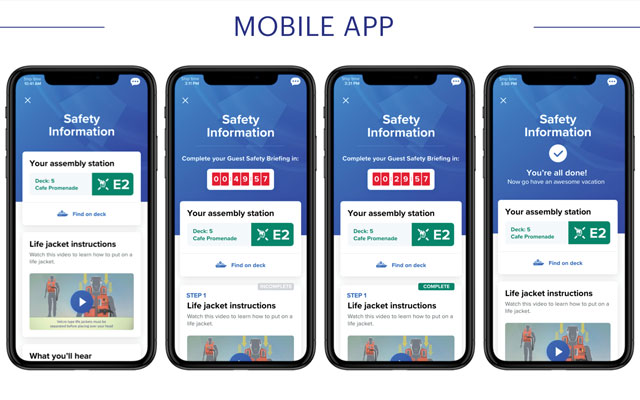
Royal Caribbean debuts digital version of safety drill

0

Millennials set to travel first post-Covid

0

Indonesia gains favour with Russian tourists

0
Pura Besakih temple, Bali, Indonesia

Indonesia’s travel trade is seeing strong outbound demand from Russian travellers, but lack of clarity around the reopening of borders to international tourists is impeding efforts to sell the destination.

Asekan Djoyo Dono, director of Asia Collection Tour, said that his company have began accepting bookings from Russia to Bali. “Demand has picked up. We even have groups from Russia to handle in October,” he added.

Russian travellers keen to visit Indonesia once travel bans lift; Besakih Temple in Bali, Indonesia pictured

As well, Pegasus Indonesia Travel has also seen a slight uptick in interest from the Russian market this month. Its president director, Jimmy Saputra, said their partners in Russia had began asking when Bali would reopen.

Jimmy elaborated: “Russian tourists are ready to travel and our wholesaler partner also wants to sell Bali soon. But they are hesitant to put Bali on the list because there is no clarity around when the border will be reopened by the central government.”

In a similar vein, Paul Edmundus Tallo, chairman of the Indonesia Inbound Tour Operators Association, said that most operators are ready to restart, with safety and cleanliness protocols firmly in place, and are awaiting authorities to lift the international travel ban.

He said: “(We need) certainty over when the border is going to reopen because we have to start selling. The government needs to at least provide a clear timeline, so we can start making business plans.”

Bali’s governor announced on July 5 that the destination will be ready to reopen to international travellers from September 11, but at press time, the trade is still waiting for the central government to announce the border reopening dates and policies to start sales.

In the meantime, Paul urged the travel trade to create new tourism products to attract more Russian tourists.

“They are no longer just looking for a beach. Nowadays, Russian travellers want to explore new places. In fact, they are now looking for adventures like an overland trip in Flores, with trekking to Mount Kelimutu,” Paul shared.

Anna Prikhodko, manager of Visit Indonesia Tourism Officer (VITO) Russia, said that Russian tourists are attracted to Indonesia for its nature, friendly locals, historical and culture heritage, as well as lower living costs as compared to the US and Europe.

Although around 80 per cent of Russian tourists who travel to Indonesia opt to visit Bali, according to Prikhodko, they have started looking for other destinations in the archipelago to explore.

“In recent years, Russian tourists have begun to travel to Lombok, Yogyakarta, Flores, North Sumatra, Batam and Bintan,” said Anna.

Asekan agreed, saying he saw demand from Russians wanting to visit Papua increase to eight per cent before the pandemic hit. Besides Papua, Russian tourists had also begun combining Bali with Sumba and Labuan Bajo, Flores on their trip. “They were looking for more quiet and exotic destinations than the crowded Bali,” he added.

Jimmy, however, saw the lack of flight connectivity posing a challenge to boosting traffic from Russia. Currently, only Rossiya Airlines serves a direct flight from Moscow to Bali, although the market was a significant market contributor to the country.

Statistics showed that in 2019, there were 158,943 Russian tourists to Indonesia, an increase of 26.4 per cent year-on-year. However, at the onset of the coronavirus, arrivals for the months of January and February 2020 dropped to 26,869.

He suggested that apart from Bali, the government should work to attract airlines to use different entry points such as Medan.

Jimmy added: “Imagine if tourists were to enter from Medan, then proceed down to the Riau Islands, before going to Java, and finally, Bali. We will have a massive variety of tour packages to offer (along that route), and it’s a greater way to attract Russian tourists.”

Penang pulls out all stops to woo domestic tourists

0
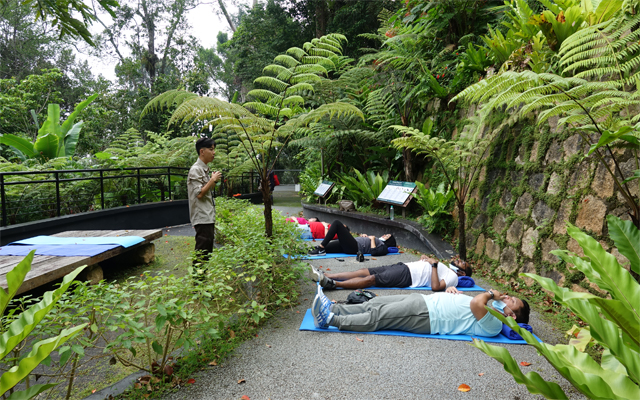
Forest bathing at The Habitat Penang Hill

Penang’s tourism scene is springing back to life, in part thanks to efforts by the state government and tourism industry partners to boost domestic tourism while the border remains closed to foreign tourists.

At The Habitat Penang Hill, an eco-tourism hotspot in Penang, visitor numbers have bounced back to “near normal”, with more than 90 per cent visitorship comprising locals and expatriates living and working in Malaysia, shared its managing director Allen Tan.

Forest bathing is among The Habitat Penang Hill’s new offerings introduced to help guests destress

The Habitat Penang Hill has also recently introduced several new offerings, including Forest Bathing, a guided three-hour programme by a resident naturalist which helps participants destress and reconnect with nature by partaking in a series of breathing exercises in the rainforest.

Tan shared the programme was popular and timely with working people and those who had been cooped up at home for almost three months during the movement control order (MCO) period.

Amid its closure during the MCO, The Habitat Penang Hill conducted free virtual tours to stay top of mind. Down the road, Tan has in mind to create more virtual tours and to monetise them. Plans to set up an online retail store is underway too. He shared: “We intend to Covid-proof our business in the event of any unforeseen, future lockdowns that might happen.”

Kampung Agong, located on the mainland in Seberang Perai, is a community-based tourist attraction developed by the villagers themselves within their hometown. The place is packed with photo opportunities, such as giant swings resembling bird’s nests and a faux grand piano seated amidst miles of paddy fields. Its photogenic landscape is what drives visitors from all across the country here, shared its spokesperson, Nur Adlini Muhamad Khidir.

Instagrammable spots like this giant bird’s nest structure make up Kampung Agong’s magnetic pull

The attraction draws more than 500 visitors on weekends, made up mainly of families and friend groups coming from all over the peninsular and Penang Island by car.

The villagers had recently built a trio of village houses to accommodate guests on overnight stays to give them a taste of village living – and locals have been so taken with the idea that forward bookings are full on all weekends through end-September, shared Nur Adlini.

Another new attraction in Penang that has gained traction among locals is The Penang International Container Art Festival which runs till year-end.

Here, five shipping container art installations – the handiwork of local and foreign artists – are spread across George Town, Jelutong, and Balik Pulau on the island, as well as Butterworth and Batu Kawan on the mainland.

Malaysian Harmony Tour & Travel product planner, May Chiong, shared that the company has seen strong demand for Penang out of Kuala Lumpur, especially from the family segment looking for short weekend getaways, and that beach stays were selling well.

She said millennials travelling with like-minded friends from Kuala Lumpur were also attracted to the destination for short breaks as there were many Instagrammable-worthy places of interest to them.

Chiong was one of 19 outbound tour operators from the Klang Valley recently hosted by Penang Global Tourism (PGT) and Penang state exco for tourism development, arts, culture and heritage on a four-day familiarisation trip to Penang aimed at showcasing the state’s offerings.

PGT CEO, Ooi Chok Yan, said: “Many relate Penang to good food and its UNESCO George Town heritage status, but we wanted to showcase to agents that there is more to Penang than just that.”

Yeoh Soon Hin, state tourism, arts, culture and heritage committee chairman, shared: “Through this familiarisation trip, we hope to instil the perception that even local destinations can be as competitive as overseas ones, and that you do not have to go far to have a holiday.”

Last month, PGT also launched Penang Travel Deals, featuring deals on hotels, attractions and tour packages, as part of efforts to woo Malaysians to the state and help the local economy recover.