
How has the travel and tourism industry’s use of analytical data evolved over the last decade?
When we started speaking with our prospects over 10 years ago – and specifically DMOs – most of them did not have a ‘data’ budget. Nowadays, every promotion board or Ministry of Tourism’s destination strategy is not only driven by data but also staffed with people capable of getting that data to speak, to provide the right information to C-suite officers, stakeholders and marketers.
In fact, management personnel require that information to do their job these days.
I remember a tourism minister in Europe explaining how information is power, and how our data had changed the relationship the minister had with the rest of the government. By using ForwardKeys’ data, they finally had live information, rather than estimated monthly reports arriving with a one-month delay. In this case, there had been geopolitical tensions between this country and another and as such, they had never been able to measure in real-time, the full-scale impact of geopolitical tensions on (tourism) demand for the destination. With our data, they finally could.
Data is useful only when one knows how to interpret it and act on it. Do you think travel and tourism players know enough of the scope of traveller intelligence available and what they can do with it?
That’s still a work in progress, but we have seen most of our customers getting organised around the capability to make data-based decisions by employing the right data, the right tool and the right staff.
Management now needs to understand what’s happening before making decisions.
However, I’d argue that it is also a two-way street; it is also our responsibility to provide the right information to support the right decision. It’s our objective to remove the complexity from masses of data and make sure that we provide the two to three figures that our customer needs at a specific point in time. This information might come from the aggregation and the processing of half a dozen of different datasets, but that should not be the concern of our customers.
What is your most prized case study on how a travel and tourism organisation was able to revolutionise their business with the foresight offered by ForwardKeys analytics?
Tough question as we have so many good examples!
One that stands out is the Japan National Tourism Office (JNTO). They have been increasing access to our data, and now have 30 logins so that their overseas offices can get onto our platform to study their markets. Each of the overseas offices can now analyse how visitors of (their market) go to Japan versus other competing destinations. These overseas offices have the responsibility to plan the promotional strategy for JNTO in each market.
I don’t think they had nearly that much insight to such information before JNTO engaged ForwardKeys. Now, each market manager has a much better real-time understanding of what is happening within his/her market. No more working with government statistics on the previous year and that only gives information about Japan.
While we often reference past data to make forward projections, the unusual state of business in 2020 must have made it very difficult for companies to apply the same technique. Furthermore, travel conditions could change from month to month. How are ForwardKeys researchers dealing with such challenges to help travel and tourism industry clients get a better forward vision to support their planning?
Yes, (the pandemic) has made a big impact on the industry and our team. We had to reinvent some of our key datasets throughout this period to compensate for side effects brought on by the pandemic, and to also adjust to the new information our customers now need. It’s been a lot of work!
We faced the challenge of travellers making reservations but sometimes had their flight cancelled and their tickets left in limbo. We had to adjust the way we process data to reflect these quick changes.
On top of this, seat capacity data often was disconnected from reality. Airlines wanted to schedule lots of flights to survive but the restrictions were not allowing them to fly them. We had to check which of these flights were actually taking off!
And then, obviously, comes the forward-looking part of the job. How do you build forecasts without historical data? It’s difficult!! So, we spent part of the year re-inventing our algorithm or even combining different datasets to get a better view of how the trends are shaping up. We also had to create our own Travel Restriction Database because the key driver for the current market (is not) offer or demand – it’s what the government allows potential travellers to do.
We found ourselves inventing new metrics to measure recovery. It’s not relevant anymore to check on year-on-year information. It’s about processing multiple datasets in a sophisticated way to create indexes of recovery, for example.
Sounds like an adventure!
It’s been a busy year, and we have made all the efforts we could to re-invent ourselves and bring to our customers the new information they need. We are a happy and harmonious team, and every member of ForwardKeys made all this possible.
What was the most sought-after data in 2020 and so far this year? How is that different from BC, you know, Before Covid?
Today, our clients are interested in identifying where new business opportunities exist – because they do exist. Everyone is scrutinising the horizon to try to identify true early indications of recovery by location and type of travel market.
Has ForwardKeys brought in new services or client engagements during the height of the pandemic? Can you tell me about them and why are they needed?
Many customers in 2020 decided that the year was the right time to dig deeper into how they can best use data to make smarter business decisions. Years of crisis are always times for companies to reinvent themselves. We worked long hours to provide the market the data and the information that they wanted.
We launched the ForwardKeys Chinese Shopper Tracker to allow our customers to understand how the Chinese, who were not travelling abroad anymore, are now spending their money domestically and specifically in duty-free shops in local destinations such as Hainan.
We re-invented our forecasts in Traveller Statistics, with short-term forecasts over six months and long-term ones which show a 10-year worldwide plan.
As if all these were not enough, we also released our new solution for DMOs which provides selected, actionable information for the main stakeholders of a destination, from management to marketing and business development.
As you can see, even in a crisis your business shouldn’t stop evolving and developing new ideas. We clearly never stop thinking about how we can improve and offer better options for our clients.
What’s in the pipeline for ForwardKeys this year and next? Will you be expanding the team to support all the fresh things you’ve been churning out?
Every year we have been consolidating our team and this year we’ll be hiring at least 15 talents to build new and better products to remain even more relevant and supportive to our existing customers.
We have a long list of products and features that we hope to release to the market in different segment areas. Some are additional features that are required to understand what the data says, such as our Travel Restriction Database to identify how states open or close access to their market, and this is a key driver for recovery. Others will be brand new products and it’s too early to speak about those. You will just need to watch this space more closely.
















Asia-Pacific’s hospitality sector is predicted to take on a V-shaped recovery, with a return to 2019 levels expected in 2023, according to Colliers International’s recently-released Hotel Insights 1Q2021 report.
Govinda Singh, executive director, head of hotels & leisure, Asia, commented: “The global economic outlook is expected to improve by 2H2021, with travel to rebound over the next three years to at least pre-Covid-19 levels. We anticipate some caution in the near term as borders reopen and the mechanism to facilitate mass travel is formalised between governments; nevertheless, we are of the opinion that travel will return.
“There will be changes and more emphasis on factors such as hygiene, but our inherent wanderlust, relatively cheap cost of travel and pent-up demand will drive our prediction of a V-shaped recovery for the sector over the next three to four years.”
While Melbourne hotels are expected to benefit from domestic demand in the near term, new supply may dampen performance of existing properties.
In 2019, Melbourne hotels performed at high levels, recording year-round occupancy levels of 84.2 per cent. In 2020, however, in line with the rest of Australia, performance was affected by Covid-19, with hotels operating at half the occupancy levels of the previous year’s figures and demand predominantly from those undertaking the mandatory quarantine period in hotels and a small proportion of intrastate leisure demand.
The extent of new supply to enter the market in 2021 is anticipated to affect existing hotels’ ability to recover. Melbourne city currently has the largest hotel development pipeline in Australia, with 19 hotels currently under construction, totalling over 4,800 new rooms (11 hotels of which are due to open in 2021). This is in a current market of 130 hotels with approximately 19,600 rooms. Hotel projects under construction that are scheduled to proceed include the Ritz Carlton, Shangri-La and Next Melbourne.
Gus Moors, head of hotels, valuation & advisory services, Australia, commented: “Melbourne has a great track record of absorbing supply in the past, and its strong event calendar, excellent domestic demand profile and extensive infrastructure projects position the city to emerge strongly as the economic recovery takes hold.”
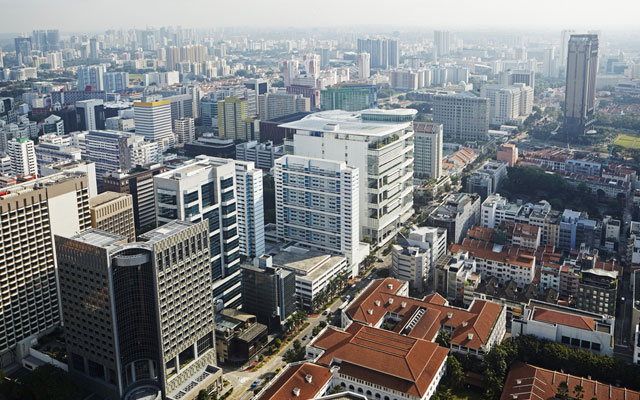
Singapore hotels are expected to remain attractive to investors, with the outlook remaining positive and pricing firm, buoyed by the resumption of MICE activities.
The Singapore government has been actively promoting various tourism initiatives that should drive visitation in 2021, including the business travel lane, which allows corporate and diplomatic travellers to skip quarantine on arrival, and the launch of the Air Travel Pass Program, which allows leisure tourists to apply for travel to Singapore without undergoing the 14-day quarantine period. In addition, the World Economic Forum recently announced its plan to host its annual meeting in Singapore in August 2021, which would be a boost to Singapore’s MICE and hospitality sector.
Colliers expects investment interest in Singapore hospitality assets to remain, underpinned by sound hotel fundamentals. Planned new attractions and infrastructure projects scheduled between 2021 and 2030 – including the expansion of the two integrated resorts and Great Southern Waterfront – bode well for future visitation and, combined with the relatively low level of new room supply anticipated over the near term, this should continue to underpin hotel fundamentals over the medium term. Hotel projects expected to proceed include Pullman Singapore, Banyan Tree Mandai, Artyzen Cuscaden, Mondrian Duxton Hill and Club Street.
While green lanes for business travel are slowly emerging, investors are still on the lookout for high-value quality assets, with significant pricing adjustments making listed entities prime targets for M&A opportunities.
The most liquid markets were South Korea, China, and Japan, while markets such as Singapore and Malaysia saw little investment sales during the quarter. With international travel restrictions in place, markets with large domestic investment bases continue to have an advantage during times of challenged cross-border investment, as Tokyo and Seoul maintain their top positions.
Colliers expects investment activity to gain pace in the coming months as investors move to take advantage of any opportunities that will emerge, although cautious sentiment and stricter underwriting remain key given the evolving Covid-19 situation, coupled with economic volatility and uncertainty.
The land-based casino industry was one of the most hard-hit sectors globally. Recovery in 2021 will vary across Asian destinations, although all should witness some recovery, with most from 3Q2021. Colliers expects Macau and Cambodia to lead the way, with Singapore, the Philippines and Vietnam lagging behind.
Gaming markets with high local visitation will lead the recovery. Premium mass will drive the recovery in Macau, whilst the VIP segment will lead Cambodia’s. As governments across the region grapple with the effects of Covid-19, many are turning to integrated resorts to generate revenue and employment, a trend that is expected to continue. Once not thinkable, even Thailand is considering development of a gaming sector.