

Yacht quarantine scheme to set sail in Thailand
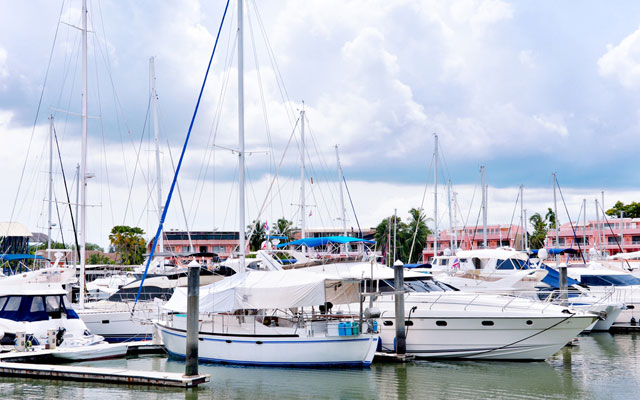
Thailand will soon launch its first Digital Yacht Quarantine project, designed to stimulate yacht tourism to Phuket and allow visitors to complete their 14-day quarantine requirement onboard their own yacht.
The initiative, announced by the Tourism Authority of Thailand (TAT), is led by Thailand’s Digital Economy Promotion Agency, together with Thai yachting organisations in Phuket, as well as key public and private sector technology providers.
The Digital Yacht Quarantine scheme will rely on smart watch health trackers using NB-IoT technology that will allow Thai medical officials to monitor the health of visitors up to 10km offshore. After arrival, visitors are to liaise with a representative from the Thai Yacht Business Association (TYBA), which will act as the coordinating agent between the Thai health authorities to arrange for Covid-19 RT-PCR testing.
After testing, visitors will then each be fitted with a smart watch health tracker, which must be worn at all times to measure the pulse, blood pressure, and body temperature. The information will be monitored in real time by relevant Thai health authorities via a dashboard at the Ao Po Pier. Both devises can also send out an emergency SOS signal if visitors need urgent medical assistance.
After the 14-day quarantine period is complete, all data will be analysed again before allowing visitors to embark and go ashore in Phuket.
Thailand first launched the yacht quarantine last October, with no Covid-19 infections detected since then. The expanded digital project is expected to attract more than 100 yachts and 300 to 500 visitors this year.
Long-stays to lead tourism’s post-Covid recovery

The tourism industry may see a rise in demand for long-stay vacations lasting more than a month when international travel resumes, especially among youth travellers, predicted experts at ITB Berlin NOW.
This comes as a result of pent-up travel demand, compounded with the need for extra procedures – such as vaccination and possible quarantine – that will likely be required for travel in the future.

Greg Richards, research advisor at World Youth Student and Educational (WYSE) Travel Confederation, said: “We’ve seen opportunities emerging in terms of long stays because, with people having to (undergo) quarantine, it doesn’t make sense to travel anywhere for a weekend anymore. Youth travel is one of the areas where long-stay travel is particularly important. The average length of a trip for someone who’s (travelling for) au pair, work experience or language learning is over 100 days.”
The promise of such long-term, “purposeful travel” jumpstarting travel again has rippled across the globe. Australia announced in February that the Covid-19 vaccine will be made available to international students, and countries such as Croatia and Greece are dangling digital nomad visas for remote workers itching to travel.
In Thailand, Sri Panwa Phuket completed its first Villa Quarantine pilot project on March 8, and 58 travellers are now free to embark on a one-month tour of the country. Based on this success, the project may soon be replicated across five provinces, including Phuket, Krabi and Chiang Mai.
Richards noted: “We’ve also seen youth accommodation providers profiting from this trend by offering long-stay packages. Now, you can get packages that are a month or more in many hostels. (These packages are) now increasingly based in private facilities as well rather than just dormitories, to facilitate social distancing.”
Home-sharing platforms are also looking to capitalise on the rising long-stay trend. Airbnb has adjusted its booking function to allow for a flexible range of dates, in anticipation of changing work arrangements and longer weekends, described Nathan Blecharczyk, Airbnb’s co-founder and chief strategy officer as well as chairman of Airbnb China.
As the vaccines bring about hope for the return of travel, WYSE predicted that travel agencies may see a resurgence as travellers seek assurance and safety in their holiday arrangements.
Richards explained: “Travel agents are positioning themselves to be advisors who can provide reassurance and knowledge, which is very important (when) travel advisories are shifting rapidly. Increasingly, travel agents are helping people understand travel restrictions, the terms and conditions that are attached to travel these days, insurance products, and how best to travel. From our previous research, this advice function that travel agents are able to offer often translates into sales as well.”
Phuket eyes domestic market to revive tourism sector
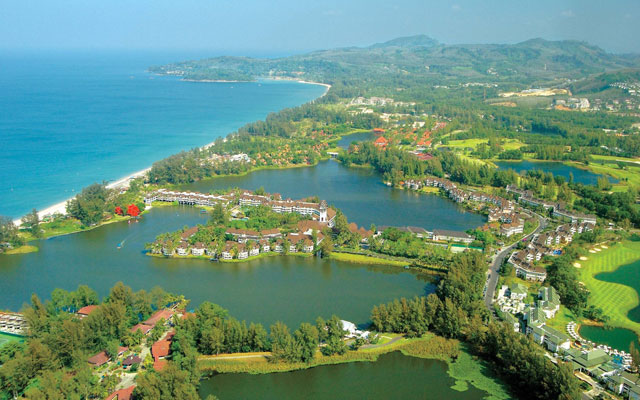
The government is partnering with the private sector to formulate new strategic plans to revive tourism in Phuket, with the aim of restoring the island back to the same level of vibrancy it had before the pandemic hit.
The scourge of Covid-19 has left Thailand’s most famous resort island languishing in its wake, recording its lowest economic activity in its 50-year history last year.
To date, despite reporting zero new Covid-19 cases for nearly three consecutive weeks, some 90 per cent of hotels on the island remain closed. The rest, with a combined room count of 10,000, are slashing rates up to 60-70 per cent.
Thanusak Phungdet, president of the Phuket Chamber of Commerce, said that the sector is likely to remain in dire straits through this year, judging from forward bookings for hotels, particularly from overseas markets.
As a first step to revitalising the island’s tourism sector, the private and public sector have teamed up to transform Phuket into the go-to destination for revellers celebrating the Songkran Festival, in hopes of superseding top destinations such as Bangkok, Chiang Mai, and Sukhothai.
Laguna Phuket is set to kick-start a 19-day festival, dubbed the Laguna Phuket Revive 555 Festival, to attract domestic tourists to celebrate the Songkran Festival in its complex and other places.
Taking place from March 31 to April 18, 2021, the festival will include a series of sports, music, cultural and community events over three weekends, including the Songkran holiday period.
“We strongly commit to making Phuket (into the) busy destination (it used to be) in the past. If we can achieve it this year, Phuket will become the first model for overcoming the crisis in the country,” Thanusak said.
The island is also poised to start receiving inbound arrivals, following the move by some airlines including Singapore Airlines to resume international direct flights to Phuket as well as from other major provinces.
Phuket deputy governor Pichet Panapong assured tourists that the island has safety and better infrastructures in place. He added that all types of accommodation, ranging from budget to luxury, are offering very attractive prices. In addition, the second series of Seafood Festival is scheduled to take place from March 19-21, 2021.
The island also unveiled a new online portal in the Thai language to draw people from other provinces to secure their rooms and packages at extremely low rates.
Full speed ahead
The first resort under the Patina Hotels & Resorts brand will soon open in the Maldives. Why launch the brand amid the pandemic?
Patina Maldives is a strategic development for Capella Hotel Group (CHG), therefore, a single moment in the history of the resort will not impact the long-term commercial success of this project.
The planned opening of Patina Maldives may turn out to be well-timed as we believe a strong recovery of luxury leisure travel is eminent in the months ahead. Over the past eight months, the Maldives has performed better than any other international resort destination, with over 140,000 tourists arriving just this year alone. This is largely due to the uniqueness of the Maldives, where resorts are based on private islands, providing guests seclusion and the ease to social distance.
Overall, how is Patina and Capella faring amid this pandemic and hospitality crisis?
Although 2020 was a year of significant challenges on all fronts, the team at CHG were able to move the company forward with our long-term strategy. We had solid financial results from the majority of our portfolio, impressive consumer recognition for our hotels and brand; the opening of our urban resort, Capella Bangkok; and additional signings in key destinations such as Kyoto, Osaka, Macau, and Chiang Mai.
Our teams at Capella Hotels and Resorts were nimble in re-engineering all revenue-generating activities to cater to our domestic markets, when it was clear that international travel would be significantly restricted. As a leisure-oriented hotel management group, it is always important for us to develop creative experiences to entertain our guests. This made our transition in catering to a domestic audience relatively seamless.
How has the group had to switch up its marketing strategies for the Patina brand launch in the wake of Covid-19?
We’ve moved further away from traditional marketing approaches and placed more focus on creative social media and digital marketing campaigns, leveraging our recently established affiliation with Design Hotels and utilising Zoom in order to host brand and resort familiarisations.
We have also decided to focus time and resources on the customer experience for Patina Maldives, with an emphasis on creative programming and overall operational excellence. As we all know, the most effective marketing tool is “word-of-mouth”.
Are future openings still continuing as planned?
Future openings for CHG continue to remain on track as our development partners take a long-term view of their investments.
For Patina Hotels and Resorts, we seek urban and resort destinations where we can be highly competitive in the lifestyle space. Markets that can appreciate the Patina brand’s strong emphasis on holistic sustainability, wellness, and experiences that cultivate creativity and social connections will be a key focus for us. We anticipate growing our Patina brand with a high degree of discipline, only selecting projects that can be unique in their respective destinations.
Although the majority of current hotel development activity is in Asia-Pacific (Ubud, Sanya and Osaka), we are consistently receiving inquiries for development opportunities in key international markets such as Americas, Europe and Middle East.
Now that vaccinations have begun across the globe, when do you think travel will return?
With international travel significantly restricted over the past 12 months, we have had great success with our domestic leisure guests. In particular, our properties in Singapore, Shanghai and Sanya have been enjoying robust demand from their local clientele; this trend has continued thus far in 2021.
With vaccination initiatives well underway across the globe, we believe international travel will begin to gain momentum in late 3Q2021. Luxury leisure travellers will be the first segment to venture to their preferred international destinations, as they have both the pent-up desire to travel and the financial capability to do so.
Fairfield by Marriott continues to grow footprint in Japan

As part of its large-scale brand expansion in Japan, Fairfield by Marriott is slated to open six hotels across four prefectures by August 2021.
Of the six hotels, the 72-key Fairfield by Marriott Mie Odai opened its doors on March 9. The other properties are: Fairfield by Marriott Kyoto Minamiyamashiro (50 rooms, planned opening March 12), Fairfield by Marriott Tochigi Nikko (91 rooms, March 22), Fairfield by Marriott Wakayama Kushimoto (90 rooms, April 14), Fairfield by Marriott Wakayama Susami (90 rooms, June 9), and Fairfield by Marriott Gifu Takayama Shokawa (64 rooms, summer 2021).

The planned openings are part of the brand’s Michi-no-eki project, bringing hotels to key locations near roadside rest stations in Japan, which are situated close to national parks and UNESCO World Heritage Sites.
The latest signing builds on Marriott’s partnership with Japanese real estate developer, Sekisui House, for the Michi-no-Eki project. Last October, both parties signed an agreement to open 11 new Fairfield by Marriott hotels across five Japanese prefectures by late 2022.
New hotels: Pullman Dubai Downtown, Shama Yalong Bay Sanya, and more
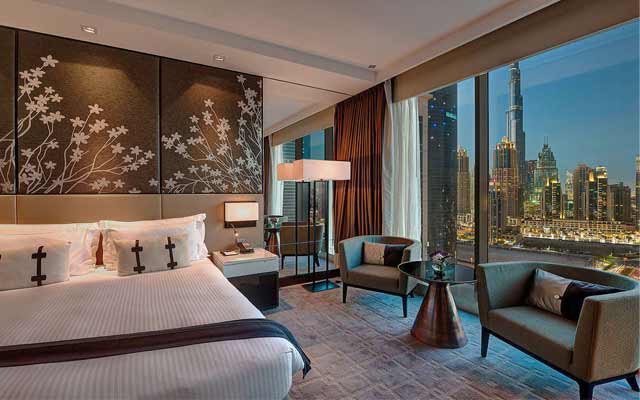
Pullman Dubai Downtown, UAE
Accor has partnered with Abu Dhabi-based hospitality company Twenty14 Holdings to open a new Pullman in Dubai. Located in Business Bay, the hotel offers views of the Dubai Canal, the Dubai Skyline and the iconic Burj Khalifa. Business Bay is near Dubai International Financial Center, as well as the Dubai International Convention & Exhibition centre. The hotel features 353 rooms and suites, as well as a ballroom, two meeting rooms, a private boardroom, a club lounge, a spa, fitness facilities with sauna and steam rooms, a squash court, a lap pool, a children’s pool, an outdoor Jacuzzi, alongside six in-development F&B venues.

Shama Yalong Bay Sanya, China
ONYX Hospitality Group has signed a management agreement with Hainan Sunup Group Investment to launch the first-ever Shama resort. Shama Yalong Bay Sanya is not only the newest flagship of Shama, but also a landmark for Sanya – a popular holiday destination in Hainan, China. Situated on the coastal area of the Yalong Bay Tourist Resort District, the hotel features 285 guestrooms and suites all featuring a fully-equipped kitchen. Amenities include an all-day dining restaurant, flexible meeting and relaxation space, a fitness centre and an outdoor swimming pool.

Classic Grande Imphal, India
Radisson Individuals has debuted in India with the opening of Classic Grande Imphal, a member of Radisson Individuals. Overlooking the majestic Baruni Twin Hills and ridges, Classic Grande Imphal, a member of Radisson Individuals features 171 rooms. The hotel is built in the commercial hub of Imphal at Chingmeirong and is just 9km away from Bir Tikendrajit International Airport. Spread over 5,016m2, the hotel features rooms across Superior, Deluxe, Suite and Presidential Suite categories; two banquet halls with capacity of 100 to 250 pax; and a meeting room. Dining options include Aroma, a multi-cuisine restaurant; Panorama, serving grills and kebabs; and coffee lounge Atrium. The hotel also features a spa, fitness centre and swimming pool.

Courtyard by Marriott Brisbane South Bank, Australia
Courtyard by Marriott has opened its first hotel in Brisbane, Australia. Located in the South Brisbane business district, the Courtyard by Marriott Brisbane South Bank boasts 134 guestrooms including 24 suites. Each suite features a private walkout balcony, galley style kitchenette with dishwasher, microwave, full-size fridge, and generous ensuites mostly with Brisbane river views looking across the lush South Bank parklands or along Kangaroo Point cliffs. All guestrooms are equipped with flat-screen televisions, a work desk and high-speed internet access. The hotel houses an all-day dining restaurant, Café63, which offers locally sourced produce and authentic Australian cuisine. Additional leisure facilities include a 24-hour fitness centre and an indoor heated pool. There is also a flexible meeting and event space featuring high ceiling, natural daylight and an outdoor area that overlooks the Brisbane and South Bank parklands.
Qatar’s first Chedi flag to fly in Doha

GHM is set to open a 91-key luxury resort at Katara Cultural Village in Qatar’s capital city, Doha.
Expected to open in July 2022, the resort will comprise of 59 rooms and suites as well as 32 chalets and villas.

Developed by the Qatari real estate consortium Triple A, in partnership with Katara Cultural Village, The Chedi Katara Hotel & Resort, Doha, Qatar will occupy a beachfront setting within the 100ha Katara Cultural Village district that includes theatres, concert halls, exhibition galleries, mosques, restaurants, shops, a park and an open amphitheatre.
The new Chedi’s principal hotel building will house a lobby lounge with 180-degree views of the sea, a spa and fitness facility, and rooms and suites with terraces and views over the Arabian Gulf and Doha skyline. The 32 villas dotting the landscaped gardens in the Katara Hills range from one to five bedrooms, all with private gardens and swimming pools.
F&B offerings will include an all-day dining venue with live cooking stations, an exclusive cigar lounge, and the Chedi Lounge. On the beachfront promenade, a long swimming pool accents the principal resort building while a second infinity pool offers a relaxing environment for guests to enjoy a variety of snacks and fresh juices at the stand-alone Beach Club.
Qatar National Tourism Council celebrates birth of baby camels

To mark the end of this year’s camel calving season, which runs from October to February, Qatar National Tourism Council has released photos of some of the country’s cutest new arrivals.
Camels have graced the Qatari deserts for centuries, having been introduced to the country by the nomadic Bedouin tribes, and are an important part of Qatar’s culture and heritage.
The animals can be spotted in large herds in the desert around Khor Al Adaid, also known as The Inland Sea, which is a tourist attraction in Qatar.
For active holidaymakers wanting to visit Qatar’s camels when borders reopen, there are many opportunities to sit astride the animals with Q-Explorer Tourism or 365 Adventures. Culture enthusiasts can get a taste of the nomadic life of the Bedouin tribes through a camel tour of Mesaieed, while those looking for a more luxurious experience can spend the night glamping under the stars following a desert camel ride.
JW Marriott Hotel Hong Kong welcomes new GM
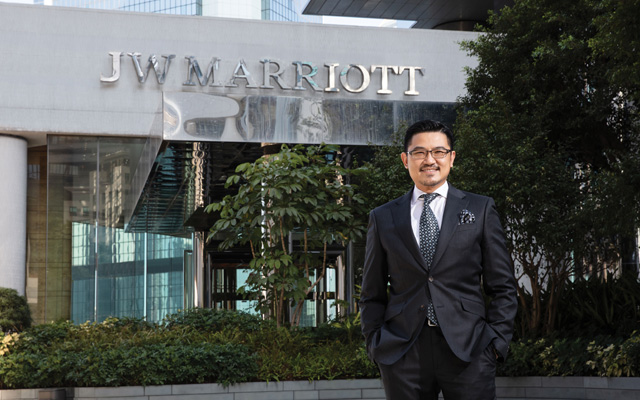
JW Marriott Hotel Hong Kong, the flagship hotel of the JW Marriott brand in Asia Pacific, has appointed GP Yeow as its new general manager.
A seasoned hotelier with almost 30 years of experience, Yeow began his hospitality career in Perth Australia, and worked in both F&B as well as rooms divisions before moving up the ranks to become hotel manager.
With his extensive operational experience in Australia, Malaysia and China, the Malaysian was appointed as area director of operations overseeing Marriott hotels in north-east Asia and northern China in 2010 and 2012 respectively.
Prior to his move to Hong Kong, GP held the role of general manager at JW Marriott Beijing for more than five years, as well as general manager at W Hong Kong for two years.







The Australian government has rolled out a A$1.2 billion (US$928 million) tourism support package designed to boost domestic travel as its international borders remain closed due to the pandemic.
The package includes airline ticket subsidies for travellers, cheap loans to small tourism businesses and financial support for the country’s two largest airlines, according to a Channel NewsAsia report.
From April 1 until the end of July, the government will provide 50 per cent subsidies for 800,000 tickets on domestic flights to 13 destinations across the country that are heavily-reliant on foreign tourists.
Qantas Airways and Virgin Australia will receive A$200 million in support from April to October to help with maintaining mothballed aircraft, bringing planes out of storage and wages for international flying staff, said the report.
Qantas is targeting to restart some international flights by end-October, to coincide with the completion of Australia’s national Covid-19 immunisation drive. However, prime minister Scott Morrison has said that “it’s still a bit too early to say” when the country will reopen its international borders.