Very briefly, how would you describe the year 2020 for Marriott’s Asia-Pacific team?
It was by far one of the toughest years, but I also say it was a year of incredible learning. I was amazed by three things. The first was the level of innovation coming from grassroots up. Adversity truly pushes one to innovate. Second for me was the incredibly level of resilience, which led to great camaraderie even during the deepest of the crisis. Everyone came together to help one another get through dark days, and we even thrived.
The third was that rather than being a spectator during the crisis, we took the bull by the horns and went on an overdrive with communications and actions with internal and external stakeholders. If we had simply sat back and watched it play out, we would have lost control. We moved early on to take control and made lots of decisions.
What were some of these tough decisions?
As a company of 93 years, we take great care of our people so that they can take great care of our customers. But when we have exhausted all options and business was down to under 20 per cent occupancy, we had to make some very difficult decisions around our people.
That’s when we saw innovation coming from our people. Our team that generally focuses on talent acquisition became the talent outsourcing team. As we were forced to let people go, our team figured out a way to reach out to our business partners that were doing well, such as DHL and Amazon, to have them proritise our (displaced) Marriott associates in their hiring activities.
We had the support of some 70 partners across Asia-Pacific. We knew that some of these companies, especially the tech and freight companies, were continuing to post job vacancies (throughout the pandemic). As they were posting these jobs, we would take these postings and pass them on to our associates and then taking their resumes over to the hirers. We connected folks so our associates could get a job quickly during this very difficult period.
Was this successful?
It was. It was also interesting that many of our associates told us that they would go and work with these partners but wanted to return to Marriott once there was an opportunity to do so.
We retain every single name of associates who are displaced, and we have rehired hundreds of them back already because, as you know, business has started to come back. We get many resumes but our mandate is very clear – over the next few months to a couple of years, we will only hire our people back.
Of course, that doesn’t feel great for somebody from the outside hoping to come and work for Marriott, but we have a commitment to the old family.
When did Marriott start rehiring displaced associates?
It started towards the end of 2Q2020. We were starting to see a number of markets, like Australia, Japan, South Korea and India, coming back around that time. Occupancy levels were rising, in some cases as high as 50 per cent. As more hotels started to reopen, we got our people back.
Is it right to say that most of the associates you have brought back are those in operations? I see that’s where you’d need most attention as hotels return to business.
Yeah. It is operations but other disciplines as well. The crux of this is that we have all the names and we are committed to bringing them back.
Here is another incredible example (of how Marriott is taking care of the team). We have business counsels in every country we operate in, something we have been doing for years. A business counsel is formed by hotel teams coming together to focus on a few critical issues, such as community engagement and environmental initiatives. Overall, their work is about giving back because as a company our goal is to be good local citizens.
(As the crisis started to unfold), these business counsels turned their attention inwards. A lot of our associates were in trouble, particularly line level staff in emerging economies where there was little government support. We did fund-raising, which were usually done for communities at large, for our staff to cover school fees, buy books and stationary, and purchase monthly rations. There was a time when over 50 per cent of our hotels (in Asia-Pacific) were shut, and it was a tough period (for affected staff).
We partnered with experts in the emotional well-being space to provide associates free access to meQuilibrium – a clinically proven resilience tool – to help individuals improve their lives and the lives of those around them. 2020 was a year tough on people financially but also emotionally. We did a lot of resilience training classes.
In markets where there was very little government support, we partnered with Silver Oak which provides confidential resources, support and counselling to associates.
It takes real heart to materialise these initiatives because these aren’t revenue generating moves.
Karen, if you had asked me these questions in 2019, I’d not have been able to give you answers. For a company with such a strong culture of taking care of its people, we knew we had to find ways to help our colleagues. That’s how these ideas came about.
Often you hear of innovations being pushed down from the top but 2020 was a year of initiatives rising from the bottom.
Let’s talk about some of the bold business decisions Marriott had made to counter the absence of travel. What stood out for me was how Marriott brought the Japanese destination Nara to JW Marriott Hotel Bangkok. What stood out for you?
Well, you know, many of these ideas came from ground up too.
We saw that as people could no longer travel, they feel an even stronger desire to be in their favourite destination. So, the teams talked about this and came up with the idea of bringing some of the favourite aspects of a top destination to their own city where we already have fantastic hotel infrastructure.
I’ll give you three more examples of what we did.
In India, we launched Marriott on Wheels before the crisis and it was something on the side. However, that took off in 2020 because nobody was coming to the hotels and many people were calling to ask about meals being delivered to their homes. Suddenly, Marriott on Wheels became the core business focus.
The second thing we did was to launch Good Travel with Marriott Bonvoy. We saw a growing desire for meaningful travel, to give back to the host community or engage with the locals – something that existed but was accentuated by the crisis. Good Travel with Marriott Bonvoy is about environmental protection and engagement with the community. I’m generally hopeful that this initiative will spread to all our hotels globally.
The third thing was our creation of a work-from-anywhere option at any of our hotels in the region. It was something that was bubbling and got accentuated by the crisis. People couldn’t get to the office and wanted to work from somewhere conducive. Response has differed from country to country. In countries where people struggled to work out of homes, the opportunity to work from a hotel that is safe and hygienic and with great Internet connection really stood out.
We have seen people check into our hotels for weeks on end. A guest wrote to me to say that he checked into W Goa in India for a week but ended up staying for a month because it was an incredible way to get away and do some work. The hotel provided all the connection and technology he needed.
A number of our resorts saw similar cases, and that’s why occupancies were the first to take off at the resorts. People were not only going for short breaks, they also want to stay on to work.
What new initiatives will stay put post-pandemic?
I think Good Travel with Marriott Bonvoy is going to stay for decades because giving back has become a big part of school education now (and will result in the younger generation approaching community responsibility as a norm).
Another business decision that will stay for long is the support for hybrid events. More and more you will not be able to get every delegate to a meeting so you will need to create an infrastructure that enables people to show up in-person as well as online.
Here in Singapore, we have just set up a studio at JW Marriott Hotel Singapore South Beach that can support a full news telecast to thousands of people. We also have one in The Westin Singapore, and we will see more of that infrastructure coming up.
Speaking of the future, what is in Marriott’s Asia-Pacific pipeline?
We see during this crisis that the long-term health of tourism is in a good state. Why do I say that? One, we continue to open a lot of hotels – 75 last year and 100 to come this year. When you look at the number of deals we signed last year, it was very similar to 2019. Our partners, the development community and investors generally believe that travel is core to who we are and will continue to grow.
At this point this year, we have already opened a bunch of hotels in this region. We opened our 50th hotel in Shanghai last month, and a beautiful W in Melbourne and Osaka in March. We have a couple of halo properties coming up – The Ritz-Carlton Maldives is going to open; a JW Marriott in Jeju; a stunning Luxury Collection in Hobart, Tasmania (Australia).
I could go on and on because that’s what’s happening with our growth story (laughs).
Two, the vaccination programme has really boosted optimism across the industry. Although vaccination is not the only answer, everybody is now a little more upbeat about international borders reopening. There are many studies that support this, and just recently there was a survey that showed that 49 per cent of millennials are ready to hit the road within six months of border reopenings.
From our perspective, we want to make sure that when people are ready to restart travel, they know that Marriott has some of the best standards in safety and hygiene.
I noticed that most of the new openings you mentioned are in established destinations. Are there new signings in lesser-known destinations, which are expected to be popular since travellers prefer less congested places when travel resumes?
Well, yes. We have been working on this for the last couple of years, and have just signed a deal with our partner, Sekisui House, in Japan to facilitate a considerable expansion of our Fairfield by Marriott brand in the country through what we call the Michi-no-eki project.
These are small hotels, some with 60 or up to 100 rooms, along roadside locations. As one drives through Japan, one would stop at these roadside stations that are often known for incredible fresh local produce or local restaurants.
Given the strong growth in road trips in Japan, Fairfields at these roadside stations will thrive.
We started opening them in 2H2020. As travel restrictions eased earlier on, we saw occupancies ramping up very quickly. We opened 20 hotels across Japan last year, of which six or seven are Michi-no-eki properties. This year we will have another six, and a number more in construction.
People may no longer want to travel by plane if they can drive to remote places, and some of these locations offer amazing opportunities to connect with nature.
Beyond Japan, we opened in new destinations like Belitung (Indonesia) last year. Such new destinations will continue to pop up and allow people to get farther away from the big cities.
It sound like things are looking bright for Marriott Asia-Pacific this year.
Absolutely! But we have to be cautiously optimistic because we are still in a pandemic and vaccinations are still underway. It is not as if borders are all open. It will probably be late 2Q or 3Q when borders start to reopen. Till then, we see good domestic travel demand.
Looking ahead, what would you say are critical must-dos for Marriott?
We need to continue to allow grassroots innovation and be transparent in our communications with all our stakeholders. We don’t have all the answers, but working openly with our stakeholders allows us to figure things out together.
We need to be very nimble and respond quickly to sudden issues, like Covid-19 infection surges.
And we will continue to form local partnerships, like the one we have with Grab. Initially our partnership with Grab was to get our restaurants in Asia listed on GrabFood for delivery but the second phase, which we are about to launch, is to get on Grab’s payment gateway, GrabPay. In the third phase, we will allow point transfers between GrabRewards and Marriott Bonvoy.
Grab is a superapp and gives us an opportunity to engage the market at a local level.




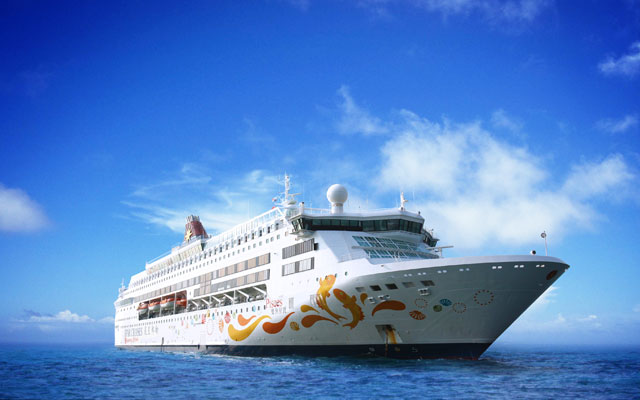











Star Pisces will become the first ship to resume sailing in Malaysia, departing from Penang starting May 13, at the start of the Hari Raya Aidilfitri Holidays.
The 40,053 tonnage cruise ship, which can accommodate up to 1,600 passengers, will offer Langkawi itineraries, Genting Cruise Lines (GCL) and Penang Port said in a joint statement.
The proposed Langkawi cruises will comprise of a two-night “Langkawi Escape” and a series of one-night “Straits of Malacca” Cruises.
The two-night “Langkawi Escape Cruise” departs Penang every Friday and Sunday, and passengers can have 10 hours of port time to explore Langkawi. The one-night “Straits of Malacca Cruise” will depart every Tuesday, Wednesday and Thursday, and passengers will be able to see all types of marine vessels in Straits of Malacca, which is the busiest straits in the world.
Cynthia Lee, vice president for GCL in Malaysia, said: “The new Langkawi itineraries will provide Malaysians the opportunity to enjoy the pleasures of cruising again and will bring much-needed benefits to the local workforce, airlines, restaurants, retailers and hotels for pre- and post-cruise stays in Penang and Langkawi.
“Importantly, the resumption of cruises will revitalise the ailing travel agent sector which has been adversely affected by the pandemic and provide employment opportunities for more citizens.”
Sasedharan Vasudevan, CEO of Penang Port, added: “The cruise services have always been the cornerstone in Penang, and what gave Penang its distinctiveness. With the persistent issue of the Covid-19 pandemic that has curbed domestic tourism, supporting Genting Cruise Lines on ensuring safe and comfortable cruise trips is important to jumpstart the local cruise sector.”
Adam Kamal, head of contracting & domestic market, ICE Holidays, shared: “This is the spark we needed to revitalise the tourism sector. Hopefully, it will pave the way for other domestic tourism sectors such as group and incentive travel, to resume.”