TTG Asia
Asia/Singapore Wednesday, 31st December 2025
Page 933

Former PTAA president Alice San Juan passes on

0

The Philippine travel trade is mourning the passing of Alice M. San Juan, well-loved for her kindness and motherly care as much as for her passion for travelling.

Her impressive CV included stints at Philippine Airlines and Rajah Group, whose outbound division she helped grow as its executive vice president.

The former president of Philippine Travel Agencies Association and Women In Travel Manila left a legacy of being a mother, sister, friend and mentor rolled into one. San Juan was also known for putting the spotlight on issues rather than on her leadership, and brightening dark corners with her inspiring talks, zest for life and disarming smile.

Hospitality consultant Jerome de la Fuente recalled: “She’s very motherly, warm and friendly and knows what she’s talking about. She is very well-liked by her staff and by the travel trade.”

China’s domestic flights headed for full recovery next month

0

Domestic air travel in China, which has been recovering gradually after the pandemic upended commercial aviation, is likely to fully recover by the start of September, according to ForwardKeys.

In the second week of August, domestic arrivals at Chinese airports reached 86 per cent of 2019 levels, while bookings (issued air tickets) hit 98 per cent, with most being for travel in mid- to late-August.

ForwardKeys’ forecast of a full recovery is based on four factors. First, the pandemic is now under control. Second, domestic aviation seat capacity is set to grow by 5.7 per cent in the last week of August, as compared to the same period last year – and when airlines make seats available, they tend to fill them by flexing fares.

Third, many school and university students are travelling ahead of the start of term in September. Finally, aggressive price promotions have greatly stimulated demand.

Since mid-June, nine Chinese airlines have launched a dozen different offers. For example, China Southern’s Fly Happily promotion allows customers to fly to any destination across the country, before January 6, for US$529. Until year-end, HNA allows passengers on its airlines to fly to and from Hainan for US$386. Elsewhere, Xiamen Airlines is launching Students Fly, which allows first-year university students to take a flight between August 25 and September 25 for just S$40.

Looking back, the aviation market in China bottomed in the second week of February and it has climbed slowly since then. Along the way, the recovery highlights were the Labour Day holiday at the start of May, resumption of group tours within China in mid-July, containment of Beijing’s second wave of Covid-19 later that month, and the ruling on August 20 by the Beijing Centre for Disease Prevention and Control that people in Beijing were no longer required to wear a mask in public.

The most notable setback was Beijing’s second Covid-19 outbreak, which caused the recovery to stall from the second week of June for a month.

Analysis of destinations within China reveals that Sanya, the holiday hotspot in the South China Sea, has been the stand-out performer, with 14.2 per cent growth year-on-year in the second week of August, helped by Hainan province’s new duty-free policy introduced on July 1.

Chongqing, Chengdu, Shanghai and Shenzhen have also seen positive year-on-year growth, due to higher levels of economic activity. However, Chinese travel to Beijing is still 24.8 per cent behind the same period in 2019, held back by the city’s second Covid-19 outbreak.

Olivier Ponti, vice president, insights, ForwardKeys, said: “This is a highly significant moment because it is the first time, since the start of the Covid-19 outbreak, that a major segment of the aviation market anywhere in the world has returned to pre-pandemic levels. The crunch question is whether heavy discounting will still be needed to maintain the recovery or whether the industry will return to profitability during the upcoming Golden Week holiday in October.”

Singapore, Thailand to speed up green lane talks

0
15 participating hotels in the city

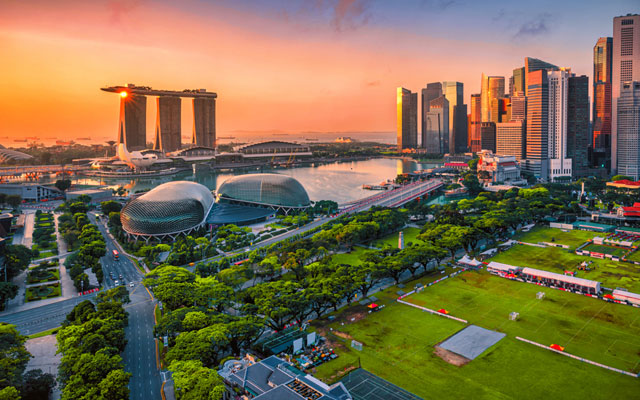
Singapore and Thailand have agreed to expedite ongoing discussions on a reciprocal green lane to facilitate essential business travel between the two countries, said Singapore’s Ministry of Foreign Affairs (MFA) in a press statement on Wednesday.

That agreement was reached during the Singapore-Thailand Political Consultations video conference call on Wednesday, co-chaired by the permanent secretaries of both countries’ foreign ministries: Chee Wee Kiong from Singapore and Busaya Mathelin from Thailand.

Singapore to expedite ongoing discussions with Thailand to set up a reciprocal green lane for essential business travel between the two countries

Besides Thailand, Singapore is currently also in talks with several countries, including Indonesia and Japan, to set up reciprocal green lane arrangements.

During the meeting on Wednesday, both permanent secretaries also had productive talks on strengthening the resilience of supply chains and connectivity networks, while reaffirming the excellent state of bilateral relations between Singapore and Thailand, the ministry said in a statement.

They also shared timely information and experiences on combatting Covid-19, and mutually contributed medical supplies, equipment and Covid-19 diagnostic test kits, it added.

Both parties also emphasised the importance of further intensifying cooperation with ASEAN’s partners through the promotion of research and development on vaccines and medicines, according to the statement.

They also committed to supporting ASEAN’s efforts to fight the pandemic, keeping their economies open and connected, and establishing a framework to deal with future public health emergencies.

TTG debuts video series on hot button issues

0

A series of short videos on demand fronted by key industry leaders will kick off in September, with conversations centred on current issues impacting travel, tourism and business events industry stakeholders.

Guest speakers for the September season include (from left) Subhas Menon, Gregg Wafelbakker, Robert Hecker and Fransiska Handoko

The debuting September season of TTG Conversations: Five Questions video series will feature guest speakers such as Subhas Menon, director general, Association of Asia-Pacific Airlines; Gregg Wafelbakker, general manager Asia, Tourism New Zealand; Carl Jones, vice president and head of travel, Asia Pacific and Greater China, SAP Concur; Robert Hecker, managing director, Pacific Asia, Horwath HTL; and Fransiska Handoko, director, government and organisation relations, Bali Hotels Association.

Each episode will run for 15 to 20 minutes, with the guest speaker tackling five questions that will allow a concise insight into a specific topic.

TTG Conversations: Five Questions content will be circulated to TTG Asia Media’s global audience via the weekly TTG Asia e-Daily and biweekly TTGmice e-News, and hosted on TTG Asia Media’s YouTube page.

Domestic market in focus

0
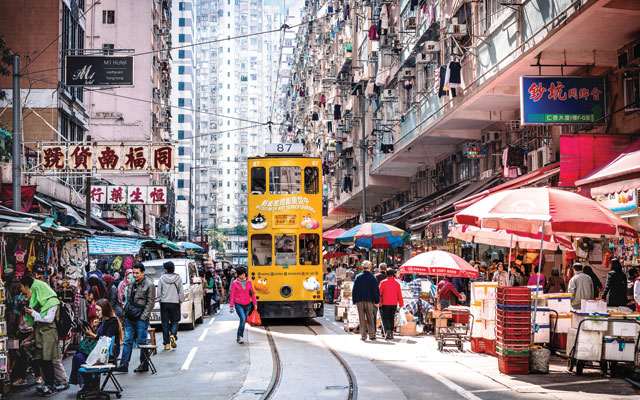
HKTB believes that locals’ love for Hong Kong attractions and experiences will improve foreigners’ confidence in the destination

Hong Kong Tourism Board (HKTB) is now into the second phase of its three-stage tourism recovery roadmap.

Where the first stage was focused on encouraging domestic tourism, the attention now is on developing travel bubbles between Hong Kong and source markets where the outbreak is under control.

HKTB believes that locals’ love for Hong Kong attractions and experiences will improve foreigners’ confidence in the destination

The final stage of the tourism recovery roadmap will involve work to resume international travel.

HKTB’s executive director, Dane Cheng, acknowledged that the path to tourism recovery would be long as uncertainty remained around the pandemic.

With access to international markets still out of reach, HKTB has chosen to rely on domestic travel to support the industry. To that end, HKTB launched the Hello Hong Kong campaign to encourage locals “to travel and explore the territory from new perspectives”.
“Since Hongkongers cannot fly out due to (travel) restrictions, why not take this chance to rekindle our interest in Hong Kong?” said Cheng .

He believes that local support will send a positive message to foreigners considering future travel plans to Hong Kong.

The Hello Hong Kong campaign encompasses three main features.

Firstly, there are six thematic and immersive itineraries developed just for the locals, such as culture and wellness, with a focus on lesser-known attractions and activities. Some ideas include forest bathing in Tai Po and boating in Tai Mei Tuk.

Secondly, the campaign drives over 11,000 attractive offers via a one-stop dining, shopping and entertainment platform.

Lastly, there is a Spend-to-Redeem Free Local Tours programme for Hong Kong residents. At press time, this programme has been suspended due to a resurgence in community infections.

HKTB told TTG Asia that it is closely monitoring Covid-19 conditions around the world, and is ready to launch targeted promotions in source markets that are ready to travel again.
Destination information and special tour packages for specific markets will be made available through the Hello Hong Kong campaign.

Some destination specialists, like Gray Line Tours, are heeding HKTB’s call to pivot to the domestic travel market for survival.

Executive director Ronald Wu shared that two to three itineraries were created just for Hong Kong residents. To attract interest, the itineraries are attractively priced and feature routes that are not easily accessible to the public.

Liberty Hong Kong’s managing director, Portia Hau, agrees that tours that stand out in the local market will be those that are unusual and “value for money”.

Hau’s team is promoting customised, upscale and in-depth tours via social media and within own social circles between this month and December 2020.

Wu believes there is potential demand from locals, given that the government is offering cash rebates to residents who purchase featured itineraries.

Furthermore, the government’s Green Lifestyle Local Tour Incentive Scheme should also incentivise local tour agencies to pursue the domestic travel market, he opined.

The scheme grants travel agencies a cash incentive for organising tours that encourage the public to get close to nature and practise green lifestyles.

Also looking for sustenance in the domestic travel market is Walk in Hong Kong, a specialist in walking tours.

Co-founder and CEO Paul Chan shared that limited edition tours are now being offered on a regular basis and at a discounted rate, and are promoted on the HKTB campaign platform.
However, Chan admits that local spending power pales in comparison to long-haul markets.
“The (local) traffic (also cannot) compensate what we have lost to the pandemic. We would only benefit if locals looked for expert guides (and) unique experiences that (mass market) products cannot offer,” he added.

The shift to domestic market is a diffucult decision to make.

Despite scoring a few local bookings, mostly for short breaks in hotels, general manager, Doris Lam, of inbound events specialist, Momentous Asia Travel & Events, said “it is not easy for DMCs doing inbound business to make adjustments overnight” because “it takes years for a DMC to build up its branding in a market and its clientele base”.

For Ivy Sung, CEO of Faces of Hong Kong, the ROI from serving the domestic leisure marketing is too minimal for the business switch to make sense.

Gray Line Tours’ Wu opined that the Hello Hong Kong campaign can only be a “short-term tactic” for industry survival.

“We, the agents, ultimately hope the business situation will improve in 4Q2020. As overseas markets are now inactive, we can only maintain close communications with our partners, to update them (on safety conditions in Hong Kong) and (share travel tips for) a safe journey (in the future).”

Wu said travellers now value health and safety standards over price and exotic destinations.

A peek into future travel

0

How is China’s tourism industry recovering?
China is currently recovering well, with cases of Covid-19 declining daily. While the country is still on alert, we’re already seeing many local municipalities rolling out measures to bolster recovery of the tourism industry.

We believe that the coronavirus has not dented the healthy fundamentals of China’s travel market, and travel restrictions have in fact led to the redirection of demand from outbound travel to domestic tourism, breathing new life into the domestic market.

How strong is the appetite for travel among the Chinese?
People have been eager to start travelling again, as we discovered in a survey in March, which showed that 40 per cent of respondents regularly followed travel and promotions, and 10 per cent of them bought some kind of special promotion.

Travellers are most concerned about safety, with respondents identifying safety as one of their main considerations when choosing a destination, along with the availability of discounts and other benefits.

What encouraging trends in domestic travel are you spotting?
It appears that the pandemic is driving the trend away from large tour groups domestically. Short- to medium-sized domestic tours are thriving best, with small groups already travelling within China.

Due to travel restrictions and events of the past few months, we’ve seen a heightened awareness of safety among travellers, who are opting for smaller, private and local tours.

Over the recent May Day holiday, for example, we saw a sharp increase in the demand for three- to four-day local tours with three to six participants. Local tour guides have also increased in popularity, with total reservation numbers tripling month-on-month.

Car rentals have risen in popularity, with a 10 per cent year-on-year growth during the May Day holiday, as travellers seek privacy, cleanliness and freedom in transportation.

Younger travellers accounted for more than half of the bookings for that period, emerging as the driving force in the industry recovery. We’ve responded to this by introducing youthful new ways of booking travel, such as our live broadcast series, which has achieved more than US$80 million in sales to date.

Is this interest sustainable?
In line with the resurgence in travel we’ve observed over these past few months, we expect October to be a peak month as the National Day holiday season approaches.

Through our joint Travel Trends Report with Google, we’ve also found that interest in shorthaul travel is quickly developing and that in addition to safety, flexibility is the foremost consideration in planning future travel.

What lessons from catering to the new domestic travel needs will come in handy in readying for future outbound travel?
Building on a new model that has achieved great results in a number of pilot markets, we’ve introduced a whole new way to travel (through our Travel On initiative), with a global series of in-destination livestream broadcasts offering further discounts to viewers. We’re confident that our customers (across) the world will love this new way of travelling too.

It’s also key for our industry to rebuild confidence among travellers, so that when it does become possible to travel, they’ll feel safe doing so. (Through the our Travel On initiative), we’ve brought the industry together to do just that.

What has Trip.com changed in its strategies to adapt to these new booking patterns?
We’ve (created) a Flexibooking guarantee, allowing travellers to start making plans without feeling tied down during this time of uncertainty.

To inspire and incentivise travellers, we’ve also launched an international Travel On Sale, giving customers access to discounts on flexible advance reservations.

We believe that Asia is well-placed for a travel recovery, and the measures for safety and flexibility offer customers the assurance they need to start planning for the next trip and travel on.

Many tourism players are also dangling free cancellations and flexible bookings to retain customer confidence. Is this strategy enough?
From as early as January, we’d implemented cancellation provisions for individuals directly and unavoidably affected by the outbreak. We also launched a Covid-19 Travellers’ Guide on our website to provide a one-stop information source to make planning travel safer and easier.

On the page, users have access to a suite of tools, information and news, including up-to-date immigration policies, cancellation provisions, updates on relief efforts and statistics on the state of the global pandemic.

As the world starts travelling again, customers will be looking to providers they trust.

The pandemic has also elevated the necessity of innovative digital campaigns. How successful has Trip.com been with this?
Our series of in-destination live-streams was conceived in response to this, and has been a hit with our users, creating demand, excitement and anticipation around tourism, even before travel had begun to open up.

In one of our recent in-destination livestreams, our chairman James Liang introduced a range of advanced-booking deals on local properties, netting over US$2.8 million in the hour-long session and attracting 1.15 million viewers.

Our app provides various digital solutions to assist with social distancing. In addition to our staggered online reservation system for destinations and cultural attractions, it also provides a virtual guide, which enables visitors to access guided tours of scenic attractions without the need for a physical guide.

Digital innovations will continue to play a key role as borders around the world cautiously open to international travel, and we continue to explore new ways of using these tools.

What makes livestreams work so well? What makes it so appealing to the Chinese – and consumers in general now – and how can tourism be transformed by livestream shopping?
This pandemic has left a lasting impact on consumers, and while travellers are more comfortable with a contactless experience, they still crave a sense of interaction.

With livestreaming, users get the best of both worlds. Consumers are able to communicate with the sellers with real-time feedback, and see the world from the comfort of their homes at a time when it would otherwise be impossible to do so. I think this is an important factor in the success of our new livestream sales model.

It is crucial that we remain in touch with consumers, and continue to provide solutions and products that improve every aspect of the travel experience, from the moment they open our app to book their travel, to after their return.


Travel lull key time for Mekong suppliers to adjust to new playing field

0

Mekong travel suppliers should leverage the current travel hiatus from prolonged border closings to adjust to the new playing field and make crucial updates across the board, opined panelists at the Virtual Destination Mekong Summit on August 25.

Small group and family travel are now on the rise, replacing large group tours

Players will need to adjust to shifting demands from key source markets like China and Japan, where big group tours and business travel have fallen out of favour and small group travel and family holidays are rising in popularity.

“The emerging smaller, (bespoke) agencies might be your best partner for the next few months and even for the next two years,” said George Cao, CEO & co-founder of Dragon Trail Interactive.

“You may also need to assess (your partners) because some…may not be in business anymore, but there are a lot of new (bespoke) tour operators; people who are focusing on the higher end of the market have emerged,” Cao added.

As they wait for borders to reopen, players should also reassess their products as well as their source markets. Said Bernard Kee, regional manager Southeast Asia, STR: “If your source market today is not a market that’s ready to reopen with your country, you have to look at new source markets.”

He encourages reliance on attributable data. “Acquire attributable forecast reports if you can – forward-looking statistics and on-the-books reports from data companies, which will empower you to measure yourself against the market when it’s open,” Kee advised, adding that data must be from source and not from script.

Safety messaging in terms of products and destinations also emerged as a very strong theme among conference panelists.

Cao: Travel suppliers keen on the China market should invest in streaming and short videos

Players should also be aware of shifts in messaging channels, especially in China where the consumption of short video content has increased tremendously. While WeChat and Weibo have grown even stronger than before the pandemic, there is also the extremely popular Douyin, the Chinese app that inspired TikTok, and emerging players like Xiaohongshu, an app where lifestyle KOLs share their experiences.

“These platforms have matured commercially so they have very solid advertising offerings that you as a destination or travel brand can take advantage of. (You may want to) look at your channel mix and invest more in streaming and short videos,” said Cao, referencing the Tourism Authority of Thailand as an example of one of the most active NTOs that has striven to increase its presence in China on WeChat and other streaming platforms.

He further pointed out that participation in online webinars, roadshows and virtual/hybrid tradeshows could help to maintain and strengthen the relationship with the OTAs and the Chinese travel trade during this time.

Kee also highlighted the need for collaboration at a time when “the travel industry has hit a hard reset”. “Collaborate with industry associations; collaborate with your previous enemies who are now your friends, because some of them have folded so they are now your alliance,” he said.

PHITEX maintains business as usual this year

0

The Tourism Promotions Board (TPB) will adopt a hybrid format with its annual Philippine Travel Exchange (PHITEX) this year, from September 22 to 24, to enable the connection of more than 100 Philippine sellers and 100 foreign buyers despite travel and tourism disruptions by the pandemic.

PHITEX 2020 will be themed, PHITEX Pivots: Business Unusual.

PHITEX 2020 will provide business appointments, networking opportunities and educational content

An event highlight is the Travel Exchange (TRAVEX), a series of exclusive business-to-business appointments between Philippine sellers and foreign buyers at virtual booths. The online market space is customised to feature each company’s range of products and services in high definition videos, digital product collaterals, and one-on-one chat rooms for more focused and effective networking with prospective buyers.

There will also be rich educational content presented through a webinar series, interview sessions and roundtable discussions.

Other activities include Philippines 360, a series of online games and quizzes that deal with Philippine culture and the arts, and topics discussed throughout the event; and Videos-on-Demand which allow event participants to replay key moments from the event and view content such as tourism marketing videos, highlights of past TPB events, links to film tourism with English subtitles, cooking videos, travel videos and more.

A curated virtual tour of Manila, showcasing the city’s unique blend of old world and new culture, is another event highlight.

Panglao in Bohol, which the Department of Tourism considers to be one of the islands most likely to reopen to international tourists once it is safe to do so, will be the official venue of a virtual networking session.

“Amid the immense challenges for the tourism industry, TPB is leveraging on digital technology as a platform to sustain and explore new opportunities and markets,” said TPB chief operating officer Maria Anthonette C Velasco-Allones.

“With this e-conference setup, we endeavour to update our tourism market stakeholders from all over the world with the latest Philippine tourism offerings.”

Registration is free of charge.

Philippines enhances pandemic support for tourism stakeholders

0

The Bicameral Conference Committee of the Philippines has approved the allocation of 10 billion pesos (US$206 million) for the tourism industry under the Bayanihan To Recover As One or the Bayanihan 2 Bill.

Bayanihan 2 Bill replaces the expired Bayanihan to Heal as One Act.

Bayanihan Act 2 is expected to cushion more of the crisis impact on micro, small and medium-sized tourism businesses in the Philippines

In response to the announcement, the country’s Department of Tourism (DOT) has issued a statement expressing “deep gratitude to the Bicameral Conference Committee”, saying that the Bayanihan Act 2 measures will safeguard micro, small and medium establishments (MSMEs) in accommodation and food service businesses.

According to 2018 data from the Philippine Statistics Authority (PSA), 99.9 per cent of the country’s 144,640 establishments in accommodation and food service activities are considered MSMEs

The DOT statement added that in terms of employment, 95.8 per cent of the 921,292 workers in accommodation and food service activities, covered by the PSA data, are also from MSMEs.

The funds for loans and credit facilities to tourism MSMEs from the Bayanihan Act 2 will be administered by Government Financial Institutions and independent government agencies such as the Small Business and Guaranty and Finance Corporation.

While the DOT is not involved in the dispensation of the funds, it will support the private sector by way of crafting the tourism industry’s road to recovery with proper health and safety protocols in place, and carry out the Tourism Response and Recovery Plan.

It will also work with the Department of Labor and Employment to support displaced and unemployed tourism workers.

RedDoorz strengthens leadership team

0

South-east Asia’s online hotel management and booking platform, RedDoorz, has appointed two new senior hires and announced an internal promotion in a move to strengthen its leadership team.

(From left): Chief operating officer Kelvin Teo; regional vice president – human resources, Trixie Thye; chief marketing officer Liviu Nedef

Kelvin Teo, joins the company as chief operating officer while Trixie Thye takes on the role of regional vice president – human resources.

Teo brings with him 20 years of experience in the tech and online industries. His previous roles included managing director for Groupon Asia and chief business officer for South-east Asia’s leading finance portal, MoneySmart Group.

Thye brings almost two decades of experience with global corporations such as Accenture. She was last regional HR vice president and business partner with Beijing-headquartered IT consulting and outsourcing company, Pactera.

Liviu Nedef, former senior vice president of marketing and communications at RedDoorz, leaps into the chief marketing officer position with immediate effect. He continues to focus on making RedDoorz the preferred hospitality brand in South-east Asia and accelerate its mobile-first customer strategies.

Amit Saberwal, founder and CEO, RedDoorz, said the new leadership team would contribute to the company’s “mission to transform hospitality in South-east Asia as we start to focus towards post-pandemic recovery”.