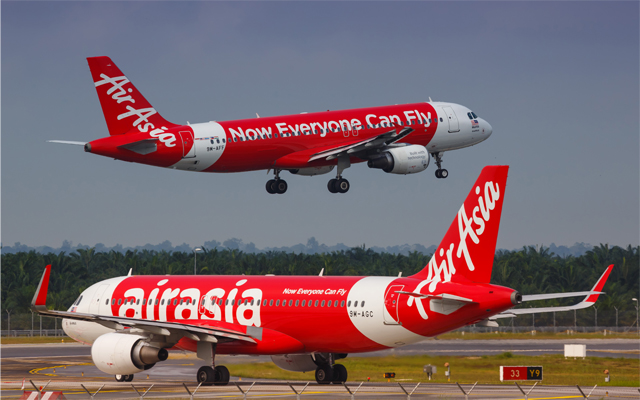
Air Asia Airbus A320 at Kuala Lumpur airport (KUL) in Malaysia. Airbus is an aircraft manufacturer from Toulouse, France.
AirAsia India has partnered with Avis India to offer the airline’s passengers discounted car rental services, as travellers increasingly seek private modes of transport.
AirAsia India guests can opt to hire airport transfers, chauffeur-driven vehicles, long-term car rentals or self-drive cars from Avis’s fleet of mid, premium, luxury and SUV cars.
AirAsia India and Avis partner to offer premium car rental services for the airline’s passengers
Through this partnership, AirAsia India guests can use the services of Avis across 14 cities – Delhi, Noida, Gurugram, Faridabad, Bengaluru, Mumbai, Hyderabad, Chennai, Kolkata, Chandigarh, Kochi, Pune, Bhubaneswar, and Jaipur. They will also be able to enjoy other benefits such as complimentary upgrades in India and internationally.
Sunil Gupta, managing director and CEO, Avis India, said: “In the wake of coronavirus, many people remain apprehensive about taking public transport or booking cabs. With this partnership, we are happy to take forward the responsibility to offer a hassle-free and safe travel experience once our travellers depart the airport.”
Genting Hong Kong has sold the Zouk Group, which operates the popular nightclub in Singapore, for S$14 million (US$10.2 million) to Malaysian firm Tulipa, as part of efforts to offload non-core assets and investments and strengthen the group’s liquidity.
The cash sale is expected to result in a gain of about HK$6.7 million (S$1.2 million), which will be used as working capital, according to a filing on the Hong Kong Exchange on Tuesday, The Straits Times reported.
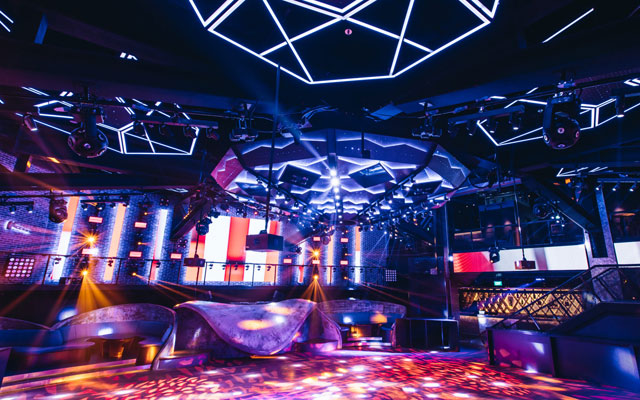
Genting Hong Kong sells Zouk Group as the pandemic takes a toll on its finances (Photo Credit: Zouk Group)
The filing said the selling of the Zouk Group is part of efforts to conserve cash and seek additional sources of finance to sustain the business, pending the resumption of cruise operations.
Upon completion of the transaction, Zouk Group will cease to be an indirect wholly-owned subsidiary of Genting Hong Kong.
Tulipa is owned by Lim Keong Hui, the son of Genting Group chairman and Genting Hong Kong’s controlling shareholder Lim Kok Thay, who holds a 76 per cent stake or six billion shares in the company.
In August, Lim pledged nearly his entire stake in Genting Hong Kong as collateral for loans, after the company’s stock fell by 38 per cent following its announcement that it would temporarily suspend all payments to the group’s financial creditors and seek to restructure its debt.
According to a filing with the Hong Kong Exchange, Genting Hong Kong’s outstanding financial indebtedness stood at US$3.37 billion as of July 31.
The company said then that the coronavirus pandemic had taken a toll on its finances, and that it would reserve its cash to maintain critical services for its operations.
Genting Hong Kong owns and operates three cruise brands – Dream Cruises, Star Cruises and Crystal Cruises. The company also has an interest in the Resorts World Manila.
Malaysia’s travel and tourism industry is making a slow comeback, thanks in part to the persistent efforts of the federal and state governments as well as the private sector to revive domestic interest.
Incentives for Malaysians to holiday within the country include personal income tax relief of up to RM1,000 (US$235) on domestic tourism expenses as well as service tax exemption at hotels. These are in addition to attractive deals and promotions that local tourism suppliers have rolled out to entice bookings since the removal of interstate travel bans on June 10.
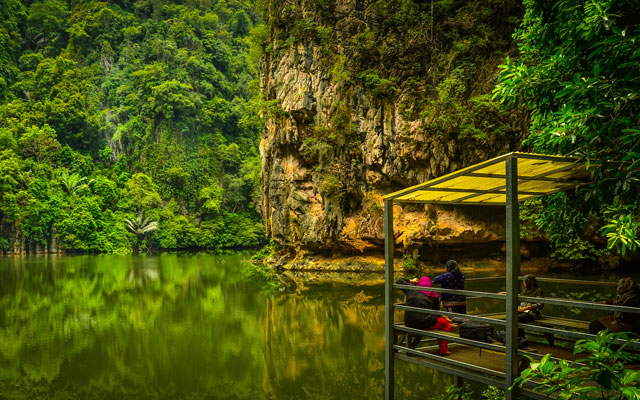
Ipoh’s senic Mirror Lake
Malaysian Association of Tour and Travel Agents (MATTA) president, Tan Kok Liang, said the industry was on track for recovery, in line with the United Nations World Tourism Organization’s projection that travel and tourism rebound would happen in 2021.
The minister of tourism, arts and culture, Nancy Shukri, expects the tourism industry to begin recovering in 2Q2021.
While there is a strong dependence on the domestic market, Nigel Wong, director of Urban Rhythms Tours, Adventures and Travel, said there was a challenge in getting locals to book with tour operators.
He explained: “Domestic guests prefer to make their own arrangements and bookings. They do not realise that a tailor-made programme designed by a travel agent will result in convenience and time savings.”
To get residents to put their faith in local travel agents, Urban Rhythms is promoting interesting experiences that excite the senses, such as food tours with wine pairings in Penang and Ipoh as well as hidden gems that many Malaysians are unaware of due to a lack of promotions.
“This includes Ulu Tupai Waterfalls in Taiping, which is a pristine nature retreat just 15 minutes’ drive from Taiping town, and the many small nature resorts in Janda Baik, Pahang, which offers nature excursions and visits to fruit and vegetable farms,” Wong detailed.
May Chiong, product planner at Malaysian Harmony Tour & Travel, said the agency has been successfully selling tour packages and hotel stays on Facebook Live since June. Response has been good.
She said: “We use our in-house talents to lead the video programme in an engaging manner and we always include attractive packages offering good value to our Facebook fans.”
Chiong said live-streaming has also helped the company to build brand awareness in the domestic market. The company dealt mainly in outbound tourism pre-pandemic, but had to pivot to domestic tours and products for survival.
She observed that domestic travellers are price sensitive and prefer to shop around for good deals.
“We attract them by working with hotels to create attractively priced packages. Beach retreats and Instagrammable destinations are doing well, especially on weekends when families or friends travel together,” said Chiong.
Klook is also targeting domestic travellers through a series of exclusive staycation offers. Accommodation is bundled with perks, such as free massages, F&B credits and attraction passes, to create a well rounded vacation for the customer.
Emily Tan, marketing lead of Klook Malaysia, shared that nature-focused staycations and theme park hotels are in hot demand.
“Some customers enjoy a tropical paradise at Ipoh’s Belum Rainforest Resort to escape the usual hustle and bustle. Meanwhile, travelling groups with children prefer to mix hotel stays with theme parks nearby, such as Legoland Hotel Malaysia and Hard Rock Hotel Desaru Coast. This allows both the parents and children to get an enjoyable travel experience,” she said.
Tan remains optimistic that demand for local activities and experiences will continue to rise through 4Q2020, and will spike during the upcoming public holidays.”
To further boost travel confidence and peace of mind of travellers staying in certified hotels, the Malaysian Association of Hotels launched the Clean & Safe Malaysia hygiene and safety certification programme for properties in July. This is supported by the Ministry of Tourism, Arts and Culture Malaysia.
Every certified hotel is issued the Clean & Safe Malaysia label. This is the benchmark of hygiene and safety standards for the hotel industry in the country.
Myanmar will reposition itself as a leading sustainable destination as part of a raft of measures unveiled in a white paper aimed at tourism recovery.
Entitled Tourism and Covid-19 in Myanmar: Priorities for Restarting Tourism, the white paper outlines a series of recommendations to help stimulate the industry once borders reopen.
Repositioning the country as an ecotourism destination among priorities outlined for Myanmar’s tourism restart post-Covid in new white paper; tourists preparing to get into their kayak in Boulder Island in Myanmar pictured
May Myat Mon Win, Myanmar Tourism Marketing chairperson, said: “We have to think about the opportunities. What do we have and how can we create a better situation to rebuild based on these opportunities? We have to be creative and innovative.”
Under the measures, it is recommended that the industry focuses on responsible and sustainable tourism management. This includes improving the quality of existing products and creating new activities.
Nicole Häusler, co-author of the white paper, said: “When preparing for the new normal, the focus should no longer be exclusively on the four major destinations of Yangon, Mandalay, Inle Lake and Bagan, but rather on ecotourism and outdoor and adventure activities.
Häusler added that this should include new products, such as zip lining, rock climbing, agro tourism, birdwatching, nature tourism, caving, cycling and water sports.
She said: “What’s important to adapt to these new travel trends is to consider destination readiness along the tourism supply chain. We can only establish products when a destination and community members linked to these products are ready.”
Ensuring the industry cleans up its act is another important element. Awareness raising campaigns are already underway to help industry players understand the negative impact of waste, especially plastic.
Paper co-author Thu Thu Zaw said: “We need to encourage stakeholders to stop single-use plastic waste by substituting with locally-available green products.”
Green activists are already working in various regions, including Inle Lake and Yangon, where young ambassadors have been carrying out environmental campaigns.
Looking at the Chinese market, zero-dollar tours should be banned and more licensed Chinese-speaking tour guides trained. Said Häusler: “We need to develop sustainable tours together with our Chinese colleagues to achieve benefits for Myanmar, especially along the whole tourist supply chain.”
Another consideration when reopening is visa waiver programmes and reduced visa fees, as well as complete transparency on quarantine and other restrictions travellers need to know before visiting.
Incheon International Airport, South Korea’s largest airport, has become the first airport in the Asia-Pacific region to be accredited under the Airports Council International (ACI)’s Airport Health Accreditation programme.
ACI’s Airport Health Accreditation programme assists airports by assessing its compliance to new Covid health and safety measures in accordance with ICAO Council Aviation Recovery Task Force recommendations. Areas of assessment for accreditation include cleaning and disinfection, physical distancing (where feasible and practical), staff protection, physical layout, passenger communications and passenger facilities.
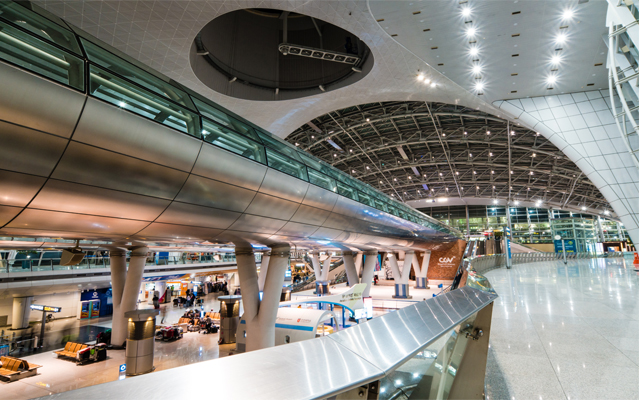
Incheon Airport becomes first in Asia-Pacific to receive ACI’s Airport Health Accreditation
“Passengers travelling through or to Seoul, Korea can rest assured that Incheon is prioritising health and safety in a measurable, established manner,” said Stefano Baronci, director general, ACI Asia-Pacific.
The ICAO-supported Airport Health Accreditation programme, launched in July, has received more than 225 applications to date. The online application process is open to ACI member airports of all sizes globally across the regions.
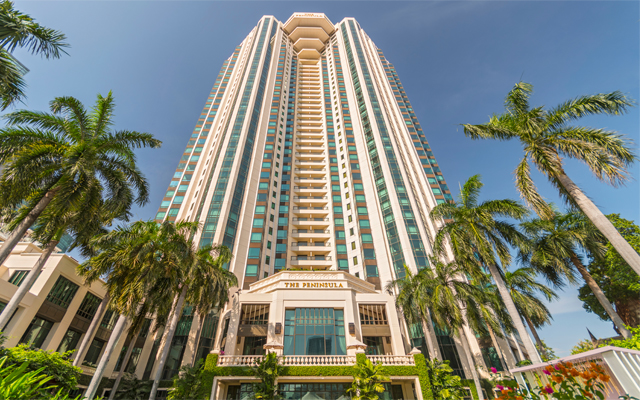
The Peninsula is a luxury hotel located on the bank of the Chao Phraya river in the Khlong San district of Bangkok. Thailand.
The Hongkong and Shanghai Hotels (HSH) is set to gain full ownership of The Peninsula Bangkok, through an acquisition of the remaining 50 per cent stake in a joint venture that operates the property.
In a press statement, HSH said that it plans to acquire the Phataraprasit shareholders’ 50 per cent stake in The Peninsula Bangkok and its surrounding land, for US$70 million in cash plus a 50 per cent stake in the Thai Country Club and nearby land parcels.
An acquisition deal will see HSH owning 100 per cent equity interest in The Peninsula Bangkok
Upon completion of the deal, the company will assume full ownership and control over the development, management and future operations of The Peninsula Bangkok and its surrounding land. It will also cease to have any responsibility over the development, management and future operations of the Thai Country Club and its land parcels.
The company said that the restructuring is in line with its principal business of hotel ownership and management and reflects the desire of the company and the Phataraprasit shareholders to resolve all current and contingent disputes, including the dispute on the hotel management agreement relating to The Peninsula Bangkok.
HSH CEO and managing director Clement Kwok said that the decision was made in light of “the very challenging global and domestic market circumstances” and “the legal dispute between the partners”.
Thailand’s Centara Hotels & Resorts has signed agreements with developer SL International Construction to manage three new hotels in Myanmar.
The agreements cover the management of Centra by Centara Hotel Thiri Hpa-An, Hpa-An Hilltop Resort & Spa, and Centara Hotel Mandalay.
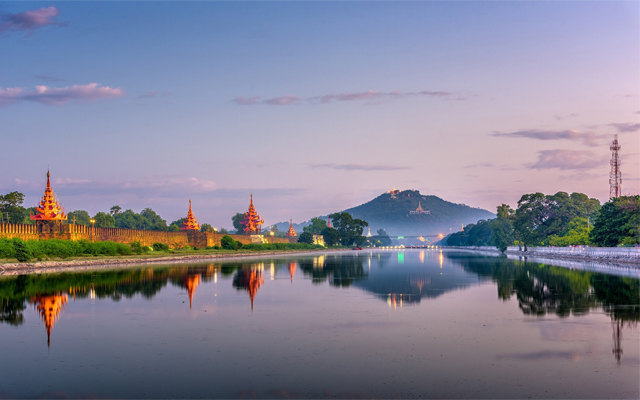
Centara brings total property count in Myanmar to nine with new signings in Mandalay and Hpa-An; Mandalay city pictured
In the last 12 months, Centara has inked management deals for a total of nine Myanmar properties, including the latest signings with SL International Construction.
Opening first in 2021 is Centra by Centara Hotel Thiri Hpa-An, a 77-key hotel nestled against one of Hpa-An’s karst mountains and featuring two F&B outlets, outdoor swimming pool, fitness centre, and meeting facilities.
Opening in 2022 a short 20-minute drive from Centra by Centara Hotel Thiri Hpa-An is Hpa-An Hilltop Resort & Spa, which will be managed under the Centara Boutique Collection brand of upper upscale and individual boutique hotels. The new-build resort will feature 60 guestrooms and bungalows, two F&B outlets, a spa, kids’ club, fitness centre with swimming pool, and a guest entertainment centre.
In 2024, Centara Hotel Mandalay will open as part of a mixed-use project which will also include a shopping mall, office and casino. The 200-room hotel will feature three restaurants, meeting facilities, fitness centre with swimming pool, and guest recreational facilities.
Centara has signed management deals with six hotels this year so far outside of Thailand, including the three Myanmar properties, as well as one in Oman, and two in Vietnam. The latest signings add 337 keys to the group’s portfolio now totalling 17,154 keys across 81 properties.
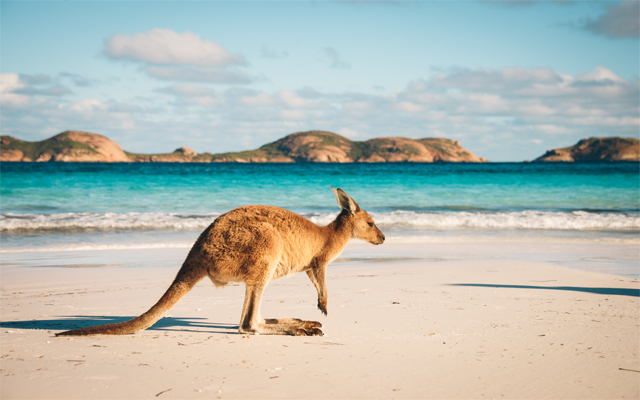
Kangaroo at Lucky Bay in the Cape Le Grand National Park near Esperance, Western Australia
Australian tourism players have come together to launch a grassroots campaign imploring the nation’s state premiers and chief ministers to reopen interstate borders to allow the rebuilding of domestic tourism.
As part of the #SaveAussieTourism campaign, which was started by Baillie Lodges COO Craig Bradbery, an open letter has been written to the state’s leaders addressing the ongoing changes to interstate travel restrictions, which has thrown a spanner into the recovery plans of the industry.
Ongoing border closures have devastated Australian tourism businesses; a kangaroo at Lucky Bay in the Cape Le Grand National Park near Esperance, Western Australia pictured
“The events of recent weeks, in particular the ongoing changes to policies around borders and access to interstate travellers, have resulted in crippling uncertainty among tourism operators and would-be travellers alike,” the letter reads.
“Guests who had previously been prepared to postpone travel have now cancelled in light of the latest announcements on long-term border closures. Fundamentally, we have seen these decisions erode confidence in the domestic tourism product and foresee serious, long-term damage to Australian tourism as a result.”
The letter, which was written by Bradbery, also highlighted the multiplier effect of tourism on employment in other sectors.
“This is an industry that directly employs over five per cent of the nation’s workforce or around 660,000 Australians, with millions more indirectly employed in or reliant on the tourism industry. This effective shutdown of the industry affects tourism businesses such as hotels, airlines, tour operators, travel agencies and attractions, as well as a wide range of other businesses which supply tourism operators or who benefit from visitors’ spending, particularly in regional Australia,” it reads.
“This includes many small independent businesses such as bakeries, wineries, farmers, local food stores, fuel stations, support services and art galleries. The regional spread of people and businesses impacted reaches deep into every electorate across the country.”
In the letter, Bradbery also stressed that the continued closure of interstate borders will mean that when international borders reopen down the road, a diminished tourism industry will struggle to accommodate the number of international visitors that Australia needs to bolster her economy.
It concludes: “We need interstate borders to remain open. We need certainty that domestic travel is accessible so that Australians can recommence making travel plans and so we can get employees and businesses back to work.
“We implore you now to desist from making announcements that erode this confidence; we implore you to stop spending public money on border closures. We implore you to work quickly and collaboratively with neighbouring states to install screening protocols for travellers and to implement logical solutions which will allow interstate travel to recommence in a safe and sustainable manner.”
As of publish time, the open letter has been endorsed by nearly 500 industry players representing hotels, tour operators, accommodation, attractions, airlines and airports, vehicle rental companies, and more.
Signatories to date include tourism leaders like Flight Centre Travel Group CEO Graham Turner, Intrepid Travel CEO James Thornton, as well as Helloworld Travel executive director and CEO Cinzia and Andrew Burnes.
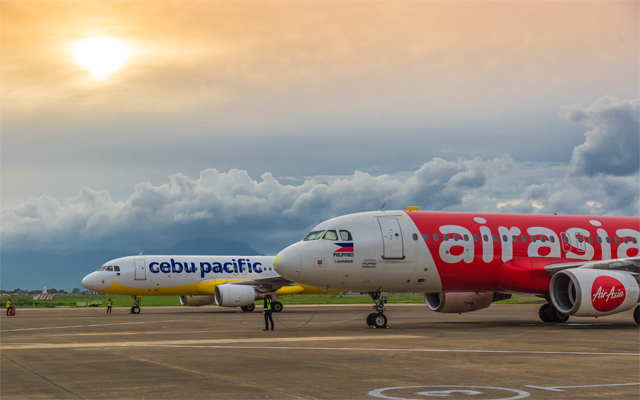
Low cost airlines Cebu Pacific and Air Asia aircraft at colorful sunset at Puerta Princesa Airport in Palawan island, Philippines. August 2018.
The Philippine Travel Agencies Association (PTAA) will have to wait it out before it can get the full refund of at least 141 million pesos (US$2.91 million) it is seeking from 27 airlines for cancelled flights due to the pandemic.
One of the big hurdles is that airlines are caught in a similar financial bind as travel agencies, if not worse. That leaves their hands tied even as PTAA president Ritchie Tuano made repeated appeals to IATA and the Philippine Civil Aeronautics Board for ticket refunds to help the liquidity of its 605 members, of which 80 per cent or 419 agencies have temporarily closed, with the rest only partially open.
Cebu Pacific, AirAsia among 27 airlines which owe Philippine travel agents refunds for cancelled flights
Paz Alberto, Philippine IATA Travel Agents Association president and Ark Travel Express general manager, asked agencies for patience, understanding and support for airlines, including Thai Airways which is banking on state-led financial aid to tide through the crisis and Etihad Airways which has announced it can only issue refunds within a year.
At the Network of Independent Travel Agencies general membership meeting last week, Alberto also said that the air passenger bill of rights (APBR), which was being invoked for air ticket refunds, was done at a time when Cebu Pacific had many cancelled flights and failed to address the fact that airlines don’t have money in this time of pandemic.
Alberto said one option is for agencies to instead offer clients travel vouchers which can be valid for up to two years and have lenient and generous add-ons including discounts and the option to refund.
Her stance reflects that of IATA director general and CEO Alexandre de Juniac who, in an April open letter to the travel agents community, said that “the best answer for both airlines and travel agents is for regulators to ease requirements for cash refunds and allow airlines to issue vouchers instead” to “remove the pressure that is currently on agents to issue cash refunds at a time when airlines are making decisions based on their own need to preserve cash”.
TTG Asia learned that Tuano, in communications with IATA and the CAB as early as April, invoked Section 11.2 of the APBR entitling passengers affected by flight cancellations due to force majeure to reimbursement for the full value of the fare and Section 16 specifying that “the reimbursement shall be made via check or cash, with no mention of the legality of a travel fund or a travel voucher”.
As irate passengers were also demanding refunds of travel agency service fees, Alberto clarified that refunds are not mandated by law because the service to passengers was a “consummated transaction”.
In the ongoing stalemate, seen by some quarters as airlines getting interest-free financing from smaller players, PTAA’s Tuano said in a statement: “Airlines have been one of the travel agencies’ long-time partner in the tourism industry. As the industry grew, they have thrived. Both sides need each other especially during this time of crisis.”
Among the 27 airlines that owe the travel agencies refunds are Philippine Airlines, Cebu Pacific, AirAsia, Emirates, Singapore Airlines, Turkish Airways, and Qatar Airways.
Indonesian hotels and restaurants are banding together with homegrown airlines to create affordable travel bundles in a bid to revive the struggling domestic tourism sector.
The Indonesia Hotel and Restaurant Association (IHRA) and Indonesia Air Carriers Association (INACA) have sealed an agreement to come up with attractive travel packages to boost domestic consumption.
From left: Indonesia National Air Carriers Association (INACA)’s Denon Prawiraatmadja, Indonesian Hotels and Restaurants Association (IHRA)’s Hariyadi Sukamdani, and Bali provincial government’s Ni Luh Made Wirati at the signing of the MoU between INACA and IHRA in Bali to collaborate on providing affordable travel packages
The MoU was signed in Bali by the chairmen from both associations: Haryadi Sukamdani from IHRA, and Denon Prawiraatmadja from INACA.
In a similar move to stimulate domestic demand, earlier in Jakarta, Indonesia AirAsia CEO Veranita Sinaga, alongside Denon and airport authority dignitaries, launched the Waktunya Terbang (Time to Fly) campaign at Soekarno-Hatta International Airport.
Both events took place last weekend as part of the INACA-IHRA Safe Travel Campaign series to boost travel confidence and stimulate domestic travel.
The campaign series was launched on August 6 in Bali, followed by Medan and Yogyakarta, before returning to Bali last weekend. Each edition sees INACA and IHRA partnering with a different airline.
At the signing of the agreement in Bali, Denon said: “Today, we are facing a ‘fierce duel’ between health and the economy with this pandemic. For us in the industry, both are top priorities. We need to create a pattern to stop the virus from spreading out and at the same time, (create an environment that) will allow people to do their activities without too much fear.”
Both Denon and Haryadi said the joint campaign was historic for both associations as they were aligned around common goals, and mutually beneficial to both ends. In turn, they expect to contribute to the country’s economic recovery.
Their cooperation will focus on two components to lift plane load factors and boost hotel occupancy, Haryadi shared. One, bolstering travellers’ confidence to fly again and two, providing affordable travel packages.
To provide affordable travel, both associations plan to create flight and hotel bundle packages for both solo and group travellers, which would be accessible through the websites of all participating airlines and hotels.
Denon said: “As associations, we are providing the umbrella (agreement) and will let members come up with the B2B implementation agreement that will (allow each party) to maintain their profitability.”
Commenting on the agreement at the Waktunya Terbang campaign launch, Veranita said Indonesia AirAsia would follow up with negotiations with IHRA members.
“I am optimistic that we can materialise the cooperation. In fact, AirAsia already has the platform not only for air ticket sales but other products so that travellers can buy combined products at the same time,” she said.
Veranita stressed on various measures the airline has been taking to ensure the safety of operations and to regain air travel confidence. That includes a HEPA air filter which cleanses the cabin air every two to three minutes and filter 99.9 per cent of air particles including virus and bacteria.
Denon said the campaign, which works with INACA member airlines including AirAsia on recovery strategies, will continue to be rolled out in various tourist destinations across the country, with an aim to see an optimal rebound in domestic travel activities during the year-end peak season.











Genting Hong Kong has sold the Zouk Group, which operates the popular nightclub in Singapore, for S$14 million (US$10.2 million) to Malaysian firm Tulipa, as part of efforts to offload non-core assets and investments and strengthen the group’s liquidity.
The cash sale is expected to result in a gain of about HK$6.7 million (S$1.2 million), which will be used as working capital, according to a filing on the Hong Kong Exchange on Tuesday, The Straits Times reported.
The filing said the selling of the Zouk Group is part of efforts to conserve cash and seek additional sources of finance to sustain the business, pending the resumption of cruise operations.
Upon completion of the transaction, Zouk Group will cease to be an indirect wholly-owned subsidiary of Genting Hong Kong.
Tulipa is owned by Lim Keong Hui, the son of Genting Group chairman and Genting Hong Kong’s controlling shareholder Lim Kok Thay, who holds a 76 per cent stake or six billion shares in the company.
In August, Lim pledged nearly his entire stake in Genting Hong Kong as collateral for loans, after the company’s stock fell by 38 per cent following its announcement that it would temporarily suspend all payments to the group’s financial creditors and seek to restructure its debt.
According to a filing with the Hong Kong Exchange, Genting Hong Kong’s outstanding financial indebtedness stood at US$3.37 billion as of July 31.
The company said then that the coronavirus pandemic had taken a toll on its finances, and that it would reserve its cash to maintain critical services for its operations.
Genting Hong Kong owns and operates three cruise brands – Dream Cruises, Star Cruises and Crystal Cruises. The company also has an interest in the Resorts World Manila.