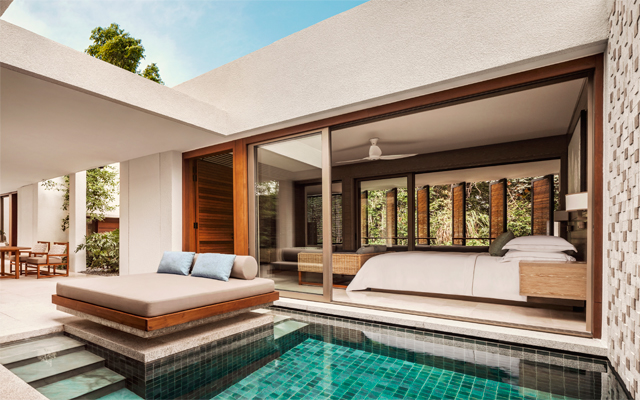
One&Only Desaru Coast Rainforest Grand Pool Suite Bedroom Plunge Pool
One&Only Desaru Coast, Malaysia
Located in Johor, this is the first One&Only resort in Asia. Accommodation is spread across 42 Junior Suites, two two-bedroom Grand Suites, and a four-bedroom Villa One. For larger groups who prefer to maintain privacy, One&Only also offers the 1,500m2 Villa One, secluded from the main resort. The two-storey, four-bedroom villa boasts a private spa treatment room, a home office, and a central courtyard garden with ocean-facing lawns surrounding a 27m swimming pool. Facilities on the 52ha property include the Ember Beach Club, four F&B choices, two infinity pools, KidsOnly club, gym, pilates studio, yoga pavilion, and Chenot Spa.
Sheraton Belitung Resort, Indonesia
Sheraton Belitung Resort is the first five-star property to open on Belitung Island, part of the Bangka Belitung Islands Province, located off the eastern coast of Sumatra. Located within a wildlife reserve, the 164-key property offers 695m2 of event space, ideal for intimate business events. Recreational facilities include a 24-hour fitness centre, kids’ club, outdoor infinity pool, and Shine Spa. There are also three F&B venues on-site – the all-day dining Island Restaurant, a Seafood Market Restaurant, and the Blue Lagoon lounge and bar.
Moxy Osaka Shin Umeda, Japan
The third Moxy-branded property in Japan has risen in Osaka’s Umeda district, a five-minute walk from Fukushima Station. There are 288 guestrooms within, each equipped with the latest technology such as a 55-inch flatscreen TV, USB ports, motion-activated guidelight, and fast and free Wi-Fi. The signature Bar Moxy doubles as the hotel’s check-in counter, where guests are greeted upon arrival with a complimentary Got Moxy cocktail. Other watering holes include outdoor area The Terrace and The Lounge, alongside a Grab and Go section. There is also a Library, as well as a 24-hour fitness centre complete with a pink punching bag.
JW Marriott Hotel Yinchuan and Courtyard by Marriott Yinchuan, China
Marriott has opened a dual-branded 513-key hotel in the cultural centre of Yinchuan adjacent to the Yinchuan International Convention and Exhibition Center. JW Marriott Hotel Yinchuan offers 247 guestrooms and 32 suites featuring floor-to-ceiling windows. Amenities include signature Cantonese restaurant Ning Xin Ge, all-day diner JW Kitchen, an executive lounge, lobby bar, indoor swimming pool, and 24-hour fitness centre. Event spaces comprise the 1,400m2 JW Grand Ballroom that can accommodate 1,300 guests, 500m2 JW Ballroom, and 10 multifunction rooms. Meanwhile, the 234-key Courtyard by Marriott Yinchuan features a lobby lounge and an all-day dining restaurant.
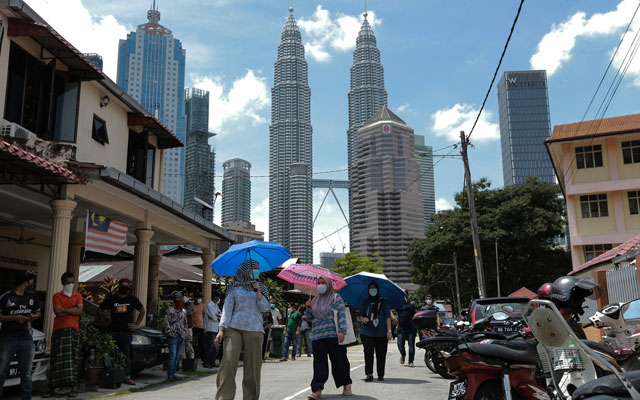
A group of tourism associations in Malaysia have come together to urge the government to extend the loan moratorium for the travel and tour industry ending September 30 by another six months.
The call comes from the Malaysian Association of Tour and Travel Agents (MATTA) together with the Malaysian Inbound Tourism Association, Bumiputera Travel and Tour Agents Association of Malaysia, Malaysia Chinese Tourism Association, Malaysian Indian Tour & Travel Association (MITTA), Malaysia Inbound Chinese Association and Tour Bus Operators Association of Peninsular Malaysia.
Malaysia’s tourism businesses in dire need of a moratorium extension due to headwinds posed by the pandemic
Speaking on behalf of the associations, MATTA president, Tan Kok Liang, said: “To date, travel agents and tour operators have hardly had any business. Hence, without any income, how are they expected to service the loans of their vehicles and businesses?”
He added that travel agents and tour operators have not been able to benefit from the flourishing domestic tourism market, as domestic travellers opt to book directly with hotels to save on third-party fees. Also, travellers are choosing to do self-drive instead of hiring vehicles owned by travel agencies or tour operators.
“Due to the fact that everyone in the tourism industry is hungry for business, not only the hotels have gone directly to the consumers; airlines and attraction operators too have joined the fray. They, too, have offered packages and ignored the fact that license imposed by the Ministry of Tourism, Arts and Culture is required,” he said.
“Likewise, outbound tour operators and travel agencies are equally hard hit with hundreds of millions tied up in airline and hotel bookings that they have made on behalf of their clients.”
Tan highlighted that several tourism companies have appealed for the extension on the loan moratorium with the banks, but to no avail as the loan moratorium extension is only accessible to individuals, not companies.
Banks are only providing a rescheduling procedure to support businesses and impose a certain interest rate, depending on the situation, he said.
Rescheduling of the loan repayment is not a viable option for many tourism companies, he added, as their businesses have been running at zero income over the past six months, with the situation likely to persist in the next several months.
He also noted the recent travel advisory on entry restrictions where citizens from 23 countries have been barred from entering the country, including those from major inbound markets to Malaysia such as India, Indonesia, Philippines, Bangladesh, Saudi Arabia, Iran, Russia and the UK.
In light of this, the hope for travel bubbles with some of these countries to boost the restart of tourism has now been dashed, Tan said, adding that “the industry can expect a further prolongation of the situation and will not be surprised that recovery can only happen in the second quarter of 2021”.
He said: “The government needs to assist us urgently by extending the loan moratorium for at least another six months due to the dire situation as mentioned above. Failing which, (it) will lead to a situation where most of us will be forced to shut down our businesses or may end up in bankruptcy. This situation will add on to the unemployment and retrenchment of the tourism workforce.”
Stressing that the tourism industry is now “in a grievous state” and “in dire need of all the help we can get”, Tan urged the government “to exercise its moral responsibility and reassess the situation in assisting and providing further extension on the loan moratorium for the tourism industry, particularly the travel and tour sector”.
In hopes of jumpstarting domestic tourism, Hotel Sales and Marketing Association (HSMA) will hold a two-week sale offering up to 70 per cent discount and flexible terms on hotels and resorts across the Philippines.
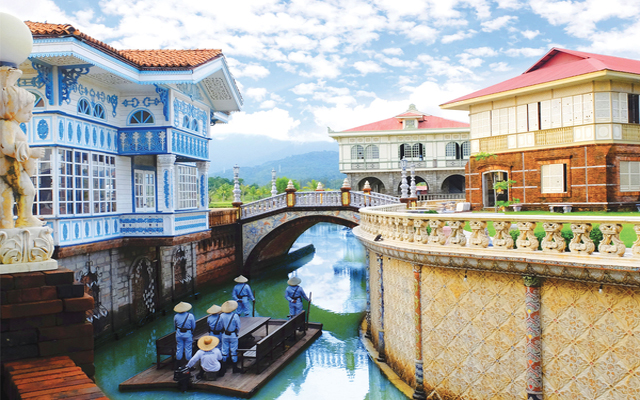
Slated to take place from September 15-30, the September Online Sale (SOS) will be held virtually on HSMA’s website. Customers can also book directly each of the 89 participating hotels and resorts. Half of them are in metro Manila, while the rest are in Northern Luzon, Southern Luzon, Boracay, Visayas, and Palawan/Mindanao.
Las Casas Filipinas de Acuzar, one of the 89 properties participating in HSMA’s September Online Sale
Some promotions are valid for up to a year, while others have no expiration on their validity, said HSMA spokesperson Pearl Maclang during a recent Zoom press conference.
HSMA chair Margie Munsayac said the e-vouchers have very flexible terms, and though not refundable, are rebookable. Up for grabs during the sale are high-value packages inclusive of meals and airfares, with at least three hotels also offering packages that include Covid-19 tests.
The sale bodes well for Philippine tourism, which screeched to a halt since mid-March, but is gradually reopening with most destinations including Boracay, El Nido, Tagaytay, and Cebu easing to modified general community quarantine (MGCC), the lowest quarantine category that allows limited tourism.
Places like metro Manila remain on general community quarantine (GCC), the second lowest quarantine category, subject to review month-end.
Munsayac assured potential buyers that all the properties to be featured during the SOS have passed stringent safety and sanitation protocols as prescribed by the government.
“We have no illusions that life will be the same, after restrictions are lifted. But the public’s patronage and advanced bookings from the sale give us hope that things will get better. It will also enable us to plan ahead in terms of manpower and other operational requirements so that we will be able to hit the ground running when the pandemic scare is over,” said HSMA president Christine Ibarreta.
Maclang said targeted markets are leisure travellers like couples and families, corporate clients, tourism workers, travel agents and tour operators. She said that most hoteliers are positive they will start getting bookings during the sale, with some already receiving advanced reservations for stays this Christmas through the New Year, traditionally peak season in the Philippines.
Family-oriented Filipinos would want a change in scenery during their reunions after being cooped up for six months, she said, adding that since overseas travel is still off the cards, they will opt for staycations instead.
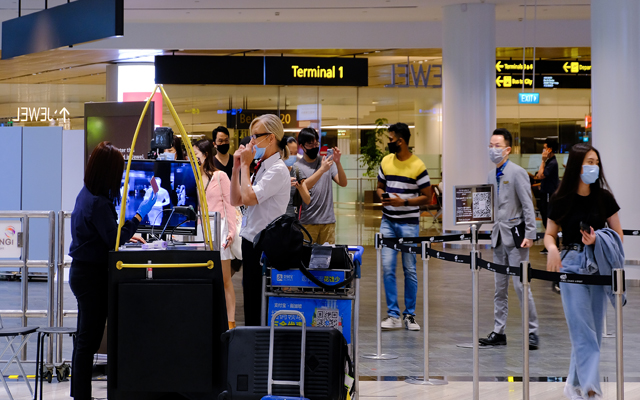
Changi Airport Jewel. Infrared thermal temperature screening and safe entry security checks at entrance. Travel concept. Reopening; coronavirus covid-19.
The availability of a Covid vaccine, virus containment success in destination markets, and quarantine exemptions are the top three influencing factors for Singaporeans to travel confidently, according to a new survey by Agoda.
While many are still dreaming of travelling overseas again, Singaporeans’ travel confidence remains cautious, found the survey. More than a third cited that the most important thing to boost their travel confidence is the availability of a vaccine to the masses, rising to 44 per cent for Gen Zs.
While Singaporeans remain cautious about overseas travel, more are opting for staycations to satisfy their wanderlust; infrared thermal temperature screening at entrance of Changi Airport Jewel pictured
One fifth of Singaporeans claim that the key to unlocking their travel confidence is when the destination market has successfully contained Covid-19, or when there are no quarantine requirements in their home market or at their destination.
Singaporeans over 55 are most likely to consider no quarantine as important (23 per cent), as compared to only 13 per cent among 18- to 24-year-olds. These are deemed more important compared to other factors such as setting up of travel bubbles and governments lifting blanket travel restrictions.
Against the backdrop of economic uncertainty brought on by Covid, nearly half of Singaporeans (48 per cent) are concerned about job security and financial security so they are likely to spend less on travel. Some 47 per cent stated they would now reconsider how and where to travel.
In light of this, staycations are on the up, with one in ten Singaporeans planning to take more staycations than they normally would. Once things improve, a quarter said they will stick to regional destinations. Singaporeans aged 25 to 44 are most likely to take extra staycations over this period.
Leveraging deals and discounts available for local stays (34 per cent) tops the reasons for booking staycations, followed by factors that bring about positive mental health benefits – such as decompressing from daily life stressors (21 per cent), as well as the opportunities of indulging in the luxury of hotels with amenities and to have private time away (both 16 per cent).
Interestingly, males are slightly more likely to book a staycation for private time and take advantage of discounts available for local stays, while females are more likely to book a staycation to indulge in the luxury of hotels’ amenities, as well as decompress from the daily stressors in life.
An increased focus on domestic tourism is expected to drive the growth of the midscale segment in India’s lodging industry, as the country further eases domestic travel restrictions, according to a HVS report.
As India enters the fourth stage of the government’s phased reopening, dubbed Unlock 4.0, it is expected that domestic leisure and business travel across the country will gradually recover.
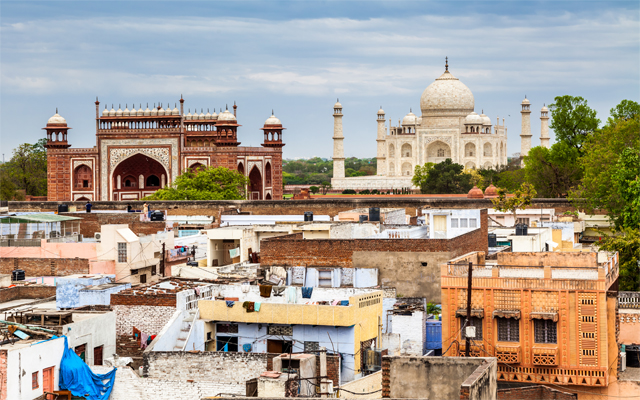
India’s mid-market hotels to flourish on back of domestic tourism: HVS; Agra city in India with Taj Mahal in the background pictured
With safety being the key concern among post-pandemic travellers, Indian domestic tourists will pivot to “branded products” as they are perceived to be “safe”, said the report.
At the same time, it added, the ongoing economic headwinds are likely to drive the already value-driven customer seeking a full-service hotel more towards the midscale hotels.
Akash Datta, HVS senior vice president – consulting and valuation, and Dipti Mohan, senior manager – research with HVS South Asia, expect that a growing number of experiential travel-seekers will flock to fledgling leisure destinations in the country, where developing and managing a midscale hotel offers better value proposition.
The growth of this segment will also be fuelled by the rising demand from business travellers, driven by companies’ need to cut costs. Development of industrial corridors in the country has also resulted in increased captive demand for quality midscale hotels around highways, said the report.
Though supply growth is expected to be slower across segments in the current scenario, mid-market hotels will still be a more viable proposition as they require lower investments and can be developed on smaller land parcels, which has often been the limitation in the country for development of large format hotels.
Additionally, midscale hotels, unlike their upscale and luxury counterparts, have a higher ability to offer flexi-pricing and still be profitable due to lower operational costs.
Datta and Mohan said that the learnings from Covid will help future midscale hotels align to a more efficiently built product as contactless needs will lead to smaller public spaces, fewer restaurants and enhanced technology – all of which will help in reducing the capital costs, while increasing revenue generating areas like rooms and providing better returns on investment.
The key deterrents for the growth of this segment have been the high land and construction costs combined with high interest and short loan tenures, which make hotel projects unviable in India, said the report.
To help domestic tourism reach its full potential in India, it added, the government should facilitate the development of midscale hotels by allocating well located, fully zoned land parcels at viable prices or long-term leases.
According to the report, the midscale segment has become the largest sub-segment among the branded hotel supply in India, accounting for approximately 43 per cent of the total supply in the country in 2019.
Seoul Tourism Organization (STO) has initiated its 2020 Seoul Global Marketing Campaign on September 4 with a series of seven destination videos fronted by the hugely popular BTS boy band, the city’s Honorary Tourism Ambassador for the past four years.
Korean boy band BTS will front Seoul Tourism Organizations’ latest marketing campaign that seeks to engage the world virtually
The destination videos, released on VisitSeoul’s Facebook and Instagram accounts, will act as a daily countdown to the launch of the campaign’s commercial on September 11 as well as a special YouTube event where members of the public from around the world could stand to win prizes such as a Samsung Galaxy Note 20, souvenirs unique to Seoul, and BTS posters.
The new commercial will be released worldwide via VisitSeoul official website, YouTube channel, Facebook and Instagram.
The latest marketing campaign bears the city’s new slogan, See you in Seoul, and will see members of the boy band introducing various sights around the destination.
Hong Jae-sun, director of STO Global Marketing Team, hopes that the star power of BTS will draw a lot of attention, particularly from people “who are longing to go out into the world and travel again”.
Meanwhile, STO is maintaining trade-facing activities despite challenges in international travel. It is presently working on an online fam tour aimed at overseas travel agencies, scheduled for October.
This joins the destination agency’s ongoing Go! Seoul programme, an effort to strengthen cooperation with 40 major travel agencies from 20 countries through jointly curated personalised Seoul experiential tours.
An STO spokesperson told TTG Asia that a microsite is also being created to introduce “new contents on Seoul tourism”.
“Through the online fam tour, we will encourage overseas travel agencies to develop tourism products for next year,” said the spokesperson, adding that STO hopes to resume regular travel trade activities “once the situation improves”.
With Reinventing Travel in the New Normal being the theme for ITB Asia 2020, the three-day, 120-session virtual event has been specially curated to help travel professionals navigate current challenges and prepare for the industry’s recovery.
Travel industry professionals around the world will converge at the virtual event next month to share ideas and plans that will shape the next decade of travel in a post-pandemic world. The event will be hosted on ITB Community, which has more than 1,500 community members and over 400 buyers subscribed to date, since its launch two weeks ago.
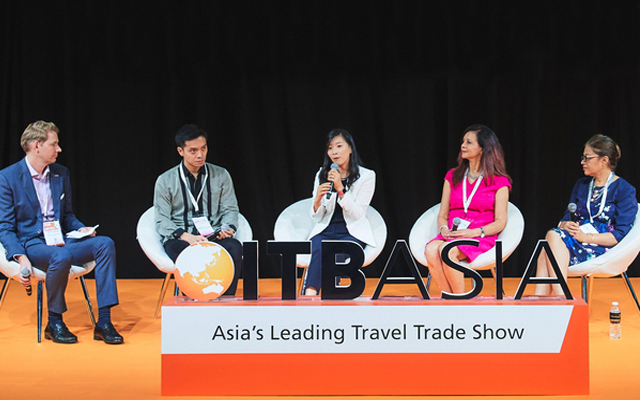
ITB Asia 2020 will showcase strategies adopted by tourism businesses in navigating the new norm
Keynote sessions this year will highlight the emerging trends the travel industry should consider as they continue to navigate Covid-19. Speakers will also address industry’s best practices, business innovations, industry know-how and professional tips on how to adopt the mindset of industry leaders when navigating through challenges. Keynoters include representatives from Booking.com, Google, MakeMyTrip, trivago, and Viator.
ITB Asia 2020’s sessions will address six core themes, including corporate travel; destination marketing; hotel revenue and distribution; as well as tours, attractions and activities.
Thinking outside the box is critical when it comes to the future of corporate travel, and a series of conferences will urge participants to challenge their approach to “business as usual”. Key speakers will include HRS Group CEO Tobias Ragge, who will cover “The new prospects for corporate travel”; and Brett Thomson, general manager, corporate travel, TAG, who will discuss “Building a better solution for international mobility”.
The destination marketing conference series will see national tourism boards, destination agencies and marketing experts come together to discuss how to adapt strategies to serve customers in the new normal. Nicola Eliot, vice president, BBC StoryWorks APAC, BBC Global News will consider “How to create the right stories at the right time to reach out to an audience dreaming of travel”.
Hoteliers and those in related fields will share thoughts on how hotels and accommodation can adapt to the current situation as well as how to stay strong during this time. Park Hotel Group CEO Allen Law will discuss “Navigating the crisis and beyond: Rebound, Recession & Reimagination”, while Jennifer Li, executive vice president and chief business officer, Tujia will consider “How to revive homestays after the pandemic?”.
Participants will share thoughts and insights on how the Covid-19 pandemic has shaped the way the travel industry sees customers and businesses in the tours and activities market. Intrepid Travel CEO James Thornton will host a speech on the tour operators of the future, while Musement co-founder & COO Claudio Bellinzona will discuss “What tours & activities companies can do to prepare for re-opening and recovery”.
Attendees of ITB Asia 2020 will have the opportunity to attend over 120 virtual conference sessions led by more than 120 expert speakers during the virtual event taking place from October 21-23, 2020.
For more information on ITB Asia 2020, click here.
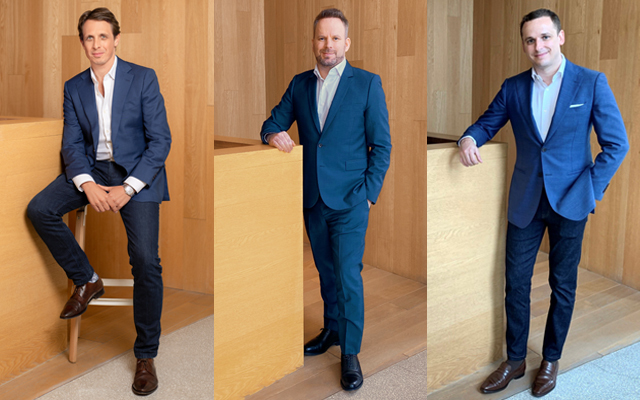
From left: Michael Faulkner; Mark Passmore; Olivier Dumonceaux
Three members from Swire Hotels’ senior management team will be progressing into new roles.
Michael Faulkner, general manager of The Middle House since its opening in 2018, will be transitioning into head of sales & distribution at the Central Support Office based in Hong Kong this September.
From left: Michael Faulkner; Mark Passmore; and Olivier Dumonceaux
His new role will focus on developing a comprehensive distribution strategy for both The House Collective and EAST. Prior to his role at The Middle House, Faulkner was director of sales & marketing at The Opposite House and general manager at EAST Beijing.
Taking over from Faulkner as general manager of The Middle House is Mark Passmore, who was previously the general manager of The Opposite House in Beijing. He will now be responsible for leading The Middle House through the next phase of its evolution.
Passmore started his work with Swire Hotels in 2007 in Hong Kong before moving to become the general manager of The Temple House in 2013, where he oversaw the pre-opening and opening of the property. He was instrumental in steering The Opposite House through its renovation and repositioning.
As The Opposite House prepares for a relaunch, Olivier Dumonceaux will continue as hotel manager and assume responsibility of the property, overseeing all aspects of the House.
Dumonceaux joined Swire Hotels in 2016 as the director of restaurants & bars at The Temple House, where he led the pre-opening and opening of the property. In 2018, he relocated to Beijing to take over as hotel manager of The Opposite House, overseeing the renovation and opening of three new restaurants and bars as well as the multifunctional event space Commune.
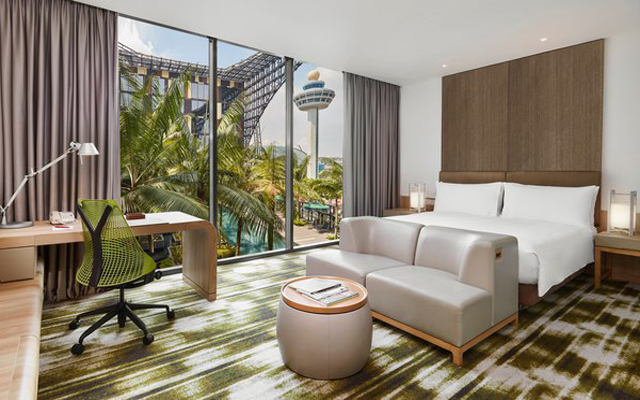
Premier Room Pool View Crowne Plaza-Changi Airport
A batch of IHG-branded hotels in Singapore and Malaysia are offering up to 50 per cent off room rates for bookings made before October 1, 2020.
As part of the Your Perfect Getaway package, guests can also enjoy complimentary breakfast during their stays from now till March 31, 2021. They also have the flexibility of having full cancellations up to one day before their stay with no deposit required.
Staycations at Crowne Plaza Changi Airport (CPCA) are now going for half the price; CPCA Premier Room pictured
Participating hotels in Malaysia are Holiday Inn Express Kota Kinabalu City Centre, which is now taking reservations for stays from January 1, 2021; Holiday Inn Kuala Lumpur Glenmarie, Holiday Inn Express Kuala Lumpur City Centre, and Holiday Inn Melaka.
Also included in the programme is the Holiday Inn Johor Bahru City Centre, which is slated to open on October 1, 2020. The hotel also features the Kids Stay and Eat Free programme, where children aged 12 and below eat for free with a paying adult at all on-site dining establishments.
Over in Singapore, participating hotels are InterContinental Singapore and Crowne Plaza Changi Airport, with more hotels to be added once they are approved by Singapore Tourism Board for reopening.
I was both excited and nervous when I received an invitation from the Indonesia National Carrier Association (INACA) and Indonesia Hotel and Restaurant Association (IHRA), along with airline partner Indonesia AirAsia, to join them on a trip in late-August from Jakarta to Bali.
It was a trade activity, and one that was being held after a six-month-long travel freeze. It presented an opportunity for me to experience the heightened health and safety protocols that we have written about and read about a lot lately.
This writer taking her temperature using an automated thermal scanner prior to entering The Anvaya Beach Resort Bali during a press trip from Jakarta to Bali last month
As part of the new travel protocol, all passengers must fill in an e-Health Alert Card and take a rapid test for Covid-19. While the effectiveness of this test is widely debated among industry members, I felt a sense of relief to see a non-reactive result.
I have never seen both Jakarta and Bali airports – two major gateways to Indonesia – this quiet, but an airport staff in Jakarta told me he was glad to see the airport “pulsing” again.
Traffic has picked up since the government eased restrictions in June, especially during the two long weekends in August. Jakarta’s Soekarno–Hatta International Airport recorded 1.1 million passenger movements, while Bali’s Ngurah Rai International Airport handled 174,462 movements last month, according to the airport authorities. While this pales in comparison to Jakarta airport’s average 4.5 million and Bali’s two million per month last year, traffic has been on the rise in the last couple of months.
The authorities of both airports have done their part in keeping to new health and safety protocols, such as marking seats and floors to ensure safe distancing, putting staff in protective gear, and providing hand sanitisers in various places.
More work needs to be done to discipline travellers in the new normal procedures. I saw airport staff having to correct the way passengers wear their masks; some even forgot to wear one. They also had to constantly remind journalists – myself included – to maintain a safe distance when taking ceremony pictures.
Travellers in the new normal will need to provision even more time for detailed security checks which will now include health document clearance and temperature checks. I went through several rounds of manual temperature checks between my arrival at the airport and boarding. It would be great if this process could be digitalised to speed things up and minimise potential snaking queues once travel picks up.
On my AirAsia flight, only 70 per cent of seats were used as the middle seats were kept empty. The inflight crew had face masks, face shields and hand gloves on, and food service was limited to pre-ordered meals.
Both cabin crew and the captain reminded passengers of the airline’s health and safety protocol and provided us with a peace of mind by explaining the capability of the aircraft’s HEPA air purification system – it cleans 99.9 per cent of air particles every two minutes.
An AirAsia stewardess sporting a face shield and hand gloves while serving passengers pre-ordered meals on a flight that this writer was on
Upon arrival, disembarkation was done in sequence – three rows at a time, starting from the front.
Bali has prepared itself and has been active in getting the island ready for both domestic and international tourists, including certifying all business establishments according to new rules and regulations.
The trade event brought me through three hotels – Novotel Bali Ngurah Rai Airport, The Anvaya Beach Resort Bali and The Royal Santrian Luxury Beach Villas. These properties demonstrated how new health and safety protocols could co-exist with the relaxing and charming ambience of a resort destination.
Take F&B service for example: snacks and fruit platters were individually served on covered plates, while buffet breakfast and lunch were served by restaurant staff. Meeting room capacity were halved for safe distancing.
Buffet breakfast at The Anvaya is served by restaurant staff
Like many resorts on the island, The Anvaya and The Royal Santrian have the advantage of open-air spaces outside their restaurants. This allowed guests to enjoy the fresh breeze, sound of crashing waves and frangipani scent as they nursed their drinks – while keeping their masks on in between sips.
The new health and safety requirements need some getting used to. Throughout various ceremonies, I observed varying diligence in sanitisation procedures. For example, at a ceremony hosted by AirAsia, speakers were offered hand sanitiser after their speech, during which they held microphones in their hands. At other ceremonies, no covers for microphone mouthpieces were provided; while at one ceremony, a single microphone was shared by several speakers without cleaning in between.
We also need to be mindful of our excessive use of plastic as we try to insulate ourselves against contamination. Plastic cups, cutleries, wraps and covers are used more than pre-pandemic times.
Overall, it was wonderful to be able to travel again. Being able to visit Bali for my first post-lockdown trip was a treat, but it is heartbreaking to see the once-popular island so quiet and with so many shops and restaurants closed.
My biggest hope is that the Safe Travel Campaign succeeds in boosting travellers’ confidence and that Bali hospitality stakeholders will approach markets more aggressively to stimulate travel revival.