

Princess Cruises
Princess Cruises has scheduled Diamond Princess for a Japan summer season running from July to October 2021, with 24 departures out from Yokohama. Itineraries range from five to 19 nights, with some featuring multiple destinations such as Japan and South Korea, or Japan, Vladivostok and Korsakov.
Come summer 2022, Diamond Princess will sail out of Yokohama and Kobe on diverse itineraries spanning from the southern tropical islands of Okinawa to the northernmost island of Hokkaido. There will be 35 departures on offer, from May through September featuring 31 destinations and four countries – Japan, South Korea, Russia and Taiwan.
Both summer sailings will present numerous opportunities for passengers to experience local festivals, such as Kyoto Gion Festival, Osaka Tenjin Festival, Tokushima Awa Dance Festival and Kumano Fireworks Festival, in addition to visits to UNESCO World Heritage sites.
Highlights: Watch out for the MedallionClass Experience coming onboard Diamond Princess’s 2021 and 2022 summer sailings. A number of new features that leverage touchless technologies promise to significantly enhance and personalise the guest experience, as well as support new health protocols. This will include touchless embarkation and disembarkation, highly personalised services, contactless payment, and friends and family locator, among others. Princess MedallionClass ships also offer speedy Wi-Fi at sea, utilising VSAT technology that supports movie streaming and live TV.
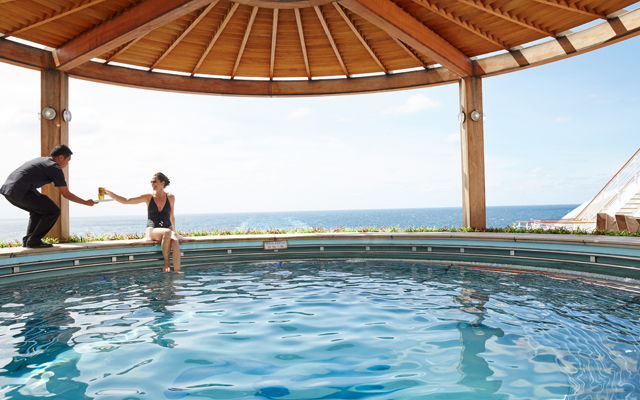
Diamond Princess will complement her itineraries out of Japan with onboard Japanese experiences, such as authentic Japanese meals at Kai Sushi, soaks in a traditional Izumi bath that is said to be the largest Japanese bath at sea, and folk shows for entertainment.
Agent support: Travel agents continue to be critical trade partners for Princess Cruises, and the cruise line has been feeding them with latest news and industry developments throughout the pandemic, so that they can better advise their customers. Training is maintained online via the Princess Academy, while regular contact is made with travel advisors in order to understand their challenges and have relevant support crafted when the market recovers.
Support for planning, sales development and marketing are also provided.

Cunard
Cruisers can look forward to two sailings to Asia in 2022.
Queen Mary 2 will offer a seven-night itinerary from Singapore to Hong Kong from February 11 to 18, with two ports of call in Vietnam’s Ho Chi Minh City and Chan May.
The Queen Elizabeth will sail on an eight-night voyage from Singapore to Hong Kong from March 24 to April 1, taking in stops for shore excursions in Chan May and Hanoi.
Highlights: Cunard’s cruise ships are reputed from their British elegance and service standards are sterling.
As the cruise line’s flagship, Queen Mary 2 holds numerous charms. She boasts her own onboard micro-brewery and what is said to be the world’s finest wine cellar at sea – one that houses a unique collection of 486 fine wines and a stunning collection of ports, dating back to 1840.
Equally stunning, but for different reasons, is Illuminations, the ship’s planetarium. The planetarium dome takes guests on an epic voyage across the solar system and once retracted, becomes a luxury 3D cinema or classical music venue.
Bookworms will marvel at Queen Mary 2’s library, which contains about 10,000 books in various languages.
Outstanding experiences onboard the Queen Elizabeth include a large conservatory inspired by the famous hothouses of Kew Gardens, afternoon tea at the Queen’s Room and a game of croquet – all for a quintessential British holiday.
Agent support: Communication and training is a continuous process that is taken seriously at the Cunard, and efforts to plan and develop future co-funded marketing activities with travel agent partners have not ceased despite the pandemic.

Royal Caribbean International
This year, Royal Caribbean International operates two- to four-night cruise-to-nowhere Ocean Getaways onboard the Quantum of the Seas. These are exclusive to Singapore residents, and are available through October 2021.
Highlights: Quantum of the Seas boasts unique onboard products for entertainment. RipCord by iFLY, which offers a skydiving experience at sea, is iconic, and so is the North Star observation capsule that offers a 360-degree view from more than 91m above sea level.
Endless fun onboard continues at SeaPlex, the largest indoor sports and entertainment complex at sea and home to bumper cars, a roller-skating rink, a rock climbing wall and more.
Over at the Bionic Bar, drinks are made by robotic bartenders.
Performances are transformed in the Two70 multimedia theatre, where cutting-edge technology turns two-storey high windows into beautiful scenes, while aerialists and robots bring the space to life.
Dining experiences never gets old on the ship, thanks to 18 restaurant concepts.
Agent support: Believing that it is only a matter of time that other destinations will resume safe cruising, Royal Caribbean International continues to engage travel partners on a regular basis. Industry trends as well as information on updated health and safety protocols and cruise experience for guests are frequently shared.
The cruise line continues to invite many travel trade partners on Ocean Getaways to have them experience safe cruising.
For now, Royal Caribbean International is encouraging travel planners to focus on the individual incentive travel segment, as that will likely bounce back before large group travel, as well as new-to-cruise consumers.

Dream Cruises
World Dream offers a series of two- and three-Night Super Seacation itineraries out of Singapore from now until June 27, 2021.
Meanwhile, Explorer Dream continues with her round-island sailings in Taiwan, from March 7 until October 1, 2021. Options include the four-night Penghu-Kinmen-Matsu Island cruise; the four-night Penghu-Kinmen-Hualien cruise; and a combination of two-night cruises to Hualien, Penghu, Kinmen or Matsu Island.
World Dream’s cruise experience is made more enticing with special themes that are built on traditional and pop culture from South Korea and Thailand as well as gastronomy.
Onboard Explorer Dream, a taste of cultures and activities from around the world is dished out. This allows cruisers to ‘visit’ iconic destinations, such as Hawaii and the Nordic region, on a single excursion.
Highlights: Muslim and vegetarian guests will enjoy peace of mind when travelling onboard World Dream, which has been certified by both the United World Halal Development (UNWHD) and the Global Vegetarian Certification Services. The UNWHD certification encompasses not only cuisine but the overall Halal lifestyle onboard the ship.
Agent support: Parent company Genting Cruise Lines has been working closely with travel agent partners across the region, especially in key markets like Taiwan and Singapore where safe cruising has resumed since July and November 2020 respectively. Regular updates and training on the new norms of cruising are provided.

Star Cruises
Star Pisces will become the first ship to resume sailing in Malaysia, departing from Penang starting May 13, at the start of the Hari Raya Aidilfitri Holidays.
It will offer a two-night Langkawi Escape and a series of one-night Straits of Malacca cruises.
Cruisers on the Langkawi Escape will get 10 hours of port time to explore the resort island, while those choosing the Straits of Malacca Cruise will be able to see all types of marine vessels in the Straits of Malacca, the busiest straits in the world.
Highlights: Star Pisces is packed with entertainment, dining and shopping options. There are six restaurants and bars, two swimming pools, a Jacuzzi, a running track, and the Galaxy of the Stars entertainment centre.
Agent support: Parent company Genting Cruise Lines has been working closely with travel agent partners across the region. Regular updates and training on the new norms of cruising are provided.

Costa Cruises
Costa Firenze will make her maiden call in South-east Asia in 4Q2021, with 13 departures from November 20 to January 8, 2022.
On offer are three-night roundtrips out of Singapore to Malaysia and four-night roundtrips from Singapore to Malaysia and Thailand. There will also be three-night roundtrips from Laem Chabang in Thailand to Cambodia’s Sihanoukville or Thailand’s Koh Samui, and four-night roundtrips from Laem Chabang to Vietnam’s Phu My.
Thematic itineraries are planned to coincide with Christmas and New Year festivities in 2022.
Cruisers looking for variety should keep an eye out for the Tropical Paradise Cruise, with four departures planned out of Singapore to Malaysia and Thailand; and the Amazing Strait Cruise from Singapore on December 11 and December 25, 2021 to Melaka and Klang, both in Malaysia.
Highlights: Costa ships take pride in their authentic Italian atmosphere. There are six themed zones, taking guests from the Renaissance period to modern day Florence, and its high fashion and elegance. In fact, the ship’s name is dedicated to the beautiful city of Florence and the interior design is inspired by it.
Costa Firenze is great for families, with plenty of activities – including a water park, exploration park and a Rope Garden – to keep everyone entertained. Come evening, catch stunning shows or take to the dance floor.
Agent support: Costa Asia has maintained a line of communications with travel agent partners, feeding them information on the resumption of cruise schedules, itinerary planning and safety protocols. Online training courses have also remained throughout the pandemic.








Capella Hanoi, Vietnam
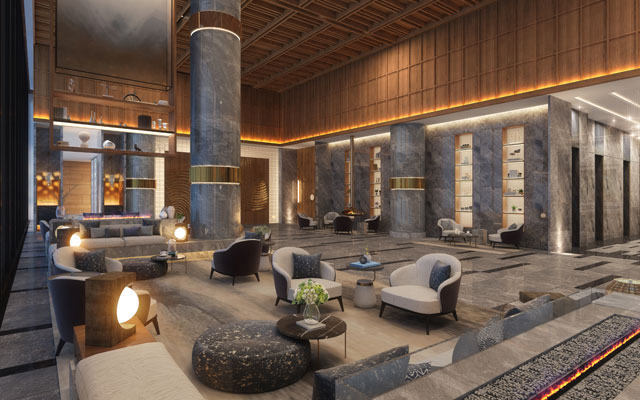
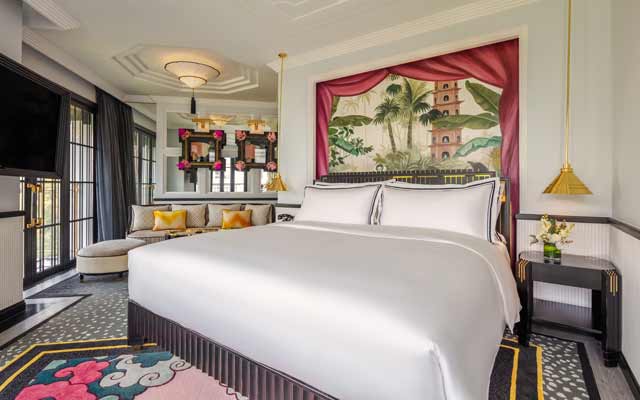
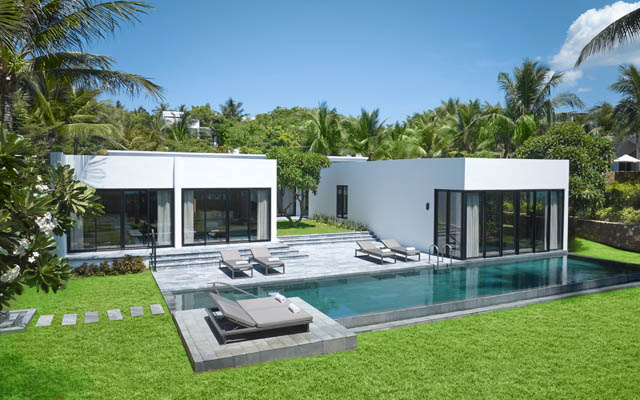
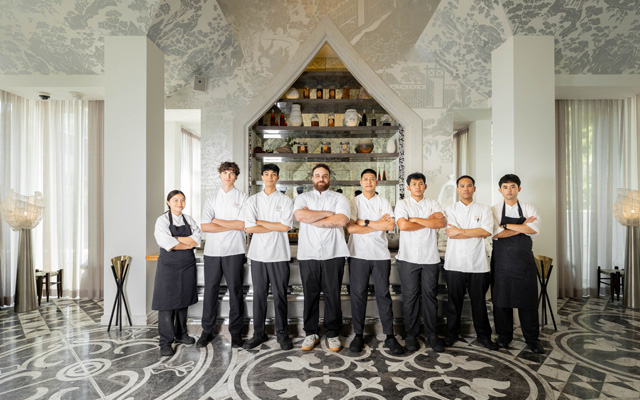
Capella Hanoi has opened its doors in the heart of Vietnam’s vibrant capital city. Nestled in the Old Quarter, just steps from the iconic Hanoi Opera House, the Bill Bensley-designed hotel features 47 themed rooms and suites, ranging from 35m2 to 194m2. Crowning the hotel, four Opera Suites open out onto alfresco terraces overlooking the tree-lined avenues below. The hotel’s signature restaurant, Backstage, offers vegan dishes and northern Vietnamese-inspired specialties. Diva’s Lounge, meanwhile, serves up bohemian cocktails and Opera Punches, accompanied by Diva’s Bar bites. Guests can unwind at Auriga Spa featuring couples’ treatment suites, saunas, steam baths, a fitness centre and La Grotta, an indoor pool that resembles a haven for opera singers to rest their voices.
Quincy Hotel Melbourne, Australia
TFE Hotels has unveiled Australia’s inaugural Quincy-branded property, with the opening of Quincy Hotel Melbourne on Flinders Lane. The 241-room property – complete with lively laneways and rooftop bars – boasts spatial design, playful interiors, tactile artwork, and a focus on ‘out-of-the-ordinary’ foodie adventures. Think hawker-inspired grazing at SingSong eatery, flowing through the Lobby to outdoor laneway dining; rooftop bites and cocktails at The Q on Level 28 (shared by a lap pool); and Salted Egg, a satellite restaurant, complete with a bespoke bar and communal areas.
Wink Hotel Saigon Centre, Vietnam
Wink Hotels, Vietnam’s new hospitality brand, has debuted its first hotel and flagship Wink Hotel Saigon Centre. The property is the first in a pipeline of 20 hotels to be opened in Vietnam within the next five years. Centrally located in Ho Chi Minh City’s vibrant Da Kao ward within District One, the hotel features 237 rooms. Wink Hotels brings Vietnamese street food culture to the comfort of a hotel environment with signature Wink Carts for easy, quick breakfasts and lunches; while the team of Wink Guides give guests the best intel on the neighbourhood and the city.
Hilton Melbourne Little Queen Street, Australia
Situated on the corner of Little Queen Street and Bourke Street, the 244-room Hilton Melbourne Little Queen Street is owned by M&L Hospitality and managed by Hilton. Luci restaurant, accessible via the hotel’s Bourke Street entrance, serves contemporary Australian cuisine. The restaurant is accompanied by The Douglas Club, a lounge bar offering cocktails, cognacs, a wine and champagne selection, and snacks. Other amenities include a 24-hour gym, as well as seven meeting and event spaces, ranging from 24m2 to 143m2. A large open-air balcony on level five offers city skyline views and a large wall mural by Kitt Bennett.