 To the casual observer, the Asian aviation industry should be close to collapse after the unrelenting onslaught of bad news and misfortune in the past 13 months. While true on the face of it, the reality is that the industry’s deep-rooted resilience and determination have thus far allowed it to ride-out the Covid perfect storm, and start rebuilding for a restart when the pandemic recedes.
Air travel has been shuttered indefinitely since March 2020 and yet almost all airlines, though battered, bruised and visibly grounded, are still around. A good thing they are, as their endeavours are keeping global supply chains ticking and playing a crucial role in the carriage of stranded residents, essential supplies and most importantly, vaccines so vital to recovery from the pandemic.
Unimpeded growth had taken Asian airlines to the forefront of the industry, but the past year’s decimation of air travel spiralled into a massive cash-burn and liquidity crunch, the likes of which has not been experienced in the past 50 years. Yet, airline leaders have avoided the spectacle of liquidations by raising private capital, receiving government support, cutting costs to the bone and flying more to transport goods, for which demand has sky-rocketed. This strong survival instinct, coupled with the success of Asia-Pacific governments in keeping the virus and fatalities in check, is cause for hope that resumption of air travel, is not too far away.
With the health crisis still raging in many countries, it would clearly be wrong to assume that the worst is behind us. But there is a growing sense that Asia-Pacific, which was the first to confront the virus, could be the first on the runway to recovery, given its track record, for diffusing the worst of the virus.
Control of the spread of the virus, still seems to be the essential condition for the resumption of international air travel, whether it is achieved by strict controls as in much of Asia-Pacific or through mass vaccination elsewhere. In the long run, everyone who can be vaccinated must be, as a public health safety net. Governments will only allow travel between places where the pandemic is under control and if their residents are immunised. Even then, complexity remains, since there can still be reinfection and resurgence. So, other established measures like, testing, tracing, tracking and thwarting the spread with health-safety etiquette, have still to be employed, together with the speedier and equitable distribution of vaccines across the world.
Pent-up demand is evidenced every time borders are opened even fleetingly, as we saw with the (since shelved) Singapore-Hong Kong travel bubble. Foregone trips to meet family and business associates for over a year, will spur demand in the VFR (visiting friends and relatives) and corporate travel markets, as family reunions and face-to-face commerce, cannot be put off for too long.
Some green shoots of recovery on relatively safe travel corridors finally look set to materialise after several false starts. The Trans-Tasman bubble opened on April 19 without quarantine while bilateral talks are underway to launch travel bubbles from Singapore to Hong Kong as well as to Australia. But there is still many a slip between cup and lip. Travel bubbles can be closed at short notice, if virus cases rise. Airlines must be optimistic and readying for a gradual restart by devoting resources to smart technology solutions as well as sharpening their commitment to safety and decarbonisation.
For years, the industry has been searching for digital solutions to address disparate and divergent travel requirements of different governments. The task is now urgent with the requirement for health status certification for air travel. It is also timely as an industry, in keeping with the evolving values of travel consumers, to renew its wows to safety and the environment. Smart solutions, safety and sustainability are perennial concerns for the industry that have become preoccupations as the pandemic advanced.
A major impediment is the confusing and sometimes conflicting travel policies especially when it comes to testing, quarantine and vaccination. Multilateral harmonisation is ideal but a pipe dream given the multiplicity of restrictions and requirements as each government has followed its own counsel. Travel bubbles provide an effective route to coordinate and clarify requirements bilaterally between pairs of destinations. Many cooks spoil the broth but two heads are better than one.
After a year in the deep-freeze, Asia’s air transport industry has remained resilient to the health crisis and is poised to get back in the saddle for a sustained restart of international air travel. Governments’ continued support not only financially but also in partnering the industry to accelerate the use of digital health certificates and bio-fuels for international flights, will provide the necessary impetus for a sustained recovery. The Asia-Pacific aviation industry is waiting with bated breath to resume in a smarter, safer and more sustainable way.








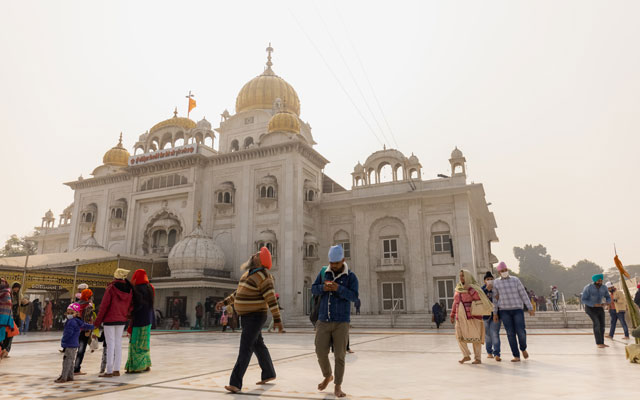









Delhi has imposed a week-long lockdown from April 19 to contain a spike in Covid-19 cases, which has put the Indian capital’s health system “at a tipping point”.
Delhi chief minister Arvind Kejriwal said the move was necessary now to prevent “a bigger disaster” down the road.
Delhi has had five consecutive days of more than 200,000 cases as of Monday. On Sunday alone, 25,500 fresh cases were reported, with almost one-third of those tested returning positive Covid-19 results.
Businesses are shut and movement is restricted to essential services throughout the lockdown.
Thirteen other states, such as Maharashtra and Tamil Nadu, have also recently imposed movement restrictions to combat fresh waves for Covid-19 infections. According to AFP data, India has recorded more than 1.4 million cases in the past week.
These restrictions are bruising India’s tourism and hospitality players, who have reported cancellations of room and banquet bookings at a time when many are still struggling to recover from the massive losses incurred since early 2020.
Meanwhile, against this challenging backdrop, the Indian government announced on Monday that it will expand the national vaccination programme to all adults from May 1. The programme, which started in January 2021, is presently available only to residents aged 45 and above.