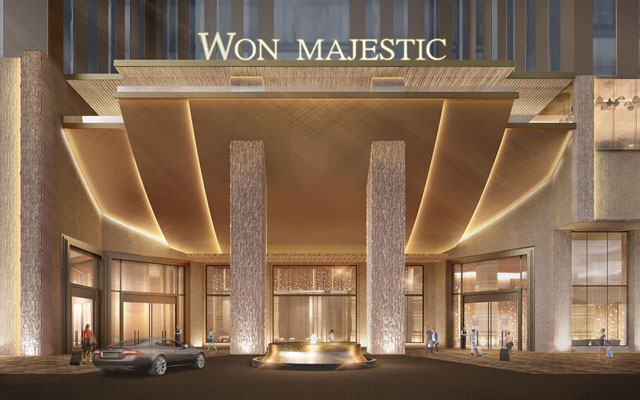
Malaysian-based WA Hospitality will be making its foray into Sihanoukville with the opening of the 300-key Won Majestic Casino Hotel & Resort Cambodia come 1Q2022.
Won Majestic will mark WA Hospitality’s first property in Cambodia when it opens in 2022
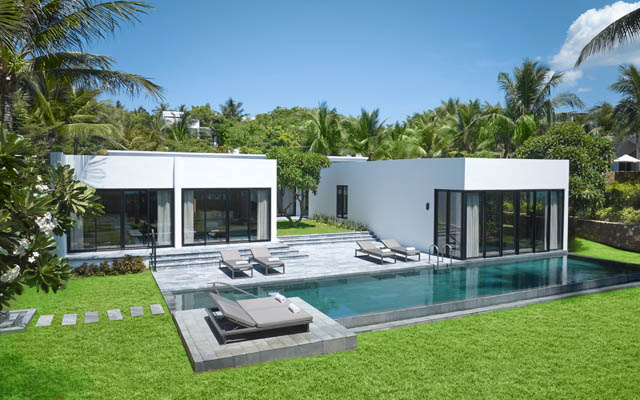
Located steps from the picturesque Sokha beach, the property will feature luxury suites and studio rooms, a swimming pool, gym, three restaurants, guest lounge and a casino.
WA Hospitality had been awarded the management contract to manage the hotel by Cambodian real-estate developer Won Majestic, which has vast experience in the casino business in the region.
Singapore and Hong Kong have called off an announcement planned for Thursday (April 22) on an air travel bubble between the two cities.
It is not clear why the announcement has been delayed, and a new date has not been set, Bloomberg reported, quoting people familiar with the matter. The report also quoted a source as saying that the cancellation was initiated by the Singapore authorities.
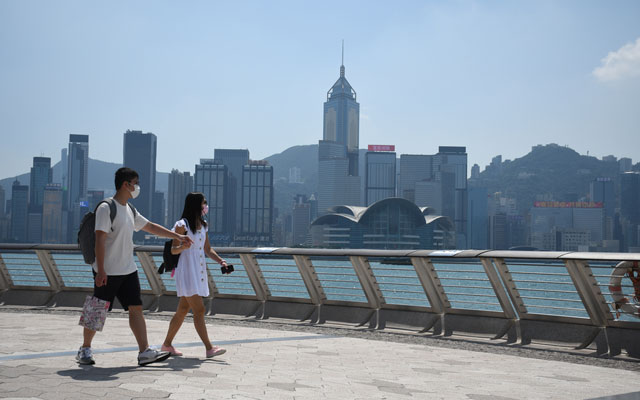
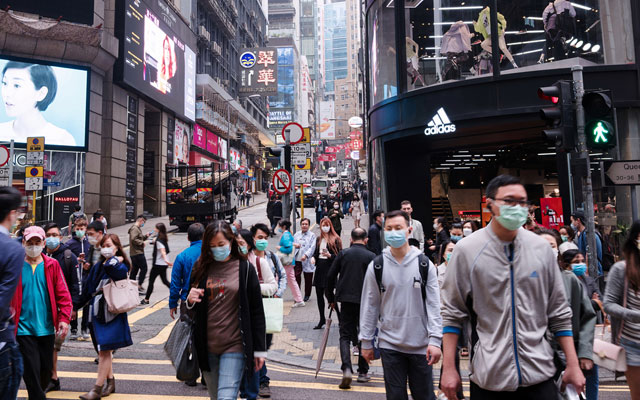
Singapore-Hong Kong potential travel bubble hits another snag as Singapore battles fresh Covid-19 cluster
Media reports had earlier reported that Singapore and Hong Kong were finalising the details of the travel bubble, which will exempt travellers from quarantine. Sources had told the South China Morning Post that the Singapore-Hong Kong delayed travel bubble is on track for a mid-May launch, despite the emergence of new virus variants.
The development comes as Singapore faces a new Covid-19 cluster among its migrant worker community that is linked to an imported case.
Japan’s largest travel agency has launched a virtual reality tourism resource that aims to introduce remotely the country’s top destinations, experiences and products amid ongoing pandemic restrictions.
JTB Corporation teamed up with information media provider Fun Japan Communications and cloud service vendor Fixer to create Japan Virtual Platform, which will begin registration of users at the end of this month.
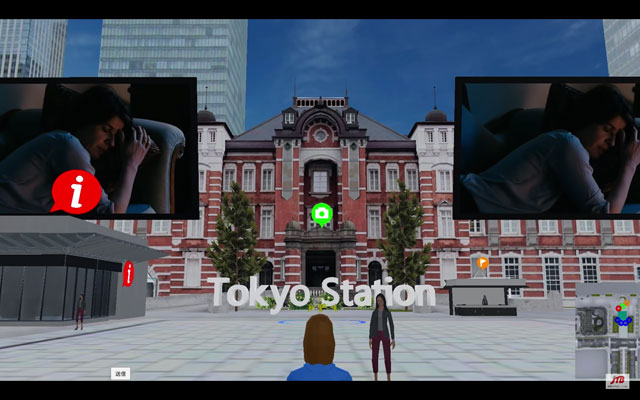
Virtual travellers will be able to tour attractions around Japan using an avatar on JTB’s new VR platform
The initiative is designed to help revitalise Japan’s battered tourism industry as well as regions and local businesses specifically. Initially, JTB will target Japanese users, but its aim is to attract 1.25 million users in Asia and 10 million users worldwide by 2024.
Users will be able to explore various parts of Japan virtually using an avatar. So far, Hokkaido – an area renowned for seafood, dairy products and unspoiled nature – and Tokyo’s sleek Marunouchi district famous for Tokyo Station and the Imperial Palace Gardens have been created, with more areas slated for addition on a weekly basis. Users will also be able to interact with others and learn about the history and culture of Japan.
Local businesses and communities will be able to join the platform to promote e-commerce shopping, which JTB expects to be a popular activity among users.
Eijiro Yamakita, president and CEO of JTB, described the platform as a “new exchange mechanism that transcends the boundaries between real and virtual,” at a time when in-person exchanges continue to be “severely restricted” due to the pandemic.
Daisuke Fujii, president and CEO of Fun Japan Communications, said that the platform could “become a bridge between Japan and overseas” that helps to revive Japan’s tourism and local economy. He added that the project has the potential to “create a new trend in Japan and the world” based on “the connections between people”.
Australia is looking at Singapore as its next target for a travel bubble agreement, after its quarantine-free travel bubble with New Zealand took off this week.
The commencement of the travel bubble – the first for both countries – comes more than a year after air links between the two neighbours were suspended due to the ongoing pandemic.
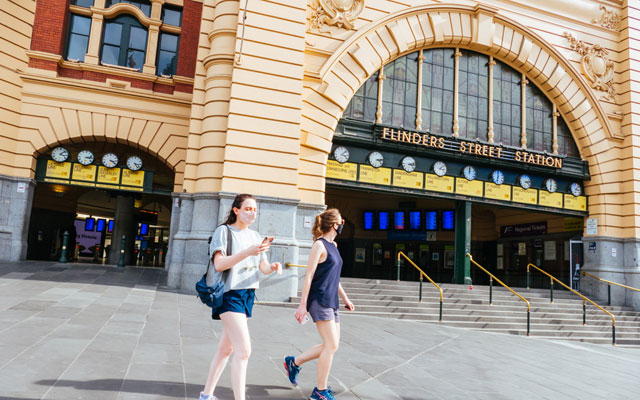
Singapore tops Australia’s list for potential travel bubble partners; Flinders Street Station pictured
First flights under the two-way travel bubble were near capacity, with almost 10,000 people travelling between the two countries on Monday, the day the travel bubble opened, according to a report by The Straits Times.
With the opening of the trans-Tasman travel bubble and the global vaccine rollout, the Australian government is looking to forge similar agreements with other low Covid-risk countries, including Singapore.
Local news outlets quoted Australia’s deputy prime minister Michael McCormack as saying that the government remains “in discussions” with Singapore on a potential travel bubble between the two countries. He also said that discussions with the Singaporean government were in its initial phase, and that Singapore was top of the list for future travel bubbles.
A fresh explosion of Covid-19 cases in India has extended the destination’s road to recovery, upsetting travel and tourism players’ efforts to rebuild both domestic and international business.
The latest wave of infections in early April has impacted almost the entire country, especially in key tourism destinations such as New Delhi and Mumbai, resulting in lockdowns and night curfews. There are now more than 15 million confirmed cases across the country at press time.
New Covid surge derails India’s tourism recovery; CBD of Connaught Place in New Delhi pictured
E M Najeeb, chairman of ATE Group of Companies, which has businesses in travel and hospitality, said the latest development has dimmed future prospects.
“The rising number of Covid-19 cases in India is worrying. We were expecting some green shoots to sprout in international demand beginning September this year, but now the future looks challenging,” commented Najeeb.
Some countries, such as the UK and the US, have responded this week with advisories against travel to India. Both are important source markets for India pre-pandemic, with the UK contributing 9.2 per cent of total international tourist arrivals in 2019 and the North American market holding a share of 17 per cent.
According to a recent ForwardKeys study, North American markets are expected to grow strongly for Indian inbound while markets like Europe are expected to record a decline. However, some Indian tourism players find it too premature to predict a shift in demand pattern.
“The demand that we are seeing from North American markets is mainly from the Indian diaspora,” said Ravinder Kumar, managing director, Indian Legend Holidays, who added that the resumption of tourist visas – presently suspended – is key to the recovery of the inbound sector.
“Restarting of e-tourist visas and reinstatement of scheduled international flights, at least to those countries with which India has travel bubble arrangements, are critical for the revival of Indian inbound market,” echoed Subhash Goyal, chairman of STIC Travel Group.
Currently, India has travel bubble agreements with 27 countries.
Najeeb believes that new tourism source markets will emerge once the pandemic is over. He is placing his bets on the Middle East and Far East, but remains confident that the traditional source markets of the US and Europe will still be important.
He has started engaging counterparts in the Middle East and Far East to gauge the needs of travellers, and has plans to organise familiarisation trips for tour operators based there.
Recovery could also come from niche travel segments, such as wellness and religious tourism.
Arun Anand, managing director of Midtown Travels, told TTG Asia that wellness seekers from the US and Europe would desire India post-pandemic, and they would likely do long-stay programmes.
He also urged Indian destination marketers to focus on Buddhist tourism as a means to rebuilding inbound business.
And with travellers prioritising travel safety and favouring shorter flights, Arun predicts that India will see “good demand” from neighbouring Asian markets like South-east Asia.
The much-delayed travel bubble between Singapore and Hong Kong is on track for a mid-May launch, despite the latter having confirmed the first Covid-19 infection with a mutant strain in the community.
According to a report by the South China Morning Post, insider sources have revealed that details on the travel bubble are set to be released in the coming days. The report also quoted a source as saying that both sides are keen for the plan to materialise as soon as possible.
Singapore, Hong Kong keen to launch delayed travel bubble as soon as possible
The development follows Singapore’s announcement that the stay-home notice period (SHN) for travellers from Hong Kong will be reduced from 14 days to seven days from Thursday (April 22), and they will be allowed to serve their SHN at their place of residence.
Travellers will also be required to take a Covid-19 PCR test upon arrival and another PCR test before the end of their seven-day SHN.
Hong Kong will also shorten the self-isolation period for fully vaccinated visitors from Singapore, requiring them to serve only a seven-day quarantine at a designated hotel, instead of 14, from as early as end-April or early May. Additionally, Singaporean travellers who have not been vaccinated will need only quarantine for 14 days at a designated hotel, as compared to 21 days previously.
Hong Kong travellers who wish to join the travel bubble scheme will have to be fully vaccinated. However, Singapore will not impose the same vaccination requirement for incoming travellers from Hong Kong.
Mandarin Oriental Hotel Group has appointed Joanna Flint to the newly-created role of chief commercial officer.
In this new role, she will oversee the development and execution of the Group’s commercial strategy while also taking executive responsibility for all aspects of Mandarin Oriental’s customer experience.
These responsibilities were originally assigned to chief marketing officer, Jill Kluge, who will retire from Mandarin Oriental in September 2021.
Prior to joining Mandarin Oriental, Fint spent 12 years at Google in general management and sales leadership roles, most recently as managing director – global partner Business, with responsibility for industry go-to-market and commercialisation for Google’s media and technology partners in Asia Pacific.
Before Google, she was principal consultant at Ogilvy Asia Pacific. This followed a decade in the travel industry-leading global eCommerce, CRM and customer service transformation programmes for Singapore Airlines and British Airways.
Far East Hospitality (FEH) will continue with its regional expansion plans, which includes two upcoming properties in Japan and Singapore, as well as a partnership with Artotel Group to boost its presence in Indonesia.
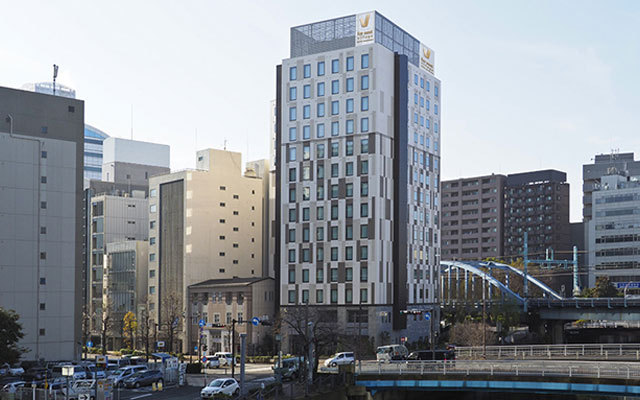
Slated for opening in June this year, Far East Village Hotel Yokohama will be FEH’s and the Village brand’s second property in Japan, following the opening of Far East Village Hotel Ariake last July.
FEH to open second Village property in Yokohama, Japan
The 277-key property will be managed by FEH under a hotel management agreement with Far East Organization. Situated in the heart of downtown Yokohama, the property targets business travellers. It is a five-minute drive to the CBD and a three-minute walk to Sakuragicho and Kannai stations.
On home ground, the hospitality group will also be expanding into the resort and spa category with the opening of Oasia Resort Sentosa in 2H2021.
The 191-key property will consist of Suites, Wellness Premier Rooms, and Deluxe Rooms, and will be the fourth property on Sentosa island managed and operated by FEH. Guests will be able to partake in wellness activities such as spa treatments, fitness routines, and mind-body practices; as well as connect with nature. Wellness journals, self-care checklists, and access to a collection of guided meditation audio will also be made available to guests during their stay.
In addition, FEH has entered into a partnership with Indonesia’s hospitality and lifestyle company Artotel Group to collaborate across operations, branding, and training, as well as support business growth across markets.
As part of the agreement, both FEH and Artotel Group will be represented as an “Affiliate Brand” on the respective parties’ distribution channels and ecosystem. FEH will also work with Artotel Group to enhance its presence in Indonesia and gain meaningful market share. Both parties will also conduct training exchanges to share industry best practices and increase internal knowledge and expertise across markets.
Incheon Tourism Organization (ITO) in South Korea has struck a new partnership with Tencent Cloud to build a smart tourism solution to boost post-pandemic recovery.
The collaboration is a joint effort to help South Korea’s tourism businesses reach travellers from China which has emerged as the country’s second-largest source market, with more than six million inbound visitors in 2019, accounting for nearly 35 per cent of the total inbound visitor arrivals.
Incheon partners with Tencent Cloud to boost its pandemic-hit tourism sector; Incheon’s Chinatown pictured
Through Tencent Cloud’s technologies, ITO will be able to better connect with inbound travellers from China to speed up the recovery of South Korea’s tourism industry. Tencent’s social solution, which includes travel and culture content recommendations, Weixin advertisements and Weixin Mini Programs, will aid the regional tourism board in reaching its target audience while deepening its understanding of Chinese tourists.
Tencent Cloud will provide ITO a one-stop smart tourism solution for travellers, leveraging the user base of Weixin and WeChat, as well as Tencent’s technology platform and digital marketing service capabilities.
The solution will allow visitors to bookmark hotels, check local weather forecast, discover shopping and tour guides, explore local restaurants and scenic attractions, download coupons, get directions and routes to landmark spots, as well as obtain tax refunds via a Weixin Mini Program before and after travelling.
Lee Gun Woo, vice president of ITO, said: “The growing number of Chinese tourists exploring South Korea, as seen in pre-pandemic statistics, demonstrates a need for the South Korean tourism industry to reach out to and further understand Chinese travellers’ preferences and habits. Looking ahead to the world’s recovery from the impact of Covid-19, we are now provided with the technology to better address and cater to the needs and requirements of visitors from China through our collaboration with Tencent Cloud.”
Accor will further grow its presence in the Philippines with the signing of a 182-room hotel in Cebu, slated to open in 2024.
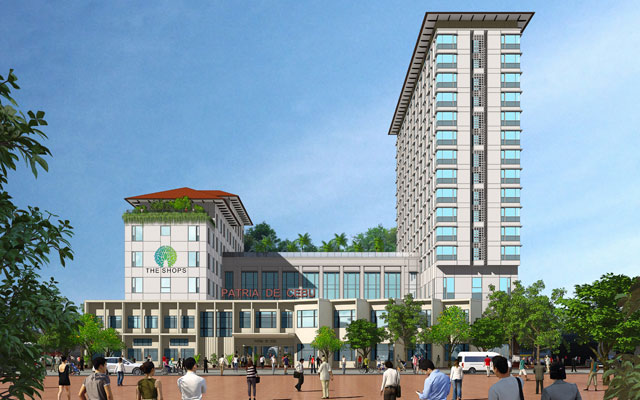
Mercure Cebu Downtown will be situated in the historic downtown area of Cebu and will form an integral part of the Patria de Cebu masterplan which features an integrated shopping centre, offices and central plaza.
Rendering of Mercure Cebu Downtown
The hotel will offer a restaurant, an executive floor lounge, swimming pool, gym and a rooftop bar; in addition to events facilities including a ballroom, meeting rooms and business centre.
Mercure Cebu Downtown will join a pipeline of 18 hotels across the country, including the Sofitel Cebu City which was announced in February.













Singapore and Hong Kong have called off an announcement planned for Thursday (April 22) on an air travel bubble between the two cities.
It is not clear why the announcement has been delayed, and a new date has not been set, Bloomberg reported, quoting people familiar with the matter. The report also quoted a source as saying that the cancellation was initiated by the Singapore authorities.
Media reports had earlier reported that Singapore and Hong Kong were finalising the details of the travel bubble, which will exempt travellers from quarantine. Sources had told the South China Morning Post that the Singapore-Hong Kong delayed travel bubble is on track for a mid-May launch, despite the emergence of new virus variants.
The development comes as Singapore faces a new Covid-19 cluster among its migrant worker community that is linked to an imported case.