
In the past decade, the Asia-Pacific region established itself as the world’s largest, fastest-growing, and most diverse tourism market. In Thailand, the tourism sector supported almost 20 per cent of national GDP in 2019, and one in five jobs, according to the WTTC.
This year, of course, the tourism sector has come to face with its biggest-ever challenge – the coronavirus.
In Oxford Economics’ latest projections for the travel and tourism sector in Thailand, we expect the volume of international visitor arrivals to fall by more than half in 2020, compared with last year. In our central scenario, we do not see tourism spending recovering to 2019 levels until 2024. That means a 4.8 trillion baht loss of visitor spending in Thailand’s economy compared with our pre-pandemic outlook.
For tourism providers in Thailand and across Asia-Pacific, this is a devastating blow. Our modelling identifies 40 million “jobs at risk” in the wider Asia-Pacific tourism sector. For workers and business owners in this sector, a return of tourism expenditure could not come soon enough. What is increasingly clear is that the rebuilding of the travel and tourism sector will be essential for the wider economic recovery of the region.
Airbnb’s role in Thailand, as part of the wider short-term rental sector, provides a useful example of how tourism spending manifests itself broadly around the economy. We recently worked with Airbnb to estimate its total economic impact across 13 Asia-Pacific countries in the five years preceding the coronavirus travel disruption. This included detailed modelling of the direct economic impacts of the spending Airbnb facilitates, and the indirect economic impacts it creates through supply chain effects and wage expenditure.
A little more than one third of Airbnb’s total economic footprint in Thailand (worth around 44 billion baht in 2019) can be attributed to this “direct impact” – that’s the value added by businesses and workers in the first line of tourism activity: the bars and restaurants, retailers, and taxi drivers. The remainder is generated by the “indirect” value added along the supply chains of these tourism providers, and from the wage expenditure of those workers earning incomes from it. And these wider impacts fall widely across sectors and are spread widely across states and regions.
In Thailand, only one quarter of Airbnb’s economic impact falls in Bangkok (Airbnb’s biggest local market in Asia-Pacific). The lion’s share is distributed around second-tier and smaller tourism destinations, including those with no tourism footfall to speak of at all.
Similarly, the decline in tourism has not only been felt by the unfortunate staff and operators of those frontline tourism providers, but also in the transport, retail, manufacturing, and agricultural jobs that service this tourism demand indirectly.
As our study for Airbnb highlights, there are more than 925,000 workers in Asia-Pacific whose employment was supported by Airbnb-related tourism alone in 2019. More than half of these workers benefited through indirect impacts. They might not make the connection themselves, but their employment and prosperity are tied in part to the recovery and trajectory of the tourism sector.
So, how can a recovery in travel and tourism be accelerated? When producing our forecasts, we tend to closely observe three core obstacles: physical travel restrictions, depressed economic conditions, and lasting impact the coronavirus will leave on traveller confidence.
It is increasingly clear that the early revival of short-haul and domestic travel along safe and trusted, low-risk travel corridors will be key to recovery, before a broader normalisation of tourism flows can be established in the years to come.
In many ways, platforms like Airbnb are well placed to help accelerate Asia-Pacific’s tourism recovery. There are five reasons why:
- Facilitating and inspiring domestic trips: As households look to substitute longhaul for short-haul and international for domestic trips, platforms like Airbnb can help connect that demand with new and unique alternatives.
- Supporting a youth-led recovery: The coronavirus has disproportionately affected older travellers in terms of health impacts and the willingness to travel. Young people will be critical to tourism’s recovery, particularly in the early stages, and the majority of Airbnb’s users are aged under 30.
- Helping to rebuild international travel as an export sector: Airbnb’s community model helps sustain traveller interest through the restricted travel period, and therefore, smooth and catalyse their return to the market once conditions normalise.
- Leveraging analytics to adapt to a changing landscape: With such a rapidly shifting landscape, agility in the current market is key. Hosts and travellers will benefit from the platform’s ability to respond quickly to the shifting trends and preferences.
- Finally, agility and flexibility in supply: Early signs of travel recovery have indicated a shift in demand for travel destinations, compared with the pre-coronavirus norms. Anchoring accommodation supply too heavily to pre-coronavirus tourism infrastructure could therefore act as a drag on recovery. Airbnb’s agile and flexibly supply of hosts can help facilitate the return of tourism spending more swiftly, and the wide range of jobs and incomes it supports.
In a post-pandemic world, a full recovery of the tourism industry will likely take time. There have been some encouraging signs of recovery in short-haul and domestic trips, but industry players across the board will need to do their part to deliver the sector’s broader revival. Platforms like Airbnb can play a pivotal role in supporting these efforts and reintroducing the many gains of tourism to the Thai economy.















Boracay has reopened to tourists from the general community quarantine (GCQ) areas on Thursday (October 1), signalling a significant stride towards restarting the Philippines’ tourism industry amid the pandemic.
The island has been open to visitors from Western Visayas since June, and tourism secretary Bernadette Romulo-Puyat said the island’s reopening to a wider market marks “a crucial first step” for jumpstarting domestic tourism recovery across the country. This gives the country’s tourism industry a glimmer of hope, especially for those counting on tourism to survive, she added.
“What could be a better way to herald the revival of Philippine tourism than the reopening of the world-renowned Boracay Island?” she said.
On its reopening day, the island welcomed 19 tourists, including seven from metro Manila and five from Aklas, according to data from the municipal tourism office of Malay.
Despite the low visitor count, Puyat told The Philippine Star that the gradual entry of tourists on the island would allow the government to test its health and safety protocols.
Having welcomed Western Visayas visitors since June, the island has reported zero Covid-19 cases, according to Puyat, promising government support in ensuring that health and safety protocols are in place.
The Department of Tourism (DOT), the Boracay Inter-Agency Task Force (BIATF), along with the Department of Environment and Natural Resources secretary Roy Cimatu and Department of Interior and Local Government secretary Eduardo Ano, the province of Aklan and the municipality of Malay have implemented enhanced hygiene and safety protocols in entry points, accommodations and activities, Puyat said.
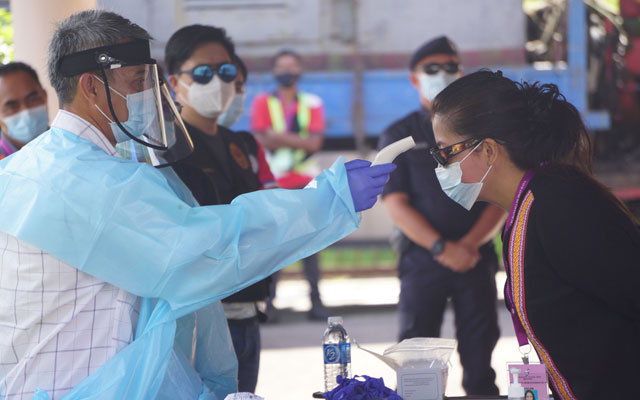
“We advise all tourists to be on strict quarantine immediately after the (Covid-19) test and until the time of travel to the island. This is to help ensure that they will remain free of Covid-19 before they visit Boracay,” she added.
Puyat reiterated that while the age restriction has been relaxed to allow travellers below 21 and above 60 years old, only those without underlying medical conditions and with documentation of negative Covid-19 test results taken 48 hours before travel to the island will be allowed to enter the island through the Godofredo P. Ramos Airport in Caticlan.
A confirmed booking in a DOT-accredited accommodation establishment, air tickets, and documentation of the negative Covid-19 test result should be submitted online, through http://aklan.gov.ph, for the approval of the Aklan provincial government. Each visitor who is cleared to travel to the island will then be issued a unique personal QR code for monitoring.
The tourism chief urged the island’s guests to comply to the health and safety protocols in order to ensure the success of Boracay’s reopening. “We urge our visitors to be responsible tourists. Follow the guidelines, respect the rules. We can never be too complacent, even on vacation, we must adhere to the minimum health protocols. Let’s wear our mask when possible,” said Puyat.
Meanwhile, DOT-accredited hotels will each have a designated health and safety officer who will call the Boracay Covid Hotline number 152 should any of the guests exhibit symptoms of the virus. The data from the QR code system will be used to identify the close contacts, should a guest test positive for the coronavirus while on the island.