Discova unveils destination guides for agents
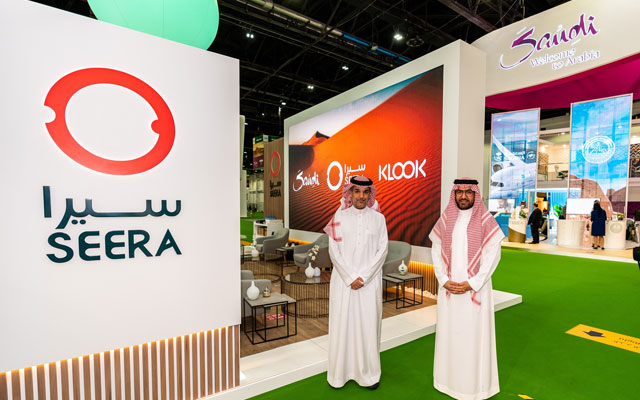
Discova has launched its 2020-2021 destination guides, designed to showcase its upcoming programmes and responsible travel offering alongside useful destination information to trade partners.
Destination guides are available for Thailand, Vietnam, Indonesia, Singapore, Cambodia, Japan, Myanmar, and Costa Rica.

The launch comes as more countries in Asia and Latin America take cautious steps towards reopening their borders to international travellers.
Discova’s 2020-2021 guides aim to provide partners with the destination information they need to advise their customers and offer trips and experiences that are tailored to their needs.
Itineraries range from a beach escape in the Andaman sea to a trek in the biodiverse rainforest of Costa Rica and a community project in the mountains of Thailand.
Andrew Turner, global sales director for Discova, said: “Our partners are telling us that travellers are increasingly looking for single destination experiences rather than multi-country itineraries. Our country specific guides which are a concentrate of our offerings and expertise in responsible and sustainable tourism for each destination will help our partners and their customers achieve their travel ambitions.”
Digitalisation crucial for SMEs’ post-pandemic recovery
Digitalisation and innovation are key for SMEs to survive the pandemic as the travel industry emerges from the crisis, according to a report by the PATA, conducted by Twenty31 Consulting and supported by Agoda, revealed at the World Travel Market.
PATA’s research report, titled The role of Online Travel Agencies (OTAs) in supporting Asia-Pacific SMEs in Recovery, aims to provide insights to benefit SMEs in the hospitality and tourism space that make up a large proportion of travel providers, as they pivot and adapt amid Covid-19.

With the pandemic dramatically changing how and where consumers travel, it is essential for hospitality businesses, especially SMEs, to adapt their operations to thrive within a digital global ecosystem. The report highlights key areas where digital travel platforms and governments can support tourism SMEs in the Asia-Pacific region.
SMEs are leveraging OTAs’ digital platforms to accelerate recovery. There is a shift in the dynamic of the relationship between SMEs and OTAs, with the latter being acknowledged and increasingly valued as a technology, data and marketing partner.
It is vital for SME hospitality providers to understand trends and reach new audiences during these times. SMEs leveraging OTAs can reduce their top-down investment, especially around payments features, customer support and marketing efforts. OTAs have also expanded opportunities for destination diversification, helping to drive tourism in second and third tier cities.
“We have seen a real push for OTAs to do more than simply selling rooms. They are helping us with other services, and this is really helping us forecast our needs and drive more sales,” said a hospitality SME in Thailand.
The use of data insights will future proof SMEs as they navigate today’s ever-changing landscape of the travel and tourism industry. OTAs are technology partners that can help provide SMEs with a comprehensive understanding of data insights to enhance their businesses.
Data insights can be used to optimise revenue through meta-search, machine learning, artificial intelligence, product diversification and platform centralisation.
“OTAs are now using AI tech to tailor offers to customers and that is going to be very interesting. This will likely allow SMEs to match our products and services with high-potential consumers and drive better ROI,” said a hospitality SME in Singapore.
SMEs call on governments to work with OTAs to boost post-Covid travel recovery. During this crucial recovery period, more private-public collaboration will boost travel confidence, where the local government can draw on the private sector’s commercial expertise to spot and create new opportunities to improve the industry, businesses and lives impacted by Covid, as well as stay relevant in the transforming economic environment.
The study also looks at the changing landscape of the travel and tourism industry and how OTAs have rapidly accelerated the growth in the region where Asia-Pacific-based OTAs represent more than a third of global gross bookings.
Mario Hardy, PATA CEO, said: “OTAs play a crucial role in the recovery process, where SMEs can leverage their data and digitise in order to adapt and build long-term resiliency. We are optimistic that the industry will eventually recover with governments and private sectors coming together to ensure that no one gets left behind.
“We look forward to working with our partners, such as Agoda, as we continue to hear from SME operators and how we can advance the discussion around the future of travel and tourism in the Asia-Pacific region, one that is sustainable and inclusive for all.”
Read the report here.
Maldives touts safety to entice visitors back
The Maldives Marketing and Public Relations Corporation (MMPRC) has launched a major campaign with Skyscanner to promote the country as one of the safest destinations in the world for tourists.
The three-month campaign will target the UK, as well as the Italian and Russian markets – the Maldives’ top three key markets pre-pandemic – and is expected to reach 50 million people across the three markets.

With the aim of assuring potential travellers that the Maldives remains one of the safest destinations amid this unprecedented time, the campaign will focus on highlighting the unique geographical formation of the island nation and the isolation and seclusion it provides as a result.
Following the UK government adding the Maldives to its safe travel list, Skyscanner observed an impressive 282 per cent increase in searches, highlighting underlying demand to travel.
Under the campaign, a page will be dedicated to the Visit Maldives tourist board on Skyscanner platforms, targeting the three markets in their native languages. Through this page, content will showcase different experiences for tourists and highlight the exclusivity that the Maldives offers.
Foreign arrivals into APAC plummet 67% in early 2020
The moderate growth of international arrivals into Asia-Pacific destinations in 2019 has been derailed this year, no thanks to the appearance of the coronavirus which has led to the collapse of travel.
According to the Annual Travel Monitor 2020 (ATM 2020) released by the PATA, updated data for foreign arrivals into 47 Asia-Pacific destinations showed moderate gains in 2019, achieving an overall annual growth rate of 3.3% and reaching a new record high of almost 731 million international visitor arrivals (IVAs), relative to 2018.

However, early 2020 data for foreign arrivals into 37 Asia-Pacific destinations show a violent and dramatic decrease in growth rates relative to the same periods of previous years, dropping from a 6.3% increase in early 2019 to -67.0% in early 2020. The loss in the absolute number of foreign arrivals is more than 172 million in the early periods of 2020, relative to the same periods of just one year ago.
All but one of the 37 destinations reported annual decreases between early 2019 and 2020 and the only increase was of just 2,600, with that occurring in the first two months of the year when the real impact of the pandemic had perhaps not yet been felt.
Given that the impact of the containment practices to reduce Covid-19 infection rates were initiated at roughly different times across the globe, only those Asia-Pacific destinations with data for 1H2020 are further considered in order to create a somewhat more level comparative period. While this reduces the number of destinations to 26, the volume of IVAs is reduced by less than 18%.
Within this group of Asia-Pacific destinations, all are showing contractions in IVAs during the first half of 2020 relative to 1H2019 ranging from -41% to as much as almost -90%.
The top five performing Asia-Pacific destinations during 1H2020 can only be listed in terms of those with the least negative growth rates, relative to 1H2019. They are: Mexico (-41.2%), Costa Rica (-48.9%), Sri Lanka (-49.7%), New Zealand (-50.1%), and the Maldives (-55.6%).
The loss in IVAs during the first half of 2020 relative to 1H2019, rapidly escalated even within the least affected destinations, from less than 100,000 to almost half-a-million, in very quick progression. In addition, the losses should be considered in terms of the overall inbound volume for each destination in order to provide some measure of scale.
PATA CEO Mario Hardy said: “Preliminary results show an enormous impact across Asia-Pacific with the 37 destinations for which early 2020 data have been released pointing to a combined decrease in IVAs of 67%. On the data available, it is obvious that no Asia-Pacific destination was spared the impacts of the current pandemic and the lockdown measures needed to contain the spread of the SARS-CoV-2 virus during the first half of 2020, relative to the same period of a year ago.”
“While bemoaning the impact of this pandemic on the lives of so many and the livelihoods of so many more, it also gives us an opportunity to ask why we were so ill-prepared to respond to the threat of Covid-19. The consequence of that would be to engage in business and personal practices that ultimately offer better protection from such threats into the future.”
As noted earlier, 2019 saw moderate gains with an overall annual growth rate of 3.3% with almost 731 million IVAs, relative to 2018. When adjusted for Guam and Hawaii – which appear twice, once as individual destinations and again as inclusions in the US figures – the Asia-Pacific aggregate performance was such that it also grew by 3.3% in 2019, year-on-year and similarly, reached a record high of close to 719 million IVAs.
From 2015 to 2019, the 47 Asia-Pacific destinations covered collectively had their IVAs increase by more than 23%, adding 138 million arrivals to the collective foreign inbound count in the process.
In terms of the percentage growth rate between 2018 and 2019, Asia had the strongest annual increase at 3.7%, marginally ahead of the Pacific at 3.5% and followed by the Americas at two per cent.
By annual increase in the absolute volume of IVAs between 2018 and 2019 however, these positions changed somewhat, with Asia receiving 19.3 million additional foreign arrivals over that period, followed by the Americas with a gain of over 3.2 million and then the Pacific with just under one million additional foreign arrivals.
At the individual Asia-Pacific destination level, the top five with the strongest annual percentage gains in 2019 had increases ranging from almost 15% to more than 38%. They are: Myanmar (38.1%), Brunei (19.8%), Vietnam (16.2%), the Philippines (15.4%), and the Maldives (14.7%).
All told, 11 of the 47 destinations covered in this report had annual growth rates in excess of 10% between 2018 and 2019. In total, 39 destinations had positive annual growth rates over that period, while eight had decreases ranging from a marginal -0.6% to a very strong -21.7%.
For the absolute IVA volume increase between 2018 and 2019, the strongest Asia-Pacific performers were: China (7.22 million), Turkey (5.57 million), Mexico (3.71 million), Macau, China (3.60 million), and Vietnam (2.51 million).
Nine destinations had annual volume increases of more than one million IVAs each, while 16 had increases in excess of 100,000 apiece between 2018 and 2019. The eight destinations with reduced arrival numbers in 2019, had an annual cumulative loss of 11.725 million IVAs. However, this was offset by the annual increase of almost 35.2 million into the other 39 destinations, thereby keeping the overall Asia-Pacific annual increase in IVAs positive in 2019.
In percentage increase terms between 2018 and 2019 by source region, Africa had the strongest annual increase at 7.7% year-on-year, followed by Europe with a gain of 5.9%, and then Asia at 3.1%. The non-descript ‘Others’ category increased by 10.5% in 2019, year-on-year.
By annual increase in the absolute volume of foreign arrivals over that same period, these positions changed somewhat, with Asia generating close to 13.7 million additional foreign arrivals, followed by Europe with almost 5.2 million, and then the Pacific with 0.3 million additional foreign arrivals generated over that period. The Americas contracted marginally between 2018 and 2019, generating 64,000 fewer arrivals over that period.
At the individual source market level, the top five with the strongest annual percentage growth rates into Asia-Pacific in 2019 are: Libya (37.6%), Morocco (32.2%), Slovakia (26.7%), Serbia (25.4%), and Latvia (22.7%).
All told, 169 (71%) of the 237 source markets (including ‘Others’) covered in this report, had positive or stable annual growth rates, with 73 of those (31%) equal to or stronger than 10%. Of the total, 68 (29%) turned negative between 2018 and 2019.
For the absolute volume increase between 2018 and 2019, the five strongest source markets into Asia-Pacific are Hong Kong (3.23 million), the US (1.69 million), Russia (1.21 million), India (1.03 million), and Japan (1.01 million).
Interestingly, four of these top five source markets are within the Asia-Pacific region, suggesting that between 2018 and 2019 at least, intra-regional travel was strong. Russia was the only European source market in this group of five and generated an annual increase of more than 1.2 million IVAs into Asia-Pacific in 2019.
Of all the source markets covered in this report, seven (~ 3%), generated annual volume increases of more than one million each, while an additional 30 (~ 13%), produced more than 100,000 additional IVAs into Asia-Pacific between 2018 and 2019.
Taking the world by virtual storm

What was the inspiration for merging ILTM’s many events into a single World Tour? How will the new show aim to target different markets?
ILTM World Tour – access all areas will compensate for the postponed ILTM events in 2020 and provide an environment for international luxury travel brands and regional buyer communities to virtually meet to connect and build their businesses.
While we know that virtual events will never replace our love to meet and share stories in person, we know that right now, what counts the most is getting business lined up for 2021. We cannot predict the timing of when growth will come back, but we can be ready for whenever it happens.
What details can you reveal about the format and content of this event?
We have created something very different – a world tour that will take place for four hours a day, for three days over three weeks, (covering) three buyer source regions. It all starts with the sunrise in Asia Pacific; follows the sun north to Europe, Middle East and Africa; then finally crosses the Atlantic to both North and South America.
With some 2,000 participants, each event is a refined version of the annual ILTM in that region so we have given suppliers the opportunity to pick one, two or all three weeks. The ILTM World Tour is representative of the world of ILTM’s portfolio of events, so the content will reflect that. It will also be available to all participants, so they can choose when they want to watch it during the three days of each week across three weeks.
There will be content included with keynote sessions announced each day. We want them to be a surprise to those registered so I’m not going to give away too much right now.
As much of international travel is still difficult at this time, what lessons are you learning about the ILTM and luxury travel community through the past months?
2020 has been a tough year for everyone. The luxury travel industry has suffered as a result of the unprecedented events, and it has meant adapting their business strategies. With target markets shifting as some borders remain closed, we want the ILTM World Tour to open up opportunities for all participants, as well as to bring people together, uniting through shared experiences and business, whilst we plan for our return.
The ILTM World Tour is about offering all of the regions of the world – (places) where we would have had an ILTM event this year – an alternative opportunity to meet together. It doesn’t replace (attending) an ILTM in any of these countries, but we know by the response to it that the world’s luxury travel industry needed an event to happen this year, and this is the biggest we could create virtually.
But we don’t expect anyone to sit in front of a screen for hours on end. With short days and regular breaks, this is as much about self-care as it is business. It cannot replace face-to-face, but it can pave the way for a stronger 2021.
Travel search spikes, air tickets sold out within hours of SG-HK travel bubble confirmation
Confirmation of the Singapore-Hong Kong Air Travel Bubble (ATB) on November 11 has led to an immediate surge in travel search and flight bookings, with seats on Singapore Airlines and Cathay Pacific flights designated for the first day of the travel access on November 22 sold out within hours.
According to a news report by CNA, prices for Singapore Airlines economy class seats departing on November 22 steadily increased from about S$800 (US$593) at 10.00 on Wednesday to more than S$1,100 at about 15.00.

Cathay Pacific economy fares for the same departure date also rose, crossing the S$900 mark by late afternoon.
At Trip.com, the ATB launch announcement brought forth a 300 per cent spike in search volume for flights from Hong Kong to Singapore and a 200 per cent increase in Singapore hotel searches within three hours.
Trip.com data also showed a significant rise in the search volume for travel products from Singapore to Hong Kong, with a 200 per cent increase for flights and a 150 per cent increase for hotels.
The positive response follows on from Trip.com’s record of increased search volume since the first announcement of the ATB agreement on October 15, indicating that hunger for cross-border travel remains strong.
Consumer intelligence company Adara has also seen an encouraging rise in weekly searches since the ATB possibility was reported, with average weekly searches for Singapore and Hong Kong rising by 38 per cent and average weekly bookings by 83 per cent.
The certainty of travel between the two cities now has led Singapore consumers to plan 31 to 60 days ahead for their trips, and an 11 per cent improvement in travel interest.
Searches for longer trip are also up since the ATB confirmation, with 16 per cent of consumers looking at spending eight to 14 days (five per cent prior to the confirmation) and 20 per cent spending more than 15 days in the destination (13 per cent prior).
Singapore pushes precinct exploration through Pokémon Go
The Singapore Tourism Board (STB) has teamed up with American AR technology company, Niantic, to showcase tourism offerings and encourage precinct exploration with the popular smartphone game, Pokémon GO, as part of the ongoing SingapoRediscovers campaign to support local businesses.
With the tie-up between STB and Niantic, players will be able to meet and capture Pokémon or engage in virtual Raids with other players at up to 300 new PokéStops and Gyms located at tourism establishments and lifestyle offerings, starting November 12.

These are located at hotels, attractions, retailers, F&B establishments as well as at tour ticketing booths in 10 precincts, including Changi/East Coast, Chinatown, Joo Chiat/ Katong, Kampong Gelam, and Mandai/Kranji.
STB is also planning to schedule special Raid Battles in some areas, with details to be released in the coming weeks on the Singapore Tourism Board Facebook (@STBSingapore) and Instagram (@stb_sg) accounts.
Not only will this initiative encourage people to walk around and discover new things in their surroundings, which in turns enable the discovery of local businesses and precinct exploration, it also conveys promotion offers to players when they access online banners and microsites at PokéStops and Gyms.
Lim Shoo Ling, STB’s brand director, said: “We are excited by this collaboration with Niantic, which allows us to connect with the passionate community of Pokémon GO players in a fun and innovative way. As they pursue their favorite Pokémon across Singapore, we hope players will explore our precincts, discover hidden gems, and support local business – while staying safe and observing the necessary precautions.”
“Our strength is to influence people to walk physically from location to location, and we are hoping to utilise this to encourage people to explore different parts of Singapore in-depth and boost domestic travel needs,” said Gary Chang, APAC business development lead, Niantic.
New hotels: The Sebel Yarrawonga; COSI Krabi Ao Nang Beach; YaTi by Artyzen Hongqiao Shanghai

The Sebel Yarrawonga, Australia
Located in the picturesque Murray River region of Victoria and adjacent to Silverwoods Golf and Lifestyle Resort, The Sebel Yarrawonga opened on November 1 to offer accommodation, dining, conference and events facilities.
There are 63 stylish studios rooms and apartments, with a further 54 keys to come in stage two of the development in 2022/2023. Two of three F&B venues are now welcoming guests – Stock & Barrel bar and casual dining and Sunset Pool Bar. A fine dining restaurant is set to open in December.
COSI Krabi Ao Nang Beach, Thailand
Opened on October 23, the 142-key COSI Krabi Ao Nang Beach projects a youthful energy through its red hawk murals created by award-winning street artist Rukkit Kuanhaweth as well as The Hub, a destination in the heart of the hotel for guests to work, connect and relax over a film or a game.
Central to the COSI lifestyle is 24-hour convenience, delivered through a café, COSI Fit fitness centre and a self-service laundromat – all open around the clock.
The hotel is located within walking distance from Ao Nang Beach and the town’s nightlife and restaurants. Further afield, adventure-loving travellers can visit and explore the region’s caves, go rock climbing on its soaring limestone cliffs, and search for offshore island gems.
YaTi by Artyzen Hongqiao Shanghai, China
Projecting creativity, vitality and passion, the new YaTi by Artyzen Hongqiao Shanghai promises a space for youthful travellers to live and breathe social, art and culture scenes while offering stay essentials without fanfare and complications.
The 303-room select service hotel offers direct access to Artyzen Habitat, which was launched a year ago. YaTi’s guests can enjoy Artyzen Habitat’s facilities, such as a fully equipped gym, Utility Hub with self-serviced laundry, a bistro and café, an amphitheater and events studios.
The hotel is close to Ziteng Road Metro Station on Line 10 and a short drive to the Hongqiao Railway Station and the Hongqiao International Airport.
GHM to manage new resort in Koh Chang
GHM will manage Aquarius International Development’s 200-key Chedi Aquarius Koh Chang, which is slated to welcome guests in 4Q2023.
The property will feature an all-day-dining restaurant, a cliff-edge restaurant, rooftop bar, spa, infinity pool with pool bar, and conference facilities overlooking the Gulf of Thailand.

“This new resort is shaping up with an integrity of design and a certain poise that are hallmarks of the Chedi experience,” said GHM CEO Tommy Lai.
“We’ve been on the lookout for a way back into Thailand since 2013, and The Chedi Aquarius Koh Chang is the perfect vehicle.”
GHM opined that Koh Chang, as Thailand’s third largest island, will charm travellers with its relative obscurity compared with popular Phuket and Koh Samui. Its natural splendour, by way of a national park that covers 83 per cent of the island, will also work in its favour.


Swedish ship captain Robert Bodin is speaking to cruise passengers over the public address system. However, it’s neither to invite us to the time-honoured captain’s toast, nor to give us evacuation details in case of emergency. Rather, he is dispensing instructions on what to do if we cough or sneeze, encouraging regular hand washing, and detailing steps on how to go about washing our hands.
Welcome to cruising in the Covid era, where hygiene reigns supreme, where self-serve buffets have gone the way of the dodo, and where the biggest safety or threat at hand is neither fire nor collision, but an invisible enemy that has 2020 in its firm grip.
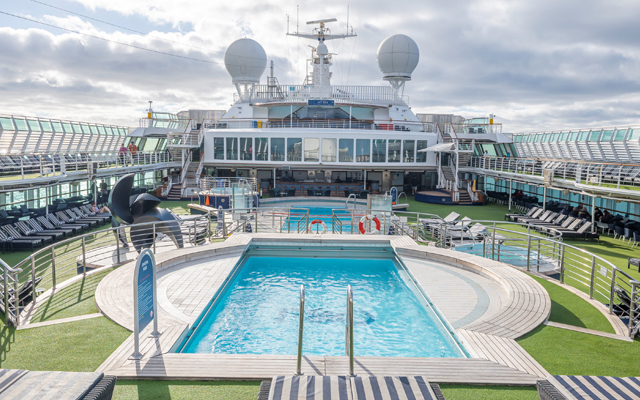
We are on board Genting Cruise Lines’ (GCL) three-day Super Seacation sailing on its 18-deck megaship World Dream, which is the brand’s second outing from Singapore, following its inaugural cruise to nowhere on November 6. World Dream is the first cruise ship to restart operations in Singapore in the wake of the pandemic.
The pilot sailings are operated in compliance with Singapore Tourism Board’s mandatory CruiseSafe certification programme, jointly developed with quality assurance and risk management company DNV GL, which sets out stringent hygiene and safety measures throughout the passenger journey.
Sailing is at a reduced capacity of up to 50 per cent, and only open to Singapore residents.
Our journey started off on Sunday at 11.15 – our appointed Covid-19 test time indicated in the cruise confirmation slip, as part of crowd control measures. After dropping off our luggage in front of the Marina Bay Cruise Centre Singapore, we headed to the car park-turned-test facility to take our antigen rapid test.
To ensure safe distancing among today’s crowd, mostly made up of families with kids, along with some couples and friend groups, the facility has been divided into different zones, based on test timings. After checking in via SafeEntry, getting a temperature check, and filling in a health questionnaire – which can be completed either in physical or electronic form – we wait for our turn to join the queue.
After the test, we proceeded to the holding area, divided into colour zones, to await our results. The whole process lasted 90 minutes.
At the immigration checkpoint at the cruise centre, we underwent iris and facial biometrics replacing fingerprint scans for border identification checks, as part of Singapore’s move towards a touchless visitor experience. We were then given a pink-hued MICE pod for contact tracing – similar to the Singapore government-issued TraceTogether token, but for cruises – which we had to carry along with us at all times onboard the ship.
The moment we set foot into World Dream, we were whisked into a private lift by a crew member into our Palace Suite (S$1,199/US$887 per pax for a three-day/two-night sailing), where we were greeted by our personal butler, who assisted us with Wi-Fi connections and dinner reservations. We could also access exclusive upper-level facilities via the private lift.
When it came to the safety drill, as compared to pre-Covid, where cruisers had to gather at their assigned muster stations, the safety briefing was carried out wherever we were due to safe distancing rules. We were midway through dinner at the Seafood Grill by Mark Best when a safety announcement was made 45 minutes before departure, while a staff did a live demo on how to put on a life jacket.
These demos are conducted at 36 venues across the ship, while guests who are in their staterooms are able to watch the safety video on their televisions. In a way, this allowed us to still receive the safety instructions, sans the hassle of traditional assemblies.
Holidaymakers who appreciate space and exclusivity will relish the heightened sense of privacy that the new normal of cruising offers. In keeping with Covid-safe rules, cloth signages mark off seats at dining venues to maintain social distancing. Guests sit at alternate tables, with no more than five people per table. Visits to the swimming pools are by pre-booked hourly timeslots, with a 26-person cap in the main pool, and 16 in the private pool, while two people are allowed in each of the Jacuzzis at any one time.
On the final night, we even had the entire private pool deck to ourselves as we soaked in one of the four outdoor hot tubs.
Crew onboard the ship were vigilant and proactive about reminding guests to adhere to safety protocols, such as maintaining a 1m distance from others. While lunching at the Palace Restaurant, when my companion reached out to scoop a serving of char kway teow off my plate, we were stopped by a staff member, who handed us an extra plate for sharing purposes. Once, we were also told to pull our mask up when it slid down our nose, and another time, to keep our face mask on when ambling around the all-day diner The Lido, where à la carte meals replace self-serve buffets.
Temperature screening and scanning of ID card for entry into onboard facilities come as second nature to us. The ubiquity of hand sanitiser dispensers throughout the ship was a welcome convenience, as were handwashing stations at F&B spots. All around the ship were social distancing and one-way system floor decals designed to prevent cross-contamination. Some 40 cruise ambassadors also help to ensure safe distancing onboard.
Generally, we found that the new safety protocols including capacity limits did not put a damper on the cruising experience on this particular sailing, which hosted 1,400 guests onboard the 3,376-pax cruise ship, including 200 media personnel and travel agents.
The only time the capacity limits posed a slight inconvenience was when we were making reservations through our affable butler for the hugely-popular Teppanyaki restaurant – it was fully booked on many timeslots over the three days. The upside? My companion and I had the table all to ourselves, and could enjoy a private tête-à-tête dinner, away from prying ears.
There was also a short wait at the rock climbing station, as only two people were allowed to scale the wall at any one time.
All the rules on land translate to onboard. Although current Covid rules dictate that we couldn’t enjoy a cabaret act at the Chinese restaurant Silk Road, croon to Jacky Cheung’s ditties at the KTV lounge, or admire an aerial acrobatics performance at the three-storey Bar 360, there were enough activities onboard to keep us occupied over three days.
We went rock climbing, teed off at the mini golf-course, had an invigorating foot rub at the spa, shot skeletons at the VR game zone Esc Experience Lab, and rode a waterslide where water kept shooting up our nose.
Social distancing also means up-close interaction between the actors and the audience during live performances at the Zodiac Theatre are off the cards. Back-of-house tours also belong in the past. To wit, during the Verry Christmas signature show, a male performer in drag began flirting with a male audience member, teasing about planting a kiss on him, before turning on his heels and going, “Cannot lah! Coronavirus!”
With a 250-person cap limit, more showtimes have to be run at the 999-capacity Zodiac Theatre. For the Verry Christmas show, guests were allocated to show timeslots based on deck levels. The premises is also disinfected using fogging machines after every show. Sanitation is done twice a day at all staterooms and suites, every four hours at public areas, and on a two-hourly basis at high touchpoints such as lift buttons and door knobs.
At the 24/7 medical centre, walk-ins are banned, with all consultations to be pre-accessed via phone. Two doctors are onboard each sailing, with one doubling up as infection control officer. Seven staterooms have been converted into isolation cabins to house suspected and positive cases, with 34 quarantine rooms reserved for close contacts.
In the laboratory sits a US$109,000-priced Covid-19 polymerase chain reaction (PCR) testing machine, which can spit out results within an hour, and not only detect Covid-19, but also 22 other respiratory diseases and bacteria like influenza.
If there is a suspected case, a nurse wearing full PPE will go to the patient’s room and bring him or her to the ward for further assessment. While waiting for the results, the patient will be put in the isolation cabin, which once activated, will be in negative pressure to prevent air leakage out of the room. Meanwhile, contact tracing will be carried out in case of a need to bring close contact cases into quarantine rooms. If the guest tests positive for Covid-19, all activities will seize and all guests asked to return to their cabins, while the ship will return to Singapore shores in less than six hours.
All 187 crew members onboard are also subjected to stringent measures, including completing a 14-day quarantine on the cruise ship prior to Dream World’s arrival in Singapore end-October. They also have to undergo a further series of mandatory Covid-19 testing and must test negative before signing up for active duty.
Disembarkation was a breeze. From leaving our suite to arriving at the taxi stand, the whole process took a mere 19 minutes. Disembarkation was conducted in sequential order by deck, each assigned to different timeslots.
World Dream’s two- and three-night Super Seacation cruises start from S$259 per pax, for bookings before November 30. For more information, visit www.dreamcruiseline.com.
Photos: Cheryl Ong