

Singapore tightens border measures with Taiwan
Singapore citizens, permanent residents and long-term pass holders entering Singapore with recent travel history to Taiwan will have to serve a 21-day stay-home notice (SHN), effective since May 16, 11.59.
The tightened border measures are in response to the recent increase in Covid-19 cases in Taiwan, said MOH in a statement on Saturday.
Travellers from Taiwan will have to serve a 14-day SHN at dedicated facilities, followed by an additional seven-day SHN at their place of residence. They will undergo Covid-19 PCR tests on arrival, on Day 14 of their SHN, and before the end of their 21-day SHN period.
This overrides the previous regulation which allowed travellers from Taiwan to go about their activities in Singapore without the need to serve a SHN, if their on-arrival PCR test results were negative.
In addition, short-term travellers holding an air travel pass with recent travel history to Taiwan will not be allowed to enter Singapore.
Travellers who are not Singapore citizens or permanent residents, and who have recent travel history to Taiwan will be required to take a PCR test within 72 hours before departure. They will also need to present a valid negative Covid-19 test result for entry into Singapore.
All travellers with travel history to Taiwan who entered Singapore between May 15 and May 16 will be subject to government-funded PCR tests on Day 3 and Day 7 of their arrival in Singapore.
MOH said that affected travellers will be contacted with additional details on how they can take their PCR tests.
TTG Conversations: Innovator Chat with Liu Wei Chun, KKday

As domestic and digital tourism turn into a lifeline for travel providers, the need for technological transformation has never been more urgent. Yet, many traditional operators continue to struggle with the costs and usability of e-commerce systems, restricting the distribution of their products at this critical time.
Enter KKday. Not only has the booking platform helped its partners develop new unique offerings for their domestic markets – including glamping with manatees and virtual prayers at Bangkok’s Erawan Shrine – it has also made the platform more accessible and seamless.
Creating a legacy system for tourism providers is an important step in helping the industry recover and thrive, expressed KKday’s co-founder and executive vice-president, Liu Wei Chun. Hear more from Liu in this episode of TTG Conversations: Innovator Chat.
Singapore-Hong Kong travel bubble to be reviewed
The once-delayed Singapore-Hong Kong bilateral travel bubble may risk another disruption due to Singapore’s rising number of Covid-19 cases.
Singapore’s transport minister Ong Ye Kung said at a Covid-19 multi-ministry task force press conference on May 14 that a critical review of the travel bubble’s start date will be carried out.
“The assessment is: Given the rising cases in Singapore, it is very likely that Singapore will not be able to meet the resumption criteria,” said Ong.
A decision will be made early next week on the commencement of the travel bubble, which is scheduled for May 26.
According to a CNA report, Ong had given Hong Kong’s secretary for commerce and economic development Edward Yau an update on Singapore’s situation on Friday morning. Ong shared that both parties have agreed that the travel bubble must be done safely and in accordance with the resumption mechanism that both sides have agreed on.
Under the terms of the agreement, the travel bubble will be suspended for at least 14 days if the seven-day moving average of unlinked local Covid-19 cases a day, excluding dormitory resident cases in Singapore, is more than five in either Singapore or Hong Kong.
As of noon on May 14, Singapore has 52 new infections, including 24 community cases, said the Ministry of Health.
Staycations still on in Singapore but with restrictions
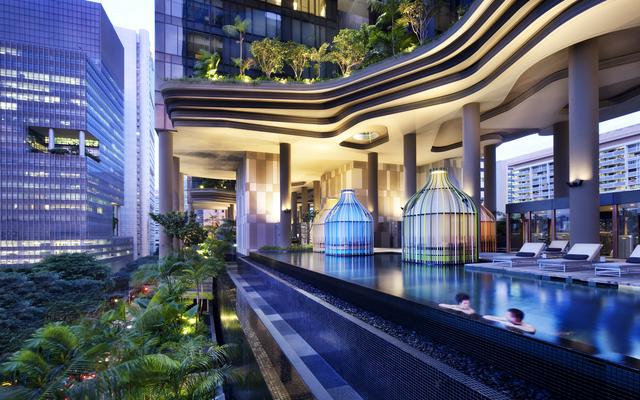
Hotels in Singapore are still maintaining their staycation offers even as the city state prepares to enter a stricter enforcement of movement restrictions from this Sunday till June 13 to contain a growing number of local infections
Announced in the afternoon of May 14, the latest restrictions include a ban on dining in at eateries and no more than two people in a group when heading out.
According to Kwee Wei-Lin, president of Singapore Hotels Association (SHA), while staycations are still permitted under latest conditions, some hotels have received cancellation requests. She expects the heightened Covid-19 containment measures to impact hotels, especially those with restaurant and banquet operations.
Pan Pacific Hotels Group (PPHG), which operates five hotels and three serviced suites in Singapore, will continue to welcome staycation guests. However, only two people will be allowed in each guestroom, and guests will only be able to enjoy in-room dining and guestroom comforts – with no access to facilities such as the gym and spa – as a result of latest restrictions, according to Cinn Tan, the company’s chief sales & marketing officer.
Millennium Hotels and Resorts is also keeping the doors open at all its properties here – Orchard Hotel, M Social Singapore, Grand Copthorne Waterfront, Copthorne King’s Hotel, M Hotel and Studio M. However, the company is tweaking its business focus for now towards the more resilient couple staycations and longstay corporate business. A spokesperson told TTG Asia that couples are going ahead with their staycation bookings while most family bookings have been postponed to later in the year. Those with bookings for mid-June are adopting a wait-and-see approach and will decide on their plans closer to date.
Phone calls to the reservations desk of several staycation-approved hotels in Singapore found that their advertised staycation packages remain valid for booking during the May 16 to June 13 period.
Singapore Marriott Tang Plaza Hotel and The Warehouse Hotel, for instance, are maintaining their staycation deals at press time, which include configurations that offer complimentary breakfast and dining credits. To abide by latest restrictions, complimentary breakfast will be served in-room while dining credits may be claimed against in-room dining.
Reservation officers at other properties, however, are uncertain how package inclusions could change as a result of the new restrictions, and have advised against booking for the time being.
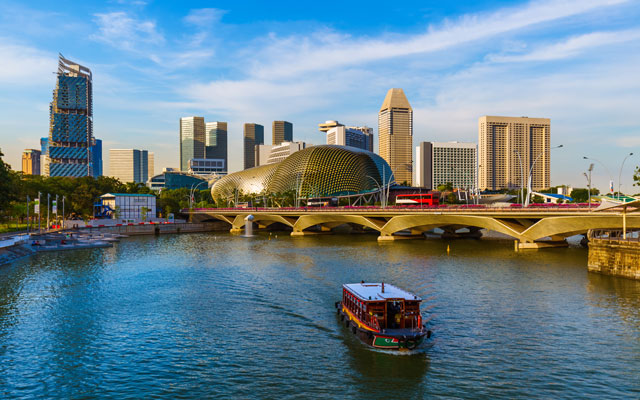
Recognising that the hotel experience will be altered under current conditions, Millennium properties are pushing out themed room ideas, such as movie nights, to ensure guests are entertained.
At M Social, guests can receive an in-room Art Jamming box as part of the Art Jamming Staycation package or have an in-room cocktail station with cocktail recipes to follow as part of the Mixologist Staycation package. Guests taking up suite rooms can be entertained with virtual reality games during their staycation.
The group is also ramping up its F&B online order and takeaway operations in anticipation of a spike in takeaway business. Its chefs are now developing customised executive lunch and dinner bento sets for takeaways, and expanding in-room dining options for hotel guests.
The Millennium spokesperson also shared that Orchard Hotel is rolling out the ‘Orchard Cafe at your home’ service, where a mini set-buffet can be delivered to guestrooms or customers’ home. “Apart from increased takeaway orders, our hotels are also preparing for increased bookings (for) Work-From-Hotel (packages),” she said.
PPHG’s Tan acknowledged that these are “challenging times” and the group will support guests who wish to adjust their existing reservations to another time when the full range of activities and facilities at their properties are accessible once more. Guests can also take advantage of flexible cancellation policies, which allow existing bookings to be changed or cancelled for stays up to July 31, 2021 without penalty.
Kwee added too that SHA member hotels are working with affected guests independently for deferment of dining, staycation and wedding bookings. She added that the industry recognises the adverse long-term implications if a decisive move is not taken immediately to control the local community transmission.
“SHA represents the collective voice of 160 member hotels in Singapore. It is our top priority to safeguard the interests and well-being of our members, hotel workforce and our guests. Together with our members, SHA is committed to complying with the public health protocols as recommended by the authorities so that we can keep our community safe,” she said.
Editor’s note: Content has been updated on May 14, 21:46 to take in more trade reactions.
Sri Lanka imposes travel restrictions amid Covid spike
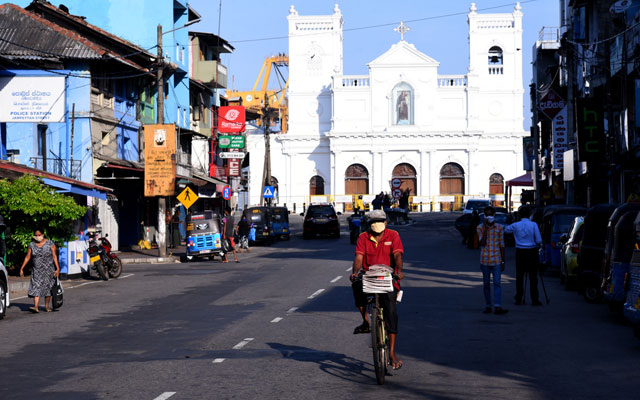
Sri Lanka has imposed islandwide travel restrictions, similar to a curfew, for a 77-hour period, which started from 23.00 on Thursday (May 13), in a bid to contain a surge in Covid-19 cases.
While the government has dubbed it as “travel restrictions”, the move is akin to a curfew and lockdown of the country which will last till Monday (May 17), 04.00. However, all essential services are allowed to continue operations, and international borders remain open, tourism officials said. The decision affected Sri Lanka’s minority Moslem community who celebrated the Ramazan festival on Friday.
The move is in response to a surge in Covid-19 cases, with the daily tally hitting 2,386 as at 13.00 on Thursday, bringing the total number of cases to 132,527 with 869 deaths. This is compared to 969 cases reported on April 23, which was then the second highest daily toll on record.
The spike was triggered by crowds thronging local markets and malls during the Sinhala and Tamil New Year period in mid-April, as well as commuters travelling in crowded buses and trains to their hometown during that week.
The government has announced a ban on all state and private events, meetings, and parties to curb the spread of the infection. Public gatherings such as exhibitions, conferences, indoor and outdoor events, carnivals, musical shows and processions are also prohibited.
NCL’s new Norwegian Prima draws strong Asian interest
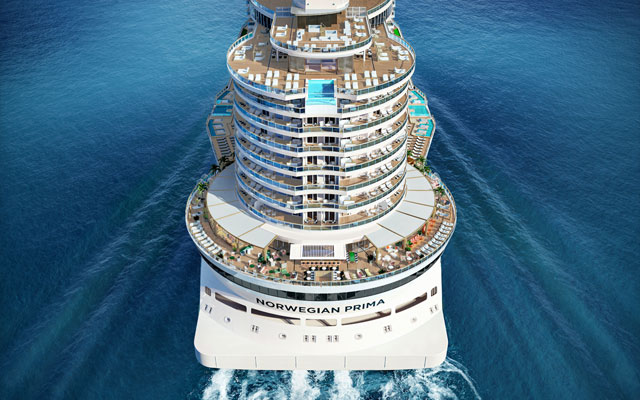
Enquiries and bookings from Asian markets have swept quickly onto shore for Norwegian Prima, the first of six ships under Norwegian Cruise Line’s (NCL) new Prima Class, mere days after its debut in 2022 was leaked early this week.
Described as a “game-changer for NCL”, Norwegian Prima is a premium cruise product that promises outstanding itineraries in the Caribbean, Bermuda and Northern Europe, 36 per cent more wide-open spaces than on the massive Breakaway Class ships, thoughtful design that brings guests closer to nature as well as their surroundings, and a variety of new experiences supported by a high staff-to-guest ratio of 1:3.
High-end cruisers are offered The Haven by Norwegian, an exclusive and centralised suite complex that spans eight decks. Other accommodation options are built to stand out too – Norwegian Prima boasts the largest suites at sea as well as largest-ever staterooms among new cruise ships.
To allow guests to connect with the outdoors and the sea, Norwegian Prima pioneers the Ocean Boulevard concept, which wraps around deck eight and provides wide-open, innovative waterfront facilities for guests to explore, such as The Concourse sculptured gardens; the Infinity Beach with two infinity pools that are set close to the water line; and two Oceanwalk glass bridges that impart the feeling of walking over water. In addition, three dining venues on the Ocean Boulevard will offer indoor and outdoor seating.
Yet another new concept to launch on Norwegian Prima is the upscale open-air marketplace, named Indulge Food Hall. Eleven venues come together to deliver favourite cuisine from all over the world, such as Southern American comfort food and barbecue from Q Texas Smokehouse; Spanish-inspired street food from Tapas Food Truck; and Indian dishes and vegetarian food options from Tamara.
Nicholas Lim, general manager, sales Asia, told TTG Asia that introducing and opening for sale Norwegian Prima’s 2022 itineraries this week provided a valuable trigger for fresh sales pitches NCL’s travel agent partners could take to their cruise customers.
“There is incredible pent-up travel demand across Asia, and we know that cruise fans are looking for new products to experience when travel is possible again. In fact, Norwegian Prima is the cruise product that many Asian cruise fans are waiting for – a contemporary, premium product that answers the desire for social distancing; luxurious accommodation in staterooms and suites that are comparable to some of the best city hotels in the region; plenty of Instagrammable locations across the ship; and a superb F&B collection that answers a range of dining desires, from casual to fine-dining needs,” Lim elaborated.
“We are also very proud that we are able to bring a new product to market in such challenging times. It demonstrates our confidence in the brand and in travel and tourism recovery,” he added.
Lim revealed that a booking from South-east Asia has been secured “and more are on the way”. Intense enquiries have also come in from China, Hong Kong and Japan.
“While our travel agent partners are unable to experience Norwegian Prima now on a fam trip (due to travel restrictions), we are not sparing any expenses to bring them up to speed with the product. We have training and product webinars lined up, and we are putting Norwegian Prima details out on social media channels to drive consumer interest,” said Lim.
When asked if any of the future Prima Class ships would be deployed first to Asia, recognised as a growing and critical market for international cruise lines, Lim said there could be an opportunity for that to happen as more Prima ships join the NCL fleet.
NCL will launch a new Prima Class vessel every year from 2022, with the last coming to market in 2027. The Prima Class fleet will expand NCL’s capacity by 47 per cent.
Singapore to ban dine-in, cap gathering size to two from May 16
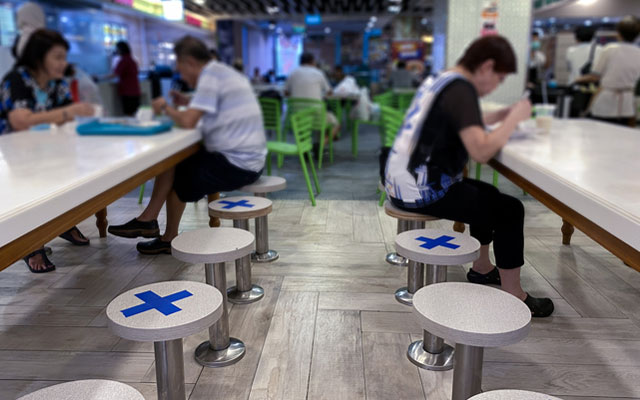
Singapore has moved to tighten Covid-19 restrictions to stem a spike in Covid-19 community cases, with social gatherings limited to two people and dining-in banned from this Sunday (May 16) until June 13.
Eateries and hawker centres will only offer takeaways and deliveries during this period to prevent the risk of transmission, said the Health Ministry on Friday (May 14). Households will also only be allowed to receive two distinct visitors a day, from five previously.
All attractions that have received prior approval to operate at 50 per cent capacity will have to reduce this to 25 per cent, while museums and public libraries will also operated at a reduced capacity of 25 per cent.
Indoor and outdoor shows may proceed with up to 100 people with pre-event testing implemented, or up to 50 people without testing. Attendance at cinemas will be capped at 100 people with pre-event testing, or up to 50 people without testing. The cap of two persons per group applies, and food and beverages cannot be sold or consumed in the cinema.
Working from home will remain the default at workplaces, and employers must ensure that staff who can work from home do so.
The stricter measures are in response to the Changi Airport cluster, which has become Singapore’s largest active Covid-19 cluster on Thursday (May 13), with a total of 46 cases confirmed.
Education minister Lawrence Wong, who co-chairs the multi-ministry task force on Covid-19, was quoted by The Straits Times as saying in a virtual press conference that the stricter measures are necessary as there may be hidden cases among those who have recently visited Changi Airport that have leaked out into the community. He further noted that unlinked cases have also been on the rise.
Activities that will also be banned include strenuous indoor exercise classes and sports, as well as facials and saunas.
Weddings receptions will not be allowed, but solemnisations may continue for up to 100 people with pre-event testing, or 50 people without testing.
A lower cap of 50 people will also have to be observed at congregational and other worship services, with the cap going up to 100 people with pre-event testing implemented. Occupancy limits for malls and showrooms will also be reduced to 16m² per person of gross floor area, from 10m² per person previously.
Slow travel way forward for post-pandemic recovery
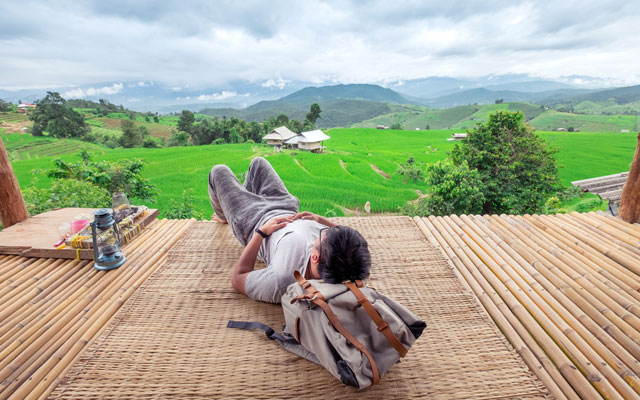
Regional tourism players are shaking up their marketing strategies post-Covid, predicting multi-country holidays will be traded in for slow travel in a single destination when tourism resumes.
“Multi-destination travel has always played a large role for travel in the region,” said Ruben Derksen, Exo Travel Thailand’s director of product and digital.
He cited typical 14-day itineraries from longhaul destinations taking in the cultural heritage sites of Luang Prabang in Laos, Cambodia’s Angkor Wat and Chiang Mai in Thailand before a few days on a Thai beach.
But he said while demand for multi-destination travel will prevail, the practicalities of moving from one country to another will make it unappealing to many tourists.
He added: “If countries allow vaccinated travellers to freely move between destinations, without quarantine on arrival and extensive paperwork, then the proportion of multi-destination travel could remain as it was. If not, then it’s feasible to think we’ll see a focus of travel within individual countries. People are, after all, on holiday and they won’t want to put themselves through any difficulties.”
This sentiment is being felt throughout the industry, as new itineraries and marketing strategies are drawn up to sell countries as single-destination packages.
Ronni Dalhoff, managing director of Diethelm Cambodia, said slow travel will be the new norm. In addition to sticking to one country, he predicts travellers will seek to restrict their movement within the destination.
“People will want to minimise the risk of anything happening,” he remarked. “They won’t be moving around too much.”
To cater to this predicted shift in demand, Vietnam-headquartered LUX Travel DMC has launched DMCs within each of the 10 South-east Asian countries, with each seen as a single destination. Additionally, in Vietnam, it is only selling north, central or south Vietnam tours, as opposed to the usual country combinations.
Pham Ha, CEO and founder, said: “People will want to slow down and choose one destination to feel it and focus on their travel experiences. They will discover, explore, relax, indulge and immerse themselves in local culture and nature.”
Derksen said this presents the opportunity for travel operators to get creative with tours and curate itineraries that dig deep into the essence of destinations.
He added: “Slow travel is better for the environment and allows people to enjoy more time absorbing the beauty of the destinations they travel through. Hopefully, this will (encourage) them to go more in-depth in each country, and explore mind-boggling beautiful destinations.”
PATA joins tourism coalition pushing sustainable recovery

The Pacific Asia Travel Association (PATA) has become a signatory of The Future of Tourism Coalition with the global mission to place destinations at the centre of recovery strategies.
PATA CEO Mario Hardy said: “While decades of growth before the outbreak of the Covid-19 pandemic have been celebrated by the travel and tourism industry, it has also placed many destinations at risk – environmentally, culturally, socially, and financially.
“As the industry looks towards recovery, it must realign around a strong set of principles in order to bring about long-term sustainable and equitable growth. We encourage all of our members, partners, and affiliated organisations and businesses to show their support and become part of the movement by joining as a signatory to this initiative.”
The Coalition was formed in 2020 by six global NGOs including the Center for Responsible Travel (CREST), Destination Stewardship Center, Green Destinations, Sustainable Travel International, Tourism Cares, and the Travel Foundation.
Since then, nearly 550 organisations have signed up to the Coalition’s 13 Guiding Principles, which place destination needs at the centre of tourism’s new future.
Those Principles call for signatories to: see the whole picture, use sustainability standards, collaborate in destination management, choose quality over quantity, demand fair income distribution, reduce tourism’s burden, redefine economic success, mitigate climate impacts, close the loop on resources, contain tourism’s land use, diversify source markets, protect sense of place, and operate business responsibly.
The Coalition will support the industry by providing the tools, guidance and collaboration to ensure a stronger path forward and encourage signatories to sign on and share their perspectives and experiences to collectively work towards a more just, equitable, and sustainable future for all.
Interested travel and tourism stakeholders can join as signatories here.

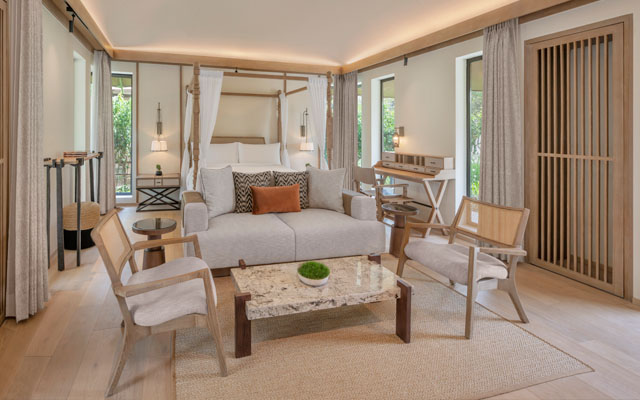






The Gold Coast is being promoted in a new marketing blitz rolled out in cities across Australia, aimed at boosting visitor numbers in the lead up to winter.
Launched on Sunday (May 16), the campaign sees the Gold Coast call on Aussies to flee the cooler Southern temperatures for sunshine, beautiful beaches, untouched hinterland and a playground of experiences and attractions.
Destination Gold Coast CEO Patricia O’Callaghan said the campaign springboards recovery for Gold Coast’s tourism sector as the marketing body remains focused on stimulating visitor demand and expenditure for its 4,600 tourism operators.
“This A$1.75 million (US$1.35 million) campaign will support Gold Coast’s visitor economy in the lead up to and during winter, which we know is traditionally a softer travel period, to safeguard our status as a preferred holiday destination,” O’Callaghan said.
“We know through our insights that there is more than just a pent-up desire to travel – there is pent-up demand to play, and reconnecting with family and friends is so important for our well-being.”
Targeting families and over-50s, the campaign is supported by more than 100 accommodation, tour and attraction deals, she added.
“Most-loved experiences from these key traveller segments feature throughout the campaign including going to the beach, relaxing by the pool, eating local produce and exploring natural scenery,” she said.
“The campaign invites our southern neighbours to ‘come and play’ in the sunshine state and swap a cold commute to work for a memorable holiday in Australia’s favourite playground.”
The seven-week campaign will be promoted across outdoor placements, television, tactical aviation and online booking platform partnerships, as well as digital and social media in Sydney, Melbourne, Brisbane, Newcastle, Hobart, Perth and Adelaide.
By extension, a two-day activation at Sydney’s Westfield Paramatta Centre Court later this month will see 10 Gold Coast tourism operators showcase their products, holiday deals and the destination to capitalise on high foot traffic in the key interstate market.
O’Callaghan said a multi-pronged approach to recovery is critical for the Gold Coast’s tourism sector to bounce back after A$3.2 billion was wiped from the pre-Covid A$5.9 billion visitor economy in 2020.
“The Gold Coast continues to top the list as a preferred holiday destination on booking engines and this is backed up by consumers voting with their feet, seeing us as the leading beneficiary of the federal government’s half-price flights scheme,” she said.
“With some 200,000 flights to-date sold to the Gold Coast, it is initiatives like this that will drive visitors into the region, coupled with increased aviation connectivity and cut-through destination marketing.”