


Over the last six months, we have seen travel gain hope with gradual reopening of borders and travel bubbles which then lead to a complete shutdown once again, as the second wave of infections hit more fiercely in some regions. At the centre of all these changes has been the focus on streamlined vaccination drives on which hinges the future of a safe and healthy global community.
While vaccination is the first step towards furthering a robust system that can help bring back the lost hope in travel, it will be necessary to keep more layers of checks at every step of the travel cycle even after the world is vaccinated, with the intention of keeping safety at the heart of the travel journey. In this light, travel and health credentials could play a game-changing role if integrated effectively in cross-border journeys.
To fulfil the promise of getting travel back on track, countries have not only streamlined the vaccine rollout, but they are also preparing a robust system on how the credibility of vaccination can be embedded in helping movements across borders with the help of the right credentials.
Governments continue to assess the effectiveness of digital identification modes like vaccine passports, digital green certificates planned by the European Commission, etc. to ensure that the future of travel is not just ready, but also safe.
Going beyond robust vaccination drives
For the past year, the advancements in health and travel tech were largely limited to screening and planning of travel. However, as the virus continues to pose more challenges, the question remains as to how sustainably the industry can address the anticipated rebound.
There is no doubt that going forward, the industry as a whole will require a more holistic approach towards the revival of travel that aligns with the realities of the constantly evolving scenario. Keeping this in mind, several stakeholders have introduced initiatives that incorporate an almost futuristic approach to travel – where human interventions and physical touchpoints can be reduced to curb the spread of Covid-19.
These include cloud lockers that allow safe storage and sharing of documents, e-passports, and eVisas that enable digital alternatives to travel documents, and lastly, the need for travel health credentials and their integration in global travel processes. These changes are slowly moving beyond concept stage and becoming a reality with the industry coming together as a binding force.
An interesting example of this includes an initiative by the World Economic Forum called Known Traveller Digital Identity (KTDI) that brings together a global consortium of individuals, governments, authorities, and the travel industry to enhance security in global travel. KTDI allows people to manage their profile and collect digital ‘attestations’ of their personal data, allowing them to consent to what data to share and when. The more attestations a user shares, the better it is for authorities to process travel seamlessly and smoothly.
Awareness will take us a long way
Understanding travel processes and being mindful of Covid-19-related requirements that vary from country to country beforehand will be critical. To help manage this, the World Tourism Organization (UNWTO) and the International Air Transport Association (IATA) recently announced a Destination Tracker in preparation for the restart of international travel.
The Destination Tracker is the result of both organisations joining efforts to boost confidence and accelerate recovery of the tourism sector when borders reopen. It is a free online tool that allows governments to provide information on Covid-19 requirements for travel and the measures in place at the destination. This can allow potential travellers to have a well-researched travel plan in place beforehand, with all the information verified by trusted bodies.
While these efforts aid the travel-planning journey, another critical intervention in international travel rests in the visa application process. As we move forward, adopting solutions such as eVisas and ePassport gates that allow essential travel documents to be digitally processed with added layers of data security, will only bring us closer to a digital-first future.
Although these are shifts to be considered at a governance level, collaborating and outsourcing these credential services will only see an upward trend as governments look to best optimise safety. A recent example of the same is the collaboration that VFS Global led with the technology company Accredify to issue health certificates that allow seamless travel from Indonesia to Singapore, providing for a safe bubble transit. The hope is to extend that model to more ‘safe travel’ corridors.
Undoubtedly, the introduction of travel-health credentials and verified information channels will help restore tourism in a seamless and well-screened manner. However, the revival of tourism will need to move beyond singular efforts and adopt a holistic approach that can help streamline the entire process of international travel with minimum risks to the traveller in the new normal.
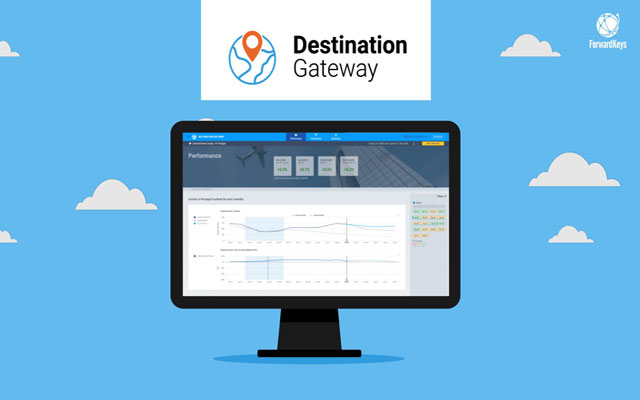















ForwardKeys has launched a new data platform to help tourism boards and DMOs use big data and air ticketing insights in real-time and in actionable ways to speed up the process of recovery planning.
Destination Gateway is an intuitive dashboard and provides for users and business departments with different skills to reach their respective business goals.
Tourism boards and DMOs can monitor their destination’s performance, marketing efforts, and air connectivity at the click of a mouse. A new feature has recently been added to monitor travel recovery more effectively due to the ever-changing travel restrictions and regulations.
“At all stages of development and testing, we included a handful of our DMO clients and partners for their additional perspective, making Destination Gateway unlike many other products available in the market,” said ForwardKeys’ CEO and co-founder, Olivier Jager.
Luis Millan, market researcher and co-developer of Destination Gateway, added: “Nowadays, it is very easy to get overwhelmed by the variety of data and tools out there for tourism bodies. The pressure to be a data-driven organisation is strong. So, this is why I think Destination Gateway will quickly become a favourite as it combines so many aspects relevant to DMOs in the one place and it is not hard to navigate and pretty enough to show in presentations and reports too.”