

Philippines to invest in upskilling, reskilling tourism workforce

Developing skilled local tourism professionals through the education system is at the core of the Philippine Department of Tourism’s (DOT) five-year industry manpower development plan.
DOT secretary Bernadette Romulo-Puyat virtually launched The Philippine Tourism Human Capital Development Plan (PTHCD) for 2021-2025, designed to ensure the steady supply of trained manpower and to address challenges facing tourism human capital development.
“We aim to develop competent, world-class Filipino tourism professionals through a harmonised education system and strong tourism industry linkages and collaboration. Together, these factors will lead us toward attaining sustainable and inclusive national socio-economic development,” Romulo-Puyat said.
The Republic Act 9593, also known as the Tourism Act of 2009, mandates the DOT to draft an industry manpower development plan every five years. PTHCD is the continuation of the Philippine Tourism Human Resource Development Strategy and Action Plan for 2015-2020.
In the previous months, DOT conducted a national consultation, situational analysis, and focus group discussions across the country with participants from different tourism industry sub-sectors, local government units, government agencies and the academe.
The discussions covered Education Tourism as a tourism product offering, industry linkages and partnerships, research and innovation, standards review and development, implementation of the ASEAN Mutual Recognition Arrangements for Tourism Professionals, and other programmes.
Romulo-Puyat added: “In view of the challenges and opportunities brought about by the Covid-19 pandemic, this updated PTHCD comes at a most critical time. The retooling, reskilling, and upskilling of the tourism workforce will all be crucial as the industry prepares to reopen and recover, and will be among the most important steps in our journey towards the better normal.”
Singapore Grand Prix canned for second year in a row

The Singapore Formula One Grand Prix has been called off for the second year in a row due to the ongoing Covid-19 pandemic.
The cancellation was announced by race promoter Singapore GP in a statement on Friday (June 4), citing “ongoing safety and logistic concerns” amid the pandemic.
Tickets for this year’s race, originally slated for October 3, had not been released for sale, pending the decision on the event’s feasibility. Singapore GP said that ticket holders who deferred their 2020 tickets to the 2021 race will be fully refunded, and that it will be in touch with them directly.
“We understand that our fans were looking forward to another edition of the Formula 1 Singapore Grand Prix. To cancel the event for a second year is an incredibly difficult decision, but a necessary one in light of the prevailing restrictions for live events in Singapore,” said Colin Syn, deputy chairman of Singapore GP.
“We would not be able to deliver a full event experience fans have come to expect over the years, while safeguarding the health and safety of our fans, contractors, volunteers and staff. Ultimately, we have to be responsible, cautious and prudent as safety is our number one concern.”
Ong Ling Lee, director, sports, Singapore Tourism Board, said that the agency is working closely with Singapore GP, Formula 1 and other government agencies to “determine the future of the race”.
Singapore GP said that it is in discussions with the government and Formula 1 on the issue of hosting the FIA Formula 1 World Championship going forward, with details to be announced “in due course”.
Natural beauty beckons

Brought to you by Sabah Tourism Board
The Malaysian state of Sabah, located in the heart of South-east Asia and the northern region of Borneo Island, enjoys excellent accessibility through direct flights from major cities, especially those in North Asia. Pre-Covid-19, Sabah received more than 250 flights weekly.
Sabah is a well sought-after destination for her thriving natural environment, and is loved for her blend of nature, adventure and culture activities under one roof.

Sabah’s blues
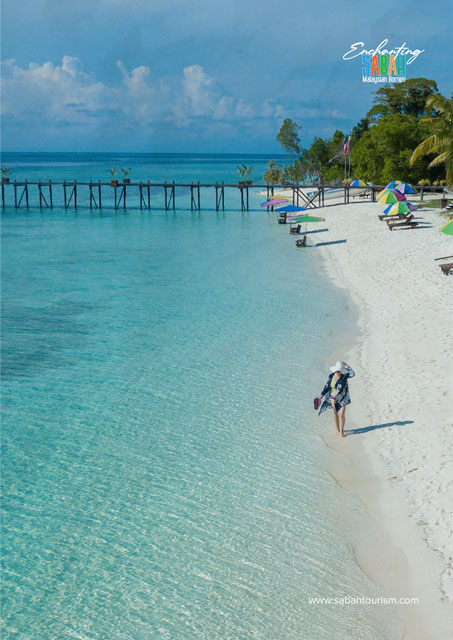
Boasting one of the world’s top eight sunsets, Tanjung Aru Beach draws visitors eager to capture nature’s golden glory. However, Sabah offers many more coastal destinations, all lined up along the West Coast to Kudat, the Tip of Borneo.
Islands are also spread from coast to coast. In Sabah, it is possible to get to a cluster of islands just 15 minutes from the city centre. Tunku Abdul Rahman Park, which houses Borneo’s longest island-to-island zipline, is most conveniently accessible from the city.
Sabah’s many islands and beaches also present ideal locations for stargazing.
Sabah’s culture
Sabah is home to more than 30 ethnic groups. The rich local culture and traditional practices can be appreciated in the rural areas or in households that welcome visitors with homestay programmes and community-based tourism activities. For a memorable and insightful cultural immersion, make a beeline for cultural villages such as Mari Mari Cultural Village, Linangkit Cultural Village, Walai Tobilung and Monsopiad Cultural Village.
Sabah’s iconic longhouses can be experienced in Kota Marudu, Kudat and Long Pasia – all of which welcome tourists with open arms.
Sabah’s nature and adventure
Hikers from the world over hold Mount Kinabalu in high regard. The mountain is the highest in Borneo, and owns bragging rights to being the world’s highest Via Ferrata and Asia’s first. Mount Kinabalu also sits within Malaysia’s first UNESCO World Heritage Site. Besides Mount Kinabalu, Sabah offers other unique hiking trails such as Maragang Hill and Mount Trus Madi.
Nature enthusiasts will appreciate the Sabah Agriculture Park or the Rainforest Discovery Centre. Pair these activities with an authentic farm stay at Padas Farmstay and Sabah Tea Garden for an outdoor holiday to remember.
Sabah’s wildlife
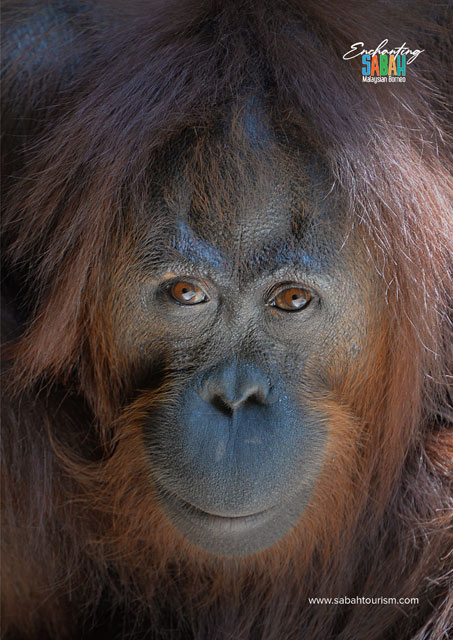
Sabah is a dream come true for wildlife conservationists, as the state boasts numerous conservation flagships such as Sepilok Orang Utan Rehabilitation Centre, Bornean Sun Bear Conservation Centre and Turtle Islands Park – all located in Sandakan.
The local wildlife also leads a protected and free existence in areas such as Danum Valley Conservation Centre, Tabin Wildlife Reserve, Sabah’s Lost World the Maliau Basin, Imbak Canyon and Deramakot.
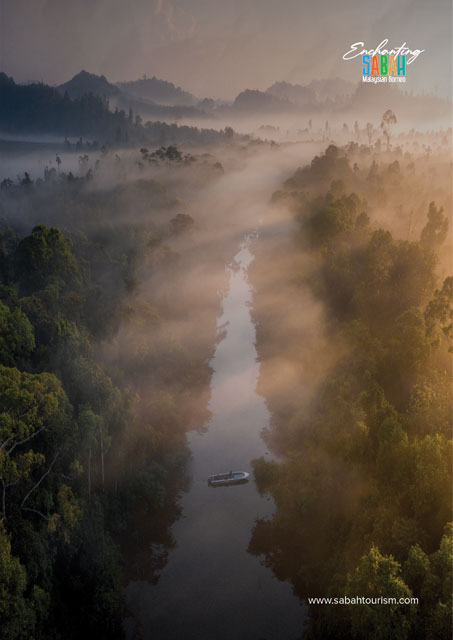
Elsewhere, the Kinabatangan Wildlife Sanctuary along the Lower Kinabatangan river is an ideal spot for wildlife sightings.
Sabah also has several important birding areas with 33 endemic species.
Sabah’s seas
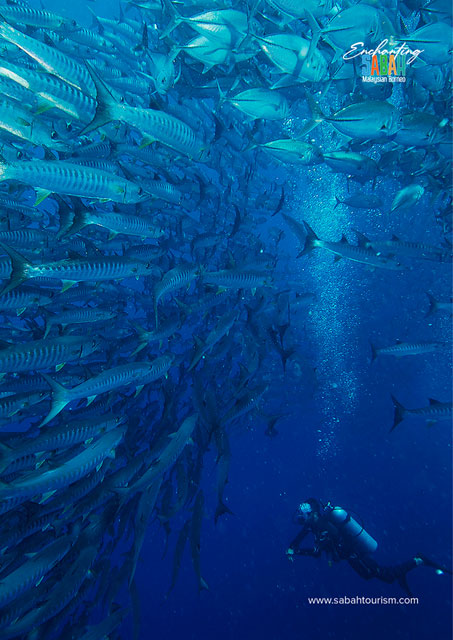
Regarded among the world’s top 10 world-class diving destinations, Sipadan Island is a magnet for leisure divers as well as niche visitors like marine biologists and underwater photographers. But beyond Sipadan Island and its popular Ligitan Reef, Sabah’s sparkling seas offer many a treasure trove for divers to explore. The Layang Layang Island is an interesting man-made atoll with 30m to 60m visibility all year round. The area also seems to be a migratory lane for sea life such as orcas and whale sharks.
Tourism that benefits all
As Sabah Tourism began amplifying its community-based tourism projects to inject more cultural immersion opportunities into its tourism offerings, the local community found itself more involved in the thriving tourism industry. Locals have been able to preserve and share their unique culture and way of life with travellers as a result.
Built for business events
More than just a leisure destination, Sabah has made progress on the business events front. In February 2020, the state launched the Sabah International Convention Centre, a venue that can cater to 5,000 delegates per event. This dedicated facility boosts the state’s inventory of professional event venues available across hotels.
 To find out more about enchanting Sabah, visit Sabah Tourism Board.
Princess Cruises unveils 2022/23 Asia itineraries
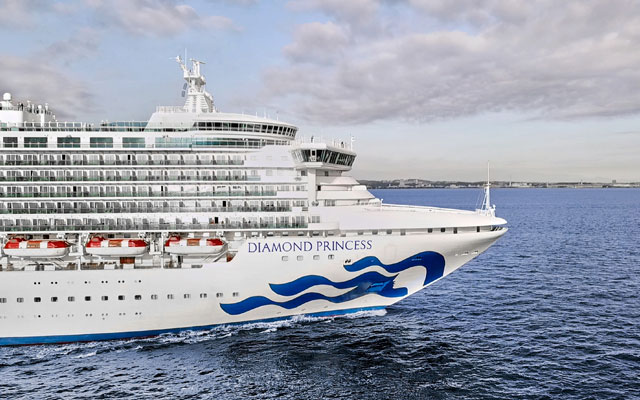
Princess Cruises has revealed its Asia cruises for the 2022-2023 season, sailing to 19 destinations across eight countries.
The season, which goes on sale on June 16, 2021, will be operated by Diamond Princess and will feature eight itineraries and 21 departures.
New for the 2022-2023 season, Diamond Princess sails a seven-day Southeast Asia with Malaysian Peninsula itinerary that includes the cruise line’s first call to Melaka in more than a decade, as well as visits to Kuala Lumpur, Penang, Langkawi and Phuket.
Also featured are holiday voyages, sailing over Christmas and New Year’s, including a 10-day Southeast Asia with Thailand, Vietnam and Cambodia and a seven-day Southeast Asia with Malaysian Peninsula, that can be combined for a 17-day cruise.
There are also two repositioning cruises from Tokyo to Singapore and return, which include stops at Taipei (Keelung), Ishigaki, Okinawa, Shimizu (for Mt. Fuji), Kobe, Hong Kong, Nha Trang and Ho Chi Minh City (Phu My).
The itineraries are as follows:
• Southeast Asia with Malaysian Peninsula, seven days roundtrip from Singapore – Singapore, Melaka, Kuala Lumpur (Port Kelang), Penang, Phuket, Langkawi, Singapore
Cruise dates: December 11, 28, 2022; January 14 and February 7, 24, 2023
• Southeast Asia with Thailand & Vietnam, seven days roundtrip from Singapore – Singapore, Ko Samui, Bangkok (Laem Chabang), Ho Chi Ming City (Phu My), Singapore
Cruise date: January 21, 2023
• Southeast Asia with Thailand, Vietnam & Cambodia, 10 days, roundtrip from Singapore – Singapore, Nha Trang, Ho Chi Minh City (Phu My), Sihanoukville, Bangkok (Laem Chabang), Ko Samui, Singapore
Cruise dates: December 18, 2022; January 4, 28 and February 14, 2023
• Southeast Asia & Japan, 12 days, Singapore to Tokyo (or Tokyo to Singapore) – Singapore, Ho Chi Minh City (Phu My), Nha Trang, Hong Kong, Taipei (Keelung), Kobe or Toba, Tokyo (Yokohama)
Cruise dates: November 29, 2022; March 3, 2023
• Southeast Asia with Malaysia, Thailand & Vietnam, 14 days roundtrip from Singapore – Singapore, Melaka, Kuala Lumpur (Port Kelang), Penang, Phuket, Langkawi, Singapore, Ko Samui, Bangkok (Laem Chabang), Ho Chi Minh City (Phu My), Singapore
Cruise date: January 14, 2023
• Southeast Asia Explorer, 17 days roundtrip from Singapore – Singapore, Melaka, Kuala Lumpur (Port Kelang), Penang, Phuket, Langkawi, Singapore, Ko Samui, Bangkok (Laem Chabang), Sihanoukville, Ho Chi Minh City (Phu My), Nha Trang, Singapore
Cruise dates: December 11, 18, 28, 2022; January 4, 28 and February 7, 14, 2023
• Japan & Southeast Asia, 20 days from Tokyo to Singapore – Tokyo (Yokohama), Taipei (Keelung), Ishigaki, Okinawa, Tokyo (Yokohama), Shimizu (for Mt. Fuji), Kobe, Taipei (Keelung), Hong Kong, Nha Trang, Ho Chi Minh City (Phu My), Singapore
Cruise date: November 21, 2022
Overtourism, beach pollution top travellers’ concerns about tourism’s environmental impact: survey
Easy identification of sustainable eco-friendly travel options, limited use of single-use plastics and financial incentives for accommodation providers who maximise energy efficiencies are the top three measures needed to make travel more sustainable, according to Agoda’s Sustainable Travel Trends Survey.
Establishing more protected areas to limit tourist numbers and removal of single-use bathroom amenities round out the top five global measures.
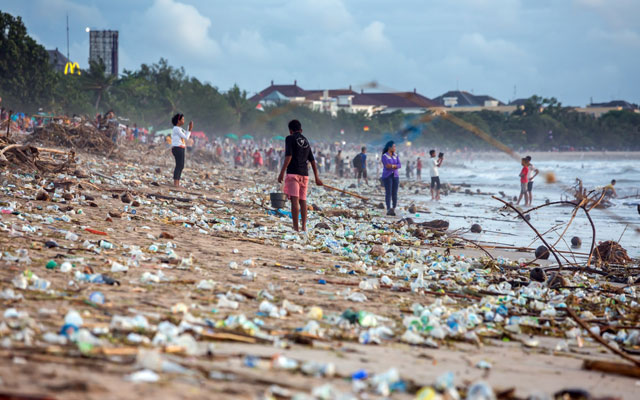
The findings from the survey which polled 18,327 respondents across 14 markets was launched to mark World Environment Day 2021 on June 5. The survey also revealed that globally, overtourism, as well as pollution of beaches and waterways are the top two concerns of the environmental impact of tourism, with deforestation and energy inefficiencies (including overconsumption of electricity/water) ranking joint third.
Globally, the public considers governments most accountable for making positive environmental changes around travel, followed by tourism authorities and individuals themselves.
When it came to holding governments most accountable, those in Indonesia and the UK were most likely to do so (36 per cent). China followed not too far behind at 33 per cent, with Australia and Malaysia in fourth and fifth spot (28 per cent and 27 per cent, respectively).
The markets most likely to cite themselves or individuals as most responsible for making changes to travelling sustainably were Thailand (30 per cent), Japan (29 per cent) and the US (28 per cent). Meanwhile, China (11 per cent), the UK (13 per cent), and Vietnam (14 per cent) were least likely to attribute responsibility to the individual.
When asked what they would pledge to do better in a post-Covid travel scenario, the top responses globally were #1 manage their waste including using less single-use plastics, #2 switch off the air-con and lights when leaving their accommodation, and #3 always look for eco-friendly accommodation. Interestingly, despite overtourism being the biggest concern, going to lesser-known destinations only ranked seventh out of 10 as a pledge to do better.
The top practices most associated with environmentally-friendly or sustainable travel are #1 renewable energy and resources like solar, wind, hydroelectric and water, #2 no single-use plastics, and joint #3 animal conservation and creating a smaller carbon footprint.
Other energy-saving solutions such as key cards or motion sensors, and using natural cleaning products are the other key practices. Interestingly, buying locally sourced products, reusing bedding or towels during holiday stays and visiting off-the-beaten track destinations are the bottom three practices out of 10 associated with sustainable travel.
John Brown, CEO of Agoda, said: “We can see from the Agoda Sustainable Travel Trends Survey that the messages of taking simple steps such as switching off lights and air-conditioning when leaving the room or reducing waste by minimising use of single-use plastics are being embraced by the public across the globe. What is also clear is that while globally, the message is governments need to take the lead on managing sustainable travel, there is recognition that some responsibility lies with people’s own behaviour.
“While there are different interpretations of what practices are eco-friendly or sustainable, most of the public are keen to be able to do their part, by actively pledging to choose eco-friendly properties or make smarter environmental choices when travelling.
“One of the easiest ways to counter concerns about overtourism is to consider traveling to off-the-beaten track destinations. This past year at Agoda, we have seen a shift in travel patterns as people, limited to domestic travel, explore lesser-known areas. If managed well, not only does this help support independent hoteliers and accommodation providers that rely economically on the tourist dollar, it can help lessen the environmental burden on overcrowded areas.”
“As an industry, we need to continue to find ways to help individuals achieve these goals, be it making it easier to search and find sustainable properties on Agoda or supporting and encouraging more partners to use key cards for power, use renewable energy sources or offering carbon-offsetting options for travel products.”
The increase in desire to travel more sustainably was most prevalent among respondents from South Korea, India and Taiwan (35 per cent, 31 per cent and 31 per cent, respectively).
However, looking at the figures globally, while 25 per cent have an increased desire to travel more sustainably, 35 per cent said their desire to do so has decreased. The markets reporting the biggest proportional decrease were Indonesia (56 per cent), Thailand (51 per cent) and the Philippines (50 per cent).
Brown said: “It’s concerning that many people see sustainable travel as less important today than they did before Covid-19, but I hope that is just a short-term effect, driven by people’s thirst to get back out there and travel any way they can.”
Meliá Hotels grows Thai footprint with Chiang Mai property

Meliá Chiang Mai, a 260-key hotel in the heart of Chiang Mai city in Thailand’s mountainous north, is slated to open its doors in 4Q2021.
Owned by Thai real estate group Asset World Corporation and launched by Meliá Hotels International, the five-star hotel will be situated 6km from the Chiang Mai International Airport on the Charoen Prathet Road.

The hotel will comprise a 22-storey tower fronted by an adjoining seven-floor podium building. Two restaurants, two bars, two lounges including an executive lounge, a spa, fitness centre, swimming pool, 358m² ballroom and four other meeting spaces will be among the hotel’s host of facilities.
Of the property’s room portfolio, 38 rooms and six suites will belong to The Level, an upgraded level of service and benefits that affords exclusive access to the executive lounge. Notably, the Level Presidential Suite will command 113m² of the tower’s top floor with city vistas.
Camp at one of the world’s largest caverns in Vietnam
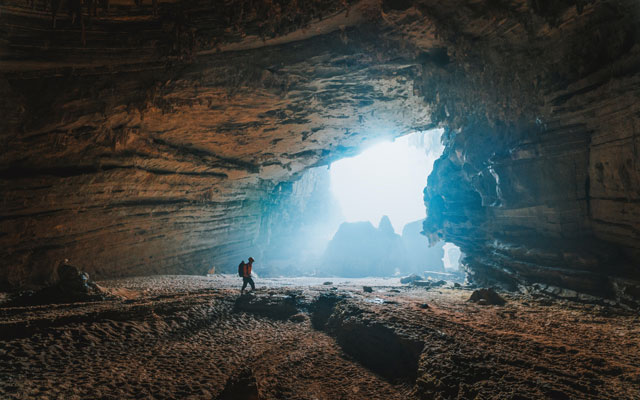
Luxury travel specialist Unforgettable Travel is offering adventurous campers the chance to experience a unique overnight stay at the entrance of one of the world’s largest caverns.
Located in Vietnam’s Phong Nha-Kẻ Bàng National Park, Hang Sơn Đoòng and Hang Én are the world’s largest and third-largest caves, respectively. At almost 6km long, Hang Sơn Đoòng has sections reaching up to 200m tall and 150m wide.
Tourists can now experience the wonder of these breathtaking natural formations and enjoy a night camping experience in the entrance chamber of Hang Én with any Vietnam tour booking under Unforgettable Travel.
Located 20km away from Vietnam’s border with Laos, the Phong Nha-Kẻ Bàng National Park is a UNESCO World Heritage Site, and is surrounded by the dense jungle found close to the central northern coast of the country.
Discovered only in 2009, Hang Sơn Đoòng and Hang Én are estimated to be between two and five million years old. The naturally formed stone caverns first opened to the public in 2013 after several years of extensive exploration, and only permit a limited number of visitors every year.
The caves are only accessible by a helicopter or four-hour jungle trek from the nearest road.
Quest breaks ground on second Geelong hotel

Quest and development partner Pellicano have broken ground on a new A$70 million (US$53.6 million) mixed-use development encompassing an 87-key apartment hotel in Geelong.
Upon completion in 1Q2023, Quest Geelong Central will offer a mix of studios, one-, two- and three-bedroom apartments, alongside ground floor dining and retail spaces, a rooftop gym and conferencing facilities.
General manager of growth & capital strategy at Quest, James Shields, said the site on Gheringhap Street was chosen to capture the growing extended stay corporate travel market within Geelong.
Shields elaborated: “The Geelong economy is undergoing a structural transition from a manufacturing dominated economy to one driven by tourism and related services. We’re forecasting strong growth over the medium- to long-term, given Geelong’s close proximity to Melbourne, growing events schedule and the ongoing gentrification of old industrial spaces.
“With the terminal for the Spirit of Tasmania opening in late 2022 and Geelong Fast Rail set to commence in 2023, Quest has invested to capture the significant local leisure and corporate travel market.”
Japan hotels, agencies hamstrung by prevailing Covid restrictions
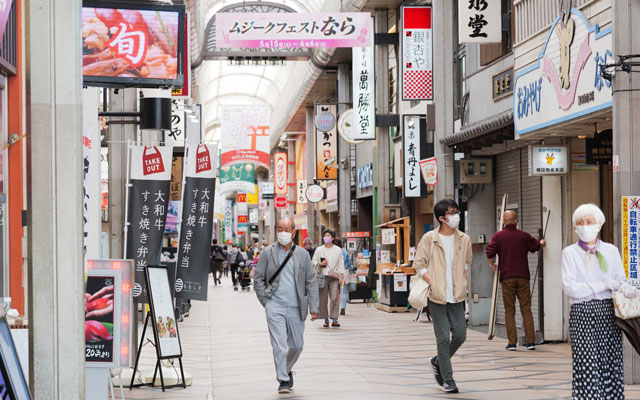
Japan’s tourism industry has reported a bleak first few months of 2021 as residents stay home amid emergency or quasi-emergency measures in place to curb Covid-19 infections.
The ongoing downturn is a further blow to the sector, which has seen unprecedented numbers of business default since the onset of the pandemic. In fiscal 2020, 125 lodging businesses went bankrupt, up 66 per cent year-on-year, according to the Teikoku Data Bank.
In an online survey of almost 5,500 hotel operators by the Japan Tourism Agency (JTA), almost half said reservations had fallen by more than 70 per cent between January and May this year compared with the same period in 2019.
The normally peak period of consecutive national holidays from late April to early May, known as Golden Week, was also quiet; most hotels and inns reported only 50 per cent occupancy.
Travel agencies have been similarly affected. Around 80 per cent of the some 3,000 surveyed said reservations have fallen by more than 70 per cent so far this calendar year, compared with the same period in 2019.
The data shows a strong correlation between bookings and the rate of Covid-19 infections in the country.
Travel agencies saw a 81 per cent decline in reservations in January followed by a 84 per cent decline in February, thought to be the result of a state of emergency announced in January for Tokyo, Osaka and nine other prefectures. Hotels operators said reservations slid by more than 70 per cent in January and February.
Respondents enjoyed some respite in March, when bookings fell by 31 per cent for lodging businesses and 76 per cent for travel agencies, before the situation declined again in April and May.
The suspension of the national government’s domestic tourism financial subsidy campaign, Go To Travel, at the end of 2020 is partly responsible for the decline in reservations, according to the JTA report.







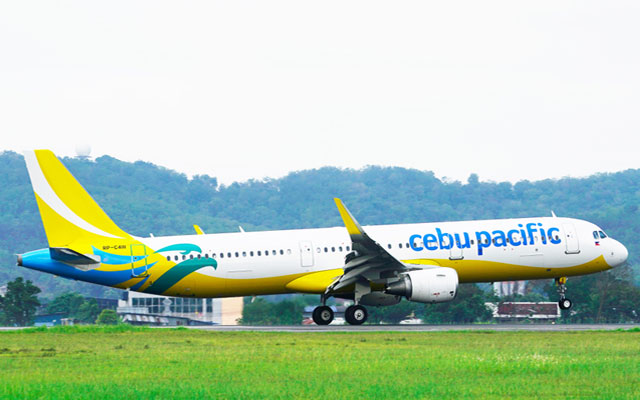
Philippine budget carrier Cebu Pacific (CEB) has launched a special all-domestic seat sale, following the government’s recent announcement on the resumption of commercial flights for leisure travel.
Passengers can now make bookings to any domestic destination on sale for a one-way base fare for as low as PHP 88 (US$1.84). The ongoing promo is until June 11, 2021, with travel period until March 26, 2022.
“We welcome this development and hope that this will continue as we all look forward to safely restart domestic tourism again. We are especially happy to resume our daily flights to Boracay, which solely cater to tourists,” said Candice Iyog, Cebu Pacific vice president for marketing and customer experience.
Since June 4, CEB has begun flying twice daily between Manila and Boracay. Apart from this route, CEB also operates regular flights to Bacolod, Bohol, Cagayan de Oro, Cebu, and more local destinations.
In March, CEB permanently removed change fees, allowing passengers to rebook whenever and as many times as they need to.