A ForwardKeys analysis has found that pent-up travel demand in China is translating to more and longer stays in destinations close to home, in particular Macau and Hainan.
From March to May this year, both Haikou and Sanya in Hainan province recorded growth in air arrivals when compared to the same period in 2019. May saw the largest increase, thanks to the Labour Day holiday, with Haikou gaining 39 per cent more domestic arrivals and Sanya 49 per cent more.
All tickets issued as of June 7 for travel to Sanya during June and August are currently 33.2 per cent ahead, while tickets to Haikou are only 6.4 per cent behind 2019’s.
Sanya, compared with Haikou, is a more popular holiday destination among Chinese domestic travellers
Big Chinese cities have emerged the most enthusiastic feeders of tourism traffic to Hainan. Shanghai is the top source market for Hainan in general, with bookings increasing 154 per cent to Sanya and 60 per cent to Haikou.
While Beijing arrivals to Sanya has leapt by 82 per cent, arrivals to Haikou are on par with 2019.
Arrival figures from Zhejiang to Sanya and Haikou have maintained double-digit growth.
In a further demonstration that central cities prefer Haikou over Sanya, 50 per cent of domestic arrivals in Haikou are from Chengdu and 46 per cent are from Wuhan.
On the other hand, Guangdong province’s recent surge in Covid-19 cases has led to delayed, reduced bookings for Haikou, much more than for Sanya,
Over in Macau, Chinese travellers are now giving more time to the destination, instead of combining it with a few days in Hong Kong.
“People used to visit both destinations, say, for a five-day holiday. But in the pandemic era, due to safety concerns and travel restrictions, people are choosing just one destination and enjoying the experience at a slower pace,” said Nan Dai, China market expert at ForwardKeys.
Chinese travellers are spending more days in Macau post-pandemic
During the first five months of 2021, the share of Chinese travellers staying at a destination for three to five nights has increased significantly, by 32 per cent when compared to 2019. Meanwhile, there was a 30 per cent drop in shares of one- to two-night stays.
Since Macau reopened to mainland China on February 23, the number of issued tickets has been building up. In the first week of June, issued tickets for travel from mainland China to Macau reached 48 per cent of 2019’s level, while in general outbound Chinese travel recovered only four per cent.
When examining Macau’s top source markets from the mainland, data reveals that Chengdu and Nanjing have recovered relatively quickly, reaching 60 to 70 per cent of their pre-epidemic levels.
Dai added that 59 per cent of domestic Chinese travellers are now booking their trip to Macau in under four days.
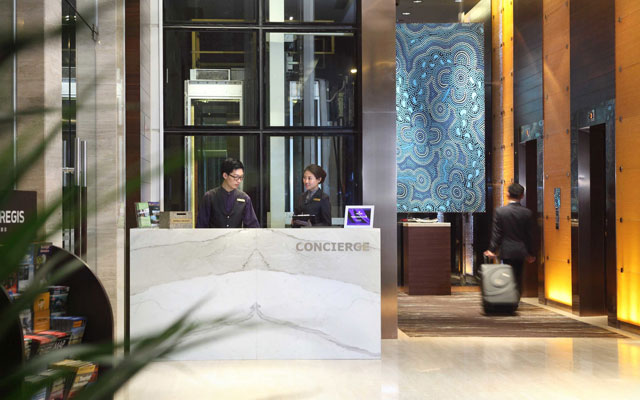
Park Regis Singapore has joined Trip Affiliates Network’s (TA Network) technology platform to enhance its online distribution channels and grow direct bookings from preferred agents, wholesalers and corporates.
The platform will enable the upscale hotel to grant its business partners around the world instant access to best available rates for their leisure and business travel customers, and benefit from a host of technology solutions that promise to automate inventory management processes with traditional offline contractors, eliminate overbooking/underbooking issues, and facilitate digital payment, among others.
Park Regis Singapore expects TA Network capabilities will improve B2B distribution and yield management
The hotel’s director of sales, Portia Low, said: “Our collaboration with TA Network highlights our continued commitment to improve our partnership with our travel agencies, wholesalers and corporates who form a strategic segment of our business.”
The new B2B distribution capabilities will also “further revitalise our service delivery to our valued offline partners and also improve our yield management at group level”.
TA Network currently supports more than 300 hotels across 15 countries.
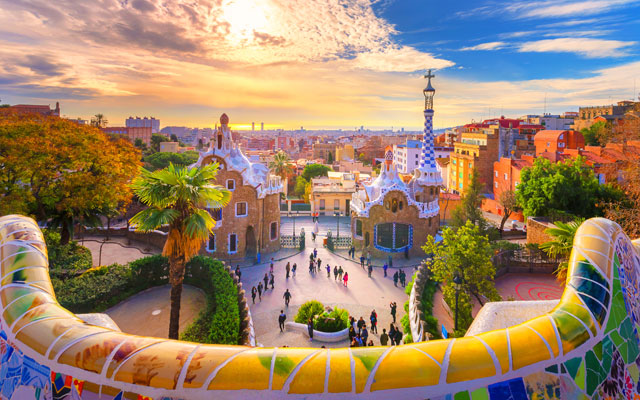
Spain and South Korea signed a new memorandum of understanding (MoU) at a preparatory conference in Barcelona last week, paving the way for the resurrection of a joint tourism plan that was thwarted by the outbreak of Covid-19 at the start of 2020.
The ceremony was attended by South Korean president Moon Jae-in and the host country’s industry and tourism minister, Reyes Maroto.
A renewed tourism development pact between Spain and South Korea will rebuild both economies and shape a more resilient tourism future
Both expressed hopes to recuperate the growing tourism numbers registered between the two countries before the pandemic struck and to work together to make the sector more sustainable.
Maroto stressed that Spain was beginning “to see a horizon of hope” as it recovered from the worst of Covid-19, and had so far managed to fully vaccinate some 27 per cent of the population.
“(South) Koreans are welcome in Spain and we want to receive them very soon,” she said, pointing out that Spain is the country with the third biggest collection of attractions on the UNESCO World Heritage list.
“Now it is time for us to build the future together after Covid,” she added,
Not only would the accord help in rebuilding economies, “it will also take on the transformation of the tourism model to make it more resilient, sustainable, inclusive and digital,” she added.
Moon said that the reopening of tourism was important for the economies of both countries. “It is my wish that Spain and (South) Korea will lead with this collaboration to open up a sustainable tourism model.”
The original MoU was signed by Maroto and South Korea’s minister of culture and tourism, Park Yang-woo, in Seoul in October 2019.
A joint working group will now share data and work together in key areas such as tourism promotion, digital marketing, market intelligence and the development of intelligent and sustainable destinations.
Special emphasis will be put on the areas of gastronomy, cinema, medical and business tourism sectors, the Spanish government revealed.
South Korean arrivals to Spain soared from 43,000 at the start of the 2010s to 630,000 in 2019, behind only China (699,000) and Japan (686,000) in the Asian market.
While Spanish arrivals to South Korea have been increasing, figures only reached 30,000 in 2019.
Seven Seas Grandeur, the sixth luxury cruise vessel to join Regent Seven Seas Cruises in 4Q2023, has unveiled sneak peeks of its signature specialty restaurant Compass Rose.
Multi-award-winning Studio DADO has crafted a space that is reminiscent of an enchanted forest. The journey begins with a delicate, cascading waterfall sculpture at the entrance and onwards under a canopy of interwoven crystal and wood-edge illuminated trees.
The interior features floor-to-ceiling illumination by thousands of crystal-faceted leaves which are encrusted on pillars and branches enveloping the restaurant. A star-dusted view of the ocean is provided by hundreds of twinkling lights surrounding the windows.
Adding to the atmospheric dining experience is a custom-designed mural by Confluent Studios. Crafted with gold-leaf and Verre Eglomisé, the mural will depict the flora and fauna at the forest’s edge, allowing the restaurant to appear endless.
“Restaurants on board all Regent ships are exquisite, but for Seven Seas Grandeur’s Compass Rose we wanted to create a space that was truly a feast for the eyes,” said Yohandel Ruiz, founding partner, Studio DADO.
“This new design of Compass Rose will pique guests’ curiosity and sense of wonder before they have even set foot in the restaurant, and go on to delight with a sumptuous, personalised meal in dramatic and beautiful surroundings. It’s a dining experience that they will regale friends and family with time and again.”
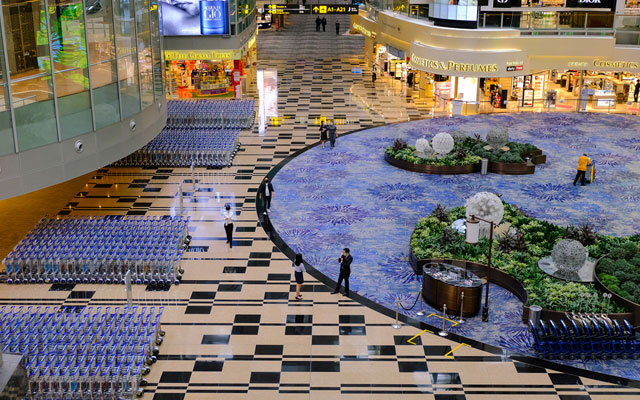
Singapore will shorten the stay-home notice period for travellers from higher-risk countries or regions from 21 days to 14 days, starting June 24.
These travellers will be required to test themselves on days three, seven and 11 of their arrival in Singapore with self-administered antigen rapid test (ART) kits, said the Ministry of Health (MOT). This is in addition to the existing polymerase chain reaction (PCR) tests they have to take on arrival in Singapore, and on day 14, before their stay-home notice ends.
Travellers entering Singapore from higher-risk locations need only serve a 14-day stay-home notice starting June 24
This is “to identify potential infection cases early and provide infected travellers with appropriate medical care as soon as possible”, given the higher transmissibility of new variants of concern, MOT added.
The new testing requirement will be implemented for travellers who arrive from 23.59 on June 27.
All countries and regions are considered higher-risk except Australia, Brunei Darussalam, Hong Kong, Macau, mainland China and New Zealand.
Meanwhile, travellers arriving from Taiwan and Israel will be able to apply to serve their 14-day stay-home notice at their place of residence instead of a dedicated facility. They must apply before arrival and must have spent the last 21 days prior to travel in Taiwan or Israel to be eligible.
Travellers must also be occupying their place of residence alone or with household members with the same travel history who are also serving the same stay-home notice duration. They will also have to undergo testing using the same regular self-administered ART kits and PCR tests.
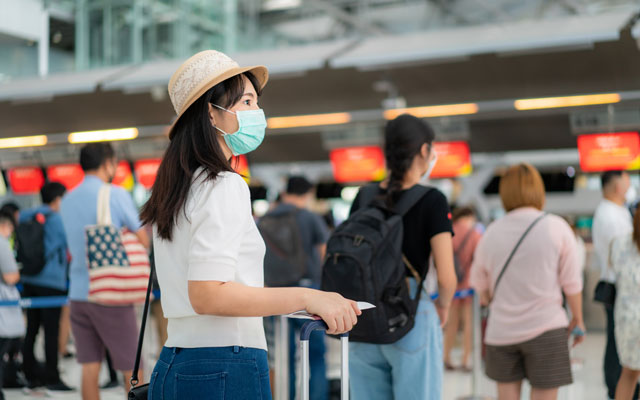
While pre-pandemic frequent flyers are ready to get back on a plane, travel restrictions and low vaccine uptake remain a serious barrier, according to new research released by Collinson’s Priority Pass.
The global survey, which polled over 46,000 Priority Pass members, found that 77 per cent of travellers in Asia-Pacific expect to travel in the next 12 months (from March 2021).
82 per cent of APAC travellers happy to use a vaccine passport to enter a country: Collinson study
Yet, despite travellers longing to hit the skies, entry restrictions – such as the need to be a resident – remain in place for many countries in the region; with most requiring several weeks of quarantine upon entry.
The survey also revealed that leisure travel will make up more than half of trips (55 per cent) taken in the next year. While business travel will recover more slowly, there is demand from frequent flyers for it to return, with the expectation that business travel will account for 45 per cent of flights taken in the next year globally.
After more than a year since Covid-19 first hit the travel industry, vaccination rollouts have brought a glimmer of hope – with 41 per cent of Asia-Pacific respondents stating that being vaccinated against Covid-19 would be the top reason for encouraging them to travel, while 33 per cent said that the lifting of international travel bans would be their top reason.
When questioned on the possibility of travelling by air in the next 12 months, 78 per cent of members globally expressed feelings of excitement and 61 per cent felt confident.
Globally, international travel will likely increase year-on-year. However, survey respondents project that domestic travel is still set to make a greater recovery than international travel during the next 12 months – at 64 per cent versus 59 per cent, when compared with 2019 travel levels, respectively.
Around the world, the desire to keep health risks to a minimum has resulted in key changes to the way people experience airport travel, with the aim of keeping external contact to a minimum.
The survey found that since the pandemic began, 24 per cent are more likely to use unmanned facilities, such as biometric passport kiosks, while 48 per cent are more likely to use airport lounge access than they did before the pandemic.
Additionally, 20 per cent are more likely to pre-order and collect their food and drinks before departure, while 49 per cent indicated that social distancing and contactless transactions at the airport are of a relatively high importance when travelling.
Despite Asia’s low vaccination rate in comparison to the EU and US, 79 per cent of travellers cite a growing confidence in the safety of air travel as more people are vaccinated.
While vaccines have yet to be fully rolled out globally, their availability continues to generate hope, as do the discussions around digital health certificates; with 82 per cent of Asia-Pacific respondents saying they would be happy to use one – higher than the global average of 74 per cent.
Globally, 76 per cent of members say they would feel confident to travel internationally if getting vaccinated became a mandatory measure. This sentiment is echoed by a further 64 per cent of travellers who agree that Covid-19 testing and the use of digital health certificates would encourage them to travel abroad.
The survey also showed that while quarantine regulations continue to be enforced around the world, 60 per cent of Asia-Pacific travellers do not feel it is an essential safety measure; while a further 69 per cent see it as a major deterrent for international travel.
When reasons behind this largely negative sentiment towards quarantine are explored in depth, 83 per cent blame the additional costs involved and 69 per cent also cite the unpredictable nature of quarantine rules, while 62 per cent are reluctant to spend so much time indoors; a finding which is likely linked to an increasing emphasis on mental wellbeing when travelling.
The total number of domestic holidays taken across Australia is set to double to 133.4 million in 2025 from 2020 levels, representing a 14 per cent growth on pre-pandemic levels, forecasts GlobalData.
The growth will be driven by Tourism Australia’s Holiday Here, This Year domestic travel campaign, being promoted through several channels including social media, radio and outdoor advertising.
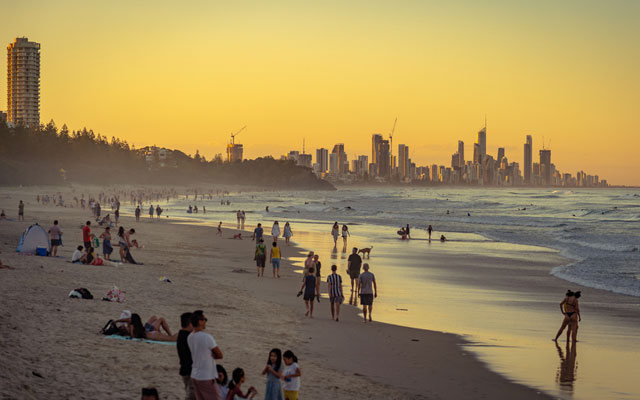
Australia’s Holiday Here, This Year campaign spurs residents to travel domestically; a crowded beach at Burleigh Heads in Gold-Coast, Australia in April 2021 pictured
Although the country will not see pre-pandemic levels for inbound trips until 2024, the increase in domestic tourism will cover some of the shortfalls and save thousands of jobs, said GlobalData.
Craig Bradley, associate travel & tourism analyst at GlobalData, commented: “Due to the pandemic, domestic trips in Australia fell by 45 per cent in 2020 from an all-time high of 116.7 million travellers in 2019. In response, Tourism Australia acted promptly to invest in a domestic tourism campaign that will reap benefits from 2021 onwards. The message to residents is simple: get out there and discover everything Australia has to offer.”
According to GlobalData projections, domestic trips will increase at a compound annual growth rate (CAGR) of nine per cent between 2021 and 2025, eventually reaching a record-breaking 133.4 million domestic trips.
Bradley continued: “The clear target marketing campaign rolled out by Tourism Australia will no doubt have had a huge impact on these projections. The organisation has done well to focus on Australia’s key selling points, focusing on various destinations, culture, gastronomy and sightseeing.
“Furthermore, as always, they have used the influence of Australian national celebrities to push their agenda (in this instance, Hamish Blake and Zoe Foster-Blake) to appeal to a wider audience.
“The Australian authorities have been unwavering with their stance on international travel restrictions. However, this strategy has kept infections to a minimum, meaning, the health risks of domestic travel are reduced and will encourage residents to travel domestically. Ultimately, the quick reaction from Tourism Australia in ensuring funds are in place to galvanise a national marketing campaign will have a significant effect on the Australian tourism industry’s short-term future.”
GlobalData concluded that Tourism Australia’s strategic focus could set an example to other DMOs on how to react quickly and decisively during unprecedented times.
Wyndham Hotels & Resorts will further grow its presence in Pakistan with a number of key signings in some of the country’s most popular destinations including Islamabad, Rawalpindi, Lahore and Hyderabad.
The development plan includes the addition of six Ramada by Wyndham hotels across the country, as well as the launch of the Howard Johnson by Wyndham brand in Pakistan.
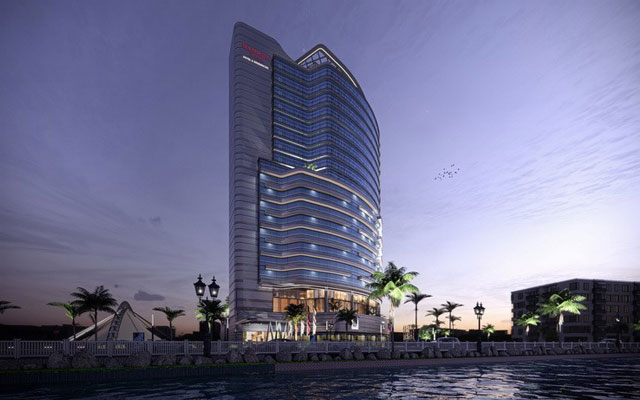
Ramada Plaza by Wyndham Islamabad Bahria Town among seven properties in Pakistan signed by Wyndham
The new signings will build on the company’s portfolio of five hotels and over 1,000 rooms in Karachi, Islamabad, Lahore and Multan.
Ramada by Wyndham Murree Lower Topa Resort will be the first of the seven properties to launch in 2022, followed by the Ramada Hotel & Suites by Wyndham Lahore Cooper Road, set for a 2023 debut.
Come 2024, there will be a trio of openings, namely, the Howard Johnson by Wyndham Islamabad Blue Area, Ramada Plaza by Wyndham Islamabad Bahria Town, and Ramada by Wyndham Rawalpindi Ayub Park.
2025 will see the launch of Ramada by Wyndham Rawalpindi Bahria Springs North, and Ramada by Wyndham Hyderabad Qasimabad.
IHG Hotels & Resorts has signed an agreement with Thai real estate group Asset World Corporation to develop three hotels in Thailand.
The multi-property agreement includes the new-build InterContinental Bangkok Chinatown, as well as two further projects in Chinatown and Pattaya, totalling 629 rooms.
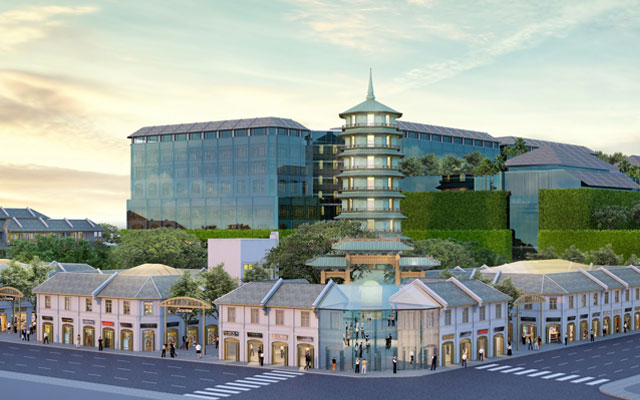
InterContinental Bangkok Chinatown will be the first luxury hospitality development in the area
Set to open in 2027, the 332-room InterContinental Bangkok Chinatown hotel will be located in historic Verngnakornkhasem within a mixed-use development that will house two hotels, residences and a retail mall, including a 24-hour food centre on Charoen Krung Road.
The hotel will feature three restaurants and bars, as well as a swimming pool, fitness centre and 1,400m² of events and meeting space supplemented by eight private rooms.
The mixed-use development will also boast the second property under this agreement – a 63-room lifestyle boutique hotel, converted from traditional four-storey shophouses.
Another boutique hotel under the agreement will open in Pattaya in early 2024. Located within the Aquatique district, the property will be at the heart of a lifestyle and entertainment complex featuring hotels, retail and dining outlets, and convention spaces. With 234 rooms and suites, the hotel will also feature restaurants, a rooftop bar, a swimming pool, spa and meeting rooms in excess of 670m².
More hotel groups, hotel developers securing green loans
Green loans on the rise; finance sector plays its part to support government and private sector’s sustainability agenda
Green financing encourages sustainable business practices, engagement with responsible travellers
The pandemic may have devastated Singapore’s travel and tourism industry but green financing for hotel properties has remained buoyant and experts expect even stronger investments ahead.
Major financiers and industry players TTG Asia spoke to indicated that sustainability efforts to green properties will likely accelerate post-pandemic and green financing seems poised on an upward trajectory too.
Ascott Residence Trust secured a S$50 million five-year green loan from DBS Bank to finance lyf one-north Singapore
The focus on sustainable financing in the hospitality sector has grown significantly over the years as travellers become more aware of the environmental and social impact they have on local ecosystems and communities, according to Lam Li Min, head of real estate and hospitality, sector solutions group, group wholesale banking, UOB.
Last year, Park Hotel Group secured its first green loan of S$237 million (US$176.1 million) under the UOB Real Estate Sustainable Finance Framework. Launched in 2019, it was the first-of-its-kind for the sector established by a Singapore bank. The framework sets out the eligibility criteria, including sustainability strategy, objectives, ratings and performance targets, for companies to meet when applying for green loans or sustainability-linked loans.
Tan: Green financing nudges hotel operators towards integrating sustainability into their businesses
Tan Shin Hui, executive director, Park Hotel Group said: “Sustainable financing for the hospitality sector is like a carrot on a stick for hotel developers and operators to incorporate sustainability in their business strategy and decisions. This development in financing encourages companies to consider environmental impact of their investments and new business initiatives. It also motivates hotel developers and operators to measure and evaluate the positive difference they are making on the environment.”
This month, Worldwide Hotels Group also inked its first green loan facility worth S$405 million for its new hotel and commercial development, 8 Club Street, with Maybank Singapore. The agreement with the Group is one of the largest bilateral green financing for a hospitality asset in Singapore to date.
Maybank Singapore has also dished out S$250 million in Islamic green financing to property investment chain, Royal Group back in March – said to be the world’s first for hospitality. The funds will go towards the upcoming Raffles Sentosa Resort & Spa Singapore and the existing Sofitel Singapore Sentosa Resort & Spa. This marks Royal Group’s first foray into sustainability finance, according to Gregory Seow, head of global banking, Maybank Singapore.
Seow: Pandemic has sharpened sustainability focus for hospitality stakeholders
“Within the hospitality sector, there is increasingly more focus given to green financing as the pandemic is a wake-up call for sustainable financing. We do see more clients embedding sustainability into their business models to show their stakeholders that they take ESG (Environmental, Social and Governance) targets seriously and will work towards the desirable outcomes they aim for,” Seow added.
Ascott Residence Trust (ART) will use its S$50 million five-year green loan from DBS Bank in January this year to finance its maiden development project and co-living property, lyf one-north Singapore.
Beh Siew Kim, CEO of ART Management and Ascott Business Trust Management, said: “Being the first hospitality trust in Singapore to secure a green loan reinforces ART’s commitment to do our part for the environment and the communities we operate in. In 2020, we increased the number of green properties in ART’s portfolio by about four times compared to 2019. To date, 21 properties in the ART portfolio have obtained green building ratings and certification.”
According to a 2018 UN World Tourism Organization report, hotels account for about one per cent of global greenhouse gas emissions as an industry – so it is crucial for hospitality businesses to embark on ways to reduce their carbon footprint.
Greening makes business sense
Apart from being able to secure green financing for their projects and combat climate change, integrating green practices into their properties will ultimately benefit the bottomline for hotel owners and operators as guests trend towards travelling sustainably and responsibly too.
Seow pointed out that both government and the private sector have also been advocating the sustainability agenda as a differentiator on the country, as well as on a company level.
From 2019 to 1H2020, the Monetary Authority of Singapore revealed that Singapore corporates have borrowed S$10.2 billion through green and sustainability-linked loans, and S$4.8 billion of green and sustainability bonds were issued from Singapore. There is an increased traction for real estate owners and developers to opt for green loans.
As at mid-2020, the green share of total loan and bond transactions in Singapore remains modest at less than five per cent, reflecting the significant opportunity for growth ahead. Seow added: “The finance sector will continue to play our part in promoting sustainable financing for the hospitality sector.”





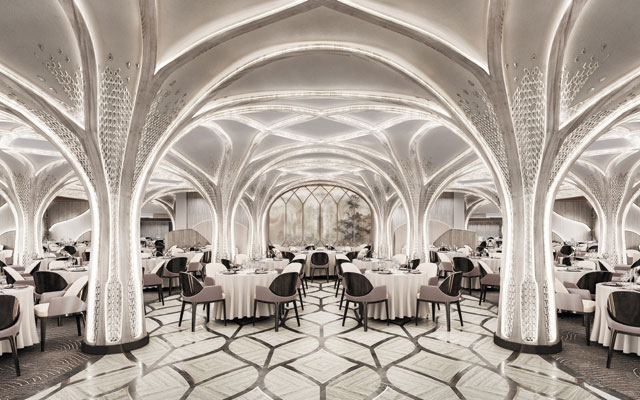










Seven Seas Grandeur, the sixth luxury cruise vessel to join Regent Seven Seas Cruises in 4Q2023, has unveiled sneak peeks of its signature specialty restaurant Compass Rose.
Multi-award-winning Studio DADO has crafted a space that is reminiscent of an enchanted forest. The journey begins with a delicate, cascading waterfall sculpture at the entrance and onwards under a canopy of interwoven crystal and wood-edge illuminated trees.
The interior features floor-to-ceiling illumination by thousands of crystal-faceted leaves which are encrusted on pillars and branches enveloping the restaurant. A star-dusted view of the ocean is provided by hundreds of twinkling lights surrounding the windows.
Adding to the atmospheric dining experience is a custom-designed mural by Confluent Studios. Crafted with gold-leaf and Verre Eglomisé, the mural will depict the flora and fauna at the forest’s edge, allowing the restaurant to appear endless.
“Restaurants on board all Regent ships are exquisite, but for Seven Seas Grandeur’s Compass Rose we wanted to create a space that was truly a feast for the eyes,” said Yohandel Ruiz, founding partner, Studio DADO.
“This new design of Compass Rose will pique guests’ curiosity and sense of wonder before they have even set foot in the restaurant, and go on to delight with a sumptuous, personalised meal in dramatic and beautiful surroundings. It’s a dining experience that they will regale friends and family with time and again.”