The Indian government has announced a few fiscal relief measures for the tourism sector reeling under the impact of the Covid-19 pandemic. This marks the first such initiative that the government has rolled out to aid the tourism sector since the outbreak of the pandemic.
Addressing reporters in New Delhi on Monday (April 28), finance minister Sitharaman said that once the tourist visa issuance for international travel is restarted, the first five hundred thousand tourists will be issued visas free of charge. The benefit that will be available only once per tourist would be applicable till March 31, 2022. Since March last year, the Indian government has suspended issuing tourist visas.
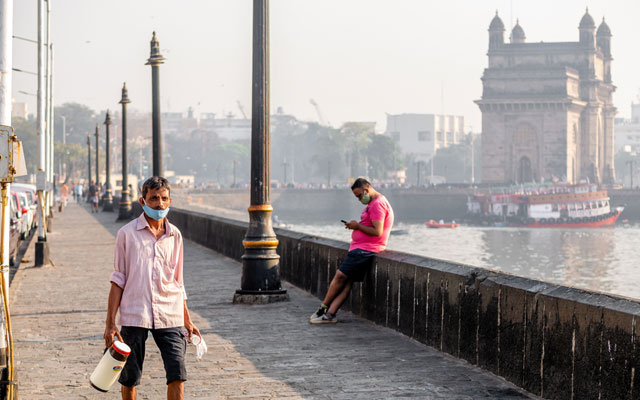
India’s government will provide five hundred thousand tourists visas free of charge to revive the tourism sector; The Gateway of India in Mumbai, India pictured
The minister also shared that travel agents and tour guides will be eligible for loans up to Rs. 1 million (US$13,470) and Rs. 100,000 respectively, without any processing charges or collateral requirement.
“These are much-needed steps towards the revival of tourism – a sector that is a significant contributor to the (country’s) GDP, foreign exchange receipts and employment generation – with a cascading force multiplier effect on allied sectors. The 5 lakh (five hundred thousand) gratis visas will serve to catalyse much-needed inbound inflows,” said Madhavan Menon, managing director, Thomas Cook India Group.
“Without these initiatives, it will take the industry much longer to bounce back,” commented Manbeer Choudhary, chairman, Jewels Group of Hotels.
However, a section of the industry feels that the measures announced have failed to address the woes of the industry completely. A few were disappointed that loans are only being offered to around 904 travel and tourism stakeholders registered with the Ministry of Tourism.
Jyoti Mayal, president, Travel Agents Association of India (TAAI), said: “We have been recommending our members to register with the Ministry of Tourism over the years but the process is tedious and requires a lot of documentation. Most of the members engaged in domestic tourism are registered with state tourism departments. The outreach of this relief is minuscule.”
TAAI has urged the government to also consider stakeholders registered under the Ministry of Micro, Small & Medium Enterprises (MSME) to widen the eligibility of loans.
Thailand’s tourism confidence index in 2Q2021 fell to a 10-year low of 11 points as the ongoing pandemic hampered recovery and dampened business confidence, but the Tourism Council of Thailand (TCT) is optimistic of a rebound when the country reopens to international visitors this week.
According to a TCT statement, only 50 per cent of tourism businesses remain open, while 36 per cent have closed temporarily, and four per cent have shuttered permanently. In addition, tourism businesses which remain open said they only have enough funds to last them another six months.
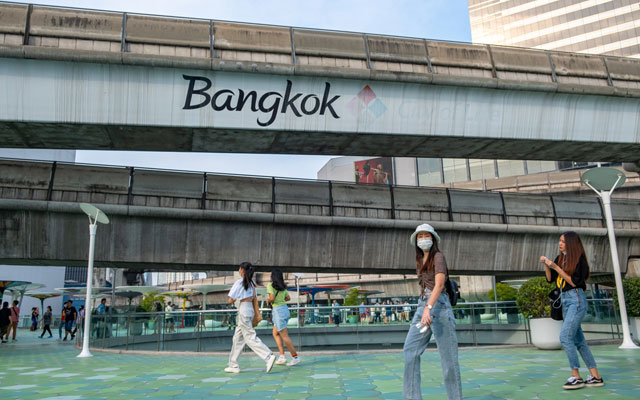
Thailand’s government targets three million foreign tourists this year under a phased reopening plan
However, once foreign tourists start returning to Thailand and domestic travel resumes, the index should rebound to 33 points in Q3 this year, predicts TCT president Chamnan Srisawat.
He said if Phuket’s Sandbox scheme which will see the resort island reopen to vaccinated foreign visitors from July 1 prove successful, operators in other destinations across Thailand will be confident to welcome visitors as well.
Pattaya mayor Sontaya Khunpluem said there are plans to reopen Koh Larn island off the coast of Pattaya in the near future. Meanwhile, Pattaya city aims to vaccinate at least 70 per cent of its population ahead of its planned September reopening.
With its phased reopening plan to vaccinated visitors, Thailand’s government is targeting three million foreign tourists this year. However, CCT Group president Wichit Prakobgosol said that target would be “very difficult” to achieve, if Thailand was unable to immunise more than 70 per cent of the country’s population and open 10 pilot provinces including Bangkok within 120 days as planned, and if China were to maintain its outbound travel ban.
He said: “If we can only open nine provinces and China hasn’t opened the country yet, there may be only one million tourists coming to Thailand. However, if the Chinese are able to go aboard, we could see three million tourists.”
The Indonesian government has rolled out a 60 billion rupiah (US$4.2 million) incentive package to the pandemic-hit tourism sector, triple the amount of a similar initiative in 2020.
The incentives range from 20 million rupiah to 200 million rupiah for each recipient from six sub-sectors of the tourism and creative industries. The selection process for the incentive recipients is ongoing.
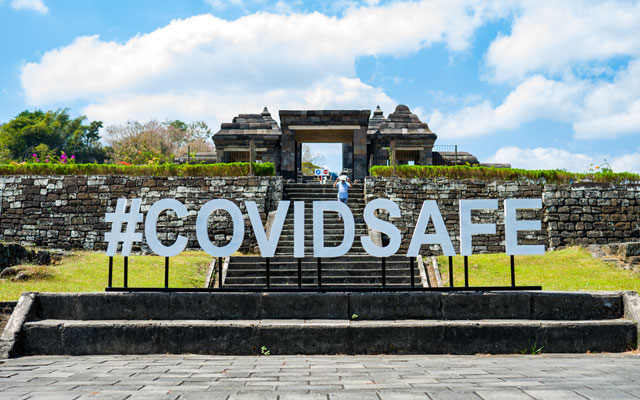
Indonesia rolls out fresh round of incentives for tourism industry; Ratu Boko in Yogyakarta, Indonesia pictured
Last year’s 24 billion rupiah incentive package allocated to the tourism sector was granted to a total of 232 recipients. Sandiaga Uno, minister of tourism and creative economy, expects 800 recipients this year. Besides cash incentives, the government will also provide training courses to help tourism businesses survive during the Covid-19 pandemic.
The fiscal aid has triggered mixed reactions among hoteliers and tour operators in Indonesia. While some welcomed the support, others deemed the stimulus insufficient to tide businesses through the crisis.
Artotel Group COO Eduard Pangkarego, said that the financial aid would provided a much-needed lifeline for hospitality staff. He recalled that the hotel group’s staff used last year’s government incentives to set up small-scale businesses for extra income.
Other stakeholders, though, are less exuberant. Sudarsana, general manager business development and marketing communications at Santika Indonesia Hotels and Resorts, said that the incentives will lend little help to the ailing industry due to their short-term benefits.
He suggested that the budget instead be used to procure more vaccines to speed up the nation’s vaccination programme, which would pave the way for the recovery of the local economy, and the tourism industry.
Sandiaga told TTG Asia that as the ministry is in the midst of developing tourism villages, business entities that are located around tourism villages would receive priority consideration for the incentives during the assessment process.
That prerequisite fails to ensure a level playing field, as it puts travel businesses located in big cities like Jakarta, where tourism villages are rare, at the losing end, claimed Hasiyanna, managing director of Jakarta-based Marintur Indonesia and chairman of ASITA 71 Jakarta chapter.
A voluntary carbon offset programme launched by the Singapore Airlines (SIA) Group will enable customers across its passenger airlines to offset their carbon emissions via dedicated microsites.
SIA and Scoot customers can now offset carbon emissions on the respective airline microsites at any time before or after a flight. Both airlines will also match the offsets that these customers purchase for the first six months from the launch of the programme.
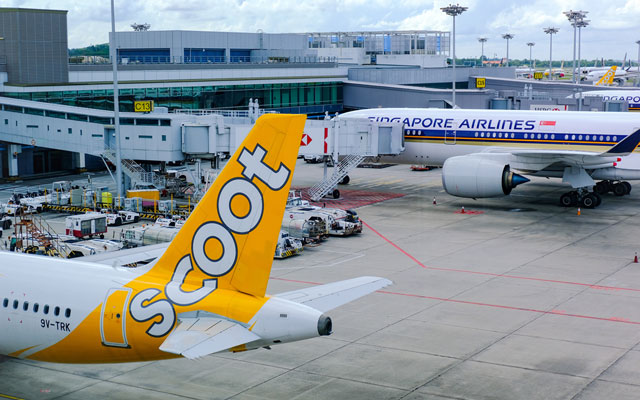
SIA Group’s voluntary carbon offset programme offers its customers the opportunity to offset their emissions
Corporate customers will be able to participate in the programme from 4Q2021. In addition, SIA customers can also use their KrisFlyer miles and HighFlyer points to offset their carbon emissions from 4Q2021.
The offsets will be provided via the BlueHalo digital solution, which has been developed by Australia-based Tasman Environmental Markets. This allows customers to immediately calculate and offset the emissions associated with their journey.
The SIA Group said that the carbon offset projects selected have “a proven and measurable impact on communities and the environment”. Contributions from the SIA Group’s customers would help to protect forests in Indonesia, support renewable solar energy projects in India, and provide efficient, clean burning cookstoves for rural families in Nepal.
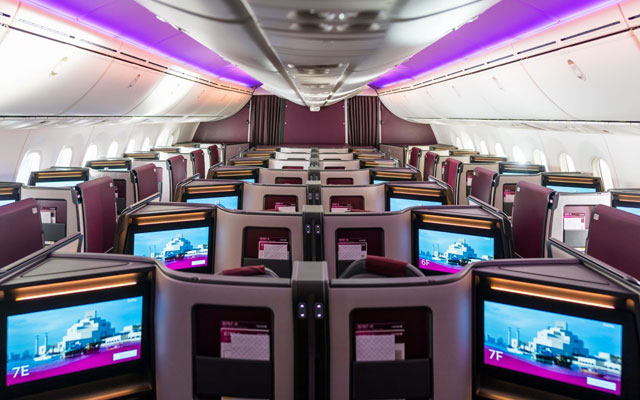
Qatar Airways has launched its new wide-body aircraft, the Boeing 787-9 Dreamliner, featuring a new business class suite, on a number of key routes to Europe and Asia.
The aircraft’s inaugural service from Doha to Milan took place on Friday (June 25), followed by routes to Athens, Barcelona, Dammam, Karachi, Kuala Lumpur and Madrid.
Qatar Airways rolls out new business class suite with sliding privacy doors and a 79-inch lie-flat bed
The Boeing 787-9 Dreamliner has a total passenger capacity of 311 seats – 30 business class suites and 281 seats in economy class.
Arranged in a herringbone pattern, in a 1-2-1 configuration, each business class suite has direct aisle access with sliding privacy doors. Other features include a 79-inch fully-flat bed and a dedicated phone holder, equipped with wireless charging technology that is compatible with both iOS and Android devices.
In economy class, each seat is equipped with a 13-inch Panasonic IFE touch screen in addition to a personal electronic device holder for both mobile and iPad devices.
Qatar Airways said in a statement that it has continued to fly its fleet of 30 787-8s throughout the Covid-19 pandemic due to its strong fuel efficiency and excellent reliability record. The airline added that its investment in the 787-9 once again underscores its commitment to sustainability and achieving net zero carbon emissions by 2050.
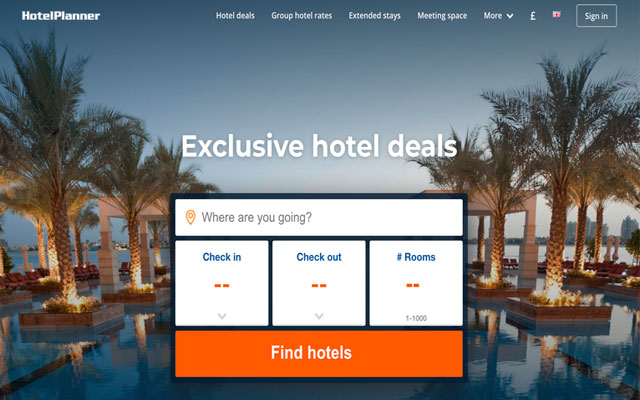
Travel technology platform HotelPlanner has entered into a partnership with the Singapore Swimming Club that will give club members exclusive group rates when booking hotels around the world on the platform.
The partnership also entitles each Singapore Swimming Club member to a US$100 hotel voucher. Singapore Swimming Club is the country’s largest non-golfing, members-only recreational club.
Christopher Lee, executive vice president, Asia Pacific at HotelPlanner, said that the partnership marks the company’s first collaboration with a recreational club in Singapore.
He added: “With pent-up demand for travel growing, we are also keen to explore more partnerships with other recreational and sporting associations in Singapore and the entire Asia-Pacific region.”
HotelPlanner is a supporter and partner of professional sporting events and leagues, including the United Soccer League, National Hockey League’s New Jersey Devils and the Ladies Professional Golfing Association.
Come mid-2022, Koh Samui will see the arrival of Avani Chaweng Samui Resort, a 76-key property situated along Chaweng Beach Road.
The resort will feature a swimming pool with cabanas and a multi-level deck, in addition to a 24-hour gym and a social bar that doubles as a check-in area. As well, the resort’s guests will get priority access to the restaurant at Seen Beach Club Samui, a sister property located next door.
Avani Chaweng Samui Resort’s bold and fresh design inspired by motor hotels
For the resort’s design, Thailand-based studio Soho Hospitality took its cues from motor hotels that gained popularity in mid-century America as a convenient lodging option for vacationing families. The result is a predominantly contemporary space infused with mid-century influences.
The new resort in Chaweng will be Avani’s tenth property in Thailand, with more developments in Thailand, the Maldives and the Middle East.
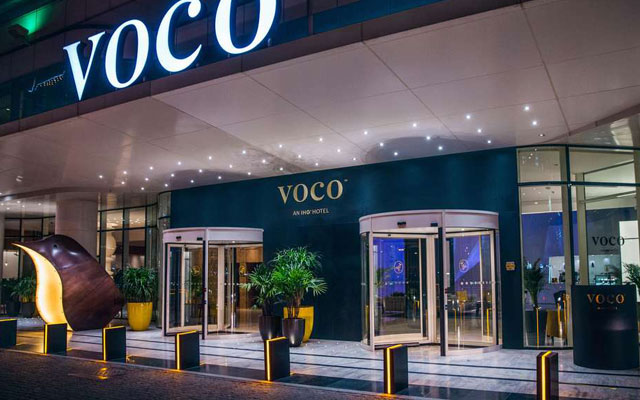
IHG Hotels & Resorts has signed a management agreement with UAE-based developer ASRE Limited to introduce its premium brand voco into Dubai’s Palm Jumeirah.
Scheduled to open its doors in December 2021, voco Dubai Palm Jumeirah will feature 141 rooms, four dining options, a gym, pool, spa, and a 55m² meeting room.
voco Dubai Palm Jumeirah will open later this year
voco Dubai Palm Jumeirah will be part of a newly launched area dubbed Palm West Beach, which also comprise of dining concepts and a promenade along the beach.
The new hotel joins the voco family in Dubai, with voco Dubai on Sheikh Zayed Road and the soon-to-open voco Bonnington Jumeirah Lakes Towers Dubai. In the Middle East and Africa region, voco has a portfolio of four operating hotels and five in the pipeline.
Price competition intensifies across hotel categories
Travellers emerge winners as hotel rates plummet to win business
Hoteliers divided on whether budget or mid/upper-scale hotels will benefit most from heightened price sensitivity
Competition among hotels to fill their rooms has intensified over the past year, with rates being slashed as much as 70 per cent to win over an increasingly price- and value-conscious traveller.
According to a recent GlobalData study, price/value is the top consideration for 48 per cent of Asia-Pacific respondents when it comes to hotel accommodation selection. Health/hygiene takes second spot, with only 14 per cent of respondents voting it as their top consideration.
Travellers enjoy heavy room rate discounts as hotels fight for much needed business
The results do not differ much worldwide. Forty-seven per cent of respondents across the world opted price and value as their number one consideration, while 15 per cent said quality mattered most. Health and hygiene considerations were important for 11 per cent of respondents.
The consumer study, conducted in 1Q2021, showed that travellers are now more price-sensitive than before the pandemic, with 87 per cent of them expressing concerns about their personal financial position during the pandemic.
With only two per cent of global travellers and three per cent in Asia-Pacific regarding hotel prestige and status as the most influential factor in hotel accommodation selection, GlobalData’s associate travel and tourism analyst, Gus Gardner, said budget hotel options would emerge winners as travel and tourism resumes.
Gardner said: “The pandemic has placed a considerable strain on travellers’ finances. Despite this, travel demand is still high, and many are looking to escape in desperate need for a change of scenery. Travellers are more likely to trade extras offered at mid- to upper-scale hotels for a more basic ‘pay for what you need’ service standard.”
Price/value is top consideration among Asia-Pacific travellers when selecting hotel accommodation, according to GlobalData / Source: GlobalData
EL Khomri, executive vice president and COO of The Erawan Group, also believes that budget hotels would see the earliest return to pre-pandemic business level, as they are a better fit for post-pandemic price-sensitive leisure and business domestic travellers.
Although many upscale hotels have invested in growing customer loyalty during the pandemic’s travel downturn, Gardner said changes in traveller sentiment could put a damper on the success of such activities.
“The financial squeeze from the pandemic will likely push travellers to budget travel options, forgoing loyalty benefits in the process,” Gardner commented.
Hotels’ battle royal
However, with the ongoing price war cutting across all hotel categories, as mid- and upper-scale hotels dig into lower-spending markets to make up for the lack of international guests, budget hotels could be at the losing end when travellers can now get more for less.
Trip.com’s Weekend Super Deals weekly online sale for the Singapore market, which kicked off in March, features mostly mid-scale to high-end hotels and dangles a variety of lures – from exclusive hotel discounts of up to 40 per cent, one-for-one hotel deals, and added perks such as late checkouts. The company also organises weekend campaigns in other Asian markets such as Hong Kong and South Korea, with different curated offers for each.
In its Mendadak OTW online travel sale in April this year, Indonesia-based OTA Tiket.com dished out special hotel rates that were up to 70 per cent below normal price. The move expanded hotel bookings by 131 per cent.
Trip.com’s Weekend Super Deals weekly online sale features attractive hotel discounts and deals
Sudarsana, general manager business development and marketing communications, Santika Indonesia Hotels and Resorts, said the company was able to shave 50 per cent off the rates of its three-star Santika and four-star Santika Premiere branded properties during online flash sales. By offerings budget-hotel prices for stays that promise mid-scale hotel facilities, price-conscious Indonesians have driven up demand for Santika’s mid-scale properties.
Artotel Group has also lowered its rates, but only as low as they “made sense and were reasonable”, shared COO Eduard Pangkarego. The hotel company runs a five-hour flash sale every Friday, with room rate discounts of up to 50 per cent.
“We will not prostitute our rates,” he asserted, but recognised that the competition among Indonesia hotels is now a fierce battle – and one where budget hotels would find it hard to triumph over generous mid-scale and upscale rivals.
It’s not just about the price tag
While hotel rates have dived, Asian hoteliers agree that price alone will no longer score them the next guest, as perceived stay value is now more important in the hotel accommodation selection process.
A Trip.com spokesperson told TTG Asia: “While price, location, hotel rooms and view from the room used to be the key considerations for most users previously, we noticed that users are now placing more emphasis on the value of their booking and overall experience of their stay. Price is no longer the only or main consideration for users.”
To ensure that promotions speak to the heart of today’s travellers, Trip.com collaborates with different hotels to curate packages for different types of travellers and which carry value-added perks, such as late check outs, free room upgrades, free club access, and dining credits.
According to Wutthiphon Taworntawat, managing director of UHG, which operates 11 mid-scale hotels in Bangkok, Thailand, the post-pandemic traveller is “picky” and will prioritise hotel location, in-hotel F&B options and other facilities, additional services such as early check-in and late check-out, guest safety, high-speed Internet connection as well as hotel image.
“Travellers may not bargain for the lowest price but they may demand something else that answers their needs. That is another aspect of price sensitivity,” Wutthiphon said.
Improvements in online travel retail have made it easier for travellers to compare room rates and value-adds, noted Wutthiphon, who added that hoteliers must therefore “accept the change and adapt” by offering more than just an attractive price tag to impress customers.
Competing beyond price is also critical for the long-term business viability of hotels.
Vincent Delsol, general manager at Pullman Phuket Panwa Beach Resort, acknowledged that it is a challenge for hotels to continue running with the low room rates witnessed over the past year while dealing with the same – or higher – operating costs today.
Delsol opined that hotels will need to cater to travellers’ desire for travel products and experiences that provide “meaning and authenticity” instead of those that are “generic and undifferentiated”.
Hotels, especially in the luxury and premium sector, would need to “reset their services”, move away from a rate focus, and “invent meaningful experiences”, according to Delsol. – Additional reporting by Kurniawan Ulung and Suchat Sritama
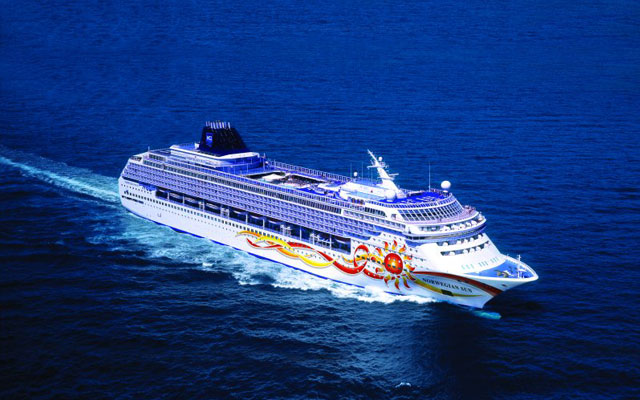
Norwegian Cruise Line (NCL) will restart cruises from Hong Kong in 2022, with a collection of itineraries aboard Norwegian Sun.
The 2,000-guest ship features elegant design, alongside bright and open spaces, following a recent bow-to-stern refurbishment.
For those seeking close-to-home convenience, Norwegian Sun debuts in Hong Kong from 2022
For Lunar New Year 2022, NCL has curated a five-day Japan Round Trip Cruise from Hong Kong to Japan. Guests can explore the scenic island of Naha, including the limestone caves of Ryukyu village, and indulge in traditional Okinawan flavours that blend Chinese and South-east Asian influences during an extended overnight stay.
The 11-day Asia Cruise will journey to three South-east Asian destinations. The voyage will begin in Bangkok, where guests will weave through golden temples before embarking on a river boat journey down the Chao Phrya, past the Royal Palace and floating markets. The journey continues in Singapore where guests can experience the country’s melting pot of cuisine, innovative architecture as well as colonial history.
Over in Vietnam, highlights include an exploration of the unique cultures of Ho Chi Minh City, Nha Trang, Da Nang and Hanoi – from iconic local street food and rickshaw rides to the natural beauty of untouched beaches and wild jungles, before finally disembarking in Hong Kong.
For an in-depth adventure, NCL’s 16-day Transpacific sailing from Tokyo to Seattle promises an experience like no other, starting with the bright lights and city life of Tokyo, to the unique town of Petropavlovsk in Russia, then across the International Date Line to multiple ports of Alaska before arriving in Seattle, Washington.
In preparation for its long-awaited global return to service in July, NCL has put in place rigorous Sail Safe protocols to safeguard the health and safety of guests, crew and the communities it visits.
NCL said in a press release that it has spent the past year further developing and refining those protocols, using the latest scientific findings and expert advice.
NCL’s Sail Safe Health and Safety programme is founded on three pillars: safety for guests and crew with vaccination requirements for all cruises departing through October 31, 2021, universal Covid-19 testing and enhanced health screening protocols; safety aboard with medical-grade air filtration, increased sanitation measures and enhanced medical resources – including a dedicated public health officer on each ship; and safety ashore through the collaboration with land-based tour operator partners to extend health and safety measures to each destination.













A voluntary carbon offset programme launched by the Singapore Airlines (SIA) Group will enable customers across its passenger airlines to offset their carbon emissions via dedicated microsites.
SIA and Scoot customers can now offset carbon emissions on the respective airline microsites at any time before or after a flight. Both airlines will also match the offsets that these customers purchase for the first six months from the launch of the programme.
Corporate customers will be able to participate in the programme from 4Q2021. In addition, SIA customers can also use their KrisFlyer miles and HighFlyer points to offset their carbon emissions from 4Q2021.
The offsets will be provided via the BlueHalo digital solution, which has been developed by Australia-based Tasman Environmental Markets. This allows customers to immediately calculate and offset the emissions associated with their journey.
The SIA Group said that the carbon offset projects selected have “a proven and measurable impact on communities and the environment”. Contributions from the SIA Group’s customers would help to protect forests in Indonesia, support renewable solar energy projects in India, and provide efficient, clean burning cookstoves for rural families in Nepal.