

The Asia Pacific and the Global Travel Recovery report, produced by ILTM in partnership with Barton, has turned up some informative insights into luxury travel. What are some of the outstanding findings that present an optimistic future for this industry?
One of the major findings is that the High Net Worth (HNW) population contributes massive amounts of money to the global luxury travel universe. At the same time, Asia-Pacific’s HNW population growth can never be understated. It is not just China that is contributing HNW individuals, but other countries too.
(Japan is an) exception to that growth. Japan has a stagnant economy in comparison to Asia-Pacific as a whole, as well as a shrinking and aging population. But beyond the unusual situation in Japan, the rest of Asia-Pacific is seeing a growing economy, a growing population and a fast-growing HNW group.
What this means is that Asia-Pacific’s share of HNW spending is increasing quickly and strongly versus the rest of the world. These Asia-Pacific HNW travellers will travel to anywhere in the world and contribute to the global luxury travel ecosystem.
The study looks into the Outbound Luxury Travel Ecosystem, defined as the set of activities linked to travel that are particularly attractive to luxury travellers. Are these activities necessarily luxury? And why is it important for luxury travel stakeholders to understand what makes up this ecosystem?
The activities are not always luxurious. The most important thing about these activities assembled for the ecosystem is that they are things that HNW travellers like to do when they travel.
For example, we don’t just have Michelin-starred restaurants in the ecosystem; we have other types, the more casual ones. Similarly, music concerts that do not have tickets at a luxury price point may present content that are culturally attractive to HNW travellers.
It is important to understand the ecosystem from the travellers’ perspective and not from the industry’s perspective. Luxury travellers don’t want to be consuming luxury experiences non-stop. They want to partake in activities that aren’t necessarily aligned with luxury as well.
Can you give us a quick glimpse into areas/activities in the ecosystem that are attracting stronger spending from Asia-Pacific HNW travellers compared to global HNW travellers?
In terms of total spend from Asia-Pacific, airfares and lodging make up a chunk. Globally, US$1.4 trillion is spent on airfares and lodging, while Asia-Pacific’s contributes US$231.5 billion to that. China’s contribution to the global airfares and lodging spend is very large – 49 per cent of Asia-Pacific’s share (or US$114 billion).
In terms of regional travel within Asia-Pacific, US$37.4 billion is spent on inbound and outbound airfare and lodging. China’s share of that is US$16.9 billion – and that’s just one country on its own.
In terms of activities, many of those that we have identified in the report – particularly the cultural ones – are not available in the Asia-Pacific region. This makes the Asia-Pacific HNW contribution so much more important because it shows the travellers’ propensity to travel internationally (to experience those activities).
For example, Asia-Pacific contributes just over one-tenth of the global spend on cultural activities although many of these cultural organisations, such as the museums and galleries, are not in Asia-Pacific. That’s an impressive statistic.
Wellness activities are also drawing a chunky spend from Asia-Pacific’s HNW community. The Asia-Pacific wellness spend is now a fifth of the global total but wellness is still not something that the global travel community identifies with Asia-Pacific travellers. Brands in the West may not realise that wellness is something Asia-Pacific HNW travellers are interested in. There is almost a presumption that when Asia-Pacific HNW travellers visit Europe or North America, their top priority is culture and sightseeing. In fact, we have identified a big chunk of Asia-Pacific HNW travellers who are interested in wellness activities like fitness classes and health treatments.
Do you foresee the make up of this ecosystem changing post-pandemic?
Short-term post-pandemic, not much. We will need to wait and see what happens with the vaccination programmes and containment efforts. Border policies are still restrictive, and there will be long hangovers about who will be allowed into a country and who will be allowed to freely travel.
It is a shame, but arising from these restrictions would be the creation of travel corridors between well-vaccinated countries and countries with no variant exposures – within regions first before globally.
We could also see in the short-term a change in the types of activities to cater to travellers who have access to the destination.
In the mid- to long-term, I expect to see the Asia-Pacific region having a greater share in the global luxury travel ecosystem simply because countries will start to create their own activities (for regional travellers). Asia-Pacific’s HNW travellers will be looking to do activities in their region, not just in Europe or North America. There will also be a growing desire among HNW travellers from outside of Asia-Pacific wanting to do activities in the Asia-Pacific region.
Hopefully, by the end of 2022 and early-2023, we would see a greater return to normality in intercontinental travel for the mass market, not just for the HNW travel community.

Let’s talk about the distribution of HNW travellers in Asia-Pacific. The study notes that 29 per cent of the region’s HNW travellers hail from China – a market that is still shut to the rest of the world due to strict outbound travel restrictions by the Chinese government to prevent the import of Covid-19 cases upon their residents’ return. Isn’t this a major obstacle to the recovery of luxury travel and tourism for the rest of the region and beyond?
Yes, it is. You cannot underestimate the power of the Chinese. China has the fastest growing HNW population across the world and they have a great appetite for luxury. Until the pandemic hit, China had a rapidly growing appetite for luxury travel.
The Chinese population being restricted from travelling overseas has a big impact on the world. It isn’t just the travel industry that is impatient to get the Chinese back. Not too long ago, a Chinese person outside of China made one in three purchases of luxury goods. Now, it is more than that – almost approaching the level of one in two purchases. Brands need the Chinese to get back to travelling and spending.
However, that doesn’t mean the Chinese story is the only story; it is not. The world needs wealthy people from Japan, Singapore, Australia to be travelling again, etc.
For luxury tourism stakeholders hoping to make in-roads into the fast-emerging luxury travel source markets of Vietnam, India and the Philippines, what aspects of these travellers’ spending habits or personal passions should be noted for marketing success?
Well, we need to remember how global these HNW people are. In doing business internationally, many are picking up international habits, interests and preferences. They may maintain some level of local identity, such as certain things they prefer to eat, family approach or cultural attitudes, but they are in general behaving much more like an international group than a national group.
We cannot look at these fast-rising Asia-Pacific markets parochially. The behaviours of the general Vietnamese may not be reflective of the characteristics of HNW Vietnamese.
When we think of the interests and passions of Asia-Pacific’s HNW people, we need to remember that they are very similar to many wealthy people around the world. For instance, sports draw huge interest from many HNW people around the world, even those in fast-rising, newly wealthy countries.
HNW individuals across Asia-Pacific are also very keen on things like technology, engineering, education, philanthropy, real estate, art, language and food – much like the other HNW individuals across the world.
We have found more similarities between the wealthy people of the world than between the wealthy people and the rest of the population in the same country.
The report expects in-region travel will be at the heart of the recovery – an estimated 57.5 per cent of Asia-Pacific traveller’s outbound spend is spent within the region. Where does that leave Western destinations hoping to bring back Asia-Pacific visitors?
This is tricky. Western destinations will have to depend on travel corridors set up with Asia-Pacific (to resume arrivals).
As long as Covid cases remain stable and don’t shoot up, we could expect China to establish travel corridors with certain parts of Europe. China is a powerhouse source market, so destinations will want to do what they can to bring the Chinese travellers back. But before that happens, domestic travel will continue to be most significant in Asia-Pacific – just as it has been elsewhere in the world during this pandemic.



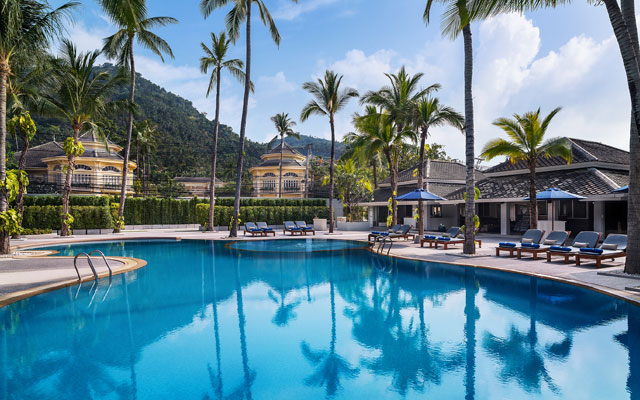
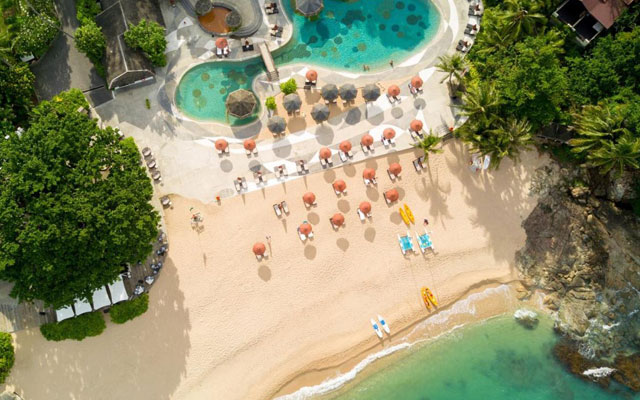









Outrigger Hospitality Group has completed its purchase of the Manathai Hotels and Resorts brand, inclusive of three beach resorts in southern Thailand.
The former Manathai Koh Samui, Manathai Khao Lak and Manathai Surin Phuket will be refreshed, before rebranding and reopening by year-end as Outrigger Koh Samui Beach Resort, Outrigger Khao Lak Beach Resort and Phuket Manathai by Outrigger, respectively. The three properties have a combined total of 372 keys.
The 148-key Outrigger Koh Samui Beach Resort is located on the quiet sands of Lamai Beach on the east coast of Thailand’s second-largest island, which is a 70-minute flight from Bangkok and 55 minutes from Phuket. The property includes 34 suites, a spa, three restaurants, a kids’ club and facilities for weddings and events.
In Khao Lak, a 75-minute drive north of Phuket airport, the 158-key Outrigger Khao Lak Beach Resort sits on Bang Sak Beach, a long stretch of fine sand coastline with uninterrupted views of the Andaman Sea. The property’s room portfolio includes 12 suites and villas. There are two restaurants, a bar, a pool with ocean views, and a kids’ club.
In Phuket, 30-minutes south of the international airport, the Phuket Manathai by Outrigger is a 66-room boutique property on the edge of the powder white sands of Surin Beach. Thirty-seven of the rooms are suites. The property features one main restaurant, a pool bar, and spa.