

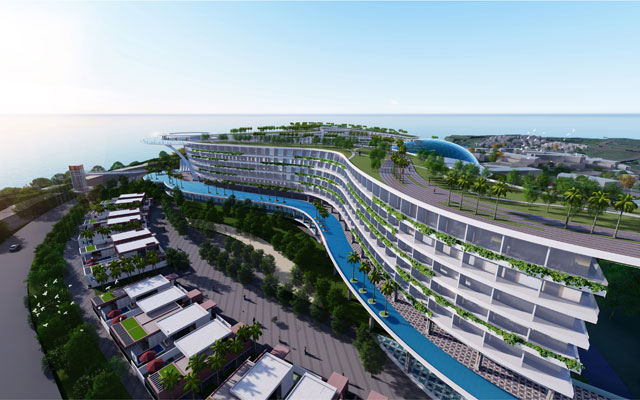
Singapore emerges as world’s most vacation-deprived country
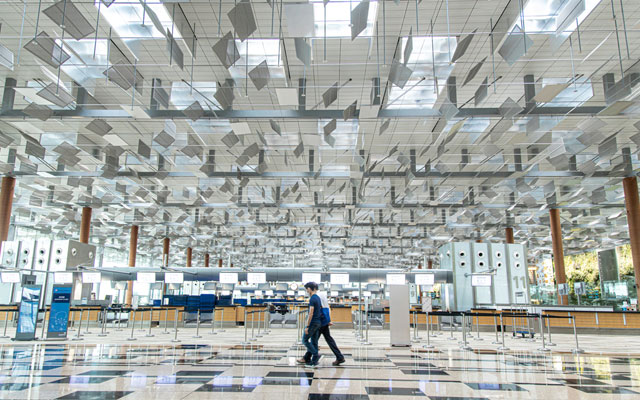
Singaporeans are longing for a return to travel more than anyone else in the world, with the country topping Expedia’s vacation deprivation rankings for the first time.
According to the latest edition of the annual study – which surveyed 9,200 consumers in 16 markets globally, including 300 in Singapore – vacation deprivation is on the rise in 10 out of the 16 markets surveyed across the globe. In particular, 71% of the respondents in Singapore and Italy said they were ‘very’ or ‘somewhat’ vacation-deprived, making them the most vacation-deprived countries in the world, ahead of South Korea (70%), France (70%) and Malaysia (68%).
For Singapore, this year’s finding marks a slight increase compared to the year before when 67% of Singaporeans said that they were vacation-deprived.

Of the Singaporeans surveyed, those aged 18-34 were found to be the most vacation-deprived group, with 85% identifying with vacation deprivation. This was followed by those in the 35-49 age range (68%), and those aged above 50 (51%). Interestingly, respondents who reside in the east of Singapore also appear to be more vacation-deprived (77%) than those residing in the west (69%).
“Singaporeans are some of the most avid travellers in the region, and when we consider the lack of options for inter-city travel within the country, it is of little surprise that they are the most vacation-deprived people globally this year. But they have adapted well while embracing the nationalistic spirit of rediscovering Singapore while supporting local tourism through staycations and local activities,” said Lavinia Rajaram, APAC head of communications, Brand Expedia.
According to the study, Singaporeans used five less vacation days in 2020 compared to the amount they would normally take in a typical year. Despite the average number of vacation days received remaining the same at 16 days annually in 2019 and 2020, Singaporeans only took an average of 10 vacation days in 2020, much lower than the 15 vacation days they would usually take in a year.
With the reduction in vacation days taken, Singaporeans also expressed a greater longing for the return to travel more than anyone else in the world. Some 90% of respondents in Singapore said that they now value vacations more than ever before, followed by 89% of South Koreans and 87% of Malaysians. In addition, 87% of Singaporeans believe that travel can help to create important memories and be one of the best things to come out of Covid-19.
Local employers have also been more accommodating of Singaporeans’ desire to travel. According to the study, 67% reported that their employees have been supportive of them taking vacation time, up from 60% in 2019 and 55% in 2018. As Singaporeans continue to look forward to the resumption of international travel in 2021, they are already planning to utilise 16 vacation days on average, six more than what they took in 2020.
To make up for missed travel time abroad, Singaporeans are also getting ready to fulfil their pent-up travel desires by splurging on vacations once it becomes safe to do so. Some 62% intend to spend more on their bucket list vacation than originally planned, while 67% said their travel bucket list budget for 2021 has increased because of the pandemic.
However, as enthusiastic as they may be about the return to travel, Singaporeans rank among the most cautious travellers in the world. Only 18% of Singaporeans have booked travel for 2021 – lower than the global average of 21%.
When asked about their approach to booking travel in 2021, 44% of Singapore respondents said that future travel planning will highly depend on the success of the Covid-19 vaccine – coming in only behind the Canadians, with 45% of them planning to do the same. In addition, 39% of Singapore respondents said they are waiting until the latter half of 2021 to travel, coming in only behind Hong Kong where 41% plan to do so.
In contrast, consumers in France, Germany, Japan and Thailand are much less concerned about travelling without a vaccine, with less than a quarter of the respondents highlighting the need to wait for a vaccine before they book travel.
There is no doubt that travel in the ‘new normal’ will require a significant mental and emotional shift. At the same time, travel booking behaviours have also evolved in response to the recent developments that have influenced their decision-making criteria.
Refundable travel options have become a pre-requisite for many travellers, with 33% of Singaporeans saying that they will only book travel that is fully refundable in case they don’t feel comfortable travelling. Some 21% of Singaporeans also said that they intend to book last-minute travel when they know that it is safe to do so, and 20% said they only plan to travel to places where they can remain socially distant from others.
Despite the cloudy climate, Singaporeans continue to show strong interest in travel. Searches for international destinations on Expedia.com.sg have increased in recent months, with Hong Kong, Bangkok, Tokyo, the Maldives, Shanghai, Guangzhou, Bali, London and Ho Chi Minh City making up the top destinations that Singaporeans are looking to travel to in 2021.
Agoda taps demand for last-minute hotel deals

Agoda has launched GoLocal Tonight across Asia-Pacific to help accommodation partners capitalise on the growing post-pandemic trend towards last-minute domestic bookings.
With the uncertainty of new outbreaks, changes in health protocols and last-minute travel restrictions, Agoda’s data reveals a shift towards searches for same day check-ins, and its GoLocal Tonight product looks to tap into this demand by offering even greater savings.

“Covid has created a new category of traveller, one who might previously have been content to hang out at home watching the latest Netflix blockbuster, but who is now so incentivised by the great last-minute deals that they act on impulse for a change of scene, deciding the same day to book an overnight stay,” explained Enric Casals, regional director Southeast Asia and Oceania, Agoda.
“The GoLocal Tonight product launching across Asia-Pacific helps hotel and accommodation partners to access these travellers and utilise inventory that would otherwise remain unused. In exchange, Agoda travellers receive further discounts of up to 30 per cent of their accommodation reservations.”
Already, more than 2,000 partners have signed up to Agoda’s GoLocal Tonight campaign in markets across Asia-Pacific, including Cambodia, Indonesia, Japan, Malaysia, the Philippines, Singapore, Thailand and Vietnam. Supported by a marketing campaign targeting customers via email marketing, PR and social media, plus in-app and a dedicated BLT, the GoLocal Tonight product will roll out from this month.
Agoda’s latest product is an extension of its GoLocal campaign which helped drive domestic travel uptake across the globe throughout last year.
MCO 2.0 plunges M’sia budget hotels into existential crisis
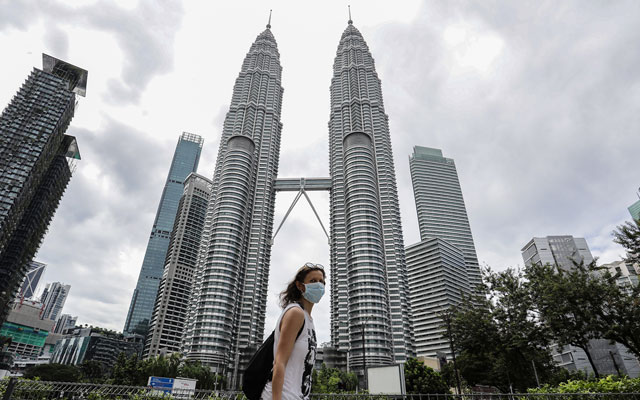
More than 40 per cent of budget hotels in Malaysia are on the verge of closing due to the ban on interstate travel coupled with the nearly year-long closure of the country’s border to foreign tourists.
Malaysia’s government on Tuesday extended by two weeks the country’s full second lockdown until February 18, as the country battles a surge in Covid-19 infections that has pushed the cumulative total past 200,000 cases.
Malaysia Budget Hotel Association (MyBHA) national deputy president, Sri Ganesh Michiel, said the association is preparing a letter of appeal to the Ministry of Tourism, Arts and Culture Malaysia to act fast on all issues that pose a threat to the survival of budget hotels in Malaysia. The document is expected to be sent out by next week.
A recent survey conducted last week revealed that many of its 2,300 members did not receive feedback from the government on the status of their applications for the since-concluded Wage Subsidy Programme 2.0, which ran from October to December 2020.
For the Wage Subsidy Programme 3.0, MyBHA is appealing to the government to extend the scheme from three to six months, and to increase the subsidy from RM600 (US$148) per employee earning below RM4,000 monthly to RM1,200, said Sri Ganesh.
The trade body is also asking the government to reduce electricity charges for hotels, and to increase and extend the 10 per cent electricity bill rebate until March this year as electricity is a high operating cost for hotels.
MyBHA’s appeal also calls on the government to keep to its promise of enforcing the Short Term Rental Act, which is a means of regulating short-term rental accommodations in Malaysia. Sri Ganesh explained: “Short-term rental accommodations are not regulated and are spoiling the market for hoteliers who are at a disadvantage as they have to adhere to many government regulations and licensing fees which hike the cost of doing business. There has been a long delay in enforcing the Act.”
In addition, MyBHA urged for an Act or law to restraint OTAs from charging high commissions on hotel bookings. Sri Ganesh said: “We are at their mercy as travel trends today see a growing number of bookings coming from OTAs. They charge hotels a commission of between 25 to 40 per cent on bookings made. We are asking the government to control the commission rates of OTAs and to not allow them to charge more than 10 per cent commission. Most OTAs are also based overseas, and this (practice) has a huge negative impact on our economy as our currency is going out of the country.”
With budget hotel rooms going for about RM60 to RM70 per night, coupled with sustained low occupancies amid Covid, a 40 per cent commission rate paid to OTAs will “make it very difficult for hotels to have the cash flow to maintain their facilities and sustain activities during these trying times”, Sri Ganesh added.
MyBHA will also reiterate its appeal to the government to mandate banks to automatically approve loan moratorium for six months, after their previous requests fell on deaf ears.
Sri Ganesh stressed: “We urge the government to take immediate action and to save the industry before it is too late, as many hotels are in the midst of retrenching employees as they are unable to pay wages and are struggling to pay utility bills, rental and bank loans.”
Sri Lanka finds a new travel bubble target in India
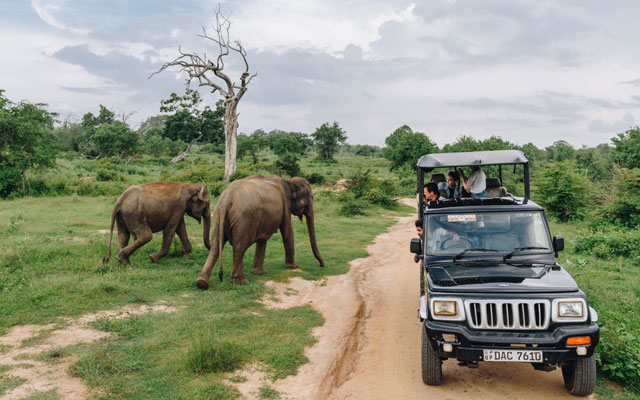
A travel bubble arrangement being worked out between Sri Lankan and Indian authorities could soon pave the way for a steady flow of Indian visitors back to Sri Lanka.
A Sri Lankan Tourism official told TTG Asia that once the plan has panned out, “there should be many visitors from India”, which is Sri Lanka’s largest tourist source market.
He said that so far about 500 tourists, mostly from Western and Eastern Europe, have visited the country since it reopened for commercial traffic under a travel bubble on January 21, following a 10-month suspension.
Some 1,700 passengers from Ukraine also visited the country between mid-December 2020 and mid-January 2021 under a pilot project to assess the country’s capability to manage tourism flows in a safe manner. While travellers are exempted from quarantine, they must have a pre-secured PCR negative test on arrival in addition to taking tests after the fifth day of their holiday.
Meanwhile, three charters have or are due to arrive at the Mattala international airport this week, carrying a total of 700 travellers from Turkey, Ukraine and Kyrgyzstan.
SriLankan Airlines CEO Vipula Gunatilleka said they were awaiting the confirmation of the travel bubble to revive cross-border travel between the country and India, as many inquiries from India were streaming in.
Since the national carrier’s reboot of operations after Covid-19, all flights operated so far were cargo flights with a limited number of 75 passengers per flight, according to Gunatilleka.
“We have been operating about 50 to 60 flights a month,” he said, adding that the airline has been flying to the UK, India, Germany, China, Japan, Australia, Middle East and the Maldives, among other sectors.
“We have also operated a few flights for the Australian government bringing their nationals from one destination to Australia via Colombo,” he said, noting that with the widespread rollout of vaccines across the globe, there would be more numbers travelling to Colombo.
Tourist Hotels Association of Sri Lanka president, Sanath Ukwatte, said they expected increased bookings from March onwards.
As of February 2, Sri Lanka has reported 64,983 Covid-19 cases with 323 related deaths.
Study ties Covid surge in Japan to domestic travel push
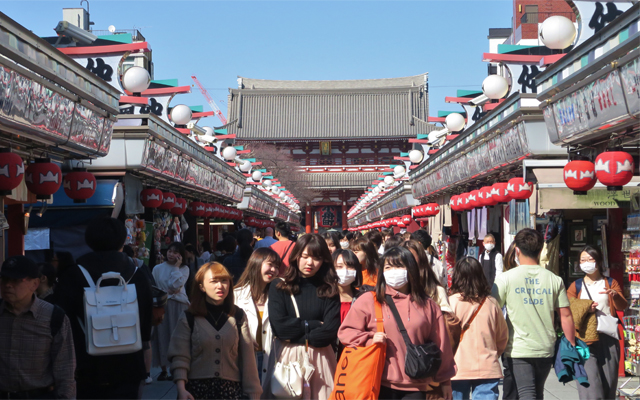
Japan’s introduction of a domestic travel subsidy programme to boost the pandemic-hit sector may have facilitated the spread of the virus in the country, according to a recent study.
The Go To Travel campaign, which was launched on July 22, has been suspended since December 28 due to rising infections in urban areas.
The study, published in the Journal of Clinical Medicine, surveyed some 4,000 people from 24 prefectures who were diagnosed with Covid-19 between May and August 2020. It found 817 of them had crossed prefectural borders or had come in close contact with people who had. Overall, the number of travel-associated cases nationwide over that period rose around threefold, while cases linked to tourism increased sevenfold.
Hiroshi Noshiura and Asami Anzai, the Kyoto University researchers who penned the study, said “enhanced domestic tourism may have contributed to increasing travel-associated Covid-19 cases,” adding that “it is natural that enhancing human mobility across wider geographic areas would facilitate additional contact,” thereby spreading the virus.
The paper supports an earlier report, published in December 2020 by researchers from the University of Tokyo and the University of California, which found that respondents who had participated in the travel subsidy scheme reported higher rates of Covid-19 symptoms than did non-participants. The report surveyed more than 25,000 people in Japan.
Despite the reported link between domestic travel and growth in Covid-19 cases, support for Go To Travel remains among sectors of government, the travel industry and the general public. Hotels and ryokan inns, in particular, have said the subsidy has been successful in boosting sales, which have slumped since the suspension.
Japan is eyeing the reopening of the initiative once the uptick in infections is curbed. Prime minister Yoshihide Suga is among its chief supporters, citing the US$16.2 billion campaign as a way to keep accommodations afloat to reach the government’s target of attracting 60 million inbound visitors by 2030.
New operations director joins Ovolo Australia

Wayne Taranto has been appointed as the director of operations for Ovolo Group in Australia.
Based in Sydney, Taranto will be responsible for all operations across the group’s Australian hotel portfolio, including the Ovolo South Yarra slated to open this year.
With 26 years’ hospitality experience, Taranto honed his skills at Event Hospitality & Entertainment managing various Rydges Hotels & Resorts’ on the east coast of Australia. He has also served as food and beverage director for the Australian Accor Hotels network, as well as general manager of the Sofitel Sydney Wentworth.
In recent years, Wayne was responsible for establishing Crown Group’s hotel division, Skye Hotel & Suites; and managing d’Albora, Australia’s largest marina group, as CEO.
Pattaya hotels face uphill climb ahead of Chinese New Year
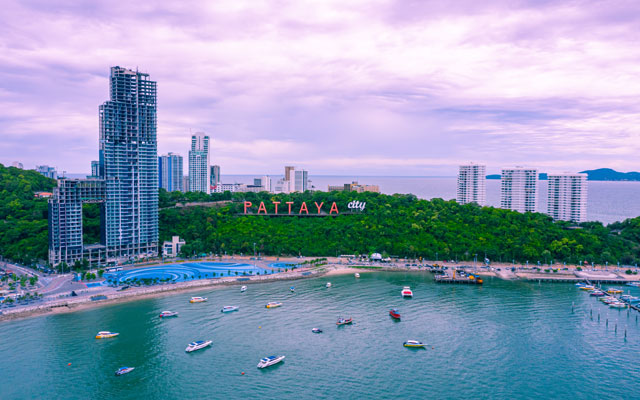
Although Covid-19 cases have steadily declined since mid-January in Chonburi province, Pattaya’s hotels still face a tough battle to claw back visitors ahead of the Lunar New Year holidays.
The province’s hospitality industry took a beating after being declared a maximum-control zone at the beginning of the year amid Thailand’s second Covid-19 outbreak.
Despite being downgraded from a Red Zone to an Orange Zone as of February 1, with pubs and entertainment facilities being allowed to reopen and serve alcohol until 23.00, the stigma of the outbreak and media reports about domestic travel restrictions continue to deter many would-be travellers to Pattaya.
“People need to know that they can travel safely, and that there are many benefits to traveling now; the hotels are empty, the prices are very good, and the beach in Pattaya is very clean,” said Vitanart Vathanakul, CEO of the Royal Cliff Hotels Group.
He doubts Pattaya hotels will be able to pick up significant bookings for the Lunar New Year period, which has been declared an official holiday in 2021 by the Thai government to catalyse domestic travel.
“The news that’s been published gives the impression that it’s hard to travel here, which is a pity because otherwise there would be more tourists. I would like people to know that Pattaya has fewer cases now; it’s no longer a Red Zone. You can travel, if you travel with caution,” he elaborated.
The mandatory lockdown in Chonburi province has adversely affected Pattaya’s hotels, many of which are empty. Some have opened food stalls on the streets with food from their restaurants to rake in extra cash to pay their staff.
Although hotels in Chonburi were issued a forced legal closure order on January 28, to give hospitality staff access to social security funds, hotels with checked-in guests and those who wished to stay open were allowed to do so if they notified the district chief within seven days.
“It’s good for the media to urge people to be careful, but the media can also play a key role in encouraging people to travel with caution, using social distancing and safe practices,” said Vitanart, whose hotels remain open and ready to welcome leisure tourists and business events.
In Orange Zones, meeting facilities can remain open and events with 300 pax or less are allowed.

“If you want to organise a meeting or event, consult your hotel to check on the situation. Many people don’t know that Pattaya has been taken off the high risk category, and that right now people who want to travel here can do so at very affordable prices. That way, hospitality providers gain income and their staff get paid; it’s a win-win situation,” he added.
Before Thailand’s second outbreak, the hospitality industry in Pattaya had recovered partially given its popularity as a self-drive destination and also with the support of the We Travel Together domestic subsidy programme.
Airport recovery expected to be slow, uncertain: ACI

The Airports Council International (ACI) has forecasted a slow and uncertain recovery for airports in Asia-Pacific and Middle East, and one that is dependent on vaccine supply and distribution.
Forecasted to close 2020 with a passenger traffic decline of about 58 per cent, Asia-Pacific airports are expected to return to 2019 pre-Covid passenger volume of approximately 3.4 billion passengers by 2023.

Over in the Middle East, 2020 passenger traffic is expected to decline about 72 per cent, and will only return to pre-Covid passenger levels in 2024.
“This forecast is based on the assumption that an effective vaccine is distributed in 2021, and broader population vaccination is largely accomplished by early 2022. Limited vaccine supply and slow distribution combined with a prolonged economic downturn risks postponing the recovery of the whole region to 2024,” said Stefano Baronci, director general, ACI Asia-Pacific.
“For the aviation industry to continue providing vital services and supporting the global vaccine distribution undertakings, ACI Asia-Pacific urges the inclusion of all aviation workers and airport staff as essential workers as part of the World Health Organization’s Strategic Advisory Group of Experts on Immunization recommendations and national vaccination plans,” urged Baronci.
Despite the sombre recovery projections, ACI expects both Asia-Pacific and the Middle East to catch up and become the fastest growing regions in the world over the next two decades, based on World Air Traffic Forecasts 2020-2040.
Total passenger traffic is forecasted to grow fast at a compound growth rate of 5.2 per cent in the Middle East and 4.7 per cent in Asia-Pacific.
Among the top 10 fastest-growing countries with more than 50 million passengers by compound growth rate from 2019 to 2040 are Saudi Arabia, United Arab Emirates and Iran in the Middle East; and Indonesia, India, Vietnam, the Philippines and China in Asia-Pacific.
Hong Kong expands official quarantine hotel list
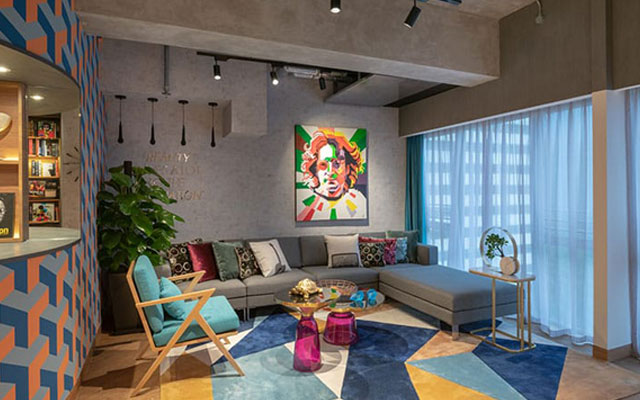
The Hong Kong government has added four hotels to its designated quarantine hotels scheme to provide more options in the lower rate category.
According to Patrick Nip, secretary for the Civil Service, the four new entrants are IW Hotel, Ovolo Southside, Silka Far East Hotel and Silka Seaview Hotel. At the same time, four hotels – Eco Tree Hotel, Mojo Nomad Aberdeen Harbour, O’ Hotel, and The Luxe Manor – have chosen to withdrawn from the second cycle.
Nip said their withdrawals were made due to personal considerations or commercial reasons.
Some 2,000 invitations were sent to properties with valid hotel or guesthouse licenses in the government’s second cycle of participant acquisition. The exercise drew more than 70 applications, and a total of 36 hotels were qualified – 32 of which are part of the first cycle of the scheme.
Altogether, the 36 designated quarantine hotels will provide 10,000 rooms across various room types and rates to support overseas returnees from February 20 to April 20 this year.
A spokesperson from the Food and Health Bureau told TTG Asia that the inclusion of cheaper room options was made in consideration of market demand.
“In this new cycle, the number of hotels charging HK$500 (US$64.50) and below per day will increase from seven to 11. The number of these rooms will almost doubled to more than 2,800. In fact, 83 per cent of the total room supply in the second cycle will cost HK$1,000 or less per day,” she elaborated.
She explained that the government considered design, facilities and operations in selection suitable candidates for the scheme’s second cycle, stating that the hotels must meet the government’s infection control requirements.
“We have also taken into account other factors including the location of the hotels, the number of rooms they can offer and their rates, etc.”
Ovolo COO Tim Alpe expressed delight over Ovolo Southside’s entry into the scheme and said the property is ready to welcome quarantine guests. The property will offer its well-regarded Quarantine Concierge perks, as well as high-speed WiFi 6 to enable guests to be on Zoom and Netflix at the same time.
An industry observer told TTG Asia that the scheme has attracted overwhelming interest because of the financial incentives that come with participation. The government will guarantee 50 per cent occupancy at HK$600 per room or 70 per cent of non-suite room rate, whichever is lower.
He said that amid travel restrictions, hotels that fail to be a designated quarantine property will struggle with business, as the number of visitors to Hong Kong are “close to zero” and these hotels are not allowed to accept quarantine guests.

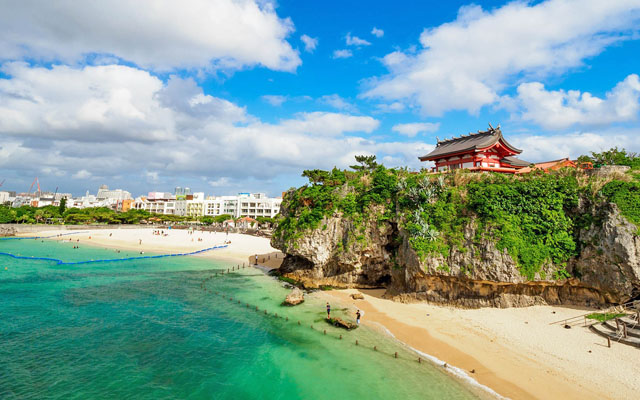






Deutsche Hospitality is planning a third hotel project in China in the form of a 300-key Steigenberger Hotel in Kunming, the provincial capital of Yunnan.
This latest move follows an earlier announcement that Deutsche will be opening a pair of Steigenberger-branded hotels in Haiyan on the South China Sea coast at the start of 2022.
Set to be operated by Huazhu, Deutsche’s shareholder, the planned Steigenberger Hotel in Kunming will form part of a new tourism centre called Lakeside Town, which is being developed on the banks of Lake Dian, situated just under an hour’s drive from Kunming Airport.
The basis for the Steigenberger Lakeside Town, Kunming, which is scheduled to open in 2024, was set out in an agreement signed by Marc Cherrier, COO of Steigenberger Hotels & Resorts at Huazhu; the Sunac Culture & Tourism Group’s general manager Zhang Yunshui; and Gao Xujiao, general manager of the Lakeside Town Project.