

Emirates rolls out new Expo 2020 Dubai campaign starring Chris Hemsworth

Dubai’s flagship airline Emirates is inviting visitors to experience Expo 2020 Dubai in a new global campaign fronted by Australian actor Chris Hemsworth.
The campaign illustrates the ultra-futuristic themes and experiences in store at Expo 2020 Dubai when it opens its doors on October 1.
Reem Al Hashimy, UAE minister of state for international cooperation and Expo 2020 Dubai director general, said: “Expo 2020 Dubai will be one of the greatest must-see events in the world. In addition to impressive marquee pavilions that immerse visitors in the themes of mobility, sustainability and opportunity, and 191 amazing country pavilions, there will also be an unforgettable celebration of music, art and culture with a packed entertainment programme, unique culinary experiences, and much more. It’s truly shaping up to be an event not to be missed.”
Hemsworth said: “In 2019, I partnered with Emirates and Expo 2020 Dubai to help bring awareness to what is a really important event for the world. We all have the power to shape a better future, and the last year-and-a-half has shown us that the possibilities are endless when we put our minds together. At Expo 2020 Dubai, the world will come together in the spirit of collaboration to provide real-life solutions that will benefit future generations.”
Conceptualised and filmed pre-Covid in time for the original opening date of Expo 2020 Dubai, the ad aims to convey the energising spirit of innovation, creativity, and the drive to create a better future – all key themes of the global event. Taking a layered approach to storytelling, the ad is supported by a myriad of computer-generated imagery animations and visuals to illustrate what the event would look like, as it was filmed while the Expo 2020 site was still under construction.
In the ad directed by two-time Oscar-winning director Robert Stromberg, Hemsworth transports viewers from the beaches of Dubai to the Expo 2020 Dubai site, bringing to life the event’s flagship mobility, sustainability, and opportunity pavilions, alongside the participating country pavilions.
Emirates is the premier partner and official airline of Expo 2020 Dubai, running from October 1, 2021 to March 31, 2022.
DOT, partner agencies work to boost Philippine food tourism

The Philippine Department of Tourism (DOT) has inked a MoU with a trio of other government agencies to boost the promotion of Filipino culinary tradition and the country’s unique food tourism experiences.
The MoU signing between DOT, the Department of Agriculture, National Commission for Culture and the Arts, and the Philippine Culinary Heritage Movement, is aimed at driving up preservation and promotion of Filipino culinary traditions to ensure transmission to future generations and to support food tourism stakeholders such as farmers and agri-communities.

The agencies will also collaborate to infuse food tourism in the celebration of the Filipino Food Month every April.
“As we look forward to every annual celebration of Filipino Food Month, we would like to use this as a platform to promote travel for a taste of a place in order to get a sense of a place,” tourism secretary Bernadette Romulo-Puyat said in her opening remarks during the virtual signing ceremony.
A DA-NCCA-DOT-PCHM Technical Working Group shall be formed and will conduct quarterly meetings to ensure the smooth implementation of the activities and responsibilities enclosed in the MOU.
DOT has been tasked to include its food and gastronomy tourism-related activities in the calendar of events for the Filipino Food Month. The department will also provide support to promote the Filipino Food Month through information dissemination via its platforms and networks.
Romulo-Puyat pledged the DOT’s full support and cooperation in the initiative, underscoring the immense potential of Filipino food in tourism prior to the pandemic.
“Our own internal studies in the DOT have revealed that prior to the pandemic in 2019, inbound tourists spent 22.4 per cent of their total expenditures on food and beverage items. For domestic tourists, eight per cent was devoted to F&B expenses and a big chunk of shopping expenses were also spent on foodie treats,” she said.
Further, the DOT chief also highlighted the department’s ongoing efforts in harnessing the potentials of food tourism by formulating regional tourism circuits with food and farm experiences as the centerpiece of itineraries.
She added that the DOT is also conducting food tourism resource inventories and mapping of key food tourism destinations in the country as well as facilitating capacity-building programmes to equip community stakeholders.
World’s tallest observation wheel set to open in Dubai next month
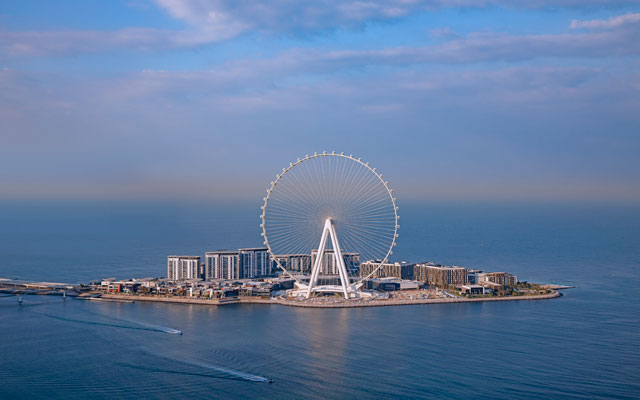
Ain Dubai, the world’s largest and tallest observation wheel sited at the heart of lifestyle destination Bluewaters in Dubai, is set to open on October 21.
Standing at over 250m high, Ain Dubai represents another addition to Dubai Holding’s entertainment portfolio and supports Dubai’s long-term vision to strengthen its global position as a key tourism hub.
From dining in the sky and exclusive celebration packages to bespoke corporate and event offerings, Ain Dubai brings over 19 customisable experiences available both day and night.
Offering views of Dubai’s iconic landmarks from indoor, air-conditioned cabins and a huge range of entertainment, the experiences are split into three main categories: observation cabins, social cabins and private cabins, with experiences starting with one rotation of approximately 38 minutes, up to two rotations of approximately 76 minutes.
The observation cabins provide the perfect platform for 360-degree views of Dubai, while the social cabins feature beverage-inclusive packages. Visitors can also step into a premium cabin for the VIP treatment or get the best social vibes at the Sky Bar cabins.
Meanwhile, the private cabins provide full exclusivity, with celebration packages available for birthdays, engagements, weddings, business functions, and more. The private cabins can also be customised to cater for all sorts of events, from intimate celebrations to cultural festivities.
First Curio Collection by Hilton resort to launch in Vietnam
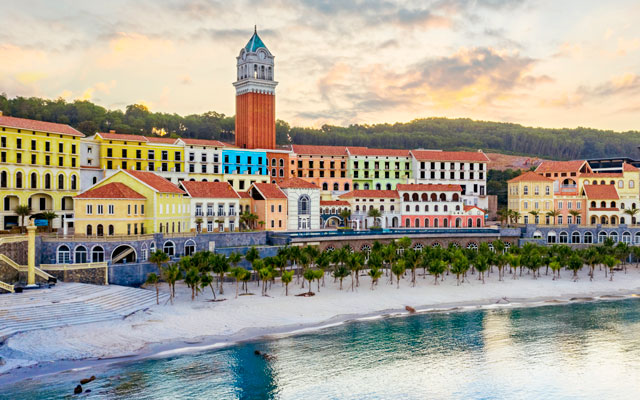
Hilton has signed an agreement with Vietnamese real estate developer Sun Group to launch a new resort under Curio Collection by Hilton in Phu Quoc, Vietnam.
Set to open in 2023, the 197-key La Festa Phu Quoc, Curio Collection by Hilton will represent Hilton’s first resort in the country, joining three other Hilton-managed hotels in Vietnam including Hilton Hanoi Opera, Hilton Garden Inn Hanoi and Hilton Da Nang.
Located 20km from the Phu Quoc International Airport, the resort will sit within the Sun Premier Village Primavera, a local tourist attraction which reflects elements of the iconic Amalfi town of Italy.
Facing the island’s popular Kiss Bridge and within close proximity to the Gondola Cable Car station, the resort will feature bold Mediterranean-inspired architecture and join an array of restaurants, bars and entertainment facilities in the vicinity. Guests at the resort will enjoy direct access to the beach.
The resort will also feature an all-day dining restaurant, a specialty restaurant, a lobby lounge and a bar. Leisure amenities will include a pool, fitness centre, spa and kids’ club.
Destinations beef up attraction lineup to entice visitors

Destinations in Asia are coming up with new products and experiences as part of their post-pandemic tourism recovery strategies.
Azerbaijan, which is now open to fully vaccinated travellers from 29 countries, is focusing on developing its ecotourism and heritage potentials; while Nepal is expanding its destination focus from adventure tourism to cultural and entertainment to cater to different types of visitors.
Speaking at PATA Travel Mart Forum last week, Florian Sengstschmid, CEO, Azerbaijan Tourism Board, said that there are a lot of ongoing renovation and restoration works at cultural and historical sites, such as Khinalig, the highest village in Azerbaijan, which is on the tentative list of UNESCO’s World Heritage Sites.
Being home to 80 per cent of the world’s mud mountains, the country aims to highlight that attraction with a Mud Volcano Visitor Centre project. “It will be an experience centre where travellers can not only look at the volcanoes but also zipline over them or drive off-road around them,” Sengstschmid said, adding that new hiking trails are being built around the area to cater to different types of visitors.
A new e-learning platform dubbed Azerbaijan 101 has also been launched to engage overseas travel companies with live events, virtual fam trips and various learning courses, according to Sengstschmid.
Nepal, whose government is finalising the entry policy to welcome fully vaccinated travellers without quarantine and reinstate visa-on-arrival, is focusing on products which are different, available year-round, and suitable for all groups.
Dhananjay Regmi, CEO, Nepal Tourism Board, said: “Nepal is divided into three ecological zones. In the past, we focused on (the adventure zone of) the Himalayan mountains. Now, we are also (promoting hilly) Pahad in the middle areas and Terai (low lands).”
Pahad highlights include hill stations and mid-hill cultural trails, while Terai boasts wildlife, culture and entertainment centre. “We are also reviving the camping treks in the less dense Eastern and Western regions, like the Khaptad-Badimalika Region trek, by prioritising on the lost trails,” Regmi said.
Air 7 creates new marketing arm in Singapore to tap rising private jet charter demand

With the Covid-19 pandemic fuelling greater demand for private jet services, a pair of Singapore-based businessmen and aviation professionals saw a promising business opportunity in the lack of dedicated, locally-based charter services applicable to US-registered aircraft.
That led to Jamie Lenox and Stefan Wood setting up Air 7 Asia as a joint venture with Air 7, LLC, a private aviation jet services organisation. The company also aims to tap on renewed interest in better-value private jet charters.
Launched this year, Air 7 Asia acts as the Singapore-based branding and marketing arm for the services of Air 7, LLC. Owners of US-registered private aircraft in Asia can now request to join the Air 7, LLC Air Carrier Certificate to make their jet available for charter-back, thus allowing the owner to profit from their asset.
Through Air 7, LLC, Air 7 Asia can provide the services from its brand-new base at Seletar Airport in Singapore.
According to Wood, executive director of Air 7 Asia, over the past year, through sister company Singapore Air Charter, the majority of the charter work has been in the repatriation sector.
While tourism recovery in South-east Asia remains uncertain, Thailand’s Phuket Sandbox scheme sparked interest, along with the ease of travel in the Maldives. Currently, there is also an uptake in private jets for business and tourism-related travel for the Brunei and German travel lanes.
Air 7 Asia facilitates more aircraft for charter, which is timely as Wood expects pent-up demand for such specialised transportation to be huge. As evident in Europe and the US, private jet travel has been at an unprecedented high, as soon as Covid-19 restrictions eased.
Come December, Air 7 Asia’s first aircraft, Cessna Citation XL Eagle, will touch down in Seletar Airport, for chartering in the South-east Asia region.
Wood said: “We already have two aircraft coming under our umbrella in the next few months, with many more enquiries. The more aircraft we have available, the more options for every sector of private jet travel. We believe that this is a unique offer for the private jet owners of Singapore.”
STB kickstarts SingapoReimagine Global Conversations forum series on the future of travel
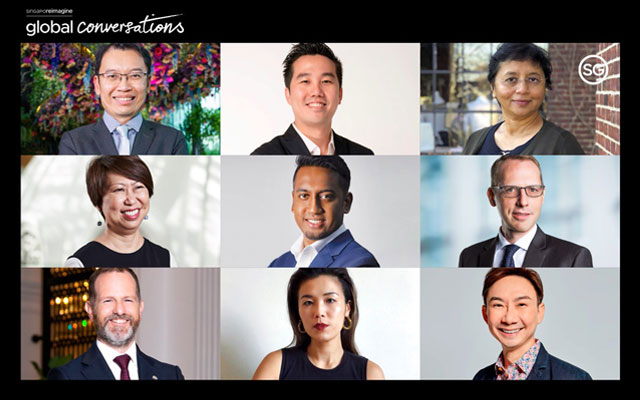
The Singapore Tourism Board (STB) has launched SingapoReimagine Global Conversations, a new forum series that puts industry game-changers on the global stage.
Featuring speakers across different sectors, disciplines and locations, the series outlines new travel experiences and business models that demonstrate how the travel industry has innovated and adapted for the future in the wake of the pandemic.
STB CEO Keith Tan said: “The needs and expectations of travellers are changing significantly. As borders gradually reopen around the world, the tourism industry must work together to innovate, develop solutions and reimagine what the new travel experience can and should be. With SingapoReimagine Global Conversations, we hope to provide a platform for such innovation, and a voice for leaders in the tourism sector and beyond.”
SingapoReimagine Global Conversations is a key part of STB’s SingapoReimagine initiative, which was launched last year to affirm the destination’s commitment to shape a new standard for travel, through safety, technology, experiences and sustainability.
The series comprises three key forums, with overseas adaptations. The first forum, titled Reimagine Experiences, is available on-demand in four video episodes released weekly on STB’s website and YouTube channel starting today. The episodes will tap into the top minds in tourism and lifestyle, through a rich blend of interviews, rapid-fire questions, and data insights, to inspire new collaborations and ideas.
The other two forums, which will focus on the themes of travel journeys as well as sustainability and wellness, will be introduced later this year and in 1H2022.
In the first episode, global trend forecaster and data partner WGSN unveils deeper insights into three future traveller profiles – The Wander Must, The Mindful Explorer, and The Slow Pacer – that will influence the future of the travel industry, as well as actionable steps for industry stakeholders.
Reimagine Experiences will spotlight different topics with featured speakers from across the attractions, design, entertainment, events, hospitality, sports, technology, and MICE industries. These include Warner Music Group; travel and lifestyle company Blue Sky Escapes; local experience curator Tribe; National Gallery Singapore; sporting events organiser Ironman Group; as well as Raffles Singapore and Double Confirm Productions & Sight Lines Entertainment, which collaborated to produce a first-of-its-kind interactive virtual play within the hotel’s premises.
To further discussions on reinventing the travel experience, SingapoReimagine Global Conversations will be rolled out in overseas markets in localised formats.
These include the US where SingapoReimagine Global Conversations will partner with The New Yorker Festival to feature a moderated panel session on food and sustainability. In China, it will take place as STB China MICE conference, which will include a panel discussion on topics such as tech-enabled experiences and sustainability. In the UK and Dubai, it will take the form of a panel session on sustainable travel and building liveable cities.
To catch all episodes of SingapoReimagine Global Conversations, visit bit.ly/globalconvos.
TTG Asia’s Loyalty Wars bags PATA Gold Award
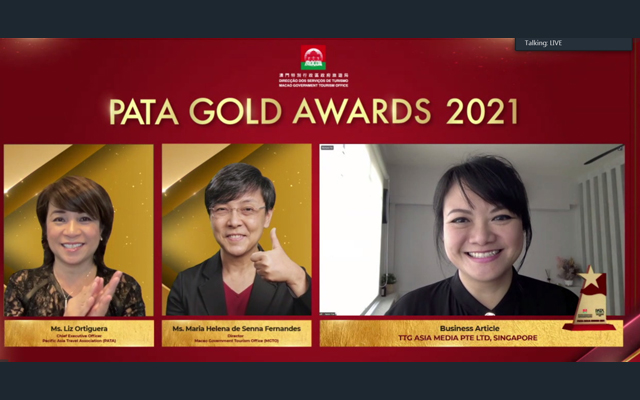
An analysis on hotels’ growing competition for guest loyalty has won the PATA Gold Awards 2021 for Business Article.
Titled Loyalty Wars, the article was authored by TTG Asia Media’s senior correspondent, Caroline Boey. It was published within the TTG Asia + TTGmice Hospitality Special edition in July 2020.
This is TTG Asia‘s first PATA Gold Awards win for Business Article, and the eighth for TTG Asia Media’s stable of English language trade titles. TTG Asia Luxury won the award in 2016; TTGmice won the award in 2008, 2011, 2013, 2014, 2018 and 2020.
Plaza Premium Group to transform passenger experience at Bangalore International Airport
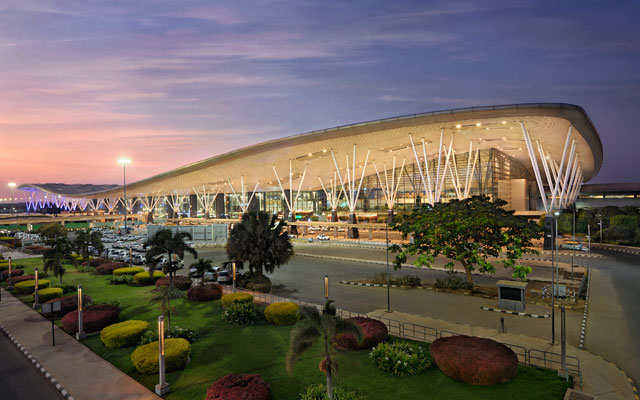
Plaza Premium Group (PPG) has been appointed by Bangalore International Airport (BIAL) to manage and enhance passenger services at the Kempegowda International Airport, Bengaluru (BLR Airport).
The 10-year full-service management appointment covers the entire portfolio of BLR Airport’s 22 services. The 360-degree airport service delivery scope includes: service delivery, control centre, training centre, customer engagement, marketing communications, sales and distribution as well as technology. More services will also be introduced to enable an end-to-end and globally connected passenger journey.
The 360-degree airport service delivery scope includes: service delivery, control centre, training centre, customer engagement, marketing communications, sales and distribution as well as technology.
BIAL and PPG will collaborate in addressing the desires of travelling in the new normal – with seamless service delivery, world-class standards and quality, technology and innovation, as well as commercialisation optimisation.
In order to deliver seamless, optimal and data-driven operation excellence, PPG has teamed up with global IT services provider Tata Consultancy Services to develop an end-to-end passenger services technology platform. The new platform will be built based on the existing PPG operating platform with tailored architecture that suits the needs of BIAL’s passengers.
The platform will include an omni-channel booking engine which enables worldwide sales and distribution; a customer engagement centre with customer profiling and personalisation capabilities; a service delivery platform for dispatch and real-time incident management; and a back office system which powers HR, administration, asset and information management.
PPG is also partnered with one-stop customer engagement technology service provider oneDirect to ensure passenger interactions are managed through one-single platform via various touchpoints.
Song-Hoi-see, founder & CEO of PPG, said: “PPG is no stranger to the Indian travel market and we see huge potential in the travel market, therefore we have strategised to invest over US$15 million and will deploy a workforce of over 800 staff over the 10 years, supported by our Hong Kong-based headquarters with the hope to grow with BIAL in the years to come.”







Cube O Discovery Park, Hong Kong’s first marine experience destination in the city centre, has opened at the Plaza 88 shopping mall in Tsuen Wan.
Covering an area of over 929m², the attraction will feature a combination of real marine life displays and interactive multimedia games, in addition to a variety of recreation, education and dining opportunities.
Cube O is the first project in Hong Kong from Cube Oceanarium, an aquarium brand; and is the result of a collaboration between an aquarium architect, an aquarium aquaculture operation team, a senior marine conservation consultant and a technical consultant.
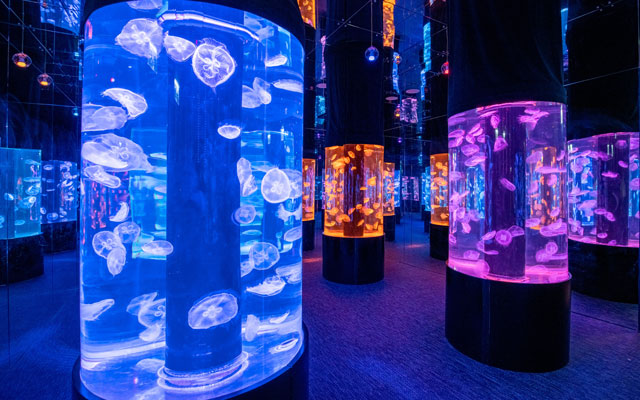
Cube O is divided into several themed zones with different attractions including Hong Kong’s first acrylic window projection. This integrates views of real marine life with projected light and shadow effects. There is also a mixed reality jellyfish classroom, a playhouse for children and a dining area.
The interactive multimedia technology will also enable visitors to observe the marine life up close and learn more about nature, environmental protection and sustainable patterns of living.
At the jellyfish research institute, visitors can learn how jellyfish develop from babies into adults, and find out more about jellyfish ecology and the characteristics of different jellyfish species. In addition to watching jellyfish feeding, visitors will also be allowed to contact them from a safe zero-distance and thus get closer to the ocean.
The interactive multimedia games will further boost the overall experience, as visitors can “become” small fish, swimming under the protection of a jellyfish in an ocean exploration tour.
In the MR jellyfish classroom, visitors can become “guardians of the ocean” and rescue a stranded green sea turtle. The rescue operation follows real turtle rescue procedures. Visitors who participate will be able to learn about the work of professional conservationists, think about the effect of human beings on the ocean and gain a sense of mission with respect to marine conservation.
Elsewhere, the children’s playhouse features Hong Kong’s first ocean-themed play space where children can gain marine knowledge while having fun with mastering physical challenges.
The park has invited a head chef and his team from a local five-star hotel to prepare a selection of delicacies. In addition, Corner Cone, a famous Asian ice cream brand, has prepared a range of limited-edition ocean-themed ice creams specially for the Cube O.