TTG Asia
Asia/Singapore Sunday, 22nd March 2026
Page 860

Slow travel way forward for post-pandemic recovery

0

Regional tourism players are shaking up their marketing strategies post-Covid, predicting multi-country holidays will be traded in for slow travel in a single destination when tourism resumes.

“Multi-destination travel has always played a large role for travel in the region,” said Ruben Derksen, Exo Travel Thailand’s director of product and digital.

Multi-country vacations predicted to lose lustre as post-pandemic travellers look for leisurely-paced trips

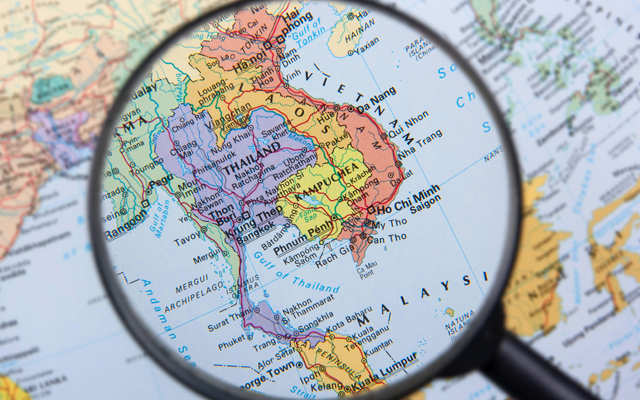
He cited typical 14-day itineraries from longhaul destinations taking in the cultural heritage sites of Luang Prabang in Laos, Cambodia’s Angkor Wat and Chiang Mai in Thailand before a few days on a Thai beach.

But he said while demand for multi-destination travel will prevail, the practicalities of moving from one country to another will make it unappealing to many tourists.

He added: “If countries allow vaccinated travellers to freely move between destinations, without quarantine on arrival and extensive paperwork, then the proportion of multi-destination travel could remain as it was. If not, then it’s feasible to think we’ll see a focus of travel within individual countries. People are, after all, on holiday and they won’t want to put themselves through any difficulties.”

This sentiment is being felt throughout the industry, as new itineraries and marketing strategies are drawn up to sell countries as single-destination packages.

Ronni Dalhoff, managing director of Diethelm Cambodia, said slow travel will be the new norm. In addition to sticking to one country, he predicts travellers will seek to restrict their movement within the destination.

“People will want to minimise the risk of anything happening,” he remarked. “They won’t be moving around too much.”

To cater to this predicted shift in demand, Vietnam-headquartered LUX Travel DMC has launched DMCs within each of the 10 South-east Asian countries, with each seen as a single destination. Additionally, in Vietnam, it is only selling north, central or south Vietnam tours, as opposed to the usual country combinations.

Pham Ha, CEO and founder, said: “People will want to slow down and choose one destination to feel it and focus on their travel experiences. They will discover, explore, relax, indulge and immerse themselves in local culture and nature.”

Derksen said this presents the opportunity for travel operators to get creative with tours and curate itineraries that dig deep into the essence of destinations.

He added: “Slow travel is better for the environment and allows people to enjoy more time absorbing the beauty of the destinations they travel through. Hopefully, this will (encourage) them to go more in-depth in each country, and explore mind-boggling beautiful destinations.”

PATA joins tourism coalition pushing sustainable recovery

0

Qantas delays international restart to December

0

Plaza Premium Group sets out blueprint for business, digital transformation

0

Plaza Premium Group (PPG) has embarked on a large-scale business transformation strategy in view of the evolving needs and behaviour of the travel market.

Besides aiming to grow its network from 180 airport lounges to over 500 by 2024-25, digitisation will also be a key part of its transformation, with an additional US$5 million to be allocated for that purpose.

Entrance and reception area at DragonPass x Plaza Premium Lounge at the Changsha South High-speed Railway Station

According to PPG CCO Bora Isbulan, things are changing expectedly fast and Covid-19 has sped up digital transformation.

He said: “We see that there are major gaps in the industry, so it’s vital to refine and align our strategy and resources to (meet evolving demands and) to make sure that we can fulfil the needs of users.

“The aim is to create a more digitally-connected global journey, not just one product (lounge) but various end-to-end services i.e. Smart Traveler loyalty programme, to let people plan their journey at their fingertips. In that regard, we will spend US$5 million to transform and invest in technology and management capabilities.

“We will spend another US$5 million in the next 18 months to transform our operations in PPG. This will ensure well-connected end-to-end solutions for not just B2B but also B2C (consumers).”

PPG founder and CEO, Song Hoi-see, opined that behavioural changes within a dynamic market created an impetus for change and for PPG to diversify and provide a holistic range of services.

He said: “We have to reshape the service solution in the market with more direct and interactive customer contact. From there, we will know their individual profile in order to deliver consistent, high-quality services.”

In January, PPG made its foray into high-speed railway (HSR) lounges in China by rolling out one at the Changsha South High-speed Railway Station, with another two to open in Guangzhou and Shenzhen in 2Q2021.

Song shared that this is just the beginning, with PPG planning to expand to various other stations.

“In China, train stations are very crowded and we observed that businessmen want a quiet place to work and get away from the crowd. The best solution is a lounge so we set up one at Changsha,” he said.

“In fact, the HSR is being fully utilised by businessmen travelling from one city to another. Even airlines are worried about direct competition from it. A lot of businessmen want more comfortable, secure and safe spaces when they are travelling, especially during the pandemic.”

The RMB$3 million (US$465,000) DragonPass x Plaza Premium Lounge, which is PPG’s first HSR lounge, is a collaboration with DragonPass, a global digital platform for premium travel services. It is targeted at businessmen who frequently travel for work, and other affluent travellers.

It distributes digitally a wide range of premium travel services including lounge access, limousine transfer, fast-track access, meet and assist, dining, valet parking, baggage porterage and advanced medical services.

Facilities and services at the 700m², 290-seat lounge include a nursing room; dedicated playroom; zoning for privacy and social distancing purposes; seating and dining areas; and dining experience with Smart Order, a contactless food ordering system accessible via smart mobile devices.

Artotel Group seeks expansion with FEH alliance

0

Indonesia’s hospitality and lifestyle company Artotel Group has formed a strategic partnership with Singapore’s Far East Hospitality (FEH) as it seeks to plant its flag in Singapore and several other countries.

Under the partnership, the two parties will collaborate across operations, cross-branding exposure, and training to strengthen their respective businesses across markets.

Artotel partners FEH to expand its presence in Southeast Asia; Artotel Thamrin Jakarta studio room pictured

As affiliated brands, Artotel Group will work with FEH to expand its presence in South-east Asia at a regional level, introducing Artotel’s hospitality brands to FEH’s network. For FEH, the partnership will allow the group to enhance its presence in Indonesia and gain meaningful market share. In Indonesia, Artotel will represent FEH brands through the group’s distribution channels and ecosystem.

In terms of business growth, both sides will prioritise one another in partnerships and new business opportunities within select jurisdictions of interest. Artotel Group and FEH will also conduct training exchanges to share industry best practices and increase internal knowledge and expertise across markets.

Eduard Pangkerego, COO, Artotel Group, said: “We are facing the challenges of competing with the international brands, which have strong networks and infrastructure. (With the pandemic,) we cannot just sit still and lament the situation. This (partnership will help us get) the right momentum to prove that we are strong.”

Arthur Kiong, CEO of FEH, said: “Singapore and Indonesia are key inbound markets for our respective tourism sectors. As such, we see strong synergies for both countries. Artotel Group also has a network in Indonesia where we do not have a presence in.

“From a brand architecture perspective, it fits into a niche segment which we are currently not represented. Amid discussions to explore a ‘travel bubble’ between both countries, we look forward to leveraging our combined portfolio to appeal to both domestic and regional markets.”

Eduard said the alliance will allow Artotel Group to offer clients the luxury brands, which the group did not have.

Artotel currently has 29 properties in its pipeline across Indonesia, which will bring the total number of properties under the Artotel brand to 50.

FEH operates a combined portfolio of more than 16,500 rooms under its management across 100 hotels and serviced residences in eight countries. The group has also continued to forge ahead with local and regional expansion plans, with two properties opening in 1Q2021 and more in the pipeline this year.

Covid surge threatens Maldives tourism

0

Tourism players in the Maldives are fearful that a recent surge in Covid-19 cases might affect the island nation’s tourism which has shown a remarkable recovery in arrivals since reopening its borders last July.

Germany, the Maldives’ fourth highest source market, raised its travel advisory last week to “high-risk” from “risk” for the Maldives due to a sharp increase in the number of Covid-19 cases there.

Maldives tourism rebound may be derailed by a recent rise in Covid cases

Last Wednesday (May 5), the number of daily cases rose to 734 from 318 a week ago. On Sunday, the daily caseload was 590, with a total of 34,724 cases and 83 deaths.

Most of the cases are in the capital city of Male and other islands populated by locals, while tourism resorts haven’t been affected. The islands where cases have been detected are not visited by tourists, as they arrive at the international airport on another island and are then whisked by speedboat or seaplane to their resort destination.

“The high-risk classification (of the Maldives) by Germany could see some cancellations,” said the manager of an agency servicing German tourists, adding that it could also affect arrival figures from Europe if the number of Covid-19 cases continue to rise. “The problem here is that insurance premiums are high when travelling to risk-averse countries,” he said.

An industry source said that his property has not seen any cancellations of bookings by German guests so far.

He further shared that in recent weeks, there has been a surge in white-collar workers from India using the Maldives as a 14-day quarantine facility before flying to a third country to work or stay there.

“Generally, those from India have to seek a 14-day quarantine in a country outside India before they can travel to the Middle East, the UK, the US or other countries,” he said.

While restrictions have been placed on Indians travelling to other destinations due to an uncontrollable surge in the number of Covid-19 cases there, there is no restriction for Indian tourists arriving in the Maldives. Like any other tourist, they only need to show a valid negative PCR test result upon arrival, and are not required to serve quarantine.

However, since April 27, travellers from India are not permitted to stay at tourist facilities in inhabited islands.

The number of arrivals in the Maldives in the first four months of 2021 was 389,770 – higher that the 2020 figure of 382,760, but lower than the 2019 figure of 646,092. India was the largest source market, followed by Russia, Ukraine and Germany. However, Russia has since overtaken India as the Maldives’ largest source market, with Indian visitors reducing in numbers.

Update: The Maldives has since banned travellers from across South Asia from entering the island nation from Thursday (May 13) in a bid to curb the recent spike in Covid-19 cases. These restrictions apply to travellers originating from Afghanistan, Bangladesh, Bhutan, India, Nepal, Pakistan and Sri Lanka, according to a statement by the Maldives Immigration. It added that the new restriction will also apply to travellers who have only transited through South Asia.

New experiences platform helps Singapore luxury hotels tap ancillary revenue

0

FITUR returns as in-person event

0

New hotels: A by Adina Sydney, Zenith Cameron, and more

0


A by Adina Sydney, Australia
Owned and operated by TFE Hotels and developed by TOGA Group, A by Adina Sydney forms the showpiece of a 26-storey tower at 2 Hunter Street. In a first for TFE Hotels, the property boasts an integrated control system that readies any one of its 194 apartments (82 studios, 104 one-bedroom units, and eight two-bedroom apartments) the moment guests check in. The apartment hotel features Australia’s first-ever Sky Lobby perched 100m above street level, and wrapped in a four-storey, glass-encased ‘golden crown’. Leisure facilities include a swimming pool and gym with city views. F&B options are Dean & Nancy on 22, a cocktail bar and dining experience; and an Italian eatery boasting indoor and alfresco dining.

Zenith Cameron, Malaysia
The Zenith Hotels & Resorts has soft opened its third hotel in Malaysia, expanding the brand’s footprint in its home market. Situated in the heart of Tanah Rata, Zenith Cameron is set on 1.38ha of pristine land and consists of 175 guestrooms including 22 suites. The guestrooms, ranging from 37-187m2, feature floor-to-ceiling windows, plush beddings, 43-inch LED television, a separate bathroom with shower cubicle, bathtub and complimentary high-speed Internet access. Each room boasts a spacious private balcony overlooking the terrains of Cameron Highlands.

The property presents three F&B concepts, including an all-day lifestyle outlet, an Italian restaurant and a semi-alfresco bar lounge. On-site amenities include an outdoor swimming pool, children’s play pool, a fitness centre, sauna and a business centre. For meetings and events, the hotel offers over 2,250m2 of highly versatile space with generous natural light. A total of 12 function rooms spread over two levels with a capacity of 10 to 860 guests, are fully fitted with enhanced equipment.

Pullman Khao Lak Resort, Thailand
Located on Bang Muang Beach on the northern tip of the Phang Nga province of Thailand, Pullman Khao Lak Resort features contemporary design that pairs modern amenities with local culture. Boasting private balconies, spacious living areas, and open bathroom concept with rain showers, the 253-room resort offers 14 room categories, starting from the 44m2 Deluxe Room, to the 62m2 Family Suite, and 88m2 Presidential Suite that overlooks the oceanfront. The resort also features a collection of two-bedroom pool villas, perfect for families or friends travelling together.

A variety of offerings can be found at the resort’s restaurants and bars, which include an all-day dining restaurant and beach club. The Junction, a fresh take on the lobby experience, offers space for guests to work, create and connect while enjoying a selection of beverages, pastries, and healthy wraps. Guests can also avail of 24/7 fitness facilities, a 1,400m2 freeform swimming pool, spa, a ballroom and two meeting rooms that can accommodate up to 350 guests.

Radisson Hotel Dubai DAMAC Hills, UAE
Radisson Hotel Group has debuted its fourth brand in the UAE, the upscale Radisson, with the opening of Radisson Hotel Dubai DAMAC Hills. Surrounded by lush green parks and community lakes, the full-service hotel features 481 rooms and apartments, all with balconies overlooking the majestic fairways and greens. Guests enjoy access to the fitness centre, outdoor pool, spa, four meeting rooms, complimentary parking and free Wi-Fi. The hotel has multiple on-site dining options. Located on the ground floor, FireLake Grill House is a mid-western steakhouse with a large outdoor terrace and bar. Those looking for international classics with a pan-Asian twist can head to Hessa Street Kitchen. Elsewhere, The Hills Pool Deck & Shisha Lounge offers grilled items and creative light bites.

Thailand’s plan to reopen to vaccinated visitors sparks hope of tourism revival

0

Tourism operators in Thailand have hailed the country’s plan to waive quarantine for vaccinated travellers from October as a positive step towards positioning the country for a robust post-pandemic recovery.

However, that plan hinges on the success of the Phuket Sandbox programme, which is expected to start in July. Under that plan, vaccinated tourists will be allowed to visit Phuket, Chiang Mai, Koh Samui, Krabi and Pattaya without mandatory quarantine.

Thailand may soon lift quarantine requirements for vaccinated visitors to Bangkok; an empty Erawan Shrine amid Bangkok’s third Covid-19 wave pictured

If successful, four other cities – Bangkok, Phetchaburi, Prachuap Khiri Khan and Buriram – will join Phuket in exempting vaccinated tourists from quarantine from October.

To reopen borders to foreign tourists, authorities are aiming to vaccinate more than 70 per cent of the nation’s population by the end of this year.

Luzi Matzig, chairman of Asian Trails Group, said that if the plan goes ahead, he is confident of a swift rebound for Thai tourism, as it is expected that the country will see an influx of tourists, especially from Europe.

“Many Europeans have started travelling within the continent, and some are going abroad to places such as the Maldives. Soon, they will travel to Thailand,” he said.

That optimistic sentiment is echoed by Udom Srimahachota, executive director at Baan Talay Dao in Hua Hin and vice president of Thai Hotels Association Western Chapter.

He projected that if Thailand reopens borders without quarantine requirements for vaccinated arrivals, four to six million foreigners or even more will return to Thailand during the last quarter this year.

However, the country must also look at the availability of commercial flights flying in and out of the country.

To ensure a safe reopening for the country, digital solutions must be harnessed, such as a digital contact tracing app, said Udom.

He also urged the government to rebuild confidence among international travellers as tourists began to view Thailand as unsafe following the third wave of Covid-19. Also, accommodations, travel agencies, transport providers, shops and restaurants must be prepared for the return of international tourists by putting in place Covid-safe regulations.

According to Thanapon Cheewaratanaporn, managing director of Quality Express, one of the biggest operators in the country servicing the China market, tourists from mainland China yearned to return to Thailand, as do those from Asian countries like Vietnam and Singapore.

However, he projected that travel patterns will change from pre-pandemic days, with tourists opting to travel in smaller groups but on a more frequent basis.

Travel expenses will also increase as tourists are likely to go for only good quality products and services, he said, adding that the number of budget tourists are likely to decrease compared to before the crisis.