

Sri Lanka enforces night curfew to curb Covid-19 spike
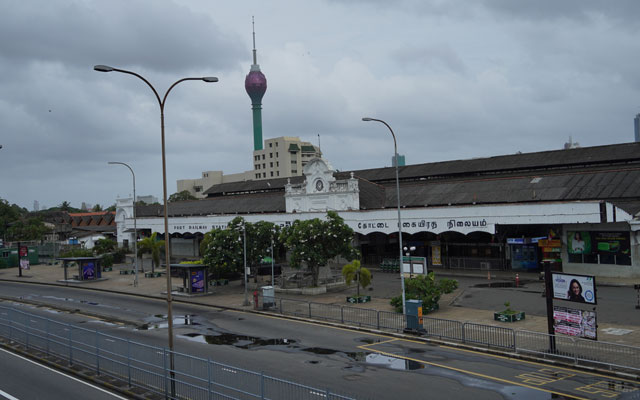
Sri Lankan authorities have imposed an indefinite nationwide night curfew which will come into effect on Monday (August 16) night as the country faces a rising tide of infections linked to the fast-spreading Delta variant.
The curfew will be imposed from 22.00 to 04.00 daily, along with a ban on social gatherings, public events and seminars.
Government officials said if the number of infections continue to rise sharply, longer curfew hours and lockdowns will be considered.
The curfew, which was announced on Sunday (August 15), comes a week after healthcare personnel urged the government to impose a nationwide lockdown or curfews as capacity reaches breaking point at hospitals across the country amid a Delta-fuelled spike in Covid-19 cases.
Sri Lanka recorded 3,435 Covid-19 cases and 161 deaths on Sunday, bringing the total tally to 354,968 infections and 6,096 deaths.
Tourism industry sources said that the rising number of infections in Sri Lanka coupled with hospital capacity constraints have led to concerns among foreign tourist operators about promoting the destination.
As of July 31, a total of 19,337 tourists visited Sri Lanka this year, marking a decline of 96.2 per cent from last year when 507,311 tourists visited the country from January through March 18, 2020 when the airport closed.
Meanwhile, the ongoing inter-provincial travel ban has derailed the country’s domestic tourism recovery and placed further pressure on hotels grappling to stay afloat during these challenging times.
TTG Conversations: Five Questions with Arthur Kiong, Far East Hospitality

Despite Singapore’s move to grant more freedom to fully vaccinated Singapore residents as well as travellers, as she begins her endemic Covid strategy, inbound tourism recovery will continue to face a tough ride ahead due to slow vaccination rates as well as strict pandemic and border controls across her traditional top source markets, projects Arthur Kiong, CEO of Far East Hospitality.
In this episode of TTG Conversations: Five Questions, Kiong also discusses how initial travel recovery would look for Singapore, the fate of 425 licensed hotels in the destination once the government’s support schemes taper off in 2022, how labour challenges will add to hoteliers’ woe, the need for a new quality tourism definition to rebuild traveller interest in Singapore, and more.
Victoria braces for more lockdowns before Christmas
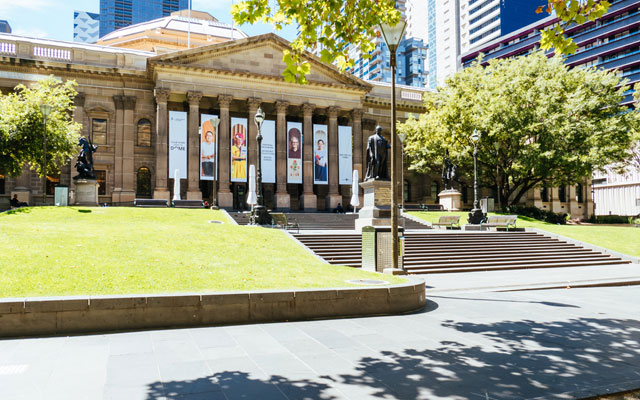
Tourism groups in Victoria are calling for more financial support from the government and flexible employment arrangements as the state braces for more lockdowns before Christmas.
The Victorian state government has confirmed it will extend its current lockdown – its sixth iteration – until September 2. A curfew has also been imposed from 09.00 to 17.00 for the two-week duration. At press time, there are currently 205 active Covid-19 cases in Victoria, compared to more than 7,000 in New South Wales.
Businesses have also been warned to expect snap lockdowns to be the new normal until Christmas, when a target of 70 to 80 per cent vaccination rates are expected to lead to a change in government policies about imposing sudden lockdowns.
The government initially responded to the latest lockdowns with a A$400 million (US$294 million) package for almost 100,000 impacted businesses, co-funded by state and federal coffers. A further A$367 million was offered when the seven-day lockdown was extended. But tourism representatives say the measures are not enough.
“While these business support programmes are welcomed by the industry, the reality is they don’t really come anywhere near compensating the businesses for the losses that they incur from all these lockdowns,” said Felicia Mariani, chief executive of the Victoria Tourism Industry Council.
“The businesses that support the state’s visitor economy have reached the end of their ability to bounce back from these rolling lockdowns and residual restrictions. There is simply little or nothing left in the tank for tourism businesses to continue under the weight of these recurring setbacks.
“We’re calling for a much more comprehensive, targeted and sustained programme for tourism, hospitality and events. We also need to see both state and federal governments reintroduce a wage subsidy scheme, similar to the NSW JobSaver program, targeting those industries most affected by the pandemic restrictions. As well, we need to see flexibility in Fair Work provisions reintroduced to ensure that businesses can tread water until we accomplish the rates of vaccination,” she lamented.
Apart from more funding, Adventure Tourism Victoria (ATV) is also calling for more hospitality businesses to be considered eligible for compensation.
“There are certain parts of the tourism industry that have been forgotten,” said ATV’s president Alex Hill. “If you don’t have a liquor license with a food license in Melbourne, then a lot of these grants aren’t available to you. For example, if you just have an accommodation venue, or one with a small lobby bar or if you’re a nightclub then a lot of these grants just don’t apply to you.
“(Plus) you’ve still got a lot of operators that are chasing lockdown grants from three lockdowns ago. All these business owners and operators are digging into their own capital or their own savings or building more debt trying to keep their staff employed,” he continued.
Brett Butcher returns to helm Langham Hospitality Group

Langham Hospitality Group (LHG) has welcomed Brett Butcher back as CEO.
Butcher previously served in the same role for five years from 2009, but left the group in 2014, and returned as CEO of GE Hospitality Asset Management Limited in 2017, a position that he will continue to hold.
No stranger to LHG, Butcher will provide guidance in the operations of the group’s hotels, spearhead all hotel owner relations, and solicit new management contracts in key destinations around the world.
The Australian has grown with LHG as senior vice president of sales, marketing and brand, as well as managing director of Langham Place, Mongkok, Hong Kong (later rebranded Cordis, Hong Kong.)
Prior to LHG, Butcher served in various operational and executive roles for nearly 20 years across the Pacific, North America, and China.
Michelin Guide Singapore adds 12 restaurants and hawker stalls to 2021 Bib Gourmand list
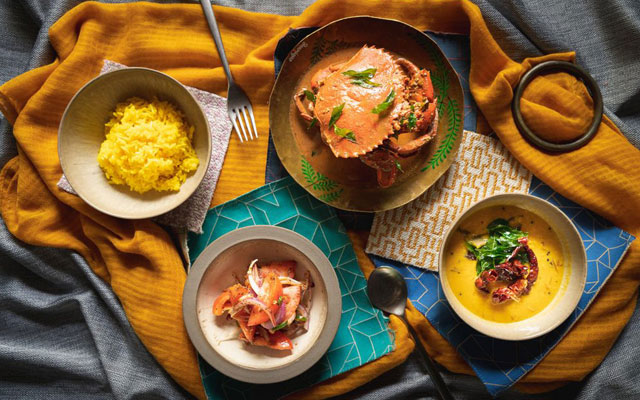
Michelin has unveiled this year’s Bib Gourmand selection for the 2021 edition of the Michelin Guide Singapore, which highlights a total of 69 venues including 12 new entries.
This year’s list of 69 venues – 11 more than in 2019 – spans a mix of restaurants, street food establishments, and hawker stalls.
Of these, 12 are new entries on the Bib Gourmand selection. They join the growing ranks of establishments nominated by Michelin inspectors that offer diners very good value for money, with a complete and high-quality menu priced at a maximum of S$45 (US$33).
The new entrants to the Bib Gourmand selection include three restaurants and nine hawker stalls. Among the new restaurants, Da Shi Jia Big Prawn Mee (Killiney) serves prawn noodle soup and fried prawn bee hoon that diners can customise with a variety of noodles and sizes ranging from regular to XXL. Kotuwa (Jalan Besar) offers hoppers and seafood-focused dishes by a chef-owner of Sri Lankan heritage, while The Coconut Club (Ann Siang) enriches coconut-centric dishes such as nasi lemak with Malaysia-imported coconuts for extra flavour and authenticity.
In addition, the nine hawker establishments offer a span of iconic Singaporean fare such as bak kut teh, laksa, and sliced fish soup. They include Fei Fei Roasted Noodle and Heng Heng Cooked Food in Yuhua Village Market and Food Centre; Jian Bo Tiong Bahru Shui Kueh and Soh Kee Cooked Food in Jurong West 505 Market & Food Centre; Lai Heng Handmade Teochew Kueh (Yuhua Market & Hawker Centre), Hainan Zi (Chong Pang Market and Food Centre), Joo Siah Bak Koot Teh (Kai Xiang Food Centre), Jun Yuan House Of Fish (Old Airport Road Food Centre), and Kwang Kee Teochew Fish Porridge (Newton Food Centre).
In total, this year’s selection features 42 hawker stalls, six street food establishments and 21 restaurants that front a range of cuisines.
The 2021 edition of the Michelin Guide Singapore will be published only in digital form on Michelin Guide’s official website and mobile app.
Hilton India celebrates sustainable food with Wakao Foods tie-up
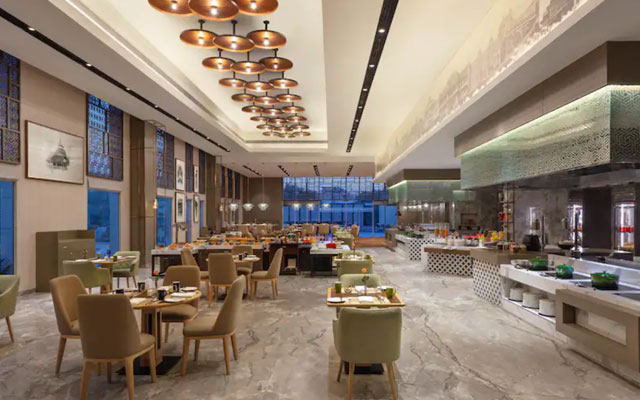
Hilton India, in partnership with Wakao Foods, has put up a sustainable food showcase in the form of a food festival dubbed The Wakao Fest, featuring an exquisite menu with jackfruit as the core ingredient.
The innovative food menu, available across F&B outlets at Hilton properties in the country, is inspired by the growing appetite among consumers for sustainable and naturally available alternatives to animal-based meat.
With the joint vision of placing jackfruit as a sustainably sourced plant-based meat substitute, the collaboration between Hilton and Wakao Foods aims at supporting local producers and products, as well as bringing plant-based alternatives prominently to the F&B scene in India.
Prashant Kulkarni, director F&B, India-Hilton, said: “The shift towards plant-based alternatives is the most dominant trend of 2021 triggered by the growing consciousness about mindful and healthy eating. The Wakao Fest explores unique dishes that are sustainable to serve and bring guests delight.”
Sairaj Dhond, founder & CEO Wakao Foods, added: “As the world looks at more plant-based alternatives, which are healthier and more sustainable options, there is a growing interest in meatless meals off late. The versatile and indigenously grown jackfruit is bursting onto the scene and finding itself being used more often. The pop-up therefore explores the versatility of the humble jackfruit, which is considered a superfood but needs to be more relevant across the cuisine culture of the country.”
The jackfruit-based artisanal menu at The Wakao Fest has been curated by the culinary experts at Hilton to offer multiple cuisines and gourmet delights comprising starters, main course and desserts.
During the festival held from August to November 2021, guests can sample dishes like Faux Pao, The Wakao Krapow, Parmesan Polenta, and “Bar of Bliss” across the F&B outlets at Hilton properties in India, including @SAIPE at Hilton Goa, Coriander Kitchen at Conrad Pune, The Amber Kitchen at DoubleTree by Hilton Jaipur Amer, and Terazzo at Hilton Shillim Estate Retreat & Spa.
Dream Cruises spotlights Singapore brands in upcoming collaborations
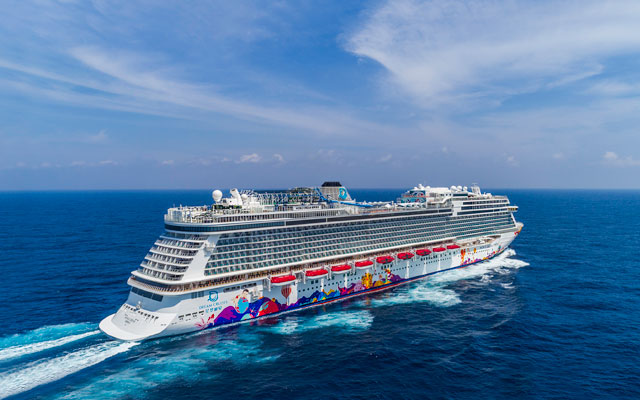
Dream Cruises will be collaborating with four Singapore brands to create exclusive collections that will be available for purchase onboard World Dream, as part of its newly-launched Support Local initiative.
World Dream is currently sailing two and three-night “cruises to nowhere” from Singapore.
The first of such collaboration by Dream Cruises, it will be working with Singapore’s oldest tea producer The 1872 Clipper Tea Co., social enterprise The Animal Project, ice-cream and coffee lifestyle café Creamier as well as lifestyle fashion brand Binary Style.
The exclusive collections will be showcased onboard World Dream in the later part of September 2021. Binary Style will design a bright and colourful scarf drawing inspirations from World Dream’s hull artwork, while Creamier will unveil a special ice cream flavour “that brings to mind the gentle sea breeze and lightly salted air during a refreshing day out at sea”.
The Animal Project, which showcases lifestyle products by artists with special needs, will create a pouch that weaves together the artists’ love for animals with elements of World Dream using digital calligraphy. Meanwhile, The 1872 Clipper Tea Co. will introduce a refreshing and calming tea blend “inspired by the haven of calm that World Dream offers”.
Amadeus accelerates NDC adoption in APAC to help rebuild travel
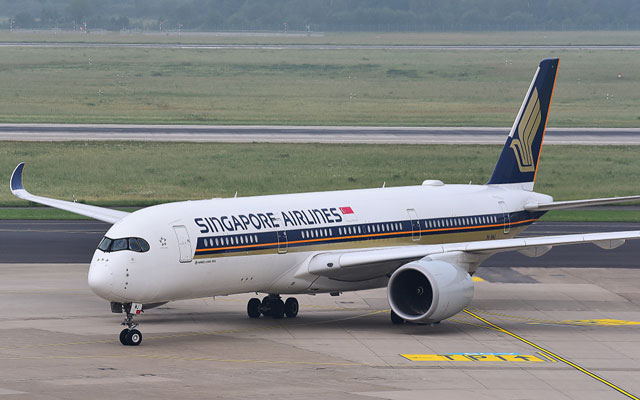
Amadeus is strengthening its NDC content capabilities in the Asia-Pacific region with various partnerships across airlines and travel sellers, which will enable a delivery of richer and more tailored content through end-to-end integration for a simpler, seamless customer experience.
In a press release, Amadeus said that the travel industry recognises NDC as a key element to rebuild travel and keep up with evolving consumer needs and demands in the wake of the pandemic.
In Asia-Pacific, Amadeus works with its airline partners such as Singapore Airlines to make its content and offers now available to travel sellers through the Amadeus Travel Platform. Travel agents worldwide connected to the Amadeus Travel Platform can shop, book, and pay for all Singapore Airlines offers made available through NDC as part of the airline’s KrisConnect programme.
Meanwhile, Qantas recently partnered with Amadeus to deliver Qantas’ NDC-sourced content to pilot travel sellers to test booking and servicing through the Amadeus Travel Platform.
The partnerships also extend to travel sellers in the region. Most recently, Riya Travel, one of Amadeus’ long-term partners and one of India’s largest retail agencies, has implemented NDC to enhance its retailing capabilities. In Indonesia, tiket.com, one of the fastest growing OTAs in the country, became the first OTA to adopt NDC in South-east Asia.
Amadeus has also partnered with ezTravel, the largest OTA in Taiwan, to adopt Amadeus’ NDC-enabled Travel API where ezTravel can access aggregated NDC and non-NDC content.
Frederic Saunier, Asia Pacific vice president of airline distribution sales, Amadeus, said: “As the travel industry rebuilds, we believe technology innovations like NDC will be key to recovery. It is no secret that our digital-first travellers want richer, relevant and tailor-made content; the kind of experience they already see in many other parts of their lives.
“Through technology like NDC, we can power great journeys for travellers. NDC is a strategic priority for Amadeus and our goal is to make NDC-sourced content available to all our travel sellers around the world over the course of this year.”
First flight from Hong Kong arrives in Phuket under Sandbox scheme
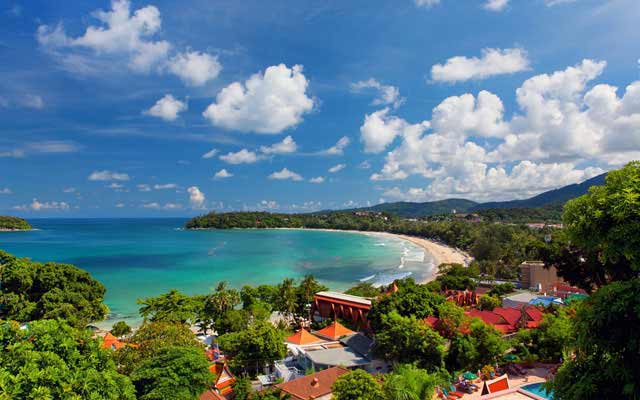
The Thai resort island of Phuket has welcomed its first direct flight from Hong Kong under the Sandbox programme, with 134 passengers arriving at Phuket International Airport via Cathay Pacific flight CX771 on Tuesday (August 10).
The passengers landed to a dramatic water cannon greeting and warm welcome from the Airports of Thailand staff and Tourism Authority of Thailand (TAT) officials.
The weekly Cathay Pacific service which operates every Tuesday added Hong Kong to a number of points in Asia, Europe, and the Middle East from where major airlines have been flying direct to Phuket since the Phuket Sandbox programme began. This includes Thai Airways International from Copenhagen, Frankfurt, Paris, London, and Zurich; Singapore Airlines from Singapore; Etihad Airways from Abu Dhabi; Emirates from Dubai; Qatar Airways from Doha; and EL AL Israel Airlines from Tel Aviv.
Under the Phuket Sandbox programme, which signalled the beginning of Thailand’s tourism revitalisation with Phuket as the pilot destination, fully vaccinated foreign tourists can visit without the need to quarantine. However, tourists must stay at hotels certified with SHA Plus certification, which indicates that the hotel meets the Covid-19 safety standards, and also that at least 70 per cent of its workforce has been fully vaccinated.
From July 1 to August 10, the Phuket Sandbox has seen a total of 19,166 international arrivals. The first month of the programme recorded more than 14,055 arrivals, generating over 829 million baht (US$24.8 million) in revenue for the local economy.
TAT expects 100,000 foreign tourists will visit Phuket in 3Q2021 (July-September) and inject some 8.9 billion baht of revenue into the local economy.







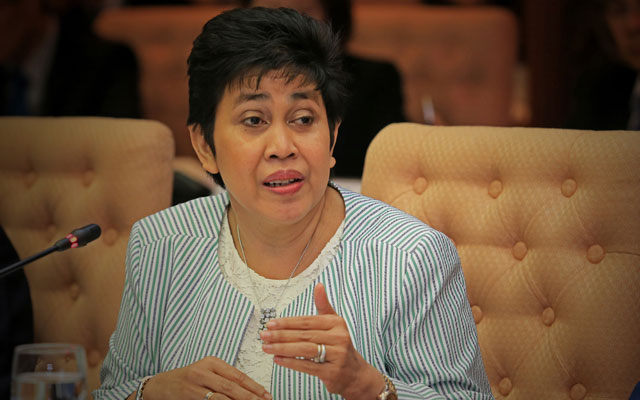
The travel trade has hit out at Bank Negara Malaysia’s governor for her recent statement that waiving the accrued interest payment on loans during the current six-month moratorium will have significant impact on banks and the country’s long-term recovery from Covid-19.
Nor Shamsiah Mohd Yunus had pointed out that the total individual and SMEs loans eligible for automatic moratorium amounts to about RM1.4 trillion (US$329 billion), or around 73 per cent of total banking system loans in the country, and that waiving the accrued interest payment under the moratorium would have significant long-term consequences.
In response, Uzaidi Udanis, president of the Malaysian Inbound Tourism Association (MITA), said in a press statement that the association is deeply saddened and “disappointed” at the governor’s statement.
“The industry is in crisis and all tourism players are facing a tough time trying to stay afloat due to the Covid-19 pandemic. We are at war and the banks should be together with the people to overcome this crisis,” he said.
“Bank Negara should encourage the banks to look into the industry’s plight and their survival rather than just (the) bank’s profit. There is no point if the banks’ profits look good while the nation entrepreneurs are in crisis.”
Uzaidi questioned why the banks couldn’t extend support to the tourism industry, which is the third most important economy sector in Malaysia.
He also called on Nor Shamsiah to step down and give way to a capable candidate, if she were unable to come up with a tenable solution, instead of putting the burden on bank customers with loans.
Uzaidi noted that it has been almost 20 months since tourism players have lost their income due to the pandemic, and appealed to Bank Negara to extend the moratorium and waive the moratorium interest for the tourism industry.
Malaysian Association of Hotel Owners president, Teo Chiang Hong, said he was both “disappointed” and “appalled” by the governor’s statement which was “ignorant to the prevailing critical business situation faced by business operators, especially (those) from the tourism industry and hotel sector (whose businesses) had (been at a near) standstill for more than 1.5 years”.
He noted that the hotel sector suffered an estimated loss of RM6.5 billion in 2020, with equally grim prospects expected for this year.
Teo further highlighted that hotel owners faced critical cash flow issues as they had to continue paying operational costs despite their businesses not generating any revenue.
He called on banks to be more sympathetic to the predicament of the tourism industry, and urged Bank Negara Malaysia to assist businesses to stay afloat during this crisis. Teo pointed out that while “waiving interest on loans during moratorium will not make banks go out of business”, it will be “a great help to the business operators”.