


Plaza Premium Group debuts premium airport experience in Qingdao
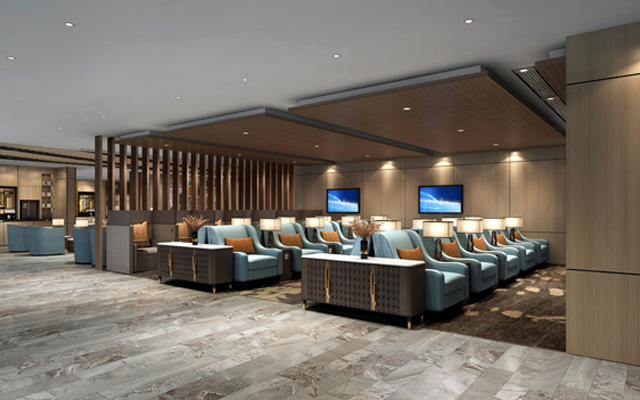
Plaza Premium Group, Qingdao International Airport Group and Capital Airport VIP Service Management Co. have jointly launched a first-to-market land-to-air premium airport experience at China’s Qingdao Jiaodong International Airport.
The unique land-to-air premium experience is offered in two areas: a three-storey VIP Building located at the Arrival area and three Plaza Premium Lounge outlets at the Departure area.
Spanning 6,500m2, the multi-complex VIP Building offers end-to-end airport hospitality services such as dining, lounging, meet-and-greet, personalised concierge and accommodation.
The ground level houses 11 VIP rooms that offer designated spaces for corporations to provide private and premium airport services to affluent travellers. Services include private check-in, concierge, dining, lounge, and a special fast track or curb-to-apron service for those departing at the Domestic terminal.
The second floor is occupied by Plaza Premium Lounge, which comprises three private dining areas, three tea rooms, an Aerobar, massage service, concierge, VIP meeting rooms, individual work stations and a souvenir shop.
On level three, Aerotel Qingdao caters to travellers in need of a comfortable and convenient stay. There are 54 guestrooms across three suite types, all outfitted with quality bedding, pillow options, soothing lighting, powerful showers, high-speed Wi-Fi and in-room IPTV.
Over at the Departure area, travellers can enjoy three pay-per-use Plaza Premium Lounges located on the airside third floor of Terminal 1, situated near the boarding gates, as well as on the East and West sides of the Central Landscape Area respectively.
All services are available for reservation on Plaza Premium Lounge official website and Aerotel official website or via partnered distribution channels and corporations.
Song Hoi-See, founder and CEO of Plaza Premium Group, said: “The Qingdao project showcases how Plaza Premium Group’s offering has evolved beyond lounge and traditional airport services, towards an end-to-end airport hospitality experience to serve the evolving needs of travellers in today’s new travel landscape. This project that we have spearheaded demonstrates that diversification in the industry is necessary and we look forward to offering this holistic support service to more airports globally in the future.”
Retired SIA aircraft to get new lease on life
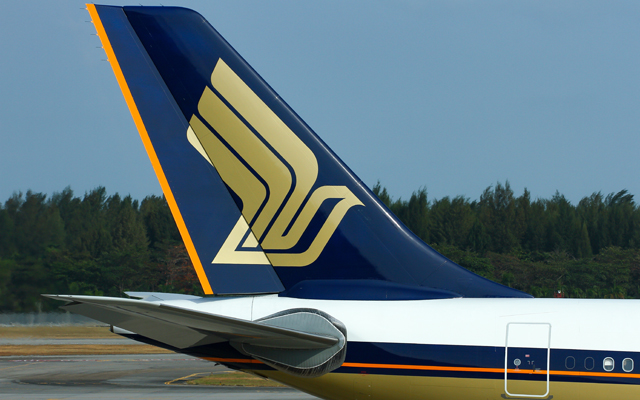
Singapore Airlines (SIA) has launched The Upcycling Project, through which parts and materials of retired commercial aircraft will be given to various Singapore-based organisations and selected global retail brands for onward usage for art and other products.
These upcycled and repurposed products will directly support educational institutions, artists and persons with disabilities.
The first initiative under The Upcycling Project will be a competition organised by SIA and Singapore University of Technology and Design, aimed at promoting awareness about design and upcycling among tertiary and pre-tertiary students in Singapore.
Aircraft parts and materials will also be donated to several educational institutions for use as teaching materials in art and design courses.
Furthermore, SIA has appointed Singapore-based brand and product consultants, Supermama’s Edwin Low and Escano’s Adriana Lim to source for local and global retail brands that are keen to repurpose aircraft parts and materials into products such as furniture, service ware, and fashion apparel and accessories.
Local art consultant Jazz Chong, who helms The Ode to Art gallery, will work with SIA to select Singapore-based artists and sculptors who will create unique artworks with the upcycled materials. For a start, four prominent artists and sculptors have been selected – Baet Yeok Kuan, Kumari Nahappan, Sun Yu-Li, and Yeo Chee Kiong. The completed art pieces will be sold exclusively at The Ode to Art gallery.
Meanwhile, SIA will also work with SG Enable, an agency that supports people with disabilities, in its i’mable Collective initiative. Aircraft parts and materials will be be provided to the i’mable Collective’s makers. The final products will be sold and proceeds go directly to the makers.
Yeoh Phee Teik, SIA’s senior vice president customer experience, said: “There was a lot of interest when we first broached the concept, and we are happy to be able to support a wide range of communities through this initiative.”
HK Express commences Taipei, Kaohsiung services

Hong Kong-based low-cost carrier HK Express launched one-way services to Taipei and Kaohsiung on August 23 and 26 respectively, with return flights slated to take off next month.

The new services this week join HK Express’s existing Taichung service to grant its passengers improved access to all three Taiwanese cities.
Return flights from Kaohsiung are expected to materialise from September 2, while the first return flight from Taipei will operate on September 4.
Customers travelling to these Taipei and Kaohsiung must comply with local entry requirements, which may include Covid-19 tests pre-departure and on-arrival, as well as quarantine and health declaration forms.
Growing reopening urgency among Cambodian tourism players as national vaccination rate improves
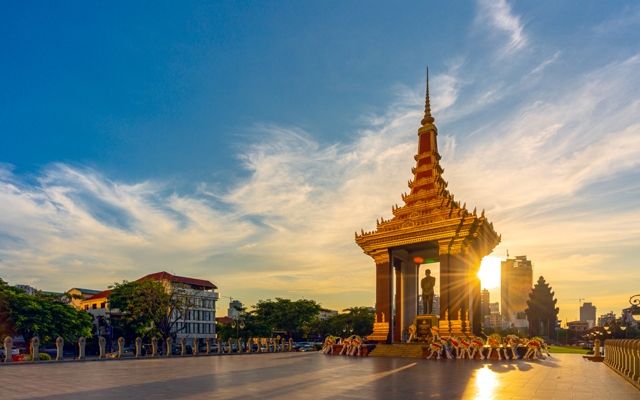
Cambodia’s rapid vaccination rollout has sparked hopes that international tourists will be welcomed in 4Q2021. However, industry players warn without the hasty announcement of official plans another high season will be lost.
Cambodia’s impressive vaccination campaign has seen more than 75 per cent of the population fully vaccinated. Frontline workers are already receiving their third booster injection, with children above 12 years old being given their first jab.
Additionally, a recent report from Executive One Consulting forecasts 80 per cent of Cambodia’s adult population will be fully vaccinated by August 31. This compares with July 22, 2022 for Thailand and September 22, 2022 for Vietnam.
Ronni Dalhoff, managing director of Diethelm Travel Cambodia, said: “As one of the world leaders in the vaccine process, Cambodia should also be one of the world leaders in the re-opening process. Cambodia has given itself a golden opportunity that simply must be used to the maximum.”
He added the Kingdom needs to act fast to “reshape the travel dynamics in South-east Asia” and plant Cambodia on the map as a standalone destination ahead of its neighbours.
While the government has publicly mooted the idea of opening to vaccinated tourists in 4Q2021, nothing has officially been announced. Agents fear they are now in danger of losing out on another year of business as the high season looms and preparation time runs out.
Steve Lidgey, general manager of Travel Asia a la Carte, said: “We need a proper plan in place so the industry can prepare. It’s not just so tour operators can sell overseas but hotels and other hospitality businesses need time to plan.”
The general manager of an independent travel agent, who wanted to remain anonymous, has already ploughed his personal savings into the business. He said: “The situation is desperate. It’s worrying because if we lose this high season, it will be another year of no business and we simply can’t survive.”
The head of a destination management company added: “The economic consequences will be far more severe and long-lasting than the disease will ever be… Counting cases in Cambodia is irrelevant at this stage of the vaccination process; it’s basically fear mongering. Count severe cases and hospitals over capacity, and get back to normal life.”
CAM DMC and other stakeholders will jointly send a formal letter to the relevant ministries urging them to announce plans to fully open to vaccinated visitors in 4Q2021.
Cambodia has also confirmed it will host ASEAN Tourism Forum in the coastal city of Sihanoukville from January 16 to 22, 2022. The Ministry of Tourism confirmed it is ready to welcome 2,000 participants from more than 25 countries.
IATA partners 2C2P to expand payment reach, operational efficiency

IATA and global payments platform, 2C2P, has established a partnership that will see the payment gateway being integrated into IATA’s Financial Gateway (IFG), granting airlines all over the world increased payments reach and enhanced operational efficiency, amid the aviation industry’s gradual recovery to pre-pandemic levels.
A key initiative by the global airline body, IATA’s IFG solution enables all airlines globally to access diverse payment solutions through one platform. With 2C2P’s integration, IATA member airlines from every continent will now have increased access to popular regional and local payment methods from Asia, including mobile wallets, QR, direct debit and other alternative payment methods.
The move is expected to open up a sea of opportunity for airlines all over the world to further penetrate the Asian market, given that Asia, the world’s most cash-reliant region, is embracing digital payments like e-wallet and QR-enabled solutions amid the pandemic.
2C2P will bring on board over 250 payment methods and enable access to 400,000 alternative payment touchpoints through one point of integration.
Airlines will also be able to process pay-outs and remittances, issue cards and wallets as well as access digital goods and services via 2C2P.
According to a recent IATA and Tourism Economics report, global air passenger numbers are forecasted to return to pre-pandemic levels in 2023.
“As the aviation industry gradually picks up with increased vaccine access and travel demand, 2C2P hopes to facilitate its road to recovery through this partnership with IATA which will help airlines to adapt to the needs of their customers in different regions and markets,” said Aung Kyaw Moe, founder and CEO of 2C2P.
Appreciating Philippine tourism achievements through the work of TPB’s Susan del Mundo

Even as Susan del Mundo recently retired after 40 years with the Tourism Promotions Board (TPB), the learnings on destination marketing that she accumulated benefit the industry to this day while certain projects that she pioneered have become more essential in the altered travel landscape.
Her leaving marks the end of an era, Susan being the last to go among the pillars of TBP’s previous incarnation – as Philippine Convention and Visitors Bureau (PCVC) and, prior to that, Philippine Convention Bureau (PCB) – who steered Philippine MICE to its heyday and made the country Asia’s darling in the days of yore. She joined other pillars like Domingo Ramon Enerio III, Daniel Corpuz, Elizabeth de la Fuente, Rosvi Gaetos, Maricon Ebron and Venus Tan.

Despite a 14-month stint as Tourism Attaché in New York until February 2019, cut short by an open heart surgery, del Mundo delivered with a significant increase in arrivals from the US and Canada, the take off of cruising in Florida, and scored international events such as the Bohol portion of the Grand Fondo New York global cycling race in 2019 and which Iloilo is planning to be a part of, Kiwanis International Convention next year, and ASTA wanting to return to the Philippines.
A certified public accountant with a master’s in tourism management, this passionate yet silent worker learnt destination marketing from her assorted positions in the US, UK and the Philippines, influenced by various tourism secretaries: establish alliances and friendships, work with embassies, talk to officials of associations such as the American Association of Retired Peoples with members in the millions.
When tasked to handle the 2006 ASEAN Tourism Forum (ATF), del Mundo gave Davao the chance to host over Manila, Cebu and Subic. With poor safety and security image, it was tough to push Davao to buyers but she mobilised the Air Force of the Philippines behind the scene and the Philippine Navy which ensured underwater safety. Feedback was that it was one of the best ATFs ever, with del Mundo learning to tap the local government, address the safety and security issues, and showcase Mindanao’s colourful tribal heritage and farm produce.
Del Mundo led the team that conceptualised and implemented the Grassroots for Entrepreneurs for Ecotourism (GREET) to encourage small and micro entrepreneurship from 2006 to 2010. Many are still ongoing in Visayas and Mindanao and in Sorsogon; the donated boats still offer tours of Bulusan Lake while trained fisherfolks guide tourists in sustainable interaction with Donsol’s whale sharks or butandings, and trained women cook and serve meals.
With the pandemic raging and many tourism workers rendered jobless, there is a call to support small and micro enterprises similar to GREET and promote eco-friendly and sustainable tourism.
Del Mundo also initiated the fam trip for local tour operators which was taken over by the Philippine Tour Operators Association (Philtoa) when she was transferred to London as marketing and administrative officer of the Department of Tourism. That time when PCVC had no budget for this project, del Mundo funded it on her own by getting sponsors, asking non-sponsors to pay for the trip, and rotating the funds so that the fam trip became self-sustaining.
Among the tourism secretaries that influenced del Mundo are Wanda Teo who levelled up the Philippine branding and promoted local culture; Mina Gabor who promoted impactful projects like the Fiesta Islands campaign and brought in not just MICE but also sporting and other international events; Alberto Lim who’s more on product development, quality than quantity and short stay vs long stay markets; and Ace Durano who was more on market forces thus uplifting emerging and opportunity markets.
From Jose Aspiras, del Mundo learnt the importance of PR, image and market positioning of the Philippines. Aspiras held massive public relations campaigns overseas, hired top-notch PR companies to promote a very positive image of the Philippines, embarked on foreign roadshows and cultural shows to the benefit of tourism.
Apart from learning the importance of research as product offerings have to be aligned with what the audience want, del Mundo learnt professionalism from former PCVC boss Elizabeth de la Fuente and from tourism secretary Ramon Jimenez, how the It’s More Fun in the Philippines campaign changed the country’s image, expanded to other emerging markets like Russia, and addressed the safety and security issues.
I don’t expect del Mundo to rest on her laurels in retirement.
“Tourism is in my DNA. I can continue to serve as a private individual,” she told me.
Rosa Ocampo is correspondent, Philippines for TTG Asia Media. She reports for the company’s stable of travel trade titles, including TTG Asia and TTGmice.
Anantara calls on fitness enthusiasts to move and contribute to conservation work
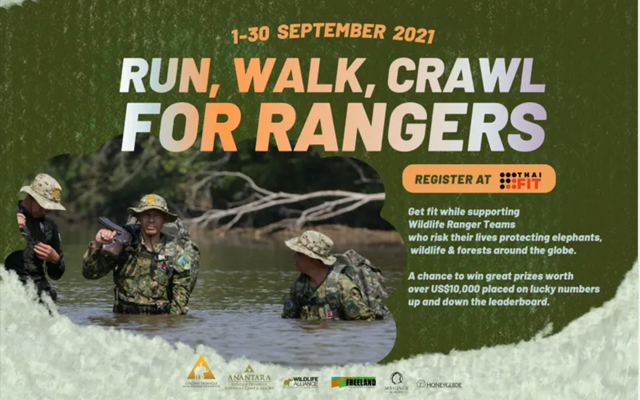
The Golden Triangle Asian Elephant Foundation by Anantara Hotels, Resorts & Spas has kicked off a global fitness initiative to benefit the essential work of wildlife rangers in conservation hotspots from Thailand to the Philippines and from Cambodia to Tanzania.
The Run, Walk, Crawl for Rangers competition from September 1 to 30 invites fitness enthusiasts to track their steps on their smart device during the month of September and stand a chance to win memorable accommodation stays at Anantara properties worth over US$20,000.
Funds raised by the US$25 participation fee will be equally divided to benefit the work of five wildlife ranger teams – the Wildlife Alliance in Cambodia that provides direct ranger intervention to stop forest destruction; Masungi Georeserve in the Philippines that is a conservation area and a rustic rock garden tucked in the rainforests of Rizal; HoneyGuide that runs community-based conservation initiatives including the Randilen Wildlife Management Area in Tanzania; the Freeland Foundation in Thailand that provides comprehensive training to rangers and protected areas managers; and the rangers at Cardamom Tented Camp Concession.
The Golden Triangle Asian Elephant Foundation was set up at Anantara Golden Triangle Elephant Camp & Resort in Northern Thailand in 2003, primarily to help Thailand’s street begging elephants and others that could not help themselves. Since then, the Foundation has branched out to lend a helping hand and resources to other conservation projects mainly in South-east Asia and Africa, including the Cardamom Tented Camp Concession in Cambodia where Khmer rangers patrol the pristine land to protect against deforestation and illegal poaching.
Registration is at Thai.fit.
Dream Cruises brings the world to Singapore cruisers
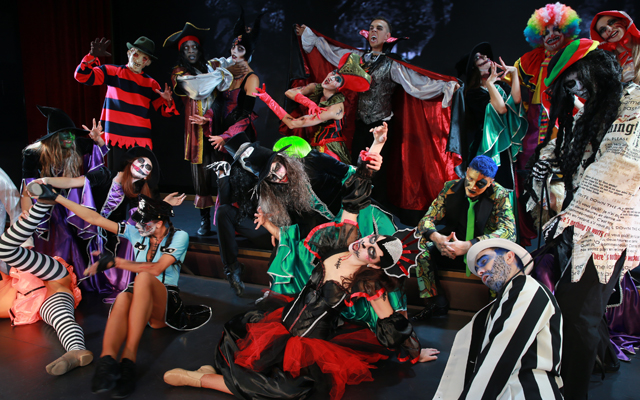
Singapore cruises fans will be able to tour the world without having to depart Singapore’s waters when Dream Cruises kicks off its Markets of the World series of thematic activities on World Dream on September 19.
The series invites guests to discover authentic flavours and a variety of cultures from across the globe.
To start, Dream Market at Sea will run from September 19 to November 6, evoking the spirit of lively festival markets in destinations such as Spain, Germany, France, Western Australia, Hong Kong, Japan, Taiwan, Thailand and more.
Alongside irresistible food, challenging game booths will bring back childhood memories. Guests can play to win prizes.
The Western Australia Adventures experience sets in with 10 Balcony Staterooms re-created on World Dream to inspire guests to experience the land Down Under. Quinton the Quokka will make special appearance throughout the cruise while interactive pop-up photo booths onboard takes the journey to Western Australia further.
Guests can also participate in the Western Australia Trivia Wall to score an exclusive hamper and stand a chance to win an all-expenses paid trip to Western Australia through a photo contest.
Australian gastronomic indulgences will be available on October 15, 17, 20, 22, 24, 27 and 29 sailings, thanks to the Indulge in Lobster Fever food festival.
On September 19 and 22 sailings, World Dream will celebrate Mid-Autumn Festival with traditional festive activities such as riddle games and lantern crafting. Free moon cake tastings will also be offered.
Later, Oktoberfest at Sea takes over on September 26, October 1, 3 and 10. Expect a feast of German beers, crispy pork knuckles, Nurnberger sausages and pretzels, alongside complimentary cooking workshops, Bavarian Folk dances and best-dressed contests.
Rounding up the Markets of the World series is Spooky Halloween on October 31. World Dream guests can dress up and go trick-or-treating, join an Into the Night dance class and participate in the Spooky Halloween Awards. Halloween-themed F&B will be served up at various outlets.
New hotels: V Villas Phuket – MGallery, Radisson Resort & Spa Lonavala, Staybridge Suites Dubai Internet City, and more

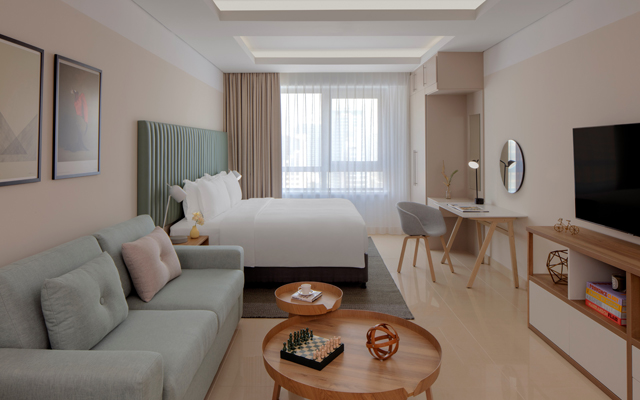
V Villas Phuket – MGallery, Thailand
Inspired by the lush nature found on the southern tip of Phuket island and promising unparalleled privacy and bespoke indulgence, the new V Villas Phuket – MGallery comprises 19 pool villas, each with expansive wooden decks that allow for a seamless blend between indoor and outdoor living, as well as three distinct dining spaces, V Villas Spa, a state-of-art gym, and an infinity pool.
One-, three- and four-bedroom configurations are available, welcoming single travellers, families and couples.
Its location on the verdant Ao Yon hillside grants guests memorable ocean views. Natural materials, bespoke design and locally inspired art pieces can be admired throughout the resort.
The resort’s holistic wellness offerings include personalised wellness programmes and in-villa yoga classes.
Three outstanding wedding venues, including the YON|Ocean House, AKOYA|Star Lounge, Hilltop Cliff and Owner’s Villa, are offered. Each provide romantic luxury wedding experiences with Andaman ocean views. The resort’s wedding specialists can assist in all arrangements from the pre-wedding party to the ceremony.
Radisson Resort & Spa Lonavala, India
India’s scenic hills of Lonavala welcomes the opening of Radisson Resort & Spa Lonavala, a property that spans over 14,100m2 and dangles sweeping views of the majestic Sahyadri range as well as one of the largest venues for meetings and large weddings.
The 103-key resort enjoys convenient air, rail and road connectivity from Mumbai and Pune, and is a 15-minute drive from both Lonavala and Khandala railway stations. Guests can easily access tourist attractions such as Bushi Dam, Narayani Dham Temple, Lonavala Lake and the celebrity wax museum.
Designed by well-known Indian architect, Kamal S Malik, the resort has been envisioned as the perfect amalgamation of sustainable design and local art and culture. It features areas such an open atrium, designed to reduce the need for air-conditioning. The resort’s entrance lobby has a grand cylindrical space which recreates the effect of the echoes of Shivaji’s forts, giving the sense of a conservatory surrounded by hills.
Radisson Resort & Spa Lonavala is also home to the country’s largest Gabion wall which is approximately 21 m in length and is a visual spectacle for guests.
Facilities at the resort include three restaurants, The Spa at Radisson, a 24-hour fitness centre, an interactive kids’ play area, and an outdoor swimming pool that is designed to resemble a Kund – traditional water reservoir.
Staybridge Suites Dubai Internet City, the UAE
IHG Hotels & Resorts has opened the doors to its latest property in the UAE – the 225-suite Staybridge Suites Dubai Internet City.
The upper-upscale extended-stay hotel is designed for multi-night business and leisure travellers looking to break from the travel norm while on the road, be it for days or even months at a time.
It is located on Dubai’s iconic Sheikh Zayed Road at the heart of the city’s technology, media, and creative free zone, and has a plethora of leisure destinations close by.
Guests have a choice of studios, one- and two-bedroom suites. All units feature spacious and comfortable living, working, and dining spaces and a fully equipped kitchen with top-of-the-line home appliances including a dishwasher and washer/dryer. Many of the apartments feature their own balcony where guests can enjoy spectacular views of the cityscape and the Arabian Gulf. Several interconnecting units offer greater flexibility for families or small groups traveling together.
On property are a restaurant, a 24/7 convenience store, an infinity pool, a concept spa, and a poolside bar and lounge.
The hotel hosts The Social, the brand’s signature event, three times a week, creating an informal gathering for guests to relax and enjoy complimentary bites and drinks while engaging with other guests staying at the hotel.
BreakFree Wirrina Cove, Australia
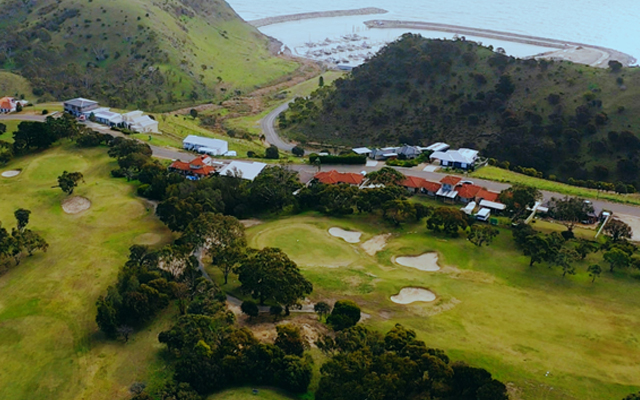
The new 87-room BreakFree Wirrina Cove resort, nestled in the heart of beautiful Wirrina Cove, South Australia, welcomes both business and leisure travellers.
Surrounded by national parks, with photogenic beaches, waterfalls and kangaroos, the resort is located in an area of outstanding natural beauty, having one of the most sweeping and spectacular panoramic views of Gulf St Vincent.
The resort sits 70km drive south of Adelaide, and offers an 18-hole golf course, conference and function facilities, high speed Internet, bar and cafe facilities, a pool and gym, and onsite car parking.






When considering sustainability, the mind frequently thinks of environmental first; or those in the corporate world would envision the best way to balance operational costs for a profitable future. The latter is more inclined towards longevity of business while the former seeks to protect our world – a movement increasingly demanded by consumers and operators alike.
It is the combination of these two ideas that would truly seek a holistic, sustainable change since profitability goes hand-in-hand with giving back to the world – or protecting our environment, be it income for local people, reducing waste or lowering carbon emissions.
While it is cool to claim modern facilities and cashless or paperless contact points, are we placing too much reliance on technology in an industry that is traditionally supported by humans? Does this diminish the essence of ‘hospitality’?
I believe we should examine further the ‘sustainability’ of human resources. While a project can be environmentally green, it also needs to find a balance that hires local people – supporting local communities with wages, training and career development, and builds a team to support such a sustainable and eco-green backbone. Otherwise, I see a future where ‘hospitality’ will lose its human touch.
Take an example of automatic check-in and check-out at a modern city hotel: While environmentally friendly (and safe) for time-poor business travellers, could we risk losing valuable insight from local hosts in exchange for an express process? This style of hospitality creates a fast-food like accommodation experience.
While the ‘experience’ described differs from the traditional idea of staying in a warm and welcoming home-away-from-home, it still offers an experience and deserves its own market niche. It may not be experience-rich but it fulfils the need for an efficient experience. The traveller staying at human-less hotels is also a different kind of traveller – one who seeks limited emotional transactions and a quick/easy/safe travel solution.
Thanks to the ubiquity of social media, news and consumer eyes looking at sustainability as environmental care is on the increase. However, public education and awareness of the true meaning of sustainability on all macro levels is further required.
Marketers and brand leaders should develop campaigns about the people behind the technology, the knowledge that cannot be shared via apps and the redirection of operational costs/profits that help build local communities. This message can actively gain traction as part of post-Covid recovery strategy. Transparency to sustainable practices will help win the hearts and loyalties of a hyper-aware traveller community.
Project leaders and investors need to consider the wider idea of ‘sustainability’ beyond environmental and waste management, to drive human resource as the seed to build on sustainability models. Only when you empower a workforce partnered with eco-conscious design, building and operations while balancing positive profitability, that’s when you get a truly sustainable project – otherwise it is all smoke and mirrors.