

Slow and fulfilling living in Macao

Brought to you by Macao Government Tourism Office (MGTO)
Pandemic-led isolation and uncertainty have had a positive impact – it gave people a chance to slow down and assess their life priorities, and along the way threw a spotlight on the importance of physical and mental well-being.
This growing need to savour one’s life better than ever before has fuelled the rise of slow, purposeful travel. Here in Macao, one can find many ways to decelerate, focus inwards and rediscover a balance in life.
Breathe in, breathe out
Take heed of numerous research that has borne out health benefits – physically, mentally, and emotionally – that come from nature immersion. Travellers to Macao looking for nature therapy have several hiking trails and nature paths to choose from. Many of these trails and paths wind through a quieter and more scenic part of Macao.
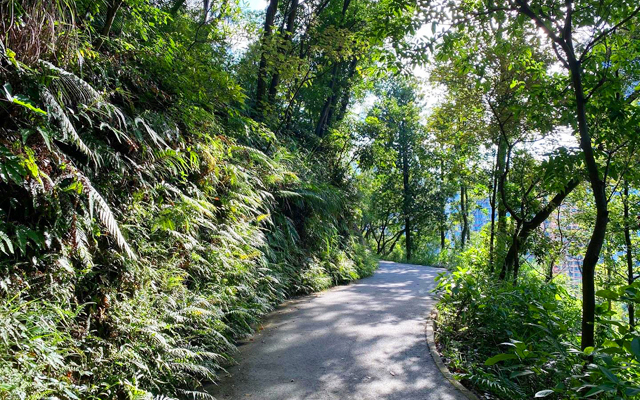

A short leisurely walk to free the mind can be made along the one-kilometre Mong Há Hill Fitness Trail, just stone’s throw from the city centre and within the Mong Há Hill Municipal Park. The route takes one to various scenic spots such as a natural rock cave. Upon ascending a small stairway, one will reach a viewing platform where a splendid view of inner Macao awaits.
For a more ambitious hike, the four-kilometre Taipa Grande Trail in the Taipa Grande Natural Park will satisfy. The broad trail features easy slopes and verdant surroundings. Besides taking in panoramic views of Cotai Central, hikers can also visit the Taipa Grande Camellia Garden and appreciate the many resident blooms. Take the Fitness Steps Walk, which lies on the trail, to arrive at the highest point of Taipa, at 159.2 metres above sea level.
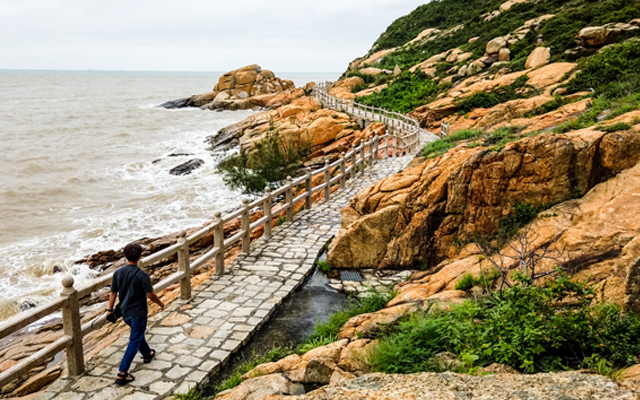
An alternative to green trails is the Hac Sá Long Chao Kok Coastal Trail, a 1.2-kilometre route that runs along a rocky coastline, dotted by numerous rock formations and enchanting visitors with sweeping seaviews.
Unravel stress knots
Macao’s many crème de la crème hotels and resorts bring with them stellar wellness enclaves to escape into and emerge later with body renewed.

Distinguished wellness options, as determined by the Forbes Travel Guide, include The Ritz-Carlton Spa, Macau, renowned for its ice fountain and vitality pool with overhanging lounge chairs; Tria Spa at both MGM Cotai and MGM Macau; and Morpheus Spa at Morpheus Hotel, a stylish sanctuary where treatments combine nature with science.
If a tropical sanctuary is what the body yearns for, then the award-winning Banyan Tree Spa Macau is the place to be. Its spa menu contains more than 20 treatments, five of which are particularly unique. Take for instance the Tropical Rainmist, which treats the guest to a rejuvenating rain mist steam bath, cascading rain shower, invigorating body scrub and a soothing massage.
Mindful meals
Macao’s 500 years of food culture earned her the UNESCO Creative City of Gastronomy designation in 2017. More than just a treasure trove of precious recipes handed down generations, Macao’s kitchens are also turning out dishes that stay true to healthful and sustainable promises.

Herbal Treasures at Studio City returns harmony to one’s body through delicious food and healthy drinks crafted in collaboration with one of the most authoritative traditional Chinese medicine associations of Macao. On the menu are herbal jellies, seasonal herbal tonic teas, double-boiled soups and a variety of desserts.
Healthy vegetarian meals can be enjoyed at Sum Yuen Buddhist Vegetarian Restaurant and Chakra SPACE, for instance. The former is set within the 19th century Pou Tai Un Buddhist temple, while the latter takes pride in surprising guests with its table d’hôte concept, although guests can state their preference for Chinese, Thai or Western flavours.

Yet another dining gem in Macao is IFT Educational Restaurant, whose celebrity status is cemented by its acquisition of the MICHELIN Green Star award in January 2021. The distinction is presented to restaurants that lead the way in sustainable practices. IFTM Educational Restaurant was recognised for its contributions to sustainable gastronomy, including the use of regional produce and herbs grown at its own garden, and for its food waste and environmental management systems.
Shop and support local businesses
If shopping is what one desires, then make every dollar spent count by supporting Macao’s local businesses.

Portuguese egg tarts are popular Macanese souvenirs, but Macao’s traditional bakeries are also masters at crafting the most addictive almond biscuits, egg rolls, coconut flakes and peanut candies. Many of these bakeries, which have thrived for generations, can be found on Taipa Island.
If foodstuff is not one’s cup of tea, then take home paintings and craft to support local artists. Their work can be found in local galleries on Rua de Santo António as well as at exhibitions hosted at the IAM Gallery, the Pavilion in Lou Lim Ioc Garden, Macao Museum of Art and Tap Seac Gallery.
For more travel updates and inspirations, follow Mak Mak Macao (on Instagram), Stopover Macao (on Facebook), and Macao Moments (on Twitter), or visit the Macao Government Tourism Office website.
How technology can help airlines today

 The year 2020 has gone down in history as the worst for air travel. While we have seen a bounce back in passenger numbers from the depth of the pandemic, a full recovery remains a long way off. Despite global efforts around vaccination and testing programmes, we don’t expect that air travel volumes will return to pre-Covid levels before the end of 2023.
So, while the recovery continues to build momentum, the pressure remains on airlines. They have had to reprioritise technology spend to keep operations running through the pandemic, doing more with less to compensate for the financial losses of fewer passengers flying.
For any airline, fleet is by far the biggest capital outlay. The primary concern of our airline customers – remembering that almost every airline is a SITA customer – is how to maximise investment in their fleet given that passenger volumes and business travel remain below what they were before the pandemic, particularly on long-haul routes.
Airlines today must also contend with rising fuel costs, which are at an all-time high. IATA’s Jet Fuel Monitor shows that the average price of jet fuel is around 70 per cent higher year-on-year in August, a US$46.4 billion additional cost to the industry.
In parallel to the financial pressures, the pandemic has greatly increased the focus on aviation to be more environmentally sustainable.
Operational efficiencies are key for airlines’ sustainability
It is more important than ever for airlines to operate in a more financially and environmentally sustainable manner. Fuel is one of the most significant expenses for an airline. From an environmental perspective, most aviation emissions are from aircraft, specifically fuel consumption.
While new zero-emission aircraft and sustainable aviation fuels are two industry measures identified to reduce carbon emissions and the reliance on fossil fuels, no airline can adopt these measures fully today. However, measures supporting operational (including efficient procedures and weight reduction measures) and infrastructure improvements (aircraft and associated infrastructure, including airports and flight paths) represent the greatest opportunities for airlines today.
SITA is acutely aware of these financial and environmental challenges as an industry-owned organisation that takes sustainability extremely seriously. We set ourselves the ambitious target of becoming a carbon neutral company by 2022, an ambition I am pleased to say we officially achieved this month when we were certified as a CarbonNeutral company – a full year ahead of our target date. This philosophy is carried through to how we support our customers and the industry to be more sustainable.
Embracing digital transformation to deliver cost and carbon savings
We are experiencing a growing demand from our airline customers for our digital solutions to leverage their data to create insights into operating more efficiently. SITA empowers airlines with the right tools to accelerate digital transformation. These tools enable stakeholders to connect and collaborate, and provide full situational awareness to inform faster, better decision-making, support resiliency in changing conditions and disruptions, and reduce costs in the most sustainable manner.
As a technology provider, we have adapted our portfolio and introduced new or supplemented solutions that help our customers cut fuel burn and reduce their carbon footprint today both on the ground — with solutions that optimize flight trajectories, deliver faster turnaround times, and limit runway taxi times — and in the air — through flexible flight planning and accurate fuel evaluation. The results are immediate and concrete.
Real-time air-ground collaboration – saving time, costs and fuel
One area where efficiency in aircraft operations can be greatly improved is real-time air-ground collaboration.
Today, the information flow between an aircraft approaching an airport, the operation control centre, the ramp, gate, and maintenance control is not optimal. Processes are complex and time-dependent. The multiple stakeholders on the ground often work in organisational silos at different airport locations and, in the case of dispatchers, sometimes even from home.
We saw an opportunity, working with Microsoft, to develop our Mission Control application. Using the Teams platform, which many employees are already familiar with, it facilitates real-time collaboration among cockpit, ground control, gate, and ramp personnel. It helps airlines better manage operational variability, optimising turnarounds while minimising fuel consumption, and ultimately, carbon emissions.
Using this tool, a pilot facing a route change, for example, can notify an aircraft fueler that less fuel is required than originally planned for the upcoming refuelling process. This saves on carrying unnecessary fuel for the next flight, optimising the refuelling process, not just saving costs for the airline but leading to more sustainable fuel usage.
In the skies
Another key area where we believe that technology can have a major impact is inflight. Before Covid-19 struck, the real challenge with congestion was not on the ground but in the wider airspace. Organisations such as Eurocontrol have long looked at ways to alleviate the pressure on the airspace.
This is where the next generation of air traffic control (ATC) services such as Trajectory Based Operations (TBO) provide a more optimal way of managing air traffic and preventing congestion. The industry has long discussed aircraft operating techniques like Continuous Descent Operations (CDO), which enables the operation of more optimal flight paths by reducing engine power, thus reducing noise and fuel consumption and, therefore, carbon emissions and costs.
The overall technology landscape that will allow these new Air Traffic Management applications is under development. In the not too distant future, solutions such as LDACS – L-band Digital Aeronautical Communications System – will enable aircraft to send ATC trajectory-based real-time data to aid better decision-making around aircraft flows and movement. The positive impact on fuel and carbon emissions will be instant.
In conclusion, Covid-19 has led to a huge demand on our industry – and indeed many other industries – to reduce costs, do more with less, and streamline operationally. It also marks a real opportunity for the industry to simultaneously achieve greater cost efficiencies while making progress in reducing carbon emissions in the near term.
Industry veteran appointed new Tourism Malaysia chief

Tourism Malaysia has appointed Zainuddin Abdul Wahab as the new director-general, effective September 13. He replaces Zulkifly Md Said who has retired.
Zainuddin was previously the senior director of management of Tourism Malaysia and also assumed the duties of deputy director-general (planning).
No stranger to the civil service, he was the director general of the Islamic Tourism Center before being appointed director of the Production Division and senior director of the Strategic Planning Division at Tourism Malaysia.
In his new role, Zainuddin will continue to assist in the recovery efforts of the tourism industry alongside driving progress towards the digitalisation of the National Tourism Policy, said Tourism Malaysia in a press statement.
Uzaidi Udanis, president of the Malaysian Inbound Tourism Association, described Zainuddin as a dedicated and experienced person who knew the market well.
“I am confident he is the right person to help the tourism industry recover. I hope he will also have regular interactions with the industry to find best solutions for the recovery of the tourism sector,” Uzaidi said.
The Malaysian Association of Tour and Travel Agents secretary-general, Nigel Wong, commented: “We hope that Tourism Malaysia under the leadership of Zainuddin will look at fresh and innovative ways to promote Malaysia and form more intimate engagement with industry stakeholders – smart public-private relationships like these are the key to quicker tourism recovery.”
Sentosa unveils sustainability roadmap
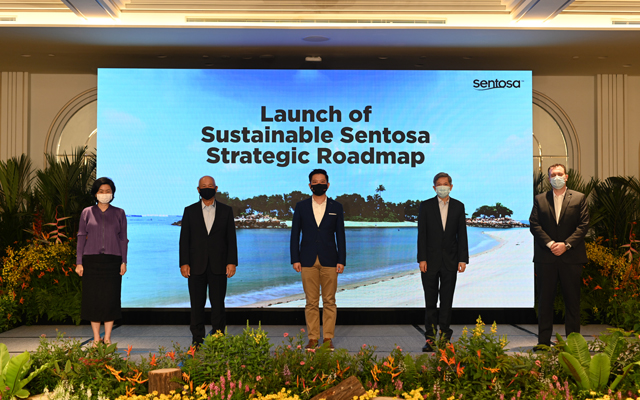
Sentosa Development Corporation (SDC) has released details of its Sustainable Sentosa strategic roadmap, following on from its March 2021 announcement of a 2030 carbon-neutral goal to support the wider Singapore Green Plan 2030.
Unveiled on September 17, the landmark roadmap, which builds on the island’s past sustainability efforts and unique value proposition, will see the Sentosa community first focusing on six key areas to achieve the island’s dual goals of achieving carbon neutrality by 2030 and becoming a globally recognised, certified sustainable tourism destination.
Thien Kwee Eng, CEO of SDC, said: “As a prominent island destination that is home to an ecosystem of leisure experiences and businesses, Sentosa is a microcosm of Singapore, and provides a unique environment to trial and implement innovative solutions that can advance Singapore’s sustainability journey.
“This is a journey that requires collective effort, and we are proud to be launching the Sustainable Sentosa strategic roadmap with the strong support from our island businesses and partners. Through these efforts, we will strengthen Sentosa’s position as a beloved getaway for Singaporeans, and as a sustainable tourism destination.”
Various sustainability-focused initiatives and experiences will be launched, creating an important ecosystem for solutions, education, and ideas in the nation’s sustainability journey.
Initiatives that will bring Sentosa towards the first goal of achieving carbon neutrality by 2030 include the establishment of the Sentosa Carbon Neutral Network, comprising 17 founding members, to lead various carbon neutrality projects with like-minded partners across public, private, and non-profit sectors; implementation of new infrastructure solutions for carbon mitigation, with a focus on studying solutions to harness renewable energy and making Sentosa a zero-waste precinct; and developing a 100 per cent green transportation infrastructure by 2025 as well as attaining Green Mark Platinum Super Low Energy certification for all new SDC-owned buildings.
Initiatives with the second goal in mind include developing a series of sustainability-themed tours to be progressively launched from December 2021, to allow guests to better understand the importance of sustainability through an immersion into the unique heritage, biodiversity and nature in Sentosa as well as neighbouring islands; launching a new gateway to the wider Southern Islands archipelago via a new ferry jetty at Sentosa Cove Village from 2Q2021; establishing guidelines by 2022 to encourage all Sentosa businesses to strengthen their sustainability practices through green initiatives; and benchmarking the island’s offerings against international standards, such as that of the Global Sustainable Tourism Council’s (GSTC).
Sentosa also targets to be certified by GSTC as a sustainable destination by its Golden Jubilee Year in 2022.
Penang Hill Biosphere Reserve earns UNESCO recognition

The International Coordinating Council (ICC) of UNESCO’s Man and the Biosphere Programme has formally inducted Malaysia’s Penang Hill Biosphere Reserve into the World Network of Biosphere Reserves.
With this designation, the Penang Hill Biosphere Reserve, which comprises 12,481 hectares of marine and terrestrial ecosystems in the north-western part of Penang Island, will be counted among a distinguished global network of 714 Biosphere Reserves across 129 countries.

Biosphere Reserves the world over are celebrated for their exceptional biodiversity and distinct social landscapes as well as for their potential to demonstrate innovative ways of living in harmony with nature.
“This designation is a recognition of the rich natural and cultural heritage of Penang Island and an opportunity to be part of the Man and the Biosphere programme which is a unique platform for international collaboration,“ The Habitat Penang Hill and The Habitat Foundation said in a press statement.
Under the leadership of the Penang Hill Corporation, with the contribution of many state and federal government agencies involved in the preparation and eventual submission of the nomination dossier, the Penang Hill Biosphere Reserve now features not only the timeless forests of Penang Hill but also encompasses the state’s forest reserves, the historic Penang Botanical Gardens, Penang National Park, and coastal and marine ecosystems in an unbroken link from the hill to the sea.
Malaysian Inbound Tourism Association (MITA) president, Uzaidi Udanis, said: “With this latest international recognition, Penang will have a new world-class attraction which should be promoted for tourists. MITA will organise a recce for its members to see and experience the places for themselves.”
Adam Kamal, head of contracting & domestic market at Ice Holidays, told TTG Asia that the recognition would raise curiosity about the destination and boost domestic and international visitor numbers once interstate and Malaysian borders reopen.
“The internationally recognised accolade makes it easier for us to promote Penang,” Kamal commented.
Vouch expands into Hong Kong
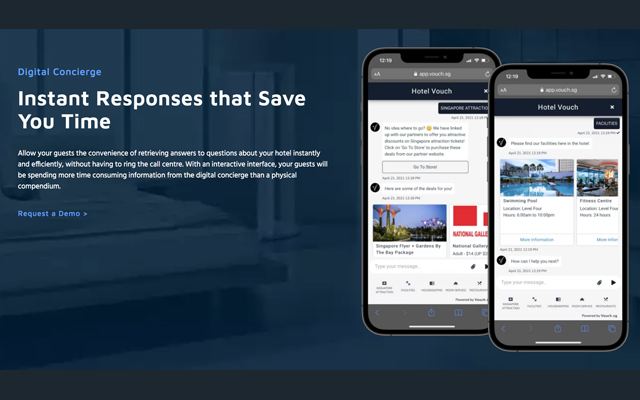
Singapore-based Vouch has forayed into Hong Kong, in hopes of using its digital solutions to help hotels in the city overcome manpower challenges, better manage fluctuating occupancy, and improve guest experience.
Established in 2016, Vouch offers an app-less guest experience platform that allows hotel guests to check-in, order room service, make facilities bookings, request items, and get immediate answers to their queries 24/7 – all from the convenience of their mobile phones.
Founder Joseph Ling noted that hoteliers everywhere are under pressure throughout the pandemic to function with a leaner team. Under such conditions, Ling believes that hoteliers can benefit from simple-to-use platforms that help to streamline operations and dial up and down operations easily while granting guests the freedom to manage their own stay experience.
“Hotels have been using apps for a long time but guests don’t want to have to download a new app and create an account (each time they stay in a different hotel). Vouch enables guests to scan QR codes to access (needed services),” Ling explained.
The company has offices in Indonesia and South Korea, and counts Fraser Suites Perth, Amara Sanctuary Resort Sentosa and Pan Pacific Singapore among its customers.
With its new Hong Kong office, Vouch has been able to bring its solutions to Grand Hyatt Hong Kong in August and will soon add two Hyatt Regency properties to its client portfolio.
According to Ling, about 90 per cent of all facility bookings made at Grand Hyatt Hong Kong last month came through the Vouch system, enabling substantial manpower savings for the hotel.
“Covid-19 has been a leveller and driver of many changes in the hospitality industry. If businesses were to resist change, they would be forced out of the market,” Ling said, adding that Hong Kong appears to be moving faster than other regions when it comes to adapting to change over the last two years.
He urged hotels to adjust their operations now to meet the needs of travellers post-pandemic. “When travel resumes, travellers want to be safe and will opt for hotels that can afford greater safety and fewer human contact. Hong Kong hotels have until early next year (to change) before the China travel market opens up again,” he said.
Vouch is also in talks with a number of Macau hotels, and aims to have its solutions adopted by one or two hotels by the end of 2021.
Trip.com grants discounts to vaccinated Filipinos
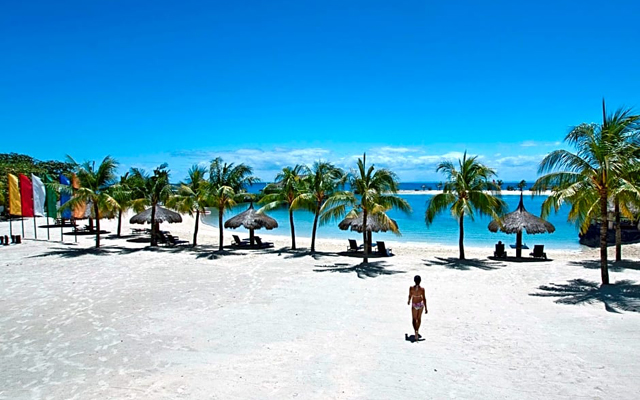
In support of the Philippine national vaccination programme, Trip.com is offering full vaccinated residents up to 30 per cent off hotel bookings from now until December 31, 2021.
Deals from the Vaccinated Discount Campaign will feature deals from more than 100 accommodation partners, such as Aloha Boracay Hotel, Boracay Beach Club and Bluewater Maribago Beach Resort. Hotels are supporting the initiative with exclusive perks to promote safe travel within the country.
To enjoy the discounts, individuals must provide proof of vaccination before or upon arrival at the accommodation of choice.
As part of Trip.com’s continuous commitment to its partners, participating merchants will also be able to garner greater visibility through dedicated marketing efforts by the online travel specialist.
Jerome Dela Cruz, general manager of Trip.com (Philippines), said: “It is critical for us to play our part in bolstering the effort towards immunisation in the country as we continue the fight against Covid-19.
“We are also working towards a recovery of the travel sector, and this campaign seeks to be an example of the actions we can take to initiate timely opportunities for safe travel resumption. By aggregating promotions from our partners, we also hope to boost the business recovery of our partners who have been affected by the pandemic.”
Margie Munsayac, vice president, sales and marketing of Bluewater Resorts, believes that travel and tourism recovery is tied to vaccination success.
“We are delighted to be one of the partners of Trip.com’s Vaccinated Discount Campaign. This is another example of how proactive Trip.com has been in implementing timely initiatives and programmes, and we look forward to working with them to encourage our citizens to be vaccinated and enjoy the discounts and added values on their staycation packages in the coming months,” remarked Munsayac.
Club Med eyes aggressive expansion in APAC

All-inclusive resort operator Club Med is gearing up for expansion in the Asia-Pacific region over the next five years, targeting greenfield opportunities in Thailand, Vietnam, Indonesia and the Philippines.
Already, the brand has announced its first South-east Asia greenfield beach resort in Borneo, Kota Kinabalu, in collaboration with owners Golden Sands Beach Resort City. Slated to open in 2023, the 16ha Club Med Borneo Kota Kinabalu resort will be one of the brand’s most upscale resorts in the region. In addition, with growing accessibility of the resort just six hours from key Asian markets, Club Med said that it is “confident to capture the vast untapped potential of this pristine location”.

In the wake of the pandemic, Club Med has successfully reopened its resorts in China and the Maldives, followed by Northern America, the Caribbean and Europe.
Domestic travel to Club Med resorts in China soared by more than 2.5 times in 2021 and is already on track to surpass pre-pandemic demand. Meanwhile, Club Med’s resort in Malaysia saw an increase in business volume of over 60 per cent in the weeks following the relaxation of interstate restrictions, before the recent movement control order.
Beyond the success of its current resorts, Club Med is also readying itself with an aggressive expansion pipeline.
“We entered the pandemic with a strong economic position and are well-placed for a swift, decisive and impactful rebound. Club Med has a demonstrated track record spanning more than 70 years as the pioneer of new destinations and untouched locations, with Club Med Seychelles and Club Med Lijiang as successful case studies of our recent greenfield projects around the globe, as well as the upcoming Club Med Borneo Kota Kinabalu,” said Jean-Charles Fortoul, CEO, APAC Resorts, Club Med.
“Following these successes, we have also identified Thailand, Vietnam and Indonesia as markets that are well-positioned to leverage this rebound and we are on the lookout for investors and partners to tap into the potential of these destinations.”
Etihad Airways inks deal with Amadeus for digitalisation

Etihad Airways, the national airline of the UAE, is set to embark on a major digital transformation following the signing of a multi-year deal with Amadeus.
As part of the deal, Etihad Airways will implement the full Amadeus Altéa PSS suite, including web booking, revenue management and merchandising, data management and passenger servicing solutions. These technology products will be customised for Etihad over the coming years and will improve the experience of guests, staff, travel agents, Etihad Guest members, and corporate customers.
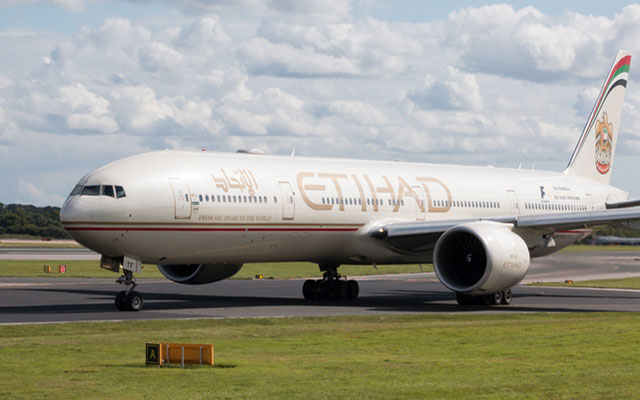
Etihad’s guests will see new web and mobile channels powered by Amadeus Digital Experience suite, offering the simplest user experience possible to purchase flight tickets and manage bookings. Advanced retailing capabilities will be developed collaboratively using machine learning to provide guests with bespoke offerings and personalise their travel experience.
To modernise retailing capabilities across sales channels, Etihad has also signed for Amadeus Altéa NDC (New Distribution Capability) and will work with Amadeus to distribute personalised travel offers to guests. Etihad will make its full range of NDC offers available to Amadeus travel sellers, allowing agents to see the features of Etihad’s product more transparently and the ancillaries that can be bought.
The airline will, in addition, implement the Altéa Departure Control Customer Management component of the suite, providing guests with real-time, personalised alerts of offers, services, and flight changes. The system will offer a higher level of service customisation and provide guests with a faster and simpler check-in process, which is more important than ever as travel rebuilds.







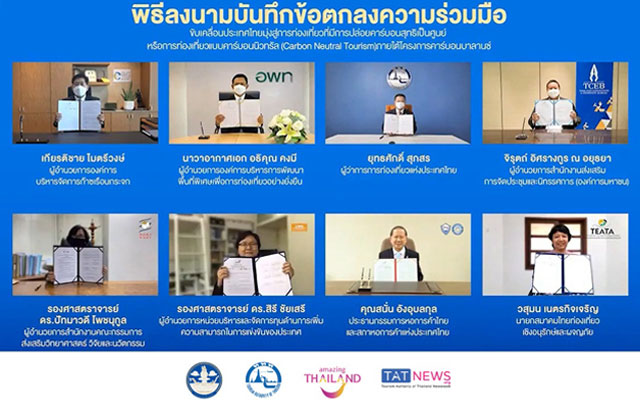
The Tourism Authority of Thailand (TAT) has signed a MoU with seven partner organisations to drive the tourism industry’s efforts in achieving net-zero emissions.
The partner organisations hail from three ministries – Ministry of Tourism and Sports, Ministry of Natural Resources and Environment, and Ministry of Higher Education, Science, Research and Innovation – as well as the private sector.
The virtual signing ceremony was presided over by minister of tourism and sports Phiphat Ratchakitprakarn; minister of natural resources and environment Warawut Silpa-archa; and Anek Laothamatas, minister of higher education, science, research and innovation.
TAT governor Yuthasak Supasorn said: “The MoU signals an important step forward in Thailand’s efforts to reduce the impacts of climate change, both because of the intended goals and the increased cooperation among the government and private sectors (which) the agreement calls for.”
Under the MoU, the eight partner organisations will work together to jointly develop knowledge related to net-zero carbon tourism suitable for the context of the Thai tourism business sector.
They will also support the development of net-zero carbon tourism management, as well as drive tourism routes, activities, services, and innovations managed with this concept in the Thai tourism and business events industry.
Additionally, they will promote a net-zero carbon approach within the demand-supply of the Thai tourism and business events industry to manage and access design guidelines and facilitate carbon offsets, as well as raise public awareness about climate change.
Along with TAT, the seven other partner organisations are the Designated Areas for Sustainable Tourism Administration, Thailand Convention and Exhibition Bureau, Thailand Science Research and Innovation, Thai Chamber of Commerce and Board of Trade of Thailand, Thai Ecotourism and Adventure Travel Association, Program Management Unit for Competitiveness, and Thailand Greenhouse Gas Management Organization.