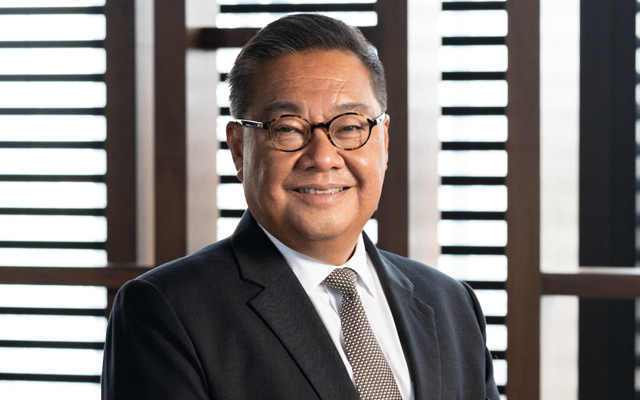
 In our recent TTG Conversations: Five Questions video interview, you spoke of opportunities in crisis – particularly the opportunity to transform Far East Hospitality (FEH) into a world-class manager of lifestyle brands. But before you saw that opportunity to transform, what were the immediate actions you had to take to protect your ship and crew?
Well, Karen, this is my 16th crisis. When you go through different crises and you reflect, you will find that there are patterns of things that you should do. So, when Covid-19 hit, I intuitively knew what must be done.
The first thing we did was to bifurcate our response teams into two different task forces. One worked on operations – what must be done to take care of business today. That entailed navigating through all the government protocols required for us at that time, keeping our people safe, knowing how much cash we have and how long we could last, and deciding if we should institute pay cuts and shorten work weeks, things like that.
The other task force worked on a transformation plan. I knew that this is a great opportunity for us to transform. Transformation (of FEH) has been brewing in my mind for a long time but we could not (do it) because we were so busy running at marvelous occupancies and delivering very high GOPs. We were trapped in a problem of success.
We are a local mid-tier hotel operator that delivers very, very strong margins through a very evolved, centralised cost containment strategy. But as successful as we are, we cannot grow very much in this arena. We have to reinvent ourselves to do something else. That reinvention is to be a world-class manager of lifestyle brands.
What was the easiest and hardest part about this transformation?
Work comes in three stages. The first stage requires a lot anticipation and to measure ever so often if the decisions are a right call. The second stage requires a plan.
The third stage requires selling that plan. Now, this is a very difficult process in an organisation that is complex and is publicly listed. Selling the plan to your bosses is actually the easiest step because they are interested in the outcome. If you are fairly certain (of a positive outcome), they will (accept it). It is also easy to sell to your subordinates, as they often only needed to know what you would like them to do to fulfill your plan. The most difficult part is to sell to your peers in the industry and to solicit support.
And after that, the final secret ingredient on how to move things forward, is to have the courage to execute.
I suppose I have waited for an opportunity like this. At that beginning, I thought this pandemic would probably last nine months, and we would get that much time for the transformation. But as the pandemic evolved, it became clear that this is very different from SARS. SARS was short, it was not global, there was no misinformation on social media, and there was no political overtones.
So, now, we may even have two years to fulfill our transformation plan.
You have been vocal about your expectations of how post-pandemic travel would look, and your outlook is very conservative and cautious.
Now, my (expectations about) post-pandemic travel is going to be very unpopular. A lot of people say that they cannot wait to travel again. I don’t believe that at all. People only say that because they think travel is going to be like what it was before.
But now, to travel, you have to take (multiple swab) tests, you have to go and apply (for exit and/or entry permits), and then you have to be quarantined according to the law.
So, what would make travel so compelling that it would drive people forward? Lives and livelihoods will be the main travel motivators in the beginning, although at some point regulators will make travel a lot easier. Still, travel will be more cumbersome than pre-Covid, just like how travel is more inconvenient compared to pre-9/11.
This pandemic has questioned the viability of the Singapore tourism model. (There is a lot of talk about) pivoting to quality tourism. I think pivot means a lot more than what most people think it means. We have to create experiences that are so unique to Singapore that people will come here just for that.
We need to ask why does New York thrive, why does Ginza thrive? They thrive because they have so much creative energy. So, that means, before Singapore can go into quality tourism, we have to think about bringing in new creative energy. There must be a seismic shift and not a rhetoric one. We have been saying that we want to go into quality tourism for the longest time, and yet we do not want to give up on volume. If we expect high occupancy and things to go back to what it was prior to 2019, then I think we are headed in the wrong direction.
I imagine Singapore has to become a specialist sushi restaurant with only 40 seats. Therefore, the person who sits on my counter has to get a check that is at least S$100.
For this to happen, there must be vision and direction. Perhaps, by way of policies that determine how land is utilised. Perhaps, stop allowing many, many hotels with very, very small rooms to be built to cater to developing markets.
Back to the analogy of the sushi restaurant: the sushi master can command S$100 per lunch because he has real skills. So, for Singapore to thrive as a high quality tourist destination, we require real skills that are not taught in tourism schools. There must be an underpinning of Singapore’s creative industries. I’m talking about musicians, filmmakers, videographers, dancers, artists, copywriters – you need people who are alive in the arts and are not just automatons.
This transformation to quality tourism is also necessary because now, tourism is creating jobs for foreigners and not for the Singapore core. The more we do, the more foreigners we have to hire.
It’s time for a job redesign because we know that foreign labour is going to be even harder to come by. So, how can we completely redesigned a hotel and create jobs that Singaporeans would want?
Singapore’s increasingly educated population and improving standards of living have presented a hiring challenge for the service industry. Let’s say Singapore manages to establish a strong creative industry to support the ultimate tourism dream, and is able to attract these high-yield customers. Will that improve the population’s perspective of a service profession?
In the 70s, the person who works in the restaurant cannot afford to buy that bottle of wine he serves his guest. What he eats is totally different from what the guest eats. But he serves his guest with a lot of reverence, and he’s very happy and very proud of his job because he is able to rub shoulders with important people.
Now, you fast forward to today and the situation is reversed. Singaporeans may not feel the same way.
However, my answer to your question is yes because we are not a homogeneous people. We don’t all want to become lawyers, doctors or accountants. There are people who enjoy serving.
A long time ago, British Airways had a beautiful advertisement showing a group of children playing musical chairs. There was one child who put his hands on more than one chair, trying to be as safe as possible. He grew up to be an accountant. Another child stood around and ordered other children to move faster and to go here and there. He became a managing director. There was another child who just helped the smaller kids along. She became a British Airways crew.
Whatever the (professional ambitions are), you must be able to pay sufficiently for the person to enjoy a particular basic lifestyle.
Let’s go back to your point about having to redesign a hotel in order to create jobs that Singaporeans would be proud of. How are you doing that?
Some hotels take a parasitic model. They do nothing but provide the basics and wait for tourists to come. Such hotels run with one Singapore manager and a plethora of low-wage workers. A hotel must be a destination (and it can only be so if it has) a holistic offering that delivers a totally different experience.
With the opening of The Clan Hotel Singapore in March, we created the quintessential Singapore success story that is not borrowed from our colonial past. When people talk about what is iconic in Singapore, they generally refer to the colonial era. But that wasn’t a good time for Singaporeans, you know, because we were servants.
What makes a better Singapore story is the time we came here with nothing on our backs, and with only our clansmen to help us.
The concept of clansmen is marvelous in that you take a stranger in simply because he’s from your same village. You clothe him, feed him, give him a place to sleep, and provide him a job. You help him save his money, bring his wife across, and build schools for his children. Our society was built on the back of clansmen. This concept makes a powerful Singapore story, because all clans – the Chinese, the Indians and the Malays – had to unite and work together.
The Clan is a modern hotel with a nostalgic story to tell, while bringing in Singapore’s best hawker fares through room service as well as highlights around the precinct through curated tours.
We did the same over at The Barracks Hotel Sentosa. It was a hotel for the heritage aficionado, telling the story of what the building was throughout history – from being a military barracks to a hotel school and now a hotel. We brought in different artefacts to create a little hideaway.
Taking an experience creation approach to hotels allowed us to combine service with theatre. People stay with us to be part of a programme.
We experimented with this concept through the Singapore staycation product. There were many decisions we made, and one of them was to put our rates at an appropriate level while delivering quality. I refused to discount (because I didn’t want) the volume all at the same time and all on the weekend. If that had happened, we would not be able to fulfill (our experience promise). People would be jammed into our lobby with no social distancing; they would be complaining and we would suffer from a bad reputation. Our staff would feel beaten up. Plus, we wouldn’t get the revenue that we hoped for.
By orchestrating an experience that is different, new and interesting, we can charge a good price and are able to spread (guests) out. Our staff feel special because they are recognised by the customer, and the customer is happy because they find the experience really quite exceptional. Then, we have our name in lights.
In taking this strategy, The Barracks is the number one-rated Sentosa Island hotel on TripAdvisor for the longest time, and it’s been over a year now; The Clan is the number one-rated Singapore City hotel on TripAdvisor since opening in March. For a local mid-tier hotel operator, that is really something.






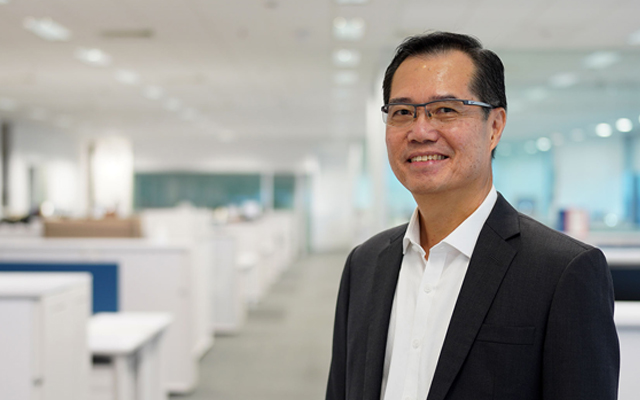
 Goh is a 34-year veteran of the airline industry. He has held various senior management roles at Singapore Airlines in Singapore and overseas, at Virgin Atlantic Airways in London, and has extensive experience working throughout the Asia-Pacific region.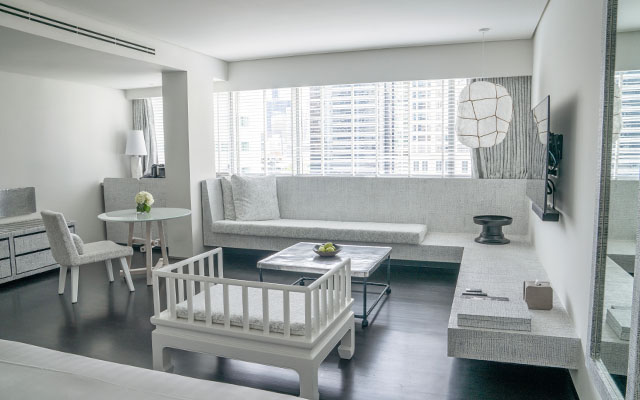






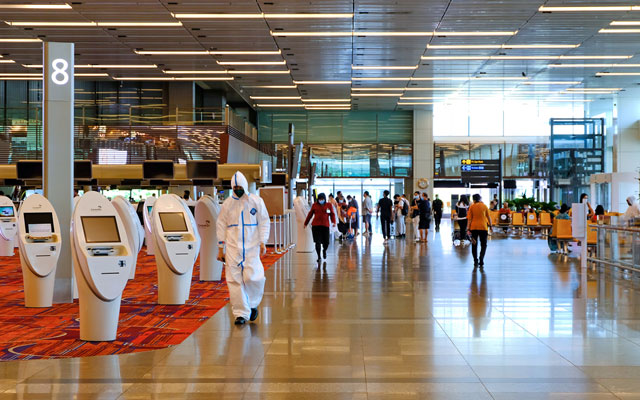
Singapore Changi has become the first airport in the Asia-Pacific region to successfully complete the Airport Health Measures Audit Program, Airports Council International (ACI) World said in a press release.
The Airport Health Measures Audit Program – developed in partnership with Bureau Veritas – supports airports in their post-pandemic recovery by addressing their specific risks and reassuring passengers through an on-site audit of their health measures.
By successfully completing the audit, Changi Airport has demonstrated compliance with a harmonised set of measures, aligned with the recommendations of national and international authorities, and can now display the associated SafeGuard label.
The SafeGuard label certifies that teams have been effectively trained on hygiene best practices and assures that protective measures are properly set up and implemented in a transparent way.
Changi also successfully renewed its accreditation under ACI World’s Airport Health Accreditation Program, demonstrating that the health measures in place at the airport are aligned with industry best practices.
“By being the first airport in the Asia-Pacific region to successfully complete the Airport Health Measures Audit Program, Changi Airport has shown they are committed to ensuring the health and safety of passengers, staff and the general public,” ACI World director general Luis Felipe de Oliveira said.
“This sets an example for the industry, showing how we can work together to support recovery and bring back the sustainable social and economic benefits of aviation we deliver to the communities we serve.
“Partnerships, like the one we have forged with Bureau Veritas, has benefitted Changi Airport and will support the wider aviation industry and help to push it forward during the recovery process and beyond.”