

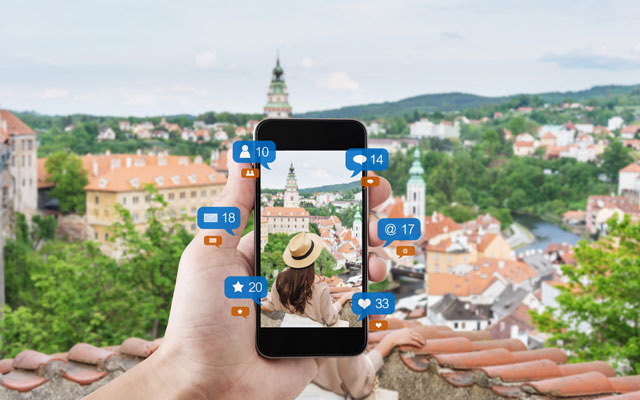
Millennials to lead the next wave of food tourism
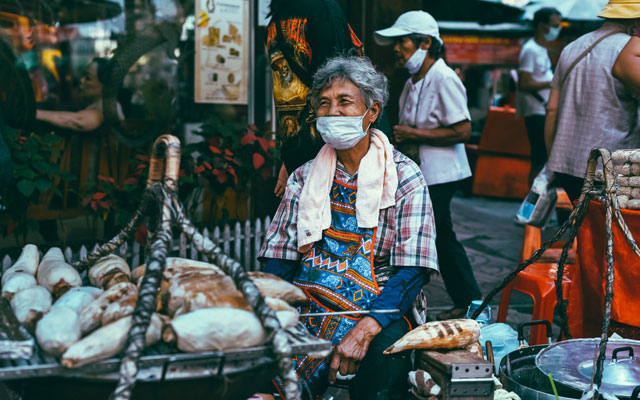
Food will play a bigger role in travel as millennials quest for extraordinary culinary experiences and rediscover new eating trends in their own countries, according to Jean-Michel Petit, co-founder and CEO of social dining platform Eatwith.
Extraordinary food experiences are about preserving the social aspects of eating and seeing food as a communal experience so that the original social network is the table, not Facebook or Instagram, he explained at the recent ITB Asia.
Petit believes in the future of smaller and local food experiences; authentic sources of food ingredients from tradition, nature and local sources; close interaction also with food producers and “not the anonymous way” of experiencing food; and personalisation as people want experiences that match their expectations and aspirations.
Saying that “food is always a great travel motivator,” Petit cited recent polls showing that 81 per cent of the people ranked food and restaurant experiences as first motivation for travel, just above family and friends at 79 per cent. Moreover, 25 per cent of global tourism spending is one way or another related to food.
As tour operators and hotels look “to create activities through and around gastronomy” to meet millennials’ food expectations during vacation, Petit categorised gastronomy tourists as those who prefer to eat like a local; those visiting restaurants and private places serving innovative food; those whose main motivation in modern food tourism is for socialisation and real interaction; and those moving away from beaten tracks to discover new gastronomic paths on their own.
Time to recreate Goa tourism model at other beach destinations: HVS

Goa’s tourism growth story is gradually getting back on track as it has become the go-to holiday destination for domestic tourists since the state reopened post the second wave, according to a report by hotel consulting firm HVS.
Due to the limits on overseas travel, several outbound Indians are also choosing to vacation in Goa, added the report. As a result, occupancy has been steadily improving month after month, with September 2021 occupancy approaching pre-pandemic levels for the month and average rates surpassing pre-pandemic levels.

With the government taking steps to welcome foreign tourists back, it is also expected that Goa, which is known as one of India’s top beach and nightlife destinations, may soon see a surge in demand from international tourists, allowing it to recover faster than most leisure destinations.
Moreover, the government intends to prioritise responsible and high-quality tourism over volume going forward, with plans in place to rebrand and remarket Goa as a diverse tourism destination.
However, even before the pandemic, Goa, which attracted approximately eight million tourists in 2019, was suffering from the negative impacts of overtourism, noted the study authors Mandeep S Lamba and Dipti Mohan.
“These challenges, particularly the rate of infrastructure development, are unlikely to be resolved very soon, giving India the opportunity to develop other untouched and unexplored beach destinations for tourists along its 7,500km coastline,” they said.
Already, the government is taking steps to transform the Andaman & Nicobar Islands, as well as Lakshadweep, into world-class tourism destinations comparable to the Maldives, Bali, and Mauritius, the authors noted.
“However, other upcoming tourist locations such as Bekal, Gokarna, Daman & Diu, Pondicherry, and Odisha, to mention a few, have not yet been able to draw their fair number of tourists,” they said.
“These destinations should reassess their positioning in order to climb up the hierarchy by emulating some of Goa’s best strategies while avoiding the state’s mistakes.”
The authors advised that authorities should evaluate global best practices and tourism models, and implement effective destination management strategies, so as to achieve a balance between tourism and sustainability.
They said: “Improving last-mile connectivity to these areas, building adequate infrastructure amenities, including quality hotel supply, and executing new marketing strategies, can help attract tourists looking for an alternative to Goa, while also helping reduce overtourism in Goa in the long run.”
Sheraton taps Chinese star Myolie Wu in new campaign celebrating community

Sheraton Hotels & Resorts has roped in popular Chinese actress-singer Myolie Wu to star in a video marking the launch of its new brand campaign, Celebrate the Community, which celebrates the communal spirit and invites guests to reconnect and share experiences.
The video, filmed at the newly opened Sheraton Mianyang in China, captures the moments of connection and shared experiences with like-minded travellers and guests.
Jennie Toh, vice president, brand marketing and brand management, Asia Pacific, Marriott International, said: “The pandemic lockdowns have created an increased awareness and appreciation of the importance of social interactions in people’s lives. With the Celebrate the Community campaign, we hope to remind people of the power of collective and that we are better together.”
With 139 hotels and resorts in Asia-Pacific, Sheraton invites guests to reconnect with their community or explore new ones in local destinations through a collection of meaningful experiences at participating Sheraton hotels across the region.
At Sheraton Mianyang, for example, guests can create their own coffee blends and enjoy signature coffees such as Affogato and Espresso Martini at the on-site coffee bar and market &More by Sheraton, thanks to a tie-up between the hotel and local artisan coffee roaster Qian Xun.
Over in the Maldives, Sheraton Maldives Full Moon Resort & Spa has teamed up with coral propagation organisation Reefscapers to allow guests to participate in a coral fragment-planting activity in an effort to promote reef habitats and generate new coral. The activity, which is led by experts, provides an alternative business to the 250 inhabitants whose sole previous source of income was fishing.
At Sheraton Hong Kong Tung Chung, guests can enjoy a hands-on experience in organic farming activities and interact with local farmers to learn more about sustainable practices.
Indonesia’s Lombok to get a Gran Meliá hotel

Spain-based Meliá Hotels International will be opening a new luxury resort in Indonesia on the paradise island of Lombok come 2024.
Gran Meliá Lombok will mark the first Gran Meliá property in Lombok and its second in Indonesia, after Gran Meliá Jakarta.
Situated at the Torok Bay in the south of the island, the hotel will boast 22 luxury beachside villas and another 105 villas on the mountainside, all with private infinity pools and ocean views.
On-site facilities will include a spa, fitness centre, kids’ club, and a lounge with panoramic ocean views. The hotel will also feature F&B options that combine local ingredients and techniques to offer guests authentic Indonesian dining experiences.
Owned by Invest Islands, a property development company based in Lombok, Gran Meliá Lombok will become Meliá Hotels International’s 12th hotel in Indonesia, eight of them currently in operation and another four (including Gran Meliá Lombok) pending opening.
Accor to reflag 8 on Claymore Serviced Residences in Singapore
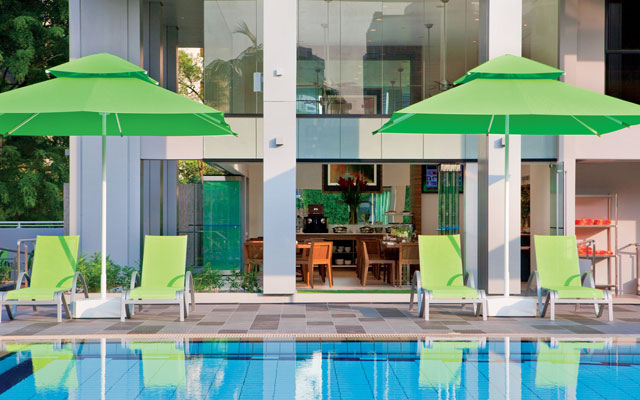
Accor is set to operate the group’s first serviced apartment property in Singapore with the signing of 8 on Claymore Serviced Residences located in the city-state’s famous Orchard Road area.
Scheduled to commence operations around the end of this year, the property will operate under the name of 8 on Claymore Singapore managed by Accor, and will undergo a soft refurbishment for all rooms and public areas by mid-2022.
The 85-room property will feature a range of accommodation, from executive studios to two- and three-bedroom apartments, each with living areas, fully equipped kitchens, in-room laundry facilities and bedrooms. Guests will have access to the Club Lounge, which also includes a pool and a 24-hour gym.
Accor’s signing of this conversion project following its rebranding of another two properties in Singapore – Fairmont Singapore and Swissôtel the Stamford. This property will join the group’s network of 28 properties in Singapore including the Raffles, Fairmont, Sofitel, Swissôtel, Novotel, Mercure and ibis brands.
Singapore eases border measures for some countries; expands VTL scheme to Finland and Sweden
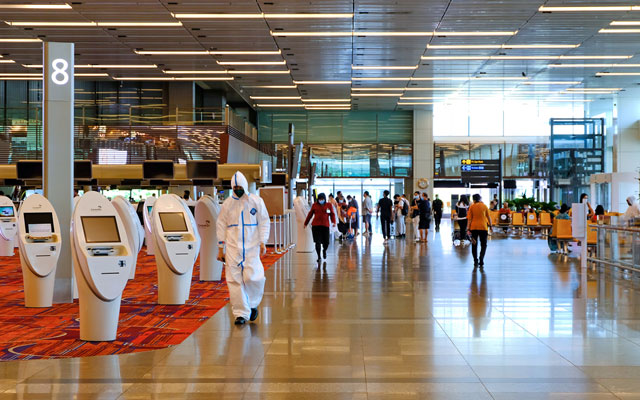
Singapore will relax border restrictions for more travellers including those arriving from Indonesia, Thailand, Vietnam and the Philippines, from November 11.
The government announced on Monday (November 8) that 23 countries previously deemed by Singapore to be of the highest risk of Covid-19 infections, including Laos and India, will have more border restrictions relaxed, reported The Straits Times.
Travellers from these countries will be allowed to present a negative antigen rapid test (ART) result taken within two days prior to departure for Singapore – an alternative to the polymerase chain reaction (PCR) tests currently required, said the report.
Travellers from these countries will be allowed to serve a 10-day stay-home notice (SHN) at home or at a hotel of their choice, instead of at an SHN dedicated facility like they are currently required to do so.
In addition, Singapore has added three more countries – Malaysia, Sweden and Finland – to its vaccinated travel lane (VTL) scheme. Along with the VTL expansion, the daily quota for VTL arrivals will be increased to 6,000 travellers from November 29, up from the 4,000 currently.
Travellers under the VTLs need not be subject to SHN. Instead, they will be required to produce a negative pre-departure test taken within two days prior to departure and undergo an on-arrival PCR test.
Singapore, Malaysia to start vaccinated travel lane from November 29

Singapore and Malaysia have agreed to launch a vaccinated travel lane (VTL) between Changi Airport and Kuala Lumpur International Airport from November 29.
This was announced by Singapore prime minister Lee Hsien Loong and his Malaysian counterpart Ismail Sabri Yaakob in a joint statement on Monday (November 8).

The reopening covers only air travel, and does not include land travel via the Causeway or Second Link.
“The prime ministers also look forward to restoring travel across the land links between both countries in the near future,” said the statement.
In a Facebook post, Lee wrote: “Singapore and Malaysia have made good progress vaccinating our populations and managing the pandemic. So we agreed that it is timely to progressively resume cross-border travel between both countries. This will help revive our economies, restore people-to-people ties, and strengthen our bilateral partnership.”
Under the VTL, fully vaccinated travellers will be able to travel between Singapore and Malaysia without having to serve quarantine or stay-home notice, and will only need to take a Covid-19 PCR test prior to departure and upon arrival.
Singapore had earlier announced VTLs with 13 other countries, including Australia, Switzerland, Britain and the US.
Hilton predicts travel trends for 2022
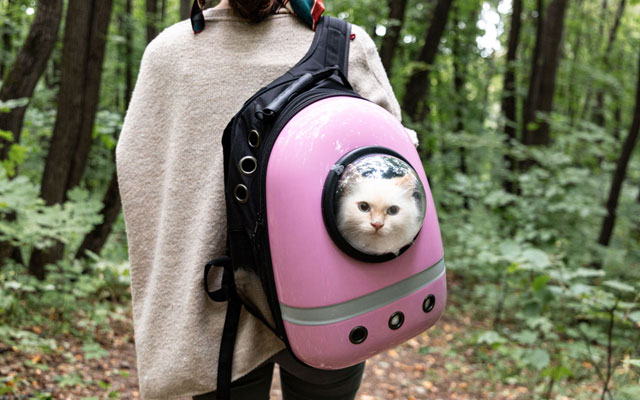
Post-pandemic travellers are predicted to embrace pet travel, reunion trips, contactless experiences, culinary adventures and sustainable travel, according to Hilton’s new global trends report which examined how travellers’ needs and interests have shifted in the wake of the pandemic.
The 2022 Traveler: Emerging Trends and the Redefined Traveler, a Report from Hilton showcases how the hotel group is evolving alongside the changing traveller, in areas such as fitness, spa, F&B, design, amenities and loyalty programmes.
The report looks at how app workouts and new fitness routines have changed people’s approach to where, when and how they exercise on-the-road; how the increased focus on wellness is evolving the spa and hotel experience; and how the home baking trend is translating into more demand for culinary adventures.
It also examines how 18 months in lockdown is driving a renewed passion for a healthy planet, from sustainable food sourcing to waste reduction; how DIY improvements, plant-crazed hobbies and working from patios is changing people’s perspective of hotel design; how the rise in pet ownership during the pandemic is leading to increased interest in pet travel and the development of hotel pet amenities, perks and more; as well as how the rise of loyalty programmes – across all sectors – is leading to better personalisation and benefits to customers.
As well, Hilton’s report highlights travel and behavioural trends among post-pandemic travellers, including a greater focus on convenience in their travels, like contactless check-in and check-out and digital keys. With a reimagined workplace and new routines and habits in place, travellers will also be looking to integrate wellness experiences into their travel plans.
People are anticipated to pack their passions, driving demand for new trends in fitness, culinary options and unique travel experiences. There is also a prioritisation of reunion and reconnection travel in 2022, with the pandemic having separated families and friends.
Beyond their inner circles, travellers are also expected to care more about sustainability and community efforts – and are looking to remain loyal to brands and companies that align with their values.
Read the full report here.
Cooking up change
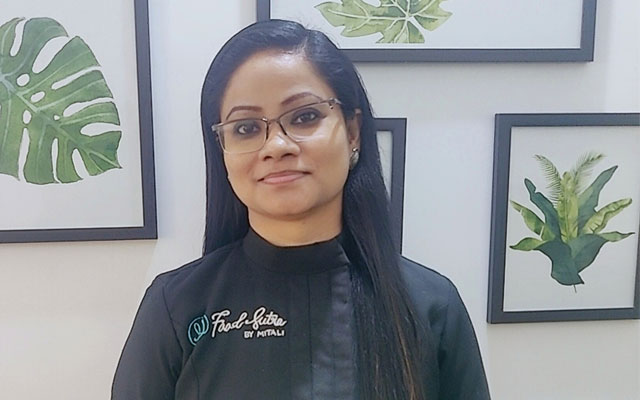
It was while training as a resource person for the World Wildlife Fund in 2017 that Mitali G Dutta awakened to the potential of culinary and community-based tourism.
That led the Guwahati-based entrepreneur to set up FSM Food Trails, a food tour agency that runs culinary tours with training and dining concept in the national parks of Kaziranga and Manas, creating sustainable livelihoods for rural communities in Assam state while promoting North-east India’s rich food cultural histories.
During these tours, rural women share different traditional recipes of local cuisines with tourists and host them for a meal.
“These tours are not merely focused on tantalising only the taste buds of food tourists or preserving the food-based customs and traditions of the rural communities but more about bringing a social change in the livelihoods of the communities,” explained Dutta, who also runs culinary venture Food Sutra by Mitali, which provides online and offline baking workshops and Assamese cooking classes in urban areas.
“One such successful social change that we could bring was to the wives of the former poachers near Manas National Park, who are getting empowered through their household skill of cooking and have converted it into a culinary tourism enterprise.”
Dutta added that the biggest challenge in the initial stage was to change these locals’ mindsets to accept their business concept, as culinary tours are a novel product in the state of Assam.
But continuous capacity-building activities conducted over a few years eventually built up their trust in the company’s vision and instilled an entrepreneurial mindset in them to execute these culinary tours.
To prepare these locals for hosting such tours, Dutta trains them in capacity building, digital promotions and market linkages, as well as hospitality and code of conduct to equip them to handle all types of tourists. About 60 women have benefitted from her training to date.
While survival used to be a struggle for these locals, this sustainable culinary tourism business model has imbued them with a newfound financial independence, and has created positive ripple effects for the whole community, shared Dutta.
“The entire village reaps benefits in different ways, like in our tours, visitors are taken for handloom experiences, farm and fishing experiences, rice-beer making experiences and other allied rural tourism experiences which are generating revenue incomes for everyone,” she said.

Dutta was one of several women entrepreneurs from across India who were selected by the Ministry of Skill Development & Entrepreneurship, Government of India, for Women’s Day Recognition on March 8, 2021. Her concept of empowering rural communities in a sustainable fashion through culinary tourism has been lauded by celebrity chefs, renowned food bloggers and travel writers from India and abroad.
Since its inception in 2017, FSM Food Trails has hosted around 500 domestic and international tourists – with majority of the foreign guests hailing from European countries – during the peak seasons of October to March every year (due to heavy rainfall, the Manas and Kaziranga national parks remain closed from June to September for safety reasons).
These tours “religiously follow sustainable and responsible tourism principles”, said Dutta, adding that with the increasing adverse impacts of mass tourism, it is crucial for destinations like India to sharpen their focus on sustainability and community-based tourism.






UNWTO and Instagram have joined forces to produce a tourism recovery playbook to help destinations and businesses harness the power of digital and visual storytelling to reach new audiences and return to growth.
This first-ever partnership with Instagram forms part of UNWTO’s wider shift towards harnessing the power of digital innovation to drive the restart of tourism, especially local and sustainable tourism.
The recovery playbook provides insights into making the most of the platform, from producing reels to showcase destinations to using guides and other tools to illustrate how the sector is ready to welcome tourists back safely and responsibly. It also explores the best ways to encourage renewed local travel, while raising environmental awareness.
Alongside best practice and tips on effective tourism storytelling, the publication also features case studies of small businesses and destinations that have successfully used Instagram to connect with key audiences during the pandemic.
In his foreword to the tourism recovery playbook, UNWTO secretary-general Zurab Pololikashvili said: “As parts of the world begin cautiously opening up again, now is the time to be creative in showing why tourism matters – for individuals, for our communities and for our planet. UNWTO’s partnership with Instagram will show that safe, responsible travel is possible, and to illustrate how just one tourist can make a big difference.”
This collaboration with Instagram builds on UNWTO’s ongoing turn towards greater use of digital tools and visual storytelling to make clear the relevance and importance of tourism to economies, societies, and planet. The organisation has accelerated this shift in its efforts to scale up member support and enable them to better seize the advantages of digital communications platforms.