Joanna Flint joins Mandarin Oriental group as CCO
Mandarin Oriental Hotel Group has appointed Joanna Flint to the newly-created role of chief commercial officer.
In this new role, she will oversee the development and execution of the Group’s commercial strategy while also taking executive responsibility for all aspects of Mandarin Oriental’s customer experience.

These responsibilities were originally assigned to chief marketing officer, Jill Kluge, who will retire from Mandarin Oriental in September 2021.
Prior to joining Mandarin Oriental, Fint spent 12 years at Google in general management and sales leadership roles, most recently as managing director – global partner Business, with responsibility for industry go-to-market and commercialisation for Google’s media and technology partners in Asia Pacific.
Before Google, she was principal consultant at Ogilvy Asia Pacific. This followed a decade in the travel industry-leading global eCommerce, CRM and customer service transformation programmes for Singapore Airlines and British Airways.
FEH ploughs ahead with regional expansion
Far East Hospitality (FEH) will continue with its regional expansion plans, which includes two upcoming properties in Japan and Singapore, as well as a partnership with Artotel Group to boost its presence in Indonesia.
Slated for opening in June this year, Far East Village Hotel Yokohama will be FEH’s and the Village brand’s second property in Japan, following the opening of Far East Village Hotel Ariake last July.

The 277-key property will be managed by FEH under a hotel management agreement with Far East Organization. Situated in the heart of downtown Yokohama, the property targets business travellers. It is a five-minute drive to the CBD and a three-minute walk to Sakuragicho and Kannai stations.
On home ground, the hospitality group will also be expanding into the resort and spa category with the opening of Oasia Resort Sentosa in 2H2021.
The 191-key property will consist of Suites, Wellness Premier Rooms, and Deluxe Rooms, and will be the fourth property on Sentosa island managed and operated by FEH. Guests will be able to partake in wellness activities such as spa treatments, fitness routines, and mind-body practices; as well as connect with nature. Wellness journals, self-care checklists, and access to a collection of guided meditation audio will also be made available to guests during their stay.
In addition, FEH has entered into a partnership with Indonesia’s hospitality and lifestyle company Artotel Group to collaborate across operations, branding, and training, as well as support business growth across markets.
As part of the agreement, both FEH and Artotel Group will be represented as an “Affiliate Brand” on the respective parties’ distribution channels and ecosystem. FEH will also work with Artotel Group to enhance its presence in Indonesia and gain meaningful market share. Both parties will also conduct training exchanges to share industry best practices and increase internal knowledge and expertise across markets.
Incheon courts Chinese visitors with Tencent Cloud deal
Incheon Tourism Organization (ITO) in South Korea has struck a new partnership with Tencent Cloud to build a smart tourism solution to boost post-pandemic recovery.
The collaboration is a joint effort to help South Korea’s tourism businesses reach travellers from China which has emerged as the country’s second-largest source market, with more than six million inbound visitors in 2019, accounting for nearly 35 per cent of the total inbound visitor arrivals.

Through Tencent Cloud’s technologies, ITO will be able to better connect with inbound travellers from China to speed up the recovery of South Korea’s tourism industry. Tencent’s social solution, which includes travel and culture content recommendations, Weixin advertisements and Weixin Mini Programs, will aid the regional tourism board in reaching its target audience while deepening its understanding of Chinese tourists.
Tencent Cloud will provide ITO a one-stop smart tourism solution for travellers, leveraging the user base of Weixin and WeChat, as well as Tencent’s technology platform and digital marketing service capabilities.
The solution will allow visitors to bookmark hotels, check local weather forecast, discover shopping and tour guides, explore local restaurants and scenic attractions, download coupons, get directions and routes to landmark spots, as well as obtain tax refunds via a Weixin Mini Program before and after travelling.
Lee Gun Woo, vice president of ITO, said: “The growing number of Chinese tourists exploring South Korea, as seen in pre-pandemic statistics, demonstrates a need for the South Korean tourism industry to reach out to and further understand Chinese travellers’ preferences and habits. Looking ahead to the world’s recovery from the impact of Covid-19, we are now provided with the technology to better address and cater to the needs and requirements of visitors from China through our collaboration with Tencent Cloud.”
Accor strengthens Philippines presence
Accor will further grow its presence in the Philippines with the signing of a 182-room hotel in Cebu, slated to open in 2024.
Mercure Cebu Downtown will be situated in the historic downtown area of Cebu and will form an integral part of the Patria de Cebu masterplan which features an integrated shopping centre, offices and central plaza.

The hotel will offer a restaurant, an executive floor lounge, swimming pool, gym and a rooftop bar; in addition to events facilities including a ballroom, meeting rooms and business centre.
Mercure Cebu Downtown will join a pipeline of 18 hotels across the country, including the Sofitel Cebu City which was announced in February.
New GM joins Dorsett Gold Coast
Dorsett Hospitality International has appointed Michael Foster as the general manager for Dorsett Gold Coast – the group’s debut hotel in Australia, set to open in 4Q2021.

In his new role, Foster will be leading the direction for the hotel’s pre-opening, including the building of a dedicated team.
Foster has over 15 years of hospitality and management experience, including pre-opening, overall hotel operations, and sales and marketing. He was previously the general manager of Holiday Inn Express Brisbane Central and has held several senior roles for other hotels brand
Expedia tackles easy cancellations, insurance on-the-go with brand makeover
Hoping to shed its image as merely a travel bargain-hunting platform and restore duty of care to travellers, booking giant Expedia has announced a brand relaunch that services consumers through the entire travel journey.
With the goal of becoming the “ultimate travel companion”, the platform will play to the high demand for flexible bookings, travel insurance and product transparency. Through its desktop site and mobile app, it will now offer “easy ways” to make changes and cancellations to bookings, said Expedia senior vice president and general manager, Shiv Singh. Any alteration made to a traveller’s arrangements can be reflected in real time through a “living itinerary”.

Additionally, the platform will provide options for purchasing travel insurance, as well as dispense advice on-the-go about policy coverage and directions on how to submit documentation if needed.
The new Expedia will also display a transparent list of all amenities, benefits and features included in a booking.
Singh expressed: “There’s often a lot hidden (from) the end-traveller. As they’re choosing between two different airlines or several different hotels, it (can be) very hard for them to know what amenities are available, what features are included in the price, and what is an add-on.
“By enhancing our product experience in the app and on expedia.com, we make it much easier to compare so that you know exactly what you’re getting, and (that) you’re getting the most value from the dollars you’re spending on that trip.”
Throughout the purchasing journey, it will rely heavily on data analytics and artificial intelligence to provide guiding information and updates that will be more relevant to the individual consumer, particularly concerning pandemic-related advisories and quarantine rules. The website and app will receive visual makeovers as well.
The transformation comes on the back of the realisation – in the wake of the Covid-19 outbreak last year – that the industry has neglected its duty of care to travellers. Singh explained that in the 24 years since Expedia was established, travel and booking companies “started to focus more aggressively on transactions, deals, cheaper tickets and cheaper hotel rooms”.
“Instead of just ‘do it yourself’, (the mindset) became ‘book and go by yourself, you’re on your own’. The traveller, in a sense, was left alone on their trips,” he reflected.
At the onset of the pandemic in 2020, Expedia instituted free cancellations for customers who had made prior bookings on its app and website. It has since also introduced other features centred on safety concerns, such as search filters to identify airlines and hotels with health and hygiene measures in place.
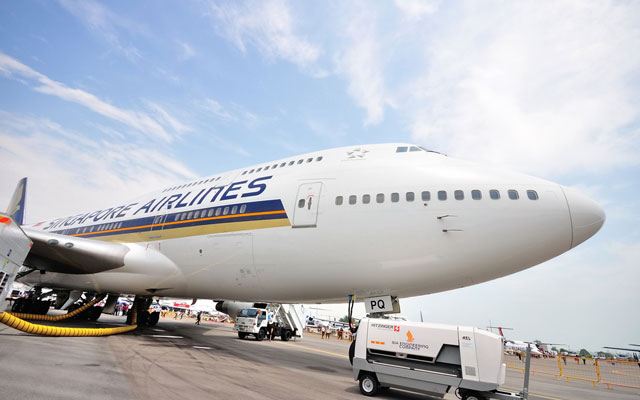
Runway to a smart, sustainable and safe restart
To the casual observer, the Asian aviation industry should be close to collapse after the unrelenting onslaught of bad news and misfortune in the past 13 months. While true on the face of it, the reality is that the industry’s deep-rooted resilience and determination have thus far allowed it to ride-out the Covid perfect storm, and start rebuilding for a restart when the pandemic recedes.
Air travel has been shuttered indefinitely since March 2020 and yet almost all airlines, though battered, bruised and visibly grounded, are still around. A good thing they are, as their endeavours are keeping global supply chains ticking and playing a crucial role in the carriage of stranded residents, essential supplies and most importantly, vaccines so vital to recovery from the pandemic.

Unimpeded growth had taken Asian airlines to the forefront of the industry, but the past year’s decimation of air travel spiralled into a massive cash-burn and liquidity crunch, the likes of which has not been experienced in the past 50 years. Yet, airline leaders have avoided the spectacle of liquidations by raising private capital, receiving government support, cutting costs to the bone and flying more to transport goods, for which demand has sky-rocketed. This strong survival instinct, coupled with the success of Asia-Pacific governments in keeping the virus and fatalities in check, is cause for hope that resumption of air travel, is not too far away.
With the health crisis still raging in many countries, it would clearly be wrong to assume that the worst is behind us. But there is a growing sense that Asia-Pacific, which was the first to confront the virus, could be the first on the runway to recovery, given its track record, for diffusing the worst of the virus.
Control of the spread of the virus, still seems to be the essential condition for the resumption of international air travel, whether it is achieved by strict controls as in much of Asia-Pacific or through mass vaccination elsewhere. In the long run, everyone who can be vaccinated must be, as a public health safety net. Governments will only allow travel between places where the pandemic is under control and if their residents are immunised. Even then, complexity remains, since there can still be reinfection and resurgence. So, other established measures like, testing, tracing, tracking and thwarting the spread with health-safety etiquette, have still to be employed, together with the speedier and equitable distribution of vaccines across the world.
Pent-up demand is evidenced every time borders are opened even fleetingly, as we saw with the (since shelved) Singapore-Hong Kong travel bubble. Foregone trips to meet family and business associates for over a year, will spur demand in the VFR (visiting friends and relatives) and corporate travel markets, as family reunions and face-to-face commerce, cannot be put off for too long.
Some green shoots of recovery on relatively safe travel corridors finally look set to materialise after several false starts. The Trans-Tasman bubble opened on April 19 without quarantine while bilateral talks are underway to launch travel bubbles from Singapore to Hong Kong as well as to Australia. But there is still many a slip between cup and lip. Travel bubbles can be closed at short notice, if virus cases rise. Airlines must be optimistic and readying for a gradual restart by devoting resources to smart technology solutions as well as sharpening their commitment to safety and decarbonisation.
For years, the industry has been searching for digital solutions to address disparate and divergent travel requirements of different governments. The task is now urgent with the requirement for health status certification for air travel. It is also timely as an industry, in keeping with the evolving values of travel consumers, to renew its wows to safety and the environment. Smart solutions, safety and sustainability are perennial concerns for the industry that have become preoccupations as the pandemic advanced.
A major impediment is the confusing and sometimes conflicting travel policies especially when it comes to testing, quarantine and vaccination. Multilateral harmonisation is ideal but a pipe dream given the multiplicity of restrictions and requirements as each government has followed its own counsel. Travel bubbles provide an effective route to coordinate and clarify requirements bilaterally between pairs of destinations. Many cooks spoil the broth but two heads are better than one.
After a year in the deep-freeze, Asia’s air transport industry has remained resilient to the health crisis and is poised to get back in the saddle for a sustained restart of international air travel. Governments’ continued support not only financially but also in partnering the industry to accelerate the use of digital health certificates and bio-fuels for international flights, will provide the necessary impetus for a sustained recovery. The Asia-Pacific aviation industry is waiting with bated breath to resume in a smarter, safer and more sustainable way.
Goodwood Park Hotel presents a refreshed experience
Goodwood Park Hotel, a heritage and architectural icon in Singapore’s shopping district, has completed its revamp to present a series of transformed guest rooms and suites.
Under the creative direction of acclaimed architect Ernesto Bedmar who was behind the hotel’s past renovation and upgrading projects, Deluxe Premier Rooms, Junior Suites, Poolside Suites and Deluxe Poolside Suites have been tastefully transformed to reflect a fresh, contemporary aesthetic.

Rooms feature clean lines, using a light and earthy colour palette to create a soothing ambience. Stylish white quartz, bronze fittings and white leather furnishing highlights are softened by the use of natural wood and fabrics, including handwoven jute rugs. Classic herringbone parquet flooring enhances the charming cosiness of each space. In a nod to nostalgia, each room features different black and white photographs of yesteryear local scenes, which are works of Singapore-based French artist Gilles Massot.
Room features and amenities include a work desk, coffee table, international sockets, USB charging ports, LED TV with cable channels, mini bar, in-room safe and Nespresso coffee machine (only for suites), among others.
In addition to the usual air-conditioning comfort, ceiling fans allow guests the option of enjoying natural ventilation; a rarity in most city hotels.
Staycation packages have also been launched for these refurbished rooms and suites. Visit www.goodwoodparkhotel.com/promotions for information.
Trip.com Group lists on Hong Kong Stock Exchange

Trip.com Group has become the first global travel group to be dual-listed on both the Hong Kong Stock Exchange and the US NASDAQ stock exchange.
The company opened for trading under Stock Code 9961.HK on April 19, and celebrated the milestone with a ceremony at its Shanghai headquarters, led by chairman of the executive board James Liang and CEO Jane Sun and attended by other key stakeholders, investors, guests, staff and media representatives.

In his address, Liang recalled the company’s progress from 1999 to 2021, during which it grew from 784 registered users on a single platform at its inception to now owning and operating a range of leading travel services platforms with hundreds of millions of users worldwide.
Sun said being dual-listed in the US and Hong Kong allows Trip.com Group “to have a truly global offering that better reflects our international presence and outlook”.
Trip.com Group plans to use the net proceeds from the listing to fund the expansion of its one-stop travel offerings and improve user experience, invest in technology to bolster its leading market position in products and services and improve its operating efficiency, and for general corporate purposes and working capital needs.


The much-delayed travel bubble between Singapore and Hong Kong is on track for a mid-May launch, despite the latter having confirmed the first Covid-19 infection with a mutant strain in the community.
According to a report by the South China Morning Post, insider sources have revealed that details on the travel bubble are set to be released in the coming days. The report also quoted a source as saying that both sides are keen for the plan to materialise as soon as possible.
The development follows Singapore’s announcement that the stay-home notice period (SHN) for travellers from Hong Kong will be reduced from 14 days to seven days from Thursday (April 22), and they will be allowed to serve their SHN at their place of residence.
Travellers will also be required to take a Covid-19 PCR test upon arrival and another PCR test before the end of their seven-day SHN.
Hong Kong will also shorten the self-isolation period for fully vaccinated visitors from Singapore, requiring them to serve only a seven-day quarantine at a designated hotel, instead of 14, from as early as end-April or early May. Additionally, Singaporean travellers who have not been vaccinated will need only quarantine for 14 days at a designated hotel, as compared to 21 days previously.
Hong Kong travellers who wish to join the travel bubble scheme will have to be fully vaccinated. However, Singapore will not impose the same vaccination requirement for incoming travellers from Hong Kong.