

Brought to you by the Wyndham Hotels & Resorts
Wyndham Rewards offers more ways to earn, and redeem points
With approximately 1,600 hotels spanning 14 trusted brands across Asia Pacific, Wyndham Hotels & Resorts holds a leading presence in key business and leisure destinations across the region.
This portfolio is supported by the Wyndham Rewards loyalty programme. Designed for the everyday traveller, members earn a guaranteed 1,000 points with every qualified stay, or 10 points per dollar (whichever is more).
Planning a hybrid or safely-distanced meeting? Wyndham Rewards’ go meet programme also rewards MICE planners. With no minimum spend or maximum point limit, planners can earn one point per dollar on all qualifying revenue. This is in addition to paying guests who will also earn points for their stay.
Wyndham Rewards members may redeem points for a range of rewards, including free nights at approximately 50,000 hotels, vacation club resorts and vacation rentals globally through affiliation with Wyndham Destinations.
Wyndham Rewards’ free nights start at just 7,500 points per night, while discounted nights start at 1,500 points plus some cash.
It’s easy to earn points with Wyndham Rewards and here are some options where you can redeem your free nights:
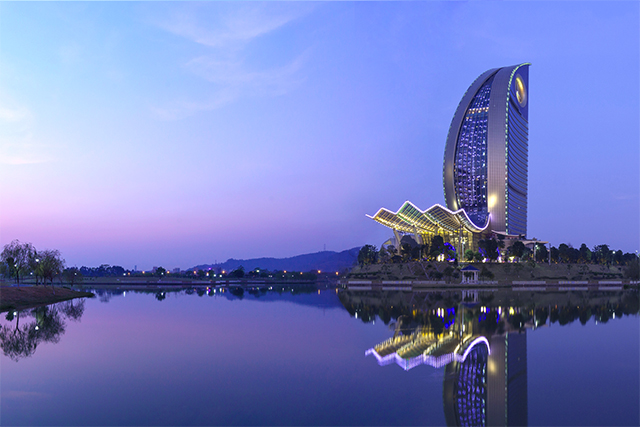
With just 15,000 Wyndham Rewards Points, enjoy a riverside retreat in the culturally vibrant city of Foshan. Situated on the scenic Xinjiang River, guests are welcome to take a dip in the resort’s outdoor infinity pool, or indulge in rejuvenating treatments and soak in a hot spring at the Blue Harmony Spa.

With just 15,000 Wyndham Rewards Points, spend a night at the ideally-located business hotel. It stands near the Chongqing International Expo Center at Liangjiang New Area, and is minutes from Chongqing Jiangbei International Airport. For delegates, there is also a direct connection to the Yuelai International Convention Center.

With just 15,000 Wyndham Rewards Points, bask in the panoramic views of Gaolong Bay and feel those stresses slowly slip away. The Hainan province is also known as the Chinese Hawaii for its tropical climate and breathtaking scenery.

With just 15,000 Wyndham Rewards Points, be privy to a Singaporean food experience at New Ubin Seafood Zhongshan Park or unwind with a cocktail at Heritage Bar & Lounge. The city’s first hotel-by-the-park development also features a gym, 30-metre pool, business centre, as well as meeting and banquet facilities.

With just 15,000 Wyndham Rewards Points, immerse in stunning Jeju’s beautiful mountains and long stretches of beaches, visit historic sites such as Gwandeokjeong Hall, and nosh on local grub at the Jeju Dongmun Traditional Market.

With just 7,500 Wyndham Rewards Points, a stay at this welcoming hotel in Yunnan will put leisure travellers near to both the Cheng Jiang Fuxian Lake scenic area and downtown, while business travellers will be near to Zai Feng Group and Cheng Jiang Hua Ye Chemical.

With just 7,500 Wyndham Rewards Points, spend a comfortable night at this modern hotel, located near the heart of the Malaysian capital. Popular attractions such as the Petronas Twin Towers and Suria KLCC are just a 10-minute drive away.

With just 7,500 Wyndham Rewards Points, book a room in island paradise to snorkel the coral reefs at Tubbataha Reefs Natural Park, go island hopping in Honda Bay, or spend an afternoon of family fun and adventure at the Crocodile Farm.
Member Levels
We know your travel plans may look different than in years past, so Wyndham Rewards has made it easier to reach new member levels with lowered qualifying night requirements in 2021. For more details, look at the updated Member Level Perks grid here.

Bonus! Wyndham Rewards Status Match with Mastercard
Fast Track your Wyndham Loyalty status to Platinum with five nights stay, or enjoy complimentary Diamond membership for World Elite Mastercard cardholders here.
As a member, you’ll earn a guaranteed 1,000 points with every qualified stay with Mastercard, as well as the chance to redeem your points for a wide-range of rewards, including free nights!
Named the number one hotel rewards programme by U.S. News & World Report and readers of USA TODAY, Wyndham Rewards recently clinched the 2020 Flyer’s Preferred Hotel Loyalty Program – Points Redemption, 2020 Travel+Leisure China Travel Awards – Best Hotel Loyalty Program, and 2021 Loyalty and Engagement Awards’ Best Loyalty Program – Travel and Hospitality (Bronze Award).
Join 89 million members of the Wyndham Rewards programme today. Not a member yet? Visit wyndhamrewards.com to join for free.
Switzerland Tourism, Kuoni Tumlare go big on small group tours via train

With small group travel poised to gain traction post-pandemic, Switzerland Tourism, Kuoni Tumlare and Swiss Travel Systems have joined hands to launch a joint campaign promoting mini group tours via train in Switzerland among South-east Asian markets.
Two years in the making, the initiative promotes guided tours using only public transport options such as trains, ships and buses.
Reto Kaufmann, vice president – sales & operations South-east & South Asia, Kuoni Tumlare, shared that this new product rollout is “timely” as it taps into the post-pandemic preference for travelling in small groups to limit potential risk exposure.
“The underlying concept is to offer visitors to Switzerland a more sustainable way to explore Switzerland using the Swiss public transportation network,” he said, adding that the exclusive itineraries offer “a value-for-money proposition” for certain travellers.
The mini group tours leverage the Swiss Travel Pass which offers unlimited journeys by train, bus and boat for consecutive days; and includes free travel for children up to 16 years and reduced cost for young adults.
“The need for more private and tailor-made travel coupled with an increasing desire to reduce one’s impact on the environment were the triggers for this project,” said Batiste Pilet, director South-east Asia of Switzerland Tourism.
“With the progressive recovery of the industry, the whole supply chain needs to reboot, and for us, as an NTO, it is a great opportunity to exploit new trends and rebuild better the industry, with a stronger focus on the customer experience and towards more sustainability.”
Reto added: “As a matter of fact, we have received first requests for incentive groups that aim for a more sustainable way of travel with the goal to reduce their carbon footprint while in Switzerland.”
While the ideal group sizes for these small guided tours are two to nine persons, larger groups can also be accommodated, Reto said. He pointed out that as reservations can be made on most of the trains and lake cruises, travellers need not worry even when travelling in a larger group.
Switzerland Tourism and Kuoni Tumlare are working with travel agencies in the region to promote exclusive itineraries for these mini group tours by co-financing the marketing efforts.
Said Batiste: “In the early stage of the recovery, we wanted to support our key agents to regain visibility in their market and reconnect with their customers. After the (travel) disruption, we believe that this will speed up the recovery of their sales channels.”
Moreover, by partnering with Swiss Travel Systems, the initiative offers clients door-to-door baggage handling services, with two options available. Travellers can have their luggage transported from their departing country direct to their first overnight hotel and subsequently for every hotel booked in the programme, or hand over their baggage at the arriving airport in Switzerland to be sent to their first overnight hotel and to the rest of the hotels based on their itinerary.
Batiste believes that the demand for this mode of travel spans across the different markets in South-east Asia.
“The product itself is customisable to accommodate the clients’ preferences; however, the trends towards smaller groups and sustainability are global and should find resonance in every market in the region,” he said, adding that by working with agents, they can better meet each market’s specificities.
Reto said they have seen a gradual take-up of bookings right after the product’s soft launch in all South-east Asian markets as well as in India, and expects demand to further grow towards the year-end holiday season as travel restrictions ease across Asia.
He added that given Switzerland’s reputation as “an extremely reliable and safe destination”, they are projecting an “over-proportional buy in” into these packages.
One integrated app needed to streamline travel, says Philippine trade
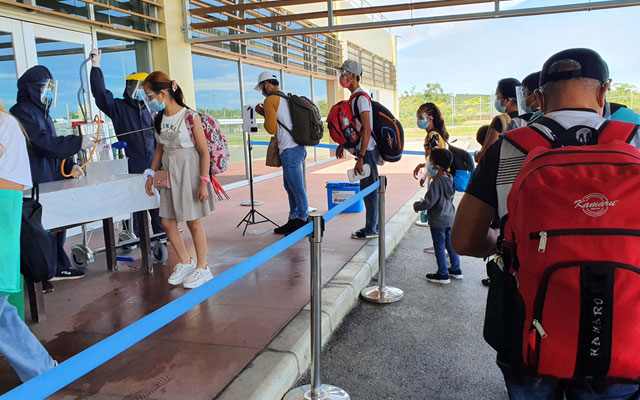
Philippine tourism leaders are clamouring for one integrated app to serve post-pandemic domestic travellers, while contending that human touch is here to stay even as the industry gears towards smart tourism.
At the Second Tourism and Technology Forum organised by the Tourism Promotions Board (TPB), it was revealed that the current digital platform leaves much to be desired, with local government units (LGUs) of various destinations having varying apps for approving tourists’ entry, contact tracing, QR codes and the like.
Monette Iturralde-Hamlin, PACEOS (Philippine Association of Convention/Exhibition Organizers and Suppliers) vice president for conventions, said the tourism industry needs one integrated app that can be used across the entire country to facilitate the return of travel.
He explained that having one integrated system would simplify health and safety protocols when travelling, and make for a better quality app.
Philippine Tour Operators Associations (Philtoa) president Cesar Cruz said that while tourists in overseas destinations only have to register their details on one app, domestic tourists in the Philippines had to, at one time, fill in their details on about four different apps and obtain four QR codes.
Calling the procedure “complicated”, Cruz questioned why the other LGUs aren’t able to adopt Bagui City’s Visita app so that only one app needs to be used so as to enable efficiency and encourage more domestic travel.
Jojo Clemente, president, Tourism Congress of the Philippines, agreed on the need for an integrated app and, in future, a global app when international travel returns.
Clemente, however, stressed on “the need for human touch”. He said that technology can only do so much, and human touch is needed to enhance the experience, for instance, when people get frustrated booking online.
Concurring, Margie Munsayac, chair of Hotel Sales and Marketing Association International, said: “People are more comfortable talking to a human being than a chatbot because they can get the information they want.”
Both Clemente and Munsayac said the challenge for the industry is how to add the human touch into the customer experience, while maximising digital connectivity.
Searches spike on Airbnb after Singapore expands VTL scheme
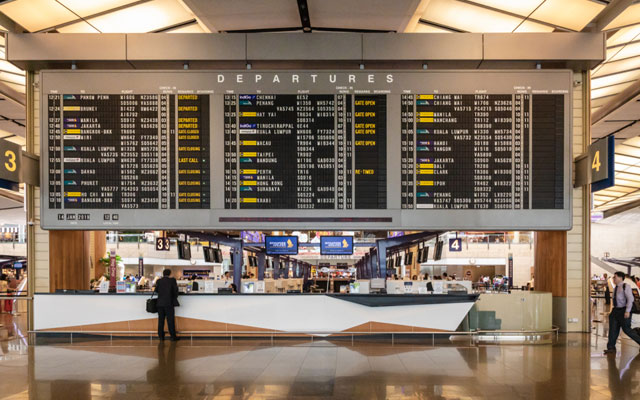
Singaporeans are eager to travel abroad again, with Airbnb seeing a rapid surge in searches by Singaporean travellers to all eleven vaccinated travel lanes (VTL) destinations, following the announcement by the government on the expansion of the scheme to include nine new countries.
According to Airbnb’s internal data, the UK, South Korea, the US and France topped the list of most searched international destinations by Singaporean guests from October 8-10. This was followed by Germany, Italy, Canada, Spain, the Netherlands, Denmark and Brunei.
Additionally, searches for Airbnb accommodation in South Korea, Denmark and Italy saw a significant spike.
Amanpreet Bajaj, Airbnb’s general manager for Southeast Asia, India, Hong Kong and Taiwan, said: “Renowned for being enthusiastic globetrotters, Singaporeans are clearly excited about once again dusting off their passports and planning a trip abroad. Many are looking to take advantage of international travel opening up to revisit favourite destinations, seek out new experiences and reconnect with loved ones.”
Gopinath Gopalan heads up Radisson Blu Hotel & Spa, Nashik
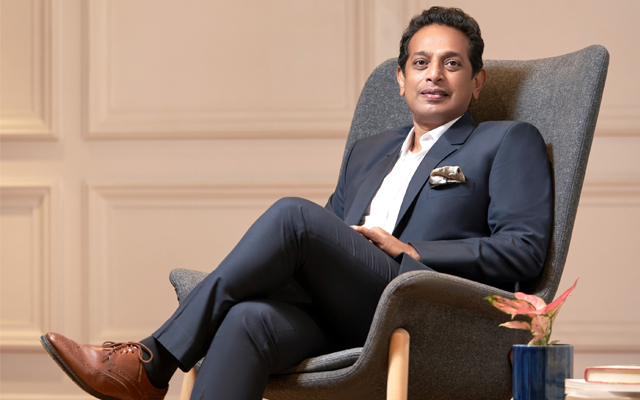
Radisson Blu Hotel & Spa, Nashik, in Maharashtra, India, has appointed Gopinath Gopalan as its general manager.
Gopinath has spent over two decades of his hospitality career in achieving milestones for several esteemed marques, having been responsible for overseeing multiple pre-opening hotels, and the repositioning of luxury brands. Luxury hotels he has played pivotal leadership roles in include Park Hyatt Goa, Grand Hyatt Mumbai, The Leela Palace Bangalore, and Oberoi Hotels & Resorts in Mumbai, Udaipur, and New Delhi.
Sentosa earns spot on Top 100 sustainable destinations list
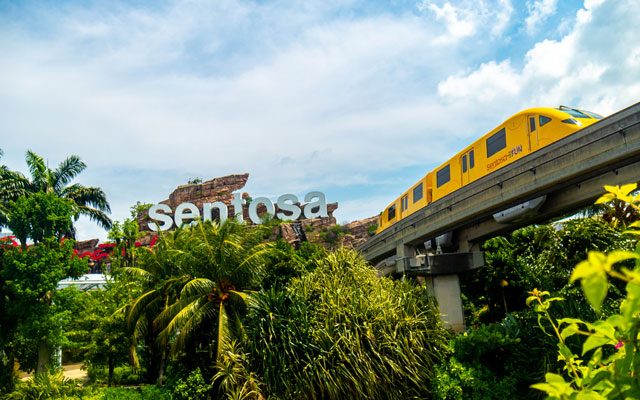
Singapore’s resort island of Sentosa has been named by Green Destinations as one of the Top 100 Destination Sustainability Stories.
First launched in 2014, the annual list by the Netherlands-based NPO spotlights destinations around the world that are taking incremental steps and making promising progress towards a more sustainable tourism industry.
Unveiled during the 6th edition of the Global Green Destinations Days, Sentosa island’s innovative and effective sustainability story has been featured alongside that of other notable destinations, including Margaret River in Australia, Kyoto City in Japan, and the Falkland Islands.
In a LinkedIn post, Thien Kwee Eng, CEO, Sentosa Development Corporation (SDC), highlighted that sustainability is a continuous journey for the organisation. She wrote: “This recognition is a timely affirmation for us to continue working as One Sentosa and a deep reminder that every effort counts in delivering our Sustainable Sentosa.”
Sustainability has been a tenet in the development of Sentosa since the island’s inception as a leisure destination in 1972. Sentosa’s story highlights SDC’s policies, programmes and technology to engage guests and the community in environmental conservation.
Initiatives to achieve the desired outcomes of conserving Sentosa’s natural assets in tandem with leisure development include the identification of ecologically sensitive sites, protection of key areas through multi-pronged approaches, and enhancement of awareness on sustainability issues.
New hotels: Centara Mirage Beach Resort Dubai, Oakwood Hotel Oike Kyoto, and more


Centara Mirage Beach Resort Dubai, the UAE
Thailand’s Centara Hotels & Resorts marks its debut in the Middle East with the opening of Centara Mirage Beach Resort Dubai. Nestled on the Deira Islands, just 30 minutes from Dubai International Airport, the themed resort offers 607 rooms and suites, ranging from Superior, Family and Mirage Rooms to Junior and Two-Bedroom Suites with 32 to 95m2 of bright, contemporary space and panoramic city or sea views.
Mirage represents Centara’s themed family resort concept, featuring facilities like a water park, three kids’ clubs, an outdoor playground, a candy-themed children’s spa, fitness centre, Spa Cenvaree, and the Mirage Family Lounge. Rooms offer flexible bedding options including bunk beds that accommodate up to two children. Nine dining venues are on offer. Suan Bua specialises in Asian cuisine, while Uno Mas is a traditional Argentinian grill with its own wine cellar. Fresh seafood and prime meats can be savoured at Sands, the casual beach club; Waves Pool Bar and Zing promise refreshing drinks and light bites; and Sheesh is a chic rooftop shisha lounge and Lebanese restaurant. As well, meeting planners can host events in a choice of indoor and alfresco function spaces.
Oakwood Hotel Oike Kyoto, Japan
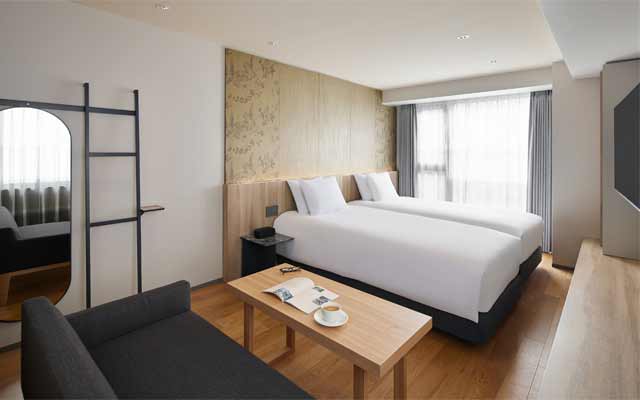
Oakwood Hotel Oike Kyoto represents the brand’s 12th property in Japan as well as Oakwood’s debut in the former Japanese capital. The property showcases 120 rooms and studio apartments in the heart of the historic and cultural district. All 104 guestrooms are equipped with the latest in-room technology, including an air purifier, 55′ flat screen smart TV, tablet, press readers and complimentary Wi-Fi along with guest services. Sixteen studio apartments feature a well-equipped kitchen fitted with a refrigerator, microwave oven, cooking utensils, washing machine and dryer. Café O, an onsite dining establishment, will serve breakfast featuring local culinary specialties. Other facilities include a co-working space, smoking room, laundromat, housekeeping and multilingual guest relations for assistance such as limousine, taxi and airport bus arrangements.
Taoxichuan Hotel, China
Hyatt Hotels Corporation has added the Taoxichuan Hotel to The Unbound Collection by Hyatt brand. The 196-room hotel has been developed as part of the Taoxichuan cultural and creative quarter in the heart of downtown Jingdezhen. Occupying three interconnected buildings and designed by Britain’s acclaimed David Chipperfield Architects, Taoxichuan Hotel houses 196 guestrooms, including seven suites. Guests can enjoy authentic local and regional Chinese cuisines at the Cobalt Restaurant, which has been conceived as an extension of an adjacent outdoor garden, providing a picnic-in-the-park dining experience. Elsewhere, Emerald Lounge serves light bites, afternoon tea and a selection of fine teas, wines and cocktails. Leisure amenities include a heated indoor pool and 24-hour fitness centre. Additionally, the hotel offers 1,360m2 of flexible meeting and event space, including a pillar-free ballroom and five meeting rooms in a variety of sizes.
Vega Hotel Gading Serpong, Indonesia
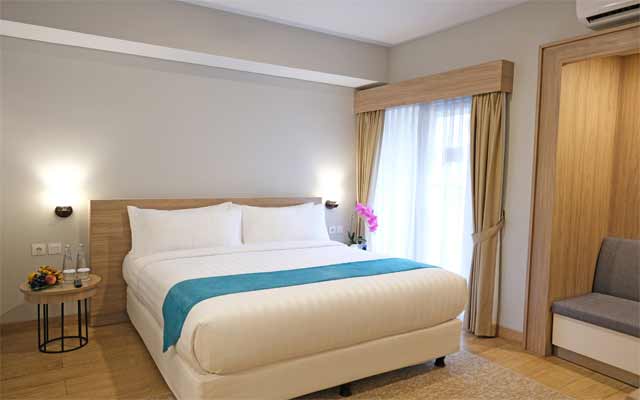
Indonesia’s Parador Hotels & Resorts has rebranded its three-star Ara Hotel Gading Serpong to Vega Hotel Gading Serpong. The 145-room hotel, which opened in 2014, has become the first property under Parador’s new three-star brand after undergoing a renovation. The Vega Hotel brand was first introduced at the ground breaking of Vega Hotel Surabaya in January 2020, with the property targeted for a 2024 opening.
Japan sticks to 60 million tourists by 2030 target
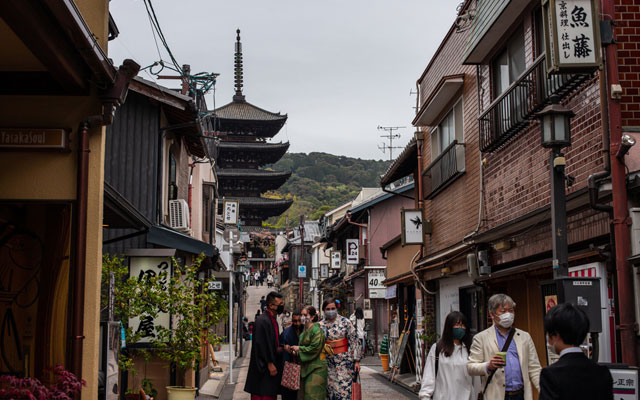
The Japanese government has pledged to uphold its target of welcoming 60 million international visitors annually by 2030 despite ongoing pandemic-related problems.
Ministers said they would keep the goal, which was set in 2016 as part of the government’s tourism strategy, despite the current entry ban on tourists and the ailing travel industry, which has been beset by numerous regional states of emergency.
Pre-pandemic, Japan was expected to easily achieve the goal based on its record inbound tourism growth, which rose from 8.3 million in 2012 to 31.8 million in 2019, according to the Japan National Tourism Organization (JNTO). In January 2020, Japan was tipped to enjoy the highest growth in international arrivals by 2022 of any country, with a compound annual growth rate of 11.3 per cent, according to a report by GlobalData.
Based on global predictions, 2024 is expected to see international travel rebound to pre-pandemic levels, and JNTO is setting 2024 as “one target” year, according to Kyoji Kuramochi, executive vice president.
“We are not changing the 2030 goal and are trying to figure out how we will be able to achieve it,” he told media, adding that JNTO is drafting strategies for recovery. These include building on efforts made during the Tokyo 2020 Olympic and Paralympic Games to raise awareness of Japan for adventure and outdoors tourism as well as barrier-free travel.
During the Games, JNTO enlisted the support of American Olympian Ashton Eaton in a tourism video commercial that was aired on major broadcast stations. It introduced new activities and experiences on offer in Japan, including paragliding for wheelchair users at Lake Biwa, near Kyoto.
Kuramochi said the Games were a “really good opportunity to draw the attention of those people around the world who are interested in visiting Japan”, and expressed hope that Japan’s high level of hygiene and wide range of outdoor activities will be big selling points in the post-Covid period. He also expects greater interest in Japan’s sustainable tourism offerings, particularly from France and Germany.
Thailand in travel bubble talks with Cambodia, Malaysia and Laos
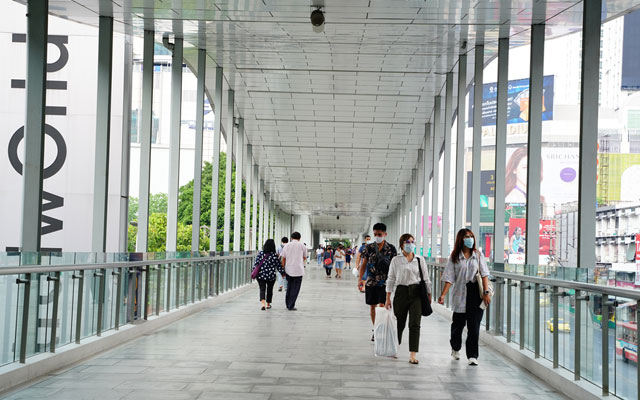
Thailand is currently in talks with Cambodia, Malaysia and Laos to set up two-way travel bubbles in a bid to revive intra-regional travel.
Minister of tourism and sports Phiphat Ratchakitprakarn said that many international tourists are keen to visit places outside of the designated Sandbox areas, but are deterred by prevailing quarantine requirements.
As such, the tourism ministry together with the Ministry of Foreign Affairs and the Ministry of Public Health are seeking to establishment travel bubble arrangements with regional countries.
As a first step, the Thai government is negotiating with Cambodia to reopen Trat province in eastern Thailand and Cambodia’s Koh Kong island. The deal is expected to be finalised within the final quarter of this year.
Authorities are also in discussion to link Malaysia’s Langkawi Island with Koh Lipe Island in southern Thailand. Negotiations are also underway between Thailand and Laos for a similar arrangement.
Thailand is targeting to receive at least one million foreign tourists during 4Q2021 and 1Q2022. For 2022, the country hopes to receive about 15 million foreigners, and achieve 160 million domestic trips, generating 1.5 trillion baht (US$45.5 billion) in revenue or about half of 2019’s earnings.
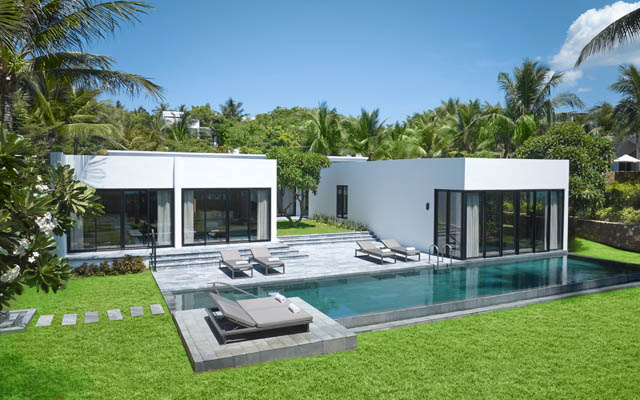
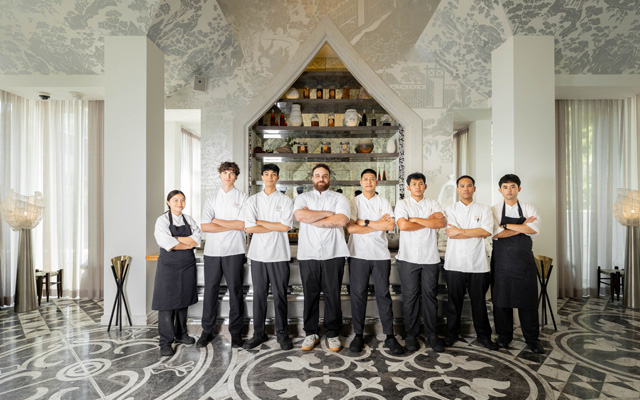






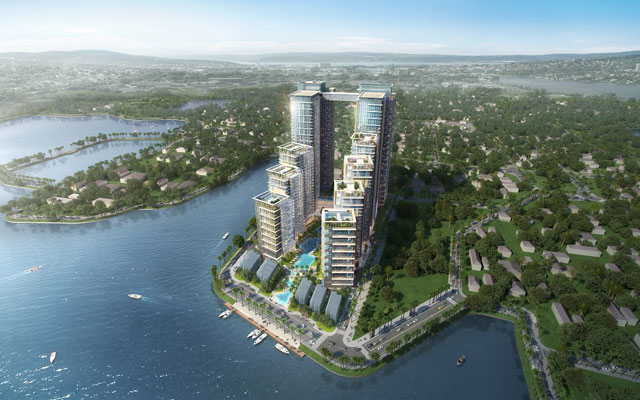
The Ascott Limited (Ascott) has formed a strategic partnership with Vietnamese developer Sun Group to manage Vietnam’s largest serviced residence integrated development.
Under the agreement, Ascott will manage 1,905 units across three serviced residence brands – The Crest Collection, Ascott The Residence, and Citadines Apart’hotel – within Sun Group’s Tay Ho View Complex in Hanoi, an integrated development in the city’s exclusive waterfront Tay Ho district.
Currently only available in France, this is the first time The Crest Collection will debut in Asia. In addition to Ascott’s trio of serviced residences, which are expected to open in phases from 1Q2023, the integrated development also comprises commercial and retail elements.
Ascott The Residence will offer 1,167 units comprising suites, studio, one- to four-bedroom apartments and duplex units, while Citadines Apart’hotel will offer 710 units comprising studio, one- to four-bedroom apartments and duplex units. The Crest Collection will offer 28 exclusive units, comprising three- and four-bedroom duplex apartments.
Facilities at the three properties will include residents’ lounges, a reading room, gyms, Michelin-starred restaurants, a club as well as a sky bar.
With the addition of the three serviced residences, Ascott’s portfolio in Vietnam comprises about 9,200 lodging units in over 30 properties across 12 cities.