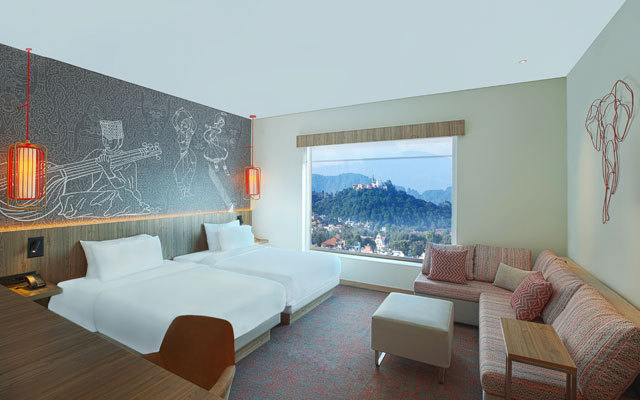
The Novotel Manila Araneta City has welcomed two hires, Maria Manlulu-Garcia as its general manager, and Darwin Labayandoy as resident manager.
Manlulu-Garcia is the very first female general manager for an Accor property in the Philippines. She embarked on her hospitality career in 1992, and began as a front office agent who rose to become rooms director of the Ramanda Portland in the US.
From left: Maria Manlulu-Garcia; and Darwin Labayandoy
She then returned to the Philippines to take up the post of general manager at the Pico De Loro Country Club and Pico Sands Hotel, Batangas. After which, she moved to Indonesia to become Sofitel Bali Nusa Dua’s executive assistant manager, and eventually worked her up to its resident manager in 2016 and hotel manager in 2019.
She will be supported by Darwin Labayandoy, who has been promoted from director of rooms to resident manager at the Novotel Manila Araneta City.
Labayandoy has 25 years of hospitality experience under his belt, and prior to joining Novotel Manila Araneta City, he held key positions at Dusit Hotel Nikko and Sofitel Philippine Plaza Manila.
The Indonesian government is speeding up vaccination efforts in Bali in hopes of achieving herd immunity quicker and reopen the island’s borders to international travellers under a free Covid-19 travel corridor by mid-year.
Speaking to the media at the Bali Investment Forum held in Bali last Friday (March 26), Luhut Binsar Pandjaitan, coordinating minister of maritime affairs and investment, said that the government is striving to vaccinate 1.8 or nearly two million people in Bali by April, and another one million people by May, with hopes of achieving herd immunity in July.
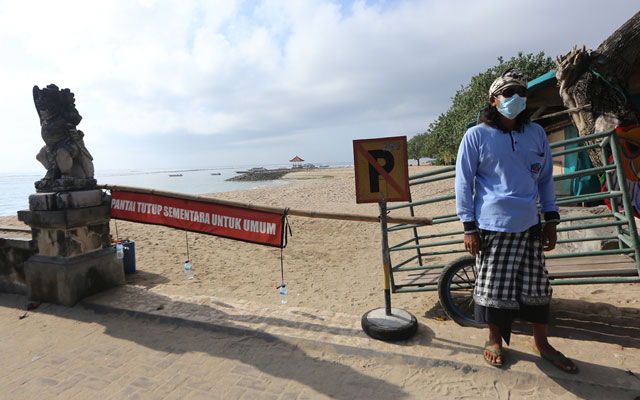
Sanur is among three designated green zones in Bali prepping to receive foreign tourists under a free Covid-19 travel corridor; Sanur Beach in February 2021 pictured
A group of foreign ambassadors attended the Bali Investment Forum to witness the implementation of the Cleanliness, Health, Safety, and Environment Sustainability (CHSE) protocols in the destination, in a bid to show that the island stands ready to welcome back tourists and investors.
With president Jokowi hoping to see the reopening of international borders by June or July, Bali has selected three green zones, namely, Ubud, Sanur, and Nusa Dua, to receive international tourists from countries that have forged travel corridor agreements with Indonesia.
Sandiaga Uno, minister of tourism and creative economy, told TTG Asia that his office will monitor the foreign visitors’ movements in the three green zones digitally and physically to minimise their potential contact with people outside the zones.
“The focus is to ensure that the travellers conduct their activities within the three zones,” he said, adding that there would be checkpoints on the sites.
Sandiaga explained that the travel corridor used a point-to-point concept that would link Bali to certain countries, and during a trial run, the island might first welcome chartered flights to test and evaluate the system.
The minister also expects that the foreign tourist visits will be organised by travel companies so their staff can help monitor their clients’ movements within the green zones.
Commenting on the plan, Ricky Setiawanto, secretary general of the Indonesia inbound Tour Operator Association, said: “What we have suggested to the government is to create attractions and activities within the green zones to keep travellers entertained during their stay, although their movements are limited to just the zones.”
Examples he cited include traditional dances, handicraft-making demos, and cooking classes. Ricky said: “They do not have to be compulsory itineraries in the holiday package, but attractions and activities that are available to travellers should they be keen.” – Additional reporting by Mimi Hudoyo
Domestic tourism in the Philippines is expected to fare worse this year compared to 2020, as metro Manila and four surrounding provinces are placed under enhanced community quarantine (ECQ) – the highest of the four levels of lockdown – starting today (March 29), after just a week of implementing stricter quarantine measures.
While only metro Manila, and the provinces of Laguna, Cavite, Rizal and Bulacan – collectively dubbed as the NCR Plus – are under ECQ, tourism nationwide has been affected as the Department of Tourism has banned hotel staycations countrywide except for destinations under modified general community quarantine (MGCQ) – the lowest level of quarantine. Additionally, airlines have already cancelled a number of domestic flights.
Tightened quarantine curbs amid rising Covid infections in the Philippines has brought the country back to square one; tourists along Real Street in Intramuros, Manila, the Philippines in January 2021 pictured
The NCR Plus areas will be under ECQ until April 4, subject to weekly reviews; with strictures including 18.00 to 05.00 am curfew, limited public transport, skeleton staff for most industries and offices, and no public gathering of any kind.
“You can write off Philippine tourism this year, which is going to be worse off than last year,” hospitality consultant Jerome de la Fuente told TTG Asia.
“It will not be revived because daily Covid-19 infections are shooting up to nearly 10,000, triggering this latest round of lockdown, and so the people’s confidence to travel isn’t there anymore,” he added.
“Health and safety protocols are in place, yet the infections are increasing. Unless the government rushes vaccination, the people’s confidence (to travel) will not return. But there’s not even enough vaccines yet for health and medical frontliners.”
Being under ECQ brings the country back to square one, back to a year ago at the onset of the pandemic.
For hoteliers like Margie Munsayac, vice president sales and marketing of Bluewater Resorts, “changing policies on quarantine and lockdowns will always be a big challenge to our industry”. Munsayac is part of a group of tourism players from the private and public sectors who have sought to revive tourism with ongoing marketing and promotions of Cebu and Bohol in the Visayas, including hefty discounts.
“Stability of policies would always be a big factor for marketing traction. And once again, the tourism sector catering to the leisure market will be on a standstill for NCR Plus”, said Munsayac, adding that “other destinations outside NCR Plus will likewise be affected”. “It would be a blessing if travellers would rebook, but a good percentage will really be cancelled trips,” she said.
“But we do understand the need for the stricter quarantine guidelines, which us tourism stakeholders fully support. We are just hopeful that when (travel restrictions lift), Filipinos will be more vigilant in the basic health protocols and will feel once again confident and safe to travel and support tourism,” said Munsayac.
De la Fuente suggested starting a Save Philippine Tourism campaign as a way to revive the country’s economy. He lamented that the industry is “on our own”, expressing disappointment in the government’s “apathetic attitude”, unlike other countries like Singapore and Thailand whose governments understand the value and contribution of tourism to their economies, and have supported the industry with initiatives such as substantial bailout packages during the pandemic.
Vietnam Airlines operated its first international commercial flight with a service from Taiwan to Danang last Thursday (March 25), following a months-long hiatus to curb the spread of Covid-19.
More than 200 passengers were onboard the flight, with travellers required to present a negative Covid-19 test result obtained 72 hours prior to departure, reported VnExpress International.
Vietnam Airlines restarts inbound commercial international flights
Upon arrival, they had to undergo a second round of testing, in addition to a 14-day mandatory quarantine at their own expense. Additionally, they will be required to take a third Covid test six days later.
They also had to install the Bluezone app that shows if a person has come into close contact with a Covid-19 patient, said the report.
Vietnam suspended all international flights in March last year as part of efforts to keep Covid-19 at bay, with only Vietnamese repatriates, foreign experts and highly-skilled workers allowed in, under stringent conditions.
Travel curator Luxury Tribe will stage the world’s first virtual marketplace to connect luxury travel brands with India’s high-net-worth travellers from May 26-28, 2021.
Organised by World Travel Magazine, Luxury Tribe is a by-invitation-only, exclusive three-day event which offers selected participants a line-up of pre-scheduled meetings, networking sessions and expert-led conferences.
At Luxury Tribe, exhibitors will have the opportunity to meet with Indian luxury travel buyers, destination wedding planners, pre-qualified luxury travel agencies and senior travel designers exclusively representing high-net-worth clients.
Successfully harnessing ultra-affluent and discerning Indian travellers requires a solid understanding of their unique preferences and needs.
Luxury Tribe’s ILLUME conference, which is hosted by thought leaders in luxury travel marketing, will provide these key insights mapping out perspectives for the next 24 months and more. ILLUME’s panel discussions and speaker-led sessions are tailored to equip participants with ready strategies for successfully acquiring – and growing – their affluent Indian customer base in 2021 and beyond. Participants will be able to seamlessly navigate the virtual innovative 3D exhibition floors and facilities efficiently to engage with like-minded industry leaders.
Exhibitors at Luxury Tribe will include international luxury hotel brands, DMCs, jet and yacht charters, airlines, bespoke shopping destinations, tourism boards, and independent boutique hotels.
Each exhibitor may sign up to 30 stringently matched, 1-to-1 pre-scheduled appointments, along with unlimited access to all ILLUME conferences, networking sessions, as well as wellness lounge & café. Post-event, attendees will receive exclusive ILLUME video recaps and intel briefings, as well as invites to follow-up meetings and exclusive discounts.
Costa Cruises has made two leadership appointments in preparation for the resumption of its cruises and its long-term growth.
From left: Mario Zanetti, Roberto Alberti
Mario Zanetti has been promoted to president of Costa Cruises, taking a role that had been temporarily filled by Michael Thamm, group CEO, Costa Group & Carnival Asia.
In his new position, Zanetti will oversee Costa as a unique brand across the world, including Asia, with the aim of guiding Costa to strengthen its leadership in Europe, South America and Asia, and ensure profitable and sustainable growth in the long-term.
Zanetti started his journey with Costa back in 1999 in the revenue management unit. In 2017, he was named president of Costa Asia; and since July 2020, he has been back in Genoa, as chief commercial officer (CCO) of Costa Cruises Europe.
Meanwhile, Roberto Alberti has been appointed CCO of Costa Cruises, a position previously held by Zanetti. Alberti will be responsible for the overall commercial operations, including sales, revenue management and marketing worldwide, reporting to Zanetti.
With a career in Costa Cruises spanning over 15 years, Alberti worked his way up through various positions in Italy and abroad. In 2016, he joined the CEO Office, reporting to Thamm. After the position of vice president strategic development, in 2019, he was appointed senior vice president and chief strategy officer of the Costa Group, contributing to the definition of a sustainable development plan, the global source market strategy and brand positioning.
Both Zanetti and Alberti will be based in Costa Cruises headquarters in Genoa.
Shall we take a moment to talk about the Anti-Asian Hate movement that is raging in the US? On the surface, it seems to have a distant relation to travel and tourism since these hate crimes are mostly aimed at the resident Asian American and Pacific Islander (AAPI) community.
However, look just a little deeper and you will realise it has a significant effect on travel and tourism.
When I did a profile interview late last year with Olivier-Henry Biabaud, CEO of TCI Research, who founded the Resident Sentiment Index model to help destinations gauge and benchmark the level of tourism support they have in their community, he told me that residents are the face of a destination, and it only takes a minority of angry residents who lash out against tourists and tourism to establish a bad reputation for the destination, which will be long and pricey to repair.
Of course, Olivier was then commenting specifically about destination residents who are opposed to the concept of tourism in their backyard, and not racism-fuelled hate crimes. But for Asian consumers across the globe watching news about the US’s Anti-Asian Hate movement and taking in social media posts by AAPI citizens who are coming out with their own stories of abuse, there is little difference. Many would wonder if their skin would attract the same treatment should they go to the destination as tourists.
This consideration will resurface when they make their travel plans for the future.
That’s not just my imagination – a recent survey by Dragon Trail International on Chinese traveller sentiments found that friendliness towards Chinese travellers ranked first as a travel decision influencer by 65 per cent of respondents. That consideration outranks other critical factors such as zero confirmed Covid-19 cases, the absence of mandatory quarantines, flight resumption and personal access to a Covid-19 vaccine.
The same study, conducted from February 22 to March 3 this year, also found that more than 80 per cent of respondents rated the US as unsafe.
Unfriendliness to travellers can come in a wide spectrum, from a lack of understanding about their unique needs, such as dominant language and diet, to petty and deliberate negligence by service staff, and to severe and possibly fatal attacks.
Many people who have visited, studied or lived in the US as well as AAPI citizens have come forth with their own positive experiences of hospitality and friendship, in hopes of highlighting the presence of a welcoming majority.
Unfortunately, these messages are drowned out by bad news, which gather the most social media momentum.
With travel in a pandemic era, and even in the post-vaccination era, so much more tedious to arrange, how many consumers would risk ruining their rare leisure trip with a possible unfriendly experience? Unlike the AAPI community who has to live with and battle the problem at home, the Asian travelling community has a choice of where they want to holiday.
And they will likely pick somewhere safe, welcoming, and worth their time and money.
Karen Yue is group editor of TTG Asia Media. She sets the editorial direction for the company’s stable of travel trade titles and platforms, and produces content for them as well.
Veteran tour operator, Sisdivachr Cheewarattanaporn, has been elected as the new president of the Association of Thai Travel Agents (ATTA).
Sisdivachr, who previously served in the position from 2011-2014, had beat Mingkwan Metmowlee, president of ASEAN Tourism Association (ASEANTA), to win the election on Thursday (March 25).
Sisdivachr Cheewarattanaporn elected as new president of the Association of Thai Travel Agents
In a speech after his win, Sisdivachr pledged to take urgent action to save Thailand’s tourism industry, with aims of reopening the country to international tourists by 3Q.
To that end, he will work with airlines to launch a digital Covid-19 vaccine passport to lure foreigners back to the country, as well as continue appealing to the government for financial aid to help tour operators impacted by the Covid-19 pandemic.
Additionally, he will work with the private sector to train the tourism workforce, create marketing tools, and develop new products and services for tourists.
Sisdivachr said: “My aim is to save Thailand’s tourism industry and reclaim the country’s position as top tourist destination on the global map.”
Foreign travellers who have been fully vaccinated will be allowed entry into Phuket without quarantine from July 1.
Deputy governor Pichet Panapong was quoted by the Bangkok Post as saying that the infectious diseases committee approved the proposal on Wednesday (March 24).
Phuket’s tourism industry had been flourishing before Covid-19; Patong Beach in January 2021 pictured
Noting that Phuket has recorded zero new Covid-19 cases for 89 days, Panapong said that the holiday island is in “urgent need for foreign tourists… to stimulate the economy and tourism sector”.
Before reopening, Phuket health authorities plan to acquire 930,000 doses of Covid-19 vaccine to inoculate 70 per cent of the local population in order to achieve herd immunity.
According to Thailand’s tourism minister Phiphat Ratchakitprakarn, a similar reopening scheme will also be rolled out in Pattaya, reported Nation Thailand. He added that the ministry plans to procure more vaccines with the aim of reopening more destinations across the country, including Chiang Mai, Krabi, Phang Nga and Surat Thani, by October 1.
Some 4.7 billion fewer passengers are projected to travel by this year-end, representing a decline of 47.5 per cent in global passenger traffic, according to a report by Airports Council International (ACI) World.
This is estimated to equate to a loss in revenue of more than US$94 billion this year, which is half of the projected baseline.
Pandemic’s dramatic impact on aviation endures but signs of recovery emerge, says ACI; a near-empty Narita International Airport Terminal 2 in January 2021 pictured
The analysis was published in the Advisory Bulletin: The impact of Covid-19 on the airport business and path to recovery.
As prospects for a recovery in 2021 begin to emerge, ACI World estimates that different regions of the world will recover at different rates. At country level, markets having significant domestic traffic are expected to recover in 2023 to pre-Covid-19 levels, while markets with a significant share of international traffic are unlikely to return to 2019 levels until 2024 or even 2025 in some cases.
ACI World has said an interoperable health data trust framework to facilitate safe border reopening and cross-border travel must be established to support this recovery. ACI added that it supports any system which will allow testing and vaccination data to be shared consistently, effectively, and in a way that protects the personal data of those that use it.
“The world is embarking on the biggest vaccination campaign in history, and we see positive indications in countries with high rates of vaccination and ACI World has discerned an escalation of these encouraging signs and prospects for recovery with a surge in travel in the second half of 2021 expected,” ACI World director general Luis Felipe de Oliveira said.
“Despite this, Covid-19 remains an existential crisis for airports, airlines and their commercial partners and we need support and sensible policy decisions from governments to ensure that aviation can fuel the global economic recovery.
“We hope an upsurge in confidence in air travel provided by vaccination and safety measures should result in the number of people travelling outside of their countries will start this spring and significantly increase by mid-year.
“Aviation recovery will not take-off, however, without a coordinated and globally-consistent approach to vaccination and testing, coupled with a safe and interoperable methods of sharing testing and vaccination information.”
With regards to economic impact, as a consequence of uncoordinated travel restrictions combined with small domestic markets, Europe is forecast to remain the most affected region in absolute terms with an estimated drop in revenues of more than US$37.5 billion for the full year 2021 compared to 2019.
In relative terms, the Middle East and Europe are forecast to suffer the biggest hits with decreases of 58.9 per cent and 58.1 per cent, respectively. Asia-Pacific is the region with comparatively the least impact, but it is still expected to experience a very significant decrease of 40.3 per cent against the projected baseline.
The Indonesian government is speeding up vaccination efforts in Bali in hopes of achieving herd immunity quicker and reopen the island’s borders to international travellers under a free Covid-19 travel corridor by mid-year.
Speaking to the media at the Bali Investment Forum held in Bali last Friday (March 26), Luhut Binsar Pandjaitan, coordinating minister of maritime affairs and investment, said that the government is striving to vaccinate 1.8 or nearly two million people in Bali by April, and another one million people by May, with hopes of achieving herd immunity in July.
A group of foreign ambassadors attended the Bali Investment Forum to witness the implementation of the Cleanliness, Health, Safety, and Environment Sustainability (CHSE) protocols in the destination, in a bid to show that the island stands ready to welcome back tourists and investors.
With president Jokowi hoping to see the reopening of international borders by June or July, Bali has selected three green zones, namely, Ubud, Sanur, and Nusa Dua, to receive international tourists from countries that have forged travel corridor agreements with Indonesia.
Sandiaga Uno, minister of tourism and creative economy, told TTG Asia that his office will monitor the foreign visitors’ movements in the three green zones digitally and physically to minimise their potential contact with people outside the zones.
“The focus is to ensure that the travellers conduct their activities within the three zones,” he said, adding that there would be checkpoints on the sites.
Sandiaga explained that the travel corridor used a point-to-point concept that would link Bali to certain countries, and during a trial run, the island might first welcome chartered flights to test and evaluate the system.
The minister also expects that the foreign tourist visits will be organised by travel companies so their staff can help monitor their clients’ movements within the green zones.
Commenting on the plan, Ricky Setiawanto, secretary general of the Indonesia inbound Tour Operator Association, said: “What we have suggested to the government is to create attractions and activities within the green zones to keep travellers entertained during their stay, although their movements are limited to just the zones.”
Examples he cited include traditional dances, handicraft-making demos, and cooking classes. Ricky said: “They do not have to be compulsory itineraries in the holiday package, but attractions and activities that are available to travellers should they be keen.” – Additional reporting by Mimi Hudoyo