

SIA unveils global campaign to coax nervous flyers back
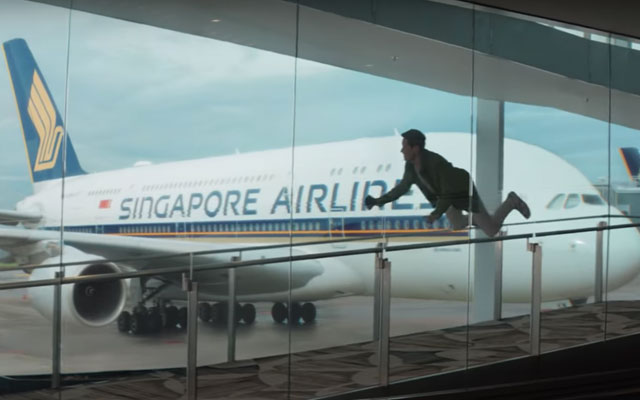
Singapore Airlines (SIA) has launched its new brand campaign titled We Look Forward to Seeing You in the Air Again, as it gears up to welcome customers back to the skies.
The campaign kicks off with a 30-second video, which follows a group of travellers at various stages of the trip from their home to the aircraft.
The video is designed to assure customers that they can expect to continue enjoying an “enhanced travel experience” with the airline, “despite the myriad changes brought about by Covid-19”.
It highlights the suite of health and safety initiatives introduced by the airline to give passengers the confidence and peace of mind as they fly again, as well as efforts to provide a seamless traveller experience in the new normal.
The video was unveiled on SIA’s website, as well as its Facebook, Instagram and YouTube pages. It also debuted to a global audience via online and international broadcast channels. The campaign will also be extended to print advertisements and out-of-home media.
Lau Hui Ling, general manager brand and marketing, SIA, said: “There is understandable excitement about the long-awaited reopening of international borders, and many of our customers have eagerly begun to make travel plans once again.
“We understand that during this time, some may still be concerned about the inflight and on-ground experience. With this video, we hope to reassure our customers that their well-being is our utmost priority, and that we significantly enhanced the travel journey with their comfort in mind.”
China’s Greenland pursues APAC expansion with new regional hub in Singapore
Greenland Hotel and Tourism Group (GHTG), the hotel and tourism arm of China-based Greenland Group, has picked Singapore as its springboard for regional expansion with the launch of its overseas operations centre (OOC) in the city-state earlier this month.
The centre will serve as the group’s Asia-Pacific hub for providing hotel advisory and management services to real estate entities in the hospitality segment.
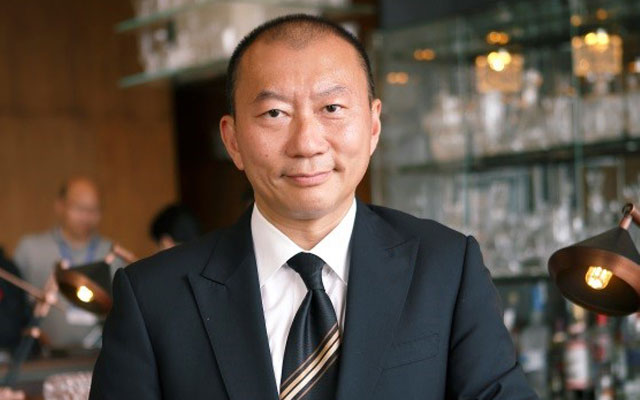
“Singapore is known to be a regional hub with connectivity to the rest of the world that appeals to many multinational companies; it offers a complete range of financial and legal services and has sophisticated infrastructure that will certainly facilitate regional and international travel,” said William Lau, general manager of the OOC, on the reason for choosing to set up base in Singapore.
He cited the Republic’s close proximity to the company’s three priority markets of Indonesia, Thailand and Vietnam, as well as the presence of many major asset owners, developers and potential partners in Singapore as other key factors.
Lau said that as vaccination rates accelerate and restrictions ease, now is an “opportune time to pursue new hospitality and tourism opportunities in the region”.
He noted that pipeline data from Tophotelprojects showed that in South-east Asia alone, both 2021 and 2022 will see 121 new hotels open; with another 88 properties lined up for 2023, and 238 projects already on the books for 2024 and beyond.
This significant expected growth of hotel assets will lead to an oversupply, resulting in a highly competitive market and increased demand for hotel management services like GHTG, explained Lau.
He said that property owners and developers can not only tap into the group’s expertise in full life-cycle asset management, but also its “one core, two wings” developmental model, where its core hotel business is supported by its tourism and exhibition wings.
This will enable them to gear up for quicker recovery, and to optimise real estate yield and value by driving tourists and exhibition traffic to properties, he added.
The group, which operates more than 50 hotels in 60 cities across the world, aims to grow its regional footprint by launching its three signature brands – the luxury-focused Primus, upscale business brand Qube, and lifestyle brand Q-Box.
Lau said the company’s growth pipeline focuses on key gateway cities with an initial focus on its priority markets, and an aim to expand to 15 gateway cities by 2024. The group is also set to open two properties in the region come 1Q2022 – the Q-Box Hotel Johor Bahru in Malaysia and Qube Hotel Tasmania in Australia.
In addition, the group also specialises in advising on the integration of hotel assets into “Hotel+” destination concepts, and managing such micro-destinations, given its experience operating hotels within integrated complexes in various cities across China.
With the pandemic causing long-lasting shifts to travel patterns, Lau stressed that hospitality and tourism businesses will need to innovate and rethink their offerings, such as creating micro-leisure/holiday destinations.
“As demand for domestic travel increases, both for leisure and for work, demand for ‘Hotel+’ experiences will also intensify,” said Lau. “Businesses will need to pivot towards creating ‘Hotel+’ micro-destinations to cater to evolving demands.” He cited examples such as the integration of business events offerings or a leisure park with hotel assets.
Lau added that the group’s advisory services on managing such micro-destinations “will enable businesses to tap into the anticipated rebound of tourism, maximising the value of their land and emerging stronger from the pandemic”.
New WTTC report provides recommendations to drive tourism recovery
The World Travel & Tourism Council (WTTC) has launched a new report that highlights the pain points to restore international mobility, and recommendations to drive the recovery of the travel and tourism sector, while enhancing its resilience.
With the pandemic bringing international travel to an almost complete standstill due to border closures and severe travel restrictions, travel and tourism suffered more than any other sector over the past 18 months.
The sector’s contribution to global GDP fell from nearly US$9.2 trillion in 2019, to just US$4.7 trillion in 2020, representing a loss of almost US$4.5 trillion. Furthermore, some 62 million travel and tourism jobs were lost.
The report, in partnership with the Ministry of Tourism of Saudi Arabia, highlights WTTC’s latest economic projections which reveal the sector’s recovery is set to be slower than expected this year, largely linked to continued border closures and challenges linked to international mobility.
The sector’s contribution to GDP is expected to rise by a modest 30.7 per cent year-on-year in 2021, representing only US$1.4 trillion increase, and at the current rate of recovery, travel and tourism’s contribution to GDP could see a similar year-on-year rise of 31.7 per cent in 2022.
Meanwhile, the sector’s jobs are set to rise by a mere 0.7 per cent this year, representing only two million jobs, followed by 18 per cent increase next year.
The report reveals pain points that focus on the urgent challenge to restore international mobility, framed by the need to address the weaknesses of the sector shown during the pandemic by redesigning a more sustainable, inclusive, and resilient future.
It demonstrates how international border closures, uncertainty due to changing rules, the prohibitive cost of testing, and the lack of reciprocity and uneven vaccination rollout have hindered the recovery of the travel and tourism sector during the past 18 months.
Julia Simpson, president & CEO, WTTC, said: “The travel and tourism sector is key for many livelihoods which continue to be affected by the failure to harmonise and standardise Covid-19 regulations worldwide. There is no excuse for a patchwork of regulations; countries need to join forces and harmonise the rules. Many developing countries rely on international travel for their economy and have been left devastated.
“As it stands, only 34 per cent of the global population have been fully vaccinated, showing that there are still large vaccine rollout inequalities globally. A swift and equitable immunisation plan, alongside worldwide reciprocal recognition of all WHO approved vaccines, is needed to safely reopen international travel and promptly resume the economic activity.”
The report outlines recommendations to achieve a swift recovery of the travel and tourism sector, including a focus based on international coordination to reopen borders, fair testing conditions, digitalisation for travel facilitation, as well as sustainability and social impact at the core of the sector.
Indian inbound market rejuvenated as tourist visas resume
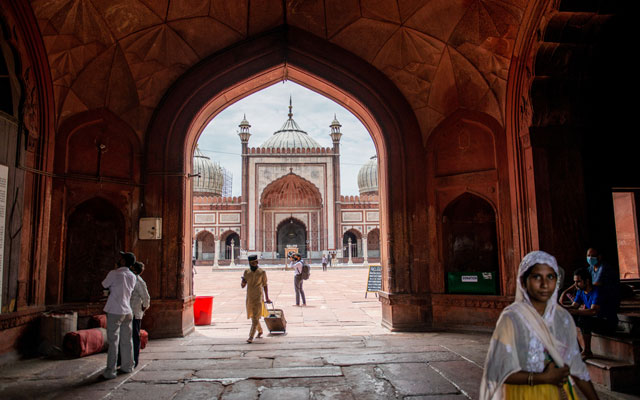
Tourism industry stakeholders in India are looking forward to the return of international visitors following the government’s recent decision to resume issuing tourist visas after 1.5 years of suspension due to the pandemic.
India began granting tourist visas to foreign travellers arriving on chartered flights from October 15, while visas for those on regular commercial flights will be granted from November 15.
The inbound stakeholders have been appealing to the government to reopen borders to international tourists and begin issuance of tourist visas with the pandemic situation improving and vaccination rates picking up. With international tourism flows at a standstill for 19 months, it has resulted in severe financial distress among tourism and hospitality players.
Dipak Deva, managing director, Travel Corporation of India, heartily welcomed the government’s announcement on the restart of tourist visa issuance.
“This, coupled with the earlier announcement of free visas for the first 500,000 inbound tourists, is a critical move that will give fillip and accelerate a much-needed revival of inbound tourism,” he said.
He noted that the sector plays a critical role in the country’s economy, with more than nine per cent contribution to India’s GDP and US$30 billion in net foreign exchange receipts, while also helping to create jobs.
Finance minister Nirmala Sitharaman earlier this year had announced once the tourist visa issuance for international travel is restarted, the first 500,000 tourists will be issued visas free of charge. The benefit that will be available only once per tourist will be applicable till March 31, 2022.
A section of tour operators said that with India reopening for international tourism, now is the time to reposition the destination to suit present demands.
“Tour operators have to now think of out-of-the-box ideas, keeping in mind the evolving demands of today’s travellers,” said Debjit Dutta, CEO of Impression Tourism Services.
“Traditionally, India has been promoted as a rich cultural destination. However, now tourists are more inclined towards natural and remote destinations. So, we have to highlight niche experiences like village tourism, keeping in mind best cleanliness and sanitisation practices.”
Dutta added that while the Incredible India campaign has been “extremely successful”, the campaign now needs to focus on highlighting less-traversed regional destinations like East India and North-east India.
He elaborated: “These regions offer rich natural experiences and are unexplored. Focusing on lesser-known destinations in international markets will also help us to draw more tourists besides ensuring that inbound tourist arrivals in India are not just confined to already popular destinations like Golden Triangle and Kerala.”
European holidaymakers’ appetite for travel to Asia growing
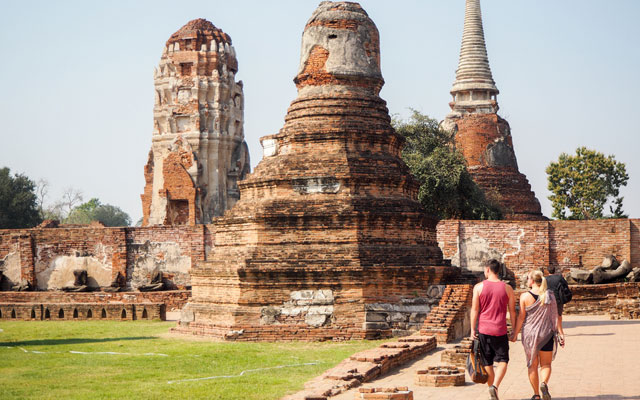
European outbound travel agents are seeing a strong interest for longhaul travel to Asia for spring and summer next year, and Asian countries that have good air connectivity and quarantine-free entry will stand to gain.
Guillaume Linton, president & CEO of France-based Asia Voyage, said that the French market is keen on “simplicity and accessibility” and government policies that create “constraints or long processes will be a no-go”.
He shared that rising prices for medium-haul destinations for summer 2022 made Asia an attractive alternative, provided prices were reasonable. His company has seen bookings pick up for Japan, Bali and Australia for travel next spring.
“Travellers are looking for new types of nature-based and outdoor experiences that are well packaged and structured,” he said at last week’s virtual tourism programme X-Change Malaysia, where tourism experts discussed ideas to help revive Malaysia’s tourism industry.
Another speaker, Mariah Hamid, managing director of UK-based outbound agency Aerticket Emerald, also stressed that European travellers are inclined to go to destinations which do not require quarantine or a lot of paperwork to enter.
An emerging trend she noticed among vacationers from the UK is the rise in multi-generational travel. “They seek new experiences, and doing things and creating memories together,” she said, adding that outdoor and nature activities such as trekking were of particular interest.
Both Linton and Mariah agreed that Malaysia’s tourism products such as nature-based attractions will stand the country in good stead to gain strong forward bookings from the European market for the spring season.
However, this would hinge on the government announcing a concrete date for border reopening as well as the regulatory framework surrounding the reopening, they added.
Linton said that travel agents will play a pivotal role in helping tourism to recover, as he has seen an increase in travellers enlisting the help of agents to advise and assist them in preparing for their longhaul trips.
Singapore lifts travel ban for five South Asian countries, eases restrictions for Malaysia and Indonesia
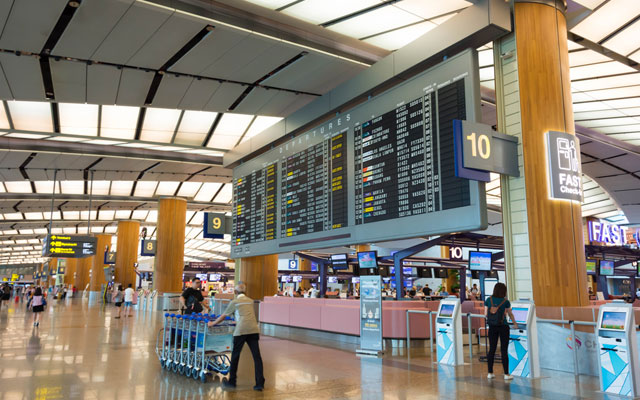
Singapore will reopen its borders to some travellers from five South Asian countries and Myanmar from Wednesday (October 26), as well as ease measures for several other nations, including Malaysia and Indonesia.
This follows a review of the Covid-19 situation in these countries, said the Ministry of Health (MOH) on Saturday.
Travellers, excluding short-term visitors, with a 14-day travel history to Bangladesh, India, Myanmar, Nepal, Pakistan and Sri Lanka will be allowed to enter or transit through the country again.
These travellers will be subject to Category IV border restrictions, which include a 10-day stay-home notice at a dedicated facility.
Singapore classifies countries and regions into four categories based on the risk of Covid-19 transmission, with differentiated border measures for each category.
MOH said that Malaysia, Cambodia, Egypt, Hungary, Indonesia, Israel, Mongolia, Qatar, Rwanda, Samoa, Seychelles, South Africa, Tonga, the UAE and Vietnam, will be placed under Category III measures.
These travellers will be able to serve their 10-day stay-home notice at their declared place of residence or accommodation – regardless of the vaccination status and travel history of the traveller and their household members.
Under the current regulations, Category III travellers have to apply to opt out of serving their stay-home notice at a dedicated facility.
MOH said that these travellers must remain in their declared place of residence or accommodation and wear an electronic monitoring device throughout their stay-home notice period.
In addition, travellers from Category I places – Hong Kong, Macau, mainland China and Taiwan – as well as those arriving from Category II countries on Vaccinated Travel Lane (VTL) flights, only need to take a PCR test on arrival.
All travellers from Category II countries on non-VTL flights, as well as those from Category III and IV countries, will no longer need to undergo an on-arrival PCR test, but will have to take an exit PCR test at the end of their stay-home notice.
Category III and IV travellers will also no longer have to undergo additional antigen rapid tests on the third and seventh days of their arrival, during their stay-home notice period.
Malaysia set to reopen to foreigners in stages, starting with Langkawi
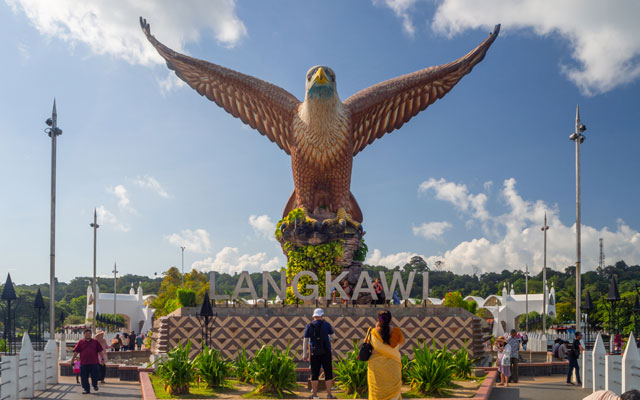
Malaysia’s popular holiday destination of Langkawi is gearing up to welcome back foreign tourists for the first time in 20 months under an international tourism bubble initiative which will kick off on November 15.
Prime minister Ismail Sabri Yaakob said the pilot project will be carried out for three months for evaluation by the National Security Council and Health Ministry before it is rolled out to other islands and destinations in the country.
However, the list of approved countries whose citizens can holiday in Langkawi under the pilot project has yet to be announced. It will be subject to the approvals of the relevant government authorities.
The requirement for foreign tourists entering Langkawi is a minimum three-day stay with proof of a negative PCR test result taken 72 hours before departure. They will also be required to have insurance coverage of at least US$80,000 and to download the MySejahtera contact tracing app.
Foreign tourists arriving at the main gateway of Kuala Lumpur International Airport are to undergo rapid molecular testing before continuing their journey to Langkawi, while those flying directly to Langkawi will have to undergo PCR testing on the second day of their arrival.
Travellers staying for only three days can use their second day Covid-19 swab test to depart from Malaysia, while those staying for more than five days are to undergo a test on the fifth day. All costs will be borne by the traveller.
The pilot project is targeted at fully vaccinated, high-yield individuals; and children under the age of 18 have to be accompanied by their parents or guardians.
Malaysian Association of Hotel Owners secretary, Anthony Wong, commended the government’s efforts to test incoming foreign arrivals for Covid-19 and said that hotels should also test long-staying guests as “it takes five days or more for an infected person to show symptoms”.
With more than 94 per cent of the adult population fully vaccinated, Wong also called on the authorities to reopen the rest of the country quickly to help the tourism industry survive.
Uzaidi Udanis, president, Malaysian Inbound Tourism Association, said it was the right move not to impose a quarantine on foreign tourists as it would have acted as a deterrent.
With regards to the list of approved countries for the pilot project, he called on the authorities to look at markets where its citizens are allowed to travel overseas and return to their home countries without quarantine.
Nigel Wong, secretary-general, Malaysian Association of Tour and Travel Agents, opined that the government should quickly firm up the list of countries permitted to enter Langkawi so that industry players can plan their marketing and promotional activities and rebuild their distribution partnerships.
He hoped that Singapore, due to its close proximity which makes frequent visits to Langkawi possible, would be among the first countries whose citizens will be permitted entry.
At a press conference last week, tourism, arts and culture minister, Nancy Shukri, said that she will be meeting with officials from Singapore this week to discuss resuming cross-border travel between the two countries. She had also hinted that Malaysia would be opening up to Singapore “very soon”.
Excitement coming through

2Brought to you by Macao Government Tourism Office (MGTO)
As Macao inches into November, the air around the destination is charging up with excitement. It is the Macau Grand Prix season from November 18 to 21, but fans of the fast and the furious are presented with more than just the motorsport to get their adrenaline fix.
Begin a journey into the Macau Grand Prix’s past and present through the voices of drivers and riders that have raced through the iconic Guia street circuit over the past six decades, and through insightful peeks into the unique atmosphere, character and emotion of a Macau Grand Prix Weekend – all captured in the film, The Legend of the Macau Grand Prix.
The Legend of the Macau Grand Prix by local filmmaker Sérgio Basto Perez, who has been in charge of film making at MGTO for years, is one of the six nominations for the Best Event Film category at the International Motor Film Awards 2021. The International Motor Film Awards is the world’s most prestigious awards event for the automotive film and television industry.
Visitors to Macao can catch the film at the Macao Grand Prix Museum and enjoy the races in full audio and visual glory, thanks to the latest 4K projection and 7.1 surround sound technologies at the new Screening Room. It is shown twice daily every Monday, Wednesday, Thursday and Friday, at 12.00 and 16.00; and four times daily on weekends at 11.00, 12.00, 16.00 and 17.00.

While there, take time to explore the museum, which reopened on June 1 this year following extensive renovations since 2017. Today, the Macao Grand Prix Museum boasts a larger space – across four floors – as well as new interactive displays and virtual reality racing stations that give visitors a taste of motor racing.
Operating hours and conditions may change due to Covid-19 safe measures. Visitors should contact the the Macao Grand Prix Museum (+853 8593 0515) ahead of their visit.
Here are some fun facts about the Macau Grand Prix to whet your appetite: the 6.2km Guia circuit is regarded as one of the most demanding motor racing tracks in the world, all thanks to its many twisty corners and fast straights; the track served very briefly as a treasure hunt street route before being used for amateur races; and the event is well loved for its Formula 3 and 4 championships as well as the Motorcycle Grand Prix.
Exhilaration power up
Beyond the high-pitched whine of racing engines, Macao has many other experiences that will delight thrill-seekers.

The new GoAirborne Macau at Lisboeta Macau integrated resort is said to be the first skydiving centre in Macao. Featuring an international competition standard 15m tall wind tunnel, the centre offers every guest – from first timers to professional flyers – an opportunity to enjoy the sport in a safe and controlled environment.
Instructors are on hand to guide first-timers, who can pick from various packages, from a single-dive Teaser Package to the six-dive Trial Training Package. Children four years old and up are welcome.
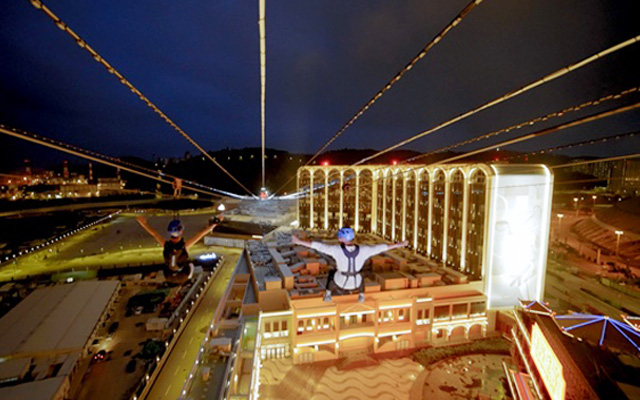
Lisboeta Macau integrated resort is also home to yet another fresh attraction – Zipcity Macau. Positioned as Asia-Pacific’s first urban zipline attraction, the facility combines exhilarating thrills of ziplining with extra-sensory audio-visual experiences. The experience is great for family day-outs and student groups.
Day and night rides are available, each presenting a different 360-degree view over the city of Cotai. A spectacular audio-visual show awaits night fliers.
Pace your time at both GoAirborne Macau and Zipcity Macau with a stay at one of the hotels within the Lisboeta Macau integrated resort, which features collective memories of Macao and her iconic landmarks. Hotels to open at Lisboeta Macau include Lisboeta, LINE FRIENDS presents CASA DE AMIGO and Maison L’Occitane – all bearing unique themes. Even more fun can be found here, such as the Night Market @ Lisboeta and Guia Electric Karting.
Operating hours and conditions may change due to Covid-19 safe measures. Visitors should contact the GoAirborne Macau (+853 2888 0882) and Zipcity Macau (contact@zipcity.com) ahead of their visit.

Need more action? Quench competitive thirst with a round of paintball war games, coordinated by destination specialist Follow Me Macau.
Participants are provided with military equipment, a pair of protective gloves and a flak jacket for close-quarter battle, as well as a safety briefing and introduction to gun usage. Three games will be played in groups until a winning team emerges. Advance reservations are required.
Light up the night
Macao continues to extend her invitation to visitors to play all day and all night when the Macao Light Festival returns from December 4, 2021 to January 2, 2022.
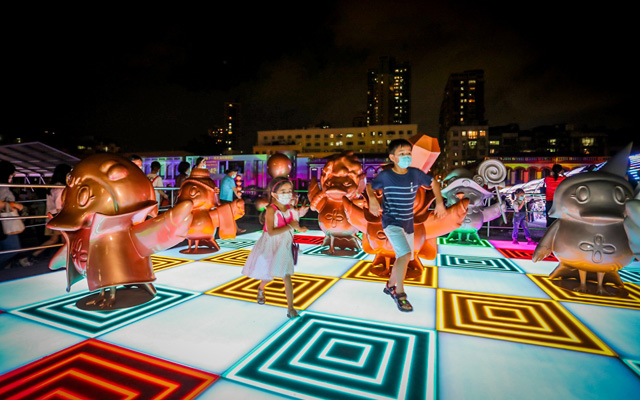
First launched in 2015, the annual event puts Macao in the spotlight – quite literally – with projection mapping and light installations. More than offering a visual treat to destination visitors, Macao Light Festival presents the perfect opportunity to appreciate and learn about the local community, culture and history through interactive activities.
In 2020, the popular festival transformed Macao into a romantic city, with visitors invited to explore four thematic light installation routes – Circus, Time Tunnel, Candy Kingdom and Music Box of Lights – and appreciate stunning light installations and participate in interactive games along the way. The route covered various landmark locations, such as Nam Van Lake Nautical Centre, Anim’Arte NAM VAN and Taipa Village.
Macao Light Festival 2021 promises to be ever more exciting, so stay tuned for details!
For more travel updates and inspirations, follow Mak Mak Macao (on Instagram), Stopover Macao (on Facebook), and Macao Moments (on Twitter), or visit the Macao Government Tourism Office website.
Indonesia defines bigger budget for tourism recovery
The Indonesian government will direct 9.2 trillion rupiah (US$645 million) from the 2022 state budget towards tourism recovery, with money being spent on the development of accessibility, attractions and tourist amenities, as well as on destination promotions and private sector support.
Sri Mulyani Indrawati, Indonesia’s minister of finance, said the budget would be divided into 6.5 trillion rupiah for central government spending and 2.8 trillion rupiah for regional spending.
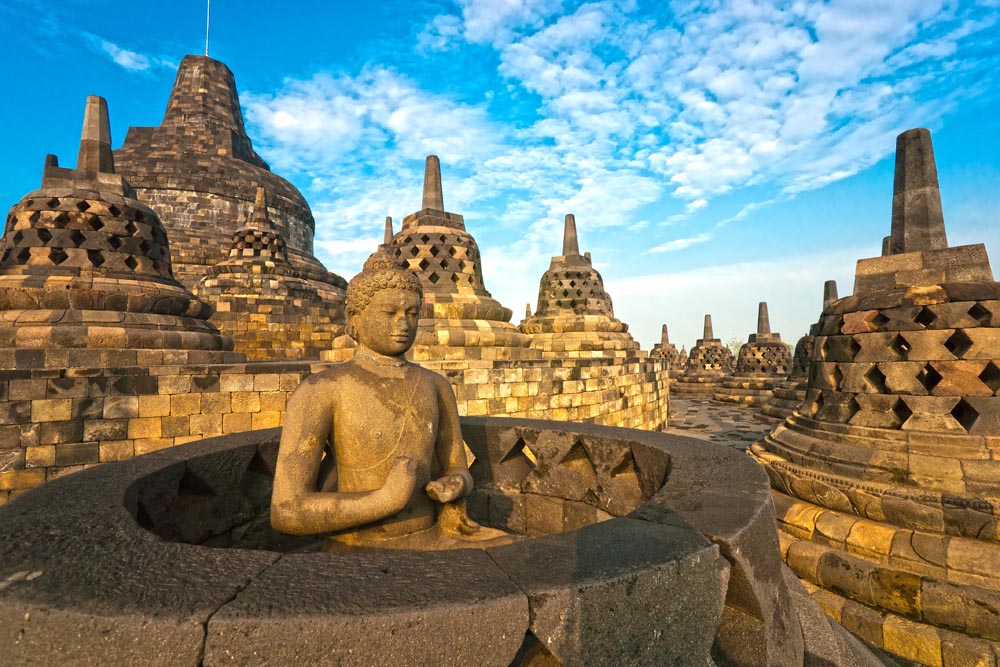
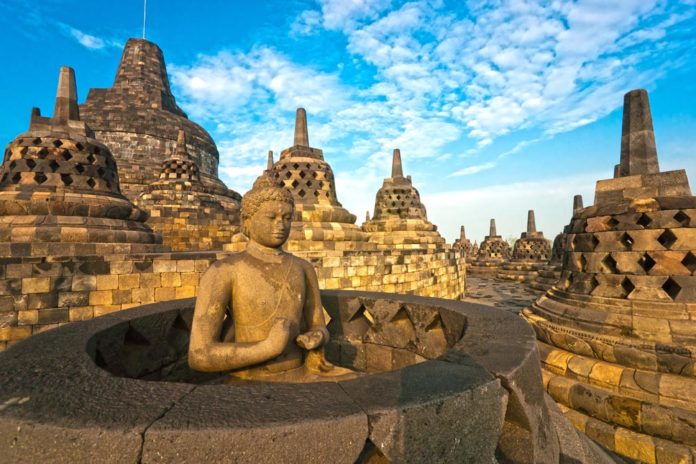
Funding will go towards developing five super priority destinations, namely Lake Toba, Borobudur, Mandalika, Labuan Bajo, and Likupang.
Sandiaga Uno, minister of tourism and creative economy said in 2022 the ministry would focus more on promoting to source markets producing quality tourists. Promotional direction will also prioritise the “spirit of sustainability” and play up nature-based tourism in the five priority destinations as well as cultural conservation, he added.
“Because we want tourism to be of higher quality, all aspects of tourism recovery must strive for the implementation of sustainable tourism,” Sandiaga remarked.
In 2021, the government allotted 7.67 trillion rupiah to support the national tourism strategic areas, ecotourism, and human resources training in the tourism sector.

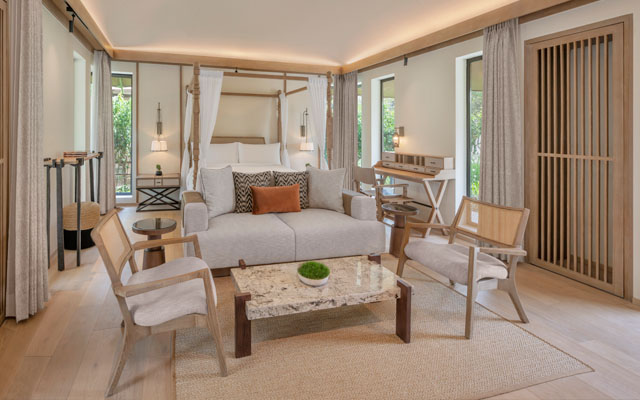






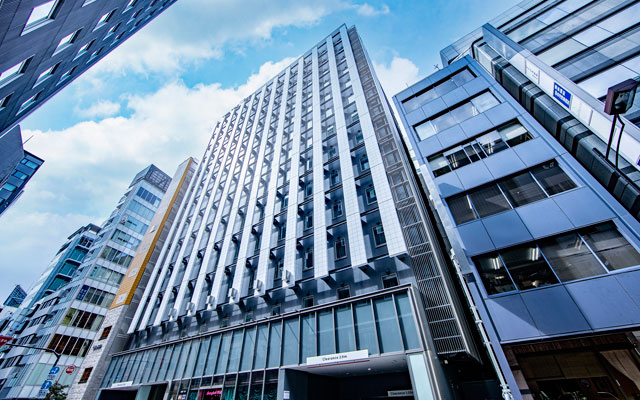
Accor is expanding its presence in Japan with the signing of two ibis Styles hotels in Tokyo and Kyoto, both slated to welcome guests from 4Q2021.
Centrally situated in Tokyo’s premier shopping and entertainment districts, the 224-key ibis Styles Tokyo Ginza is located within a five-minute walk from Ginza Station and seven-minute walk from Shimbashi JR Station.
In Kyoto, the 281-room ibis Styles Kyoto Shijo is located within a five-minute walk from Karasuma Station and Shijo Station and a 10-minute drive from Kyoto JR station.
With this expansion, the hospitality group will operate 21 hotels and resorts across eight cities in Japan by the beginning of 2022.