New South Wales’ (NSW) decision on October 15 to lift quarantine requirements for overseas arrivals from November has made clear Australia’s imminent full opening of international borders, however the country’s export tourism industry is still short of a clear date for the reopening.
The Australian Tourism Export Council (ATEC) has urged the federal government to provide a date and framework for reopening that tourism businesses across the country can use to plan, rebuild distribution partnerships, lock in bookings for 2022, and “help breathe life back into our A$45 billion (US$33.7 billion) industry sector which was crippled by the pandemic”, said ATEC managing director Peter Shelley in a press statement.
Shelley: Australia cannot miss critical booking windows and lose out to other competing destinations
ATEC noted that the country’s export tourism industry has suffered 18 months of no revenue.
“Since the announcement by the NSW government last Friday, our members have been fielding enquiries from intending travellers looking to book an Australian holiday or visit their family, but they still can’t make these bookings with any certainty,” said Shelley.
“We simply can’t afford to continue to keep our borders closed to high spending international travellers and miss critical ‘booking windows’ as these people simply will choose to holiday in other competing destinations, putting Australia at the bottom of their bucket list,” he added.
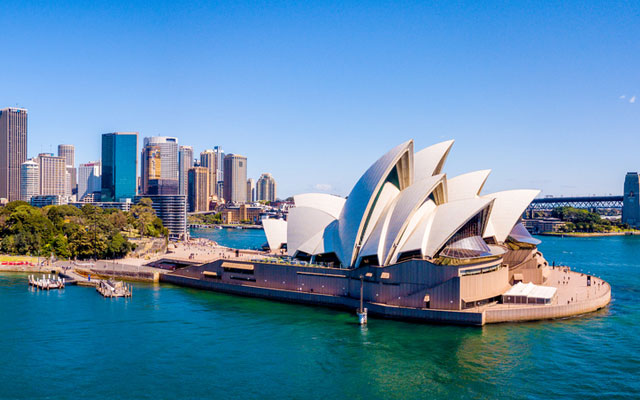
New South Wales will lift quarantine requirements for overseas arrivals from November; capital Sydney pictured
Booking season for the northern hemisphere is fast approaching, with travellers from the US, Europe and the UK looking to escape winter by heading to warmer destinations.
“If we miss this booking window, it will not surface again for another 12 months,” Shelley warned.
He reflected that Australia’s tourism players have a “hard road ahead” to rebuild connections with international markets and reestablish the destination’s presence. A certain “date for the reopening of our international border is therefore both urgent and critical”, he emphasised.
“Now is the time to provide clarity about Australia’s reopening to the world, and offer certainty to our industry, providing a much-needed opportunity for our financially fragile and work-depleted industry to commence the long road to rebuilding what was once Australians second largest export industry,” he said.
Low cost carriers Air Seoul, Jeju Air and T’way Air are readying for a ramp up in service as travel confidence improves and restrictions ease.
Asiana Airlines’ Air Seoul will resume service from Incheon to Guam on December 23, operating twice weekly flights every Thursday and Sunday. It is also contemplating service resumption to Saipan.
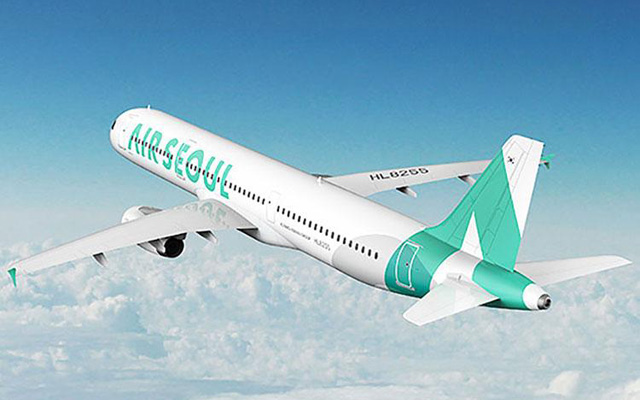
Air Seoul’s first service activation since its suspension of operations in March 2020 will be to Guam from Incheon
According to The Korea Herald, the service to Guam is Air Seoul’s first activation since flights were suspended in March 2020 due to the pandemic.
An Air Seoul official said the airline would work towards resuming international flights “at the appropriate time, especially to countries that sign travel bubbles with South Korea”.
Meanwhile, Jeju Air will commence a charter flight between Incheon and Thailand’s Chiang Mai in November for golf tourists. There are also plans to reinstate other key services, including between Incheon and Bangkok, before the end of 2021.
Back in June, Seoul-based T’way Air announced its leasing of three mid-sized A330-300 aircraft, which would be deployed for medium- and long-haul flights to destinations such as Sydney, Honolulu and Singapore – subject to pandemic developments. Personnel training for A330-300 operations commences this month.
As competition for staycationers in Singapore heats up, hotels are roping in well-known lifestyle brands or leveraging popular festivals to create thematic accommodation experiences.
Thematic staycations that have hit the market include experiences tied up with Häagen-Dazs and McDonalds, where guests can also take home not-for-sale memorabilia and unique merchandise from their stay.
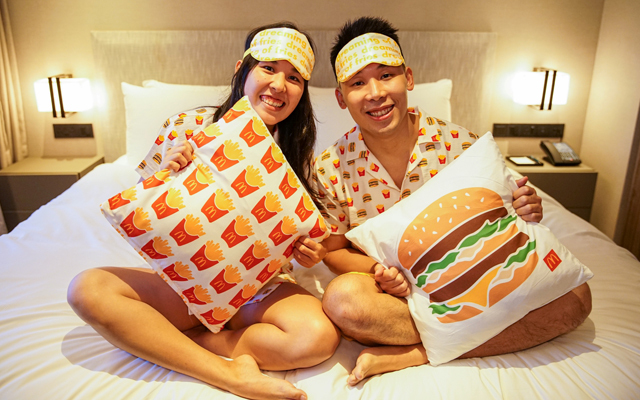
Oakwood Premier AMTD Singapore’s McDonald’s staycation deals with Klook were sold out within an hour
Hoteliers told TTG Asia that such themed staycations are well-received by travel-starved Singapore residents, as they offer an alternative type of entertainment in the current pandemic.
Roy Liang, general manager of Oakwood Premier AMTD Singapore, recalled how the property’s McDonald’s staycation deals, created in partnership with Klook and launched earlier in April 2021, were sold out within the first hour.
Fifty studios and apartments were allocated for each of three reservation windows, and the public interest was “immense”, said Liang.
Guests had a choice of a night’s stay in a Studio Deluxe Room, or a two-bedroom apartment for families. Guests were given exclusive McDonald’s merchandise as well as food vouchers.
More recently, Pan Pacific Hotels Group (PPHG) launched the Stay, Hide and Seek with Otah & Friends staycation package in partnership with KKday. Cinn Tan, chief sales and marketing officer of the hotel company said response was “especially boisterous” during the school holidays and National Day weekend in August.
Otah & Friends is a popular local family entertainment brand featuring characters inspired by Singapore’s wildlife, such as otters, hornbills, and wild boars.
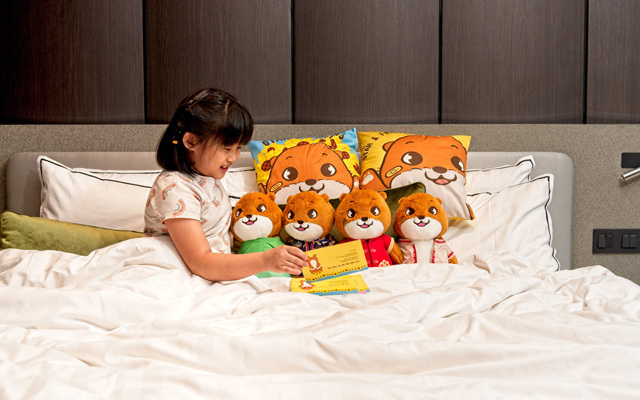
Guests can collect limited-edition Otah plush toys dressed in traditional costumes of Singapore, take home a welcome pack that includes a pair of Otah & Friends cushions, and join a hide-and-seek game in the guestroom to uncover hidden snacks using a clue kit provided.
Fans of Häagen-Dazs’ icy treats benefitted from a themed staycation at two Shangri-La hotels in Singapore. The spokesperson for Shangri-La Group said interest in the packages were unaffected by social gathering restrictions that were imposed a week after the campaign launch.
By the end of this month, Andaz Singapore will roll out a Halloween themed package, which includes spooky treats and mystical experiences such as a tarot reading session, put together with local bookstore and café The Moon, shared the hotel’s director of sales and marketing, Federica Brugnara.
When it comes to themed staycations, both Tan and Liang highlighted the strength of social media as a powerful driving force.
Limited edition memorabilia offered by Pan Pacific Hotels Group’s Otah & Friends staycation package in partnership with KKday drew character fans
“In the case of Otah & Friends and LINE, these brands have great fan bases. Limited edition memorabilia are also a big draw for many. They give our guests something tangible to take home and remember the good times by,” commented Tan.
Liang added: “Such items (like the not-for-sale McDonald’s loungewear) make for great Instagram-worthy shots and have driven a domino effect among people who want to be seen with the latest trends in the market or get their hands on these items.”
More ideas in the pipeline
Hoteliers are not about to put the brakes on thematic staycations, even as Singapore gradually lifts travel restrictions. In fact, plans are underway for even more themed offerings.
The Shangri-La Group spokesperson said the properties are “exploring more themed staycations with complementary brands”, following the “encouraging response and buzz” brought on by the Häagen-Dazs tie-up.
Tan shared that PPHG has just launched an afternoon tea-themed staycation. The Tea-cation Relaxation comprises a stay at a participating hotel, and includes a decadent and unique afternoon tea crafted by the hotel. At Parkroyal Collection Marina Bay, for instance, Tea-cation Relaxation takes garden picnics to the next level with a nature-inspired set enlivened with herbs, edible flowers and vegetables freshly picked from the hotel’s urban farm.
In tandem with themed staycations, PPHG has also rolled out other promotions such as workcation day passes, dining credits, and staycations that utilise the SingaporeRediscovers vouchers.
“We are also working with premium apothecary Appelles to develop sustainability-themed initiatives and offerings for guests in Singapore. We look forward to announcing more details later this year,” she said.
Over at Oakwood Premier AMTD Singapore, a Bike & Chill package was newly launched. It builds on the hotel’s proximity to Marina Bay and Coastal Park Connector, and offers an overnight accommodation, dining credit or one-way bike transfer, and partner vouchers.
Liang is on the lookout for more of such collaborations.
When asked if staycation demand would falter as overseas travel is possible once more through the Vaccinated Travel Lanes (VTL), Tan expressed confidence that it would not.
“We believe that for 1H2022, local staycations will continue to be in demand because there is still some consumer wariness surrounding the VTLs – factors such as paying for Covid-19 testing, flight fares, and overall uncertainty about hygiene and safety may hamper demand for vaccinated travel,” she explained.
This sentiment is echoed by Brugnara, who agreed that regardless of whether its for “financial or safety reasons”, there are individuals who are “wary of international travel” and “choose to exercise caution when it comes to holiday plans”.
She is certain that staycations will remain a great option for a local holiday, as the hotel industry here has built up a reputation over the past two years as a “safe, hygienic, and trustworthy choice”.
Liang posited: “There are two camps – one is ready to travel despite costs and lowered risks, while the other prefers to wait and see, patiently holding out for the opportune time to kickstart travels without having to risk their health.
“The latter are the people we hope to reach out to, as they are more likely to continue with staycations for vacations (for the time-being).”
The eco-friendly beach properties of Millennial Resorts in Batangas, Philippines, have registered for the EDGE (Excellence in Design for Greater Efficiencies) certification.
“The EDGE registration of Millennial Resorts along with our measures to reduce our ecological footprint demonstrates Landco’s leadership and advocacy in green hospitality. Our goal is to ensure the stewardship and sustainability of Batangas as one of the country’s prime tourist destinations,” emphasised Patrick C. Gregorio, senior consultant for hospitality, Landco.
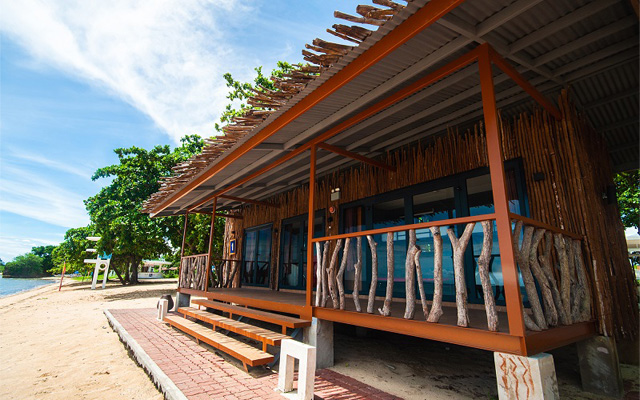
Crusoe Cabins
Millennial Resorts, a sister company of Lando Pacific Corp., owns and operates experiential resort accommodations, Crusoe Cabins and Cocoons, which are situated in the master-planned Landco Beachtowns CaSoBē (Calatagan South Beach) and Club Laiya, Laiya, San Juan Batangas, both approximately a three-hour drive from Metro Manila.
Both properties feature designs and practices focused on sustainability. For instance, they feature LED lighting fixtures and water-efficient showers and faucets, while natural sunlight and air flow are also maximised for efficient use of lighting and air conditioning.
Millennial Resorts guests are also provided with the option to go paperless. Check-in and check-out, requests for housekeeping services and room service are also conducted done through the hotel’s proprietary Milli App.
Situated in CaSoBē and Millennial Resorts’ flagship brand, Crusoe Cabins are contemporary rooms constructed from upcycled container vans and refreshed with rustic and beachy exteriors that blend in with the coastline of Calatagan.
Water reduction measures are also undertaken at Aquaria, a waterpark with a giant three-story pool slide at CaSoBē and Laiya Beach Club near Club Laiya.
Other facilities soon-to-open include Captain Barbozza restaurant and bar, Canopy and The Isle – venues for events, and Colony, a beachside co-working space.
St Regis Hotels & Resorts is planning to debut 11 new properties by 2025 within in destinations such as Bermuda, Mexico, Morocco, Aruba, China, the Dominican Republic, Oman and Qatar.
Expanding its footprint in Mexico, St Regis is expected to debut The St Regis Kanai Resort in 2022 and The St Regis Los Cabos Resort in 2023. Located in the Mayan Riviera, The St Regis Kanai Resort will feature ocean views from every vantage point, with plans that call for 124 guestrooms and suites, as well as 32 villas with private pools.
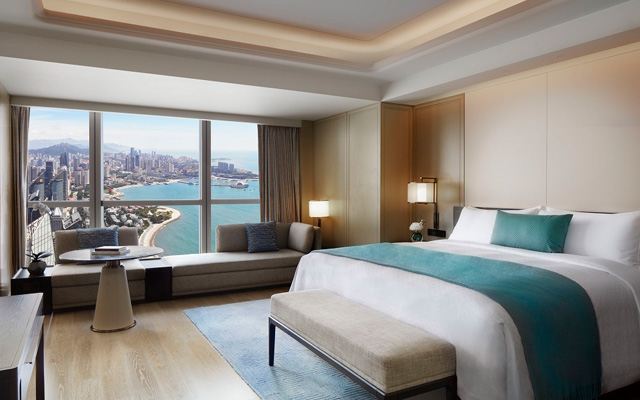
The St. Regis Qingdao
The St Regis Los Cabos Resort will be located in Quivira, Los Cabos, featuring panoramic coastal views. The resort is expected to offer 120 rooms and 60 residences, as well as a spa, golf course, beach club and three dining experiences.
In the Middle East, the brand plans to grow its presence in Qatar with the early 2022 opening of The St Regis Marsa Arabia Island, The Pearl, which will feature architecture influenced by the Andalusian and Arabesque style and offer views of the Arabian Gulf.
With a continued focus on the Caribbean in the coming years, in 2024 St Regis is expected to debut in Aruba with The St Regis Aruba Palm Beach Resort, as well as in the Dominican Republic with The St Regis Cap Cana Resort.
The brand also anticipates celebrating its entry into Oman in 2024 with The St Regis Al Mouj Resort in Muscat. Additionally, St Regis is expected to open a property in Africa, with the debut of The St Regis Marrakech Resort slated for 2025.
Most recently, in August 2021, The St Regis Qingdao debuted, featuring 233 guestrooms designed to pay homage to the destination and welcomes guests to enjoy one of China’s most beautiful coastal cities. Travellers can experience cobbled streets and heritage German architecture, or they can relax at one of the beaches facing the Yellow Sea.
St Regis currently has 49 open hotels and resorts today, with 29 hotels and resorts in its pipeline, representing expected growth of nearly 60 per cent over the next five years in both urban and leisure destinations.
YTL Hotels has released a new set of offers across its European properties for Singapore residents taking advantage of the recently announced Vaccinated Travel Lanes.
Travellers can book luxurious stays and curated experiences at seven different destinations in the UK, France and The Netherlands. Properties comprise The Academy, Monkey Island Estate, The Gainsborough Bath Spa, Threadneedles, The Glasshouse, Edinburgh, The Hague Marriott Hotel, The Netherlands, and MUSE Saint Tropez.
YTL Hotels
1 of 5
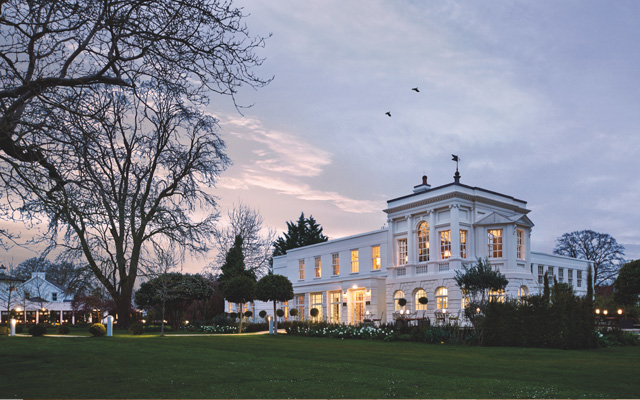
Monkey Island Estate
Monkey Island Estate's Floating Spa
The Academy Hotel London
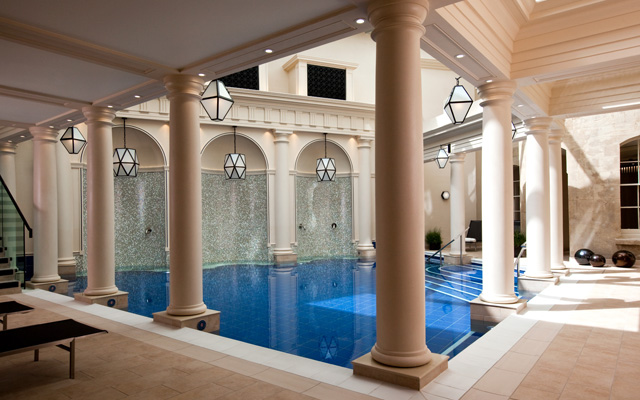
The Gainsborough Bath Spa
Threadneedles London
The Academy is centrally located in London’s Bloomsbury, and occupies five restored Georgian townhouses. Meanwhile, Monkey Island Estate in Bray, one hour away from London, is a retreat located across 2.8 hectares on an island in the River Thames.
Both hotels are offering a Stay Two, Pay One offer, and guests receive a complimentary night for every two nights booked. This offer includes accommodation in a guestroom or suite, complimentary continental breakfast and Wi-Fi.
For the other five properties, offers vary.
The ‘Book-Direct Benefit’ at The Gainsborough Bath Spa ensures the best available rates. For every reservation made directly with the hotel, guests will be given a 20 per cent discount on treatments booked in Spa Village, where they can also take advantage of the spa’s access to the natural thermal waters of Bath for a one-of-a-kind experience.
At the Threadneedles in London, the City of London package includes a four-hour private guided walking tour of London to explore monuments and museums, full English breakfast for two each morning and free Wi-Fi.
Over at The Glasshouse, Edinburgh, the property offers a Romance Package great for couples, which includes a champagne breakfast, romantic turndown service, and pamper and relax toiletries.
Moving east to The Hague Marriott Hotel, The Netherlands, the Open Local Doors Promotion includes daily breakfast, complimentary bicycle rental for one day per person, and a Local Discounts Card with access to discounts and complimentary items at local partners throughout the city. A minimum of a two-night stay is required.
Lastly, open only during summer and confirmed reopen for the new season in April 2022, MUSE Saint Tropez is a retreat nestled in the heart of a self-sustainable garden by landscape artist, Sophie Agata Ambroise. Here, with the Book Direct Benefit, guests receive a complimentary bottle of MUSE Rosé wine made from the grapes of the neighbouring vineyards and enjoy complimentary Wi-Fi, parking, bicycles and bowl games, free shuttle service to the town and the beach, and complimentary non-alcoholic beverages from the mini-bar and more.
Bookings are subject to availability and can be made online on each website or directly to reservations@ytlhotels.co.uk. Direct bookings ensure guests receive the best available rates.
The US Centers for Disease Control and Prevention (CDC) has raised its Covid-19 travel advisory level for Singapore to the highest risk category at level four.
The CDC system categorises destinations by taking into account factors such as the number of recent Covid-19 cases and the trajectory of new cases.
The US issues a new heightened travel alert for Singapore this week
“Because of the current situation in Singapore, even fully vaccinated travellers may be at risk for getting and spreading Covid-19 variants,” said CDC.
The agency urged travellers to Singapore to be fully vaccinated, and to abide by Singapore’s recommendations or requirements, including wearing a mask and observing safe distancing measures.
CDC’s latest warning comes as Singapore’s Vaccinated Travel Lane with the US kicks in on October 19. Fully vaccinated travellers from the US – joining travellers from 10 other countries – are able to enter Singapore without the need for quarantines.
Having maintained a full-time destination promotions office facing South-east Asian markets throughout the pandemic, Los Angeles Tourism & Convention Board is confident that Singapore’s latest Vaccinated Travel Lane (VTL) with the US as well as the US’ reopening to international travellers from November 8 will put the city in good stead for tourism recovery.
In an interview with TTG Asia, Adam Burke, president & CEO of Los Angeles Tourism & Convention Board, said his team remained “actively engaged” with travel trade partners in Singapore and other source markets in the region throughout the travel freeze.
New tourism products and hotels have emerged in Los Angeles, promising travellers fresh experiences
Activities include hosting the L.A. Insider online training programme, which provides travel professionals with the knowledge and tools to plan a vacation in Los Angeles; regular travel trade e-news programme; and a new Facebook page that conveys information tailored exclusively for the trade.
“We recently participated in the US Commercial Service webinar series for South-east Asia tourism exporters, and will be exhibiting at the ITB Asia trade show this month with one of our leading tour operator partners, Tour America,” Burke added.
The Singapore market is an important one for Los Angeles, said Burke, pointing to travellers’ average stay of 8.6 nights and trip spend of more than US$2,300.
“In fact, the market is one of the best performing from the Asian region,” he remarked.
“We couldn’t be more excited about the Singapore-US VTL. Not only is Los Angeles the main gateway to the US for most Singaporean visitors, Los Angeles International Airport (LAX) is also a vital direct connection for both business and leisure travellers from across the South-east Asian region. There’s always been great synergy between Singapore and Los Angeles,” he said.
Prior to the pandemic, Singapore was one of the top Asian markets to Los Angeles, with an average of 10 weekly flights offering 1,600 seats. Los Angeles went on to maintain direct air services with Singapore throughout the pandemic – the only city in the US to do so. Burke intends to continue the tourism board’s partnership with LAX to “grow and support direct air service from the region to Los Angeles”.
Burke: travel trade engagements were maintained throughout the pandemic
In building up towards tourism recovery, Los Angeles has welcomed several new products and experiences that Burke believes will appeal to South-east Asian travellers.
New draws include The Academy Museum of Motion Pictures, the world’s premier institution dedicated to the arts and science of movies; the revamped Warner Bros. Studio Tour, which now features a tour of the Big Bang Theory sitcom set as well as costumes from the Crazy Rich Asians movie; and SOFI Stadium, which will host the Super Bowl in February 2022.
Burke also pointed to a “hotter than ever” hotel development in the city, led by boutique properties. Travellers can look forward to fresh stays at properties such as Venice V Hotel, a beachfront property; Thompson Hollywood, a luxury lifestyle hotel with a destination rooftop lounge; Godfrey Hotel Hollywood which features a SoCal-centric restaurant and bar; and Fairmont Century Plaza, a US$2.5 billion redevelopment of the landmark Century Plaza hotel.
“With the recent news out of the White House that international travellers will once again be able to visit the US starting November 8, we are optimistic about the return of travel demand from our key overseas markets.
“We are also hopeful that many Singaporeans will choose our City of Angels as one of their first international trips since the pandemic’s start. Los Angeles remains one of the most diverse, welcoming, and inclusive destinations in the world – with Angelenos from 140 countries speaking over 220 different languages. That diversity is our greatest strength, and it infuses our community with a vibrancy and creativity that informs every aspect of the Los Angeles experience – from our world-class culinary scene, to an incredibly rich and eclectic collection of arts and cultural institutions, to unparalleled sports and entertainment offerings, and so much more,” he said.
When asked about the fear of travel that grips some consumers as the world opens up once again, Burke said travellers are assured of a safe experience in Los Angeles.
He elaborated: “Throughout the pandemic, the health and safety of visitors and residents has been top priority in Los Angeles, just as it has in Singapore. California has the lowest transmission rate of Covid-19 of any state in the country.
“Recent health orders at the county and state level add additional layers of protection to help to slow the spread of Covid-19. None of the orders limit business occupancy and operations, allowing Los Angeles to continue its comeback story and welcome visitors as well as business travelers back to our city.”
Current health measures include compulsory mask-wearing indoors, universal masking at outdoor mega-events, and proof of vaccination or a negative Covid-19 test for attendance at events of a certain size and entry to indoor establishments, including restaurants and bars, come November.
As AirAsia’s rapid transformation from an airline into a digital travel and lifestyle services group continues to gain strong momentum, the holding company for the airline group has been officially renamed AirAsia Aviation.
Bo Lingam, formerly president (airlines) for AirAsia Group, takes over as group CEO of AirAsia Aviation, overseeing the four airlines – AirAsia Malaysia, AirAsia Philippines, AirAsia Thailand and AirAsia Indonesia.
Lingam: new entity paves the way for new airline ventures to be formed in due course
AirAsia Aviation is part of the portfolio held by AirAsia Group Berhad (AAGB), the investment holding company, joining other companies – the airasia Super App, cargo and logistics venture Teleport, BigPay financial services, the edutech arm AirAsia Academy, engineering company Asia Digital Engineering, ground services division GTR, and the restaurant chain and food group called Santan.
Commenting on the move, Lingam said: “This structural change helps facilitate strong projected growth in both airline and non-airline portfolio businesses.
“The AirAsia Aviation entity holds our existing airline investments and paves the way for new airline ventures to be formed in due course. We have also established a new AirAsia Consulting division tasked at reviewing new airline partnerships and franchise opportunities.
“By creating this airline holding company we can focus on continuing to be the world’s best low cost airline. We have spent the past 18 months reviewing every aspect of the operation to ensure that our airlines will return stronger than ever before. The world is finally opening up and we foresee a V-shaped rebound in air travel in the near future.”
Lingam shared observations of “huge pent up demand for air travel” in Malaysia as interstate travel resumed on October 11.
“We are operating over 60 daily flights to 16 key leisure destinations, and more frequencies and routes will continue to be added in response to significant consumer demand,” he said.
Services in Thailand, Indonesia and the Philippines are also resuming in line with accelerated vaccination rates and the easing of travel restrictions in our key markets.
“We look forward to the opening of international borders as the next key milestone. We will continue to review new markets to operate from in the future, like Cambodia for example, when we can connect (South-east Asia) once again with the best value fares and lifestyle offerings,” said Lingam.
Panorama Group in Indonesia is boosting its distribution channel with the launch of Panorama Agent, a B2B2C business model that leverages on a network of ‘travelpreneurs’ across the country to connect with customer communities.
For a start, Panorama Agent members will be given access via a dedicated digital application to sell Panorama JTB’s domestic and outbound tour products, visa services and travel insurance which covers Covid-19. Later on, they will be able to sell other products such as airline tickets, hotel vouchers and admission tickets.
The new Panorama Agent will utilise a network of travel entrepreneurs across Indonesia to sell the company’s various travel products and services
Hellen Xu, CEO of Panorama JTB, said the company is looking to recruit
1,000 travel entrepreneurs – or ‘travelpreneurs’ – by the end of 2021 to support the new programme.
At press time, Panorama Group has built a team of 200 ‘travelpreneurs’.
Having ‘travelpreneurs’ representing Panorama will enable the company to reach out to more communities, a more efficient route compared to simply adding sales counters, according to Xu, who expects the Panorama Agent programme to boost business by 30 per cent.
“However, our sales counters, such as those in the malls, will continue to operate to serve those who need face-to-face services, such as dropping documents off for visa applications,” said Satrijanto Tirtawisata, president commissary, Panorama.
Sadewa, Panorama’s corporate secretary, expects the Panorama Agent programme to support the company’s efforts to catch pent-up travel demand as international borders begin to open up.
Furthermore, Sadewa believes the programme would enable the company to attract and collaborate with many skilled talents in the travel and tourism industry that have lost their jobs during the pandemic.