Travel trade stakeholders in Indonesia are increasing their online presence and app capabilities to better engage domestic customers and secure new sales in an increasingly challenging travel landscape.
Traveloka recently conducted live hotel tours, during which discounted rooms were sold. The initiative, according to John Safenson, vice president market management, helps to demonstrate the health and safety measures taken by industry players and rid fear of travel in a pandemic era.
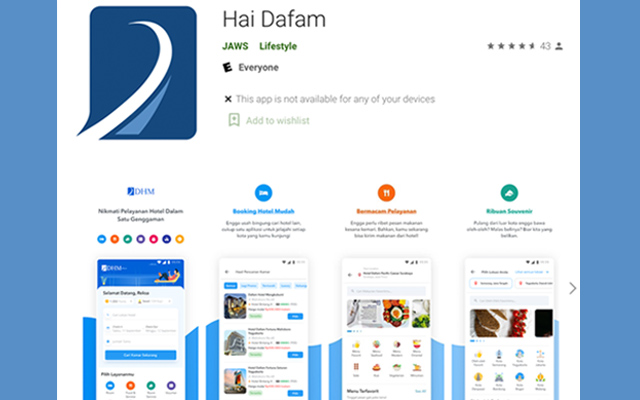
The new HAI Dafam will facilitate improved guest servicing
Recognising that travellers today are more price-conscious, Traveloka has intensified its marketing work, throwing out special offers and door prizes to entice consumers.
Safenson told TTG Asia that travellers today seek promotions and discounts, and look for assurance in the form of flexible booking and payment terms.
Over at Dafam Hotel Management (DHM), an improved mobile app has been created to facilitate better communications with in-house guests and expand service offerings.
Andhy Irawan, CEO of DHM, said hotels must do more than sell rooms and services on property; they should also have the capability to bring external experiences to in-house guests. With that in mind, DHM worked with Jawara Solusi Nusantara (JAWS), a web and mobile application system provider, to launch the HAI Dafam mobile app.
Rizki Susetiadi, CEO of JAWS, said the new app allows in-house guests to make room and restaurant reservations as well as order room service. In the future, the app will include online shopping features, allowing hotel guests to order local cuisine or souvenirs and have their purchases delivered to their room.
Another industry partnership has surfaced to benefit the travelling community, this time between Indonesia AirAsia and the Indonesia Hotel and Restaurant Association (IHRA). Both entities have come together to create travel packages for both individual and group travellers through the new Super AirAsia app. Supporting this effort is the SNAP promotion, which dangles affordable travel deals to Medan and Lombok, with prices starting from 699,000 rupiah (US$48.35). These deals include round-trip airfares from Jakarta and two-night stay at IHRA participating member hotels.
While the promotion was initially aimed at boosting traffic to priority Indonesian destinations the airline operates in, Veranita Yosephine Sinaga, CEO of Air Asia Indonesia, soon found opportunities to expand it to other destinations. – Additional reporting by Mimi Hudoyo
Minor Hotels has appointed Mark O’Sullivan as area general manager Bangkok.
This role will see O’Sullivan at the helm of numerous flagship properties including Anantara Siam Bangkok Hotel, Anantara Riverside Bangkok Resort and Avani+ Riverside Bangkok Hotel.
He first arrived in Bangkok in 2018 to take up the post of general manager at Anantara Riverside. During his tenure, he introduced several F&B concepts, as well as led the launch of Loy River Song, a luxury river cruise that transports guests from Bangkok to Ayutthaya.
Hailing from Ireland, O’Sullivan has over a decade’s worth of hospitality experience in Asia. He first joined Anantara in 2017 as general manager for Anantara Mai Khao Phuket Villas.
Prior to joining Anantara, the Irishman has cut his teeth at large global hotel brands such as Starwood and Hyatt, as well as boutique properties such as Club Coco and Brooks Hotel in his native Dublin.
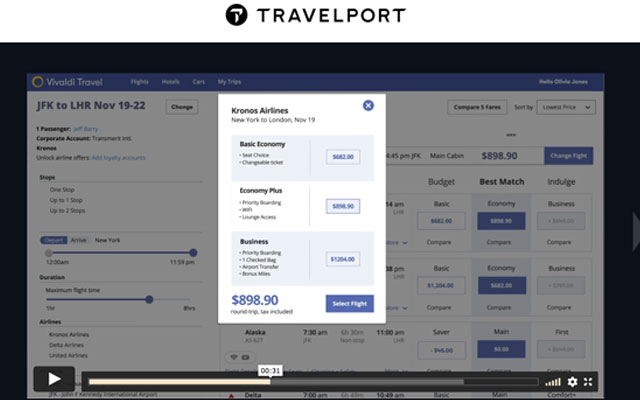
Travelport has launched its next-generation platform, Travelport+, as part of its new global strategy and commitment to accelerate industry innovation in multi-source content distribution, travel retailing and value generation.
It is built to contain a lightweight and highly functional microservices API, complete with NDC content; enhanced airline ticket exchange tools; a trip container to manage all aspects of the trip; and a sophisticated point of sale solution to address the needs of the professional travel agent.
Travelport+ capabilities will enable users to deliver higher value trips
Such improved retailing and merchandising capabilities as well as support from Travelport’s leading data and insights will enable Travelport+ users to deliver higher value trips.
“It’s a monumental moment in our history and in the development of our industry”, said Greg Webb, Travelport CEO.
“Travel hasn’t kept up with the evolution of modern digital retail and today, the buying and selling of travel is more complex than it needs to be. As Travelport is the only dedicated, global, travel distribution platform, we have made a multi-year investment to accelerate industry innovation in travel retailing. Bringing together the best of Travelport’s existing capabilities and tools, and driving innovation to deliver the unmet needs of our industry, Travelport+ truly changes the game in the speed of delivery of modern travel retail and offers a fundamental upgrade to travel technology,” Webb continued.
Travelport+ has acquired a number of agency and supplier partner buy-ins as part of the initial upgrade exercise, most of which are organisations based in the US and Europe.
Gabrielle Carr, COO, TAG, a global travel and event management company based in the US, said: “Upgrading to Travelport+ has been a game changer. The process was simple. It had an instant, positive impact on our business.”
Online business at UK-based Perfect Holidays has leapt by 30 per cent since the transition to Travelport+, shared managing director Faisal Butt.
Travelport+ will continue to be rolled out globally and users will be assisted by a specialised customer support team.
Ovolo Group has expanded the role of Dave Baswal to managing director ANZ.
Previously, Baswal has been leading the Australian arm of the business since 2016. This includes acquisitions, repositioning, design and project management for The Inchcolm by Ovolo and Ovolo The Valley in Brisbane, Ovolo Nishi in Canberra and Ovolo South Yarra in Melbourne.
He has over two decades of hospitality finance and real estate management experience under his belt.
After a year out of service, Norwegian Cruise Line (NCL) will finally return to the seas with fresh itineraries in Europe and the Caribbean this July 25.
Norwegian Jade, Joy and Gem will the be first ships to welcome guests once again, but with reduced capacity. Norwegian Jade will offer seven-day cruises to the Greek Isles from Athens (Piraeus) from July 25; Norwegian Joy will offer week-long Caribbean itineraries from Montego Bay, Jamaica starting August 7; and Norwegian Gem will sail from Punta Cana (La Romana), Dominican Republic beginning August 15.
Norwegian Jade, pictured along the coast of Santorini, Greece, will be among the first NCL ships to return to service starting July 2021
NCL president and CEO Harry Sommer said the company has been “working diligently towards our resumption of operations”.
Focus has been on ensuring guest health and safety, he stated.
“The growing availability of the Covid-19 vaccine has been a game-changer. The vaccine, combined with our science-backed health and safety protocols, will help us provide our guests with what we believe will be the healthiest and safest vacation at sea,” Sommer remarked.
NCL has made it compulsory for all guests sailing aboard cruises with embarkation dates through October 31, 2021 to be fully vaccinated and tested prior to boarding.
However, Sommer noted that NCL’s health and safety protocols for cruises could change for embarkation dates beginning November 1, 2021, due to the “ever-evolving nature of the pandemic, the accelerating rollout of the vaccine, and the speed of scientific learnings”.
He emphasised that NCL’s health and safety protocols will continue to rely on science and the advise of its expert council.
On April 4, parent company Norwegian Cruise Line Holdings launched its SailSAFE Health and Safety programme, which is founded on three pillars: Safety for guests and crew with vaccination requirements, universal Covid-19 testing and enhanced health screening protocols; Safety aboard with medical-grade air filtration, increased sanitation measures and enhanced medical resources; and Safety ashore through the collaboration with land-based tour operator partners to extend health and safety measures to each destination.
The company has also revealed its SailSAFE Global Health and Wellness Council, comprising six experts in their fields. The Council is led by Scott Gottlieb, former commissioner of the U.S. Food and Drug Administration and co-chair of the Healthy Sail Panel, which was formed to guide the cruise industry’s safe resumption of operations.
The Council’s work will complement the Healthy Sail Panel initiative and will focus on the implementation, compliance with and continuous improvement of health and safety protocols across Norwegian Cruise Line Holdings operations.
Sommer said: “Resuming operations is a comprehensive endeavour, involving many parties around the globe. We are very proud of our collaborations and look forward to deeper partnerships as we forge into the future.”
A docuseries, EMBARK – The Series, will premier on April 15 at 20.00 on the cruise line’s Facebook page and website to give guests a glimpse of the careful preparations needed ahead of NCL’s return to service.
Meanwhile, NCL has extended its temporary Peace of Mind cancellation policy to guests sailing on cruises booked by April 30, 2021 with embarkation dates through October 31, 2021. Guests have the flexibility to cancel their cruise 15 days prior to departure, and receive a full refund in the form of a future cruise credit. Guests will also only need to make final payment 60 days prior to embarkation versus the standard 120 days.
A new sea-to-air ferry transfer service from Shenzhen Shekou Port to the SkyPier in the airside of Hong Kong International Airport (HKIA) will be offered from April 15 by Qatar Airways, which hopes to improve passenger movement in the Guangdong-Hong Kong-Macao Greater Bay Area (GBA).
Qatar Airways customers can purchase their ferry tickets from SkyLink or the port’s website. They will be provided with boarding passes and baggage check-through service to their final destinations at the Shenzhen Shekou terminal, where they will also clear their customs and immigration.
Southern China travellers can soon enjoy a convenient sea-to-air service with Qatar Airways
Upon arrival at SkyPier, customers can proceed directly to their Qatar Airways boarding gate or explore HKIA facilities prior to boarding.
Thomas Scruby, Qatar Airways vice president of sales for Australasia & North Asia, said the new ferry transfer service would boost the airlines’ footprint in the GBA by providing Southern Chinese customers more flexible flying options via HKIA and onwards to more than 80 destinations in Europe, the Middle East, Africa and the Americas.
“We know connectivity within the region and to the wider world is critical for the success of the GBA. Therefore, we are excited to do our part to build the infrastructure necessary to make it easier and smoother for local customers to travel despite the disruption caused by the pandemic around the world,” said Scruby.
“We are confident in the market’s demand and our commitment to the region remains resolute. The next phase of our partnership with Airport Authority Hong Kong will see the ferry transfer service to be further expanded to other key GBA metropolis such as Macau and Dongguan once government restrictions are lifted, allowing even more customers in the region to enjoy the world-class experience that Qatar Airways has to offer,” he continued.
With the global pandemic changing how people work, travel and live, the remote working trend continues to gather pace, with pristine beaches, expansive villas and even national parks being pitched as temporary workspaces to a rising breed of digital nomads.
Accommodation across the globe have reported longer-stay bookings fuelled by a rising tide of travellers looking for an escape from lockdown fatigue or a change in work scenery.
Keen to tap on that growing demand, more hotels and destinations are rolling out longer-stay packages, ranging from one month to a year, with deep discounts and other perks to please this unusual breed of travellers.
More remote workers are flocking to sandy beaches and the countryside for workations as the pandemic gives rise to a work-from-anywhere culture
Sweetening the long-stay deal
From free vaccines to five-year visas, tourism authorities across Asia and the Middle East are crafting strategies and dangling sweeteners to stir interest among long-stay tourists.
Dubai has since January started promoting free vaccines for all UAE residents as an added perk to its one-year virtual working programme launched last October.
Following on, in February, Ras Al Khaimah Tourism Development Authority rolled out its Live RAK Play programme, luring remote workers to call the emirate home for one month to a year. The programme comprises a host of long-stay offers across numerous hotels, complete with free Wi-Fi, discounted rates, complimentary tickets to attractions, and other perks.
Similarly, Indonesian tourism officials are looking to tap into the burgeoning pool of remote workers facing work-from-home fatigue, in hopes of reviving the bruised sector. Once international travel reboots, Indonesia plans to offer a five-year visa for international tourists to carve out a second home in Bali, traditionally one of Asia’s hotspots for digital nomads.
According to tourism minister Sandiaga Uno, they can either opt for an individual package or one for the family, by making a deposit of US$142,300 or US$178,000, respectively. The plan targets business owners and travellers who are looking to escape the cold winters in their native countries by staying at least three to four months in Bali.
Foreign visitors will be allowed to work in Indonesia under this visa, renewable every five years. There are also plans to extend the programme to other parts of Indonesia, including Batam, Bintan and others within the ASEAN Travel Corridor Framework.
A remote worker taking a workation at a co-living and co-working space in Bolinao, Pangasinan
Work from home away from home
Private tourism stakeholders are also eager to capitalise on the extended workcation trend to speed up recovery in the pandemic’s wake.
In February, Hyatt Hotels Corporation launched The Great Relocate, offering a flat rate for long-term stays with a minimum 29-day booking for hotels across South-west Asia, the Middle East and Europe.
Likewise, Centara Hotels & Resorts in January rolled out Work From Hotel (WFH) packages in destinations across Thailand, offering extended stays from two weeks to a month at reduced rates.
The initiative came about as Centara saw a surge in remote workers, some with children in tow, looking to escape for “a significant period of time” to pastures new such as beaches or the countryside amid the pandemic, said Tom Thrussell, vice president of brand, marketing and digital at Centara Hotels & Resorts. A trend was also emerging of Bangkok-based residents migrating to different areas, like coastal towns, to escape the city’s air pollution, he added.
“We see value in not just day packages but also longer-stay WFH packages, because people are taking this opportunity to change up their environment for a longer period,” he said, adding that the WFH trend “is here to stay for the foreseeable future”.
To date, Centara has seen “hundreds” of bookings for its WFH packages, with top locations being the drive destinations from Bangkok and Pattaya; and further afield, Phuket, also known as one of the areas in Thailand with the finest air quality, according to Thrussell. Buyers of WFH packages have been a mix of Thai and expatriate residents.
While Centara also has a home-away-from-home package offering three- to six-month stays at slightly more competitive rates, demand has been subdued, shared Thrussell. However, he expects more longer stays to come into demand once borders reopen.
Over in the Philippines, hotels and resorts are looking to court digital nomads booking long-term stays. To capture this growing segment, an online booking platform has been set up by Manila-based hostel owner Orly Darnayla.
Baybayin Hub, referencing the word ‘coast’ in Filipino, connects a portfolio of local hotels and resorts with a current network of over 1,400 digital nomads seeking medium to long stays.
Currently, 35 resorts are on the platform, spanning six locations: from tourist hotspots like Boracay and Palawan to the scenic province of Pangasinan. Listings run the gamut from hostels and beach lodges to luxury resorts, with rates slashed up to 80 per cent and prices starting at US$200 for a month-long stay.
The idea was born out of the pandemic when occupancy at Darnayla’s hostel plunged from 99 per cent to zero amid the lockdown. To survive, he converted his hostel into a co-working and co-living space to tap the growing pool of remote workers, digital nomads and freelancers seeking an affordable workspace.
The move allowed Darnayla to continue operations at a time when leisure travel was banned, with only business travel permitted.
His pivot took off, with revenue soaring by 20 to 30 per cent – inspiring him to set up Baybayin Hub to support other hotel operators to make the same transition. For each booking made via the site, the platform takes a 15 to 30 per cent cut.
The 25-key Birdland Beach Club, the first resort to join the platform, saw occupancy soar from zero to 95 per cent within the first month of converting into a co-working space.
Gen-Zers and millennials make up the bulk of the platform’s clientele, with the rest comprising Gen X business owners and upper-class families, according to Darnayla.
Under the lockdown, guests were required to book a minimum one-month stay in accordance with legal requirements. But, following the rolling back of restrictions, the platform now also markets seven-day and 15-day stays. Since its October 2020 launch, over 400 rooms have been sold on the platform, with 15- to 30-day stays making up 98 per cent of bookings.
Darnayla said he has seen a hike in longer-stay bookings, with some guests at lower-end accommodation opting to extend their month-long stay for three to six months.
“They will stay longer, especially when they have found a community of like-minded professionals to co-work and co-live with,” he said. “Also, they feel safer staying in our resorts in the countryside or province because they are not as crowded as compared to (those in) big cities.”
Darnayla sees the switch to target remote workers and digital nomads as a way to crisis-proof hospitality businesses, as in the event of another pandemic, they can continue operating as co-working spaces.
Some of the platform’s resort partners are now investing to set up exclusive co-working spaces to cater for long-stay guests.
More companies are also catching on to the idea of flexible workspaces. In March, one of the biggest business process outsourcing (BPO) companies in the Philippines, with 47,000 employees nationwide, signed up to the Baybayin Hub platform. As well, a couple of small, local BPO companies are also due to come on board.
Looking ahead, Darnayla plans to expand Baybayin Hub across South-east Asia, including countries like Japan, Thailand and Singapore.
Centara’s properties across Thailand, including Centara Grand Mirage Beach Resort Pattaya, now offer extended stays at reduced rates
Embracing diversification, differentiation
The entry of more players into the long-stay market heralds new competition for established serviced residence providers who are vying for that same share of extended stay demand.
To strengthen its position in the extended stay business and build the company’s global scale, Ascott – which manages a range of long-stay brands, including Ascott The Residence, Somerset, Citadines and co-living brand lyf – has embarked on various initiatives.
Last June, Ascott expanded into the rental housing segment in China to tap on the growing demand from young, mobile workers as well as returning students from abroad looking to rent quality fully furnished homes in the tier one and tier two cities on a long-term basis.
“We have secured three rental housing properties in Shanghai and Hangzhou, increasing our presence in China’s high growth rental housing sector,” said Kevin Goh, CapitaLand’s CEO for lodging and Ascott’s CEO.
Further, the group’s hospitality trust, Ascott Residence Trust (ART), will foray into the US student accommodation sector with the acquisition of an Atlanta property for US$95 million, as it looks to capitalise on the sector’s resilience amid Covid-19 headwinds. The purpose-built student accommodation, Signature West Midtown, boasts 525 beds across 183 units.
“Student accommodation, with leases that typically last for a year, will build on our stable income streams,” said Goh. “It will offer a new platform for growth and also diversify ART’s portfolio beyond traditional hospitality assets, mitigating the near-term headwinds faced in the hospitality sector.”
To tap on the telecommuting trend, Ascott also capitalises on its serviced apartments to feed domestic demand, with the launch of Work in Residence and Space-as-a-Service last August in countries such as Singapore, Malaysia, Japan, Australia, China and Vietnam.
As for Far East Hospitality (FEH), the company’s segmentation of its brands based on traveller profiles, instead of demographics or nationalities, has set it apart from its extended stay competitors, said Arthur Kiong, CEO of FEH.
For instance, the company’s Village brand targets travellers with a keen interest on the local culture and wanting to experience living like a local, with edible gardens set up in its Village serviced residences so that residents can sample local vegetables in their own backyards.
Meanwhile, its Oasia brand targets the wellness-conscious traveller.
Post-Covid, Kong projects that families are likely to travel together out of safety considerations and that travellers will be opting for longer stays due to the inconveniences of travel. With the company offering accommodation options for shorter-term, with a minimum six-night stay, and extended stays for a minimum of three months, Kong said that its serviced residence portfolio is well poised to meet these evolving trends.
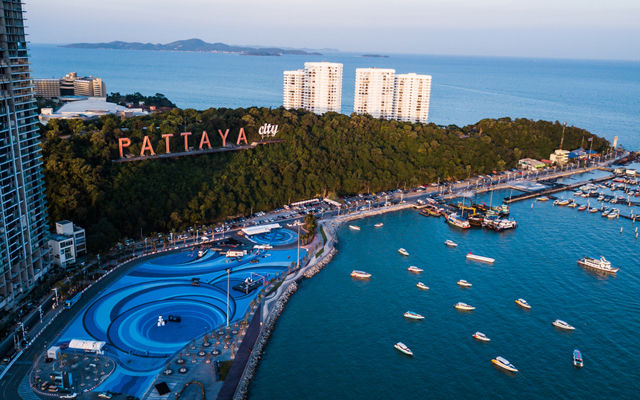
Pattaya's host city status comes as Thailand works to position the destination as a MICE-friendly city while Eastern Economic Corridor development gets underway
Thailand’s latest wave of fresh Covid-19 infections has resulted in massive cancellations for hotels in major Thai cities ahead of the Songkran festival, with the Tourism Authority of Thailand (TAT) predicting income losses of up to 50 per cent for the accommodation sector.
To contain the latest outbreak, the Thai government has imposed mandatory quarantines for travellers coming from high-risk provinces – 41 at the point of publication – as well as shut pubs and bars in the same provinces for two weeks.
Hotel occupancy in Pattaya is down to just 60 per cent for Songkran, usually a peak travel season
These measures have negated the government’s effort to boost domestic tourism by way of adding an extra day to the Songkran public holiday, which runs from April 12 to 15.
Numerous public events that have been planned for this week have also been disrupted. For instance, Amazing Songkran Buriram was issued a stop order on April 10, after opening on April 6. It was scheduled to conclude on April 15. As a result, remaining concerts, marathon and sports events were cancelled.
In Prachuap Khiri Khan province, famed for Hua Hin beach resorts, hotels have reported cancellations of 70 per cent of booked rooms.
Hotels in Ayutthaya province have had their bookings slashed by 40 per cent.
Hotels in Pattaya are now running at an average occupancy rate of 60 per cent for Songkran, down from a high reservation rate of 95 per cent. In the same eastern region, hotels in the seafront Rayong town saw 30 per cent of bookings being postponed.
TAT also reported a five to 15 per cent room cancellation in Phuket, Krabi, Phang Nga and Nakhon Si Thammarat provinces.
However, according to Bhumkit Raktaengam, president of the Tourism Business Association Phuket, hotel occupancy for the festive period has plunged from 80 per cent to just 35 despite the destination being a popular option with domestic travellers.
As of April 12, half of the hotel bookings made in Chiang Mai and other northern provinces were cancelled, shared La-iad Bungsrithong, president of the Thai Hotels Association Upper Northern Chapter.
An overwhelming majority of Singaporeans would be comfortable using digital health passports to help restart travel, with a new global study commissioned by Amadeus showing 96 per cent of Singaporean respondents in favour of such an initiative – the highest among the nine countries that were surveyed globally.
The study, which also looked at factors that travellers will take into consideration when it comes to storing health data, found that 63 per cent of Singaporean travellers would be more likely to store health data on an app where a travel company has partnered with a trusted healthcare company.
Singaporeans most receptive to digital health passports among countries surveyed in recent Amadeus study
Three in four Singaporean travellers (74 per cent) agreed that they would more likely feel comfortable sharing health data if the airline they frequently travel with offered a way to store travel health data in an app.
Some 51 per cent of Singaporean travellers said that having a travel app that could be used across the entire journey would greatly improve the overall travel experience. The same percentage said they would be reassured that all their information is in one place, while 49 per cent indicated this would reduce stress around travel.
While Singaporean travellers are receptive in sharing their health data, they remain cautious about travelling, with only 23 per cent saying they would book international travel within six weeks of restrictions lifting, compared with a global average of 41 per cent across all the markets in the study.
Mieke De Schepper, managing director of Amadeus Asia Pacific, said: “Markets across Asia-Pacific have shown tremendous resilience in light of Covid-19 and this survey shows us that travellers want to start traveling again. Singaporeans have the highest level of receptiveness when it comes to digital health passports amongst other Asia-Pacific and Western countries. The survey proves that travellers are placing their confidence in digital health passports, which is key in shaping how travel will be rebuilt moving forward.
“The travel industry is resilient and we will build it back better than before. This survey further highlights the need for all of us, within the industry, to work together with the government in order to achieve this.”
Green shoots sprouting in India’s domestic tourism market has been curtailed by renewed restrictions to stem a resurgence in Covid-19 cases, leaving hospitality players bracing for a fresh blow to their businesses.
With destinations like New Delhi imposing a night curfew and Mumbai announcing a weekend lockdown, business sentiments have nosedived.
Renewed lockdowns and curfews derail India’s tourism recovery; tourists thronging Taj Mahal in April 2021 pictured
“The domestic market that had started to pick up is going to witness a downturn again,” said Sanzeev Bhatia, vice president and general manager, The Metropolitan Hotel and Spa in New Delhi.
“Restrictions like night curfews mean that besides a loss in room night business, the banqueting business will also take a hit. In fact, a lot of hotels are already seeing cancellations of some booked banqueting business.”
Maharashtra reported 63,294 new Covid-19 cases on Sunday (April 11), its highest spike since the onset of the pandemic. The state government is mulling imposing a full lockdown across Maharashtra from April 14.
“Whenever there is a rise in Covid-19 cases, the hospitality industry is targeted and victimised, (despite us) operating in the safest of environments and following all the mandated compliances,” said Sherry Bhatia, president, Hotel and Restaurant Association of Western India.
“A majority of the establishments have mounting debts and face threats of insolvency. With fear of losing jobs like last year, many workers have begun to leave for their homes again. After last year’s lockdown, the hospitality industry is in turmoil and is just not in a position to bear any more losses.”
However, a section of hospitality players remain bullish about the future prospects of the industry.
“After almost a year, the last couple of months saw domestic tourism enabling the hospitality sector to slowly get back on its feet. Though the recent increase in Covid-19 cases has created a dent in that growth, it is still faring well,” said Sarbendra Sarkar, founder and managing director, Cygnett Hotels and Resorts.
“We are better prepared to manage the situation. While all tourist spots and public places have been closed, people are still opting for staycations. Besides, the vaccination drive has instilled a sense of safety among people. While they are cautious, they have no fear of leaving their safe spaces.”