TTG Asia
Asia/Singapore Tuesday, 16th December 2025
Page 816

ForwardKeys rolls out DMO-specific dashboard

0

Cruise cancellations spill in as Singapore enforces new restrictions

0

Singapore’s month-long Phase 2 Heightened Alert restrictions, which kicked off on May 16, has resulted in cruise cancellations, according to two major travel agencies.

Under latest restrictions, cruises out of Singapore must reduce their on-board capacity to 25 per cent, suspend outdoor activities and dining-in services, as well as limit travelling groups to two guests per cabin.

World Dream sails out of Singapore with Japan themes from May 28 to August 31

Both Dream Cruises and Royal Caribbean International, which operate special cruises out of Singapore for local residents, will continue to do so but with new health and safety provisions.

Koh Chong Wee, general manager at Citystate Travel, told TTG Asia that nearly 20 per cent of customers have cancelled their bookings. However, the majority are still keen to cruise, so assistance has been rendered to help affected customers postpone their trips to preferred future dates.

Over at Dynasty Travel, as many as 80 per cent of cruise customers have opted for cancellation while the remaining 20 per cent have decided to postpone their trip to the next school holiday period in November and December this year.

Dynasty Travel’s director of public relations and communications, Alicia Seah, said: “The current social distancing measures of limiting travelling groups to two guests per cabin is a big challenge as most of our customers are (cruising) with family and friends (and are in) groups of more than three or four persons.”

With Phase 2 Heightened Alert restrictions expected to run until June 13, sailings in the first two weeks of the June school holidays are affected. Most of the bookings for that period are from families with school-going children.

Koh explained that this group of passengers might have difficulties postponing their trips to the third or fourth week of the June holidays due to high occupancy. “Their only choice is to postpone to year-end school holidays. This might result in some customers cancelling the trip totally and asking for full refund instead of postponing it,” he added.

Singapore’s cruise industry was able to restart in late-2020 amid the pandemic when the Singapore Tourism Board launched a pilot scheme for round-trips that are only open to local residents. At a time where cruises have not resumed in many parts of the world, the success of these cruises-to-nowhere programmes has resulted in Singapore accounting for one-third of global cruise travellers.

Strong business leads, high value orders emerge from The Great ASEAN Travel Fest

0

Organisers of The Great ASEAN Travel Fest earlier this month have reported encouraging business performance for participating travel and tourism companies.

Close to 800 live business meetings were conducted online over two days, and 97 per cent of exhibitors expect travel orders to result from these interactions. Fifty-five per cent of travel orders are said to be valued above US$250,000.

Online meetings and informative destination presentations were offered

Despite the challenging travel landscape, the inaugural event attracted keen interest from buyers across the world. South-east Asian buyers made up the majority at 54 per cent of total attendance, a reflection of expectations that intra-regional travel will be the first to recover.

European and American buyers made up 11 per cent and six per cent respectively, indicating continued longhual interest in South-east Asian destinations.

Ricky Effendy, sales manager, business development with Hilton Bali Resort, Indonesia, said the property’s participation in The Great ASEAN Travel Fest has “helped to enhance our branding among buyers in the marketplace as we await borders to reopen”.

For Rovani Aliff, manager travel design and reservations South East Asia with Panorama Destination, Indonesia, the event brought “really good connections” with buyers from Asia and beyond, such as Zimbabwe and Turkey.

Attendees also found the event format easy to use and the programmes interesting. Jimmy Sim, manager – head of MICE & special projects with WTS Travel & Tours, Singapore, said the event was “different and refreshing” and “worthwhile to attend again”.

The Great ASEAN Travel Fest was organised by TTG Asia Media, and was held on May 4 and 5.

Fresh, green summer draws at Higashiyama Niseko Village

0

Higashiyama Niseko Village, a Ritz-Carlton Reserve is welcoming summer with special stay packages and four summer lifestyle programmes exclusive to guests.

Priced from 63,333 yen (US$581) per room, per night, the stay packages include overnight accommodation, complimentary breakfast, afternoon tea for two as a Book Direct Benefit, and flexible booking changes.

Summer lifestyle programmes at Higashiyama Niseko Village, a Ritz-Carlton Reserve will take guests down scenic routes and away to historical places, local farms and more

Various stay package options are available, such as The Maserati Experience, which include usage of a Maserati Levante – Special Edition for self-drive and Maserati in-room amenities.

Meanwhile, the four summer lifestyle programmes are designed for guests with intermediate to high fitness level. Options include a full-day Majestic Mount Yotei Hike, full-day Lake Toya e-Bike Adventure, half-day Scenic Mount Annupuri e-Bike Ride, and half-day Niseko Leisure Ride. All come with to-go lunch box and photo memories made by hotel staff on a GoPro.


For more information, email reservation.higashiyama@ritzcarlton.com.

The Travel Corporation makes DMC portfolio available for white-labelling

0

The Travel Corporation (TTC) is granting white-label access of its extensive DMC portfolio to leisure and corporate travel companies, and has created new solutions to facilitate improved ground-handling processes for users.

Gavin Tollman, president of TTC, who oversees the project, said the move was in response to partners who wanted “an operational solution with the quality, knowledge, infrastructure, consistency and financial resilience to deliver on the ground in a new post-pandemic world”.

Leisure and corporate travel companies can customise TTC’s DMC programme for own use

Tollman remarked that few knew about “the depth and breadth of TTC’s Destination Management portfolio” and were “excited when they realised we could provide that solution across multiple destinations worldwide, affording them deeper access to the award-winning expertise and service for which our brands are well recognised”.

TTG owns numerous industry-leading brands such as Trafalgar, Insight Vacations, Contiki, Red Carnation Hotels, Uniworld Boutique River Cruises and Evan Evans Tours, as well as 12 DMCs offering holidays, local experiences, corporate travel and ancillary services across Africa, Europe, the Americas and the South Pacific.

To support industry partners, TTC has launched a dedicated website and a series of new tools, including marketing assets and training. In addition to working with the 12 DMCs, users also gain access to TTC’s in-market teams across 40 offices worldwide.

The DMC programme is available for English-speaking markets, and offers guided custom group trips in a number of languages, including Mandarin, Cantonese, Japanese, Turkish, Spanish, German and Italian.

“We hope to be able to present this hassle-free and risk-free opportunity to a wider range of leisure and corporate travel businesses,” said Tollman.

Sri Lanka locks down airports for 10 days

0

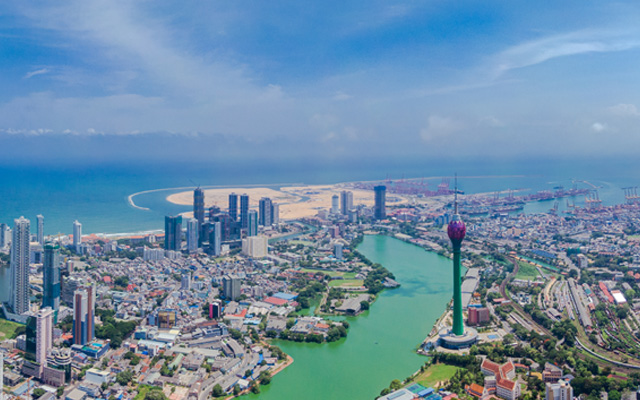
All international airports in Sri Lanka will prohibit passengers from disembarking between May 21 and 31 in the country’s latest move to curb a rising tide of Covid-19 infections.

The decision by the director general of civil aviation on May 19 will affect both Sri Lankan residents and foreign tourists, and joins an island-wide lockdown order passed earlier this week that will apply from this weekend and into next week.

Sri Lanka’s tourism industry will be further impacted by expanded restrictions that now include a ban on all air arrivals

The new restrictions will impact Wesak on May 26 and 27, a festival that marks the birth, enlightenment and death of Buddha, the spiritual leader of Sri Lanka’s majority Sinhalese community.

Sri Lanka has seen a recent spike in cases, with daily caseloads of over 1,500 and deaths topping 1,000 on May 18. The total number of cases as at May 18 was 147,720.

The border restriction will not apply to departing passengers, emergency aircraft, freight operations and humanitarian flights, as well as passengers transiting through Colombo to another destination.

The move is regarded as a further blow to Sri Lanka’s tourism industry, which has been seeing only a trickle of international arrivals despite reopening her borders on January 21, 2021.

Devindre Seneratne, managing director at JourneyScapes Travels and former president of the Sri Lanka Association of Inbound Tour Operators, told TTG Asia that the association supports the government’s efforts to curb the spread of the pandemic by imposing necessary lockdowns.

“It’s unfortunate that tourism gets affected but this is beyond anyone’s control,” he remarked.

Travel agency owner Nilmin Nanayakkara is bracing for inbound cancellations, but also acknowledges that health is a priority for all.

Despite the ongoing crisis, tourism authorities are continuing their marketing efforts. One of their most prominent effort is fielding Sri Lankan Tourism chairperson Kimarli Fernando in numerous interviews on international channels such as BBC and CNN to promote the country’s tourism draws.

Is SE Asia ready for the Indian and European travel markets post-Covid?

0
  • Travel spending of leisure and VFR travellers post-pandemic may be impacted due to declining incomes
  • Receptivity of South-east Asian countries may influence Indian tourists’ willingness to travel abroad
  • South-east Asia’s rural, nature offerings hold potential to attract European remote workers, special interest travellers
South-east Asian countries with rural hinterland may lure remote workers looking to escape to sunnier climates; paddy rice terraces at Mu Cang Chai, Yen Bai, Vietnam pictured

Europe and the UK are easing travel and social restrictions as summer approaches and people are venturing abroad. Meanwhile, many parts of Asia are battling a resurgence of Covid-19 infections and fatalities. When virulent strains abate and masses are vaccinated, will European and Indian tourists return to South-east Asian countries? Moreover, will South Asian travellers be welcomed?

These issues were addressed by the ASEAN Tourism Research Association in a webinar on May 6. Two professors described the characteristics of their respective markets and new travel trends that can be tapped to attract tourists back when the health situation stabilises.

Toney K Thomas, assistant professor, Mahatma Gandhi University Kerala, spoke on middle-class leisure tourists and those visiting friends and relatives. Leisure travellers range from millennials to families and retirees.

“Spending level is high relative to tourists from other countries,” he said. “However, income is expected to decline post-pandemic, with the middle-class shrinking by 32 million people.” The national economic stimulus policy will impact discretionary spending, such as on overseas travel. Indian inbound traffic to Thailand, Singapore and Malaysia numbered close to two million, 1.4 million and 600,000 visitors, respectively in 2019.

Individual decision-making will also be influenced by the ‘health belief’, noted Thomas. But it may be more important to watch destination attitude and receptivity towards Indian travellers. He said Covid-19 is unevenly distributed across India. However, much depends on governments deciding whether to “retain the Indian market”.

“Ultimately, what is the receptivity of South-east Asian countries to Indian tourists, given the current dire situation? There are perception issues. So the confidence of the receiving market could be more important than whether Indian tourists are willing to go abroad,” he concluded.

Fréderic Bouchon, associate professor, Institut Paul Bocuse, cited characteristics such as the preference in the UK and Germany for package holidays booked through tour operators, whereas French and Dutch tourists favour independent travel booked through OTAs.

“The pandemic has led to prioritised travel safety and proximity. European tourists also favour unique travel experiences and authenticity, especially in non-traditional destinations where they can mingle with locals,” said Bouchon.

Covid-19 has accelerated a trend towards a slower type of tourism, enabling stressed urban residents to reconnect with themselves, nature and a simpler lifestyle. Domestic rural tourism has soared in many countries. Longhaul destinations may benefit too.

He added: “People favour authentic experiences in different cultural and natural encounters, such as local cuisine and bird-watching. South-east Asia’s rural offer fits well with that trend. Slow-mode transportation and infrastructure are important, such as cycling trails, farmstays and low-density environments.”

Bouchon also proposed tapping into “digital nomadism and workation”.

The distance-work model provides opportunities to relocate permanently or temporarily to sunnier or more affordable places. Those ready to relocate like sunnier climates, while keeping a comfortable income. That has triggered a strong interest in destinations like Barbados and Madeira. South-east Asian countries with a rural hinterland could target this segment.

“However, this presents challenges for the hospitality industry. Hotels will need to rethink the room setting, including office space, and adjust their offer. Other considerations include immigration regulations, visa duration and level of income,” Bouchon said.

“Gig economy nomads have high mobility patterns. Salaried employees are the new opportunity, with more stable income and residence for ‘workation’ – even longer periods up to six months. That could benefit more remote places, especially with longer-term rentals: service apartments, condos and resorts,” he added.

It remains to be seen if South-east Asia’s big cities and rural areas in Indochina and Brunei, for instance, will be able to attract European workation and special interest travellers, respectively, as soon as this winter.

Absolute Hotel Services expands U brand to Karjat

0

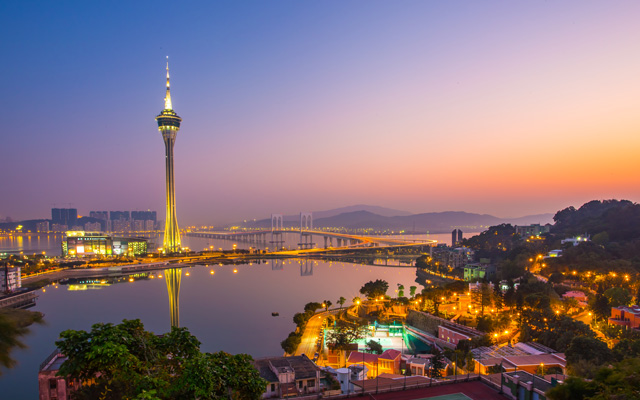
Macau travel trade unveils new, in-depth tours

0

MITA urges government to prepare for tourism recovery and support industry through MCO 3.0

0

In preparation for tourism reopening, the Malaysian Inbound Tourism Association (MITA) has called on the government to study and adopt best practices from destinations such as Qatar, Dubai and the Maldives which have successfully restarted their tourism engines.

Malaysia’s tourism sector is now in a critical stage as the country is currently under its third movement control order since the start of the pandemic, with domestic and international tourist activities banned, as the country battles to contain a surge in Covid-19 infections.

MITA urges support for tourism workers amid ongoing nationwide lockdown, Alor Setar Town pictured 

MITA president, Uzaidi Udanis, said at a recent virtual press conference that the government needed to start planning for the recovery of the country’s tourism industry, which in pre-pandemic times, was the third biggest contributor to the GDP, after manufacturing and commodities. In 2019, contribution of travel and tourism to the GDP was 13.3 per cent.

He described the current state of the travel and tourism industry as being “almost paralysed”, with players having to contend with zero income.

In a recent survey conducted by MITA, which polled its 3,000 members, the pandemic has so far forced 10 per cent of licensed travel agencies to close, and 70 per cent of companies to go dormant. While 20 per cent of its members are still active, they have had to resort to staff layoffs to reduce costs, with only one or two staff left on the payroll.

To ensure the survival of the local tourism industry, MITA urged the government to establish an automatic loan moratorium with zero interest for all loan facilities taken by industry players before March 2020. “Since all banks made huge profits in 2020, we hope banks can become a corporate role model in helping the nation during this challenging time,” Uzaidi said.

He also called on the government to waive insurance and road tax for valid registered tourism vehicles up to 2024, as operators still need to pay for annual insurance ranging from RM1,000 (US$240) to RM10,000 per vehicle per year, despite not earning an income due to the lingering pandemic.

MITA has also called for a tax waiver for all travel agents for five years from 2021, based on the projected timeline for Malaysia tourism to rebound to pre-pandemic levels. It is also hoped that travel agents will be allowed to operate from home to save on rental costs until the end of next year.

In view of the escalating Covid-19 situation in the country, MITA also urged the authorities to impose stricter restrictions during the ongoing nationwide MCO due to end on June 7, as well as to speed up the national vaccination programme so that herd immunity can be achieved faster.