

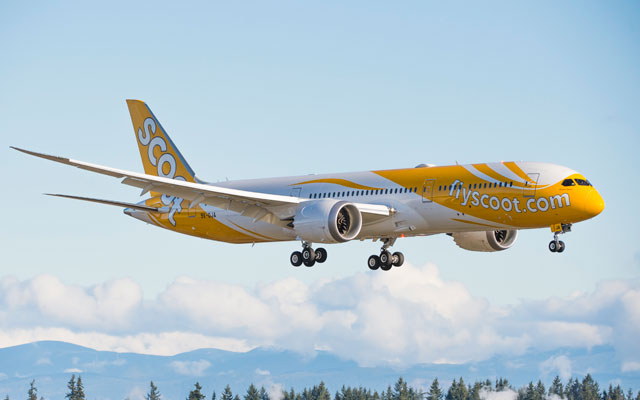
Singapore extends vaccinated travel lanes to more countries
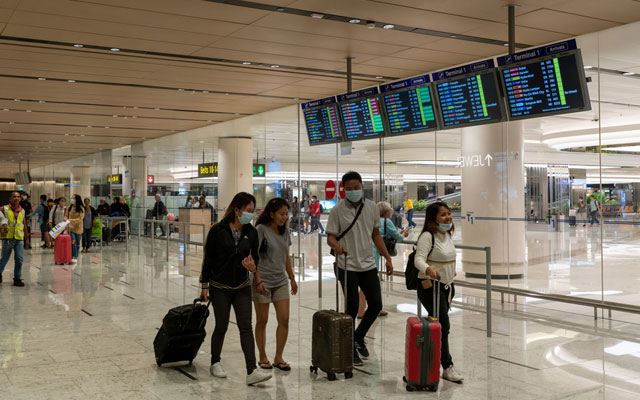
Singapore will extend its vaccinated travel lane (VTL) scheme to India, Indonesia, Qatar, Saudi Arabia, and the United Arab Emirates (UAE), as the country continues with the gradual reopening of its borders.
Under the VTL, Singapore will allow entry for travellers from Indonesia starting November 29; and travellers from Qatar, Saudi Arabia and the UAE from December 6, said the Civil Aviation Authority of Singapore (CAAS) in a press release on Monday (November 15).
CAAS said that it also plans to launch a VTL for India for entry into Singapore from November 29.
Fully vaccinated travellers entering Singapore under the VTLs are not subject to quarantine or stay-home notice, and just need to undergo Covid-19 testing. Unvaccinated children aged 12 years and below will be allowed to travel under the VTL into Singapore if they are accompanied by a traveller who meets all the requirements.
CAAS noted that Indonesia, India, Qatar, Saudi Arabia and the UAE are in Category II of MOH’s country/region classification for border measures; with similar or lower Covid-19 incidence rates than Singapore.
The VTL started on September 8 with two countries – Brunei and Germany. With the latest extension, the total number of VTL countries will increase from 16 to 21. Consequently, the quota for all VTL countries will be increased from 6,000 to 10,000 travellers daily, said CAAS.
Countries that Singapore has established VTLs with are Australia, Brunei, Canada, Denmark, France, Germany, Italy, the Netherlands, South Korea, Spain, Switzerland, the UK and the US.
The country will also be launching VTLs with Malaysia, Finland, and Sweden from November 29.
Vietnam welcomes first foreign tourists in nearly 20 months

More than 400 international tourists arrived in Vietnam last week, the first batch of travellers to the South-east Asian country in almost 20 months.
Two charter flights carrying more than 400 South Korean and Japanese fully vaccinated passengers from Seoul and Tokyo landed in the southern resort city of Nha Trang on Thursday (November 11), state media reported.
The flights came ahead of Vietnam’s plans to reopen the resort island of Phu Quoc to vaccinated foreign visitors on November 20, with a target of receiving at least 5,000 travellers in coming months.
International tourists entering Vietnam are required to present proof of vaccination and of a negative pre-departure Covid-19 test result.
The country’s borders have been shut to international visitors since March last year and there are almost no commercial flights entering the country.
Vietnam has reported more than a million infections and almost 23,000 deaths since the pandemic began.
So far, the country has fully vaccinated about 32 per cent of its 100 million population, as it scrambles to procure enough vaccines to reach herd immunity by the end of next year’s first quarter.
Japan mulls restart of travel subsidy campaign
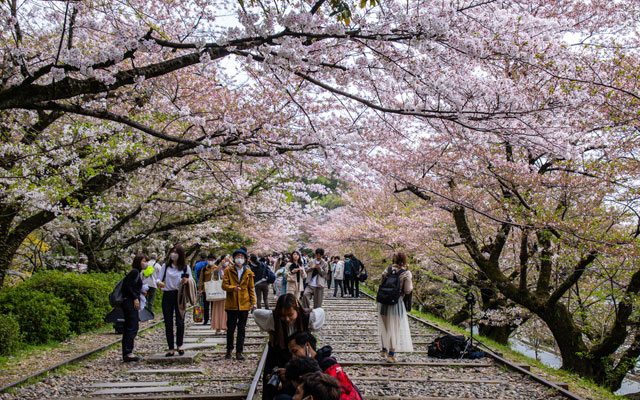
The Japanese government plans to restart its domestic travel subsidy programme, Go To Travel, in February, as it looks to revitalise the pandemic-hit tourism economy.
The Japan Tourism Agency-run scheme, which covered up to half of travellers’ expenses, was initially in place from July to December 2020, but was halted amid a rapid increase in Covid-19 cases nationwide.
Discussions on the programme’s resumption follow the lifting of states of emergency across the country, the decline of new and serious infections and the full vaccination of 77 per cent of the population as of end-October.
However, the scheme will be implemented under more stringent measures in response to the criticism it received last year for contributing to the spread of Covid-19. Procedures to confirm travellers’ vaccination status or virus test results have been trialled since October, with operational guidelines to be devised by the end of this month.
Japan’s tourism minister Tetsuo Saito said the resumption of the Go To Travel campaign is “crucial for the recovery of tourist sites and local economies,” adding that “it is important to balance the prevention of contagion and the promotion of tourism”.
Sebastien Duval, community director at travel agency Japan Travel KK, said a successful restart of the Go To Travel programme “would prove that travel is relatively safe,” which in turn could lead to “return to business as usual for domestic stakeholders” and even accelerate the reopening of borders to international tourists.
Kyoko Nagano, founder of Mypal Inc, an agency for cultural tourism-related businesses, agreed that the programme could be a lifeline, particularly to regional operators. Many breweries that she supports resumed in-person tours as late as October 1 so she said they should “see a good impact” from Go To Travel via tour participant numbers and sales at souvenir shops.
Mid- and lower-priced hotels and ryokan inns are also expected to enjoy greater business under the restart, as plans are underway to reduce discount rates for accommodations. This move is intended to avoid the concentration of travellers at luxury options, which was another criticism of the initial scheme.
ACI Mentor of the Year recognises Ayalaland’s Wilma Estaura, Leading’s Sathia Moorthy

Wilma Estaura, group director of HR, Ayalaland Hotels & Resorts in the Philippines, has been nominated ACI Mentor of the Year 2021, while Sathia Moorthy, director of SE Asia, The Leading Hotels of the World has been recognised with the Highly Commended Award.
The 2021 award, conducted by ACI HR Solutions, received more nominations than previous editions, shared founder Andrew Chan, with many coming from across the world, signifying growing recognition of the purpose of the award. However, a decision was passed by the judging committee to keep the list to within Asia-Pacific.

According to Chan, the annual ACI Mentor of the Year provides a “platform to showcase and highlight the results of mentorship”.
Commenting on her win, Estaura said: “All the nominees are top HR executives whose mentorship touched the lives of their people and contributed to their professional development. To be included in the company of highly-respected professionals was already a great recognition for me.”
Reflecting on her role as a mentor, Estaura said she is “purpose-driven, selfless, authentic and patient”.
She added: “I feel it is my mission to help my team members achieve their personal and career goals. When you are genuine in your desire to coach and motivate your mentees, they can feel your sincerity and will also strive to succeed. It is an invaluable experience for me to be a mentor because I myself learn a lot from my mentees.”
In place of an in-person ceremony, Chan presented the trophy to Estaura via Zoom, in an online event organised by Ayalaland’s president for all department heads and board members.
Sathia, who is based in Singapore, personally received the trophy from ACI HR Solutions’ senior consultant Leon Nonis. He told TTG Asia that his ways of mentorship were founded on examples set by his own mentors.
“I’m always more a friend than a colleague. This allows people to approach me without any hesitation. I set aside time to listen to them and if a solution is needed, I offer various viewpoints and suggestions, never imposing my views or what I think is the best solution. I give the mentees the space to think and decide for themselves. This way, I allow them to feel empowered and this is how people can grow. This was how I learnt from my mentors. Where I am today in the industry is also thanks to them,” Sathia reflected.
In an earlier interview with TTG Asia, Chan observed that business survival throughout the pandemic has made mentorship an even more critical function, but also one that is challenged by personal difficulties faced by mentors as well as disruptions to mentorship meetings due to lockdowns and social distancing.
Sathia shares Chan’s opinion, noting that “mentorship is critical especially when our industry took one of the worst hits due to the pandemic”.
He said: “People were made redundant and employers were stressed about pivoting their businesses to stay afloat. Mentorship helps the mentee regain confidence and allows them to voice their concerns.
“It is not a one-stop solution to solve issues but it helps build trust and understanding among team members, and that will help them ride towards success as our industry recovers.”
Estaura believes that greater attention to mentorship is needed amid the business and job disruptions.
“People need someone to guide, inspire, and lead them in the right direction. Most, especially the millennials, look for a role model in the organisation, someone who will take time and personal interest in helping them grow as an individual and a professional. When they feel they have a mentor with the strength of character to lead them, they become more productive, loyal and engaged in the organisation,” she said.
As group director of HR, she leads the company’s leadership programme, which has a structure to promote talents from within. A developmental plan lasting two to three years is set for high performers and high potential team members, and they benefit from regular coaching by mentors.
TTG Conversations: Five Questions with Jon Owen, Go City

Greater consumer reliance on technology-driven transactions during the pandemic has encouraged providers of attractions, tours and activities to speed up their digitalisation, resulting in enhanced distribution for businesses and improved purchasing experience for travellers, notes Jon Owen CEO of Go City.
In this episode of TTG Conversations: Five Questions, Owen details the various benefits providers of attractions, tours and activities can enjoy by moving transactions online and via travel apps, shares tips on choosing the right online distributor partner, and discusses how the digitalisation of attractions, tours and activities bookings impacts providers’ relationship with travel agents and customers.
Reconnecting people with nature

 Singapore’s Gardens by the Bay has welcomed a new 15,000m² nature sanctuary, Kingfisher Wetlands, along its waterfront. It features more than 200 native true mangrove trees and mangrove associates planted amid newly-created water cascades and streamlets, as well as a wildlife lookout that bird-watchers and nature photographers will enjoy. Educational signage helps visitors gain a greater understanding of frequently-spotted wildlife in the area.
The Kingfisher Wetlands comes at a time when Gardens by the Bay is experiencing a spike in visitorship, as more people turn to nature for respite and recreation amid the pandemic. Gardens by the Bay has welcomed more than 10 million visitors since Singapore’s Circuit Breaker lockdown in April 2020.
Development of the sanctuary is made possible by a S$500,000 (US$371,978) donation from Kikkoman Singapore.
In nature’s embrace
Into Cambodia’s wild
Experience Cambodia’s rugged wild on one of Sam Veasna Conservation Tours’ (SVC) birding and wildlife adventures. The award-winning eco-tour operator has been running since 2003 and is continually adding new itineraries that venture into relatively untouched areas.
With the aim of sustaining Cambodia’s wildlife and communities through ecotourism, SVC has also formed a unique partnership with the Wildlife Conservation Society to access some of their unique sites in protected areas. These include overnight trips to six-day adventures across Siem Reap province and the Northern Plains that take in camping next to waterfalls, staying at lodges, safari camps and treehouses. Wildlife highlights include the critically-endangered Giant Ibis and feathered friends at Prek Toal bird sanctuary.
Another outstanding option takes visitors into Keo Seima Wildlife Sanctuary where they can spot gibbons in the conservation area, trace black-shanked douc langurs and Asian elephants, and visit Jahoo Gibbon Camp.
Hardcore adventurers can indulge in the legendary SVC Birding Super Tour. The 21-day excursion takes in Cambodia’s most important nature sites, home to critically-endangered and endemic species.
Cut a trail in Kushiro River
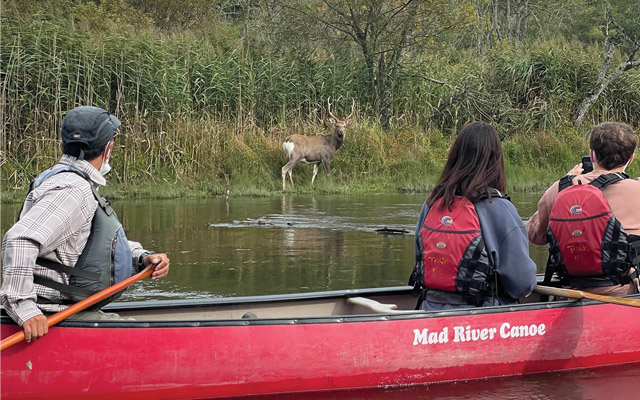
Kushiro-Shitsugen National Park is home to Kushiro Marsh, Japan’s largest wetland. The vast landscape remains untouched, and canoeing through it provides visitors with access to nature that is not possible by other means.
The 9km course from Lake Toroko to Hosooka along the gentle Kushiro River takes two to three hours at an easy pace and passes through a scenic area rich in biodiversity. An expert guide can share insights on the geography and environment while pointing out wildlife on the banks.
There are about 40 species of mammals and 200 species of birds including the Ezo red fox, Yezo deer and red-crowned crane, which is revered by the Ainu, Hokkaido’s indigenous people, as “the deity of the marsh.” So rare is the marshland and red-crowned crane that they are both designated special natural monuments by the Japanese government.
The park is home to 700 alpine and cold-climate plant varieties including a species of the phlox family thought to be a relic of the Ice Age. Stone Age artefacts have been found in hundreds of locations around the marsh.

Floral delight
Tropical Montane Orchidetum is a new attraction that opened this year within Singapore Botanic Gardens, a UNESCO World Heritage Site. Part of the National Orchid Garden, the attraction simulates the experience of ascending through a tropical montane forest and showcases a diversity of orchids and other plants, such as bromeliads and gingers.
A highlight at the Tropical Montane Orchidetum is the Sembcorp Cool House, home to orchids from five biogeographical regions – Malesia, Continental South-east Asia and South Asia, Australasia, Afrotropics and the Neotropics. The temperature here is maintained at 16°C to 23°C, to emulate a high elevation forest. With some 1,000 orchid species and hybrids exhibited in the Cool House, this space brings pleasure to both floral enthusiasts and botanists.

Walk with giants
Cambodia’s Elephant Valley Project presents nature-lovers with a unique elephant experience in the remote mountainous province of Mondulkiri. The ethical sanctuary is home to both the country’s largest remaining wild and working elephants. It offers respite to overworked, injured or retired elephants belonging to indigenous bunong communities that populate the area. The elephants and their mahouts can freely roam the 1,500-hectare site.
While elephant riding is prohibited, visitors can stroll though ancient jungles alongside the giant beasts, watching as they forage for food, tear out young trees with their trunks, and wallow in natural mud baths. Options range from a half-day visit through to more than a week. Depending on the itinerary, guests can embark on a jungle hike to view elephants in their natural habitat and learn about elephant behaviour and forest ecology.
There is also the opportunity to meet bunong people to discover their rich culture and unique relationship with elephants and the forest, and their efforts to protect both from extinction.

Multimedia Ainu journey
An enchanted night walk around the shores of Lake Akan in eastern Hokkaido, Kamuy Lumina retells a traditional song of the indigenous Ainu people, via an immersive experience.
Multimedia entertainment creators Moment Factory and Akan Adventure Tourism combine the natural beauty of the forest, which is located in Akan Mashu National Park, with cutting-edge projection mapping, scenography and interactivity to create an otherworldly showcase of sound and light.
Akan is home to Hokkaido’s largest Ainu settlement and Kamuy Lumina is Moment Factory’s first multimedia production with indigenous people. It is also the first in a national park, making it a truly unique way to get up close to nature.
In the story, the kamuy (spiritual beings in Ainu mythology) have stopped sending deer and fish for hunting because mankind no longer respects the land. Two leaders of the forest, the owl and jay, are determined to give mankind a second chance by delivering a musical message to the kamuy on mankind’s behalf. Visitors take the role of rhythm keeper to help the jay deliver his lyrical song.

Rizal’s regal reserve
Masungi Georeserve conservation area in Baras, Rizal – a few hours drive from Manila – invites city dwellers to commune with nature and enjoy sunshine and fresh air.
Set across 2,700 hectares of rainforests are 60 million year-old limestones that spike the tranquil landscape, 400 species of documented fauna and flora, and 40,000 native trees.
Highlights here are the sawa, snake-like hanging bridges that connect to limestone peaks; sapot, giant cobweb viewing platform; duyan, giant hammock of white braided ropes connecting the mountains; huts suspended in the air; and the meditation area called Liwasan. The Silayan Dining Room atop a hill is a fine dining, farm-to-table concept with menu that changes according to the local harvest season.

Deep dive
Tubbataha Reefs Natural Park is an extraordinary dive sites at the heart of the Coral Triangle, the global centre of marine biodiversity.
This 100,000-hectare marine protected area in Palawan, in the middle of the Sulu Sea, is one of the oldest ecosystems in the Philippines.
It treasures 10,000 hectares of coral reefs that support key marine species, among them 360 coral species or half of all the world’s coral species, 600 fish species, 11 sharks and rays species, and 13 species of dolphins and whales.
Accredited dive operators have a slew of activities for divers, while non-divers can take dive courses, snorkel, or watch birds – a new product that has been developed.
Tubbataha has 100 bird species, including endangered seabirds species, apart from two species of endangered green turtles and hawksbill turtles.
Tubbataha Reefs is open only three months a year – March to June – due to its remoteness and unpredictable weather. Tourists stay on the yacht or boat since there are no accommodations in the reserve. The gateway is the Puerto Princesa airport in Palawan before guests are taken to the nearby pier for the trip to the reefs.
Not your usual home
Akan Yuku no Sato Tsuruga on the shores of Hokkaido’s Lake Akan combines resort and ryokan.
The jewel in this hot spring inn’s crown is the collection of 33 public baths, including pools of hot, warm and tepid temperature, waterfall and whirlpool baths, and even a bath in a cave. The suite of outdoor baths on the eighth floor rooftop offers a commanding panorama of the lake, which is particularly striking in fall and winter. A secluded bath on the first floor sits along the shore and forested area.
Guests can choose from Japanese or Western-style rooms or opt for a suite that features a private outdoor bath overlooking Lake Akan.
Philippines in travel bubble talks with South Korea
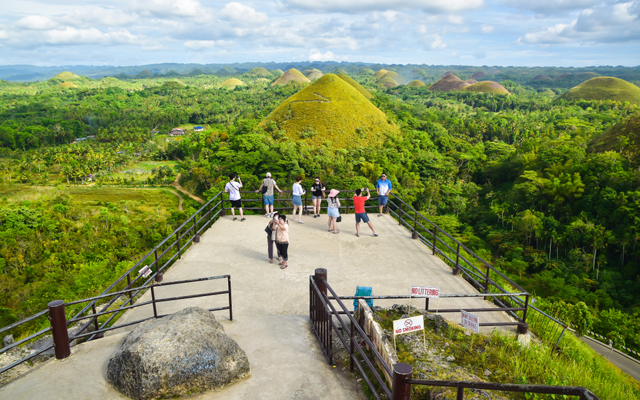
Talks are underway for a quarantine-free travel bubble between the Philippines and the South Korea, as the South-east Asian country looks to gradually reopen its borders to revive its pandemic-hit tourism industry.
If the plan goes through, it would be the first travel bubble arrangement for the Philippines since the start of the pandemic.
Philippines tourism secretary Bernadette Romulo-Puyat told Bloomberg in an interview that the two countries are in the midst of discussing the quarantine requirements for when the visitors return to South Korea.
While South Korean travellers are keen to arrange chartered flights to Bohol, the quarantine requirement for when they return to their home country poses an issue, she said.
Romulo-Puyat expressed hope that with increasing vaccination rates and declining Covid-19 cases, that governments will scrap the quarantine requirement for people returning to their countries.
She added that while the government is considering travel bubble arrangements with other destinations, it is South Korea – the Philippines’ top source market – that has shown interest in travelling to the country.
Manila-based hotel management firm wants to help SMEs compete with the big boys

A pair of former honchos of a now-defunct Singapore-headquartered OTA has set up a hybrid hospitality management company in Manila, targeted at small and medium-sized hotels and resorts.
Unlike a typical hotel management company, SMS Hospitality Network (SMS) offers clients the option to choose sales and online revenue management only; online revenue management including rates, inventory and reputation; or full management including operations as in the case of the 30-key Gilmore Tower and Suites.
Furthermore, SMS can also represent province-based clients in trade shows and business events held in metro Manila.
“The pandemic has shown very clearly that small and medium-sized hotels and resorts need support. If they are just going by themselves, they will have difficulty competing with the big boys,” said Nikki Rocha, SMS Hospitality CEO and president.
Rocha was previously the group executive vice president and president in the Philippines of the now-defunct Asiatravel.com, which closed in 2018.
There are over 5,000 hotels and resorts accredited by the Philippines’ Department of Tourism, and a significant number of them, mostly SMEs, are not listed in OTAs.
“In terms of network, (these SMEs) need support on how to be more visible on OTAs. So with our team, experience, network plus the technology we will provide, we can help them manage their hotels and resorts to achieve that,” said Francis Asuncion, SMS managing director, who was Asiatravel.com’s vice president in Thailand.
SMS’ value proposition is to achieve the full revenue potential of the properties by using high-technology and mastering OTAs’ algorithm. “A lot of owners don’t realise that they can earn much higher than what they currently do,” Rocha said.
Asuncion said SMS Hospitality is the exclusive Philippine partner of Japan’s OTA Rakuten for hotels, while India tech partner Street Gooser provides the real-time, cloud-based property management system.
Correction: In our previous version, we stated that the company name is SMS Hospitality Solutions, which is the registered name of the company. SMS Hospitality Network is the name that the company is known by in the industry. This article has also been edited for accuracy.






Scoot, the low-cost subsidiary of Singapore Airlines, will launch a new service between Singapore and London’s Gatwick Airport via Bangkok Suvarnabhumi Airport.
In addition to being the sole LCC to operate non-stop flights between Bangkok and London, this will also mark the airline’s entry into the UK.
The carrier will operate three weekly Singapore-Bangkok-London services between December 16-27, and one daily service on the same route between December 29-30.
Flights will resume in March 2022, with two-times-weekly services from March 22. This will be increased to three flights per week from March 27.
All flights will be operated by Scoot’s widebody Boeing 787 Dreamliners offering both Economy and ScootPlus cabins.
With the addition of London, Scoot will serve more than 30 destinations in December, as it progressively builds back to its pre-Covid coverage of 68 cities.