

G Adventures unveils forecast of top 10 travel trends

G Adventures has released its predictions of the top 10 travel trends for 2022, which looks to be a more purposeful and intentional travel year.
The forecast is based on two surveys of more than 4,500 travellers who make up the tour operator’s global consumer panel, of which two thirds are former travellers. Surveys used are from July and October, 2021.

1: Community tourism = responsible travel
Close to a third of respondents said they will put more focus on travelling responsibly in 2022. Travellers are looking for adventures that move through several smaller communities which they can do on a walking trek as it supports many local people as they explore their region.
2: Travellers care more about supporting local people
Coming in well ahead of carbon footprint and plastic reduction, travellers want their money to directly benefit local people. At 66 per cent globally, this trend was intensified by the pandemic’s impact on countries that rely on tourism for economic survival.
3: Workations increasing in popularity
No longer just for digital nomads, workations have hit the mainstream. Of its panel respondents, 24 per cent said they are able to work from anywhere – with that number jumping to 46 per cent for 18-34 year olds. An increasing number of people (37 per cent up from 19 per cent in December 2020) plan to combine work with future travel.
4: Hostels set to make a big comeback
The need for social connection among young travellers is stronger than ever with 63 per cent of respondents aged 18-34 saying they are likely to try a hostel experience after the pandemic. Meeting people to socialise and possibly travel with was the most important factor going into selecting which hostel for 71 per cent of panelists.
5: Desire to disconnect from devices
Workationers aside, travellers want to reconnect with people and places but are desperate to disconnect from the online world while on holiday. Some 54 per cent of respondents want to pause social media and reduce screen time, with 28 per cent saying socialising and meeting new people is their top wellbeing priority for booking their next holiday.
6: Having a bit more cash to splash
With staying in spurring a savings boom, 18 per cent of respondents said they have bumped their travel budget for an international holiday. That surplus likely means their travel dollars will take them on bigger adventures than they might have thought possible.
7: Nay to staycations, yay to remote destinations
Domestic holiday appeal is wearing thin as the pandemic rolls ever onward. Only 18 per cent of respondents said they would prefer to stay closer to home rather than head further afield on their next international holiday. Close to a third (30 per cent) said they are less likely to take a staycation in 2022.
8: Lockdown lethargy spurs active lifestyles
Being physically active on their next holiday came in strong at 70 per cent, with 64 per cent of travellers saying their physical and mental wellbeing is a top consideration for their next holiday.
9: Wellbeing and mental health come first
With an overwhelming 95 per cent of travellers saying travel is important to their wellbeing and mental health, many are looking for a holiday that helps them to reconnect and optimises travel as a means to revitalise.
10: Revenge travel is out, reconnection travel is in
Travellers are hungry for new experiences and stronger connections with others. Although the term ‘revenge travel’ gained popularity over the course of the pandemic, reconnection travel now sits at 42 per cent compared to revenge travel at 14 per cent.
Light to Night Festival returns in hybrid format
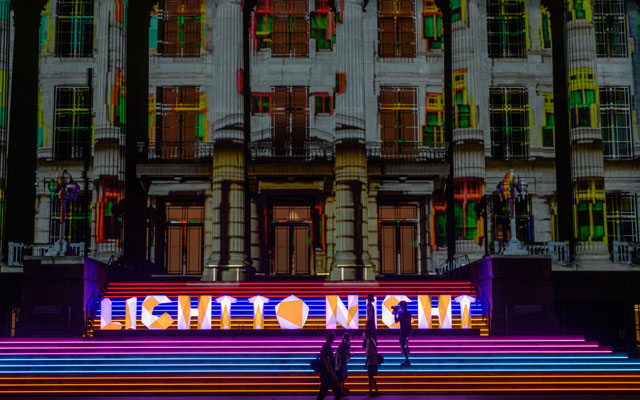
A marquee event of Singapore Art Week, Light to Night Festival will electrify the Civic District and beyond with visual spectacles and new interactive art experiences from January 14 to February 3, 2022.
Spearheaded by National Gallery Singapore (NGS), the visual arts festival will continue its phygital format with an expanded line-up of day and night programmes and more festival locations across three weeks.
The 2022 edition of Light to Night inspires everyone to engage with the world anew through the theme, New Ways of Seeing, Thinking and Being.
Suenne Megan Tan, festival director and senior director, museum planning and audience engagement, NGS, said: “This year’s theme encourages our audiences to expand notions of how art can be explored in new spaces and imagined through technological innovations.”
Artists and creatives were challenged to create commissions that uncover new perspectives and stimulate conversations through art from the National Collection, the Civic District’s history, and relevant social concerns. Audiences, in turn, are invited to engage with these novel viewpoints through a host of new programmes and festival staples.
This year’s festival spotlights emerging talents and the visually impaired community, on top of the usual light projections and live performances by Singaporean talents.
New highlights include Visions, an interactive outdoor augmented reality (AR) art exhibition, featuring a new commission by local artist Ho Tzu Nyen titled Language, in addition to several AR artworks from leading global artists, including Cao Fei, Olafur Eliasson, KAWS, and more.
Audiences will be able to unlock these experiences along the Gallery’s facade with the Civic District as their backdrop, enabling them to enjoy this iconic space in a new light. Visitors can explore the AR artworks in 360 degrees with accompanying soundscapes, during the day and at night.
Another addition is Move For?ward (Unseen: Inside Out), a multi-sensory art installation at the Ngee Ann Kongsi Auditorium Foyer featuring the collaborative process of gathering and representing the stories of 12 individuals from the visually impaired community. Audiences can participate in an audio walk of the installation as they navigate through a web of strings.
The festival’s online programmes include artist talks as part of SAW Dialogues, music performances, exclusive behind-the-scenes footage, and more. On-site admission to the festival is free, commencing from 10.00 until midnight. Certain programme timings and admission charges may vary. For more information, visit lighttonight.sg.
Country Inn refreshes brand identity, plots expansion
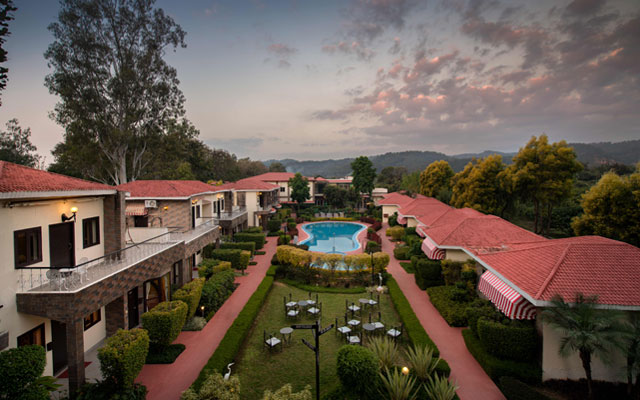
Country Inn Hotels & Resorts plans to expand its footprint in more than 12 other locations this year, with the aim of increasing its property count from the current five resorts to 20 by 2023.
Planned locations for expansion include Goa, Dehradun, Mussoorie, Varanasi and Vrindavan.
As well, the company recently launched a brand new logo and identity. The new logo representation with a lotus symbolises warmth and hospitality which is the core ideology of the brand. The new logo and identity also resonates with the brand’s vision of having hotels in serene destinations.
Akhil Arora, COO, Espire Hospitality, said: “It’s a crucial time for the tourism industry and with the unwavering increase in domestic travel in the last few years, we see an enormous potential for our Country Inn Hotels & Resorts brand. We plan to grow our portfolio exponentially, making it a leading mid-market resort brand known for its quality of service.”
Omicron’s rapid rise hurts travel bookings in India
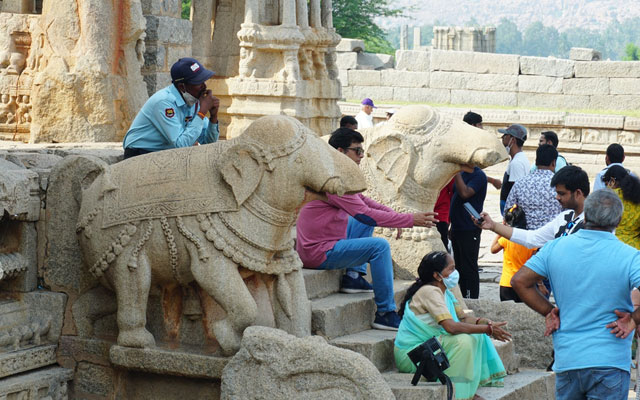
A worrying rise in Omicron cases and the subsequent restrictions imposed by the central and state governments have dealt a fresh blow to Indian tourism, aviation and hospitality sectors, with a nosedive in demand due to travellers either cancelling or postponing their trips.
All international travellers have to undergo mandatory quarantine for seven days and a Covid test on the eighth day since Tuesday (January 11). Earlier, the state of West Bengal moved to restrict domestic flights from New Delhi and Mumbai, allowing airlines to operate flights only three days a week.
“From January onwards, we are seeing cancellations from tourists. For the months of February to April, we had some queries which we expected to materialise in demand. But now, the clients have postponed their plans for an indefinite period,” said Sanjay Thakur, founder, East India Travel.
“Our tourist season is from October to April, so this tourist season, both domestic and international markets are gone.”
With the emergence of the new Covid variant and the recent trend of rising infections, a few states have already announced certain curbs on domestic air travel, posing a serious threat to domestic passenger traffic recovery in the near-term, credit rating agency ICRA Limited said in a statement.
One of India’s leading airlines, IndiGo, has said that owing to reduced demand, the carrier will be selectively withdrawing some of its flights from service. The airline anticipates that around 20 per cent of its current scheduled operations will be withdrawn from service.
“Owing to the increasing number of Omicron infections, large numbers of IndiGo customers are changing their travel plans. In response to customer needs, IndiGo is waiving change fees and is offering free changes for all new and existing bookings made up to January 31, for flights up to March 31, 2022,” the airline’s recent media communique read.
A large section of hoteliers are seeing cancellations in bookings and a drop in enquiries too.
Shubhadeep Dutta, general manager, Goldfinch Mumbai, said that the recovery process of the industry have once again taken a big hit with the fresh restrictions imposed by the state and central governments.
“Many tourists are cancelling or postponing their trips. The demand from the wedding segment has also taken a toll. Also, the queries for future bookings have gone down,” he added.
Vishal Lonkar, general manager, brand development, Renest Hotels & Resorts, said: “Omicron has come in just as the hospitality industry was steadily trying to recover and move towards normalcy.
“December was the busiest period for all the hotels and so, for us, (business) was largely unaffected and we were quite content with the sales and performance of our properties located in Manali, Shirdi, Gandhidham, Tirupati, Jaipur and Bandhavgarh.
“So far, cancellations have mostly been for our properties in Kolkata and Bangalore because of state-imposed restrictions and flight cancellations. Occupancy at our hotels in Manali and Bandavgarh have been going strong.”
He expects a slowdown in the coming weeks in view of rising Omicron cases, and adds that revenues from weddings will be impacted with numbers being restricted under the new guidelines.
Some hoteliers are hoping that a complete lockdown doesn’t happen as it would further aggravate challenges faced by the hospitality sector.
“After a sturdy third quarter, we are assuming that the last quarter will definitely witness a fall in revenues. As a sector, we are hoping that complete lockdowns will not be imposed, otherwise, it will take a comparatively longer time to recover,” said Rahul Deb Banerjee, vice-president, The Clarks Hotels and Resorts.
“The Indian hospitality industry anticipated the opening up of international routes, but in the current situation, it will not open soon. However, this time, the good thing is that cancellations are not high as people are postponing their trips for future.”
Alma names new resort manager

Alma Resort in Vietnam has promoted Vu Thi Huong Giang as resort manager.
Born and bred in nearby Nha Trang, Giang graduated from Nha Trang University with a major in food processing and started her career in 2004 as a waitress at Six Senses Ninh Van Bay, where she steadily climbed the career ladder over a decade to become an F&B manager.
She has also worked for Vinpearl Land and Mia Resort in Nha Trang, and was the F&B director at The Anam, before moving to Alma in the same capacity. She was subsequently promoted to executive assistant manager of F&B.
In her new role, the resort’s executive chef, executive assistant manager of rooms, assistant director of F&B and the recreation manager report to her.
Tripadvisor brands 2022 the year of the travel rebound
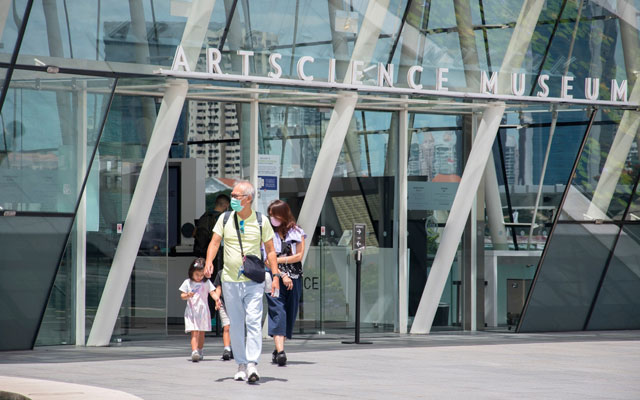
Tripadvisor, in partnership with Ipsos MORI, have released a new travel trends research paper on how consumers are planning to travel in 2022 and beyond, and how their attitudes and behaviours in relation to travel have changed as compared to pre-pandemic.
While outside factors like Covid-19 variants, international travel rules and staffing shortages still can represent existential threats to traveller behaviours, year-end sentiment and search data shows ongoing demand for travel remains high.
Who benefits from the tourism demand? As travellers spend more, cultural experience providers (tours and attractions), tourism businesses catering to domestic audiences and companies adhering to safety standards will win the hearts and minds of travellers.
“Despite new variants of Covid-19, consumers across the globe still want to travel and explore. This is evident in our month-over-month search data which shows a consistent, healthy increase in page views post-holidays,” said Kanika Soni, chief commercial officer, Tripadvisor, Inc. “Travellers are quickly adapting to local public health conditions, with cleanliness and safety remaining important factors in their planning.”
Unsurprisingly, the report continues to show that the pandemic weighs on the minds of people across the countries featured in this study. The good news is that reported travel intent for 2022 compared with 2019 and analysis of planned average trip spend show prospects for a strong year ahead in the hospitality industry.
Key findings from the study include:
Planned travel in 2022 surpasses actual travel in 2019
○ Across the five key markets around the world that were surveyed, those likely to travel for leisure purposes in 2022 outpaces pre-pandemic reported travel levels.
○ In the UK, 78% of respondents said that they are likely to travel for leisure in 2022, compared to 72% of those who said that they travelled for leisure in 2019.
○ In the US, 2022 leisure travel intent is up 8 percentage points (pp) compared to 2019, with 71% saying they are likely to travel for leisure in 2022.
○ Singapore leads the way in travel optimism, with 82% reporting they are likely to vacation in 2022, up 2pp compared to 2019. Australia (72%) and Japan (51%) are trending similarly, with those who are planning a leisure trip in 2022 up 7pp and 5pp from those who reported travelling in 2019, respectively.
Average spend per trip for 2022 is beyond that of 2019, as travellers look to level up their travel experience
○ According to Tripadvisor site behavioural data, American travellers are expected to spend 29% more on their average trip in 2022 than they did in 2019.
○ In Australia, average booking rates are expected to be up by 16% in 2022 against 2019.
○ Singaporean travellers booking values are also expected to increase by an average of 7%.
○ On the other end of the spectrum, the average Japanese traveller is expecting to spend 30% less in 2022 compared with 2019. In Italy, average booking spend is expected to be down 19%. While in the UK, Brits are planning to spend slightly less on 2022 travel than they did in 2019 (-1%).
○ Shifting from behaviour to sentiment, over a quarter of travellers in each of the five markets surveyed said it is more important now than before the pandemic to splurge on a big trip. In the US, roughly three in 10 Americans (29%) who travelled for leisure in 2019 said it’s more important now than before the pandemic to splurge on a big trip. Twenty-eight per cent of Singaporean and Australian travellers, 27% of Japanese travellers and 25% of UK travellers said the same.
Domestic travel continues to lead the way
○ While a sizable proportion of consumers across most of the markets surveyed plan to travel abroad for leisure in 2022, travelling within their home country is still the most favoured option.
○ Seventy-four per cent of Singaporean respondents plan to travel domestically for leisure, compared with 53% who plan to travel abroad for leisure. Seventy-three per cent of Brits say they plan to travel within the UK for leisure compared with 48% planning to travel abroad.
○ In the US and in Australia, 68% of respondents in each market said they are likely to travel domestically in 2022, while 29% of Americans said they are likely to travel overseas in 2022 compared to 38% of Australians.
○ In Japan, 50% of Japanese respondents reported that they are likely to travel within their home country in 2022, compared to 10% of those likely to travel internationally.
Travellers are seeking new travel experiences in 2022 and beyond
○ More than a third to nearly half of all travellers surveyed in the US (41%), UK (38%), Australia (46%), Japan (34%) and Singapore (49%) said that travelling to a destination they’ve never been to before would be more important to them now, compared to trips they took in 2019, when choosing where to travel.
○ Three-quarters (75%) of Americans said that it’s important they “see new places” when thinking about their future travel plans, 74% of Australians, 73% of Singaporeans, 70% of Britons and over half (59%) in Japan said the same.
○ The top three most important considerations, across the markets surveyed, in future travel plans to visit a destination, was to get immersive by seeing new places, having new experiences and learning about history and culture.
○ Forty-four per cent of Singaporean travellers, 38% of Australians and a third (34%) of Americans and UK travellers respectively said that it’s more important now than before the pandemic that they choose a destination where they can immerse themselves in “authentic local experiences”. A quarter (25%) of Japanese travellers said the same.
○ In both the US and Australia, 30% of travellers said it’s more important now that they “pack as many activities” into their holiday travel as possible. While in the UK, 28% said it’s more important for them to plan an action-packed travel experience in 2022 or beyond.
○ About two in 10 travellers in each of the five markets surveyed said they will do more guided cultural activities – those activities and tours where subject matter experts and professional guides allow for travellers to sit back, learn, relax, and see all that an area has to offer – when planning trips in 2022 or beyond than before the pandemic (except in Japan where this proportion was 14%).
Covid-19 case counts, safety protocols, quarantine restrictions, and cleanliness are all key factors in travel decision making in 2022
○ Eighty-five per cent of Singaporean travellers, nearly three-quarters of Japanese (73%) and Australian (74%) travellers, 72% of British and 70% of Americans say that cleanliness measures of a hospitality business will be an important factor in their travel decision making next year, even after Covid-19 cases have dropped worldwide.
○ Approximately seven in 10 respondents in each of the markets said that destinations that have a low number of Covid-19 cases are important when making a decision on where to travel next.
○ One-third of the Brits (32%) and Americans (33%) who aren’t travelling next year said they’ve decided against it because of uncertainty surrounding possible travel restrictions. Over half (55%) of Singaporeans, 47% of Australians and a quarter (25%) of Japanese respondents cited the same reason.
The 2022 travel trends report can be viewed in full here.
Indonesia unveils carbon calculator tool to spur climate action

Indonesia’s Ministry of Tourism and Creative Economy (MoTCE), in collaboration with Jejak.in, has launched the Carbon Footprint Calculator (CFPC) platform, which educates the travelling public on their carbon emissions generated during their travels, and ways to offset them.
Jejak.in is a platform assisting businesses to plan, implement and monitor their conservation programmes with AI- and IoT-based solutions.
The CFPC initiative, which can be accessed via the ministry’s Indonesia.travel page, is part of the authority’s quality and sustainable tourism development programme. In the first phase, the ministry is inviting the public to offset their carbon footprints with tree planting.
Speaking during the launch event, Sandiaga Uno, minister of tourism and creative economy, said he expects the CFPC will improve the reputation of Indonesian tourism and encourage the public to make their travels more climate-friendly.
Stressing the importance of addressing environmental issues, he said: “Although (the ministry does) not have a dedicated sustainability department, sustainability must be embedded in all tourism and creative economic activities. We will make sure that this becomes a national movement to overcome the various crises caused by climate change and to achieve sustainable tourism.”
Noting that tourism contributed eight per cent to carbon emissions globally, Sandiaga invited the travelling community to take note of their carbon footprints when they travel through the usage of CFPC.
Arfan Arlanda, CEO of Jejak.in, expects that the programme will significantly support the fight against climate change and help achieve Indonesia’s emission reduction targets.
“I hope that this initiative can be implemented by all tourism industry practitioners to achieve a huge impact for the country,” he said.

Ritz-Carlton, Langkawi eyes well-heeled travellers after revamp
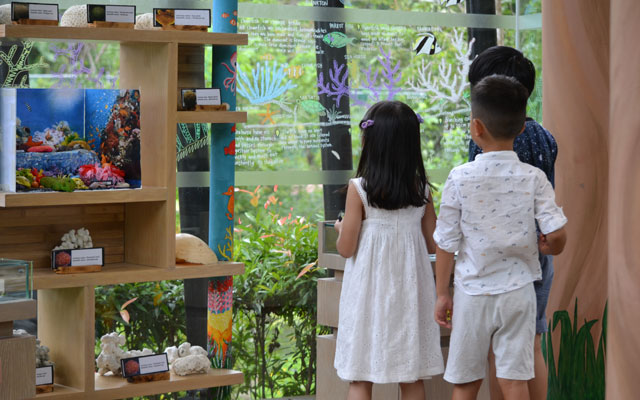
The Ritz-Carlton, Langkawi has used the pandemic downtime last year to enhance its offerings in hopes of drawing well-heeled family holidaymakers and increasing their average length of stay.
Currently, the average length of stay is 1.5 days for a domestic tourist, and 7.2 days for an international tourist.
A new addition to the 119-key resort is its 85.26m² Eco-Discovery Centre which dives into the underwater world of Langkawi. Among features within the facility is the sea cucumber reproduction project, where visitors can learn how the sea cucumber plays a valuable role in the marine ecosystem of Langkawi, and the importance of its preservation.
Another new attraction is Teratak Mahsuri, an alfresco cabana by the ocean, where guests can reconnect with nature.
To enhance the guest experience, the resort also includes a surprise element upon check-in, such as gifting children below the age of 12 with an activity bag.
With the revamp, the resort is targeting Gen Y vacationers travelling with young children from both domestic and international markets, shared the hotel’s director of sales and marketing, Zulkifli Rahman.
However, he is banking more on the domestic market through 3Q2022 as the reopening of the island to fully vaccinated travellers since September has only seen “insignificant” number of arrivals from the traditional markets in Europe such as the UK, Scandinavia, and Germany, partly due to the emergence of the Omicron variant.
Last year, the domestic market accounted for 97 per cent of total guest volume, but Zulkifli hopes that by 4Q2022, the ratio of domestic to foreign guests will be more balanced.
Plans to attract Gen Y travellers include social media engagements to promote the resort’s offerings and outdoorsy activities. The resort will also work with travel partners on special tactical campaigns from time to time.








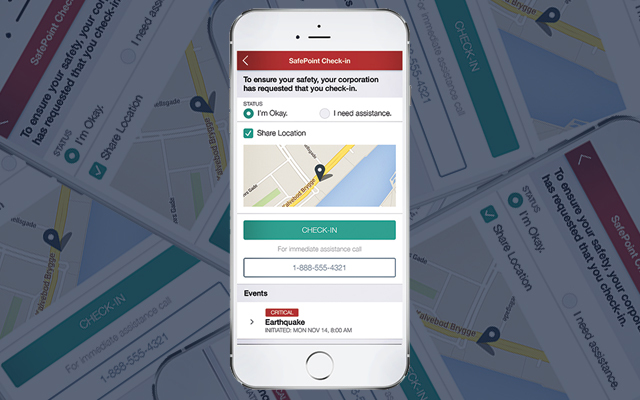
Sabre Corporation has expanded SafePoint, its travel risk management product, to include global travel restriction tracking.
The solution is not limited to a singular event, and instead, provides information regarding the spread of Covid-19 and new variants, as well as destination entry restrictions imposed by countries including masks, vaccinations, health documentation and quarantine requirements.
SafePoint monitors world events in near real-time, 24/7. It utilises hundreds of data sources for events and restrictions that may impact travel arrangements and/or traveller safety. This would help Sabre’s travel agencies and corporate customers make more informed decisions and enhance the safety of their travellers by alerting them to restrictions that may impact their itinerary. Travellers will then be able to use the information to take action at any stage of their trip.
“As travel rebounds, we believe a duty-of-care and crisis alerting solution is imperative to any travel business, especially in a world where travel advisories can change rapidly,” said Saunvit Pandya, senior director of product management, Sabre. “SafePoint is designed to keep travellers and corporate travel managers apprised of critical events in a fast-moving world.”