TTG Asia
Asia/Singapore Sunday, 14th December 2025
Page 812

Trade urged to start planning as travel shows signs of strong rebound

0

Tour operators need to start laying the groundwork for travel rebound which is anticipated to come “fast and furious”, according to industry stakeholders.

At the Arabian Travel Market Virtual, Julia Randow, regional director of GetYourGuide, noted that globally, certain markets have picked up and swathes of the industry have been caught unprepared.

Dubai has been attracting visitors from new markets, and targets over 5.5 million overseas tourists this year, a family touring Dubai Zoo in February 2021 pictured

She said: “When recovery comes, it comes hard. You need to be prepared, have availability uploaded and a great inventory in place. You have to have all the opportunities for customers to make a booking.”

Ian Renton, director of sales at Atlantis, said it is essential to be “nimble and on your toes”. In preparation for the tourist influx as Dubai prepares for a strong peak season ahead, Atlantis has diversified its business and reached out to new key source markets.

“We have kept our fingers on the pulse, worked with government authorities and airlines, and shared information so that when things do come back – and they will come back quick – we’re ready,” said Renton.

Randow said Dubai experienced three to four times growth from the UK in November and December compared with 2019. This was triggered by a quarantine-free corridor between the destinations. “A strong travel sentiment is there,” she added.

Additionally, she noted the US is leading recovery, with bookings already surpassing 2019 numbers. This is a pattern that is starting to be seen in Australia and New Zealand.

Douglas Quinby, co-founder and CEO of Arival, noted a “supply constraint” in the US sparked by an unpreparedness for the “fast and furious” surge in travel demand. He said: “Operators are struggling to hire guides and there’s a labour shortage for restaurants and hotels that are trying to reopen quickly.”

A recent survey carried out by GetYourGuide in the US revealed 70 per cent of respondents plan to take a holiday within the next three months. However, only about eight per cent have booked.

Remarked Randow: “That’s very different to what we normally see but suggests many bookings are to come. This highlights the need to be on top of business in the long-term and short-term if you want to win this game.”
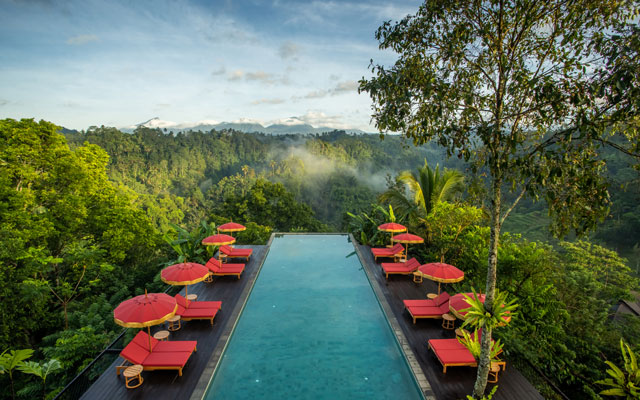

Banyan Tree to launch “no walls, no doors” resort concept in Bali

0

WorldHotels unveils brand refresh

0

Marriott to debut Ritz-Carlton in Ningbo

0

One-night, one-dollar plan proposed to lure tourists back to Phuket

0

A catchily named campaign, One-night, one-dollar, has been proposed by the Tourism Council of Thailand (TCT) to attract international tourists back to Phuket, ahead of the popular resort island’s planned July reopening.

Under the plan, participating operators will offer to foreign tourists room rates at US$1 per night – for rooms that typically sell for between 1,000 baht (US$32) and 3,000 baht per night – with costs to be subsidised by the government, explained TCT president Chamnan Srisawat.

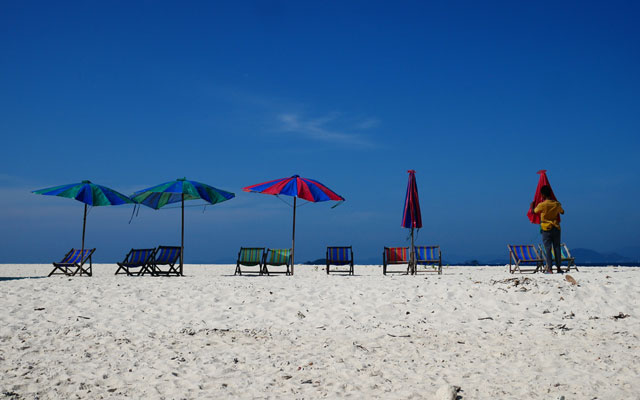
A one-night, one dollar reopening campaign for Phuket hotels has been floated by the Tourism Council of Thailand; a man preparing umbrellas and beach chairs on an empty island in Phuket amid Covid pictured

If the proposal is green-lit, tourism players in Thailand will roll out the campaign to international markets.

“TCT also discussed the idea with major wholesalers and online travel agents to prepare for the reopening of Phuket. And they are ready to help,” Chamnan said.

He expects that out of a total of 70,000 rooms on the island, nearly one million room nights would be up for sales, generating at least 40 billion baht into hotels and other services throughout July.

TCT’s proposal has been submitted to the Tourism Authority of Thailand and the Ministry of Tourism and Sports, and will be escalated to the cabinet for approval within June.

If Phuket’s One-night, one-dollar campaign proves successful, private sector players and the government may expand the campaign to other destinations such as Koh Samui, Pattaya and Bangkok.

“However, the current wave of Covid-19 infection could (impact the) final decision. But we have been suffering from the pandemic for 15 months now. Only mass tourism will save us,” Chamnan said.

Set to be the first Thai city to reopen to vaccinated foreign tourists in July, Phuket is expected to welcome 500,000 visitors through year-end, much lower than the 6.7 million arrivals in 2020, mainly from the first quarter.

In 2019, prior to the pandemic, Thailand received nearly 40 million visitors, generating 190 billion baht (US$60 billion) in revenue.

Work from Bali programme launched to boost domestic tourism

0

A government-led programme that will dispatch Jakarta-based civil servants to work remotely from Bali is set to be rolled out as part of efforts to revive domestic tourism in the pandemic-ravaged island.

The Work from Bali (WFB) programme led by the Coordinating Ministry of Maritime Affairs and Investment (CMMAI) will assign civil servants from the office and its seven subordinate ministries, including the Ministry of Tourism and Creative Economy, to work from hotels on the island.

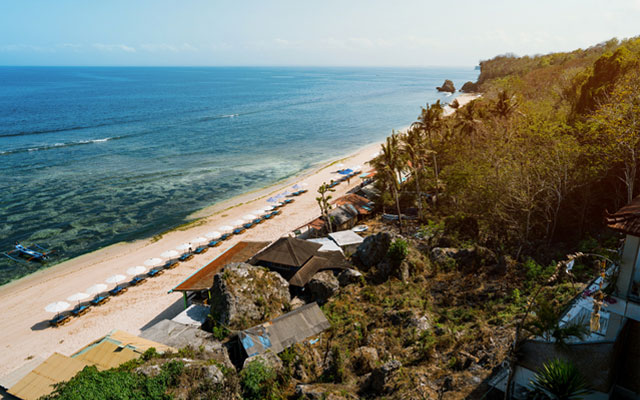
Plan for civil servants in Indonesia to work remotely from Bali underway; closed beach in Bali during Covid-19 pictured 

Under the programme, Bali will host not only the ministries’ regular meetings but also international events for the year ahead to prove that the island is safe.

Depicting Bali as a Covid-safe destination is expected to lure more domestic tourists to the island and raise hotel occupancy during this pandemic, opined Odo Manuhutu, deputy for tourism and creative economy at CMMAI.

He recalled that when the government held the Bali Investment Forum in March, the host hotel saw a rise in occupancy from eight to 50 per cent within the week.

On May 18, CMMAI and Indonesia Tourism Development Corporation (ITDC) signed a MoU for the WFB programme to be launched in ITDC’s Nusa Dua complex, which is home to 16 hotels.

Sandiaga Uno, minister of tourism and creative economy, said that the WFB initiative is aimed at providing emergency help to Bali hotels struggling with record-low occupancy rates averaging at around nine per cent. He further noted that the island’s GDP contracted by 9.31 per cent in Q1 of this year, lowest among the 34 provinces in Indonesia.

“We hope that with WFB in place, Bali can see a positive economic growth in late Q3 or Q4,” he said.

Sandiaga added that the WFB programme is also part of the government’s effort to prepare tourism players in Bali to welcome foreign visitors once borders reopen. Nusa Dua is one of three green zones being prepared for international travellers under the Travel Corridor Arrangement.

CMMAI is still mulling the number of civil servants that will take part in the WFB programme, according to Sandiaga, but his office proposed 25 per cent of employees from each participating ministry.

He also expressed hopes for corporates in Bali and other regions to follow suit, and opt to remote work from the resort island.

I Putu Astawa, head of Bali Tourism Agency, said that the Bali administration would rope in pecalang (traditional Balinese guards) from 1,493 customary villages across Bali to help armies and police personnel monitor the WFB programme and ensure strict enforcement of health protocols on-site.

Sri Lanka will reopen to foreign tourists from June 1

0

Sri Lanka will reopen its two international airports to foreign arrivals on June 1, following a 10-day shutdown to curb a rising tide of Covid-19 infections.

The country has been placed under an islandwide lockdown since May 21 lasting till June 7, with restrictions to be lifted for three days in-between for 19 hours per day to enable Sri Lankans to secure their essential provisions.

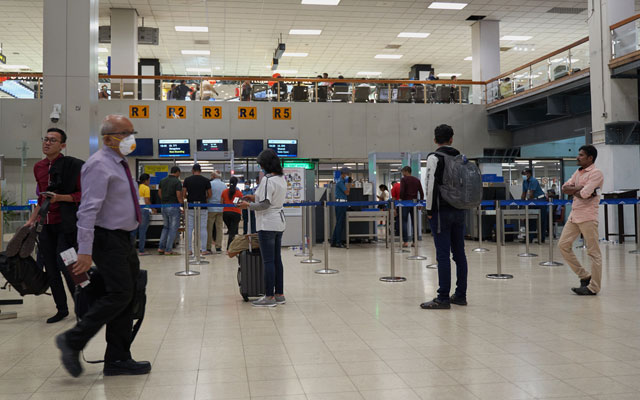
Sri Lanka will reopen borders to international tourists from June 1; Colombo Airport pictured

On Tuesday, the Department of Civil Aviation said the airports would be reopened on June 1, but noted that the ban on travellers from India, which has been engulfed by a tsunami of infections, would remain.

All foreign tourists are subject to a pre-arrival PCR test, with more testing required upon arrival. They must also stay at Covid-19 certified hotels. The pre-arrival PCR test requirement also applies to tourists who have received both doses of the vaccination.

Under new guidelines, only 75 passengers comprising both Sri Lankans and tourists will be permitted per flight. The airports are currently open only for outbound passengers.

The announcement of the airports’ reopening has been welcomed by industry officials who said even though arrivals have been merely a trickle since the airports reopened on January 21 after a prolonged pandemic shutdown last year, it means the country is back in business and open for tourism.

Arrivals totalled 9,629 from January 21 to end-April 2021 – a sharp drop compared to the 507,311 arrivals in the January-April period in 2020. Kazakhstan, Ukraine, Germany, India and China were the top five tourist generating markets during this pandemic period.

In the meantime, a former Sri Lankan ambassador in Russia and now tourism entrepreneur has announced that he would bring down 2,500 travellers from Russia as soon as the airports reopen.

Udayanga Weeratunga was quoted by the Daily Mirror newspaper as saying that discussions are ongoing with Russia’s Aeroflot airline and SriLankan Airlines for each carrier to operate at least one weekly flight between Moscow and Colombo, with at least 275 passengers arriving in Sri Lanka per week.

Weeratunga was also responsible for a pilot project bringing nearly 3,000 tourists from Ukraine to Sri Lanka between December 28, 2020 and January 19, 2021 in 12 flights operated during this period.

New hotels: the Arca, Avani Seminyak Bali Resort, and more

0

Frasers Hospitality enlarges footprint in China

0

TTG Conversations: Innovator Chat with Phau Hui Hoon, Changi Airport Group

0

When the pandemic brought air travel to a near standstill last year, Changi Airport had to act swiftly and innovate to sustain its business. Over the past year, it has found a lifeline in the form of festive events and unique activities catering to Singapore residents.

In this episode of TTG Conversations: Innovator Chat, Phau Hui Hoon, Changi Airport Group’s general manager of landside concession, shares that these pivots not only supported the businesses under its wing, but also served to jumpstart other consumer-facing innovations, such as a park connector, closed-door duty-free shopping for loyalty members and an integrated app.

Watch this episode to find out how the airport is turning its hardware and software around for survival.