

Cross Hotels & Resorts signs Vietnamese mega-deal

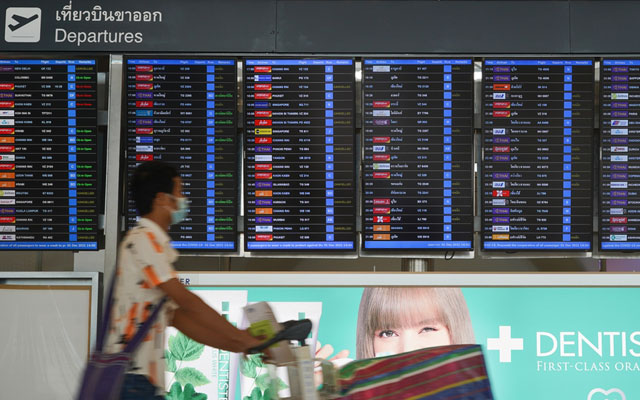
Cross Hotels & Resorts has signed an agreement with Tan Thanh Trading & Tourism JSC to develop a mega-project that will see the opening of two new hotels in Vietnam with a combined room count of 716 keys.
In a statement, the hotel group called the signing “one of the biggest greenfield deals in Asia since the start of the global pandemic two years ago”.
Scheduled to open in 4Q2022, Cross Long Hai and Cross Vibe Long Hai will be located in the coastal province of Vung Tau, a two-hour drive from Ho Chi Minh City.
Cross Long Hai will be an all-villa resort; while the twin-tower Cross Vibe Long Hai will be a modern Condotel offering 658 guestrooms, event and meeting facilities, spa, swimming pool and fitness centre.
Across South-east Asia and the Pacific, Cross Hotels & Resorts currently operates a property portfolio that includes more than 21 hotels under five brands, namely, Cross, Cross Vibe, Away, Lumen and Cross Collection.
TTG Asia news bulletin goes on festive break

TTG Asia news bulletin will be taking a break from December 10.
We will be back on January 3, 2022, when we will continue to deliver the hottest headlines to your inbox.

Meanwhile, TTG Asia Media wishes all readers Happy Holidays and a Happy New Year!
Sri Lanka upbeat on tourism growth in 2022 despite Omicron
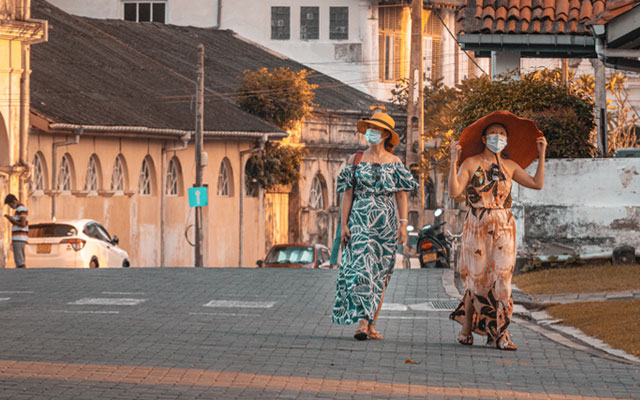
Sri Lankan tourism officials are optimistic that inbound tourist arrivals for next year will bounce back to 50 per cent of 2018 numbers – the year where the country recorded the highest international arrivals to date – even as the Omicron variant threatens to hinder the sector’s recovery.
Kimarli Fernando, Sri Lanka Tourism chairperson, told a conference on Tuesday (December 7) that she is confident the country would record an average 100,000 arrivals per month next year, amounting to 1.2 million arrivals for the entire year – approximately half of the 2.3 million arrivals recorded in 2018.
While arrivals started as a trickle following the reopening of the country’s main international airport in mid-January 2021 after a 10-month pandemic closure, there has been a steady increase, with 44,294 arrivals recorded in November.
However, that is still a far cry from pre-pandemic figures. Arrivals from January to November 2021 totalled a mere 104,989. In comparison, there were 507,311 arrivals in the three months from January to March 2020, before the closure of the airport.
Currently, Sri Lanka is open to tourists across the world except visitors from South Africa, Botswana, Lesotho, Swaziland, Zambia and Zimbabwe who have been banned since November 27 due to the Omicron variant.
All vaccinated travellers entering the country are only required to present a pre-departure negative PCR test result, with no quarantine requirement.
Meanwhile, outbound travel from Sri Lanka hasn’t picked up to pre-pandemic levels, with Omicron being a deterrent due to uncertainty over the possibility of sudden border closures imposed by countries.
The ever-changing travel restrictions have made people unsure about travelling out of the country, Mackinnons Travels CEO Trevor Rajaratnam said, adding that outbound group travel has completely stopped.
Still, travel agents in the country have been actively promoting overseas group tours to normally attractive locations like Dubai, Singapore and Bangkok.
Rajaratnam shared that most Sri Lankans were travelling to Dubai, said to have the easiest on-arrival travel requirements; while some individuals and even families were heading to Singapore and Thailand, but not on group packages due to a greater reluctance to make advanced travel bookings.
Star Cruises to restart domestic sailings in Malaysia
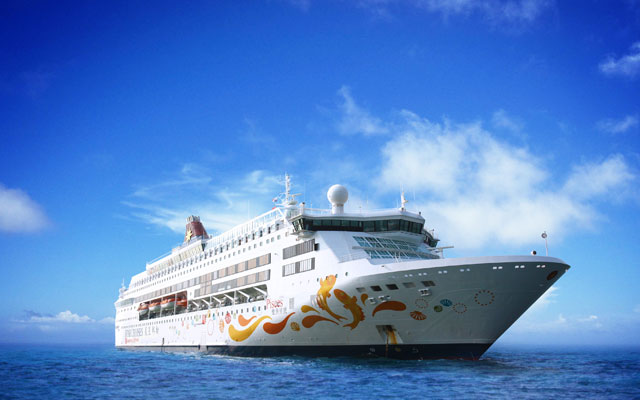
Star Cruises is set to become the first cruise line to resume operations in Malaysia, with Star Pisces offering domestic cruises from Penang starting December 22.
Parent company Genting Cruise Lines (GCL), together with Penang Port Commission and Penang Port, have been granted approval by the Malaysian government to restart cruises from Penang.
Star Pisces will have five departures every week, offering a series of roundtrip itineraries from Penang, including a two-night Langkawi Escape and a one-night Straits of Malacca cruise itinerary.
GCL also plans to launch more ships under the Star Cruises fleet.
Star Pisces will initially operate at a reduced passenger capacity of 50 per cent with strict enhanced safety and preventive measures. All individuals on board must be fully vaccinated for Covid-19. In addition, all embarking guests are required to present a negative test result after completing the mandatory pre-boarding antigen rapid test, which will be conducted at the cruise terminal on the day of the departure.
GCL president Kent Zhu said: “We hope to call on to more Malaysian destinations and to expand our itineraries with the inclusion of regional destinations like Phuket in the near future to spur the cruise tourism industry.
“We are also actively pursuing with the various port authorities to create a ‘Harmonize Cruising Standards’ for the region in the hope of gradually reopening international cruising in a controlled and safe manner, which will also bring inbound tourists to Malaysia, especially from our ship in Singapore.”
Star Pisces bookings will be open in mid-December and available to all Malaysian citizens, foreigners with valid Malaysian long-term visit passes, as well as international tourists who have completed and passed the quarantine and home surveillance order by the Malaysian authorities.
Since July 2020, GCL was the first international cruise company in the world to pioneer and successfully restart operations with Dream Cruises, starting in Taiwan, Singapore and Hong Kong.
FEH rings in the holidays with experiential staycation packages

Far East Hospitality has launched a series of staycation packages with themed experiences, ranging from a cultural culinary class to wellness treatments and a Christmas-styled picnic at Southern Islands.
At The Clan Hotel Singapore, locals are invited to immerse themselves in a heritage experience with The Clan Uncovers: The Exuberant Edition package, priced from S$1888 (US$1,383) nett for a three-day, two-night stay.

The package includes accommodation in a Master Series Grand Premier Room; and an evening trishaw ride along Chinatown, followed by a bumboat cruise along the iconic Singapore River.
Guests can also cook up a heritage feast at The Food Playground and learn the stories behind age-old family recipes of dishes such as laksa, curry chicken, and char kway teow. Also included is a six-course festive feast at QĪN Restaurant and Bar, complete with free-flowing cocktails.
Meanwhile, the Barracks Hotel Sentosa has pushed out the Exquisite Barracks Christmas package, priced from S$4,588 nett for a three-day, two-night stay.
The package includes accommodation in a Premier Room, a Eurasian Christmas-themed patio dining experience with free-flow of premium cocktails, a private morning sail to the Southern Islands with a festive-themed picnic, and a cable car dinner experience for two at Mount Faber.
Wellness junkies can pamper themselves with the Christmas Retreat package, priced from S$3,988 nett for a three-day, two-night stay at the Oasia Resort Sentosa.
The package comprises of accommodation in a Junior Suite, as well as a three-hour body ritual that includes a 30-minute body scrub, 90-minute massage and a 60-min private body care workshop.
Guests also enjoy four hours’ worth of relaxation therapy, including a two-hour guided forest bathing experience, 90-minute facial and 30-minute scalp massage. The stay comes with a S$300 dining credit at Bedrock Origin.
For families who want a short getaway, Orchard Rendezvous Hotel is presenting the Family Rendezvous x Cath Kidston package, priced at S$2,188 nett for a three-day, two-night weekday stay and S$2,288 for a three-day, two-night weekend stay.
The package includes Peranakan lunch at Indocafe – The White House; and accommodation in the Cath Kidston Family Room, a botanical-accented room with bunk beds for kids, complemented by Cath Kidston prints.
Other inclusions are an open-top coach tour of Christmas lights along Orchard Road, dim sum lunch at Tung Lok Signatures, tickets to National Orchid Garden, and dinner at The Halia at Botanic Gardens. Guests can also bring home Cath Kidston mementos including the classic cosmetic case, square pencil case, a small book bag and strappy carryall.
These festive packages are valid to book and stay from now until January 1, 2022.
Pan Pacific revamps loyalty programme

Pan Pacific Hotels Group (PPHG) is redefining the loyalty game with the revamped Pan Pacific Discovery, as part of Global Hotel Alliance (GHA)’s reimagination of the Discovery loyalty programme.
With this elevation, members of Pan Pacific Discovery can now savour more benefits with a new easy-to-use digital rewards currency, Discovery Dollars (D$); enjoy additional discounts on room rates, dining experiences and more; move up with faster tier progression; as well as earn and spend D$ on premium hotel amenities and experiences, including all PPHG-owned dining outlets across its global portfolio.
The overhaul of Pan Pacific Discovery marks a significant shift from the previous programme, which provided member recognition based on stays and accumulated room nights.
Cinn Tan, chief sales & marketing officer, PPHG, said: “The new Pan Pacific Discovery is built around the evolving expectations of our customers, who told us that they would like a rewards-based loyalty programme.”
Under the revamp, Pan Pacific Discovery has rolled out new rewards currency Discovery Dollars, or D$. At check-out, D$ earned on previous stays can be used towards the hotel room, room upgrades, dining, spa treatments, and more. The percentage earned on eligible spend increases with membership tier status, starting at four per cent and rising to seven per cent.
Pan Pacific Discovery now offers an expanded four tiers of membership: Silver, Gold, Platinum, and Titanium. New members achieve Silver status upon joining the programme and are entitled to benefits from their first stay. Tier progression can be achieved more easily and faster through three ways: number of stays, spend across eligible purchases, and number of GHA hotel brands stayed in.
Additionally, Titanium members can now benefit from status sharing, with the option to gift their tier to a friend or family member each year. All members are eligible for additional room rate savings of 10 per cent or more.
Oakwood plants first Bangladesh flag in Dhaka

Oakwood will be making its entry into Bangladesh with the signing of Oakwood Hotel & Apartments Dhaka, scheduled to open in April 2022.
Located on Gulshan Avenue within Dhaka’s affluent precinct, Oakwood Hotel & Apartments Dhaka will feature a collection of 89 hotel rooms and serviced apartments, from studios to two-bedroom units.

The property will offer a range of F&B outlets, including a split-level rooftop bar, all-day restaurant, lobby lounge-café and cigar divan bar; as well as meeting and event facilities.
Oakwood Hotel & Apartments Dhaka will add to Oakwood’s enlarging footprint across South Asia in support of its goal to double the global portfolio of managed properties by 2025.
Dusit expands China footprint with Hangzhou signing

Thailand’s Dusit International has signed a hotel management agreement with Zhejiang Dahua Group to operate Dusit Thani Tianmu Mountain, Hangzhou, a luxury resort in Lin’an County within Hangzhou, China.
Slated to open in 2Q2022, the resort will comprise 160 villas and guestrooms on the outskirts of the Tianmu Mountain National Nature Reserve – a UNESCO Biosphere Reserve.

The property is located an hour’s drive from Hangzhou city centre, and 90 minutes from Hangzhou Xiaoshan International Airport. The new high-speed rail station, which links with Shanghai, is just a 20-minute drive from the property.
Resort facilities will include an all-day dining restaurant, a Chinese restaurant, an outdoor swimming pool, hot mineral pools, a gymnasium, the deluxe Namm Spa, and two ballrooms with adjoining function rooms.
Dusit International’s portfolio now includes more than 300 properties operating under six brands across 16 countries. In China, the company currently operates 10 hotels and has more than 20 properties in the pipeline.
ForwardKeys finds 2021 travel and tourism recovery to be “bumpy, patchy”
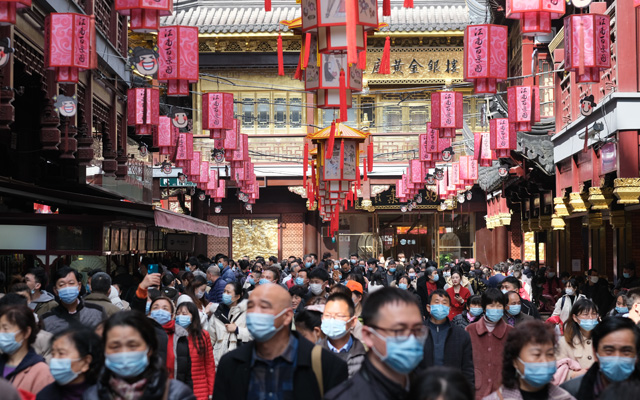
A new report from ForwardKeys, drawing on its collection of the latest and most comprehensive air ticketing data available, has identified some top developments of 2021 as the travel and tourism industry moves towards recovery.
US leisure travel leads recovery
A comparison of the world’s top destination cities, before the pandemic in 2019 and throughout 2021, illustrates the strong trend towards leisure travel leading the recovery.
Several major cities have been pushed down or out of the top 20 rankings, whereas major leisure destinations, particularly for US holidaymakers, have climbed high. While Dubai – a major leisure destination as well as a substantial travel and commerce hub – remains at the top of the list, the most notable rises include Miami from 18th to 5th, and Madrid from 16th to 10th. New entrants are Cancun (Mexico) at 2nd, Cairo (Egypt) at 9th, Punta Cana (Dominical Republic) at 12th, San Juan (Puerto Rico) at 13th, Lisbon at 14th, Athens at 15th, Mexico City at 16th, Palma Mallorca at 17th, and Frankfurt at 20th.
The two highest risers, Cancun and Miami, are major leisure destinations popular with US holidaymakers. Most of the new entrants lower down the list are also leading leisure destinations, popular with European holidaymakers. Doha, which entered at 7th, has done particularly well as a hub for transits.
Major pre-pandemic destinations, which have fallen out of the top 20 list include Bangkok, Tokyo, Seoul, Singapore, Hong Kong, Taipei, Shanghai, Jeddah, Los Angeles and Osaka.
Paralysis of Asia-Pacific
A review of worldwide travel in 2021, broken down by region, reveals the extent to which international travel was paralysed. Overall, international air travel was just over a quarter (26%) of its pre-pandemic level. The Asia-Pacific region reached just 8%; whereas Europe achieved 30%, Africa & the Middle East 36% and the Americas 40%.
A comparison of travel between the first and second halves of the year shows that global international travel more than doubled from 16% of pre-pandemic levels to 36%. However, the recovery was extremely uneven. In the Asia-Pacific region, flight arrivals grew from 5% of their 2019 level in the first-half to 10% in the second-half. In Europe, they grew from 14% to 45%; in the Middle East & Africa, they grew from 24% to 48%; and in the Americas, from 30% to 52%.
Within the regions, some countries were much more resilient to the impact of Covid-19 on travel than others. The stand-out destinations which best maintained their visitor numbers were Central America, particularly El Salvador and Belize, and the Caribbean – all holiday hotspots for US tourists. Many of them managed to record visitation rates in excess of 60% of 2019 levels throughout the year. The same degree of travel resilience was true of around two dozen countries in Africa. However, their level of resilience is a little less noteworthy because many of them have economies which are much less dependent on tourism.
A Middle East revival
Travel to various Middle East destinations has exceeded the 60% benchmark in the second-half of the year. Most notably, travel to Turkey climbed from 33% in 1H2021 to 67% in 2H2021 of pre-pandemic levels and travel to Egypt grew from 37% to 72%. Dubai held its position as the top city destination; and Doha overtook Dubai as an air transit hub.
Domestic travel has been dominant, particularly in large countries
While many countries have been able to impose severe restrictions on international travel, citing the need to keep their own populations safe, imposing equally stiff constraints on one’s own populations is politically more challenging.
Consequently, there has been a relative rise in domestic travel, particularly in geographically large countries such as Brazil, China, Russia and the US, where it is possible to fly for a few hours without crossing the border.
In China, domestic travel volumes returned to pre-pandemic levels as early as September 2020; however, they fell back in January and again in August, owing to a resurgence in Covid cases.
In Brazil, Russia, the US and China, domestic travel rose respectively to 148%, 128%, 87% and 76% of pre-pandemic levels in 2H2021, compared to 50%, 28%, 39% and 1% for international travel.
 Major European airlines have struggled disproportionately
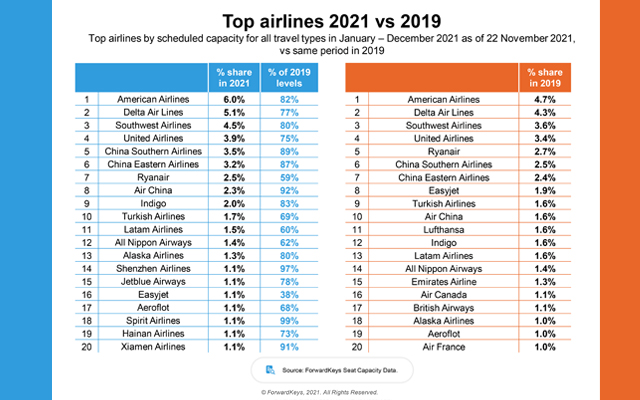
Largely due to the trend towards domestic travel in large countries, airlines in those markets have managed to weather the Covid storm better than carriers whose business has been more oriented towards shorthaul international travel.
This is illustrated by an analysis of the top 20 airlines in 2021 compared to 2019. The major European carriers have all fallen down or out of the ranking; and they have been replaced by airlines which have substantial business in China and the US, which have been better able to maintain capacity.
For example, Ryanair and easyJet, the two largest European carriers, have fallen from 5th and 8th position respectively, to 7th and 16th. Lufthansa, British Airways and Air France, Europe’s largest legacy carriers, have fallen out of the top 20 list, as have Emirates and Air Canada. They have been replaced by Shenzhen, JetBlue, Spirit, Hainan and Xiamen.
Relative decline in longhaul travel
A comparison of international travel within the major world regions, intra-regional travel, and between world regions, extra-regional (or longhaul) travel, reveals a shift away from longhaul travel during the pandemic.
In 2019, the ratio of intra-regional to extra-regional travel was 56%:44%; but in 2021, that had changed to 62%:38%. The pattern has also changed, with a greater proportion of people within Europe and the Americas travelling intra-regionally rather than longhaul.
The trend can be explained by a combination of several factors, including the effective closure of Asia-Pacific, the increased cost and difficulty of travelling longhaul during the pandemic, and frequently changing pandemic travel regulations, which disproportionately deter people from booking longhaul travel, as it is typically booked and planned with much longer lead times.
Doha, Amsterdam advancing in the battle of the hubs
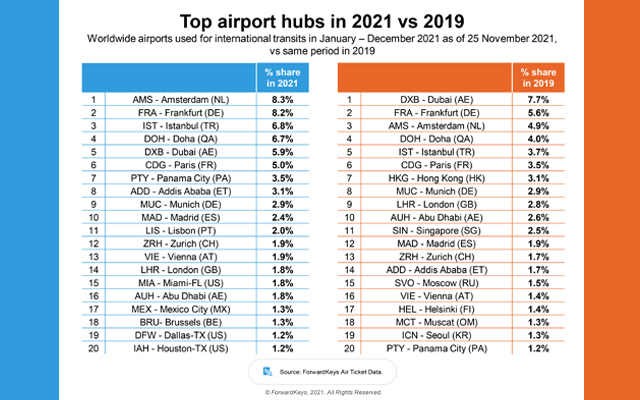
In the battle of air hubs, Doha overtook Dubai to become the preeminent hub airport in the Middle East, connecting air traffic between South Asia, Middle East, North America and Sub-Saharan Africa.
In Europe, Amsterdam closed the gap on Frankfurt for intra-European transits and connections with North America.
Pre-pandemic, the top 10 list of global hub airports was headed by Dubai with 7.7% market share of intercontinental flight connections. It was followed by Frankfurt, Amsterdam, Doha, Istanbul, Paris, Hong Kong, Munich, London and Abu Dhabi. In 2021, it was headed by Amsterdam, with 8.3% share of intercontinental flight connections. Amsterdam is now followed by Frankfurt, 8.2%; Istanbul, 6.8%; Doha, 6.7%; Dubai, 5.9%; Paris, 5.0%; Panama City, 3.5%; Addis Ababa, 3.1%; Munich, 2.9%; and Madrid, 2.4%.
Analysis of monthly traffic in 2021 shows that Amsterdam briefly overtook Frankfurt in September and October, but it fell back in November. In the same month, Dubai recovered its lead over Doha for the first time since February.
New variants continue to pose a potent threat
A chart plotting the recovery in air travel shows relatively steady growth from 1Q2021, when traffic was less than 20% of 2019 levels, to 4Q2021, when it had climbed to over 50%.
However, there were two setbacks. The first began during the week of March 12, when the growth in weekly bookings turned from +11% to -10%, as the Delta variant began to sweep around the world.
The second began in the last week of October, when weekly bookings reached their highest point, 64% of same week in 2019. Bookings have been slowing down ever since; and in late November, they were down to 54% of 2019 levels, which was closely correlated with a fresh rise in Covid-19 cases since late October. It is now likely that the emergence of the new Omicron variant, and the travel restrictions introduced in response, will inhibit demand for last minute travel over the Christmas period.
Olivier Ponti, vice president, insights, ForwardKeys, said: “2021 has definitely been a year of travel recovery; but that recovery has been bumpy and patchy, with many established destinations displaced and several tourism-dependent destinations making valiant efforts to retain the patronage of leisure travellers. It has also been a tug of war between a strong pent-up demand to travel on the one hand and travel restrictions, imposed by governments to inhibit to the spread of Covid-19 on the other.”








The World Tourism Organization (UNWTO) of the United Nations has spoken out against new blanket restrictions on travel imposed by governments around the world in response to the Omicron variant.
The call echoes the concerns raised by UNWTO members during the recent 24th UNWTO General Assembly, where countries from all global regions expressed their solidarity with Southern African states by calling for the immediate lifting of travel bans imposed on specific countries and for freedom of international travel to be upheld.
UNWTO noted the recent declarations of the United Nations secretary-general and the director general of the World Health Organization (WHO) regarding the unfairness and ineffectiveness of blanket travel bans in respect to the countries of Southern Africa.
In light of recent developments, UNWTO has once again reminded countries that the imposition of blanket restrictions on travel is discriminatory, ineffective and contrary to WHO recommendations. Blanket restrictions may also stigmatise countries or whole regions, it said.
During the UNWTO General Assembly, member states and partners, including voices from international organisations and across the private sector, echoed WHO’s advice that travel restrictions should only be imposed as a very last resort in response to changing circumstances.
Furthermore, it was stressed that if restrictions are introduced, they must be proportionate, transparent, and scientifically-based. They must also only be introduced with a full appreciation of what halting international travel would mean for the most vulnerable, including those developing countries and individuals who depend on tourism for their economies and livelihoods.