

Room for growth

When a nationwide lockdown in Malaysia left hotel rooms across the country sitting largely vacant, Hanley Chew saw a window of opportunity to help hoteliers put their distressed inventories to good use.
That led him to set up online hotel booking platform JustTonite in February, at a time when Malaysia was under its second movement control order and the hotel industry was suffering with occupancies less than 15 per cent, even in the nation’s capital, Kuala Lumpur.

“There were more than 50,000 unoccupied hotel rooms daily in the capital alone. Nationwide, the number was in excess of 100,000. I created JustTonite solely with the intention of assisting hotels to fill up their unoccupied inventories for the same night,” shared Chew, founder and CEO of JustTonite.
The platform offers same-day, room-only bookings with check-in from 18.00 onwards. “This unique model was very welcomed by the hotel industry as it focuses only on the segment of unoccupied rooms for the night that will (otherwise) not generate any revenue,” said Chew.
Chew, who has been in senior management in the hotel industry for the past 28 years, shared that it was initially a challenge to explain the concept of distressed inventories to hoteliers.
“Many thought JustTonite was another OTA coming into an already very crowded marketplace. Many a time, I got ‘lectured’ on rate parity and hotel positioning, a topic which I am way too familiar with,” he elaborated.
“The industry ethics on rate parity only applies when all parties are selling the same product. In the case of JustTonite, we are selling a different product which is of restricted use. We are only selling (hotels rooms based) on a time segment – (a concept) which no hotels nor OTAs are focusing on.”
The platform was launched with 30 hotels in Kuala Lumpur and Selangor. That number has since increased to more than 100 hotels nationwide, and Chew is optimistic that the platform will grow to 300 hotels by year-end.
Hoteliers are allowed to list their inventory free-of-charge on the platform. A transaction fee is charged only when a booking materialises, with payment made to hotels immediately through the payment gateway.
Chew now plans to expand the platform to Singapore as he sees similarity in booking preferences between Singaporeans and Malaysians in that they desire a user-friendly booking platform with fixed, consistent rates.
To that aim, JustTonite has appointed Infinity Hospitality Asia as its partner in Singapore, effective July 1. Chew shared: “Its role will be to introduce this new concept of marketing distressed inventories to the hotel community in Singapore, and to reach out to staycationers through various marketing initiatives.”
The ambitious Chew is also in discussions with an organisation based in Dubai to promote this innovative model to all seven GCC countries. If all goes according to plan, the roll-out will start in the UAE this September.
JustTonite’s success in Malaysia has given Chew a long-term vision of adding value to the entire travel ecosystem, based on the similar concept of creating an effective distribution channel for distressed inventory.
Chew explained: “Airlines, car rental companies, bus operators and theme parks have similar distress inventories during low or no demand periods. All these industries have enough data to know which periods have low demand, and will need platforms like JustTonite to assist them. Each industry, however, defines distressed inventories quite differently.
“We are currently engaging with the captains of these industries to first understand their definition of distressed inventory. Through some proprietary tools we developed in-house, we determine a matrix to price these inventories effectively.”
Chew added that this pandemic season is the “perfect time” to introduce the concept of distressed inventory management via JustTonite as “hotels and many travel-related industries are currently undergoing some stages of ‘reset’ for their businesses”.
Sheraton debuts family programme in Greater China

Sheraton Hotels & Resorts has launched the brand’s first family programme, Side by Side, designed to foster inter-generational bonding through immersive activities.
Rolled out at the brand’s collection of 13 resorts in Greater China, the Sheraton Side by Side Family Programme allows guests to experience the resort’s dining and leisure facilities, while enjoying a variety of activities with their families, as well as unique local experiences in the destination nearby.
Parents and children can take part in a tropical sunset carnival and a traditional Hainanese Li bamboo folk dance, bonfire activities by the sea and a coconut bowling game at the Sheraton Shenzhou Peninsula Resort.
Meanwhile, families can learn about the local food culture through cooking and tasting the authentic Jiaodong cuisine at the Sheraton Yantai Golden Beach Resort, or bond over arts and crafts workshops and pottery-making sessions at the Sheraton Grand Xishuangbanna Hotel.
At the Sheraton Shanghai Chongming Hotel, guests can start the day off with a ride along the resort to the sunrise viewing spot and enjoy a breakfast picnic while welcoming the first rays of light. Located on the banks of the Bailu Lake in Huizhou, families staying at the Sheraton Bailuhu Resort, Huizhou can cycle around and enjoy a picnic by the lake.
Guests who book one night or more in a standard room or suite under the Sheraton Side By Side Family Package enjoy exclusive benefits, including a welcome amenity, access to all family activities, guaranteed connecting rooms for larger family groups, as well as early check-in and late check-out. Also, as part of the package, daily breakfast for two adults are included and kids under 12 eat for free (up to two children, ordering from the kids’ menu and accompanied by an adult dining on the regular menu).
Travel trade backs Malaysia’s full lockdown
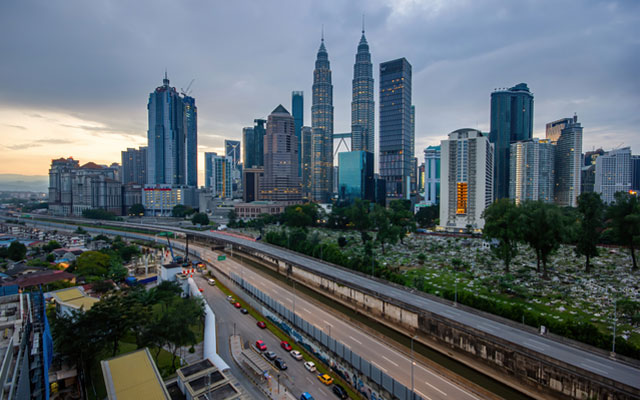
Tourism and hospitality players have welcomed the move by the Malaysian authorities to impose a full nationwide lockdown for two weeks beginning tomorrow (June 1) in a bid to flatten the Covid-19 curve.
The announcement made on Friday night comes after a record surge of 8,290 new cases on that day. This record was broken the following day with 9,015 new cases.
This will mark the country’s second full nationwide lockdown, following the movement control order (MCO) initiated last year in March for almost two months to stamp out Covid-19.
During this fresh lockdown from June 1 to 14, only essential and service sectors will be allowed to operate. This includes health services, the food and beverage industry, as well as banks and transport services including ports and airports.
Hotels and accommodation are allowed to open, but only for the purposes of quarantine, and not tourism.
The government has also decided that 80 per cent of civil servants and 40 per cent of the private sector will work from home.
If the 14-day lockdown succeeds in reducing daily new infections, the government will move to a four-week Phase 2, where economic sectors may resume, provided there are no large gatherings involved and physical distancing is possible.
This will be followed by Phase 3, where economic sectors are allowed to operate, but social activities are not allowed. The decision to move from one phase to the next will be based on risk assessment.
The tourism and hospitality sectors are in agreement that a complete lockdown is much needed to break the current spread of Covid-19 infections in the community as well as to ensure the long-term survival of all businesses and industries.
Malaysian Inbound Tourism Association (MITA) president, Uzaidi Udanis, shared: “MCO 1.0 was a success, no one can deny it. It had helped to flatten the curve. We had been calling for a similar lockdown to MCO 1.0.”
He added that concurrently, Malaysia also needs to speed up the pace of its national vaccination programme as that seems to be the only way out of this pandemic.
“Our members are also willing to volunteer the use of all our assets including vans and tour buses to speed up the vaccination programme by providing free transport and manpower to bring people to the vaccination centres,” he said.
MITA’s voluntary service comes in the wake of several news reports that the take-up rate for vaccination is low. It has also been reported that more than 14,000 mostly senior citizens in Johor, 11,000 in Kedah and about 10,000 in Kedah, did not show up for their appointments, with common reasons being not having transport to get to the vaccination centres and not having someone to accompany them there.
On the new lockdown, Malaysian Association of Hotels (MAH) president, N Subramaniam, opined: “The government must ensure that implementation (of mobility restrictions) is executed at the highest level, and that there be no room for compromise when the country is facing such high daily numbers.”
Both MAH and the Malaysia Budget & Business Hotel Association (MyBHA) also called on the government to support businesses during this period.
Subramaniam added: “Enhancement to the wage subsidy programme is long overdue, and banks must play its part by giving automatic full moratorium at zero interest to assist the government in ensuring the survival of businesses. Banks had collectively declared billions of net profit for 2020 as well as the first quarter of 2021.”
MAH and myBHA also called on the national electricity provider, Tenaga Nasional Berhad, to extend support to businesses, with a minimum of 50 per cent discount on electricity charges.
“Businesses unable to cope with operating and payroll costs should be given leeway on statutory payments during the lockdown to protect jobs,” shared Subramaniam.
Requests made by MyBHA to the state and federal government include providing special exemption on tax assessment for 2020 and 2021 for all hotel premises as well as introducing special tax incentives from 2020 to 2022 for all registered and licensed hotel and tourism industry players, shared Sri Ganesh Michiel, national deputy president.
MyBHA had also requested for the establishment of a special division under the Ministry of Tourism, Arts and Culture or the Ministry of Finance to process all loan applications by hotel and tourism industry players, allowing them to bypass approval requirements by financial institutions.
Quiet June holidays for Singapore’s top attractions

With Singapore’s month-long Phase 2 Heightened Alert restrictions coinciding with the first two weeks of the June school holidays, which start today, the city-state’s most popular attractions are giving up hopes of welcoming increased visitorship from families with children.
The new measures require attractions to further reduce their operating capacity to 25 per cent – from 50 per cent previously– and limit group sizes to only two. Dining-in services at F&B venues are also suspended.
According to a Wildlife Reserves Singapore spokesperson, booking slots on their website have been capped within the new permissible capacity and they are already assisting guests who prefer to defer their outings. Their zoological parks include the Jurong Bird Park, Night Safari, River Safari and Singapore Zoo.
Shows will be performed to a maximum crowd of 50 guests, while animal token feedings will continue in pairs.
To enable more consumers to enjoy the wildlife experience despite reduced access, Wildlife Reserves Singapore has invited customers to join a range of virtual programmes, during which they can interact with animals and keepers remotely.
Operating hours at various family-friendly attractions on Sentosa island have also been revised, according to a Resorts World Sentosa spokesperson. Universal Studios Singapore (USS) will be operational on Fridays through Sundays while the S.E.A. Aquarium will open only from Saturdays to Mondays. Dolphin Island and Adventure Cove Waterpark will be closed. Selected eateries, such as Feng Shui Inn, will remain open for takeaways.
Guests with existing reservations and SingapoRediscovers Vouchers bookings to USS and S.E.A. Aquarium for visits during the affected period will be allowed entry subject to capacity limits and changes to the operating days.
When contacted by TTG Asia, two of the authorised booking partners for SingapoRediscovers Vouchers, Klook and Trip.com, said focus is now on helping affected customers to reschedule their bookings. However, attraction tickets can neither be cancelled nor refunded as attractions are still open to visitors.
TTG Conversations: Five questions with Maria Anthonette C Velasco-Allones, Tourism Promotions Board

The Philippine Tourism Promotions Board (TPB) has found itself having to be more agile and creative in the way it markets the destination and motivates local tourism partners throughout the Covid-19 pandemic, especially as the country weaves through waves of community quarantine requirements implemented by the government, noted Maria Anthonette C Velasco-Allones, chief operating officer.
In this new episode of TTG Conversations: Five Questions video series, Velasco-Allones sheds light on the new responsibilities TPB has to take on to uplift the local tourism industry, bankable tourism products that will facilitate the destination’s tourism recovery, and infrastructure developments that are paving the way to a brighter future for the Philippines’ business events industry.
Hotel Okura Kyoto Okazaki Bettei to rise in Kyoto

Hotel Okura has contracted with Mitsubishi Estate to manage a 60-key hotel in Japan’s ancient capital of Kyoto.
Slated to open in January 2022, Hotel Okura Kyoto Okazaki Bettei will overlook Marutamachi Dori in the Rakuto and Okazaki areas of Kyoto. The property will offer guestrooms ranging from 40m² in size, including eight 80m² suite rooms themed after mountain villas.

It will be located near the historic Okazaki Betsuin Temple, overlooking the temple grounds, with the suites and some other rooms offering guests changing views of the seasonal scenery in its Japanese gardens. The hotel will also feature a restaurant, a lounge, bar, and fitness centre.
Hey, who turned on the lights?: Defeating darkness with creativity

Singapore has just stepped back into partial lockdown this month due to new infection clusters and unlinked Covid-19 cases in the community. The current state also means yet another disruption to the highly-anticipated Singapore-Hong Kong Air Travel Bubble, which was supposed to materialise on May 26. At press time, both governments have agreed to revisit the arrangement on or before June 13, when Singapore’s Phase 2 Heightened Alert restrictions end.
In yet another blow for Singapore, who has taken pride in resuming many in-person business events safely since October 2020, the World Economic Forum decided on May 17 to cancel its special annual meeting in the city state. The high-profile meeting was scheduled for August this year, following postponements from mid-May to late-May and then to August because of pandemic uncertainties.
Disruptive as these developments may be to travel and tourism recovery, most of us know that such evolving conditions are something we have to take in our stride. We have a full year and more to observe how the virus impacts countries and communities, and we know that even the best in Covid-19 containment is not immune to sudden infection surges.
Maldives, the envy of many destination marketers for being able to safely resume international tourism in July 2020 when most international borders were still shut, has been dealing with a surge in cases since early May. Maldives has now withdrawn her welcome to travellers originating from high-risk countries and regions.
Taiwan, yet another success story in Covid-19 containment, is battling a growing number of local infections.
India, Malaysia and Thailand are still trying to quell troubling new waves.
Hopes of 2021 being better than 2020 are dashed! Or not. It depends on how we want to remember this crisis. This is either a time of darkness or a time of creative brilliance. I will gladly go with the latter. There are plenty of creative survival examples here in Asia.
We have seen hotels, resorts and serviced apartments do well with workation, staycation, long-stay and themed stay packages, some built for beloved pets and others for home owners waiting out home renovations. Some hotels have successfully turned to delivering gourmet delights to customers stuck at home, while others have become skilled destination story-tellers.
NTOs, tourist attractions and tour operators have devised out-of-the-box ideas to engage their customers and keep the travel dream alive, such as through virtual reality tours and online interactions with in-destination artisans, chefs, oenophiles, cave explorers, and many other subject matter experts that travellers would love to meet on their trips but might not always have the chance to do so.
Innovative partnerships with non-hospitality businesses have been forged to the benefit of travellers and guests.
We may be living in one of our darkest times in modern history, but these are also days of bright ideas that could forever change how we travel and appreciate destinations.
Karen Yue is group editor of TTG Asia Media. She sets the editorial direction for the company’s stable of travel trade titles and platforms, and produces content for them as well.
IATA predicts strong comeback for air travel by 2023
Global air passenger traffic is expected to recover to 88 per cent of pre-Covid levels by 2022, as the vaccine rollout and testing advancements see more travellers return to the skies, according to the IATA.
The report by the IATA and Tourism Economics which looked at a long-term view for post-Covid passenger demand recovery demonstrated that people remain eager to travel in the short- and long-term.
It also predicted that global passenger numbers are expected to recover to 52 per cent of pre-Covid levels (2019) by the end of this year, and surpass pre-Covid levels (105 per cent) by 2023.
By 2030, global passenger numbers are expected to have grown to 5.6 billion. That would be seven per cent below the pre-Covid forecast and an estimated loss of 2-3 years of growth due to Covid-19.
Beyond 2030, air travel is expected to slow, due to weaker demographics and a baseline assumption of limited market liberalisation, giving average annual growth between 2019 and 2039 of 3.2 per cent. IATA’s pre-Covid growth forecast for this period was 3.8 per cent.
The recovery in passenger numbers is slightly stronger than the recovery in demand measured in revenue passenger kilometres (RPKs), which is expected to grow by an annual average of three per cent between 2019 and 2039. This is owing to the expected strength of domestic markets like China with large passenger numbers and shorter distances.
“I am always optimistic about aviation. We are in the deepest and gravest crisis in our history. But the rapidly growing vaccinated population and advancements in testing will return the freedom to fly in the months ahead,” said Willie Walsh, IATA’s director general.
“And when that happens, people are going to want to travel. The immediate challenge is to reopen borders, eliminate quarantine measures and digitally manage vaccination/testing certificates.”
While the damage caused by Covid-19 will be long-lasting, IATA’s study showed that people have retained their need and desire to travel, with news of borders reopening met with an instant surge in bookings.
The most recent example is the 100-percentage point spike in bookings from the UK to Portugal when the UK’s “Green List” was announced in early May.
IATA also predicted that vaccination rates in developed countries, with the exception of Japan, should exceed 50 per cent of the population by 3Q2021.
“This should be a clarion call to governments to get ready. The travel and tourism sector is a major contributor to GDP. People’s livelihoods are at stake. To avoid greater long-term economic and social damage, restart must not be delayed,” said Walsh.
“Governments can facilitate a safe restart with policies that enable restriction-free travel for vaccinated people, and testing alternatives for those unable to be vaccinated. Governments must also be ready with processes to digitally manage the vaccine or test certificates – ensuring that a safe restart is also efficient.”
Spotlighting destination Hong Kong, one plate at a time
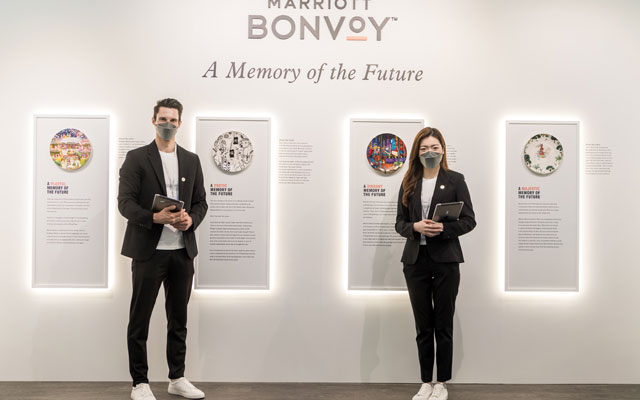
In collaboration with charitable organisation, The Plated Project, Marriott Bonvoy recently presented a series of artworks titled, A Memory of the Future, to spotlight Hong Kong as a destination through its arts and culture.
 Showcased at Art Basel Hong Kong 2021 from May 21-23, the artworks come in the form of four ceramic plate designs that pay tribute to the distinct art-forms that are intrinsically Hong Kong, such as hand-carved mahjong tiles, hand-made stencils, neon signs and Cantonese opera.
The limited-edition art plates are more than just eye candy, as proceeds from their sale at selected Marriott hotels in Hong Kong go to Foodlink Foundation Hong Kong – a charity dedicated to fighting hunger, building self-sufficiency, and fostering nutritional wellness among those in need, while reducing food wastage in Hong Kong.
For guests outside of Hong Kong, the plates are available for sale via The Plated Project website in support of Covid-19 relief efforts.







The Malaysian government has unveiled a RM40 billion (US$9.7 billion) economic stimulus package to cushion the impacts of a nationwide two-week total lockdown which kicks off today (June 1).
The overall value of the Pemerkasa Plus programme includes a direct fiscal injection from the government worth RM5 billion.
Announcing the details via a televised address yesterday, prime minister, Muhyiddin Yassin, said the financial aid comprised of 12 initiatives based on three main objectives, namely, enhancing public health capacity, supporting business continuity and advancing the people’s welfare agenda.
Aid for the travel and tourism sector includes RM1 billion for a bus and taxi hire purchase rehabilitation scheme that will allow eligible bus and taxi operators to obtain a loan moratorium for up to 12 months, with the option to extend the loan period for up to 36 months.
Tour vehicle drivers, taxi drivers and e-hailing drivers will each receive a one-off aid of RM500. Hoteliers, shopping centres and theme parks will enjoy electricity bill discounts of 10 per cent from July to September.
The prime minister also said that SMEs that are not allowed to operate during the movement control order (MCO) 3.0 had been given the option of automatic approval of bank moratoriums for three months or a 50 per cent reduction in loan repayments for six months.
The government has also allocated RM1.5 billion for a month’s worth of the Wage Subsidy programme under the Social Security Organisation for all affected economic sectors, with a limit of 500 employees per application.
Commenting on the latest government stimulus, the Malaysian Association of Tour and Travel Agents (MATTA) president, Tan Kok Liang, said the association welcomed many of the initiatives outlined as it would help tourism players, especially travel agents, to stay afloat during this crisis.
He added: “Foremost amongst these is the push for the rollout of the vaccination programme which will help pave the way to a quicker reopening of borders, and thereby, the revival of tourism and all its related economic subsectors.”
Tan also hailed the rehabilitation programme for buses – a move that MATTA has been calling on the government to make since the early stages of the pandemic.
He said: “We are thankful that the government has taken the bold decision to intervene on behalf of bus owners as the previous moratoriums did not apply to leasing companies.
“MATTA estimates that our members alone own more than 9,000 vehicles classified as tour buses, many of which were purchased from credit and leasing companies. To put into context, a 40-seater tour bus costs between RM490,000 to RM580,000. The debt which is impossible to service given these trying times has the potential of crippling the tourism ecosystem if not dealt with swiftly and decisively.”
However, Tan also appealed to the authorities for a longer extension of the moratorium and wage subsidy programme until year-end, as well as to provide travel agencies with a grant of RM10,000 each to help them cover fixed costs and overhead costs.