

New hotels: Homm Bliss Southbeach Patong, Oakwood Premier Melbourne, and more
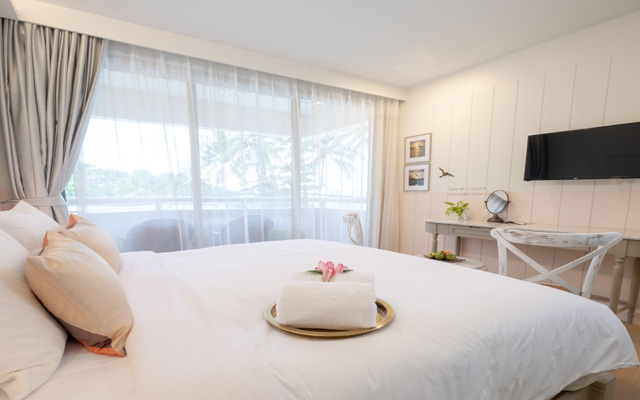
Homm Bliss Southbeach Patong, Thailand
Banyan Tree Group has unveiled its latest concept, Homm, with Phuket serving as the brand’s first-ever location. Sitting on the southern end of Patong Bay, the 71-key beachfront property has 39 rooms that boast sea-facing private balconies or terraces, or ground-floor plunge pools. There are two outdoor pools on-site, and culinary offerings include quick bites and grab n’ go snacks, like HOMM’s signature breakfast buns from Seagulls on Southbeach, or all-day dining at Rice Bowl, best known for authentic Thai cuisine.
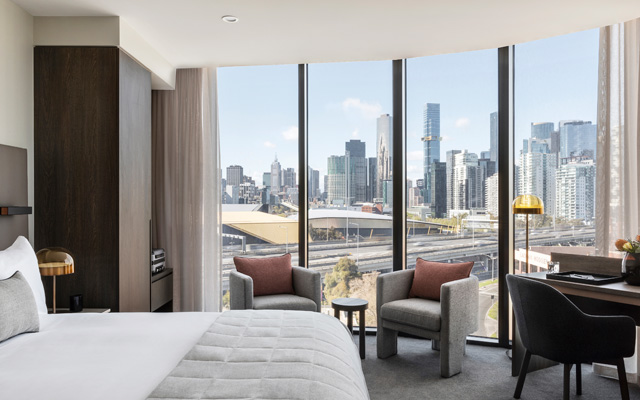
Oakwood Premier Melbourne, Australia
A debut for the Oakwood Premier brand in Australasia, this new-build soars 140 metres and 40 storeys with views of the CBD and the Yarra River, South Melbourne, Albert Park and Port Phillip Bay.
There are a total of 132 hotel rooms and 260 serviced apartments with fully-equipped kitchens for both extended and short-stay guests. In addition to the all-day dining restaurant Fifth, other amenities include a Sky Bar, fitness centre, three meeting rooms, two multipurpose event venues, co-working space, games centre fitted with modern entertainment for those looking to play snooker or video games.
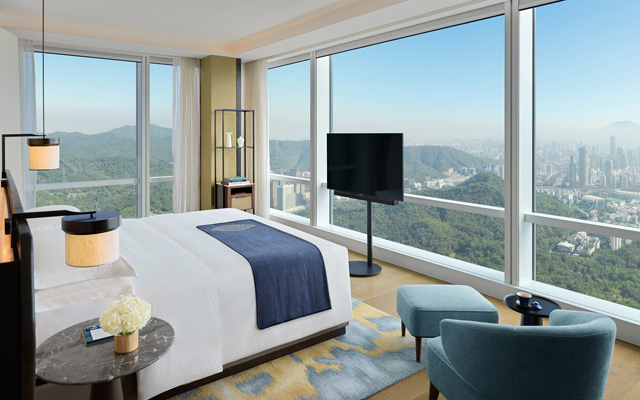
Mandarin Oriental, Shenzhen, China
The hotel is located on the upper floors of a new 79-storey building in Futian business district. Each of the 178 luxurious rooms and suites – among the largest in the city – provide vistas of the cityscape, greenery of Lotus Hill Park, Bijia Mountain Park and Shenzhen Bay. The Mandarin Club, located on the 78th floor, provides a private lounge experience. Amenities include eight F&B options, The Mandarin Club lounge, a fitness centre, and indoor swimming pool.
Event planners will be able to organise functions at The Cube, an independent meeting space offering 1,500m2 of event space. They also have the option of booking The Gallery on the 77th floor, which is the highest banquet space in the city.
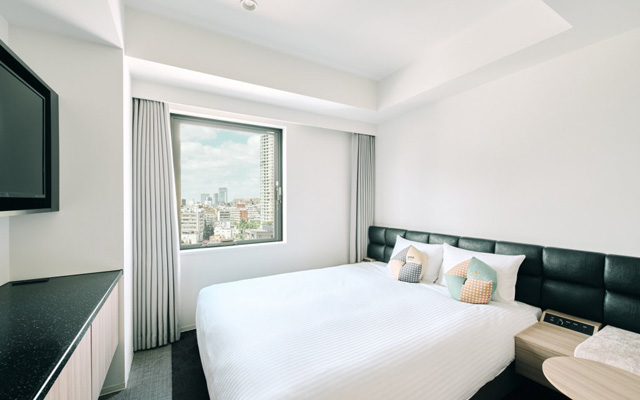
OMO3 Tokyo Akasaka, Japan
This newly-opened property under Hoshino Resorts is located in Akasaka, less than a five-minute walk from the Akasaka-Mitsuke Station and Akasaka-Station on the Tokyo Metro Lines. There are 140 rooms across several categories, and guests exploring the city will be able to avail the Go-Kinjo Map, an original map of the Akasaka neighbourhood with recommendations by staff members.
Although the property does not have a restaurant, OMO3 Tokyo Akasaka has collaborated with nearby restaurants such as Ueshima Coffee Shop to provide a scrambled egg sandwich with sea bream to guests in the morning, and the Yona Yona Beer Works Akasaka for a free welcome beer and special small bites.
Chinese consumers make move on travel plans for 2022
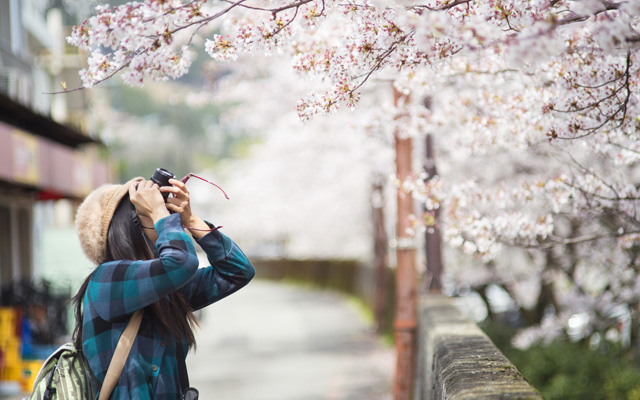
Chinese consumers are progressing from merely dreaming of travel in 2022 to setting clearer travel plans, according to Dragon Trail International’s latest China Travel Market Monitor, which surveys 1,045 Chinese citizens who have had recent international travel experience.
The results, gathered for TTG Asia in a survey conducted in December 2021, found that 78% of respondents are considering outbound travel in the new year, with 55% having a destination in mind and will go ahead once outbound travel is made possible.
An additional 17% even have a date in mind and are waiting for international restrictions to be lifted; while five per cent have started to plan their itinerary.
Only one per cent – or 12 respondents – have gone ahead to book some or all of their next outbound trip components.
Respondents have identified several factors that will inspire the return of their travel confidence, with the most popular conditions being the safe resumption of international travel for several months (60%), end of quarantine requirements both ways (58%), lifting of China’s restrictions on outbound group tours (41%), and resumption of destinations’ visa issuance (40%).
Some respondents are also likely to travel overseas once China replaces quarantine in government facility with home isolation, when the price is right for international flights, or when international flight frequencies are up.
Travellers in China’s second-tier cities are found to be more conservative than others when it comes to travel approaches. Tier Two residents primarily require international travel to resume safely for several months before they will regain confidence to make an overseas trip.
At the same time, male Chinese travellers are less likely than females to travel as soon as outbound trips are permitted.
When asked whom they would want to take their first post-pandemic outbound trip with, 49% of respondents pointed to their family, including children, while a holiday with their significant other came in a far second (29%).
Eleven per cent of respondents want to travel alone when they can return to travel, while 22% are keen to mark the occasion with friends or colleagues, implying that their first overseas trip could be business related.
Male travellers are more likely to take their first international trip with family and children, while those in the higher income bracket – with a personal monthly income of RMB30,000 (US$4,713) and above – are least likely to travel with partners and family without children.
Japan takes pole position as the destination of choice among Chinese respondents, with 17% of votes or 177 in total. It is also the only destination to score a double-digit percentage vote.
Other destinations that respondents are eyeing for their first post-pandemic outbound trip include Thailand (eight per cent), Australia (eight per cent), France (seven per cent), and South Korea (six per cent).
Tier One residents (24%) are more likely than their Tier Two peers (14%) to make a trip to Japan. Dragon Trail International’s research manager, Mengfan Wang, explained that this could be due to Tier Two travellers being generally more conservative about travelling outbound.
In selecting their destination of choice, respondents pay greatest attention to the destination’s track record in pandemic management (59%). The quality of the destination’s sanitation measures is also crucial (51%), so is a low level of Covid-19 infections in the destination over several months (47%) and the destination’s perceived welcome for Chinese travellers (41%).
Other factors under consideration include the destination’s strong reputation in medical services (37%), value for money (36%), variety of tourist experiences (35%), and availability of direct flights to destination (33%).
Some 32% of respondents would consider all the above factors equally.
In forming their post-pandemic travel plans, a majority of respondents (83%) rely strongly on online travel agency or travel review sites (such as Trip.com, Mafengwo, Fliggy) for information. National tourism board official channels (such as website, WeChat or mini-programme) come in second (63%) as the most favoured source of information.
Commercial entities, specifically travel agents or agencies (54%) and airline, hotel, car rental company official channels (51%) are also deemed reliable sources of information.
Word-of-mouth sources, such as friends and family (22%) and travel bloggers/travel media (23%) are favoured by a smaller segment of respondents.
Further defining how Chinese travellers are obtaining their travel information, the China Travel Market Monitor found that Tier One and Two residents are more likely to rely on OTAs, while New Tier One residents are keener on national tourism board official channels.
Tier Two consumers are more likely to rely on word-of-mouth sources than their peers in Tier One cities.
Among age groups, those in the 21-30s bracket rely the least on travel agents and travel agencies, which is most preferred by those aged 41 and above.
Travellers married without children or unmarried are more likely consult travel blogs than those married with children.
The China Travel Market Monitor is the only specialised travel market survey that gains insights directly from China’s outbound travellers, with surveys launched each month and allowing multiple brands to join at the same time for a cost-effective solution to getting the most up-to-date information on this segment of consumers.
Dragon Trail International is an award-winning marketing solutions company with roots in China and extensive experience in the global travel and MICE sectors.
Lufthansa Group ramps up APAC operations, banks on organisational transformation in march to recovery

Despite Asia-Pacific’s cautious approach to travel and tourism resumption relative to Europe and the US, Lufthansa Group continues to regard the region as an critical market and has maintained agility in ramping up services along with changes to border restrictions.
In an interview with TTG Asia during his recent business trip to Singapore, Stefan Kreuzpaintner, chief commercial officer with Lufthansa Group, emphasised the region’s importance – one where the group used to operate 253 weekly flights to 18 destinations pre-pandemic and where it has many important joint venture partners, specifically All Nippon Airways, Air China and Singapore Airlines.
Even with Asia-Pacific’s careful reopening, the group has been able to resume close to 30 per cent of its pre-pandemic frequency – with 71 weekly flights in operation today to 14 destinations.
Kreuzpaintner noted that travel demand is moving very closely with travel restrictions, with any easing of measures resulting in a spike in flight searches and bookings on all Lufthansa Group airline websites.
“Singapore’s Vaccinated Travel Lane (VTL) is a good example. As soon as the announcement was made in August 2021 about a VTL between Singapore and Germany, we saw demand kicked in,” he recalled.
“Therefore, as soon as markets reopened here in Asia-Pacific, we responded by putting capacity back in. Our flights serving China and India are fully packed – sold out – and we are prepared to bring in additional capacity.”
When asked if top source market rankings in the region would change post-pandemic, Kreuzpaintner said no; he expects India and China to “keep their weight and return to their original strength soon” after the pandemic, and acknowledges Singapore’s continued importance as a destination and source of origin”, especially with the successful implementation of the VTLs.
Besides responding swiftly to changing border conditions, the group has kept a prominent market presence in the region throughout the pandemic with help from its sales force.
Kreuzpaintner said the decision was a conscious one to ensure the group remains close to its travel agent partners – a community that has an even more important role to play in post-pandemic travel and tourism. The pandemic has altered the role of travel agents, he noted, moving them past ticketing functions to responsibilities in “providing travel counsel to their end customers and fulfilling important services”.
The group’s recovery also relies heavily on an organisation-wide transformation that was rolled out pre-pandemic and accelerated by the crisis.
According to Kreuzpaintner, a major achievement of the transformation was the group’s implementation of a capital increase on November 12 last year, which allowed it to exit its state subsidies.
“I think that is an enormous positive step for the company. While we are very appreciative of the support given to us by Germany and the state throughout the pandemic, we are glad to be able to refinance ourselves on the capital market,” he remarked.
The second milestone is the group’s fulfillment of a promise to keep more than 100,000 jobs amid tough cost-cutting measures deployed throughout 2021.
Lufthansa Group’s transformation also involves boosting its products and services. It has kept more than 650 airplanes post-pandemic and continues to invest in new aircraft. More than 170 airplanes are expected to join the fleet up to 2030, with all capable of serving longhaul and shorthaul routes.
“Our focus on offering premium products and services (have not wavered) during the pandemic,” Kreuzpaintner said, pointing to the reopening of its own First Class Terminal at Frankfurt Airport on September 1, recent introduction of a new catering concept for economy and business class products across all Lufthansa Group airlines, resumption of longhaul service in all seat classes, and a soon-to-launch business class product with the next delivery of its longhaul aircraft. The latter initiative will begin with Lufthansa and progress through other airlines in the group.
Kreuzpaintner observed that appetite for premium air travel has grown globally, with the “front of the cabin booked more than the rear of the cabin”. He explained that this could be driven by the robust return of corporate travel, a segment of the market that favours premium products, as well as a growing appreciation for more airport and inflight comforts during longer journeys.
“The one exception to this trend is in our flights to North Atlantic and the US – they are sold out across all cabins, especially after November 8 when the US reopened to European travellers,” revealed Kreuzpaintner.
In view of growing preference for premium products, the group will continue to evaluate seat and space configurations. For instance, all Swiss aircraft will have first class cabins in the future.
The group also continues to pursue a sustainable strategy in response to growing customer expectations for airlines to use sustainable fuel and to offer sustainable compensation in their booking flow.
It is now the largest sustainable aviation fuel (SAF) customer in Europe and second worldwide. In mid-November, the group secured US$250,000 worth of sustainable kerosene in order to meet the foreseeable increase in demand in the coming years.
This is the largest pure sustainability investment in the history of the group.
“We see the same expectations for responsible travel and sustainable air travel globally, be it in Asia-Pacific or Europe or the Americas. This is a good thing for our industry,” he said.
In identifying challenges to the group’s CO2-neutral travel approach, Kreuzpaintner said there needs to have the same sustainability measures and restrictions across the world – something the group is lobbying for – as well as greater access to SAF.
Sabre SafePoint adds travel restriction tracking capability
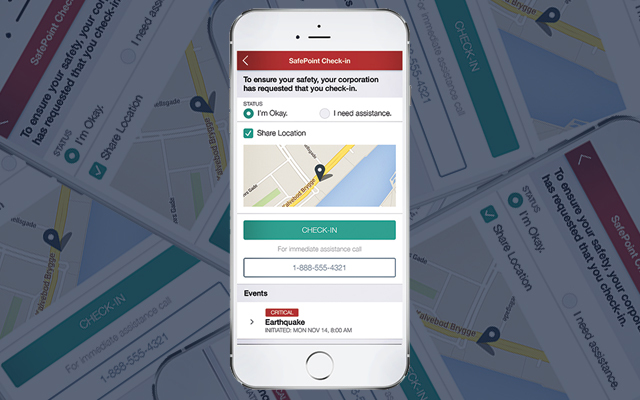
Sabre Corporation has expanded SafePoint, its travel risk management product, to include global travel restriction tracking.
The solution is not limited to a singular event, and instead, provides information regarding the spread of Covid-19 and new variants, as well as destination entry restrictions imposed by countries including masks, vaccinations, health documentation and quarantine requirements.
SafePoint monitors world events in near real-time, 24/7. It utilises hundreds of data sources for events and restrictions that may impact travel arrangements and/or traveller safety. This would help Sabre’s travel agencies and corporate customers make more informed decisions and enhance the safety of their travellers by alerting them to restrictions that may impact their itinerary. Travellers will then be able to use the information to take action at any stage of their trip.
“As travel rebounds, we believe a duty-of-care and crisis alerting solution is imperative to any travel business, especially in a world where travel advisories can change rapidly,” said Saunvit Pandya, senior director of product management, Sabre. “SafePoint is designed to keep travellers and corporate travel managers apprised of critical events in a fast-moving world.”
G Adventures unveils forecast of top 10 travel trends

G Adventures has released its predictions of the top 10 travel trends for 2022, which looks to be a more purposeful and intentional travel year.
The forecast is based on two surveys of more than 4,500 travellers who make up the tour operator’s global consumer panel, of which two thirds are former travellers. Surveys used are from July and October, 2021.

1: Community tourism = responsible travel
Close to a third of respondents said they will put more focus on travelling responsibly in 2022. Travellers are looking for adventures that move through several smaller communities which they can do on a walking trek as it supports many local people as they explore their region.
2: Travellers care more about supporting local people
Coming in well ahead of carbon footprint and plastic reduction, travellers want their money to directly benefit local people. At 66 per cent globally, this trend was intensified by the pandemic’s impact on countries that rely on tourism for economic survival.
3: Workations increasing in popularity
No longer just for digital nomads, workations have hit the mainstream. Of its panel respondents, 24 per cent said they are able to work from anywhere – with that number jumping to 46 per cent for 18-34 year olds. An increasing number of people (37 per cent up from 19 per cent in December 2020) plan to combine work with future travel.
4: Hostels set to make a big comeback
The need for social connection among young travellers is stronger than ever with 63 per cent of respondents aged 18-34 saying they are likely to try a hostel experience after the pandemic. Meeting people to socialise and possibly travel with was the most important factor going into selecting which hostel for 71 per cent of panelists.
5: Desire to disconnect from devices
Workationers aside, travellers want to reconnect with people and places but are desperate to disconnect from the online world while on holiday. Some 54 per cent of respondents want to pause social media and reduce screen time, with 28 per cent saying socialising and meeting new people is their top wellbeing priority for booking their next holiday.
6: Having a bit more cash to splash
With staying in spurring a savings boom, 18 per cent of respondents said they have bumped their travel budget for an international holiday. That surplus likely means their travel dollars will take them on bigger adventures than they might have thought possible.
7: Nay to staycations, yay to remote destinations
Domestic holiday appeal is wearing thin as the pandemic rolls ever onward. Only 18 per cent of respondents said they would prefer to stay closer to home rather than head further afield on their next international holiday. Close to a third (30 per cent) said they are less likely to take a staycation in 2022.
8: Lockdown lethargy spurs active lifestyles
Being physically active on their next holiday came in strong at 70 per cent, with 64 per cent of travellers saying their physical and mental wellbeing is a top consideration for their next holiday.
9: Wellbeing and mental health come first
With an overwhelming 95 per cent of travellers saying travel is important to their wellbeing and mental health, many are looking for a holiday that helps them to reconnect and optimises travel as a means to revitalise.
10: Revenge travel is out, reconnection travel is in
Travellers are hungry for new experiences and stronger connections with others. Although the term ‘revenge travel’ gained popularity over the course of the pandemic, reconnection travel now sits at 42 per cent compared to revenge travel at 14 per cent.
Light to Night Festival returns in hybrid format
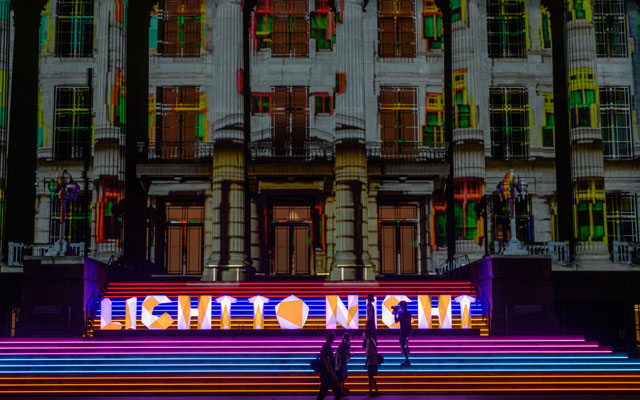
A marquee event of Singapore Art Week, Light to Night Festival will electrify the Civic District and beyond with visual spectacles and new interactive art experiences from January 14 to February 3, 2022.
Spearheaded by National Gallery Singapore (NGS), the visual arts festival will continue its phygital format with an expanded line-up of day and night programmes and more festival locations across three weeks.
The 2022 edition of Light to Night inspires everyone to engage with the world anew through the theme, New Ways of Seeing, Thinking and Being.
Suenne Megan Tan, festival director and senior director, museum planning and audience engagement, NGS, said: “This year’s theme encourages our audiences to expand notions of how art can be explored in new spaces and imagined through technological innovations.”
Artists and creatives were challenged to create commissions that uncover new perspectives and stimulate conversations through art from the National Collection, the Civic District’s history, and relevant social concerns. Audiences, in turn, are invited to engage with these novel viewpoints through a host of new programmes and festival staples.
This year’s festival spotlights emerging talents and the visually impaired community, on top of the usual light projections and live performances by Singaporean talents.
New highlights include Visions, an interactive outdoor augmented reality (AR) art exhibition, featuring a new commission by local artist Ho Tzu Nyen titled Language, in addition to several AR artworks from leading global artists, including Cao Fei, Olafur Eliasson, KAWS, and more.
Audiences will be able to unlock these experiences along the Gallery’s facade with the Civic District as their backdrop, enabling them to enjoy this iconic space in a new light. Visitors can explore the AR artworks in 360 degrees with accompanying soundscapes, during the day and at night.
Another addition is Move For?ward (Unseen: Inside Out), a multi-sensory art installation at the Ngee Ann Kongsi Auditorium Foyer featuring the collaborative process of gathering and representing the stories of 12 individuals from the visually impaired community. Audiences can participate in an audio walk of the installation as they navigate through a web of strings.
The festival’s online programmes include artist talks as part of SAW Dialogues, music performances, exclusive behind-the-scenes footage, and more. On-site admission to the festival is free, commencing from 10.00 until midnight. Certain programme timings and admission charges may vary. For more information, visit lighttonight.sg.
Country Inn refreshes brand identity, plots expansion
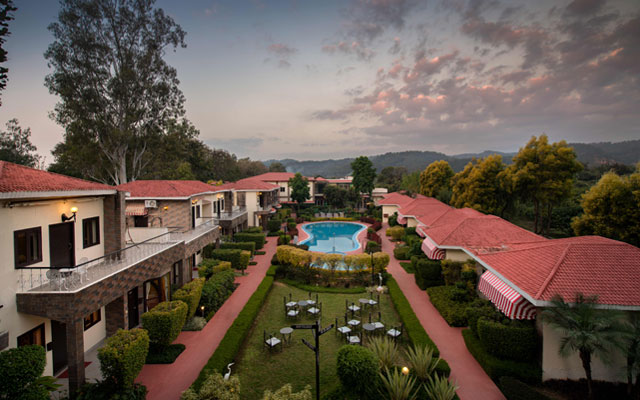
Country Inn Hotels & Resorts plans to expand its footprint in more than 12 other locations this year, with the aim of increasing its property count from the current five resorts to 20 by 2023.
Planned locations for expansion include Goa, Dehradun, Mussoorie, Varanasi and Vrindavan.
As well, the company recently launched a brand new logo and identity. The new logo representation with a lotus symbolises warmth and hospitality which is the core ideology of the brand. The new logo and identity also resonates with the brand’s vision of having hotels in serene destinations.
Akhil Arora, COO, Espire Hospitality, said: “It’s a crucial time for the tourism industry and with the unwavering increase in domestic travel in the last few years, we see an enormous potential for our Country Inn Hotels & Resorts brand. We plan to grow our portfolio exponentially, making it a leading mid-market resort brand known for its quality of service.”
Omicron’s rapid rise hurts travel bookings in India

A worrying rise in Omicron cases and the subsequent restrictions imposed by the central and state governments have dealt a fresh blow to Indian tourism, aviation and hospitality sectors, with a nosedive in demand due to travellers either cancelling or postponing their trips.
All international travellers have to undergo mandatory quarantine for seven days and a Covid test on the eighth day since Tuesday (January 11). Earlier, the state of West Bengal moved to restrict domestic flights from New Delhi and Mumbai, allowing airlines to operate flights only three days a week.
“From January onwards, we are seeing cancellations from tourists. For the months of February to April, we had some queries which we expected to materialise in demand. But now, the clients have postponed their plans for an indefinite period,” said Sanjay Thakur, founder, East India Travel.
“Our tourist season is from October to April, so this tourist season, both domestic and international markets are gone.”
With the emergence of the new Covid variant and the recent trend of rising infections, a few states have already announced certain curbs on domestic air travel, posing a serious threat to domestic passenger traffic recovery in the near-term, credit rating agency ICRA Limited said in a statement.
One of India’s leading airlines, IndiGo, has said that owing to reduced demand, the carrier will be selectively withdrawing some of its flights from service. The airline anticipates that around 20 per cent of its current scheduled operations will be withdrawn from service.
“Owing to the increasing number of Omicron infections, large numbers of IndiGo customers are changing their travel plans. In response to customer needs, IndiGo is waiving change fees and is offering free changes for all new and existing bookings made up to January 31, for flights up to March 31, 2022,” the airline’s recent media communique read.
A large section of hoteliers are seeing cancellations in bookings and a drop in enquiries too.
Shubhadeep Dutta, general manager, Goldfinch Mumbai, said that the recovery process of the industry have once again taken a big hit with the fresh restrictions imposed by the state and central governments.
“Many tourists are cancelling or postponing their trips. The demand from the wedding segment has also taken a toll. Also, the queries for future bookings have gone down,” he added.
Vishal Lonkar, general manager, brand development, Renest Hotels & Resorts, said: “Omicron has come in just as the hospitality industry was steadily trying to recover and move towards normalcy.
“December was the busiest period for all the hotels and so, for us, (business) was largely unaffected and we were quite content with the sales and performance of our properties located in Manali, Shirdi, Gandhidham, Tirupati, Jaipur and Bandhavgarh.
“So far, cancellations have mostly been for our properties in Kolkata and Bangalore because of state-imposed restrictions and flight cancellations. Occupancy at our hotels in Manali and Bandavgarh have been going strong.”
He expects a slowdown in the coming weeks in view of rising Omicron cases, and adds that revenues from weddings will be impacted with numbers being restricted under the new guidelines.
Some hoteliers are hoping that a complete lockdown doesn’t happen as it would further aggravate challenges faced by the hospitality sector.
“After a sturdy third quarter, we are assuming that the last quarter will definitely witness a fall in revenues. As a sector, we are hoping that complete lockdowns will not be imposed, otherwise, it will take a comparatively longer time to recover,” said Rahul Deb Banerjee, vice-president, The Clarks Hotels and Resorts.
“The Indian hospitality industry anticipated the opening up of international routes, but in the current situation, it will not open soon. However, this time, the good thing is that cancellations are not high as people are postponing their trips for future.”
Alma names new resort manager

Alma Resort in Vietnam has promoted Vu Thi Huong Giang as resort manager.
Born and bred in nearby Nha Trang, Giang graduated from Nha Trang University with a major in food processing and started her career in 2004 as a waitress at Six Senses Ninh Van Bay, where she steadily climbed the career ladder over a decade to become an F&B manager.
She has also worked for Vinpearl Land and Mia Resort in Nha Trang, and was the F&B director at The Anam, before moving to Alma in the same capacity. She was subsequently promoted to executive assistant manager of F&B.
In her new role, the resort’s executive chef, executive assistant manager of rooms, assistant director of F&B and the recreation manager report to her.








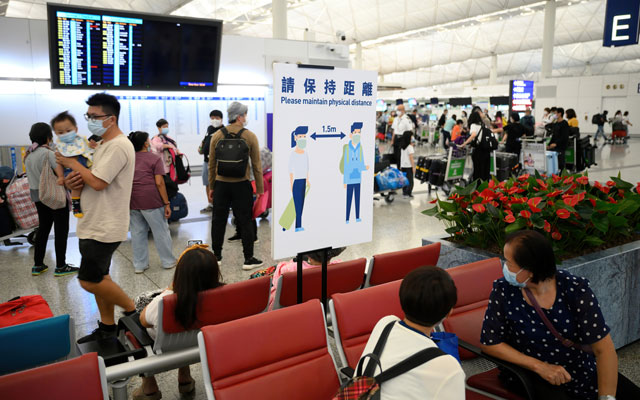
Hong Kong’s international airport is set to ban transit by passengers from designated high-risk countries to keep Omicron out, according to a Bloomberg News report which cited people familiar with the matter.
The report quoted the people as saying that airport officials recently briefed carriers about the plan, which is set to start on Saturday (January 15) and run through February 14, with the end date subject to review.
This comes as Hong Kong battles a relatively small number of Omicron cases, which has led authorities to impose a semi-lockdown in keeping with its zero-tolerance Covid-19 strategy.
Hong Kong has designated around 150 countries and territories as high-risk, including the eight nations that have specific route flight bans in place due to Covid-19 cases on board. Those eight are Australia, Canada, France, India, the Philippines, Pakistan, Britain and the US.
The ban, however, will not apply to diplomats, government officials, athletes and staff participating in the Winter Olympics, which open on February 4 in Beijing.