Two-time HSMA president Christine Ann Urbanozo-Ibarreta passes away after battle with Covid-19
Christine Ann Urbanozo-Ibarreta, who served as the president of Hotel Sales and Marketing Association (HSMA) for two terms, passed away last Friday (July 2) after two months of battling Covid-19. She was 54.
Well-loved, bubbly and irrepressibly witty, Christine was “the agile leader when the pandemic struck and guided the hotels to pursue available businesses, while serving as the conduit between government agencies and industry committees,” shared former HSMA president Rose H Libongco.

“Christine braved calling on the market contacts of Overseas Workers Welfare Administration, Philippine Airlines and other airlines, and medical and business frontliners. That’s how she caught the virus,” Libongco shared.
To help hotels and resorts to stay afloat, Christine rallied all members during this pandemic to optimise alternative market segments such as the business process outsourcing, overseas Filipino workers, and returning overseas Filipinos, said HSMA chair Margie F. Munsayac.
“She continuously worked with government agencies so that guidelines and protocols are cascaded to all members to ensure that hotels and resorts can guarantee a safe stay for all guests,” Munsayac added.
Describing Christine as “truly a lifeline for hotels and travel”, Libongco said HSMA’s annual Virtus Award recognising industry exemplars was Christine’s idea. In addition to leading HSMA members in organising sales webinars, as well as marketing and promotions to keep hotels top-of-mind, Christine also started a Facebook marketplace during the pandemic for displaced industry employees to earn an income.
Christine also sat on the board of the Tourism Congress of the Philippines and had worked in various capacities in sales and marketing for many hotels, including Resorts World Manila, Sofitel Philippine Plaza, and most recently, as group director of sales and marketing at Golden Phoenix Hotel.
InterContinental Maldives Maamunagau Resort welcomes new GM
InterContinental Maldives Maamunagau Resort has appointed Coetzer Deysel as general manager.
He will be responsible for driving the resort’s strategic and commercial growth, overseeing operational excellence and will continue to elevate the luxury positioning of IHG’s flagship property in the Maldives.

Deysel brings with him over 17 years of experience in hospitality across leading luxury brands such as Anantara Resorts, The Westin, W Hotels, naked Retreats and Le Meridien in resort destinations such as Mauritius, Maldives, Thailand, China and South Africa.
His most recent role was general manager of Ananatara Iko Mauritius Resort & Villas, where he oversaw the launch of the first Anantara resort in Mauritius.
Travelport identifies trust gaps in travel industry
The travel industry can boost global recovery by addressing consumer trust gaps in price transparency, Covid-19 health and safety measures, data privacy and information credibility, according to research commissioned by Travelport.
The study of 11,000 travellers across 10 countries was conducted by Edelman Data & Intelligence, the research and analytics arm of Edelman, which has studied trust for over 20 years through the Edelman Trust Barometer.

Price transparency
According to the study, the two most important factors in building consumer trust in travel agencies and travel suppliers, such as airlines, are having ‘no hidden costs’ (55 per cent) and ‘fully flexible or refundable products’ (45 per cent).
Unfortunately, most travellers currently deem industry performance in both of these areas to be poor (60 per cent and 57 per cent respectively). Travellers in New Zealand and Australia were shown to be the most disappointed on this point, with a significant 40 and 39 percentage point gap between importance and performance.
Greg Webb, CEO at Travelport, said: “The importance of price transparency can’t be overstated. To put it into context, having no hidden costs is a full 16 per cent more influential on trust than an airline’s long-term safety record. The request from consumers here is clear; the time has come to eliminate hidden fees and improve the overall transparency of pricing and communication.”
Covid-19 health and safety
The majority (56 per cent) of travellers that participated in the study said the travel industry has done well in implementing Covid-19 health and safety measures. Going forward, however, around half said they would like more reassurance on how robustly some measures are being enforced, in particular, improved air filtration, social distancing, and managed boarding and queuing.
As such, “travel suppliers and agencies will benefit from being clearer in their communication on certain measures, like social distancing,” said Webb.
Data privacy
Data privacy was another key issue highlighted by the research. Only four out of ten travellers (40 per cent) reported that they currently trust travel companies to use their personal information in the right way. This was especially apparent among Baby Boomers (33 per cent) and Gen Z (36 per cent) respondents.
When it comes to using information to personalise experiences, travellers said they are most comfortable with companies using data that they have actively shared with them through one-to-one conversations (46 per cent), past booking behaviour (46 per cent) and loyalty activity (44 per cent).
They are less comfortable, however, when information is sourced indirectly, for example, through social media activity (35 per cent), public records like credit scores (37 per cent) and past shopping, as well as search and booking behaviour with other companies (40 per cent).
Information credibility
According to the research, the most trusted sources of travel-related information that travellers use when researching a trip are those perceived to have aligned interests: friends and family (67 per cent) and review websites (50 per cent).
In contrast, the least trusted are those with a clear vested interest in selling, such as social media influencers (30 per cent) and celebrities (25 per cent). Once again, Gen Z was revealed to be the least trusting in almost every category.
A similar story played out when examining trust in different types of travel-related information. Customer ratings (54 per cent) and written customer reviews (51 per cent) are among the most trusted. However, third-party certification (39 per cent), photos of products such as hotel rooms provided by travel companies (42 per cent), and third-party ratings such as hotel star systems (43 per cent) were revealed to be the least trusted.
“The travel industry needs to sharpen its focus on trust. This study has shown, as an industry, we are not as trusted as we would like,” said Webb. “The good news, however, is that we now know what the issues are, and we also have a once-in-a-lifetime opportunity to hit reset, as countries re-open and travellers eagerly get back on airplanes. If we move quickly to address these issues, we can accelerate industry recovery as well as the modernisation of travel retailing.”
In addition to identifying gaps in trust, the research also uncovered evidence that trust directly influences purchasing behaviour. Due to Covid-19, almost half (46 per cent) of travellers today, for example, were shown to prioritise trust over all other factors when choosing a travel supplier.
Many travellers also stated, when trust is in place, they will consider purchasing multiple travel-related items (48 per cent), upgrading their package (43 per cent), and buying non-travel-related items such as credit cards (34 per cent).
Vaccines, digital solutions give impetus to travel recovery: UNWTO
The global vaccination rollout and increased adoption of digital solutions for safe travel should lead to a rise in international mobility over the weeks and months ahead, the latest data from the UNWTO has shown.
According to the newest edition of the Travel Restrictions Report from the UN agency, as of June 1, 29 per cent of all destinations worldwide have their borders completely closed to international tourism.

Of these, more than half have been completely closed to tourists since May 2020 or longer, with the majority of these belonging to the SIDS (small island developing states) of Asia and the Pacific. In comparison, just three destinations (Albania, Costa Rica, Dominican Republic) are completely open to tourists, with no restrictions now in place.
One in three (34 per cent) of all destinations are partially closed, and 36 per cent require a negative Covid-19 test result upon arrival, and in some cases, in combination with a quarantine requirement.
The data confirmed the trend towards destinations adopting more nuanced, evidence-and-risk-based approaches to restrictions on travel, particularly in light of the evolving epidemiological situation and the emergence of new variants of the virus. Indeed, 42 per cent of all destinations have introduced specific restrictions for visitors from destinations with variants of concern, ranging from the suspension of flights and closing of borders to compulsory quarantine.
Additionally, since most of those destinations with the strictest measures have some of the lowest rates of vaccination, the data also indicated a link between vaccination speed and easing of restrictions. In comparison, those destinations that have higher rates of vaccination and where countries are able to work together on harmonised rules and protocols such as those being employed in the Schengen area of the European Union, are better-placed to allow tourism to slowly return.
“Governments are instrumental for the restart and recovery of tourism through collaboration, use of data and digital solutions”, said UNWTO secretary-general Zurab Pololikashvili.
Regional differences with regards to travel restrictions remain. 70 per cent of all destinations in Asia and the Pacific are completely closed, compared with just 13 per cent in Europe, as well as 20 per cent in the Americas, 19 per cent in Africa and 31 per cent in the Middle East.
Assessing current requirements for vaccinated passengers, 17 per cent of all destinations worldwide specifically mention vaccinated passengers in their regulations. In most cases, travel restrictions continue to apply to fully vaccinated passengers (who have received two doses of an approved vaccine), though in others, all restrictions are lifted. UNWTO expects that this will significantly evolve over the coming weeks.
The report indicated that the restart of global tourism will remain muted so long as governments continue to advise caution. Four of the 10 top source markets, which generated 25 per cent of all international arrivals in 2018, keep advising their citizens against non-essential travel abroad.
Qatar Airways trials vaccine verification via IATA Travel Pass
Qatar Airways is the first airline to begin trialling Covid-19 vaccine authentication through the IATA Travel Pass mobile app, as the airline seeks to provide a more contactless, secure and seamless travel experience for its passengers.
The trial will be rolled out in phases from July, beginning initially with cabin crew returning to Doha travelling from Kuwait, London, Los Angeles, New York, Paris and Sydney.

Cabin crew will be able to upload their Qatar-issued Covid-19 vaccination credentials along with their Covid-19 test results to the IATA Travel Pass mobile app and verify they are eligible to travel. On arrival in Doha, crew will then be able to safely and securely share their vaccination certificate and proceed through immigration at the airport.
Qatar Airways Group CEO Akbar Al Baker said: “We know as more people begin making plans to return to their favourite holiday destinations, they will inevitably face the challenge of ensuring they have the right paperwork.
“Through trialling and supporting the development of new technologies, we aim to provide travellers with a tool that will support them to seamlessly travel across borders with greater confidence.”
Willie Walsh, IATA’s director general, said: “Certificates of Covid-19 vaccination or testing status will be key to restoring people’s freedom to travel. Trials by Qatar Airways and some 70 other airlines have demonstrated that IATA Travel Pass can efficiently manage test results.
“This important new trial focusing on vaccination status will build even more confidence in IATA Travel Pass as a complete solution for travellers, governments and airlines.”
IHG’s Voco brand to make South Korea debut
IHG Hotels & Resorts has signed an agreement with Seraphim Development to open the first voco hotel in South Korea.
Scheduled to start welcoming guests in 2023, voco Pyeongtaek City will be the first upscale international hotel brand in Gyeonggi-do province.

The new-build 280-room urban resort will form part of the mixed-use development International Market Place, situated in close proximity to the Pyeongtaek Special Tourism Area and Naeri Cultural Park.
The hotel will feature a rooftop pool with a 360-degree view of Godeok city and Ansung River. Other facilities will include a restaurant, lounge and bar, fitness centre and 1,300m² of meeting space.
voco Pyeongtaek City will be IHG’s 10th hotel in South Korea and its fourth brand in the country, alongside InterContinental, Holiday Inn and Holiday Inn Express.
NCL bolsters sales team with latest VP appointment
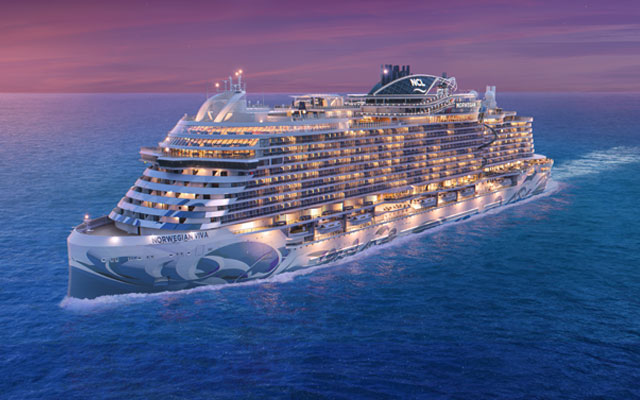
Norwegian Cruise Line (NCL) has appointed Eamonn Ferrin as vice president of international business.
Ferrin will oversee NCL’s sales efforts outside of the US and Canada and grow the Company’s international footprint by deepening existing travel relationships, reaping new business and further integrating international source markets into the Company’s global business plan. He reports to Todd Hamilton, NCL’s senior vice president of sales.

Ferrin joined the Company in January 2019 as vice president and managing director for the UK, Ireland, Israel, South Africa and Middle East. During that time, he expanded the UK’s position as the Miami-based Cruise Line’s leading international market through strategic investments designed to support the travel agent community as part of the Company’s Partners First philosophy. Key efforts included the launch of the incentive programme NCL Freestyle Rewards, a new travel agent portal and resource centre Norwegian Central and a fly-cruise booking platform NCL Air.
Ferrin also increased NCL’s market share in the emerging markets of Israel, South Africa and the Middle East, where the Cruise Line recently increased its presence with the deployment of Norwegian Jade. The ship will make NCL history as the first to offer roundtrip cruises from Cape Town beginning December 2021.
Ferrin is an industry veteran with more than 23 years of travel and hospitality experience. He has worked in a variety of divisional CEO, chief operating officer and managing director roles in the UK, Canada and internationally for brands including Air Canada, Holidaybreak and MyTravel. Outside of NCL, Ferrin serves as a member of the CLIA Executive Committee and the CLIA Steering Group for the UK.
Seizing a window of opportunity

Tripfez started as a business focusing on Muslim travel in Asia back in 2016. This year, you found a new opportunity in purchasing travel companies in distress in Malaysia.
The travel industry in Malaysia experienced a significant downturn in 2020 due to the continuous lockdown and closure of both domestic and international borders to curb the spread of Covid-19. The movement control order introduced throughout most of 2020 and in 2021 has impacted the revenue of many travel companies.
While there is no way to tell exactly what the economic damage from the global Covid-19 pandemic will be, there is widespread agreement among economists that it will have severe negative impacts on the global economy at large, especially for the travel industry.
As Winston Churchill was working to form the United Nations after WWII, he once famously said: “Never let a good crisis go to waste.” With every crisis, there lies opportunity. We believe in this, too, and during this crisis, we saw an opportunity in consolidating travel companies to enable a strong position when travel rebounds. This will enable us to hit the ground running with scalability capacities, accelerating profitabilities, and maximising growth and scale as borders start to open.
We are using this opportunity on two levels: one, to consolidate travel companies via merger and acquisition (M&A); and two, to streamline operational costs and departments such as accounting, marketing, technology stack, and technology team. Streamlining the back-office ensures an increase in volume, while fixed costs remain the same.
How many companies are you currently negotiating M&A deals with?
We are finalising the terms with two travel companies with amazing track records and industry standing. Unfortunately, we are unable to reveal the names of these companies at this point in time. We are also eyeing another four companies. We are also not discounting the possibilities to extend beyond the tour business, into other verticals within the travel industry including hotels.
What is your criteria for buying a company?
What we normally eye are travel agencies that are leaders in their niche with a massive, loyal customer base. These agencies normally offer exclusive or distinctive products that are difficult to replicate and have a wide geographical, albeit niche, reach.
What are your considerations when negotiating an M&A deal?
With each M&A deal, we put a strong emphasis on two main areas: strategic fit and organisational fit. A strategic fit is important to ensure that companies are aligned both in terms of strategies as well as the roles each plays. It is equally important to stress the need to achieve an organisational fit by matching administrative systems, corporate cultures, or demographic characteristics. This ensures that several operational costs and departments can be streamlined, ensuring an increase in inefficiencies and optimising overall costs.
What challenges do you foresee after completion of an M&A deal?
The biggest challenge lies in unifying the company cultures and employee policies like benefits, compensation and holidays, among others. These must be settled prior to the M&A.
What are your plans after completing the M&A process?
Post-M&A, we are looking at placing a stronger focus on different segments of the market such as corporate travel over leisure. Several of the companies we are targeting for M&A are household brands with a strong offline presence, but with room to improve on the online space.
The online travel sector has grown dramatically over the last five years and being strong in this space, we see an opportunity to scale the business by merging the offline and online segments, and leveraging the strong market presence of these new companies.
How are you financing these M&A transactions?
We are looking at a mix of two types of financing instruments, mainly equity financing and debt financing, combined with utilising existing available cash.
A bulk of the financing comes from our cash reserves and debt financing. With any debt financing, the most important aspect to take into consideration is cash flow management and ensuring there is adequate cash to cover operational expenses before travel reopens as well as the ability to repay the debt on top of interest obligations. We do not have equity financing at the moment, but we are open to this, provided we find a strategic partner with the potential to bring added value to the company.
Any plans of expanding beyond Malaysia via M&A?
We are not limiting ourselves to geographical borders. The travel business revolves around the movement of people between two places, and as such, the businesses involved can be located in two different areas, extending beyond their original geographical boundaries.
We have seen similar exercises done with large travel companies such as TUI AG that operates in more than 30 countries as well as giant online company, Expedia.
We will be interested in overseas expansion should we find companies that are leaders in their niche with a massive, loyal customer base.
Do you think the travel industry in this region will see more consolidations in the near future if the pandemic drags on?
Consolidation among travel companies has always been a hot topic even before Covid-19. We have seen ideas such as the merger of Malaysia Airlines and AirAsia being brought up time and time again. Even within the space, we have seen a significant increase of hotels trading hands in 2019 and 2020.
With the pandemic crossing its 15-month mark, margins are stretching thin, and tight cash flows are pushing the industry to undergo M&A to strengthen its competitive position, optimise costs, and grow post-pandemic. Globally, we saw American Express Global Business Travel acquiring Egencia, the corporate travel arm of the Expedia Group.
According to Real Capital Analytics, the total value of hotel transactions across Malaysia in 2020 alone stands at RM497 (US$119.7) million. Over the next six months to a year, I expect to see more and more consolidation among travel companies as more see the value of operating under a united umbrella. Joining arms while crossing the stream makes more sense than trying to swim upstream yourself.
Expedia finds Singaporeans optimistic about year-end holidays
A speedy and successful national vaccine rollout programme has fuelled greater confidence in overseas travel among Singaporeans.
According to Expedia data, searches for international travel among Singaporeans during the period of November 2021 to January 2022 grew by 60 per cent in the second quarter (April to June 2021) compared to the previous quarter (January to March 2021).

Despite prevailing travel restrictions amid the pandemic, optimism towards international travel in recent months has been fuelled by higher vaccination rates among the resident population – with 75 per cent of Singapore citizens expected to be inoculated by October 2021.
Searches for staycations in Singapore grew close to 440 per cent in 2Q2021, which included the June school holidays, compared to the previous quarter. In total, search volume for domestic and international travel combined grew by 140 per cent from Q1 to Q2.
Expedia’s recent search data also revealed a shift in Singaporeans’ preferred international destinations, with beach destinations becoming more popular for year-end travel as compared to the same period in 2019 and 2018, when cooler North Asia destinations like Okinawa, Seoul and Taipei were top choices.
Beach destinations featured prominently in the list of top 10 most-searched international destinations, with the Maldives taking top spot – a big jump from 2018 and 2019, when it took 14th spot on the list. Other beach destinations that made the top 10 list include Bali, Krabi and Phuket, which took the 4th, 5th and 10th spot respectively.


Korean Air has finalised its post-merger integration (PMI) plan with Asiana Airlines after receiving approval from the state-run Korea Development Bank (KDB).
The PMI plan had been submitted to the KDB on March 17, five months after Korean Air signed a deal to acquire Asiana’s new shares and perpetual convertible bonds.
For three months, the KDB reviewed the PMI plan and made revisions in consultation with Korean Air, the Ministry of Land, Infrastructure and Transport, and other relevant agencies.
The finalised PMI plan includes integration plans for the airlines’ full-service carriers (FSCs) and low-cost carriers (LCCs), measures to resolve restrictions of holding companies stipulated in the Fair Trade Act, employment retention and succession of collective agreements, and plans to effectively reorganise relevant subsidiaries.
Once the PMI plan has been finalised, Korean Air will proceed to integrate with Asiana after receiving business combination approvals from relevant authorities.
The newly integrated global airline will increase operational efficiency of overlapping passenger and cargo routes, while diversifying its schedules and expanding opportunities for new routes, which will increase customer benefits and create integrated synergy by reducing costs, Korean Air said in a statement.
It added that the integrated FSCs and LCCs are expected to improve efficiency by achieving economies of scale, and will act as an opportunity for the growth of relevant contractors, partners and other companies in the aviation industry.