


ILTM Asia Pacific moves to September

ILTM Asia Pacific has postponed its event in Singapore to September 5-8, 2022, from its initial dates in June.
 The in-person tradeshow will be held at Marina Bay Sands, offering pre-scheduled meetings, educational sessions, networking, parties, and brand exposure.
DidaTravel doubles reach for hotel network worldwide


Brought to you by DidaTravel
DidaTravel will capitalise on its successful pivot to direct contracting hotels with an ambitious plan to double the number of such hotels by the end of the year, reaching 74,000 hotel properties around the world made available to its clients – up from around 37,000 hotel properties at the end of 2021.
The strategic shift over the last few years was led by DidaTravel’s senior vice president, sourcing, Abba Lee, who is based in Hong Kong and joined the company in March 2019.

Apart from having over 140 global, regional and local hotel chains and more than 3,000 independent hotels in various destinations already in partnership with DidaTravel, Lee and his team now also secured a pipeline of more than 30 worldwide hotel chains and over 2,000 major hotels that are ready to connect in 2022.
Under his leadership, focus on the direct contracting efforts will be deployed in key popular destinations to fulfil targeted growth in the next three years in the UAE, UK, France and Italy, as well as Thailand, Malaysia, Indonesia, Japan and South Korea within the Asia Pacific region.
With a strong distribution roadmap in place, hotel partners will benefit from access to not only B2B clients in China and the wider Asia Pacific region – which the company is well known for – but also in Europe, the USA and the Middle East, which now collectively represent 50 per cent of all sales.
The contracted hotels can also easily access over 23,000 hard-to-reach B2B clients such as airline websites and loyalty schemes, bank loyalty programmes, mobile and social media platforms and applications, as well as travel agencies, tour operators, wholesalers, online travel agencies (OTAs), and travel management companies (TMCs).

Rikin Wu, DidaTravel founder and chief executive officer said: “Abba and his team are doing a fantastic job ensuring that our directly contracted hotel partners gain exclusive access to the sales channels and source markets best suited to them. This partnership will also give our hotel partners an opportunity to tap into our technical strengths and expertise, such as our network of the best hotel technology connectivity partners and leading content mapping solutions.”
With the tourism recovery, more and more hotels are keen to develop a direct contract relationship with DidaTravel due to the numerous benefits, according to Lee.
He added: “This is the best time to be connected and prepared for the full recovery, in particular the opening of China outbound when that eventually happens. Apart from promoting their hotel rooms this year, we will be adding value to partners by providing them with more in-depth market data and insights via our upcoming BI (Business intelligence) reports. By doing so, we can work closely with hotels to come up with the best strategies for targeting the right sales channels and accurate pricing suggestions along with the right marketing tools.”
Founded in 2012, DidaTravel is headquartered in Shenzhen, China and has over 300 staff in eight offices globally. The company works with over 23,000 travel buying clients around the world, including travel agencies, tour operators, wholesalers, OTAs, TMCs and airlines.
Additionally, the company has a portfolio of over 37,000 competitively sourced direct hotel contracts as of end of 2021, as well as 700,000 hotel products provided by about 600 global suppliers, covering more than 200 countries and regions.
Prior to the pandemic, DidaTravel sold hotel bookings in China and the Asia Pacific region worth over USD700 million in 2019.
To find out how to tap into DidaTravel’s extensive network of travel agencies, tour operators, wholesalers, OTAs, TMCs, airlines and hotels, visit www.didatravel.com.
Major GDSs remove Aeroflot content from system
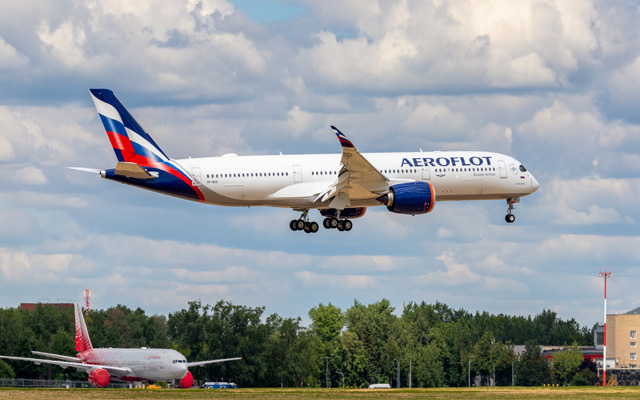
Sabre Corporation, Amadeus and Travelport have terminated their distribution agreement with Russia’s Aeroflot last week.
Sabre explained in a statement that the move represented its stand against Russia’s attack on Ukraine, and was in compliance with sanctions imposed against Russia.
Aeroflot is the largest government-majority owned carrier in Russia.
Sabre’s chief executive officer Sean Menke said: “Our primary focus has been the safety of our team members in the impacted region, as well as doing our part to support the much-needed relief efforts.”
The company has donated US$1 million to the Polish Red Cross, which is providing humanitarian work in the conflict zone.
Sabre will continue to monitor the ongoing situation and evaluate on further actions where appropriate.
News reports have stated that Aeroflot operations have been disrupted, with it being unable to fly across a number of airspaces and land in many countries around the world. The Russian government has in turn banned carriers from landing in Russian destinations. Aeroflot will continue to carry passengers by working directly with sales agents through its own system.
Indian agents rue government’s suspension of international flights

The Indian government’s recent decision to suspend scheduled international flights to and from India until further notice has not gone down well with Indian outbound tour operators.
The announcement has come at a time when stakeholders were expecting travel demand to rebound for overseas summer holidays this April to June, especially as more destinations begin to reopen their borders for tourism.
Indiver Rastogi, president and group head, global business travel, Thomas Cook (India) & SOTC, told TTG Asia: “The announcement deferring the restart of India’s commercial aviation is a strong concern and a clear dampener of travel sentiment. India’s bubble agreements worked as an interim stop-gap solution, but are not conducive to bridging the demand-supply gap and inflationary airfares.
“This is the critical booking season for India’s travel peak (summer vacations) and the return to scheduled flight operations is mission critical towards the recovery of the overall sector.”
Flights placed under the Directorate General of Civil Aviation’s air bubble agreement will not be affected by the government’s suspension. As of March 2022, there are special passenger flights connecting India with some 37 countries under the air bubble agreement.
Rohit Kohli, joint managing director, Creative Travel, said the government decision goes “against all rational thinking”.
He said: “The Indian government has once again moved the goal post for international flights. Not only does this not make any sense, it’s also highly detrimental for the tourism industry, both inbound and outbound.
“The biggest outcome of the lack of scheduled flights is that Indians have to pay a much higher premium on airfares because airlines are taking advantage of the lack of supply (when there is) pre-Covid level of demand.”
Veena Robinson, vice president – India sales with Discover Destinations, expects the flight suspension to weaken summer holidays business and outbound travel growth potential.
However, Nishant Kashikar, country manager, India & Gulf with Tourism Australia, shared that some airline partners have suggested the Indian government may allow scheduled international flights to operate by the end of March.
Should that fail to happen, however, Tourism Australia would postpone its planned promotional activities in India.
“There is no point in creating demand when there is no (flight) supply,” he remarked.
Narai launches Marasca brand into luxury hotel landscape

Thailand-based Narai Hospitality Group has debuted Marasca Hotels & Resorts, a new luxury accommodation brand, with the opening of Marasca Khao Yai set to be its first flag bearer.
Marasca Hotels & Resorts is described as a collection of intimate, casual and luxurious escapes in unique locations, with properties that promise ‘cherry-on-top’ moments and experiential stays.
Marasca Khao Yai will offer a range of accommodation types, from villas to luxurious glamping tents and glamper vans, all with stunning mountain views, private outdoor tubs and a personal fire pit. The surrounding greenery, large trees and natural terrain will be preserved so that guests can enjoy nature as it is.
Marasca Koh Samui will follow suit in 2023.
Narai Hospitality Group’s director Nithida Nithivasin said: “Marasca is named after a type of cherry, which shaped the essence of our brand. We want to create ‘cherry-on-top’ moments for our guests through stylish designs and high-quality amenities, while offering welcoming experiences to make them feel truly at home – a space where you can spend time to reset while traveling and rediscovering yourself.”
The company is now recruiting for both properties. To apply, visit https://bit.ly/MarascaTeam
Malaysia forms more quarantine-free lanes with neighbours
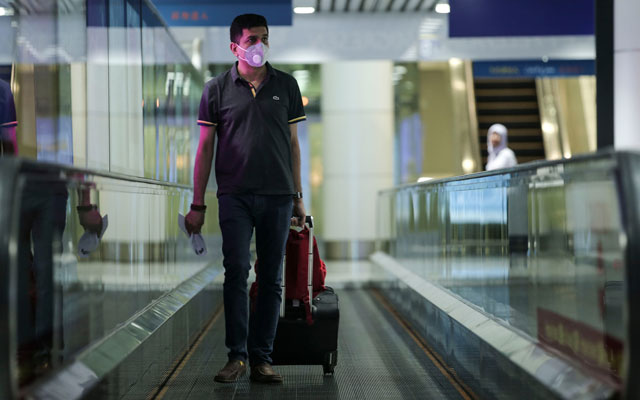
The Malaysian government has commenced Vaccinated Travel Lanes (VTLs) with Malaysia, Thailand and Cambodia as part of joint efforts to reopen international borders.
The quarantine-free travel arrangement for fully vaccinated travellers will come into effect on March 15.
Malaysian transport minister Wee Ka Siong, said: “These routes are expected to aid our mutual economic recovery from the impact of the Covid-19 pandemic, particularly in reviving the ailing tourism industry.”
For the VTL with Thailand, designated airlines from both countries will be allowed to mount up to six flights daily for the Kuala Lumpur-Bangkok route, and up to four flights daily for the Kuala Lumpur-Phuket route. Additional routes may be added, subject to mutual agreement by both countries.
For the VTL with Cambodia, designated airlines from both countries will be allowed to operate up to two flights daily on the Kuala Lumpur-Phnom Penh route, while additional routes may be added should demand dictates.
Malaysia Inbound Tourism Association’s president Uzaidi Udanis stated that the “VTLs are a privilege to tourists, who cannot visit Malaysia otherwise”, and urged the government to make it compulsory for VTL travellers to use the services of travel agents to ensure compliance of Covid-19 standard operating procedures. This policy is implemented with the Langkawi International Travel Bubble model.
KL Tan, president of Malaysian Association of Tour and Travel Agents, opined that the Malaysian VTLs were lagging behind the initiatives of other governments, as many have announced full border reopening.
With the current global practices of countries transiting away from VTLs in favour of welcoming vaccinated travellers from all countries, Tan said Malaysia should follow suit while making the necessary modifications based on country of origin, travel history and negative Covid-19 status.
Currently, Malaysia only has an air and land VTL arrangement with Singapore, which was implemented on November 29, 2021. An air VTL for Penang-Singapore would commence on March 16.
International Women’s Day: working through the community
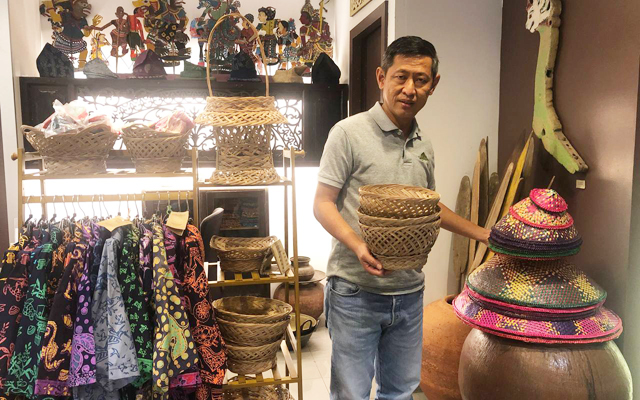
Since its inception in 1990, Ping Anchorage Travel & Tours has fashioned its tours in Malaysia to channel income to local women, by way of community tourism.
Tours around its home state of Terengganu, as well as Kelantan and Pahang, feature village visits, during which guests can experience the rustic environment and interact with villagers to learn about their lifestyle.
Managing director, Alex Lee, said most of the hosts are local women, who will take guests around and serve them delicacies made by fellow villagers.
“We pay the villagers a fee for hosting the guests. It is also an opportunity for the village women, who make beautiful handicraft such as mats, baskets and handbags, to showcase their craft. Foreigners love purchasing authentic products to take home as souvenirs,” said Lee.
Lee also buys handicraft from the villagers and resell them at the company’s craft shop, Terradala.
“This is our way of supporting the local women, many of whom due to personal commitments, such as having to care for their family, are unable to work outside their homes. We offer them the flexibility to produce lovely handicraft from the comfort of their homes, and the guests we take to the villages are their potential buyers.”
Lee said the Covid-19 pandemic and the resulting disruption of travel and business events have impacted the income of these women. However, he is confident that the industry will gradually recover, and bring about more orders and jobs for the women.
TTG Conversations: Five Questions with Fazal Bahardeen, CrescentRating and HalalTrip

Despite the travel disruption, destinations that set shining examples of Halal travel development pre-pandemic have continued to engage Muslim travellers and trade partners as well as build up their Halal tourism capacity and capability, observes Fazal Bahardeen, CEO of CrescentRating and HalalTrip.
In this new episode of TTG Conversations: Five Questions, Fazal also shares his views on how the Muslim travel growth trajectory will look as travel begins to resume, travel intentions for the upcoming Hari Raya Aidilfitri holidays, post-pandemic travel motivations, as well as the many things CrescentRating and HalalTrip are keeping busy with.
Agoda, Singapore Tourism Board to grow SE-Asia arrivals
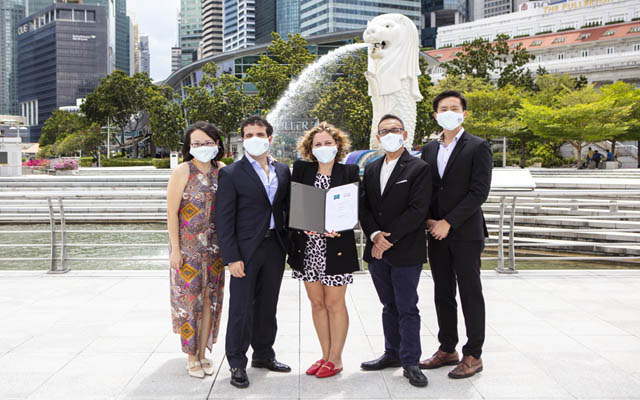
Singapore-headquartered Agoda has signed a partnership agreement with the Singapore Tourism Board (STB) for an integrated marketing campaign that targets South-east Asia travellers.
Utilising Agoda’s technology and travel expertise, data insights and integrated marketing capabilities to showcase Singapore as a destination, the partnership will help to drive more affinity for travel experiences to Singapore and stimulate the tourism economy.
John Gregory Conceicao, STB’s executive director, said: “As borders gradually re-open, it is important for the industry to collaborate and drive our travel sector forward. Through this partnership, we can reach a wider audience and invite them to rediscover Singapore and our vibrant neighbourhoods, variety of delicious food and unique attractions.”







Originally scheduled for this month, PATA Annual Summit 2022 will now be held from October 25 to 27 in Ras Al Khaimah, the UAE.
The event led by PATA and hosted by Ras Al Khaimah Tourism Development Authority will be attended by international thought leaders, industry shapers and senior decision-makers who are invested in driving tourism to, from and within Asia-Pacific.
PATA CEO Liz Ortiguera said: “We are delighted that we will still be organising the PATA Annual Summit in Ras Al Khaimah this year and bring together our industry network to discuss opportunities and best practices to enable recovery and sustainable growth.
“The team is working hard to put together an event programme, under the theme ‘Reconnecting the World’, that will take on a format that is more experiential and will maximise in-person connections and engage an appreciation for this beautiful destination.”