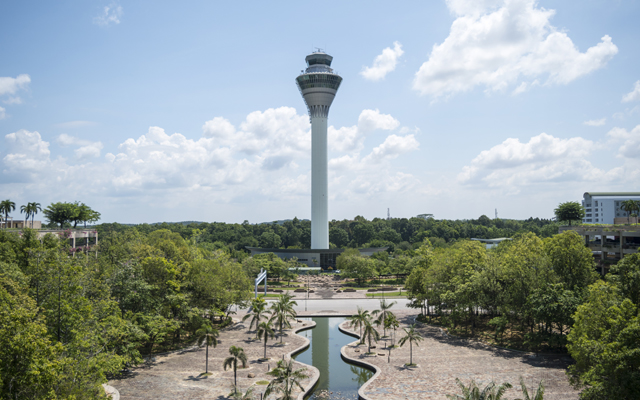
Malaysia will finally reopen to international tourists on April 1, with no quarantine on arrival for fully vaccinated travellers.
In making the announcement on March 8, prime minister Ismail Sabri Yaakob detailed that these travellers must still undergo an RT-PCR test two days prior to travel and an RTK antigen test within 24 hours upon arrival in Malaysia.
Fully vaccinated travellers can enter Malaysia without quarantine from April 1
Entry requirements for travellers who are not fully vaccinated will be announced today by the Health Ministry, while Standard Operating Procedures for land and sea entry points will be updated soon.
The move to reopen international borders were in line with the country’s Transitioning to Endemicity phase on April 1.
Malaysia’s travel players welcome the decision.
KL Tan, president, Malaysian Association of Tour and Travel Agents (MATTA), said it was a crucial step for the tourism industry.
He said: “We can finally start rebuilding the tourism sector and contribute to the country’s economic recovery. With a firm date, the industry can now begin its marketing and promotion activities.”
He said it made sense to reopen the country’s borders while maintaining updated Standard Operating Procedures to ensure public health and safety.
Sri Ganesh Michiel, deputy president, Malaysia Budget & Business Hotel Association, said the reopening would not immediately revive the hospitality and tourism industry; it would take a long time to rebuild the confidence of travellers to vacation in Malaysia.
And as overseas travel will soon be more accessible to Malaysian residents, Yap Lip Seng, CEO of Malaysian Association of Hotels, said domestic travel promotions must be intensified while activities targeting overseas markets are reignited.
Yap hopes that airlines would be incentivised to mount more services into Malaysia in support of inbound traffic recovery.
Newly-opened Mövenpick Hotel Melbourne on Spencer and Mövenpick Hotel Hobart, Tasmania are embracing their Swiss brand heritage to bring chocolatey treats to guests this Easter.
The culinary team at Mövenpick Hotel Melbourne on Spencer is partnering with Melbourne’s Kenny Lover’s ice cream chefs to give their iconic Mövenpick Ice Cream Parfait an Easter twist.
Celebrate Easter with Chocology packages at Mövenpick Hotel Hobart
Featuring Kenny Lover’s custom blend hot cross bun ice cream topped with an array of chocolate eggs and rabbits, this Easter parfait will be available for the whole of April during the hotel’s Chocolate Hour from 13.30 to 16.30 daily.
At Mövenpick Hotel Hobart, celebrate with the range of Chocology packages during high tea at Tesoro Restaurant during the month of April. Little Sweet Treats packages are available for guests aged 12 years and under.
More than double the visa processing fee for Malaysian tourists to India
Days after the Indian government said it would continue to suspend scheduled international flights to and from India until further notice, an about-turn decision has been made to reinstate international air access from March 27.
The decision is welcomed by India’s tourism stakeholders who have been pleading with the government to resume scheduled international flight operations in the country.
Resumption of scheduled international flights to and from India sparks hopes of a summer business revival
Sanjay Razdan, joint secretary, Indian Association of Tour Operators as well as director, Razdan Holidays, said the move “sends a positive message in the international markets that India is ready for international tourism”.
Gaurav Bhatia, executive director, Bird Group, said: “The announcement to resume scheduled international passenger services comes at the right time. The pandemic situation has improved in India as well as globally.”
He expects the resumption of international flights to positively impact India’s aviation companies as well as hotels. Passengers planning their international travel ahead of the summer peak season can expect to see high airfares cooling off, now that seat supply will improve.
The removal of the scheduled international flight ban comes just before the summer holidays in India, between April to June.
However, Ajay Prakash, president, Travel Agents Federation of India, warned that the Indian rupee’s significant depreciation would make overseas travel more expensive and shape outbound demand.
“Hopefully, the air capacity increase can bring down international airfares to more realistic levels to even things out,” he said, adding that there is “tremendous pent-up demand” for travel among Indian residents.
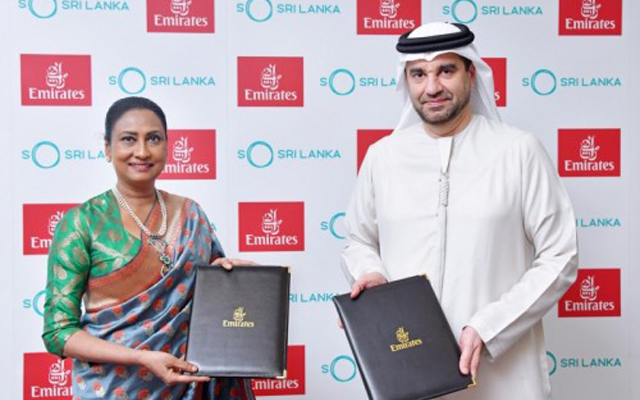
Emirates has signed an MoU with Sri Lanka Tourism Promotion Bureau that reaffirms the airline’s commitment to reviving tourism business for the destination.
Both entities will conduct joint activities such as tradeshows, trade fam trips, exhibitions, and workshops.
(From left) Sri Lanka Tourism Promotion Bureau’s Kimarli Fernando and Emirates’ Ahmed Khoory
Ahmed Khoory, senior vice president, commercial West Asia & Indian Ocean at Emirates, said: “Sri Lanka remains a very key market in Emirates’ global network and the agreement signed today underscores our unwavering commitment to the country. We launched operations to Colombo more than 35 years ago, and our partnership continues to grow from strength to strength. We look forward to exploring mutually beneficial initiatives that will help revive the nation’s trade and tourism sectors, and provide Emirates with an opportunity to serve market demand.”
Kimarli Fernando, chairperson, Sri Lanka Tourism Promotion Bureau, said the partnership was “crucial for us to explore and capitalise opportunities that emerge and to open up many beautiful avenues to establish brand awareness and perceived quality in the global tourism market”.
Since reopening borders to international tourists in February 2021, Sri Lanka has welcomed more than 80,000 passengers to Colombo onboard Emirates flights. The top inbound markets include the UAE, Italy, the UK and Germany.
The airline currently operates 28 weekly flights to Colombo and is the only international carrier to serve the country with First Class services.
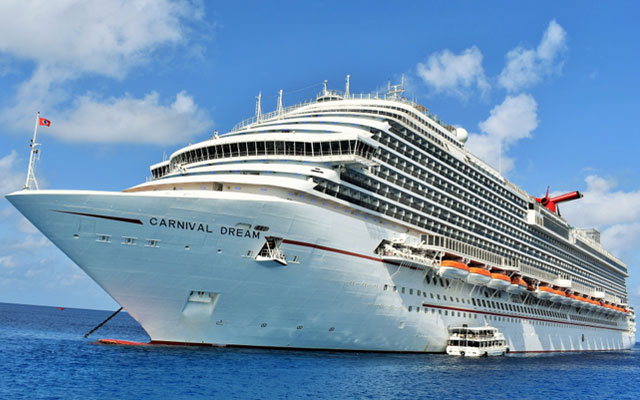
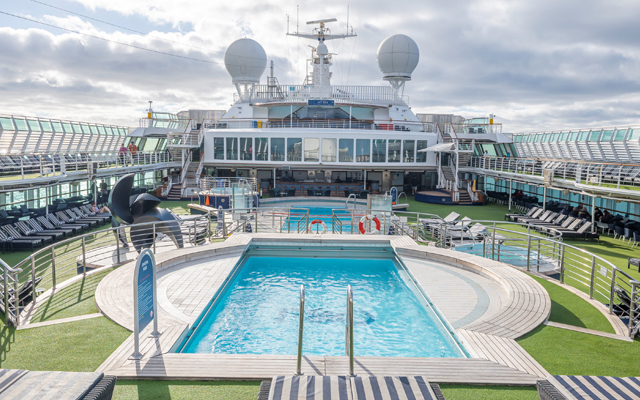
Carnival Corporation’s range of cruise lines have or will skip Russian ports going forward, in light of Russia’s attack on Ukraine.
Some of Carnival’s cruise lines that had previously featured ports in Russia include Princess Cruises, Holland American Line, Seabourn and AIDA Cruises.
Carnival Corporation’s range of cruise lines will replace Russia’s St. Petersburg port with alternative destinations
Princess Cruises will replace St. Petersburg on 24 cruises with Stockholm, Sweden (overnight call); Visby, Sweden, and Gdansk (Gdynia), Poland.
Holland America Line is altering six itineraries that were originally scheduled to call at Russian ports, to now call at Baltic ports such as Riga, Latvia; Klaipeda, Lithuania; Visby, Sweden; and Stockholm, Sweden. One cruise that was scheduled to visit Vladivostok, Russia, will instead visit Busan, South Korea.
Seabourn is also modifying six itineraries on Seabourn Ovation, with details to come soon.
AIDA Cruises will adjust the itineraries of four ships sailing in summer 2022 to stop at Riga, Latvia; Copenhagen, Denmark; Oslo, Norway; or Visby, Sweden instead.
Carnival Cruise Line and P&O Cruises UK are also adjusting their Baltic sailings.
In a statement issued by Carnival Corporation, a Costa Cruises spokesperson said the company was “following with great concern what is happening in the heart of Europe, and we hope that the pressure of the international community will soon restore peace”.
Costa has taken actions to reassure and assist Ukrainian crew members and guests who are aboard, and will continue to monitor the situation and “amend itineraries as necessary following guidance from authorities”.
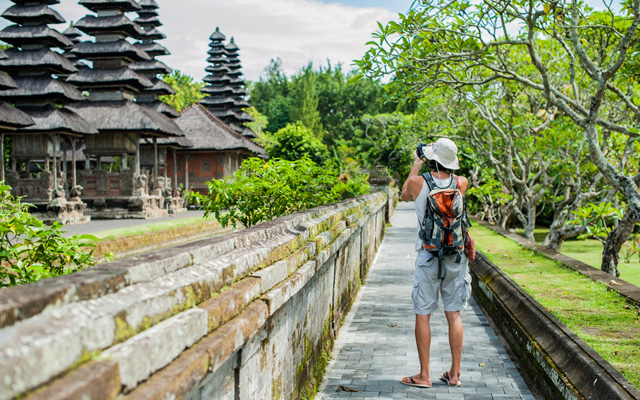
More outbound travellers from emerging markets are choosing Indonesia as a holiday destination; tourist in Bali pictured
Indonesia has opened the Bali, Batam and Bintan borders under the quarantine-free trial programme and granted Visa-on-Arrival (VoA) for 23 countries as of March 7 for all inbound visitors travelling by air and sea.
Eligible travellers have to be fully vaccinated or have taken a booster 14 days before arrival, with the certificates verified by the country’s official Covid-19 digital contact tracing app, PeduliLindungi. Travellers are also required to have Covid-19 insurance with a minimum coverage of US$25,000.
Indonesia has opened the Bali, Batam and Bintan borders under the quarantine-free trial programme for tourists
Upon arrival, travellers have to show proof of a negative PCR test result obtained prior to departure to Bali, and a paid booking at any CHSE (Clean, Health, Safety, and Environment) certified hotels in Bali with a minimum stay of four days.
They must take another PCR test and wait for the result at their hotels. Should a positive result emerge, the traveller must self-isolate in the hotel or be admitted to a hospital if he/she is elderly or have comorbidity.
This process also applies for Batam and Bintan arrivals.
Visitors must take another test on day three, whether or not they intend to travel out of the island to other parts of Indonesia. Prior to this latest entry requirement, travellers were not allowed to travel beyond Bali.
The VoA facilities are granted to all ASEAN member countries as well as Australia, the US, the UK, Germany, the Netherlands, France, Qatar, Japan, South Korea, Canada, Italy, New Zealand, Turkey and the UAE, with a tariff of 500,000 rupiah (US$36) per person, valid for 30 days, with an extension up to another 30 days.
The rest of the world can now apply directly online for the e-visa without having to go through a travel agency sponsor in Indonesia.
Sandiaga Uno, minister of tourism and creative economy said that as the government transitions into an endemic state, the Ministry of Tourism and Creative Economy and other related agencies are also preparing for a new economic era – one that is “digital and health-based” and will ensure achievement of “quality human resources” and job creation across “tourism and creative village levels”.
Visa waivers and eased entry for vaccinated travellers will place Vietnam ahead of her neighbours when she reopens to international visitors on March 15, claim industry players.
While details of entry requirements are still to be confirmed, tourism players have welcomed the move.
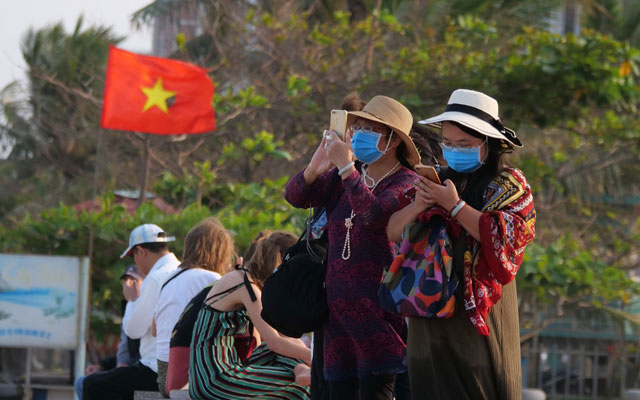
Vietnam will reopen to international visitors on March 15
Alexander Leven, general manager, Asian Trails Vietnam, said: “(Recovery) really depends on the safety measures that will be implemented. At the moment there are talks of 24-hour quarantine and Covid tests upon arrival – these would definitely prevent many tourists from coming to Vietnam.”
Pre-pandemic, Vietnam had visa waivers in place with 13 countries. The Ministry of Health has lodged an application for them to be reinstated, which is currently awaiting approval. Travel agents say this is crucial for Vietnam to remain competitive.
Jeff Redl, managing director, Diethelm Travel Vietnam, believes that Vietnam has the chance for a successful tourism comeback by implementing the easiest Covid-19 rules and protocols in the region.
He said: “If authorities could agree to open borders without any kind of restriction, we will definitely see a boom in demand. Also, we need urgent clarifications with regards to the visa policy.”
Pham Ha, CEO and founder of Lux Travel DMC, remains doubtful about Vietnam’s short-term inbound recovery, as there is “no hope” for mass tourism from China, South Korea, Hong Kong and Taipei.
However, he predicts the western market will start to resurface from May and June.
Meanwhile, Vietnam’s reopening announcement has triggered market interest and response.
Lux Travel has received re-bookings from Germany, Spain and France, while Diethelm has reported “an important increase in demand”, especially from France, the UK and Nordic countries.
Redl said: “We are now getting several inquiries on a daily basis and from different source markets. It’s surprising to see how international travellers are eager to plan a trip to Vietnam.”
Leven observes continued regional and longhaul demand for Vietnam, and told TTG Asia that Western European operators are keen to start selling Vietnam as soon as possible.
Marriott International’s Women’s Leadership Development Initiative goes back 20 years, earning it bragging rights as the first hospitality company to have such a programme in place to help women ascend to senior leadership roles in the company.
Regan Taikitsadaporn, chief human resources officer of APAC with Marriott International, said: “Diversity, equity, and inclusion have always been a cornerstone of our culture, and our continued success is the direct result of our efforts to cultivate an inclusive workforce.”
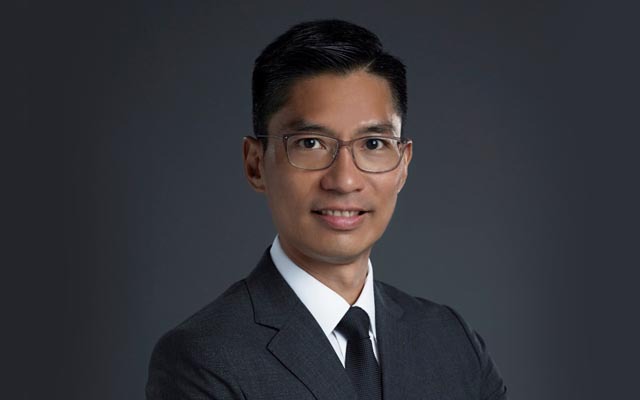
Taikitsadaporn: success in gender parity in leadership is never final
The company has since accelerated its goal to achieve gender representation parity for the entire global leadership team by 2023, two years earlier than originally planned. According to Taikitsadaporn, women now occupy 44 per cent of Marriott’s global executive positions.
“While we are on track to reaching our goal, success is never final. We are unwavering in our commitment to advance women in leadership, and will continue to find ways to develop the next generation of women leaders at Marriott,” he told TTG Asia.
As the Women’s Leadership Development Initiative is global, Asia-Pacific talents are beneficiaries too. Today, around 40 per cent of management positions in the region are represented by women, and there are nearly 100 female general managers here, with many more top talents in the pipeline.
Gender parity efforts in the region are supported by the Women Ambassador Network (WAN), a community of Marriott leaders in Asia-Pacific who are passionate about raising awareness and taking actions to promote, advance and inspire women in leadership.
After putting WAN on pause in 2020 due to the pandemic, Taikitsadaporn said Marriott employees were excited to revive the programme last year.
“We were thrilled by our associates’ enthusiasm to get involved. There are currently more than 70 women and men in the programme, representing various roles and seniorities, from hotel general managers to property-level associates in sales, marketing, operations, finance and HR. Each WAN member is an ambassador for their respective markets, and is responsible for coming up with a customised activation plan as each market’s progress and needs can be different,” elaborated Taikitsadaporn.
“As one of the senior sponsors of the programme, my role is to inspire and help our ambassadors shape their vision and objectives, making sure they have access to the right tools and resources to promote women in leadership locally.
“One of our most recent initiatives was training our WAN ambassadors to set up mentorship programmes for women associates in their markets. Our markets have already started recruiting mentees and mentors, and we are very excited by the potential of building a strong pipeline of future Marriott woman leaders, and promoting a culture of women lifting each other up for growth and success,” he shared.
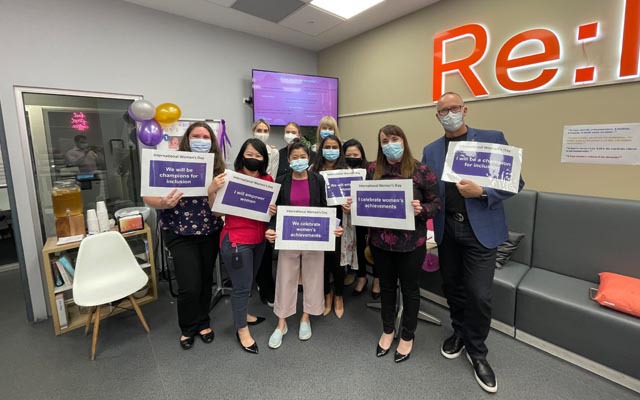
Aloft Perth hosted an International Women’s Day event, featuring director of sales of marketing Danielle Garrigan as speaker, who shared her career experience with fellow associates and how Marriott International empowers women at the workplace
Taikitsadaporn believes that a diverse leadership team brings enriched experiences, which ultimately leads to the best possible business outcomes. Furthermore, empowering female leadership “nourishes a culture that inspires and promotes career opportunities for all”.
He detailed: “When there are more women leaders in an organisation, it empowers young women to realise that they too have the full potential to be the leaders of tomorrow. It also sends a message to other employees that the contributions and perspectives of everyone are valued and supported.
“Embracing differences and diversity is critical to the success of any good organisation. A company that advocates for diversity and inclusion will be better at decision-making and retention of top talent.”
When asked if the pandemic and evolved work and personal pressures have altered the future of female leadership opportunities, Taikitsadaporn referenced a McKinsey survey that found that mothers in heterosexual dual-career couples with children have reported larger increases in their time spent on household responsibilities since the pandemic began.
To ease the pandemic’s disruption to work/life balance for working mothers, Marriott International activated its TakeCare programmes regionally and locally. Team leaders offer flexible work arrangements, while confidential helpline and counselling services via the Employee Assistance Program are available in some markets.
“Taking care of our associates’ well-being is at the core of our values and culture. We will continue to explore more opportunities to ensure our support to working mothers stays relevant during this challenging time,” he concluded.
A project to almost double the size of Wyndham Garden Kuta Beach Bali, from 155 rooms to 300, is on schedule for completion by 3Q2022.
When finished, the 143 billion rupiah (US$9.9 million) development will include a new Premier Deluxe room category, along with a new pool bar, gymnasium, additional infinity swimming pool and a children’s playground. These features are expected to make the hotel an ideal family holiday destination in Bali.
Wyndham Garden Kuta Beach Bali has added a new pool bar as part of the hotel’s expansion project
The day spa will also be relocated to more spacious quarters in the new wing.
“This ambitious development has been our vision for this property for many years and we are proud to see it taking shape,” said Sonny Inayatkhan, director of Global Bali Investama, which owns Wyndham Garden Kuta Beach.
He acknowledged that undertaking an expansion project during the pandemic has proven challenging but necessary so that the property would be ready “at a time when international travel will be resurgent”.
Raffles Hotels & Resorts has created a collection of travel experiences – Beautifully Curated by Raffles – that showcases unique aspects of the destination where each property resides.
In Asia, Beautifully Curated by Raffles tours are offered at properties such as Raffles Udaipur, Raffles Bali and Raffles Singapore.
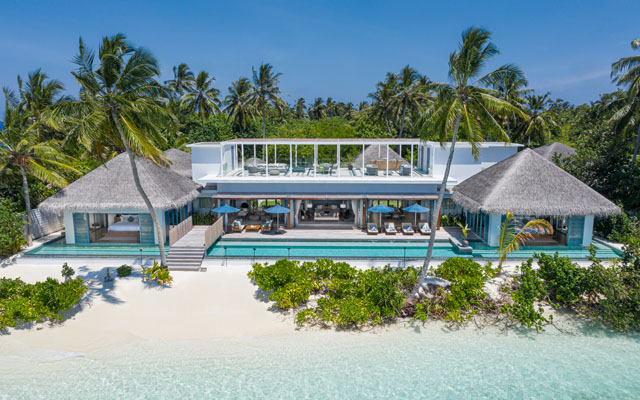
Guests can create their own Beautifully Curated experience with the Raffles Royal Residence experience at Raffles Maldives Meradhoo
The Raffles Retreat at Raffles Udaipur takes guests on a gastronomical journey, which features a memorable breakfast and lunch, a live cooking demonstration, an introduction to the lost recipes of the Rajputana kingdom, and a bespoke Raffles Signature High Tea experience at the classic Writers Bar.
Over in Bali, the Timeless Royalty Experience at Raffles Bali takes in a royal wellness experience at The Sanctuary Escape, the Raffles Royal Afternoon Tea at The Writers Bar Bali, a private full-day tour at the Puri Agung Karangasem Royal Palace, as well as an intimate dinner and champagne tasting at The Secret Cave.
More details on the Beautifully Curated by Raffles tours can be found on each property’s website, or visit raffles.com.