Travel to the Philippines will be made even smoother with the removal of an arrival cap at all ports of entry across the country from April 1, 2022.
The Department of Tourism (DoT) made the announcement on March 11, following the decision of the Inter-Agency Task Force for the Management of Emerging Infectious Diseases (IATF-EID) to lift the arrival quota for unvaccinated passengers.
The Philippines will open to fully vaccinated tourists from all countries, without arrival limits, from April 1; Coron, Palawan pictured
Arriving passengers will submit a negative laboratory-based antigen test result taken within 24 hours from departure. This replaces the initial requirement of a negative RT-PCR test taken 48 hours prior to departure from point of origin.
The resumption of visa issuance by Philippine embassies and consulates will also start on April 1 to coincide with total removal of arrival quotas.
“This latest development opens the country to all fully vaccinated tourists from all countries, and means the country’s tourism industry is well on its way to recovery,” said tourism secretary Berna Romulo-Puyat.
“We at the DoT thank our colleagues in the IATF for approving such measures that will help sustain the recovery of the sector in the coming months. We have high hopes that all of these will result in an uptick in international travelers visiting the country during the summer season,” Puyat added.
The IATF Resolution 164-A also allows the entry of passport holders from Hong Kong and Macau for a period not exceeding 14 days.
There will also be reciprocal recognition of Covid-19 vaccination certificates from Croatia, Cyprus, and Nepal which are among the 157 countries whose citizens can enter the Philippines without a visa.
“While our domestic tourists have been the pillar of our recovery, we are also excited to welcome more foreign visitors in the weeks ahead. Such a move to further ease our borders and recognise the vaccination certificates of other countries is very important, noting that our top foreign markets were part of the visa-free countries,” she added.
Since reopened the borders to foreign travellers from visa-free countries on February 10, the Philippines has recorded 76,736 arrivals at the main airports. Of these, 43,249 were foreign tourists.
With India removing her travel barriers, the Tourism Authority of Thailand (TAT) has stepped up destination marketing in the massive source market to rebuild what was once the Kingdom’s fastest-growing tourist market pre-pandemic.
TAT is focusing on millennials, golfers, luxury travellers, wellness seekers, wedding groups and honeymooners – segments that it expects to be the first-movers as travel curbs ease.
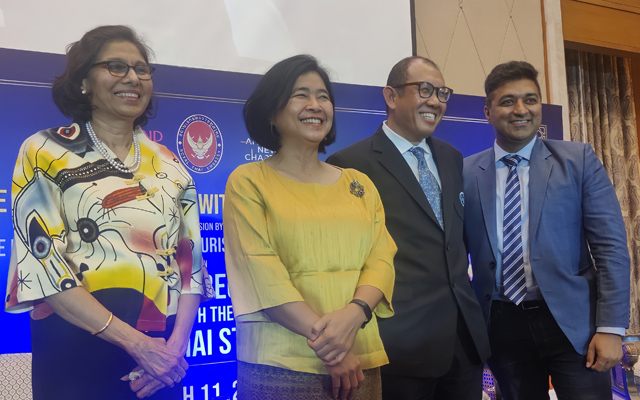
(From left) TAT’s Pinki Arora, ambassador of Thailand to India Pattarat Hongtong, TAT’s Vachirachai Sirisumpan, and Thailand Convention & Exhibition Bureau’s Nitin Sachdeva
Besides engaging in publicity and marketing activities aimed at trade and consumers, TAT is planning a number of fam trips for key partners such as travel agents and wedding planners to spur demand. It will also join hands with Indian digital influencers to promote travel to Thailand.
“We expect the Indian market to rebound strongly for us. Our focus in India is to showcase Thailand with new perspectives and experiences. So, we will be promoting products like diving, hiking and eco-tourism. We want to promote sustainable tourism and that’s why segments like millennials are important, as they understand the importance of travelling responsibly,” said Tanes Petsuwan, deputy governor for Asia and South Pacific, TAT during a virtual press address in New Delhi last week.
Tanes shared that the NTO will also go deeper into India, targeting new markets such as the north-eastern states, which are seeing improved access to Thailand via Myanmar overland.
The India–Myanmar–Thailand Trilateral Highway, most commonly known as the IMT Highway, is being constructed as part of India’s Look East policy. Once completed, the highway will connect Moreh in India with Mae Sot in Thailand via Myanmar.
“Good tourist demand is expected from India starting from April. We are carrying out joint promotions with airlines and travel trade partners for the promotion of Thailand. Many wedding planners have expressed interest in taking their groups to Thailand,” said Vachirachai Sirisumpan, director, TAT, New Delhi office.
Travel agents told TTG Asia that overseas destination weddings are returning.
Preecha C Singh, registrar, Association of Thai Travel Agents (ATTA), said one of his members is handling a 400-pax Indian wedding group, with guests coming from Mumbai and Bengaluru.
Nearly two million Indian tourists visited Thailand in 2019, a growth of 25 per cent compared to the previous year.
Demonstrating continued confidence in the recovery and long-term tourism growth of Greater China, Marriott International says it will add more than 50 hotels in over 30 destinations across the region this year, with the 500th hotel set to open in early 2023.
Marriott International’s expansion will include a growing presence of luxury hotels in leisure destinations, such as a Ritz-Carlton Reserve in China’s Jiuzhaigou Valley and W Macau – Studio City scheduled to open this year; an injection of more than 15 premium branded hotels in popular getaways cities such as Chengdu, Xi’an, Sanya and Qinhuangdao; and a larger Sheraton portfolio.
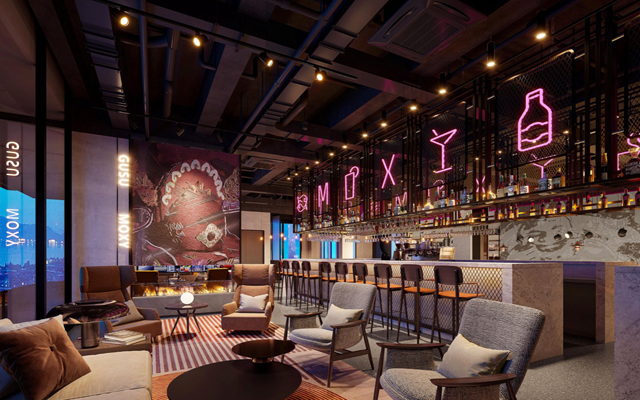
Moxy Hotels will debut in Suzhou
The company’s select service brand portfolio will continue to drive growth in Greater China, with more than half of all hotels in the pipeline belonging to that category. According to WTTC and Trip.com‘s Trending in Travel report, rural and suburban destinations in China demonstrated strong growth in booking rates in 2021, which indicates an increased tendency among people to travel beyond first-tier cities. In light of this trend, Marriott International will further expand the presence of its select service brands in secondary and tertiary destinations this year.
In a press statement, Henry Lee, president, Greater China, Marriott International, said: “Greater China is an important growth market for us. In the past three years, Marriott International has expanded its footprint in the region with an average of 40 hotel additions per year. Currently, our portfolio includes 448 hotels spanning 23 brands across more than 110 cities in Greater China.”
Lee shared that the company will abide by its “Brand + Destination” development strategy, by working closely with owners and franchisees to drive travel demand.
Marriott International’s hotel expansion will result in new job opportunities.
Luxury travel specialist Intriq Journey has entered the Asia-Pacific market, after Covid-19 halted its original plan to launch in 2020.
The company aims to curate a fully personalised itinerary that is reflective of individual lifestyle preferences and needs while inspiring the spirit of exploration. Programmes are customised by a team of experienced Asian travel designers.
Intrique Journey centres on luxurious, curated destination experiences
Through Intriq Journey’s strong personal connections with local communities and commitment to sustainable tourism, travellers can expect to discover off-the-beaten path and inaccessible destinations.
Co-founder Jess Yap said: “Our aspiration for Intriq Journey is for guests to travel with a total peace of mind in each journey, to places they otherwise wouldn’t pick and leave all the research and planning to us.”
The company has also recently launched Intriq Finesse, a collection of luxury small group journeys aimed to showcase the very best of each destination.
Plaza Premium Group, which has 250 facilities in over 70 international airports, has launched promotional offers that will benefit travellers on their spring break from now until April 17, 2022.
Perks include the convenience of booking online of walking in to pay-per-use Plaza Premium Lounges and Aerotels; ALLWAYS Meet & Greet airport service for guests on arrival, departure or transit; and free access for children under 12 years of age when accompanied by a full paying walk-in adult to any Plaza Premium Lounge.
Plaza Premium Lounge Passes are going at a discount for the spring holiday season
To guarantee Plaza Premium Lounge access at prices that are up to 50 per cent off standard walk-in rates, travellers can obtain the Plaza Premium Lounge (PPL) Pass. Valid for 12 months upon activation, the PPL Pass is available for purchase via Plaza Premium Lounge’s official website. Passes for two, four or six lounge visits are priced at US$75, US$150 and US$198 respectively.
From now until April 17, the PPL Pass can be purchased at a 10 per cent discount using a promo code at checkout.
Smart Traveller members can enjoy an extra 20 per cent off bookings for Plaza Premium Lounge, Aerotel or ALLWAYS Meet & Greet services.
Eager to revive travel interest among Indian residents, the South African Tourism has planned a a host of activities in the market, with a roadshow series kicking off in New Delhi on March 7.
South African Tourism will tour through major Indian cities such as Ahmedabad, Bengaluru, and Mumbai, taking 35 suppliers from the destination to meet with travel buyers and showcase the latest and hottest tourism experiences in South Africa.
(From left): South African Tourism’s Neliswa Nkani and South African High Commission’s Sibusiso Ndebele
The tourism board is engaging with airline partners such as Air Seychelles, Ethiopian Airlines, Emirates Airline and Qatar Airways for joint promotions.
These trade engagements follow on from the NTO’s More & More campaign launch in India last month. Localised for the Indian audience, the campaign highlights South Africa’s abundant selection of more than 3,000 things to do and see, from bungee jumping off Bloukrans Bridge to retracing Nelson Mandela’s life journey.
More & More, activated through outdoor and social media advertising, will conclude end of March.
Speaking to TTG Asia on the sidelines of a press conference in New Delhi, Neliswa Nkani, hub head, MEISEA, South African Tourism, said: “We want to reignite, reengage and trigger the travel demand in India through our trade and consumer activities. We are talking to our airline partners at present to introduce special airfares for the Indian market. The importance of the Indian market for us can be gauged by the fact that the biggest consumers of our adventure activities are Indian travellers.”
Nkani said South African Tourism is training its marketing eye on millennial, FIT, family, honeymoon and business event segments for the next 18 months.
“There has been a growing demand from the corporate market. In fact, if it wasn’t for Covid, I believe that MICE would have taken over from the leisure segment in terms of tourist arrivals from India,” she added.
At present 28 per cent of Indian visitors to South Africa are business event travellers. The destination has a number of Indian corporate groups travelling to South Africa in the coming months, including an 800 pax movement from a pharmaceutical company.
The tourism board expects the upcoming e-visa facility and direct connectivity to be a game-changer for the Indian source market. India will be among 14 countries to benefit from a new e-visa facility soon, and the process is being tested at present.
With help from its High Commission in New Delhi, South African Tourism is in talks with airlines such as Air India, Vistara, IndiGo and South African Airways to launch direct flights between the two lands.
Sibusiso Ndebele, high commissioner of South Africa to India, revealed that New Delhi-Johannesburg and Mumbai-Johannesburg routes are attractive for direct connections.
“IndiGo is keen to fly to Africa and is leading in interest to operate direct flights between the two nations,” he said.
South Africa expects to see a 64 per cent improvement in Indian arrivals this year over 2021, when there were about 20,000 Indian travellers. Prior to the pandemic, India was the eighth largest international source market for South Africa.
Norwegian Cruise Line (NCL) has unveiled nine new F&B offerings for its Prima Class vessels, Norwegian Prima and Norwegian Viva.
Guests can look forward to The Metropolitan Bar, NCL’s first sustainably focused bar, which will premiere under NCL’s Sail and Sustain programme. It will feature zero-waste cocktails prepared with surplus ingredients, a sustainable spirits menu, and biodynamic wines.
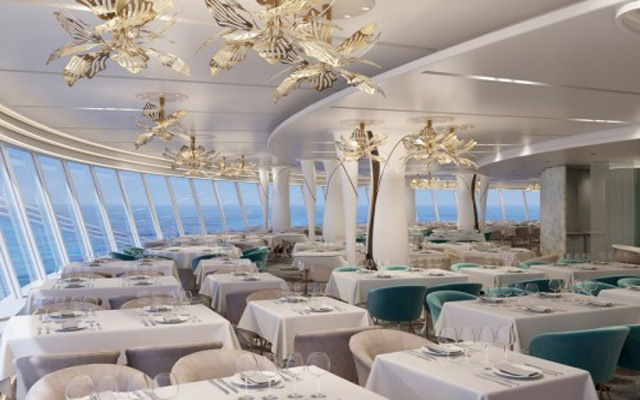
NCL’s revamped menus in restaurants offer greater variety of global dishes
Also new on Norwegian Prima and Norwegian Viva are The Belvedere Bar, a contemporary cocktail lounge; the decanter-inspired Whiskey Bar; and The Penrose Bar featuring video poker machines.
For gourmands, Norwegian Prima‘s new Mediterranean seafood specialty restaurant Palomar, Hasuki restaurant which specialises in traditional “hibachi-style”, and contemporary sushi house Nama will impress.
Meanwhile, both Hudson’s and The Commodore Room will present revamped menus that promise a greater variety of global dishes. These will debut on Norwegian Prima before rolling out to the rest of NCL’s fleet through 2023.
NCL’s first three-level glass-walled atrium, the Penrose Atrium
Yet another unique offering in NCL’s newest epicurean upgrade is its first three-level glass-walled atrium, the Penrose Atrium. This is one of the focal points on Norwegian Prima and Norwegian Viva. The space features futuristic architecture and a three-deck-high light feature. Retail spaces and high-end luxury shops can be found here, along with the Prima Casino and NCL’s newest addition, Starbucks Coffee.
Usual favourites, Cagney’s Steakhouse, Le Bistro, Food Republic and Observation Lounge, will return with enhanced environments.
“We’ve been innovators in the food and beverage space for more than three decades, becoming the first cruise line to offer specialty dining and the first to introduce our Freestyle Cruising concept that allows our guests to vacation their way by giving them the choice to decide when and where they dine,” said Harry Sommer, Norwegian Cruise Line president and chief executive officer.
He added: “Our latest food and beverage offerings take our Norwegian Prima food and beverage experience to another level, one that travels well beyond the guest expectation to provide elevated gastronomical experiences featuring sophisticated design, masterful mixology and cuisine that delivers full-throttle flavour.”
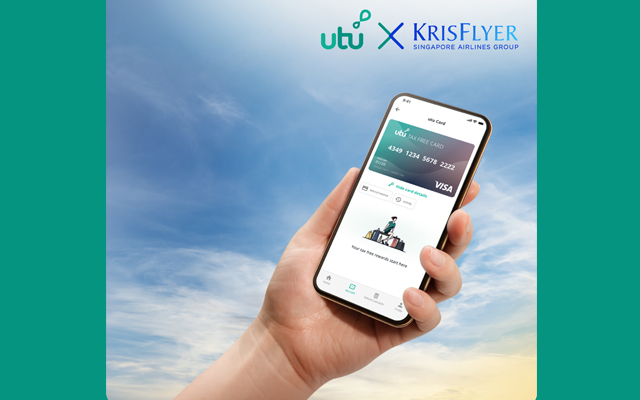
A partnership between Singapore-based start-up utu and Singapore Airlines Group’s lifestyle membership programme KrisFlyer will offer travellers greater tax refunds that are converted into miles.
By registering for a virtual utu Tax Free Card and making their shopping tax refunds with their utu membership, users can enjoy 25 per cent more on their tax refunds in 50 countries where VAT and GST refunds are available. These countries include Singapore, France, Switzerland, Germany, South Korea, Thailand, and the United Arab Emirates.
The utu Tax Free Card offers travellers greater tax refunds that are converted into miles
For KrisFlyer members, tax refunds can be converted into KrisFlyer miles, with US$125 worth of KrisFlyer miles for every US$100 of tax refunds claimed abroad.
Royal Caribbean International’s Spectrum of the Seas will arrive in Singapore six months sooner than anticipated, all ready to whisk holidaymakers off to their ideal cruise vacation as early as April 2022.
Sailings are now open for bookings, with spectacular three- and four-night Ocean Getaways on offer.
Spectrum of the Seas promises an array of memorable experiences, from dining delights to unparalleled entertainment, alongside quality accommodation and abundant opportunities for family and friends to bond.
Rise up to endless fun
Recognised as Asia’s largest and most innovative ship, and one that is built to deliver great vacation experiences, Spectrum of the Seas is a recreation wonderland.
There are several signature experiences, such as the FlowRider surf simulator, the North Star glass observation capsule that ascends 300 feet above the ocean, and RipCord by iFly sky diving experience at sea, alongside many other attractions including three whirlpools, a rock-climbing wall, and an outdoor movie screen.
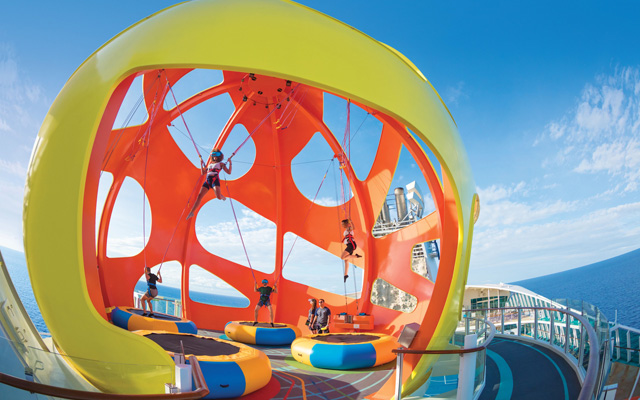
Sky Pad is Asia’s first virtual reality, bungee trampoline adventure onboard a cruise ship
Be sure to make time for a number of gems – Sky Pad, Asia’s first virtual reality, bungee trampoline adventure where guests can strap in, don a headset and transport themselves to another time and planet; and SeaPlex – the largest indoor active space at sea, featuring bumper cars, laser tag, fencing, archery and more.
Also not to be missed is Two70, a space that boasts 270-degree ocean views by day and transforms into a multidimensional theatre by night. This transformative space flaunts six agile Roboscreens, and is where breathtaking live performers and mind-bending aerialists create unimaginable visuals.
Rise up to impressive feasts
Get ready to dine well tonight and every night onboard Spectrum of the Seas. There are 19 distinct dining venues to choose from, all serving up flavours from around the world.
Signature classics include imaginative cuisine at Wonderland, American steakhouse Chops Grille, and authentic rustic fare and handmade pasta at Jamie’s Italian.
If familiar cuisine is what guests desire, then they are right at home with Spectrum of the Seas.
Teppanyaki takes guests on a gourmet journey through Japan
Sichuan Red weaves culinary magic using authentic Sichuan spices. Highlights here includes Kao Yu simmer pot, which spotlights deep-fried fish served on a bed of tofu, vegetables and potatoes in a spicy aromatic broth; and Royal Sea Cucumber, which comes impeccably plated alongside broccoli and tangy spring onions.
Teppanyaki is a treat for the eyes and palette, as delicious dishes come with impeccable presentation and dazzling displays over a hot plate by expert chefs who elevate cooking to a performance art form. Take a gourmet journey through Japan with jumbo crispy softshell crab, sea scallops and top-quality Wagyu A4 beef.
The Hotpot brings loved ones to the table, where they can cook and enjoy their meal together. Elevating the authentic hot pot experience are stunning views of the ocean.
Rise up to family-friendly stays
Reconnect with loved ones in the comfort of family-friendly accommodation, from exterior balcony staterooms to interconnected rooms. Large families will appreciate the two-level Ultimate Family Suite, an expansive, multi-room retreat complete with its own slide and cinema that also doubles as a karaoke stage.
Loved ones can stay and play together in the Ultimate Family Suite
Guests also have the option of the Suite Enclave, Royal Caribbean’s first and exclusive space for the exquisite Royal Suite Class Star, Sky and Sea accommodations. These are set in a private area, featuring exclusive floor access, an elevator, private restaurants and a dedicated lounge area.
Rise up to booking and sailing confidence
In line with its Royal Promise and regulations stipulated by the Singapore government, Royal Caribbean continues to implement health and safety measures for the well-being of its guests and crew members, and the destinations it visits.
The comprehensive, multilayered set of measures include pre-departure wellness screenings and testing, contactless embarkation and debarkation, enhanced ventilation and sanitisation on board, as well as sailing with fully vaccinated crew members and guests. The cruise line will continue to evaluate and update its measures as circumstances evolve with various government and health authorities.
Guests who book their vacation on Spectrum of the Seas on or before March 31, 2022, can be assured of flexibility in their plans with Royal Caribbean’s Cruise with Confidence programme, which allows for changes and cancellations up to 48 hours before their cruise sets sail. A Future Cruise Credit will be provided and remains valid for future bookings on or before September 30, 2022, for sailings departing before December 31, 2022, or one year from the original sailing date, whichever is later.


















Plaza Premium Group, which has 250 facilities in over 70 international airports, has launched promotional offers that will benefit travellers on their spring break from now until April 17, 2022.
Perks include the convenience of booking online of walking in to pay-per-use Plaza Premium Lounges and Aerotels; ALLWAYS Meet & Greet airport service for guests on arrival, departure or transit; and free access for children under 12 years of age when accompanied by a full paying walk-in adult to any Plaza Premium Lounge.
To guarantee Plaza Premium Lounge access at prices that are up to 50 per cent off standard walk-in rates, travellers can obtain the Plaza Premium Lounge (PPL) Pass. Valid for 12 months upon activation, the PPL Pass is available for purchase via Plaza Premium Lounge’s official website. Passes for two, four or six lounge visits are priced at US$75, US$150 and US$198 respectively.
From now until April 17, the PPL Pass can be purchased at a 10 per cent discount using a promo code at checkout.
Smart Traveller members can enjoy an extra 20 per cent off bookings for Plaza Premium Lounge, Aerotel or ALLWAYS Meet & Greet services.