A new management collaboration that sees Vietnam’s largest domestic hotel owner, Vinpearl, contracting 12 properties to Meliá Hotels International is expected to deepen the latter’s presence in the country.
These hotels and resorts are in operation, and will bear the brand Meliá Vinpearl going forward.
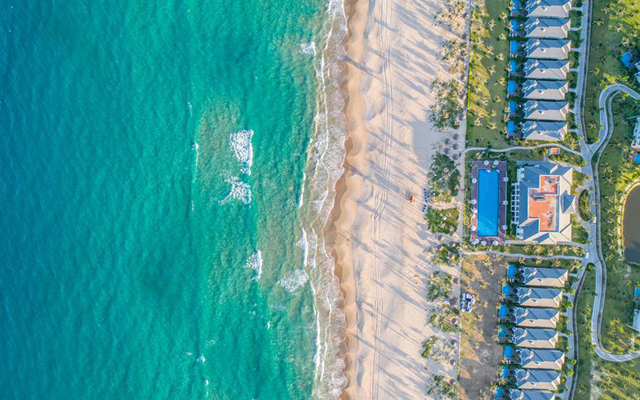
Vinpearl grants Meliá Hotels International management of 12 existing hotels and resorts in Vietnam; Melia Vinpearl Cam Ranh Beach Resort pictured
The first hotel to undergo rebranding will be Vinpearl Quang Binh, which will take on the new name, Meliá Vinpearl Quang Binh, this month. The remaining 11 will complete their migration within 1H2022.
Meliá’s latest move will make it the second largest hotel group in Vietnam in terms of room inventory; it will have 8,000 keys across the country.
The company first entered Vietnam in 1999 with the opening of Meliá Hanoi.
“We believe in creating strong and strategic regional partnerships with companies that have a deep connection to the locations they serve,” said Gabriel Escarrer, vice chairman and CEO of Meliá Hotels International.
“The Vinpearl properties and destinations at the heart of this agreement are a wonderful complement to the roots we’ve already established in Vietnam.”
“Collaborating with international partners in running our properties will effectively facilitate Vinpearl in joining world-famous hotel networks and contribute to raising the bar for Vietnamese tourism,” said Thai Thanh Nhat Quang, CEO of Vinpearl Hotel.
“Through this cooperation, Vinpearl and Meliá Hotels International also expect to deliver a variety of high-class hotel service experiences to millions of domestic and international tourists.”
Meliá will take the Meliá Vinpearl brand into locations where it already has properties, such as Danang, as well as cultivate new ground in destinations where the group currently has no presence.
Fully vaccinated travellers arriving in Sri Lanka from March 1, 2022 will no longer need to take an on-arrival PCR test.
The move aims to improve tourist arrivals to the country.
Sri Lanka will remove on-arrival PCR tests for fully vaccinated travellers from March 1, 2022
The Civil Aviation Authority of Sri Lanka said in a statement on February 27 that “Covid-19 cases are on a downward trend and communities around the world (are learning) to live with the coronavirus”.
Partially-vaccinated or unvaccinated travellers are still required to submit a negative RT-PCR test result within 72 hours of their travel date to Sri Lanka.
Sri Lanka has seen an uptick in arrivals, with 82,327 tourists in January 2022 compared with 1,682 in the same month last year.
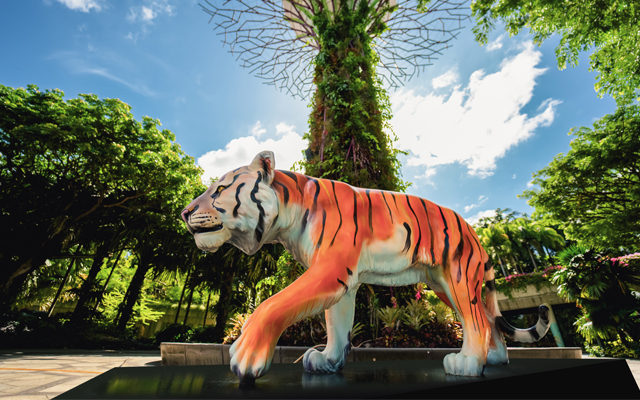
Singapore’s Gardens by the Bay has brought together eight life-sized tiger sculptures as part of WWF-Singapore’s AR-mazing Tiger Trail, which raises awareness of tiger conservation and other key environmental issues facing the planet today.
Each tiger has been decorated by a renowned local or international artist, presenting various perspectives on how climate change, poaching and deforestation are affecting tigers in the wild.
The exhibition is ongoing until April 9 and is free.
WWF-Singapore’s AR-mazing Tiger Trail features 33 tigers in total, located across key locations in Singapore.
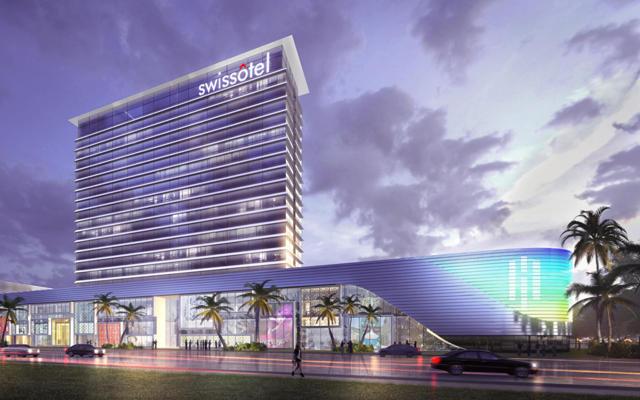
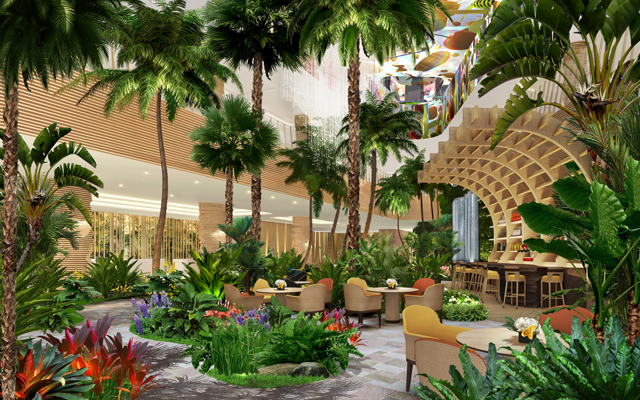
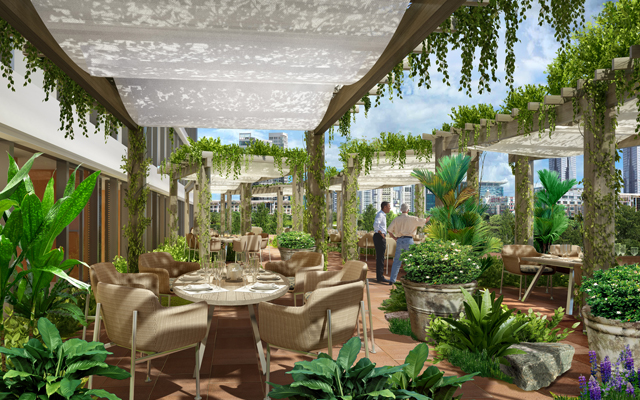
Situated in Clark Freeport Zone, Pampanga, Swissôtel Clark – only 1.5 hours away from capital Manila – stands the first Swissotel-branded property to open in the Philippines.
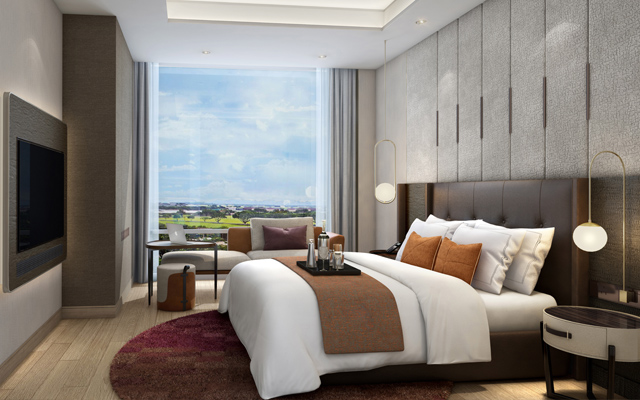
Soft opening on March 1, 2022, the five-star property is part of Hann Casino Resort, Clark’s first integrated casino resort concept. All arriving guests will be warmly greeted, and staff will be on hand to help them feel right at home in one of the 372 stylish guestrooms and suites. Guestrooms and suites (ready by 3Q2022) will be furnished with modern amenities, and many will open out to the magnificent view of the lush Zambales mountains.
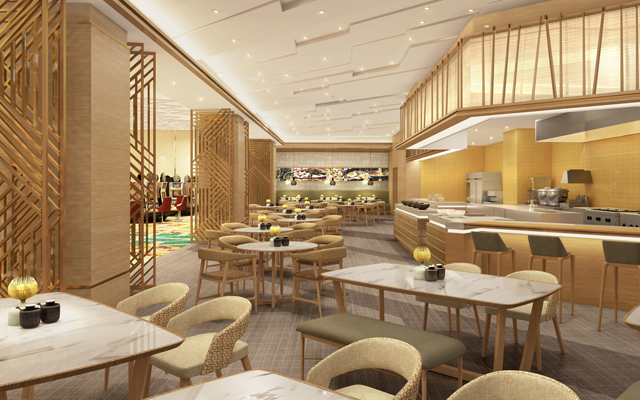
A destination within a destination, Swissôtel Clark ensures guests will be spoilt for choice when noshing at one of the 10 in-house restaurants and bars, offering an extensive range of mouth-watering international and local cuisines.
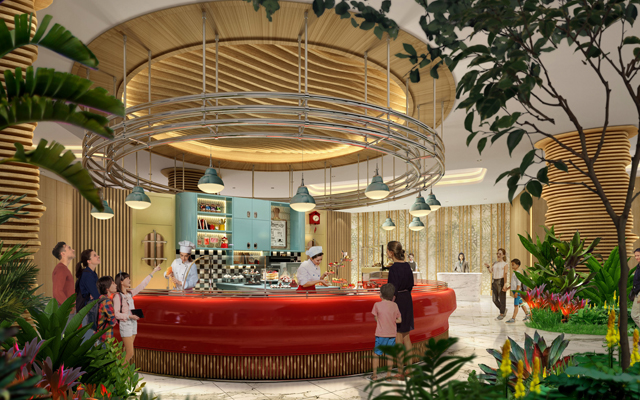
Travellers will be able to sample sumptuous European and grilled dishes in a colourful market setting at Markt, the hotel’s all-day dining restaurant. The Atrium will be the go-to place for afternoon tea, snacks, and drinks, while Oma’s Dessert Bar will showcase freshly-baked pastries and cakes. Situated on Level 5 is Swiss Tropic, a playful poolside bar serving refreshing drinks, comfort food and small bites. Later in 2Q2022, diners will get the chance to experience a modern take of classic Italian cuisine at Ristorante di Verona, either in its indoor or alfresco spaces.
Inside Hann Casino, Swissôtel Clark will also be operating three distinct outlets – Nasi, the perfect venue to savour authentic local dishes; Spice, the go-to restaurant for Asian street food; and 20, a stylish round-the-clock entertainment destination boasting themed nights and sensory performances.
Business travellers and suite guests will soon be able to avail the Executive Lounge when it opens in 3Q2022, or the five inspiring meeting rooms – ready by 2Q2022 – within Swissôtel Clark, all of which will be perfect settings to host corporate events, networking sessions, and C-suite meetings. The passionate and accomplished events team will also be on hand to ensure all events run smoothly.
But it’s not all business talk here, for the urban retreat also offers recreational facilities such as Purovel Sport, a 24-hour fitness centre; and a resort-style pool for kids and adults with a splendid view of the mountains.
Guests should take time to experience the benefits of holistic wellness and beauty offerings from Pürovel Spa & Sport, opening in 3Q2022. Being the Philippines’ first and only Swiss and Alpine-inspired spa, Pürovel Spa will celebrate the origins of wellbeing inspired by the Pürovel philosophy, it mirrors the four stages of natural vitality: renewal, peak activity, recovery and hibernation.
Swissôtel Clark is less than a 10-minute drive from Clark International Airport, and a 20-minute drive from the dining and entertainment hotspot of Angeles City, well-known for its homegrown restaurants, raucous nightlife, hip cafes, and lively pubs.
Swissôtel Clark is just one of several new openings slated for this year, as parent company Accor turns its focus towards enlarging its footprint in the Philippines.
For more information, visit our website, connect with us on Facebook, or follow us on Instagram.
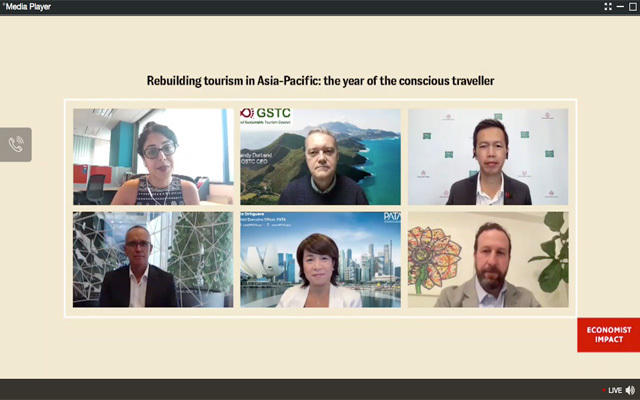
The pandemic has intensified travellers and organisations’ awareness of sustainable tourism but it remains to be seen if that consciousness will translate into action and responsible travel demand, say industry leaders on the Rebuilding tourism in Asia-Pacific: The year of the conscious traveller webinar.
In a recent Economist Impact survey of more than 4,500 travellers in Asia-Pacific, more than seven in 10 respondents indicate that Covid-19 has changed the way they think about sustainable tourism by making it more important to them.
Industry leaders discuss the factors that would translate heightened sustainable tourism awareness into actual travel demand, and how travel and tourism leaders can facilitate the positive change
Randy Durband, chief executive, Global Sustainable Tourism Council (GSTC), said: “I think we are on the dawn of a new traveller. We’re seeing an increasing amount of consciousness, (but not) what actually happens with behaviour. While there will not be a revolution, we are going to see significant changes (as to how people approach travel).”
Durband related an example of a group of American travellers who overwhelmingly stated Hawaii as their dream destination but eventually went to Florida or Mexico because of “bargains or discounts”.
Liz Ortiguera, CEO of PATA, said cost concerns could influence socially-conscious travel decisions.
Keith Tan, chief executive, Singapore Tourism Board, opined that sustainable travel demand is also reliant on supply. “We saw (sustainable travel demand) before the pandemic, but they were very scattered. A question now for NTOs is how we can harness and grow this momentum to support the supply side, so that this dawn can become a new era,” he said.
And with more destinations reopening for travel, Ortiguera said there was a responsibility on all sides to find ways to welcome tourism back without overwhelming the system.
Building tourism back better, according to John Lee, director-general, department of tourism, innovation and sport with the Queensland government, requires the alleviation of overtourism in certain destinations in Asia.
Theo Yedinsky, Airbnb’s global policy director, however, posited that the diffusion of tourism is already happening, and smaller towns now have “a level of economic opportunity out of the tourism industry they had not had before”.
“It is an amazing time (for NTOs to do) good old fashion storytelling about the opportunities that are out there and the places to go to, as people will be very open to hearing about them,” he said.
Another silver lining from the pandemic is the heightened awareness of technology and digitalisation, and its accelerated adoption.
Citing examples, Tan said Singapore tourism stakeholders have used digital tools to reduce risky human interactions while hotels are relying on technology to cut food waste.
“On the consumer side, there are also apps that support consumer decision-making, whether it helps make them more conscious of their carbon footprint, or where they can source sustainable food choices, clothing, or activities,” Ortiguera added.
However, aviation remains a major hinderance to the progress of sustainable tourism, as the industry is still years away from cleaner fuel sources.
“Travel and tourism is dependent on aviation. The flight shame movement was growing before the pandemic, and with climate change punching us in the face, that’s going to come back. We are probably 15 years away from reasonably clean aviation, so that puts tourism business at tremendous risk,” Durband remarked.
Lee expected the pandemic to move key airlines towards smarter route development, “where they can find a niche in which they can operate to their benefit”.
However, the reality is that the market currently favours mass travel and connections, such as the Sydney-Melbourne route that was top five in volume pre-pandemic.
“Major primary routes will always be lower cost unit than secondary tertiary routes”, said Durband, who suggested that NTOs could promote more flights to secondary markets, or air over rail as rail is greener.
As to how governments and business leaders can ensure that travel recovery is more sustainable, speakers say clear standards and expectations must be set, and a systematic approach must be taken.
Tan pointed out that as an NTO, it was important to think about “what sort of grants and incentives can be used to support and nudge tourism stakeholders” towards Global Sustainable Tourism Council’s standards and goals.
However, many of such sustainable initiatives, and the progress and commitments by government organisations, may not be visible to the everyday traveller. As such, Tan highlighted the need to make efforts more “visible” to the conscious traveller who may be willing to pay more for a sustainable hotel or attend a net-zero event.
Lavorel replaces former CEO Barbara Dalibard who has left SITA after five years at the helm.
Lavorel has been with SITA for more than 20 years, during which he served in a range of senior roles, most recently as CEO of SITA At Airports and Borders.
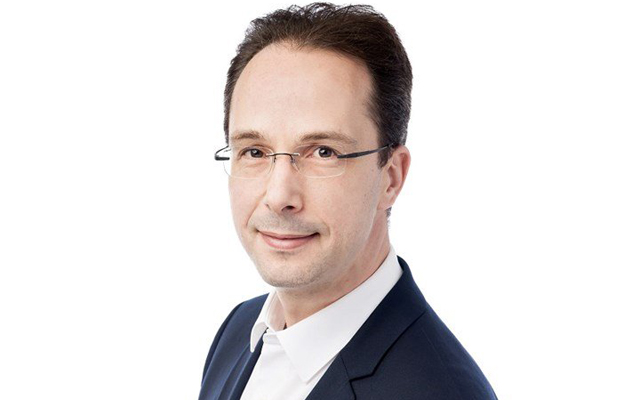
Omar Jefri, SITA Board chair, said: “The air transport industry has been through an incredibly turbulent period. As we look to recovery, digitalisation of the industry is a key focus. David’s experience and knowledge of both the industry and SITA will be instrumental in cementing SITA’s position as a trusted partner, working with our shareholders to shape the future direction of the organisation.”
Adib Charif, SITA Council president, said: “David brings a deep conviction and commitment to delivering SITA’s vision as a vital industry partner. The SITA Council looks forward to working closely with him.”
Best Western Hotels & Resorts has brought in renowned wellness company, GOCO Hospitality, to curate exclusive wellness experiences for its guests at two upcoming hotels within Charm Resort Ho Tram in Ho Chi Minh City.
The partnership between the two companies will see GOCO managing a spa and wellness centre, staffed by GOCO’s team of health professionals. Hotel guests will be offered a wide range of natural therapies complemented by advanced technology within an oasis of landscaped gardens and waterways, just steps from the beach.
GOCO Hospitality will lead a holistic health and wellness centre within the two Best Western hotels set within the upcoming Charm Resort Ho Tram
The wellness facility will be part of the 470-key Charm Resort Ho Tram, BW Signature Collection by Best Western and the 548-key Charm Resort Ho Tram, BW Premier Collection by Best Western.
Erwann Mahe, managing director, international operations – Asia, Best Western Hotels & Resorts, said: “Wellness has become a key component of the hotel and resort industry, especially in Asia, and we are delighted to work with GOCO Hospitality and Charm Group on this impressive new project. This soothing sanctuary will become one of the key selling points at Charm Resort Ho Tram, BW Premier Collection by Best Western and Charm Resort Ho Tram, BW Signature Collection by Best Western.”
Accor will open its first ibis budget hotel in Cambodia this July with the signing of ibis budget Phnom Penh Riverside.
The 322-key hotel will incorporate the signature ibis budget concept and offer Sweet Bed by ibis budget in all its rooms, while amenities will include a grab-and-go breakfast outlet and four meeting rooms.
ibis budget Phnom Penh Riverside will pack in a grab-and-go breakfast outlet and four meeting rooms
ibis budget Phnom Penh Riverside will sit in Chamkar Mon district, one of the prime business and entertainment neighbourhoods of Cambodia’s capital. Within the hotel’s vicinity are attractions such as the Independence Monument, the National Museum of Cambodia, the Royal Palace, and the Central Market.
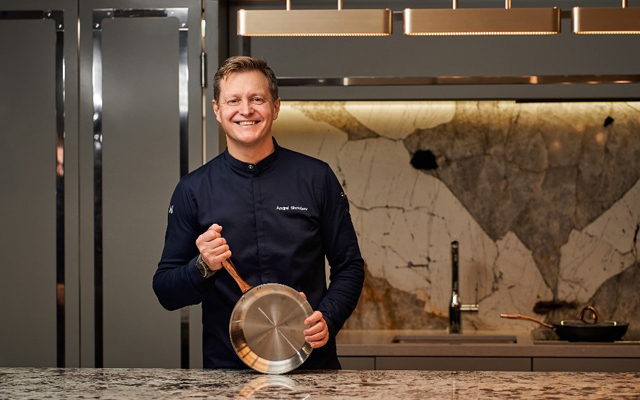
Michelin-star chef Andrei Shmakov will take over the Sea Salt at Sheraton Maldives Full Moon Resort & Spa, where he will present a series of exclusive, multi-course dinners from March 20-27.
Shmakov will surprise guests at Sheraton Maldives Full Moon Resort & Spa with a limited-time dinner menu
While the actual menu is a surprise, Shmakov has previously served up dishes such as tartlets with pumpkin cream, yuzu and marinated tomato; seared salmon with seaweed, pickles and horseradish sour cream; baked scallops with morel fricassee, as well as a fish coulibiac with champagne sauce and caviar.
Originally from Tallinn, Shmakov joined Hotel Metropol in Moscow as executive chef in 2013 after working in some of the best kitchens in Europe, including previous training at Noma in Copenhagen. His award-winning restaurant Savva in Moscow offers modern Russian cuisine that interprets classic dishes in a contemporary way.
Marriott Bonvoy members will also have the chance to bid loyalty points for a Marriott Bonvoy Moment, which includes a sandbank picnic for two hosted by Shmakov, a private dolphin cruise with champagne and canapés, a snorkelling excursion, spa treatments and more.
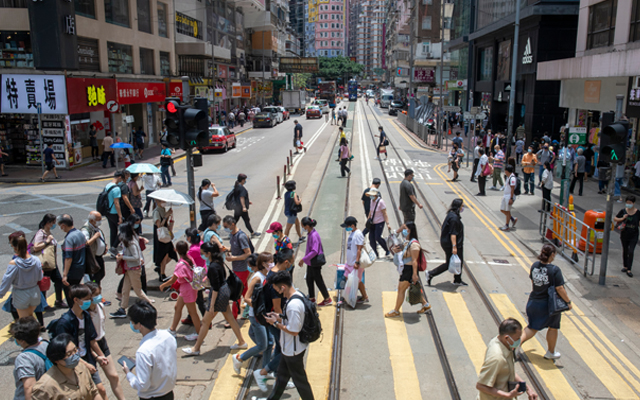
Hong Kong’s tourism players are reserved about tourism recovery potential on the back of the Singapore-Hong Kong Vaccinated Travel Lane (VTL), which will come into effect on February 25.
Inbound agents told TTG Asia that Hong Kong’s current battle with Covid-19 infections and medical facility overload as well as a quarantine-on-arrival for travellers coming into Hong Kong could diminish the value of the new VTL.
Hong Kong inbound travel agents doubt the Singapore-Hong Kong Vaccinated Travel Lane would see immediate demand while Hong Kong deals with another Covid surge
Wing Wong, managing director of W Travel, which specialised in South-east Asian markets prior to the pandemic, retains a bleak outlook.
He said: “With the Hong Kong government and citizens fighting the outbreak now, I wonder if the Singapore government would reassess the viability of the Singapore-Hong Kong VTL. Unless Singapore residents need to visit relatives here in Hong Kong, I doubt they would make the trip now.”
Wong added that interest and enquiries from Singapore travellers in December were snuffed out by the latest outbreak.
Ronald Wu, executive director of Hong Kong’s Gray Line Tours, said that even though Hong Kong residents could enter Singapore quarantine-free, they would have to pay for a seven- to 14-day quarantine on return.
“Not everyone can afford that. Therefore, I don’t expect to see any travel demand (for the VTL) in next six months,” said Wu.
Offering an alternative optimistic view, Pinky Lee, general manager of KKday, told TTG Asia that the Singapore-Hong Kong VTL would pave the way for future tourism recovery between the two lands. For now, it would benefit business travellers who would not have to personally shoulder the cost of returning quarantine in Hong Kong.



 Each tiger has been decorated by a renowned local or international artist, presenting various perspectives on how climate change, poaching and deforestation are affecting tigers in the wild.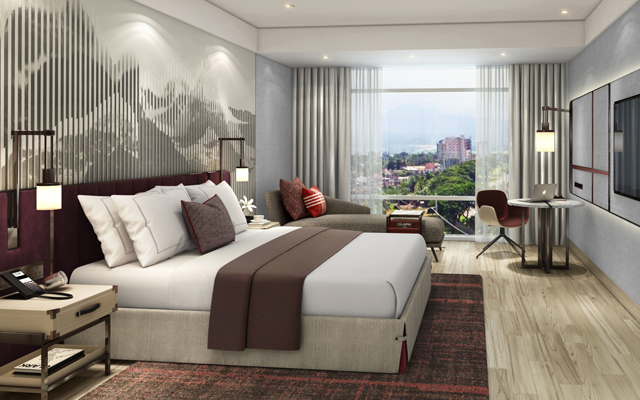

 Omar Jefri, SITA Board chair, said: “The air transport industry has been through an incredibly turbulent period. As we look to recovery, digitalisation of the industry is a key focus. David’s experience and knowledge of both the industry and SITA will be instrumental in cementing SITA’s position as a trusted partner, working with our shareholders to shape the future direction of the organisation.”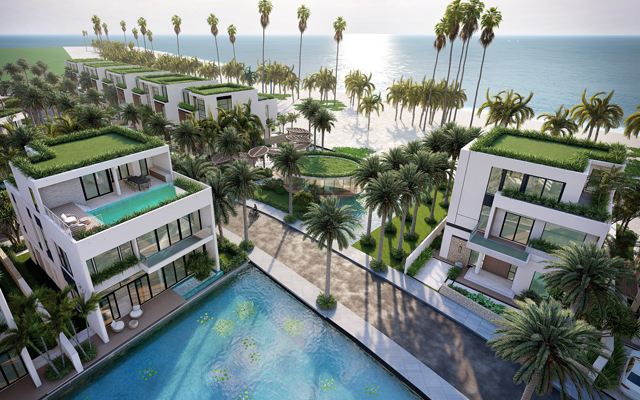







Hong Kong’s tourism players are reserved about tourism recovery potential on the back of the Singapore-Hong Kong Vaccinated Travel Lane (VTL), which will come into effect on February 25.
Inbound agents told TTG Asia that Hong Kong’s current battle with Covid-19 infections and medical facility overload as well as a quarantine-on-arrival for travellers coming into Hong Kong could diminish the value of the new VTL.
Wing Wong, managing director of W Travel, which specialised in South-east Asian markets prior to the pandemic, retains a bleak outlook.
He said: “With the Hong Kong government and citizens fighting the outbreak now, I wonder if the Singapore government would reassess the viability of the Singapore-Hong Kong VTL. Unless Singapore residents need to visit relatives here in Hong Kong, I doubt they would make the trip now.”
Wong added that interest and enquiries from Singapore travellers in December were snuffed out by the latest outbreak.
Ronald Wu, executive director of Hong Kong’s Gray Line Tours, said that even though Hong Kong residents could enter Singapore quarantine-free, they would have to pay for a seven- to 14-day quarantine on return.
“Not everyone can afford that. Therefore, I don’t expect to see any travel demand (for the VTL) in next six months,” said Wu.
Offering an alternative optimistic view, Pinky Lee, general manager of KKday, told TTG Asia that the Singapore-Hong Kong VTL would pave the way for future tourism recovery between the two lands. For now, it would benefit business travellers who would not have to personally shoulder the cost of returning quarantine in Hong Kong.