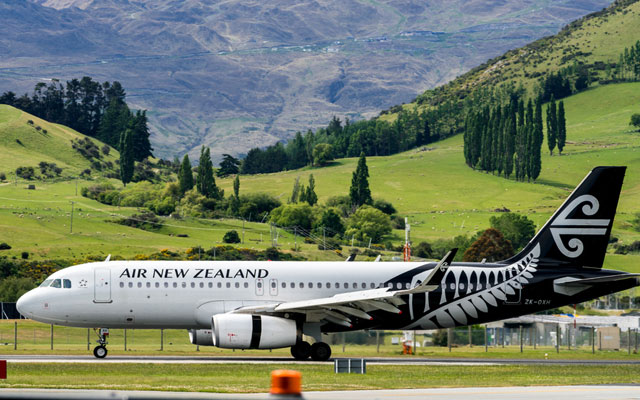
Air New Zealand (Air NZ) has introduced its new snack offerings onboard its domestic flights, following six-week-long trials ran across 100 flights and involving more than 7,000 customers.
Throughout the trials, the airline tested a range of things from trolley signage on Koru Hour flights, Grab & Go snack boxes in its lounges, and plenty of new food offerings.
Air New Zealand’s new inflight snack menu includes popcorn, crisps, muesli bars and chocolate
An array of snack products from New Zealand including popcorn, crisps, muesli bars and chocolate will be rotated on a monthly basis. But the airline assured customers that its popular inflight cookie and Air NZ lollies are here to stay.
Air NZ general manager customer Leeanne Langridge said the new inflight offerings will give customers the variety they desire.
She elaborated: “What we learnt throughout the trials was that our customers value variety and change throughout the day. Going forward, we’re going to be more time specific with what’s on offer – from danishes in the morning to antipasto in the evening – because we know a cookie at 06.00 isn’t for everyone. Having options for different dietary requirements is also a big trend so we’ve added more gluten-free options.
“On our shorter sectors, customers told us our food and beverage service felt rushed, so we’ve simplified our menu by removing tea and coffee on Koru Hour flights under 50 minutes.”
The airline said that it will work with innovative New Zealand companies to showcase other food products, and issued an invitation for local producers to get in touch with product recommendations.
The World Travel & Tourism Council (WTTC) has released a new report which signals how the global travel and tourism sector can help eradicate human trafficking.
The report, titled Preventing Human Trafficking: An Action Framework for the Travel & Tourism Sector, is released with support from the Carlson Family Foundation, and builds on WTTC’s Human Trafficking Taskforce, which was launched in 2019 at its Global Summit in Seville, Spain.
WTTC report will help travel and tourism sector to better identify and prevent human trafficking
With its report, WTTC aims to strengthen cooperation across stakeholders and share best practices to raise awareness about how the sector can, and does, make a difference, to proactively address this global crime.
The report details an action framework to tackle human trafficking, around four main pillars: Awareness, Education & Training, Advocacy, and Support.
The International Labour Organization has estimated that on any given day in 2016, more than 40 million people around the world were victims of human trafficking. With the pandemic exacerbating pre-existing inequalities, this has accelerated the urgent need for targeted actions within the travel and tourism sector, WTTC said.
The report offers solutions both within the sector and beyond, as the complexity of these transnational crimes require multi-disciplinary efforts and concerted coordinated action by stakeholders, such as states, private companies, and international organisations around the world.
For the travel and tourism sector, this means involving the expertise of all stakeholders, including survivors, as well as civil society organisations to establish joint initiatives.
Launched in conjunction with the World Day Against Trafficking in Persons, the in-depth report highlights the need to work on facilitating an approach which will enhance the understanding of the crime of human trafficking, enable better identification, prevention, and mitigation of potential and actual impacts of the sector, and further public-private collaboration to ensure that appropriate steps are taken by governments when human trafficking is detected.
Virginia Messina, senior vice president and acting CEO, WTTC, said: “Human trafficking is a global crime which preys on the vulnerable, continues to grow and affect the lives of millions around the world.
“This vital report offers a framework for the travel and tourism sector to play its part to help combat human trafficking. Given the sector’s inadvertent position in the path of human traffickers, we need to shoulder our responsibility to ensure that the travel and tourism sector offers a safe and welcoming environment for those who work within it.
“Ultimately, travel is something that brings people together, and it is critical that we proactively help address this crime. The sector needs a cohesive approach and focus its efforts on driving forward advocacy related to human trafficking by engaging all key stakeholders. We hope that this report can aid in that task.”
A few months into the pandemic that ravaged Malaysia’s hospitality industry, a pair of co-living space owners operating in the city centre was approached by a neighbourhood hotel in Kuala Lumpur to help fill up its vacant hotel rooms.
Leveraging on their co-living experience, the duo managed to help the hotel secure 30 guests staying for one month or longer within the first few months.
Liew: Hotel rental platform Roomah aims to deliver a seamless booking experience for customers
Buoyed by their success, the savvy pair, Jordan Liew and Henry Liu, got the idea to work alongside hotels in Malaysia to convert a portion of their rooms into medium and long-stay accommodation. Thus was born Roomah, a Malaysia-based rental accommodation startup focusing on providing flexible monthly stays to renters.
As movement restrictions and the remote working paradigm shift funnel guests towards extended-stay hotels, Roomah aims to capture this growing demand and help put heads in beds during the pandemic.
Liew, co-founder and chief experience officer of Roomah, said that he and Liu, co-founder and CEO, saw a gap in the market for hotel booking platforms that allow users to book longer stays, with existing platforms targeted at short-term stays.
Alongside the team’s CTO, Kevin Ong, they decided to create a rental platform for hotels to list their accommodation bookable on a monthly basis at affordable rates.
Roomah was launched in May 2021, after a year-long pilot test. Filling hotel rooms aside, Roomah also aims to make the booking process seamless for guests, allowing them to book move-in ready or plug-and-play hotels for long stays with just a few clicks.
Explained Liew: “We have designed our platform (such that the) user can complete the whole booking process in five minutes via a web page or soon-to-launch mobile app.”
“Unlike traditional year-long leases, we want to ensure users don’t have to go through various channels, multiple viewings, price comparison and lengthy negotiations to find a suitable accommodation for longer stays. We make this happen by providing a standardised renting experience, both online and offline.”
Besides giving detailed information on each hotel listing, Roomah also provides virtual tours of each property to give users the confidence to book immediately.
All listings on the Roomah platform come fully furnished, with weekly cleanings, 24/7 online concierge and high-speed Wi-Fi. Resident perks include special merchant discounts, complimentary laundry services, yoga mat and other amenities.
New opportunities, new challenges
With selling long-term hotel stays, the biggest challenge is to educate the market about hotel living as users are not accustomed to the idea of staying long-term in a hotel, opined Liew. “In general, renters finding a place to stay for long-term will only look for conventional accommodations such as apartments and landed houses,” he said.
Liew added that the team strives to bring about a mindset shift by promoting the benefits of hotel living such as having all-inclusive rentals, fully furnished space, weekly housekeeping and 24/7 concierge support.
The Roomah team is currently in discussions with several hotels to redesign their rooms for a better long-stay experience.
Amenities wise, Roomah operates a hybrid model, according to Liew. The company allows hotels to list on its platform just like Booking.com and Agoda, while at the same time providing these hotels some long-stay amenities at their own expense.
All hotels on Roomah are situated at locations offering great accessibility and convenience to guests
Converting hotel guestrooms designed for short-term stays into medium and long-stay accommodations come with its own set of challenges.
“We identified the lack of kitchen facilities and readily available laundry services as main challenges to welcome longer-stay guests,” said Liew. He added that the company partners with laundry providers to provide pick-up and drop-off laundry services to its residents, and is currently in discussion with several hotels to build a communal kitchen so residents have the option to cook.
“There is also an alternative to include an induction cooker and microwave in each hotel room, however, that will be subject to each hotel’s approval,” he said.
Roomah for growth
Opportunities to optimise hotel inventory in Malaysia existed even before the pandemic.
Liew noted that pre-pandemic statistics showed that the average occupancy rate of hotels in Malaysia hovers around the 65 per cent mark, with occupancy rates for even the best-performing hotels rarely exceeding 80 per cent.
“This means at any given time, there will be 20 per cent of hotel rooms left vacant, and we hope to work with hotels to continue unlocking values of these unutilised hotel rooms by accommodating long-stay guests,” he said.
The hybrid work format and tighter budgets as a result of Covid-19 have placed hotels in a sweet spot to capitalise on the growing extended-stay demand by marketing themselves as a cost-effective lodging option to price-sensitive renters.
Opined Liew: “The various lockdowns imposed by the (Malaysian) government have caused the depletion of cash reserves of many individuals. Now, renters would prefer lower upfront-cost accommodation options such as hotel living and co-living.”
Since its launch, Roomah has received about 100 bookings, with average length of stay about three months now. Liew observed that customers are staying longer in a hotel now as compared to when they were just starting out, with the platform’s guests largely made up of interns, new hires, digital nomads and contract workers.
Roomah typically charges between 10-18 per cent of commission for each hotel listing, depending on the types and prices of rooms being advertised.
While Roomah’s business has been battered by Malaysia’s protracted lockdowns, Liew said they are using this downtime to improve their product features and work closely with more hotels and new partners to prepare for the eventual upturn.
Currently, there are 10 hotels on the Roomah platform, ranging from three- to five-star properties, with all situated in the Klang Valley. The company aims to reach 20 hotels in the Klang Valley to cover all key areas in the short-term, said Liew.
“We also aim to form strategic partnerships with start-ups, corporates, or student organisations that could add value to the ecosystem such as job portals, smart locker providers, BPOs and co-working spaces,” he added.
The company also plans to expand into Penang and Johor Bahru by year-end, and beyond its home ground to other regional cities, starting with Bangkok and Ho Chi Minh City in 2022.
However, the team’s ambitions go beyond the extended hotel stay segment.
Said Liew: “Hotel living is just the beginning. We are constantly working with hotels to think of ways to create more product offerings that fit the needs of users. In addition, we plan to work with boutique hotel owners to convert their hotel into a co-living building. This will create more affordable and flexible options for renters to live within the cities.
“In a nutshell, our vision is to create a world where people have the freedom to choose where to live and work. Roomah does this by repurposing and unlocking spaces that were once difficult to access or unsuitable to become more accessible and convenient.”
Looking ahead, Liew predicts Malaysia’s tourism recovery will be “sluggish” for the next six months, after which a vaccine-led rebound will be steered by domestic tourism. “In terms of international travel, it will be harder to predict as it depends on vaccination progress and travel restrictions imposed by other countries,” he said.
Overall, Liew expects that tourism will not return to pre-pandemic levels until earliest 2023. As such, he believes “it is imperative for hotel owners to take a proactive approach in exploring new ideas and alternative approaches in running their hotels over the next few years, while waiting for full travel to return”.
While passenger demand performance for June showed a very slight improvement in both international and domestic air travel markets, demand remains significantly below pre-Covid levels owing to international travel restrictions, said the International Air Transport Association (IATA).
Total demand for air travel in June 2021 (measured in revenue passenger kilometers or RPKs) was down 60.1 per cent compared to June 2019, which followed a normal demand pattern before the Covid-19 crisis. That marked a small improvement over the 62.9 per cent decline recorded in May 2021 versus May 2019.
Asia-Pacific airlines experienced the steepest traffic declines in June 2021 among several regions
International passenger demand in June was 80.9 per cent below June 2019, an improvement from the 85.4 per cent decline recorded in May 2021 versus two years ago. All regions with the exception of Asia-Pacific contributed to the slightly higher demand.
Total domestic demand was down 22.4 per cent versus pre-crisis levels (June 2019), a slight gain over the 23.7 per cent decline recorded in May 2021 versus the 2019 period. The performance across key domestic markets was mixed, with Russia reporting robust expansion while China returned to negative territory.
“We are seeing movement in the right direction, particularly in some key domestic markets. But the situation for international travel is nowhere near where we need to be. June should be the start of peak season, but airlines were carrying just 20 per cent of 2019 levels. That’s not a recovery, it’s a continuing crisis caused by government inaction,” said Willie Walsh, IATA’s director general.
Asia-Pacific airlines’ June international traffic fell 94.6 per cent compared to June 2019, unchanged from the 94.5 per cent decline in May 2021 versus May 2019. The region had the steepest traffic declines for an eleventh consecutive month. Capacity dropped 86.7 per cent and the load factor was down 48.3 percentage points to 33.1 per cent, the lowest among regions.
European carriers saw their June international traffic decline 77.4 per cent versus June 2019, a gain from the 85.5 per cent decrease in May compared to the same month in 2019. Capacity declined 67.3 per cent and load factor fell 27.1 percentage points to 60.7 per cent.
Middle Eastern airlines posted a 79.4 per cent demand drop in June compared to June 2019, improving from the 81.3 per cent decrease in May, versus the same month in 2019. Capacity declined 65.3 per cent and load factor deteriorated 31.1 percentage points to 45.3 per cent.
North American carriers’ June demand fell 69.6 per cent compared to the 2019 period, improving from the 74.2 per cent decline in May versus two years ago. Capacity sank 57.3 per cent, and load factor dipped 25.3 percentage points to 62.6 per cent.
Latin American airlines saw a 69.4 per cent drop in June traffic compared to the same month in 2019, improved over the 75.3 per cent decline in May compared to May 2019. June capacity fell 64.6 per cent and load factor dropped 11.3 percentage points to 72.7 per cent, which was the highest load factor among the regions for the ninth consecutive month.
African airlines’ traffic fell 68.2 per cent in June versus the same month two years ago, an improvement from the 71.5 per cent decline in May compared to May 2019. June capacity contracted 60.0 per cent versus June 2019, and load factor declined 14.5 percentage points to 56.5 per cent.
China’s domestic traffic returned to negative territory in June, declining 10.8 per cent compared to June 2019, following a 6.3 per cent growth in May versus the same period in 2019. IATA attributed the decline to new restrictions introduced following a Covid-19 outbreak in several Chinese cities.
US domestic traffic improved from a 25.4 per cent decline in May versus the same month in 2019, to a 14.9 per cent decline in June. Life in the US was starting to see some normalcy following the easing of measures and the rapid rollout of the Covid-19 vaccination, noted IATA.
Walsh said: “With each passing day, the hope of seeing a significant revival in international traffic during the Northern Hemisphere summer grows fainter. Many governments are not following the data or the science to restore the basic freedom of movement.
“Despite growing numbers of vaccinated people and improved testing capacity, we are very close to losing another peak summer season on the important trans-Atlantic market. And the UK’s flip-flop to reinstate quarantine for vaccinated arrivals from France is the kind of policy development that destroys consumer confidence when it is most needed.
“A risk-managed re-connecting of the world is what we need. Vaccinated travellers should have their freedom of movement returned. An efficient testing regime can sufficiently manage risks for those unable to be vaccinated. This is the underlying message in the latest WHO travel guidance.
“The UK, Singapore and Canada have indicated timelines to open their borders without quarantine for vaccinated travellers. The European Commission has recommended that its member states adopt travel protocols that are closely aligned with the WHO – including testing for unvaccinated travellers. Similar moves to reopen borders in line with the WHO guidance by the US – leaders in vaccinating their populations – would give critical impetus to demonstrating that we can live and travel while managing the risks of Covid-19.”
The World Tourism Organization (UNWTO) has signed an agreement with Bangkok-based real estate investment firm Destination Capital (DC) to promote investment in sustainable hotels and to stimulate re-employment in the hospitality industry to help rejuvenate the sector post-Covid.
The collaboration, which supports the relationship DC has with the International Finance Corporation (IFC), is based on DC’s adoption of best practices aimed at reducing carbon emissions and operating hotels in a manner consistent with IFC’s environmental and social criteria.
UNWTO, Destination Capital to promote green hotel investments to restart tourism
Against this backdrop, DC acquires and repositions freehold hotels of 150-250 rooms in Thailand and across South-east Asia with the aim of implementing sustainable water and energy systems. It also works to promote gender equality at every level of the hospitality sector, another of UNWTO’s core priorities and in line with Sustainable Development Goal 5.
While governments and destinations around the world are working on vaccination programs to accelerate the restart of tourism, UNWTO is working with the private sector to encourage employers to play their part in the recovery of local communities through job creation and training programs.
UNWTO data shows that international tourism arrivals fell by one billion in 2020, with the crisis carrying over into 2021. Worldwide, this has placed as many as 120 million tourism jobs directly at risk. Moreover, Asia and the Pacific has been the worst-affected of all global regions, and young workers and women are among the hardest hit by the downturn in tourism employment.
In line with the 2030 Agenda for Sustainable Development, DC recognises the hotel industry not only has a responsibility to re-hire and re-train hotel staff, but also to reduce its carbon footprint and mitigate the impact of energy and water consumption as well as food waste and environmental degradation.
DC said that it is committed to retrofitting its hotels to be compliant as green hotels, as per the Excellence in Design for Greater Efficiencies (EDGE) standards established by IFC.
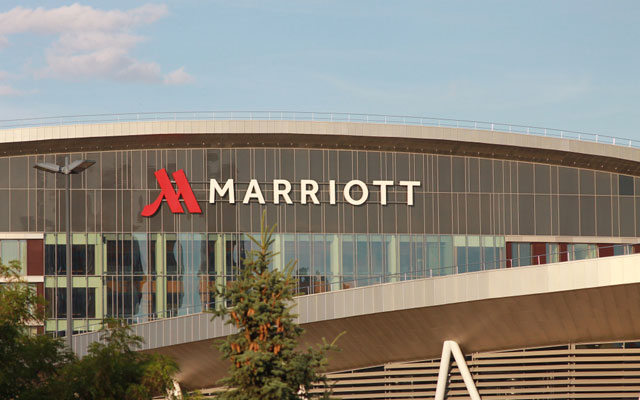
Marriott International will launch an updated version of its human trafficking awareness training, in line with its goal to train all its on-property associates to recognise and respond to potential human trafficking situations by 2025.
The enhanced training will be rolled out on July 30, in conjunction with the World Day Against Trafficking in Persons.
Marriott worked with trafficking survivors to develop the enhanced training for on-property associates
Covid-19 has ushered in more contactless and mobile hotel experiences, which can make it more difficult to spot potential indicators of trafficking, Marriott said in a press release.
The new training builds upon the original training’s foundation by featuring scenario-based modules, a mobile-friendly design, and increased guidance on how to respond to potential situations of human trafficking – critical enhancements based on hotel-level feedback to help associates turn awareness into action and continue the fight against the multinational crime.
Additionally, the new training was developed in collaboration with survivors of human trafficking, ensuring the training is victim-centered and the resources are survivor-informed.
“As an industry that cares deeply about human rights and the horrible crime of human trafficking, we have a real responsibility to address this issue in a meaningful way,” said Anthony Capuano, CEO of Marriott International. “The updated training empowers a global workforce that stands ready to recognise and respond to human trafficking and allows our company to live up to our core values.”
Through a collaboration with ECPAT-USA and with input from Polaris, two leading non-profits that specialise in combatting human trafficking, Marriott launched its original human trafficking awareness training in 2016 and made it mandatory for all on-property staff in both managed and franchised properties globally in January 2017.
So far, the training has been delivered to more than 850,000 associates, which has helped identify instances of human trafficking, protect associates and guests, and support victims and survivors.
As the company did with its original training, Marriott plans to donate this training and work with ECPAT-USA and the American Hotel and Lodging Association Foundation to make it widely available in early 2022 to help educate the entire hospitality industry.
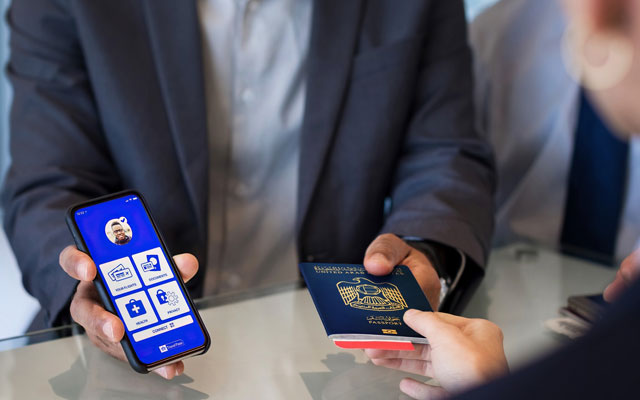
Etihad Airways has expanded the usage of IATA Travel Pass to include flights between Abu Dhabi and seven destinations across its network.
The seven destinations are Bangkok, Singapore, Barcelona, Geneva, Madrid, Milan, and New York.
IATA Travel Pass offers the convenience of a one-stop platform for managing Covid-19 documentation.
Etihad Airways was one of the first airlines globally to begin testing IATA Travel Pass, in support of a global, standardised solution for travellers to validate their documents and navigate Covid-19 travel requirements.
Mohammad Al Bulooki, COO at Etihad Aviation Group, said: “The feedback from the IATA Travel Pass trial has been positive, with Etihad’s guests appreciating its ease-of-use and data security. Etihad is pleased to now make IATA Travel Pass available on flights to and from seven major global cities, providing more guests with the option of simplifying their journey and airport experience.”
Currently, the app is able to accept EU Digital Covid Certificates issued by all 27 member states of the European Union plus Switzerland, Iceland, Norway and Lichtenstein, as well as vaccine certificates from Singapore and Qatar.
As vaccines continue to roll out globally, more and more travellers around the world will be able to upload their government issued Covid vaccine certificates to the app to facilitate seamless travel.
The airline said that it continues to work closely with IATA to progressively roll out the digital travel pass to more cities across its route network.
Ongoing tight border restrictions continue to suppress international air passenger demand in the Asia-Pacific region in June, according to preliminary traffic figures released by the Association of Asia Pacific Airlines (AAPA).
Across the Asia-Pacific region, many countries recorded a surge in Covid-19 transmissions caused by new variants, with limited vaccine supplies hampering vaccination progress.
Airlines in the Asia-Pacific region carried only 1.4 million international passengers in June
The region’s airlines carried only 1.4 million international passengers in June, just 4.4 per cent of the 32 million carried in the corresponding month in 2019.
With available seat capacity at 12.9 per cent of pre-pandemic levels, the average international passenger load factor of 31 per cent recorded in June was a 51 percentage point drop from that of the corresponding month in 2019. The decline underscored the significant challenges faced by airlines in the passenger segment, which normally accounts for a significant portion of total airline revenue.
Subhas Menon, AAPA director general, said: “The already dire situation has recently been compounded by new Covid-19 infections across the region due to the Delta variant, with ongoing border restrictions holding back any meaningful restart in international travel markets. Air cargo traffic growth, supported by strong demand for both intermediate and consumer goods from the major advanced economies, remains the saving grace.
“Many Asian economies are facing renewed challenges in bringing the pandemic under control and in progressing vaccination rollouts. Prospects for an early recovery for Asian airlines are dim unless cohesive action is taken by governments to accelerate vaccination rollouts and reopen borders safely based on ICAO and WHO guidelines.”
Travel plans are on the rise in Singapore, with 44 per cent of Singaporean adults planning to travel over the coming three months, up from 20 per cent a month ago, according to Finder’s Travel Index.
Both domestic and international travel plans are on the rise. A third of Singaporeans (34 per cent) plan to travel domestically over the months of August, September, and October, up from 12 per cent in the June survey.
34 per cent of Singaporeans plan to travel domestically over the coming three months: survey
One in five Singaporeans (21 per cent) plan to travel internationally over the next three months, up from 10 per cent last month.
The survey also found that 30 per cent of Singaporean adults plan to travel either domestically or internationally in August, while 16 per cent plan to travel in September and 14 per cent in October.
Finder’s global editor-at-large, Angus Kidman, said the jump in travel plans coincides with the launch of Singapore’s Test, Trace, and Vaccinate campaign, as part of Singapore’s post-pandemic roadmap.
“We’ve seen a monumental jump in the percentage of Singaporeans interested in travel over the past month, with the number of people planning short-term travel more than doubling from June to July.
“It’s likely this is in part due to the recent Test, Trace, and Vaccinate campaign for Singapore’s shift to a new normal.”
Over the same period, most other countries surveyed saw the percentage of people with travel plans remain flat or even fall month-on-month, making Singapore an exception to the trend.
“Unfortunately due to the latest outbreak, it’s likely some of the trips planned for next month won’t be possible, with restrictions in place expected to last until mid-August,” said Kidman.
“However this is just a temporary pause, and it’s likely many of these trips will be postponed for when travel is possible again. Overall, it’s promising to see the lift in the number of people planning to travel, and suggests that travel is starting to recover, if not back to the way things were.”
The Australian city of Sydney has extended a lockdown by four weeks amid a continued rise in Covid-19 cases.
The announcement made on Wednesday (July 28) by premier Gladys Berejiklian comes after a protracted stay-at-home order failed to stem an outbreak of the more contagious Delta variant. The state’s lockdown was initially supposed to end on Friday.
Sydney’s population has been under stay-at-home orders since June 26
More than 2,500 people have been infected in Sydney’s worst outbreak this year, according to a BBC report. The state of New South Wales, of which Sydney is the capital, reported 177 new cases on Wednesday, its highest daily count since March 2020.
Under the extended lockdown, stricter movement curbs have been enforced, including a 10km limit on essential shopping.
Berejiklian was quoted by media reports as saying that police would boost enforcement of wide-ranging social distancing rules and urged people to report suspected wrongdoing, saying: “We cannot put up with people continuing to do the wrong thing because it is setting us all back.”
In one case, a mourning ceremony attended by 50 people in violation of lockdown rules resulted in 45 infections, she said.
The extension turns what was initially intended to be a “snap” lockdown of Australia’s most populous city into one of the country’s longest since the start of the pandemic.
The states of Victoria and South Australia both came out of lockdowns on Wednesday, after bringing smaller outbreaks under control.














The World Travel & Tourism Council (WTTC) has released a new report which signals how the global travel and tourism sector can help eradicate human trafficking.
The report, titled Preventing Human Trafficking: An Action Framework for the Travel & Tourism Sector, is released with support from the Carlson Family Foundation, and builds on WTTC’s Human Trafficking Taskforce, which was launched in 2019 at its Global Summit in Seville, Spain.
With its report, WTTC aims to strengthen cooperation across stakeholders and share best practices to raise awareness about how the sector can, and does, make a difference, to proactively address this global crime.
The report details an action framework to tackle human trafficking, around four main pillars: Awareness, Education & Training, Advocacy, and Support.
The International Labour Organization has estimated that on any given day in 2016, more than 40 million people around the world were victims of human trafficking. With the pandemic exacerbating pre-existing inequalities, this has accelerated the urgent need for targeted actions within the travel and tourism sector, WTTC said.
The report offers solutions both within the sector and beyond, as the complexity of these transnational crimes require multi-disciplinary efforts and concerted coordinated action by stakeholders, such as states, private companies, and international organisations around the world.
For the travel and tourism sector, this means involving the expertise of all stakeholders, including survivors, as well as civil society organisations to establish joint initiatives.
Launched in conjunction with the World Day Against Trafficking in Persons, the in-depth report highlights the need to work on facilitating an approach which will enhance the understanding of the crime of human trafficking, enable better identification, prevention, and mitigation of potential and actual impacts of the sector, and further public-private collaboration to ensure that appropriate steps are taken by governments when human trafficking is detected.
Virginia Messina, senior vice president and acting CEO, WTTC, said: “Human trafficking is a global crime which preys on the vulnerable, continues to grow and affect the lives of millions around the world.
“This vital report offers a framework for the travel and tourism sector to play its part to help combat human trafficking. Given the sector’s inadvertent position in the path of human traffickers, we need to shoulder our responsibility to ensure that the travel and tourism sector offers a safe and welcoming environment for those who work within it.
“Ultimately, travel is something that brings people together, and it is critical that we proactively help address this crime. The sector needs a cohesive approach and focus its efforts on driving forward advocacy related to human trafficking by engaging all key stakeholders. We hope that this report can aid in that task.”
Read the full report here.