

The Datai Langkawi rolls out new nature experiences and upgraded facilities
The Datai Langkawi in Malaysia has developed a number of fresh nature experiences, relaunched its signature The Chef series, and launched two new room categories, as Malaysia’s borders reopen.
New for 2022, The Nature Centre at the Datai Langkawi invites guests to participate in reef protection activities at the centre’s new Coral Nursery, learn about the resort’s reforestation efforts at the Native Tree Nursery or discover how to harvest the unique Trigona itama honey from the resort’s stingless beehives with a new “Bee a Beekeeper” activity.
Meanwhile, the resort’s sustainable craft-making centre, The Lab – built from over 9,000 used wine, champagne, and liquor bottles – has also been extended with an open-air annexe to conduct upcycling workshops.
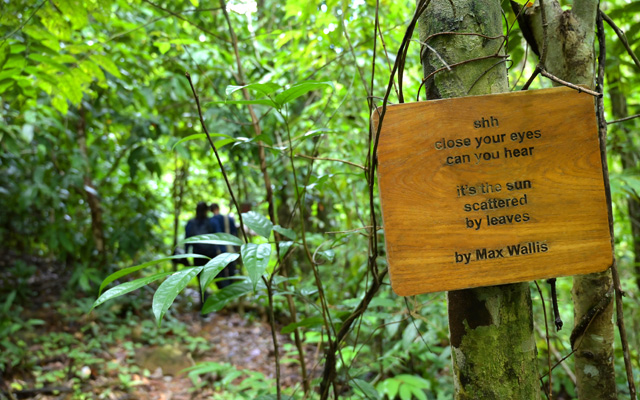
Outdoors, the resort’s inspirational Poet’s Trail has been relaunched with a series of poems by Max Wallis, Khalil Gibran and The Datai’s Resident Naturalist, Irshad Mobarak.
The Datai Langkawi also welcomes back The Chef Series, a signature chef residency dining experience that welcomes culinary stars to its kitchens throughout the year. Previously, guest chefs included luminaries as Michel Roux, Nils Henkel and Michel and Sebastien Bras.
The focus for this year is ‘Eclectic Malaysian’ Dining, spotlighting the country’s culinary talents. From April 22-23, 2022, chef Azli Ahmad from OpenHouse KLCC, will champion Malaysian flavours based on recipes handed down by mothers and grandmothers.
For their menus, the chefs focus on local ingredients, especially what they can hand-pick from the resort’s own permaculture garden where the resort team grows turmeric, chilli, lemongrass, pandan and many more ingredients essential to authentic Malaysian fare. Fresh fish and seafood are predominantly sourced from Langkawi’s fishermen and organic chicken is available from a local village farm.
Some of the chef residencies are accompanied by cooking demonstrations and cooking classes, where guests are able to enjoy a hands-on gastronomic experience creating and enjoying their own culinary creations, under the guidance of the chefs themselves.
The Datai Langkawi has also introduced two new room categories: the Canopy Garden and the Rainforest Premium Villa. The five new Canopy Garden rooms are ideal for larger groups, offering direct access to an outdoor private patio and seating area, while the Rainforest Premium Villa offers enhanced privacy views of Anak Datai River and Sungai Datai.
Singapore Grand Prix 2022 opens for sale

Tickets for the Formula 1 Singapore Grand Prix 2022 will be up for sale from April 13 at 10.00.
The night race, slated to take place at the Marina Bay Street Circuit from September 30 to October 2, was put off for the past two years due to the Covid-19 pandemic.

According to a press statement from race promoter Singapore GP, the Singapore Grand Prix 2022 will offer a variety of three-day grandstand offerings, priced between S$298 (US$218) and S$1,288 as well as combination packages from S$698 to S$1,088 that will enable spectators to experience both race and off-track entertainment from different parts of the Circuit Park over the weekend.
Hospitality suites will be available at the exclusive Formula 1 Paddock Club, Sky Suite, Twenty3, The Green Room, and Lounge@Turn 3.
The race will return with Red Bull Racing’s Max Verstappen and Ferrari’s Charles Leclerc battling for pole position this season, as well as Alfa Romeo’s Zhou Guanyu, Alpha Tauri’s Yuki Tsunoda, Haas’ Mick Schumacher, and Williams’ Nicholas Latifi racing through Singapore for the very first time.
A full entertainment line-up is promised off-track, and details will come in the coming weeks.
TUI BLUE Hotels & Resorts makes three new hires; eyes APAC expansion

TUI BLUE Hotels & Resorts has made three new hires based in the Hong Kong office, as the brand rolls out its expansion plans in Asia-Pacific.
Born and raised in Hong Kong, Jacqueline Cheng has been appointed as team head overseeing the team in brand development in the region.
She has extensive hospitality experience working with international hotel players such as InterContinental Hotels Group, Maritim Hotelgesellschaft, Webin International, sales & marketing, project development, pre-opening and operations.
Next, Bob Jiang has been appointed as managing director, Greater China, where he is responsible for hotel development, pre-opening as well as operations management.
Jiang possesses 30 years of extensive industry experience involving asset management, hotel design, pre-opening and operations across different corporate levels to owners in China.
Lastly, Wipawee Peamsilpakulchorn has joined TUI BLUE Hotels & Resorts as head of business development, South-east Asia. She has extensive knowledge on hotel development, having worked with well-known corporations in the region such as Singapore’s CapitaLand Development, and Thailand’s TCC Capital Land.
Prior to her move, she was assistant vice president business development and asset management with The Ascott Limited in Bangkok, overseeing business development in Thailand, Cambodia, Vietnam and Laos.
Thailand scraps PCR tests to boost tourism
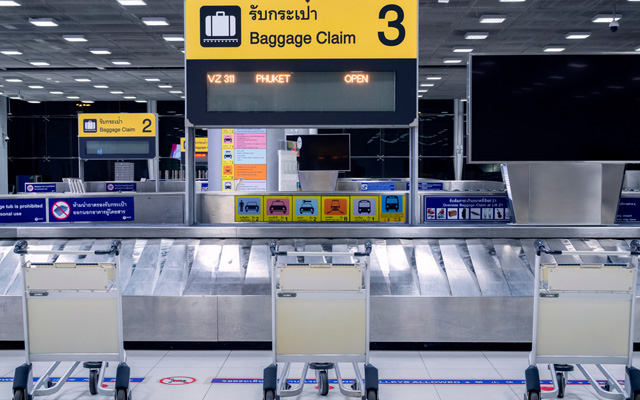
Thailand plans to scrap the mandatory on-arrival Covid-19 PCR test for foreign visitors starting from May, as the country steps up efforts to lure more tourists back.
The PCR tests will be replaced with the quicker ART tests at airports, Thailand’s deputy health minister Sathit Pitutecha said on Friday, after a meeting with the Covid-19 panel.
Vaccinated travellers will also no longer need to reserve a one-night hotel stay to secure visas, joining other countries such as the Philippines and Singapore in easing border restrictions.
The Test & Go scheme has been seen as a major deterrent for travellers, and the hospitality industry has long asked for the programme to be scrapped.
Thailand’s Covid task force will review the proposed visa relaxations again over the new few weeks.
Courtyard by Marriott Melbourne Flagstaff Gardens names new chief

Carolyn Smith is the general manager of Courtyard by Marriott Melbourne Flagstaff Gardens – the Courtyard brand’s first hotel to open in Melbourne.
Smith brings 20 years of hospitality and luxury hotel management experience, having worked at numerous properties like The Westin Melbourne, The Langham, London, and the Sheraton Melbourne.
Prior to this appointment, Smith was director of operations at Sheraton Grand Mirage Resort Port Douglas.
She is one of the company’s youngest female general managers in Australia, and oversaw all aspects of the new-build four-star property and 20-plus-strong opening team.
Alma Resorts appoints first sustainability officer
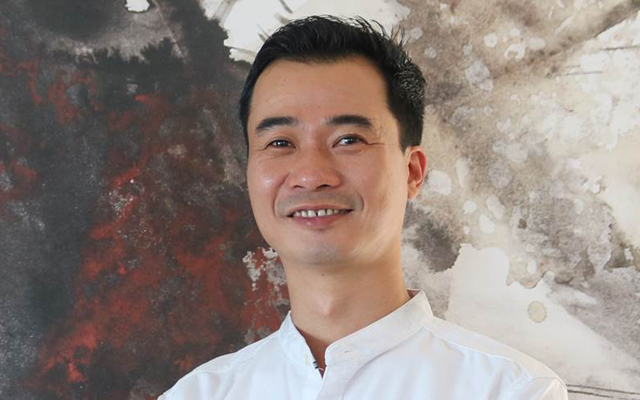
Vu Ngoc Linh – a hospitality veteran with a decade’s experience in F&B – has stepped into the position of sustainability officer at Alma Resort in Vietnam.
Vu has been tasked with tracking the property’s energy use, resource conservation, recycling, pollution reduction, waste elimination, transportation, education efforts and building design.
The role also involves creating sustainability programmes, budgets and schedules, evaluating the success of sustainability initiatives, and managing three staff committees focused on ‘green products’, ‘innovation and solutions’ and ‘people and partnerships’.
One of Vu’s new projects is the installation of 5,634 solar panels totalling 12,500m2 at Alma. With a capacity of 2,480 kilowatts peak, the solar power system will fuel between a quarter to almost half of Alma’s energy needs depending on occupancy.
Ras Al Khaimah steps up India courtship, predicts strong rebound
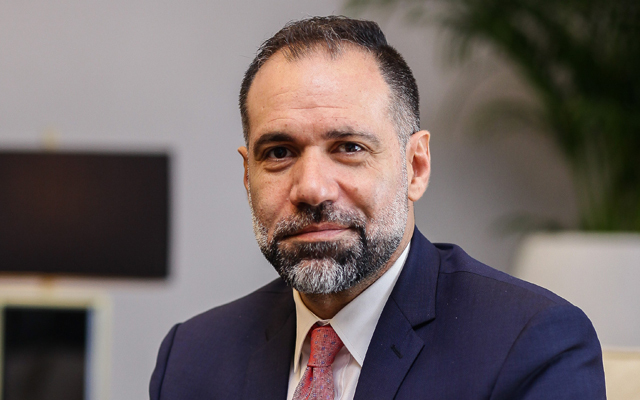
The Emirate of Ras Al Khaimah expects to Indian arrivals to return to pre-pandemic levels this year, as healthy demand makes a comeback as soon as travel curbs were eased in India.
According to Ras Al Khaimah Tourism Development Authority (RAKTDA), which was in New Delhi and Mumbai from April 4 to 7 with destination roadshows, there have been hotel buyouts in Ras Al Khaimah for Indian weddings this year.
“India is one of our top five source markets for international tourist arrivals. As a nature-based Emirate, we offer a variety of experiences for different segments, from solo travellers to family groups. We are already noticing a strong demand from wedding and MICE segments. Considering the short flight duration from India, we also promote Ras Al Khaimah as a weekend destination for Indians,” said Iyad Rasbey, executive director, Destination Tourism Development & MICE, RAKTDA, while addressing a press conference in New Delhi earlier this week.
As part of its travel trade engagements, RAKTDA brought hospitality representatives from the destination to showcase their leisure, business event and wedding offerings to Indian buyers.
Prior to the in-person roadshows, RAKTDA organised a webinar on March 22 for 100 travel partners and business event operators from across India.
Ras Al Khaimah recorded 1.1 million international tourist arrivals in 2019, of which about 70,000 were from India. The tourism board is targeting three million international tourist arrivals as part of its 2030 vision.
“We will continue to leverage our partnerships with travel agents to promote Ras Al Khaimah as a tourist destination in both metro and non-metro cities in India,” added Rasbey.
At present 85 per cent of international tourists to Ras Al Khaimah arrive through Dubai airport. Low-cost carrier SpiceJet is the only airline that operates direct flights between India and Ras Al Khaimah.
“We are in talks with another Indian airline to strengthen direct air connectivity with Ras Al Khaimah. We expect these direct flights to be operational in 3Q2022,” said Rasbey.
Apart from its nature-based experiences, Ras Al Khaimah will promote new products like Jais Sledder – the region’s longest toboggan ride – to the Indian market.
The destination will expand its hotel room inventory with 3,000 more keys over the next two years. It now has 7,720 keys.
Shangri-La gets bigger in the business of fun on Sentosa

The Shangri-La Group will develop its first standalone lifestyle and entertainment precinct, Palawan Sands, on Sentosa Island in Singapore. Slated to open in 2023, it will be home to several new-to-Singapore leisure activities.
There will be a host of lifestyle entertainment and exciting food and beverage options, accompanied by Shangri-La’s hallmark hospitality.
Taking pole position at Palawan Sands is HyperDrive, South-east Asia’s first-ever gamified electric Go-Kart circuit featuring an eco-friendly fleet of electric karts on a three-level racetrack.
Palawan Sands will also be home to two unique beach clubs, each catering to different audiences. The first is a sandcastle-themed family beach club. Complementing that is the +Twelve, which will feature an iconic swim-up bar in the main pool overlooking the shoreline of Palawan beach, and 12 terraced private cabanas, each with their own plunge pool.
Other attractions are UltraGolf, a brand-new 18-hole mini golf course, and HydroDash, Singapore’s very first floating aqua water theme park.
More details on food and beverage options at Palawan Sands will be shared closer to opening.
Chan Kong Leong, regional CEO for the Shangri-La Group in South-east Asia & Australasia, said: “Here at Shangri-La, we have spent the last 50 years helping our guests create meaningful memories to last a lifetime. With Palawan Sands, we are pleased to have the opportunity to bring colourful joys of life to our guests outside of the hotel setting. Designed to bring families and friends together, Palawan Sands enables our guests to realise their Shangri-La, both individually and with one another, as they play, explore and bond together.”
Thien Kwee Eng, CEO of Sentosa Development Corporation (SDC), added: “Palawan Sands will be a reimagination of the Sentosa beach getaway, and illustrates SDC’s partnership with the industry to curate multi-faceted and unique leisure experiences for our island’s guests. With leisure and dining offerings for various ages at Palawan Sands, the attraction will reinforce Palawan Beach’s position as a family-friendly zone, and give Singaporeans and tourists a great option to unwind.”
Nara whips up a stronger focus on food tourism

Japan’s Nara prefecture is stepping up its food and drink-related offerings ahead of hosting the 7th UNWTO World Forum on Gastronomy in June 2022.
The event is expected to be a catalyst in the development of central Kansai’s gourmet tourism, and local stakeholders are working hard to ensure the prefecture is maximising the opportunity to showcase itself to the world.
Efforts include the development or expansion of authentic, traditional and innovative culinary experiences, as well as activities such as visiting local producers, participating in food festivals, and attending cooking classes.
Gurutto Auberge, which literally means travel around auberges, is an initiative to encourage visitors to stay in a French-style auberge – a restaurant focused on food but which also has accommodation. It now offers 12 facilities.
Yoshiaki Tanaka, assistant director of MICE promotion at Nara Prefectural Government, said the initiative aims “to promote the creation of local liveliness through food, the development of sightseeing tours, and the utilisation of local agricultural products”.
A new booklet, Gastronomique Promenade, introduces 47 places for gourmands in Nara’s Yamanobe-no-Michi area, such as restaurants, souvenir shops and places offering food and drink experiences.
The developments build on Nara’s successful hosting of the International Symposium on Gastronomy Tourism 2022 in January, where almost 400 people attended a hybrid event on the theme of realising sustainable regional tourism using “food x comfort x travel”.
Businesses are tapping increased demand domestically for the area’s unique food and drink, particularly sake and local ingredients.
As the heart of ancient Japan, Nara has long been renowned for sake. Now, breweries are inviting visitors for culinary experiences as well as sake tours and tastings.
Namakura Sake has private rooms where seasonal dishes and sake from across Nara are served.
At JW Marriott Hotel Nara, which opened in spring 2020, ingredients from Nara are used with local and international techniques to create fusion cuisine at Silk Road Dining.








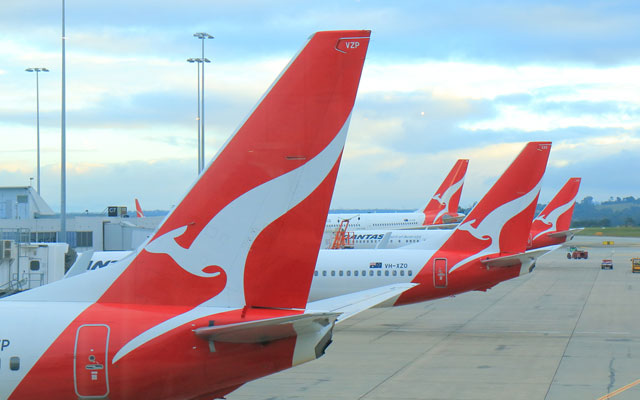
Qantas and Jetstar will grow their international network out of Sydney, with new direct routes to India and South Korea taking off this year, accelerating New South Wales’ post-Covid tourism recovery.
The flag carrier’s new direct Sydney-Bengaluru service will be offered four times weekly from September 14, using the Airbus A330 aircraft.
These will be the first non-stop flights between Australia and southern India by any airline, and will cut almost three hours off the current fastest travel time from Sydney to Bengaluru.
Qantas will continue to operate up to five flights a week between Melbourne and Delhi, making it the only airline offering direct flights between Australia and both northern and southern India.
At the same time, Qantas intends to enter into a codeshare agreement with Indian domestic carrier, IndiGo, which will make flights to and from Sydney more accessible to Indian travellers from more than 50 Indian cities.
The partnership will extend to Jetstar customers who will be able to book connecting flights on IndiGo services from late April.
Meanwhile, Qantas and Jetstar will both commence direct flights to South Korea’s Incheon International Airport later this year.
Jetstar will become the only low-cost carrier to fly direct on the Sydney-Incheon route. It will begin thrice-weekly operations from November 2, 2022.
Qantas will begin direct Sydney-Incheon service from December 10, marking the first Qantas scheduled service to Seoul since January 2008.
Qantas Group CEO Alan Joyce said the new routes would help New South Wales’ tourism sector recover from Covid.
“Sydney is one of the world’s truly global cities and these new direct flights to India and (South) Korea will make it easier for millions of people to come here,” Joyce said, adding that demand for international flights has rebounded since borders reopened.
“It’s clear that Australia is back on the map for international travellers,” he remarked.