As destinations race to recapture tourism dollars, Singapore’s key preoccupation is to differentiate the city-state from its competitors, emphasised chief executive of Singapore Tourism Board (STB), Keith Tan.
Speaking at the Tourism Industry Conference 2022 yesterday, Tan unveiled a host of initiatives aimed at stimulating travel demand and rebuilding arrivals.
Key among STB’s efforts is an expanded SingapoReimagine international recovery campaign, which will be carried out over the next six to 12 months in critical source markets like Indonesia, Australia and India.
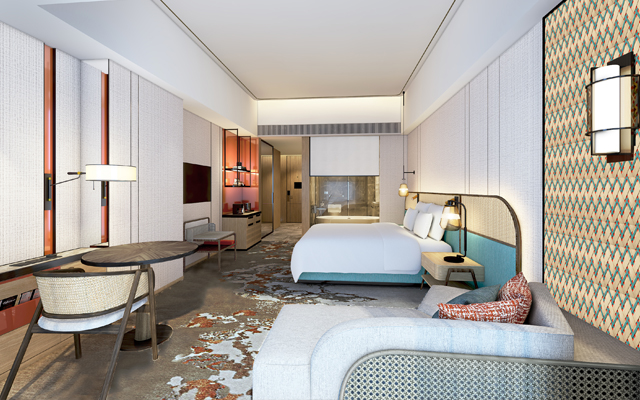
In Indonesia, the second-largest market for the city-state after China, STB is relying on a combination of creative activations and attractive incentives to raise Singapore’s desirability. An example, STB has an ongoing collaboration with Artotel Group and Far East Hospitality, where the hotel groups have designed unique Singapore-themed rooms in their Indonesia hotels, and are offering exclusive discounts at Far East properties in Singapore.
STB also promoted Singapore’s tourism offerings with redeemable rewards at the Astindo Travel fair in Jakarta last month.
To further market Singapore and spur conversions, STB is now firming up partnerships with Indonesian banks and malls.
These in-market efforts are complemented by intensified regional and global partnerships to feature the destination. Singapore Airlines, Qantas, AirAsia, Changi Airport, Expedia, Klook and WarnerMedia are among the many partners.
Enhanced offerings
Later in the year, STB will launch a new incentive programme that will offer travellers a complimentary experience when they visit Singapore.
“We want to delight our visitors with hidden gem surprises so that they experience more of Singapore, in an unexpected way,” Tan explained, and urged industry players to support the programme by developing more unique and unusual experiences that will reel in repeat visitors especially.
Building towards mid- and long-term goals Tan said Singapore’s immediate initiatives must support medium to longer-term strategies for 2030 and beyond, and STB has drawn up forward-looking plans that are termed, Tourism 203X.
Tourism 203X comprises four key pillars: defending Singapore’s business events position as a global-Asia node; developing Singapore as a sustainable urban destination; strengthening Singapore’s urban wellness offerings; and doubling the fun quotient of events and experiences in Singapore.
On the business events front, Singapore will create, attract and grow high-quality events out of Singapore that are aligned with the country’s economic focus and critical needs of the future, such as sustainability, urban solutions and fintech.
Expanding on Singapore’s sustainable destination goal, which was highlighted last year, Tan said there has been “good progress over the past year at raising our sustainability quotient”. He pointed to the launch of the Hotel Sustainability Roadmap in March, which has seen “high ambition and high commitment” from hotels across the country.
Support has also come from other tourism sectors, such as from the Singapore Association of Convention & Exhibition Organisers & Suppliers, which will be aligning its MICE Sustainability Certification with internationally-recognised standards. Along the same lines, Singapore will participate in the Global Destination Sustainability Index for the first time, to benchmark performance against other MICE destinations.
STB will also look to certify Singapore as a sustainable destination under the Global Sustainable Tourism Council’s Destination Criteria.
Tan encouraged industry players to support the sustainable goal by thinking beyond reducing carbon emissions, and “weaving sustainability into all your touchpoints with your guests”.
Citing an example of what tourism businesses can do, Tan pointed to the collaboration between Sentosa Development Corporation and Palawan Innovation Studios to introduce HyperDrive, a new racing and interactive gaming activity using electric go-karts.
Tan explained: “Our ambition is to become one of the world’s most sustainable urban destinations, a city in nature, where large experiences come with small footprints.”
In the space of wellness tourism, which is projected to grow in the next five years to reach US$1.1 trillion by 2025, STB has the ambition to position the destination as one with a wide range of accessible experiences that support the holistic well-being of leisure and business visitors, and for the Singapore wellness experience to be different from the likes of Bali or Phuket.
The Wellness Festival Singapore will debut in June to enhance the country’s wellness offerings and catalyse more wellness-related products and partnerships between various players in the destinations. Some of the known activities include a multi-sensory pop-up at Gardens by the Bay alongside wellness masterclasses; an inaugural Livewell Festival at Sentosa; and a series of art, wellness and mindfulness programmes at the National Gallery of Singapore.
More activities under the Wellness Festival Singapore will be announced in time to come.
For the final pillar, Tan urged industry players to skip old and familiar templates and look towards “innovative ways to enable our events, experiences and offerings to surprise and stand out”.
One way to do that is to partner with popular brands and IP, or introduce more hands-on, educational experiences, he suggested.
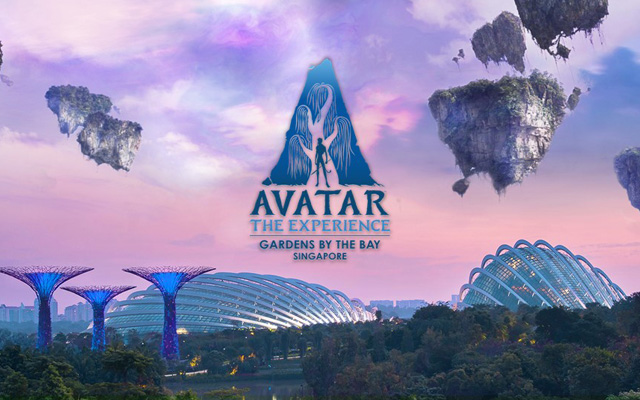
Later this year, CityNeon will launch Avatar: The Experience at Gardens by the Bay’s Cloud Forest. The walk-through event invites guests to connect with the alien world of Pandora, its bioluminescent environments, mythical creatures, flora, and the captivating culture of its indigenous people, the Na’vi. It coincides with Gardens by the Bay’s 10th-anniversary celebrations as well as the worldwide release of the film’s sequel.
Another product that will up the fun quotient is the new Chocolate Factory concept by homegrown brand Mr Bucket Chocolaterie at Dempsey. Launching later this year, it will feature Singapore’s first build-your-own chocolate bar section, with distinctive Asian flavours.
To let returning visitors know that they are not coming back to the “same old places”, Tan encouraged industry players to maximise the use of existing spaces and refresh them.
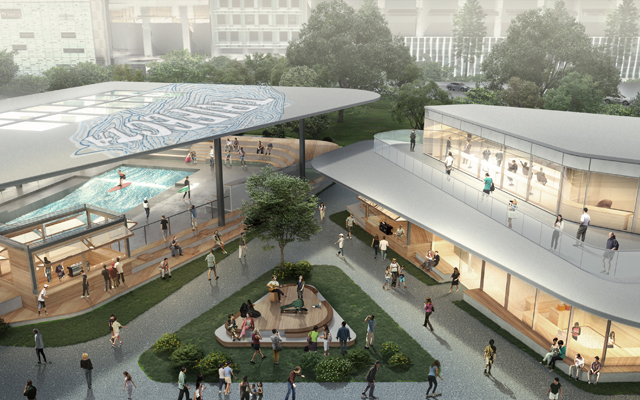
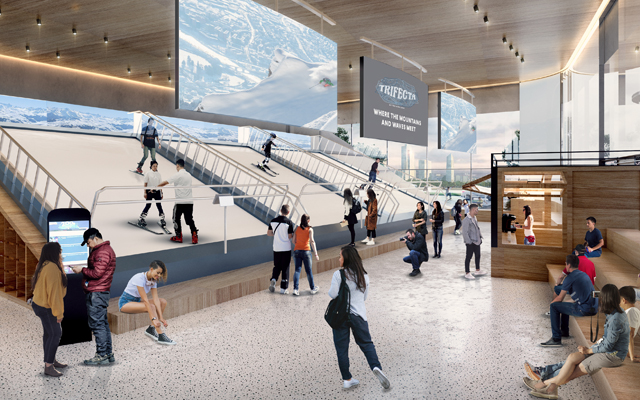
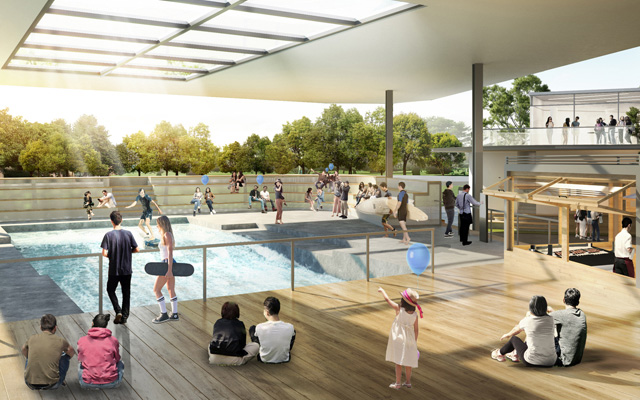
Orchard Road will continue with its transformation to become a top lifestyle destination. An iconic new development is Trifecta, set to be Asia’s first snow, surf, and skate attraction when it opens in 2023. Conceptualised and developed by Singapore-based adventure sports company The Ride Side, the attraction next to the Somerset Skate Park will enable visitors to accomplish the hallowed trifecta of snowboarding, surfing and skating in one day and all under one roof.
The slopes in the snow arena will be powered by the first Virtual Reality (VR) ski simulator in Asia, with best-in-class speed simulation and directional movements to mimic the uneven terrain of a natural mountain. The surf arena will incorporate the world’s leading technology in deep water wave pool for an endless surf experience, with water columns of 1.5m, the deepest in Singapore. Meanwhile, the skate arena will be home to the world’s first hybrid skate bowl designed for skateboarding and surfskating, making it the first skate bowl in Somerset, and the first surfskate circuit in Singapore.
Facilities at Trifecta will be rounded out with unique F&B concepts and retail stores that introduce the complete trifecta lifestyle to customers. – Additional reporting by Karen Yue







 FATA is an established association in ASEAN, but there is always room for improvement. In what ways should FATA improve?