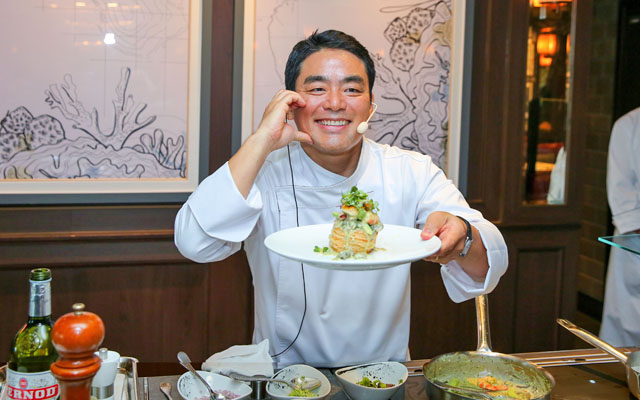
Despite the travel disruption, destinations that set shining examples of Halal travel development pre-pandemic have continued to engage Muslim travellers and trade partners as well as build up their Halal tourism capacity and capability, observes Fazal Bahardeen, CEO of CrescentRating and HalalTrip.
In this new episode of TTG Conversations: Five Questions, Fazal also shares his views on how the Muslim travel growth trajectory will look as travel begins to resume, travel intentions for the upcoming Hari Raya Aidilfitri holidays, post-pandemic travel motivations, as well as the many things CrescentRating and HalalTrip are keeping busy with.
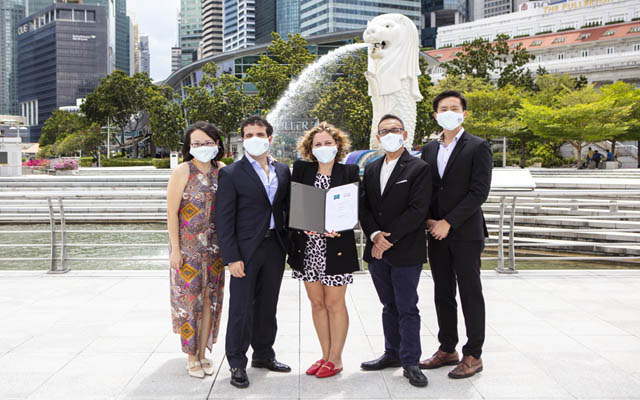
Singapore-headquartered Agoda has signed a partnership agreement with the Singapore Tourism Board (STB) for an integrated marketing campaign that targets South-east Asia travellers.
Utilising Agoda’s technology and travel expertise, data insights and integrated marketing capabilities to showcase Singapore as a destination, the partnership will help to drive more affinity for travel experiences to Singapore and stimulate the tourism economy.
(From left) Agoda’s Crystal Koh, Enric Casals and Ollala Rey; STB’s John Gregory Conceicao and Nicholas Lim
John Gregory Conceicao, STB’s executive director, said: “As borders gradually re-open, it is important for the industry to collaborate and drive our travel sector forward. Through this partnership, we can reach a wider audience and invite them to rediscover Singapore and our vibrant neighbourhoods, variety of delicious food and unique attractions.”
Singapore will roll out two new vaccinated travel lanes (VTLs) for Vietnam and Greece, and extend quarantine-free arrangements to more cities in Malaysia, Indonesia and India, from March 16.
Travellers from Vietnam and Greece may enter Singapore under the VTL on or after March 16. VTL applications will open on March 13 at 10.00. This is required for eligible short-term visitors and work permit holders.
Access to Singapore has improved with a new Vaccinated Travel Lane with Greece and more Asian destinations
With the addition of the VTL with Greece, Singapore now has two-way quarantine-free travel with all countries in Europe that have direct flights to the city-state.
The European Economic Area, which comprises 27 EU member states, Iceland, Liechtenstein and Norway, allows the free movement of people between these countries.
Travellers who have been in any country in the European Economic Area, including transit stops, within the last seven consecutive days before departure to Singapore, may count their stay in those countries towards fulfilling the seven-day VTL travel history requirement.
Meanwhile, the air VTL for Malaysia will extend beyond Kuala Lumpur to include Penang, starting with four daily flights each way between Singapore and Penang.
The air VTL for Indonesia will also extend beyond Jakarta to include Bali, starting with two daily flights from Bali-Denpasar to Singapore. Indonesia has also voiced plans to launch a trial to allow vaccinated travellers to enter Bali from mid-March.
Lastly, the VTL for India will include all cities; previously it only covered Chennai, Delhi and Mumbai.
After putting its Productive Muslim Retreats on pause because of Covid-19, HalalTrip will conduct its first post-lockdown programme this May, with more in the pipeline for the rest of the year.
The May tour will head to Uzbekistan for a week, where participants will be joined by personal development coach Mohammed Faris, founder and CEO of The Productive Muslim Company, and historian Hassam Munir, founder of iHistory.
The Productive Muslim Retreat to Uzbekistan will visit iconic cities and sites rich in Muslim heritage; Mausoleum of Ismail Samani pictured
While trekking through and learning about the iconic cities of Tashkent, Samarkand and Bukhara, participants will also connect with other like-minded Muslims and discover what it means to live a meaningful life.
The tour, which offers 40 seats, was sold out by March 1. It attracted more than 200 applicants from around the world within a month of advertisement.
Fazal Bahardeen, CEO of CrescentRating & HalalTrip, told TTG Asia: “This is the way forward for (post-lockdown) tourism. There will always be people who want to travel for shopping, dining and fun, but there is also a growing segment that wants travel to be meaningful.
“Our first attempt to resume travel services shows that huge appetite for meaningful travel. And this is despite us pricing the tour higher than your usual Uzbekistan tour, only because we have to pay for the specialists who will be leading the programme and the itinerary is not your usual tour.”
The Productive Muslim Retreat to Uzbekistan continues from HalalTrip’s pre-pandemic programmes, which were conducted in Bintan, Indonesia. They were also led by Mohammed Faris, and attracted participants from all over the world.
“We wanted the retreats going forward to be different, to be more than participants attending workshops in a destination and staying in a single place,” he said.
“Uzbekistan has such a rich Muslim history. With a regular tour guide, participants may not hear of detailed backstories of the cities. That is why we brought in a historian familiar with Uzbekistan.”
Fazal said the Uzbekistan retreat saw a quicker take-up than earlier editions in Bintan.
“There are probably a few reasons for that intense demand. People are fed up with staying home; the destination is really popular right now; more people are now familiar with our Productive Muslim Retreats and want to be part of it; and lastly, the programme satisfies the desire for meaningful travel,” he said.
HalalTrip intends to conduct more Productive Muslim Retreats to Uzbekistan to cater to customers who failed to join the inaugural programme.
Fazal hopes to soon develop HalalTrip’s own portfolio of meaningful tours to other destinations, such as Bosnia, where participants could help to build houses or teach children in school.
“There is huge interest in travel with opportunities to do something for the local community,” he said.
Established in 2015, Womenwise is Flight Centre Travel Group’s (FCTG) effort to inspire women across the company to develop their leadership potential, and it comes with numerous women-led events that are committed to the agenda.
In 2018, FCTG became a signatory to the United Nations Global Compact (UNGC). Its own Sustainable Development Goals (SDGs) addresses 12 of the 17 SDGs set out by the United Nations, including Gender Equality.
Wong: FCM Asia staff have greatly benefitted from the opportunity to ask FCTG female leaders questions and learn from them
“Initiatives such as Womenwise play a critical role in ensuring we remain accountable to achieving this,” remarked Anna Wong, HR director for Asia with FCM, the flagship business travel division of FCTG.
“Key to the momentum our Womenwise movement is gaining has been the creation of an accessible platform for all of our women across brands or support roles to engage with,” Wong told TTG Asia.
Prior to the pandemic, FCTG organised annual events that enabled thousands of women to take their place on the leadership pathway. One highlight was the Womenwise annual incentive, an internal one-day all-expenses paid programme that saw the company fly in and accommodate attendees in the host city. It was a coveted event that drew more than 1,000 applicants every year.
The Womenwise Leadership Summit was another valued event, where FCTG’s senior female leaders shared tried and tested methods harnessed to develop the company’s own leaders.
Womenwise expanded into Asia in 2019, and today there are Womenwise chapters in Australia, Asia, India, the Americas and Africa. These chapters ran customer events, blending business networking with opportunities for attendees to share vulnerable stories and form authentic connections.
Wong said: “Just as Womenwise has played a big role in leadership development at FCTG, Womenwise customer events enable us to take all we have learnt and gathered over the years, and start to rally behind the women we work with across organisations.”
Initiatives differ across region. In Asia, Singapore, Hong Kong, Malaysia and China have their own chapter that drives local initiatives and activities.
“Despite the ongoing pandemic, in 2021, the local chapters organised fundraising activities and were able to raise A$13,157 (US$9,646) for Solar Buddy, a FCTG-supported charity dedicated to illuminating the future of those living in energy poverty,” shared Wong, adding that the usual quarterly regional workshops were able to continue online.
“During these workshops, our people were able to hear and learn from inspirational women leaders within the FCTG family. Senior female leaders such as Melanie Waters-Ryan, CEO for leisure at FCTG and Suyin Lee, managing director of Discova shared their stories – how they have raised a family, navigated major businesses changes, and defined their own unique leadership styles within multiple roles at FCTG.
“Our FCM Asia staff have greatly benefitted from the opportunity to ask questions, interact and learn,” she said.
When asked to detail successes FCM has achieved through Womenwise Asia’s goals, Wong said: “Asia has made good progress in creating gender parity and ensuring there is representation of women in leadership teams over the last two years. Thirty per cent of our regional senior management team are women and within the local markets, females make up 40 per cent or more of the local management team.
“Under the company’s Brightness of Future philosophy, we have proactively discussed career development with all staff. In the last two years, 70 per cent of role changes were female staff, with 20 per cent going into leadership roles. Female staff on maternity leave have all returned to work after their leave, and retention is high (90 per cent and up) in this group as their leaders proactively support them to balance their commitments at work and at home.”
The Brightness of Future philosophy states that people have the right to belong to a team that will provide them with a supportive working community, and the right to a clear career pathway. Promotion and transfers from within reign as the first choice.
According to Wong, Womenwise Asia’s goals for FCM are: Celebrating the success and contributions of our female staff; Introducing flexibility to FCM Asia offices; and Providing initiatives to encourage women in leadership.
“We are constantly making conscious efforts to drive this transformation in female leadership parity. It is important to recognise the influence and contribution of FCM’s women who are passionately contributing to the workplace and ensure they have equal and fair opportunities in leadership development,” she added.
Following the launch of FCTG’s renewed Diversity & Inclusion programme Come As You Are in mid-2021, Womenwise now comes under the Gender Equality pillar, one of six pillars to the programme. The other pillars are LGBTQI+, Mental Health, Accessibility, Age, and Heritage/Race/Religion.
This story is part of an International Women’s Day series published by TTG Asia, TTGmice and TTGassociations, where we highlight organisations in our industry that are committed to supporting gender parity in the workplace and beyond as well as uplifting the quality of life for womenfolk in the communities they interact with through their operations.
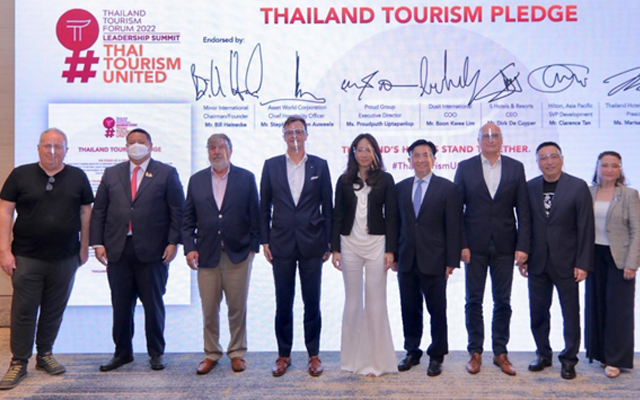
Thailand’s tourism leaders have come together to sign the Thailand Tourism Pledge towards charting a strong and sustainable path out of the global pandemic.
Together, these leaders committed to forging a new strategic direction for Thailand, including placing tourism at the forefront of the national economy, putting the service sector back to work, achieving sustainable growth, and making international visitors feel safe and secure.
(From left) C9 Hotelworks’ Bill Barnett; Thailand Convention & Exhibition Bureau’s Chiruit Isarangkun Na Ayuthaya; Minor International’s Bill Heinecke; Asset World Corporation’s Stephan Vanden Auweele; Proud Group’s Proudputh Liptapanlop; Dusit International’s Boon Kwee Lim; S Hotels & Resorts’ Dirk De Cuyper; Hilton Asia Pacific’s Clarence Tan; and Thailand Hotel Association’s Marisa Sukosol
The Thailand Tourism Pledge will lay the foundations upon which Thai tourism can be rebuilt from the ground up, following the travel freeze and pandemic.
The Pledge materialised at the 11th Thailand Tourism Forum (TTF 2022) on March 1, an event that ran under the theme #ThaiTourismUnited.
There was a clear call by all leaders at the event that it was time the country fully reopen to tourism.
Proudputh Liptapanlop, executive director of Proud Group, which owns numerous tourism assets including two InterContinental branded hotels in Hua Hin and Phuket, said: “We need to open up. We need everyone to understand that we need to open up the country for their good and for the benefit of the country.”
Bill Heinecke, chairman/founder of Minor International, said: “If we don’t open up, we can’t be competitive. Currently the rules are just too complicated. We are not even 10 per cent of where we were pre-Covid and Thailand will not reach her target of 10 million arrivals in 2022. We are falling behind. We are not even keeping up with our neighbours.”
Marisa Sukosol, president of Thailand Hotels Association, emphasised that reopening Thailand was no longer a choice. She urged the government to quit the Test & Go programme and “move our mentality from a pandemic to an endemic”.
TTF 2022 kicked off with a series of addresses, debates and discussions to help attendees devise strategies to survive and thrive in the post-pandemic era.
Bill Barnett, managing director of C9 Hotelworks, said the in-person TTF 2022 at Conrad Bangkok was a signal for travel and tourism to restart.
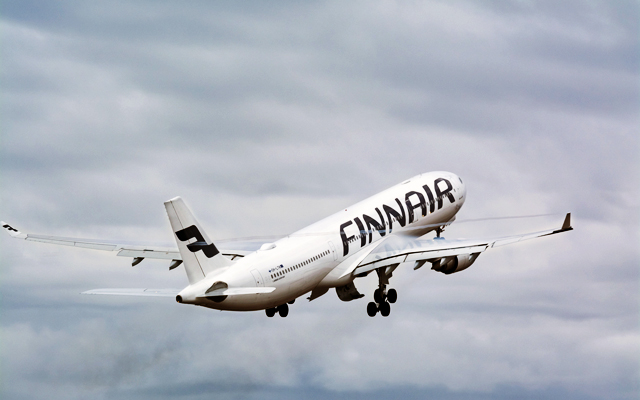
Finnair will reinstate flights from March 9 to Japan’s Tokyo Narita airport four times a week out of Helsinki, with the service taking a new route that avoids the Russian airspace.
The Helsinki-Tokyo Narita service departs on Tuesday, Thursday, Friday and Saturday, while the Tokyo-Helsinki flight operates on Wednesday, Friday, Saturday and Sunday. The flight time is approximately 13 hours.
Finnair will reinstate flights from March 9 to Japan’s Tokyo Narita airport four times a week out of Helsinki
“Japan is one of our most important markets, and we want to continue offering safe and reliable connections between Helsinki and Tokyo also in this situation”, said Ole Orvér, chief commercial officer, Finnair.
Finnair continues to fly to Bangkok, Delhi, Phuket and Singapore, with a longer routing that avoids Russian airspace.
It has cancelled flights to China, Japan and South Korea until March 6, as it evaluates possible alternative routings for these services.
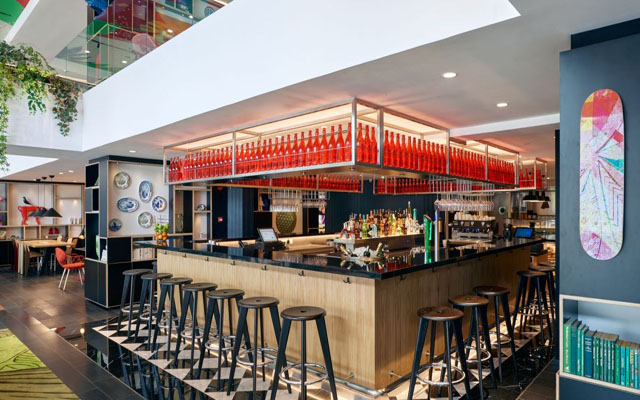
CitizenM has rolled out a spring sale across its 24 properties located in major cities from Boston to Paris.
Room rates are now at 22 per cent off from now to March 13, 2022, and stay dates are until August 31, 2022.
CitizenM in Kuala Lumpur, Malaysia
There are two CitizenM hotels in Asia-Pacific, located in Taipei and Kuala Lumpur.
All bookings come with free cancellations up to 18.00 on the day of arrival.
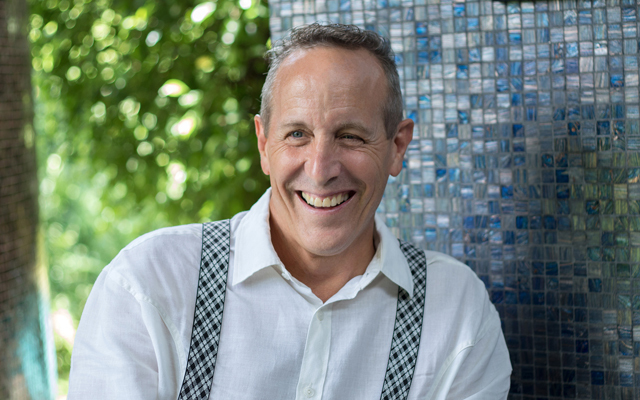
I love your story behind the making of the new InterContinental Khao Yai Resort – of train conductor Somsak, whose many train voyages are woven into the spirit of the entire hotel. Do you always take this storytelling approach with the hotels you design? We absolutely do! It is one of the keys to our success, and what keeps clients coming back to our studio, and guests back to our hotels.
You see, over the years I have learnt that designing a hotel is akin to producing a Hollywood movie, in that both hotels and movies need a
compelling storyline. For a wonderful premiere, we come up with a unique DNA that influences everything, from the architecture to the design of the teaspoons – and that is the key to success as resort craftsmen!
The same goes for the InterContinental Khao Yai.
What inspires the type of stories you adopt for the hotels you design? Take for instance, Capella Hanoi, also a rather new property that had opened just last year. One does not need to look far for a story. If you have a good site and are able to honour the place’s history, you cannot go astray.
At the Capella Hanoi, we were gifted with a darling little footprint at the heart of the old French quarter. As we were just steps away from the Hanoi Opera House, it seemed obvious to take inspiration from there and think of what this little “auberge” might have been like in her glory days. We were soon daydreaming of opera singers, artists, composers, stage and costume designers, and ran with that. We researched, collected antiques and books, and eventually named all the rooms after different characters (famed artists of that era), such as Sarah Bernhardt, Eleonora Duse, Leon Bakst, Sergei Diaghilev and, of course, the Ballets Russes (a French ballet that performed between 1909 and 1929).
Emerging from the travel freeze, more destinations have declared their desire to pursue only high-value travellers instead of mass travellers. Do you think that taking a storytelling approach can enable hotels, attractions, and other elements of destination experiences to support the destination’s wider goal of acquiring high-value travellers? I couldn’t agree more, as mass tourism is rarely beneficial to all and ravages the environment – which is what draws people to visit in the first place. Tourism shouldn’t just be all about big numbers.
Storytelling can certainly help to attract the right people – a spoonful of sugar, as they say! In our hotel design, I use storytelling not only to attract people, but also to educate visitors and locals on the history of the place.
At the Capella Ubud, we imagined the tale of shipwrecked Dutch settlers in Bali in the 19th century, and through that told the story of incredible characters such as Mads Lange, nicknamed the White Rajah of Bali. I will let you find out that story for yourself!
Dilapidated train cars are being converted into luxurious suites
Let’s go back to InterContinental Khao Yai Resort. For this property, you brought in 16 heritage train cars and had them repurposed into luxury suites. Will you take us through the upcycling work needed to give these cars a new lease on life? What was the hardest task, for instance? Well, to begin with it was a real scavenger hunt finding them. We sourced all over Thailand, discovering them in old train lots, or forgotten in fields for some 50 years with Ficus trees taking root and enveloping the carriages. Those had to be pried off to get the trains out of the field. I have kept the root system of these and we will return them to Mother Earth, literally, on site.
Then, you can imagine there’s a fair bit of restoration to do while we designed a luxury hotel room in a cabin 2.9m wide! We played on the length, doubling up carriages, and adding on decks and pools for outdoor living. Everything is custom made to fit these very precise dimensions.
A tricky design exercise, but also an incredibly fun one, don’t you think?
Is the rest of InterContinental Khao YaI Resort new-build? Are there upcycling opportunities in this other part of the hotel? Yes, but it is made to look like it has been there all along. The 100-acre (40.5ha) site is rich in wildlife, with gorgeous trees, so we designed buildings of charming Thai colonial ilk, with a small footprint so that they (the buildings) can be placed strategically between wooded areas to avoid damaging natural drainage patterns. There are more than 50,000 trees and seven lakes on this site.
These guestrooms are designed to look like train carriages as well, down to the antique accessorising, signage and art. That is the key to telling a good story: doing it down to the finest details. The same goes for the public areas.
Did you bring your love for upcycling into other hotels that you have designed and developed? Oh yes! The first project where we went wild with upcycling was Lamarck University, also known as the JW Marriott Phu Quoc Emerald Bay Resort & Spa. I wrote an elaborate script for this resort that included a history of each and every building, when it was built and for what purpose.
We told the tale of Lamarck, who laid the groundwork for Darwin, and the university he once founded there. The buildings were of a variety of scales, making up 11 departments such as the Department of Physical Education (spa and gym), the Department of Chemistry (a beach bar) or the Department of Architecture (all-day dining). Guests, when checked in, would be marked “present” at one of 16 different departments: Botany, Astronomy, Zoology, Ichthyology, Entomology, Oceanography, etc.
The hallways of each department display original etchings of natural studies dating back as far as 1760, period teaching information, and school charts specific to the department.
For two years we collected some 3,000-plus antiques and vintage pieces to give the university authenticity. From a 19th century elevator to 48 original French car designer drawings of the ill-fated six-wheel car that dated back to 1910, the university grounds hold a plethora of fascinating stories. I have never had more fun putting together a beach resort!
From then on, I vowed that intense upcycling and a strong narrative would always be woven into my designs, because guests love it.
There are still months before InterContinental Khao Yai Resort is done and ready for first guests. Are you already looking for your next fun project? What would it be, if you had your way? Just a couple of weeks ago I had my first ever public art show, and to my surprise, it seems to be doing rather well! So, my next fun project is very much dreaming up the next few exhibitions I have generously offered to do.
The world of hotels is definitely waking up from the long Covid night. Just yesterday I had the most offers for new projects in a day since this all started. If I have my way, we’ll be in Turkey, Congo, South Africa or India – wherever a good story is.
Strategically housed within the iconic King Power Mahanakhon, a 78-story mixed-use building that is one of the tallest in Thailand, The Standard, Bangkok Mahanakhon is a breath-taking hospitality landmark spotlighting world-class design, culinary, entertainment, retail and wellness offerings.
Poised to open on May 11, with room reservations available since February, the 155-key property is The Standard brand’s flagship hotel in Asia and the latest exciting addition to the company’s growing global portfolio.
Step into a world of Instagram-worthy art installations and backdrops
Situated in bold and buzzy Bangkok’s central business district, between the Sathorn and Silom corridors, the eclectic The Standard, Bangkok Mahanakhon is designed by Spanish artist-designer Jaime Hayon in collaboration with The Standard’s award-winning in-house design team.
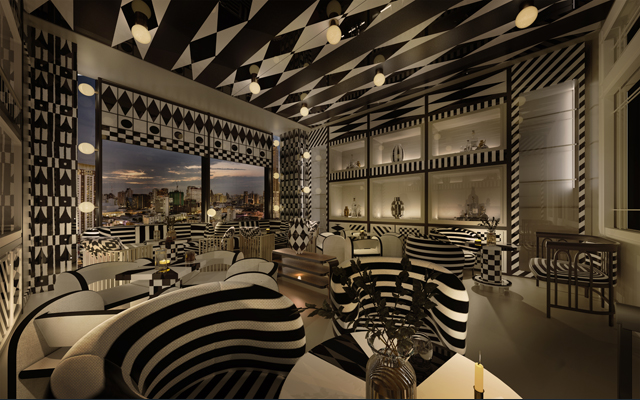
A sharp aesthetic departure from other luxury hotels in the city and upholding the same unconventional and playful sensibilities epitomised by The Standard hotels, guests will be pleasantly greeted by the vibrant colours, fluid shapes, evolving art installations and lush greenery that flow seamlessly inside and out of the swanky establishment.
Amar Lalvani, executive chairman for Standard International said: “We love the energy, style and culture Bangkok offers and couldn’t be more proud to partner with King Power to open our flagship for the region in this awe-inspiring building, in this incredible city. When we open our doors in May, visitors and locals will be treated to the world of immersive hospitality that only The Standard can create.”
Taste-making guests will be impressed with the thoughtfully appointed guestrooms and suites – ranging from 40m2 to a sprawling 144m2 penthouse – which come complete with many creature comforts, such as rain showers and/or soaking tubs, Nespresso machines, Bang & Olufsen bluetooth speakers, plush seating areas, custom robes, and Davines bath amenities. Guests can stay connected with free Wi-Fi, and enjoy access to a 24-hour gym.
Bangkok's newest trendsetting hospitality address
1 of 5
Balcony Suite
The Parlor
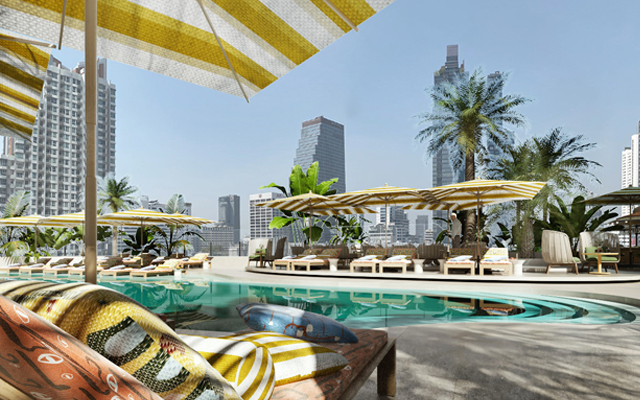
Swimming pool
Tease
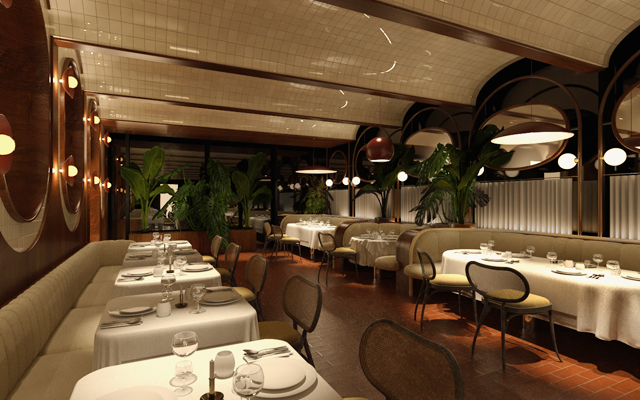
The Standard Grill
A dynamic array of dining and nightlife offerings also beckons at The Standard, Bangkok Mahanakhon, including the first international outpost of the renown The Standard Grill and Thailand’s first outstation of the acclaimed Mott 32.
The Standard Grill is a take on a classic brasserie that blends traditional American steakhouse with a freshness of regional flavours. Think burger with martini. Mott 32 utilises the latest in innovative cooking techniques and time-honoured recipes to create award-winning Oriental cuisine. For the first time in Bangkok, diners will be able to savour Mott 32’s signature dim sums and apple-wood roasted Peking duck.
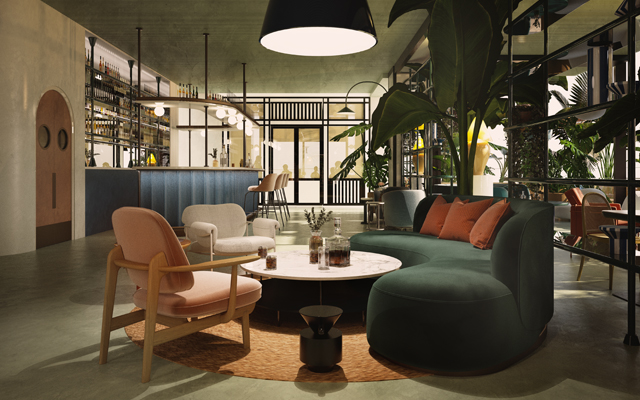
The Parlor will be the city’s place to be for socialising or work, cocktails or lectures, and live music or lounging. Over at the fantasy-décor accented Tease, guests can indulge in luxurious tête-à-têtes with the impeccable tea selection.
The hotel’s rooftop showcases Ojo Bangkok, a Mexican-inspired retro-glam restaurant helmed by Francisco Paco Ruano, one of the finest, award-winning chefs from Mexico. It aims to satisfy diners’ midday cravings and midnight ravings all under one roof.
Enjoy a tipple while taking in Bangkok’s glittering lights at the Sky Beach rooftop bar
From the al fresco Sky Beach, the highest rooftop bar in Bangkok, hotel guests can relish stunning views of Bangkok.
Delectable culinary delights aside, the retail shop on the ground floor carries a specially-curated collection of local and foreign fashion, travel and home goods, as well as one-of-a-kind collaborations for the shopaholic at heart.
In Lalvani’s own words: “There is nothing in Bangkok, or the entire region, like what we have created here.”
The Standard, Bangkok Mahanakhon currently offers a 25 per cent pre-opening discount on Best Available Rate. Bookings can only be made directly here.





 I love your story behind the making of the new InterContinental Khao Yai Resort – of train conductor Somsak, whose many train voyages are woven into the spirit of the entire hotel. Do you always take this storytelling approach with the hotels you design?